Up next in 10

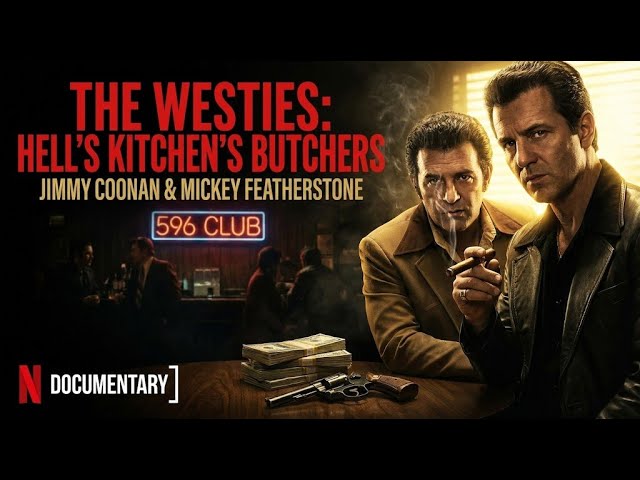
The Gambinos Killed for Money — The Westies Killed for FUN and Made the Mafia FLINCH
Jan 2, 2026

A loan shark walks into a Hell's Kitchen bar in nineteen seventy-seven. He never walks out. Three days later, pieces of his body surface in the Hudson River. His head was never found.
The men responsible weren't Italian. They were Irish. And they terrified the Gambino crime family.
This is the true story of the Westies—the Hell's Kitchen crew so brutal that Paul Castellano, head of the most powerful Mafia family in America, partnered with them despite finding their methods disturbing. Jimmy Coonan. Mickey Featherstone. A Vietnam veteran with untreated P-T-S-D and a psychopath who discovered that dismemberment solved problems.
Based on court testimony, F-B-I files, and T.J. English's definitive account. Some dialogue has been reconstructed from documented sources. Viewer discretion strongly advised.
What happens when violence becomes your only product? And what happens when the neighborhood that created you decides to forget you ever existed?
Hell's Kitchen has changed. The 596 Club where the Westies conducted business is now a boutique hotel. But the bodies are still out there. Somewhere.
Subscribe for weekly documentaries on organized crime's darkest chapters. New episodes every week.
-~-~~-~~~-~~-~--~-~~-~~~-~~-~--~-~~-~~~-~~-~-
⚠️ Content Disclaimer:
This video is created for educational and informational purposes only. We do NOT glorify, promote, or encourage any form of criminal activity.
All visuals, audio, and materials used in this video are either:
✔ Created using AI tools, or
✔ Sourced from royalty-free platforms with valid licenses.
Some images and characters have been generated using AI and do not represent real people or events.
Show More Show Less View Video Transcript
0:00
They called themselves the Westies,
0:01
[music]
0:03
an Irish gang from 10 blocks of
0:05
Manhattan's west side. And they [music]
0:08
made the Gambino crime family
0:12
uncoverable.
0:13
That word matters.
0:16
Uncomable.
0:17
The Gambinos [music]
0:18
killed people. They buried bodies and
0:21
foundations and dumped them in the
0:24
Meadowlands.
0:25
They ran the most powerful organized
0:28
crime operation in American history, but
0:32
the Westies made them uncomfortable.
0:35
In 1987, [music] federal prosecutors
0:39
would use a single word to describe the
0:41
Westies methods [music] in court. That
0:44
word was dismemberment.
0:46
This [music] is the true story of how a
0:49
small crew from Hell's Kitchen [music]
0:51
became too violent for the Italian
0:54
mafia.
0:55
how their partnership [music] with the
0:57
Gambinos made them rich and marked them
1:00
for destruction [music] and how one
1:03
man's testimony brought the whole bloody
1:06
operation [music] down. Before we go
1:09
further, some of the dialogue in this
1:12
documentary has been reconstructed from
1:15
court [music] testimony,
1:17
FBI records, and TJ English's definitive
1:21
account. The events themselves are
1:24
documented, [music] but memory is
1:27
imperfect, and 30 years changes the
1:30
[music] telling. What you're about to
1:32
hear is as close to the truth as the
1:35
record allows. Now, Hell's Kitchen,
1:40
1966.
1:42
The neighborhood ran from 34th Street to
1:46
59th Street along Manhattan's west side.
1:51
tenementss stacked five stories high.
1:54
Factories, slaughter houses, the peers
1:58
where long shoremen unloaded cargo and
2:01
sometimes bodies. This was not the
2:04
hell's kitchen of farmtotable
2:06
restaurants and luxury condos.
2:10
This was [music] the neighborhood where
2:11
kids learned to fight before they
2:14
learned to read. Mickey [music] Spillin
2:16
ran the neighborhood. Not the writer,
2:20
the gangster. They called him the
2:23
gentleman [music] gangster because he
2:25
had rules. He took his cut from the
2:28
bookmakers and lone sharks. He protected
2:31
[music] the union locals. He kept the
2:35
violence manageable.
2:37
When someone needed to disappear,
2:40
Spillin preferred exile to execution.
2:43
He'd been running Hell's Kitchen for
2:46
almost 20 [music] years. But in the back
2:49
rooms of the 596 Club on 10th [music]
2:52
Avenue, a younger generation was
2:55
watching, waiting, and they didn't share
2:58
Spillin's taste for [music] restraint.
3:01
Jimmy Counan was 21 years old in 1966.
3:06
[music]
3:07
Dark hair slicked back, quick smile that
3:11
didn't reach his eyes. His [snorts]
3:14
father had been a low-level [music]
3:15
player in the neighborhood. Jimmy wanted
3:18
more. He'd already done time for
3:21
assault. He'd already discovered
3:24
something about himself [music] that
3:26
would define the next two decades.
3:29
Jimmy [ __ ] [music] liked hurting people,
3:32
not as a means to an end, as the end
3:36
[music] itself. Stop. Hold that detail
3:40
in your mind because it matters. There's
3:44
a difference [music] between a man who
3:46
uses violence to get what he wants and a
3:49
man who wants violence and finds ways to
3:53
justify it. Jimmy [ __ ] was the second
3:57
kind. Every [music] debt collection was
4:00
a chance to cause pain. Every
4:02
territorial dispute was an opportunity.
4:06
The money was secondary to the damage,
4:10
but Kunan was smart enough to know he
4:12
needed soldiers.
4:14
And in 1971,
4:17
he [music] found his perfect weapon.
4:19
Mickey Featherstone came home from
4:22
Vietnam with a bronze star, a combat
4:26
infantryman badge, and something broken
4:29
inside him that would never fully heal.
4:33
He [music] was 22 years old.
4:36
blonde hair, blue eyes, baby face that
4:40
made [music] him look 17. In the jungle,
4:44
he'd learned to kill on reflex.
4:47
Back in [music] Hell's Kitchen, those
4:49
reflexes didn't turn off. Within weeks
4:53
of returning home, Featherstone [music]
4:55
was involved in a shooting outside a bar
4:58
on 43rd [music] Street. self-defense,
5:03
according to witnesses.
5:05
But the dead [music] man's friends
5:07
disagreed.
5:08
According to testimony [music]
5:10
Featherstone would later give, he
5:13
started carrying a gun everywhere,
5:16
not because he was looking for trouble.
5:19
Because trouble [music] kept finding
5:21
him. The flashbacks came without
5:24
warning. A car backfiring,
5:28
a door slamming. Suddenly he was back in
5:31
the jungle [music] and the people around
5:34
him were threats. He walked into a
5:37
[music] bar called the Leprechaun in
5:40
1971.
5:42
A man named Lynwood Willis was [music]
5:44
drinking there. Words were exchanged.
5:48
Featherstone's hand found his gun
5:51
[music] before his brain caught up.
5:54
Willis died on the floor of that bar.
5:57
The court found Featherstone [music]
5:59
not guilty by reason of insanity.
6:03
They sent him to a psychiatric hospital.
6:06
He was diagnosed with what we'd now call
6:09
post-traumatic stress disorder. For 18
6:13
months, he received treatment. Then they
6:16
released him back to Hell's Kitchen.
6:19
[music] Jimmy Kunan was waiting. What
6:22
happened next, according to court
6:25
testimony, [music]
6:26
followed a simple logic. Kunan needed a
6:29
killer who wouldn't hesitate. [music]
6:32
Featherstone needed a purpose. Kunan
6:35
offered money, protection, belonging.
6:39
Everything [music] Featherstone hadn't
6:41
found since coming home from the war. In
6:45
return, Featherstone became Kunan's
6:47
enforcer. His reputation [music] from
6:50
the leprechaun incident preceded him.
6:54
People in the neighborhood knew Mickey
6:57
Featherstone [music]
6:58
had killed a man and walked free. The
7:01
jury [music] had called him insane.
7:04
That reputation was worth more than
7:07
[music] any weapon. And years later, one
7:11
name would keep appearing in the shadows
7:13
of this story.
7:15
a [music] name from the other side of
7:17
organized crime, a man named Paul
7:20
[music] Castellano.
7:22
By 1975,
7:25
Kunan's crew had a name, [music] the
7:28
Westies. They'd taken it from a
7:30
newspaper article that [music] described
7:33
the Westside Irish gangs. They wore it
7:36
like a badge, and they'd [music]
7:39
establish something that would become
7:41
their signature.
7:43
They didn't [music] just kill their
7:45
enemies, they made them disappear.
7:49
This [music] next detail changes
7:51
everything we thought we knew about
7:53
organized crimes rules. Ruby Stein was a
7:57
lone shark, not Irish, Jewish. He
8:02
operated out of Hell's Kitchen with
8:05
protection from Mickey Spillin, the old
8:08
boss. When Spillin's power started
8:11
slipping, Stein kept operating. He
8:14
thought the neighborhood protection
8:16
still applied. On a night in late 1977,
8:21
[music] according to testimony that
8:23
would later be given in federal court,
8:26
Ruby Stein walked into a Hell's Kitchen
8:29
bar to discuss a debt with Jimmy Kunan.
8:34
What happened next was reconstructed
8:36
from witness accounts and Kunan's own
8:39
admissions during later proceedings.
8:42
The version that follows is drawn from
8:45
court records.
8:47
Stein sat down, ordered a drink, asked
8:51
about the money he was owed. Kunan
8:54
smiled. Then someone behind Stein moved.
8:59
A knife quick and deep. Stein didn't
9:03
[music] die in that bar. According to
9:06
testimony, they kept him alive for
9:08
several hours. The details of those
9:12
hours [music] are a matter of court
9:14
record. For the purposes of this
9:17
documentary, what matters is what
9:20
[music] came next. Jimmy Counan had a
9:23
problem. A body in Hell's Kitchen.
9:26
Neighbors who [music] talked. Police who
9:29
patrolled. He solved that problem with a
9:32
hacksaw. The method, as described
9:35
[music] in later testimony, was
9:37
clinical. They removed the parts most
9:40
likely to float. They [music] packaged
9:43
the remains in garbage bags. They
9:46
distributed those bags across multiple
9:49
locations.
9:50
Some went [music] to landfills.
9:53
Some went to the river. Ruby [music]
9:56
Stein's head was never found. Let that
9:59
detail sit for a moment. This was not
10:02
the Italian [music]
10:03
way of doing business. The mafia had
10:07
their methods. A body in the trunk, a
10:11
burial in the pine barren. They killed
10:14
when necessary, but [music] they didn't
10:17
disassemble.
10:19
Shimit Kunan had discovered something. A
10:23
body that can't be found creates a
10:25
different kind of fear than a body that
10:28
can. When Ruby Stein vanished, the
10:32
message [music] spread through hell's
10:33
kitchen like infection.
10:36
Cross the Westies and [music] your
10:38
family won't have a grave to visit. That
10:42
message reached the five families.
10:45
And instead [music] of declaring war,
10:48
they reached out. But here's what the
10:50
Gambinos didn't understand.
10:53
They thought they were hiring
10:55
contractors.
10:57
They thought they were outsourcing
10:58
[music] the work too dirty for their own
11:01
crews. They were actually building a
11:04
bomb inside their own operation.
11:07
And that bomb had a name, Mickey [music]
11:10
Featherstone.
11:11
A man so broken by war that he couldn't
11:15
[music] tell the difference between
11:16
enemies and friends.
11:19
a man whose loyalty lasted [music]
11:21
exactly as long as it was convenient.
11:25
The question wasn't whether Featherstone
11:27
[music] would turn. The question was
11:29
what would push him over the edge. And
11:32
the answer was closer than anyone
11:35
suspected.
11:36
1977,
11:39
the year everything changed. Mickey
11:42
[music] Spillin had been running Hell's
11:44
Kitchen for two decades. the gentleman
11:47
gangster. He [music] collected his
11:50
tributes.
11:51
He kept the peace and he watched Chimmy
11:55
Kunan's [music] crew grow stronger every
11:58
month. According to accounts from that
12:01
period, [music] Spillin knew he was
12:04
losing control. The younger generation
12:07
didn't respect the old rules. They
12:10
didn't want a cut of the action. They
12:13
wanted all of it. On May 13th,
12:17
1977,
12:19
Mickey Spillin walked out of his [music]
12:21
apartment in Woodside, Queens. He was 54
12:26
years old. He'd survived gang wars and
12:30
police investigations [music]
12:32
and two decades of navigating New York's
12:34
underworld. [music]
12:36
He didn't survive the men waiting for
12:38
him on the street. Multiple gunmen broad
12:43
daylight
12:44
spill and died on the sidewalk in front
12:46
of his home. No one was ever charged.
12:50
But in Hell's Kitchen, everyone [music]
12:53
knew. Jimmy Kungan had just announced
12:56
himself as the new boss of the West
12:59
Side. The question was what that meant
13:02
for [music] the rest of New York's
13:04
organized crime. Pay attention to what
13:07
happens next. It's easy [music] to miss.
13:11
The Gambino crime family controlled
13:14
significant [music] portions of
13:16
Manhattan,
13:18
construction, unions, gambling. They'd
13:22
watched the Irish gangs on the west side
13:24
for years. Under [music] Spillin, the
13:28
Westies had been manageable, a
13:31
neighborhood crew that knew its place.
13:34
Under Coin, they were something else
13:36
entirely. According to testimony later
13:40
given in federal proceedings,
13:43
Paul Castellano sent word [music]
13:45
through intermediaries.
13:48
Big Paul, the head of the Gambino
13:51
family, the most powerful organized
13:54
crime figure in New York. He wanted a
13:58
meeting. Kunan went to that meeting with
14:01
Mickey Featherstone at his side. The
14:04
arrangement they reached based on
14:06
[music] court testimony and FBI
14:09
intelligence reports was unprecedented.
14:13
The Gambinos would pay the Westies a
14:15
retainer, $10,000 a week, according to
14:20
some accounts.
14:22
In exchange, the Westies would handle
14:25
specialized work. Here's [music] what
14:28
that meant. The Italian families had
14:31
rules about killing. Maid members
14:35
couldn't be touched without permission
14:37
from the commission. [music]
14:39
Certain witnesses were protected.
14:41
Certain methods were forbidden. The
14:44
Westies had no such rules. If a Gambino
14:48
associate needed [music] to disappear
14:50
without authorization,
14:53
the Westies could make that happen. If a
14:56
body needed to never be found, the
14:59
[music] Westies had the expertise.
15:02
If a message needed to be [music] sent
15:04
that was too brutal for Italian tastes,
15:08
Jimmy Kunan would smile and reach for
15:11
his tools.
15:12
Violence had [music] become a commodity,
15:15
something that could be bought and sold.
15:18
The Westies weren't partners. They were
15:21
contractors.
15:23
and their specialty [music]
15:24
was the work no one else wanted to do.
15:28
But before we go further, there's
15:30
something the Gambinos never understood
15:33
about doing business with men like
15:35
Kunan. [music]
15:36
Contractors eventually want a bigger
15:38
cut. Through the late 1970s,
15:42
the Westies expanded their operations.
15:46
Lone sharking in the theater district.
15:49
Control of the Javitz Convention Center
15:52
construction site. A piece of every
15:55
union job on the west side. The money
15:58
flowed. And with the money [music] came
16:01
ambition.
16:02
Mickey Featherstone, according to his
16:05
own later testimony, had reservations.
16:09
Not about the killing. He'd made his
16:12
peace with that. But about Kunan's
16:14
[music]
16:15
judgment, the bodies were piling up, the
16:19
dismemberments continued, [music] and
16:21
Kunan seemed to enjoy the work more than
16:24
the prophets.
16:26
Featherstone watched his partner
16:28
carefully. They'd been together since
16:31
the early [music]
16:32
70s. He'd killed for Kunan. He'd helped
16:36
dispose [music] of Ruby Stein.
16:39
He'd built a reputation [clears throat]
16:41
as the most dangerous enforcer on the
16:44
west side. But [music] something had
16:46
started to shift. In 1979,
16:50
Featherstone married [ __ ] a
16:53
neighborhood girl who [music] understood
16:55
exactly what her husband did for a
16:57
living. According to [music] accounts
16:59
from those who knew them, [ __ ] began
17:03
pushing Featherstone [music]
17:04
to think about the future, not today's
17:08
score.
17:09
Not next week's job. The long game. What
17:13
did the long game look like for [music]
17:15
a Westside enforcer?
17:18
Prison or death? Those were the only
17:21
[music] endings. Unless there was
17:24
another way out. Take a [music] breath.
17:27
Because from here on, the story only
17:30
gets darker. The early 1980s should have
17:34
been the Westy's Peak. The Gambino
17:37
[music]
17:37
Partnership was generating hundreds of
17:40
thousands of dollars annually. Their
17:43
territory was secure. Their reputation
17:47
kept competitors away. They'd achieved
17:50
something rare in organized crime,
17:54
stability [music]
17:54
through fear. But Jimmy Kunan, who had
17:58
been convicted in 1988 of multiple
18:01
counts of racketeering and murder and is
18:04
currently serving a 75-year sentence,
18:08
allegedly had appetites that [music] the
18:11
money couldn't satisfy.
18:13
According to testimony from multiple
18:15
former associates,
18:17
Kunan began making decisions that
18:20
worried [music] even his own crew. Hits
18:23
that weren't necessary.
18:25
dismemberments of people who could have
18:27
simply been killed. Risks that the
18:30
prophet [music]
18:31
didn't justify.
18:33
There's a pattern here. One that [music]
18:36
repeats across organized crime. The
18:39
violence that builds an empire is rarely
18:42
[music] the violence that sustains it.
18:45
The brutality that creates fear
18:48
eventually [music] creates something
18:49
else. [snorts] recklessness,
18:52
overconfidence,
18:54
the belief that the rules don't apply.
18:58
This pattern repeated with the Bonano
19:01
family in [music] the 1980s,
19:04
with the Luces Unerbos, who became an
19:08
informant,
19:09
with every crew [music] that mistook
19:11
terror for loyalty. Different decades,
19:15
different names, same ending. [music]
19:19
Now, here's where the story takes a turn
19:21
no one expected.
19:24
1985,
19:26
a man named Michael Holly was shot dead
19:29
outside a bar in Hell's Kitchen.
19:31
Multiple witnesses identified the
19:34
shooter. They identified Mickey [music]
19:37
Featherstone.
19:38
There was one problem. Featherstone was
19:42
miles away when the shooting happened.
19:45
He had witnesses.
19:47
He had an alibi and he knew exactly what
19:51
was happening. Someone was setting him
19:54
up. According to [music] testimony
19:56
Featherstone later gave, he suspected
20:00
members of his own crew. The Westies had
20:03
internal tensions that the outside world
20:06
never saw. Younger members who wanted to
20:09
move up. Loyalties that shifted based on
20:13
who [music] had the money. But the frame
20:16
held. The witnesses stuck to [music]
20:19
their story. And in 1986,
20:22
Mickey Featherstone was convicted of a
20:25
murder he did not commit. He was facing
20:28
25 years to life. His wife [ __ ] began
20:32
[music] investigating.
20:34
According to court records, she tracked
20:37
down witnesses.
20:39
She documented inconsistencies.
20:43
She did the work that Featherstone's
20:45
attorneys had failed to [music] do. What
20:48
she found would eventually exonerate
20:50
him. The witnesses [music]
20:52
had been coached. The identification had
20:55
been manufactured.
20:57
The real killer was someone else
20:59
entirely.
21:01
But before that exoneration came,
21:04
Featherstone [music] had to make a
21:06
choice. Sit in prison for a murder he
21:10
didn't [music] commit. protect the code,
21:13
maintain the loyalty that had defined
21:16
his entire adult life, or talk
21:20
everything he knew about the Westies,
21:23
the Gambino partnership, the bodies, the
21:28
dismemberments, [music]
21:29
Ruby Stein, Mickey Spillin, two decades
21:34
of blood and business on the west side.
21:37
The FBI [music] was waiting and they
21:40
were offering something Featherstone had
21:42
[music] never considered a way out. But
21:46
the decision wasn't simple. Featherstone
21:49
had killed [music] people. He'd disposed
21:52
of bodies. He'd been Kunan's right hand
21:56
for 15 years. If he talked, he was
22:00
condemning himself as much as anyone
22:03
else. His wife pushed him. His attorneys
22:07
laid out the options. The prosecutors
22:10
made promises.
22:12
And somewhere in a prison cell, Mickey
22:15
Featherstone, [music]
22:16
the man who'd come home from Vietnam
22:19
broken, the man who'd found purpose in
22:22
violence, the man whose reputation had
22:25
been built on being someone you could
22:27
trust to keep his mouth shut. He started
22:31
to think about what loyalty had actually
22:33
gotten him. Framed by his own people,
22:37
abandoned by the crew [music] he'd
22:39
killed for, facing decades in prison for
22:43
someone else's crime. What was loyalty
22:46
[music] worth? Now, the answer would
22:48
take down the entire Westy's
22:50
organization.
22:52
But it would also expose something
22:54
darker. A secret about the bodies, about
22:58
where they'd been buried, [music]
23:00
and about what happens when
23:02
gentrification starts digging up the
23:04
past.
23:06
[ __ ] Featherstone had [music] never
23:08
been an investigator.
23:10
She was a Hell's Kitchen wife. She knew
23:13
the rules. You didn't ask questions. You
23:18
didn't talk to cops. You waited for your
23:21
husband to come home, and you didn't ask
23:24
where he'd been. But her husband was in
23:27
prison for a murder he [music] didn't
23:29
commit, and the rules had stopped making
23:32
sense.
23:34
According to [music] court records and
23:36
accounts from the period, [ __ ] started
23:39
with the witnesses.
23:41
the people who had sworn under oath that
23:44
they'd seen Mickey Featherstone [music]
23:46
pull the trigger outside that bar in
23:50
1985.
23:52
She found inconsistencies, [music]
23:55
times that didn't match,
23:58
descriptions that contradicted each
24:00
other, and something [music] else,
24:03
connections between the witnesses and
24:05
members of the Westies organization.
24:08
But before we go further, there's
24:11
something that needs to be understood
24:13
about Hell's Kitchen. [music] In the mid
24:16
1980s,
24:17
the neighborhood was starting to change.
24:21
Developers had noticed the west side.
24:24
The tenementss that had housed
24:25
generations [music] of Irish families
24:28
were being bought up, renovated,
24:31
converted into something the [music]
24:33
original residents couldn't afford. The
24:36
Westies had built their power on
24:38
territorial [music] control. They knew
24:41
every block, every building super, every
24:45
bartender who might overhear [music] the
24:47
wrong conversation.
24:49
That knowledge was worth more than
24:52
weapons. But what happens when the
24:55
territory [music]
24:55
itself disappears?
24:58
When the people who feared you move away
25:01
and the people who replace [music] them
25:03
don't know your name? That question was
25:07
still a few years from mattering. In
25:10
1986,
25:11
the immediate problem was simpler.
25:14
Mickey [music] Featherstone was in
25:16
prison, and someone in his own crew had
25:20
put him there. Now, here's where the
25:23
story takes [music] a turn no one
25:25
expected. According to testimony that
25:28
would later emerge in federal
25:29
proceedings, the frame wasn't random. It
25:33
was strategic.
25:35
With Featherstone out of the picture,
25:38
there was [music] room to move up. His
25:41
reputation had protected certain
25:43
operations.
25:45
His relationship with [ __ ] [music]
25:47
had blocked certain ambitions.
25:50
Remove Featherstone and the power
25:53
structure shifts. The witnesses [music]
25:55
who identified him had been paid.
25:59
According to court documents, the
26:01
coordination came from inside the
26:04
Westies organization.
26:06
Men Featherstone had worked with, men he
26:10
trusted.
26:11
[ __ ] brought her findings to the
26:13
attorneys.
26:15
The attorneys [music] brought them to
26:16
the court, and in 1987,
26:20
Mickey Featherstone's [music]
26:21
conviction was vacated. He walked out of
26:24
prison a free [music] man. But he wasn't
26:27
the same man who'd walked in. Something
26:31
[music] had broken, not the way Vietnam
26:34
had broken him. That had been external.
26:38
Trauma inflicted by forces beyond his
26:41
control. This [music] was different.
26:44
This was betrayal by the people who were
26:47
supposed to be family. The FBI was
26:50
waiting with an offer. According to
26:53
documented accounts, the conversation
26:56
happened within days of his release.
27:00
Federal [music] prosecutors had been
27:02
building a RICO case against the Westies
27:05
for years. They had surveillance.
27:09
They had informants on the periphery,
27:12
but they didn't have anyone from the
27:14
inside. Mickey Featherstone [music] knew
27:17
everything. The Gambino Partnership, the
27:21
bodies, the dismemberments,
27:24
names, dates, locations,
27:27
15 years of blood and [music] business
27:31
organized in his memory like a filing
27:34
cabinet. The prosecutors offered
27:36
immunity. They offered witness
27:39
protection. They offered a chance to
27:42
disappear [music] and start over. All he
27:46
had to do was testify against [music]
27:48
Jimmy Kunan, against the crew that had
27:52
framed him, against [music] the
27:54
organization he'd helped build. Stop.
27:58
Rewind that in your mind because it
28:01
matters. This wasn't an easy choice.
28:05
[snorts] Featherstone had killed people.
28:08
Under normal circumstances, [music]
28:10
his testimony would have been an
28:12
admission of his own crimes. The
28:16
immunity [music] deal meant those crimes
28:18
would go unpunished.
28:20
But it also meant abandoning [music]
28:22
every principle he'd lived by since
28:25
coming home from the war. The code said
28:28
[music] you never talked. The code said
28:31
loyalty came before [music] everything.
28:34
The code said you did your time and kept
28:38
your mouth shut. The code had also put
28:41
him in prison for someone else's murder.
28:44
According to [music] his own later
28:46
accounts, Featherstone talked to [ __ ]
28:50
She didn't hesitate. The organization
28:53
had tried to destroy their family. There
28:56
was no loyalty left to protect. In late
28:59
1987,
29:01
Mickey Featherstone [music] became a
29:03
federal witness. The trial that
29:06
followed, [music] documented extensively
29:09
in court records and news coverage from
29:11
the period, dismantled the Westies
29:14
organization completely.
29:17
Featherstone testified for days.
29:20
[snorts]
29:20
He described [music] the Ruby Stein
29:22
murder in detail. He explained the
29:25
dismemberment [music] process. He named
29:28
the bodies that had never been found. He
29:32
mapped the Gambino [music] Partnership,
29:35
the payments, the contracted killings.
29:39
Jimmy Kunan, who had built [music] the
29:41
Westies into the most feared crew on the
29:43
West Side, sat in the courtroom [music]
29:47
and watched his empire collapse. In
29:50
1988,
29:52
Kunan was convicted of rakateeering,
29:55
[music] extortion, and multiple counts
29:58
of murder. He was sentenced to 75 years
30:02
in federal prison, where he remains
30:04
[music] today. But there's a detail that
30:07
got lost in the headlines [music] of the
30:09
conviction. Kevin Kelly was a younger
30:13
member of the Westies.
30:15
According to court testimony, he'd been
30:18
involved in the organization since the
30:20
[music] early 1980s.
30:23
He represented the next generation.
30:26
The future of [music] the crew, if there
30:29
was going to be one. In 1985,
30:32
Kelly allegedly participated in a
30:35
[music] murder that went wrong. The
30:38
details emerged during the federal
30:40
trial. The hit was sloppy. Witnesses saw
30:44
too much. Evidence was left behind.
30:49
According to [music] prosecutors,
30:51
that botch job created pressure that
30:54
rippled [music] through the
30:55
organization,
30:56
more heat from law enforcement,
30:59
more paranoia about [music] informants,
31:03
more internal suspicion. The frame up of
31:06
Featherstone may have been connected.
31:09
remove [music] the most dangerous
31:11
enforcer before he could become a
31:14
liability.
31:15
But the removal created a bigger
31:18
liability,
31:19
a man with nothing left to lose and
31:22
everything to trade. This pattern
31:25
appeared across organized crime in that
31:28
>> [music]
31:28
>> era. The Luces family collapsed partly
31:32
due to internal betrayals.
31:35
The Columbbo family tore itself apart in
31:38
the8s. [music]
31:40
Every organization that mistook fear for
31:43
loyalty eventually discovered [music]
31:45
the difference.
31:47
Pay attention to what happens next. It's
31:50
easy to miss. After the [music]
31:53
convictions, Mickey Featherstone
31:55
disappeared.
31:57
Witness protection.
31:59
New [music] name, new location. The most
32:03
dangerous enforcer in Hell's [music]
32:05
Kitchen became someone else entirely.
32:09
According to accounts from those
32:11
familiar with the case, he struggled
32:13
[music] with the transition. The skills
32:16
that had made him valuable on the West
32:18
Side had [music] no application in his
32:21
new life. The reputation that had
32:24
protected him was gone. He was just
32:28
another middle-aged man trying to
32:30
disappear. [music]
32:32
But Hell's Kitchen was changing, too.
32:35
And the changes would erase the Westies
32:37
more completely than any federal
32:40
prosecution.
32:42
The late [music] 1980s and early 1990s
32:46
brought developers in waves. [music] The
32:49
tenementss came down. The factories
32:52
closed. The peers where Long Shoreman
32:55
had worked for generations became parks
32:59
and luxury [music] apartments.
33:02
The 596 Club, where the Westies had
33:05
conducted [music] business for years,
33:08
where Ruby Stein had walked in and never
33:11
walked out, it's still there. The
33:15
building [music]
33:15
anyway, but the bar is gone. According
33:19
to recent accounts, the space has been
33:22
converted,
33:24
renovated, made safe for tourists.
33:28
The corners where men died are now
33:31
restaurant patios. [music]
33:33
The alleys where bodies were transported
33:36
are now loading zones for delivery
33:38
trucks, bringing [music] organic produce
33:41
to farm to table establishments.
33:45
Every physical trace of the Westies has
33:48
been scrubbed away. But there's
33:50
something the developers [music] don't
33:52
talk about, something that the real
33:54
estate listings never [music] mention.
33:57
The bodies were never recovered.
34:00
Ruby Stein's head was never found.
34:02
[music]
34:04
According to testimony, there were
34:06
others. Harold Whitehead, Billy Bey.
34:11
Names that appeared [music] in court
34:13
records but never appeared in
34:15
cemeteries.
34:17
The landfills that received those
34:19
remains have been built over. Some are
34:23
parks now. Some are commercial
34:25
developments.
34:27
The exact locations were never
34:29
documented. [music]
34:31
The men who knew are dead or in prison
34:34
are hiding under new names.
34:37
Somewhere underneath Hell's Kitchen's
34:39
[music] transformation,
34:41
the evidence remains. And that raises a
34:45
question that no one [music] wants to
34:47
answer. What happens when someone starts
34:50
digging? When a construction crew
34:53
[music] breaks ground for a new luxury
34:55
tower and finds something that doesn't
34:58
match the architectural plans,
35:01
it's happened before in other [music]
35:04
cities, other developments,
35:08
bones that weren't supposed to be there.
35:11
Evidence that real estate would prefer
35:13
to [music] stay buried. Hell's Kitchen
35:16
has been digging for 30 years. New
35:19
foundations,
35:21
new basements, [music]
35:23
new underground perking structures.
35:26
So far, nothing has surfaced, but the
35:30
documentary record suggests there are
35:33
bodies still out there. Victims who were
35:36
dismembered [music] and distributed
35:38
across locations that Jimmy Kunan and
35:41
Mickey Featherstone knew by heart.
35:44
locations that were workingclass
35:46
neighborhoods in 1977 [music]
35:49
and are luxury developments today. The
35:52
Westies are gone. The organization
35:55
collapsed.
35:56
The leaders are dead or imprisoned or
36:00
[music] vanished into witness
36:01
protection. But the work they left
36:04
behind,
36:06
that's still [music] there waiting. And
36:09
that brings us to the question this
36:11
story has been building toward since the
36:13
beginning. What did the Westies actually
36:16
prove [music] about organized crime?
36:19
About loyalty?
36:21
About what happens when violence becomes
36:23
your only product? The answer [music]
36:26
destroyed more than one family. And it
36:30
started with a choice that Mickey
36:31
[music] Featherstone made in a prison
36:34
cell. When he finally understood what
36:37
the code had actually cost him, [music]
36:40
Mickey Featherstone made his choice in a
36:42
prison cell. And that choice answered a
36:46
question that organized crime has been
36:48
asking since the first family [music]
36:51
swore the first oath. What is loyalty
36:54
actually worth? The Westies had an
36:57
answer. Loyalty was worth everything.
37:01
Until it wasn't.
37:03
Until the organization that demanded
37:05
[music] your silence was the same
37:08
organization that framed you for murder.
37:11
Until the code that promised protection
37:13
[music]
37:14
delivered a 25-ear sentence for someone
37:17
else's crime. Featherstone [music]
37:20
testified for 3 days in federal court.
37:23
According to court records, he described
37:26
[music] murders in clinical detail. He
37:29
explained the dismemberment process. He
37:33
named the victims. He mapped the
37:36
locations where bodies had been
37:38
distributed across New York City.
37:40
[music]
37:41
Jimmy Culin sat at the defense table and
37:45
watched his enforcer dismantle
37:47
everything they built together. But
37:50
here's what the prosecutors never fully
37:52
understood and what the newspapers
37:55
[music] missed in their coverage of the
37:57
trial. Featherstone wasn't testifying
38:01
because he'd suddenly [music] developed
38:02
a conscience. He wasn't testifying
38:06
because he'd realized the Westies were
38:08
wrong. He was testifying [music]
38:11
because the Westies had betrayed him
38:13
first. The distinction matters. This
38:17
wasn't a redemption [music]
38:18
story. This was a transaction.
38:22
Immunity for information,
38:25
freedom for names. Featherstone traded
38:28
the only currency he had left and walked
38:32
[music] away from the life that had
38:34
defined him since Vietnam.
38:36
But there's something else in the court
38:38
records.
38:40
Something that gets overlooked.
38:42
During his testimony, Featherstone was
38:46
asked about the bodies, the ones that
38:49
were never recovered. [music]
38:51
Ruby Stein, Harold Whitehead, Billy Bey,
38:56
others whose names appeared in sealed
38:58
documents. According to the transcript,
39:02
Featherstone [music]
39:03
described the disposal process, the
39:06
dismemberment, the packaging, the
39:09
distribution [music]
39:10
to multiple locations.
39:13
Then he was asked a simple question.
39:16
Could he identify where the remains were
39:18
taken? His answer, according to court
39:22
records, [music] was complicated.
39:24
Some locations he remembered. landfills
39:28
[music] that had specific names in the
39:30
1970s.
39:32
Sections of the waterfront that no
39:35
longer exist in their original form.
39:38
Places that [music] had been bulldozed,
39:40
developed, transformed. The prosecutors
39:44
moved on. They had enough for conviction
39:48
without the bodies. The testimony
39:50
[music] was sufficient. The pattern was
39:53
clear. But that question lingered. This
39:57
next detail changes everything we
40:00
thought we knew about what the Westies
40:02
left behind. Pay [music] attention. The
40:06
landfills Featherstone mentioned in his
40:08
testimony [music]
40:10
have been redeveloped. According to
40:13
public records, [music] several sites
40:15
that received waste from Manhattan in
40:18
the 1970s
40:20
are now commercial [music] properties,
40:23
parks, residential developments.
40:27
The infrastructure of modern New York,
40:30
built on top of [music] the
40:31
infrastructure of old, new, York. The
40:35
waterfront peers where long shoreman
40:37
once worked, those have been transformed
40:40
into public spaces. The Hudson River
40:44
Park, luxury apartments with views of
40:48
New Jersey. The physical geography of
40:51
Hell's Kitchen has been completely
40:53
rebuilt.
40:55
But ground doesn't forget [music] what's
40:57
buried in it. And that silence said
41:00
everything.
41:02
Construction crews have been digging in
41:04
Manhattan for 30 [music] years. New
41:07
foundations,
41:08
new subway extensions, [music]
41:11
new utility tunnels.
41:14
Every excavation is a roll of the dice.
41:18
Every shovel in the ground is a chance
41:20
to find something that wasn't supposed
41:22
to be there. According to documented
41:25
cases from other cities, [music]
41:28
construction projects have uncovered
41:30
remains from organized crime disposals
41:33
decades after the fact. In Chicago, in
41:37
Philadelphia, [music]
41:39
in Boston, the bodies don't disappear,
41:43
they wait. Hell's [music] Kitchen has
41:46
been lucky or careful or both. The 596
41:52
Club still stands on 10th Avenue. The
41:55
building anyway, [music]
41:57
the bar where Ruby Stein walked in for
42:00
his last drink. That's gone. According
42:04
to recent reports, the space has been
42:07
renovated multiple times. The current
42:10
[music] tenants have no connection to
42:12
the history. The walls have been
42:15
repainted. The floors have been [music]
42:18
replaced. But somewhere in that
42:20
building's foundation,
42:23
in the pipes that carried water in 1977,
42:27
in [music] the cracks that no renovation
42:30
fully addresses,
42:32
the past remains.
42:34
Mickey Featherstone [music]
42:35
left Hell's Kitchen in witness
42:37
protection. New name, new location. The
42:42
skills that had made him valuable as an
42:44
enforcer had no application in his new
42:48
life. According to accounts from those
42:51
familiar with the program, former
42:54
organized crime figures struggle with
42:56
the transition. The
42:58
>> [music]
42:58
>> identity that defined them is gone. The
43:02
reputation that protected them is
43:04
>> [music]
43:04
>> erased.
43:06
Featherstone reportedly tried to build
43:08
something normal. A life without
43:11
violence.
43:13
A future without looking over his
43:15
shoulder. Whether he succeeded is
43:18
[music] not part of the public record.
43:21
And maybe that's the point. The Westies
43:24
are gone now. Jimmy Counan remains in
43:28
federal prison, convicted [music] and
43:30
sentenced to 75 years for crimes that
43:33
included murder, racketeering, [music]
43:36
and extortion. Mickey Featherstone
43:39
disappeared into a new identity. The
43:42
soldiers and associates are dead or
43:45
scattered or forgotten. Hell's Kitchen
43:48
belongs to a different [music]
43:50
population now. Young professionals,
43:54
tourists,
43:56
families who chose the neighborhood
43:57
[music] for its restaurants and
43:59
proximity to Time Square. They walk
44:02
[music] the same streets where men died.
44:06
They drink in bars built on the [music]
44:09
foundations of bars where bodies were
44:11
dismembered. They have no idea. That's
44:16
[music] not a criticism.
44:18
That's just how cities work. New York
44:21
has [music] always been a place that
44:22
builds on top of its past. The layers
44:26
accumulate. The history gets buried.
44:28
[music]
44:29
The living don't owe anything to the
44:32
dead, but the dead are still there.
44:36
somewhere. And that brings us back to
44:39
the question we started with. What did
44:42
the Westies actually prove? Take a
44:45
breath. Let the question settle. The
44:49
Italian mafia had rules, hierarchy,
44:54
tradition, a code that had evolved over
44:57
generations.
44:59
The Gambinos looked at the Westies and
45:02
saw something useful.
45:04
contractors who could do the work that
45:07
was too dirty [music] for made men.
45:10
Violence without the complications of
45:12
[music] internal politics.
45:14
But they also saw something dangerous.
45:17
Men without limits, [snorts]
45:20
without the restraints that [music] kept
45:22
organizations functional.
45:24
The Westies weren't building an empire.
45:28
They were feeding appetites.
45:30
That's the lesson that organized crime
45:33
learned from Hell's [music] Kitchen.
45:36
Violence is a tool. When it becomes a
45:39
product, when it becomes the point, the
45:43
organization stops being an
45:45
organization.
45:47
It becomes a countdown. Jimmy Kunan
45:50
built the Westies [music] on terror. And
45:52
terror worked for a decade, maybe
45:56
longer. The neighborhood [music] feared
45:59
him. The Gambinos respected him. The
46:03
bodies piled up and nobody talked. And
46:07
one man got framed. One wife started
46:10
investigating.
46:12
One deal got offered in a prison cell.
46:15
And 20 years of blood [music] and
46:18
business collapsed in 3 days of
46:20
testimony. The violence [music] that
46:23
built the empire was the same violence
46:26
that destroyed it. That's not a moral
46:29
judgment. That's just arithmetic.
46:32
Some men earn respect.
46:35
Others earn fear. The Westies [music]
46:38
proved fear has a shorter shelf life.
46:41
And still the question remains open. The
46:45
bodies that Mickey Featherstone
46:47
described in his testimony.
46:50
The remains that were distributed across
46:53
locations he could no longer precisely
46:56
identify
46:57
are still out there somewhere underneath
47:00
the restaurants and apartments and
47:03
[music] parks of modern Hell's Kitchen.
47:06
Every construction project is a gamble.
47:09
Every foundation is a potential
47:12
discovery.
47:13
Every shovel in the ground might find
47:16
what [music] the Westies tried to make
47:18
disappear. It hasn't happened yet, but
47:21
the city [music] keeps digging and the
47:24
past keeps waiting. So, here's the
47:27
question this story leaves you with.
47:30
Were the Westies a warning about what
47:32
happens when violence has no limits? Or
47:36
were they proof that violence [music]
47:37
works right up until the moment it
47:41
doesn't? The evidence supports both
47:44
interpretations.
47:46
The Gambinos used them for years,
47:50
profitable [music] years, productive
47:52
years. The partnership functioned, the
47:56
bodies stayed buried, the fear [music]
47:58
stayed effective. Then it collapsed
48:02
completely in less than a [music] year.
48:06
You can read that as a cautionary tale
48:09
or you can read it as a business model
48:12
with a known expiration date. What you
48:16
conclude is yours [music] to decide. The
48:19
Westies operated for roughly two
48:21
decades.
48:23
They killed at least a dozen people,
48:26
possibly more. They pioneered methods
48:29
that made the Italian mafia
48:31
uncomfortable.
48:33
They built [music] a reputation on
48:35
terror and maintained it through
48:37
dismemberment.
48:39
And now they're a footnote, a paragraph
48:42
[music] in the history of New York
48:44
organized crime, a documentary that most
48:48
people will watch and forget by next
48:51
week. Hell's Kitchen has moved on. The
48:55
neighborhood [music] that created the
48:56
Westies has been replaced by a
48:59
neighborhood [music] that would never
49:01
create anything like them. The
49:04
conditions don't exist anymore. The
49:06
tenementss are condos. The factories
49:09
[music] are galleries.
49:11
The workingclass Irish families are
49:14
somewhere else now. Priced out by the
49:17
same forces that erased the Westy's
49:20
territory. Maybe that's the real ending.
49:23
Not the trials, not the convictions,
49:27
not the witness protection and the
49:30
prison [music] sentences.
49:32
The real ending is that nobody
49:34
remembers.
49:36
The real ending is that [music] the
49:38
Westies have been gentrified out of
49:40
existence more completely than any
49:43
federal prosecution could have managed.
49:46
The real ending is that you can walk
49:49
down [music] 10th Avenue today.
49:52
Stand in front of the building that used
49:54
to house the 596 Club and there's
49:58
nothing. No plaque, no [music] marker,
50:02
no acknowledgment that this was once the
50:05
headquarters of the most violent crew
50:07
[music] in New York. Just another block
50:10
in Hell's Kitchen. Just [music] another
50:12
piece of Manhattan real estate. Just
50:16
another layer of city built on top of
50:19
what came before. That's the story of
50:22
the Westies.
50:24
Now the question for you. Were they
50:27
monsters who got what they deserved?
50:31
Or were they a product of a [music]
50:32
neighborhood and an era that no longer
50:35
exists?
50:37
Men who would have been something else
50:39
entirely if they'd been born somewhere
50:42
different. One word in the comments,
50:46
monster or product. Next week we go
50:50
[music] deeper into the Gambino family.
50:53
The partnership you heard about today,
50:56
that's just the surface. Paul Castellano
51:00
had his own secrets,
51:02
his own vulnerabilities,
51:04
and his own ending on a sidewalk outside
51:08
a Manhattan steakhouse.
51:11
Subscribe, hit the bell. We [music] go
51:14
deeper every week. This is global mafia
51:19
universe and hell's kitchen remembers
51:23
even when the city forgets.
#Arts & Entertainment