Up next in 10


A furniture store in broad daylight. Seventy thousand dollars gone in four minutes. No masks. No panic. Military precision.
This wasn't a robbery. This was a demonstration.
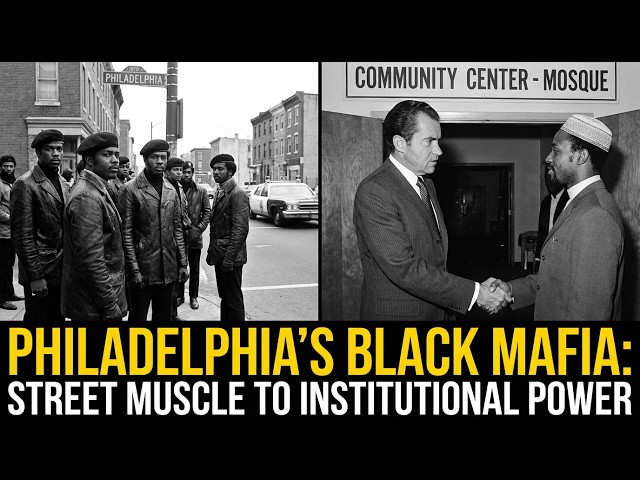
Between nineteen sixty-eight and nineteen seventy-seven, Philadelphia's Black Mafia transformed from street-level muscle into one of America's most sophisticated criminal organizations. They didn't just control territory. They controlled institutions. Mosques became banks. Community centers became command posts. Faith became cover.
Historical Note: This documentary reconstructs events from court records, law enforcement reports, and documented testimony. Some dialogue and scenes are dramatized based on verified accounts. All convicted crimes are matters of public record.
From the formation under Samuel Christian in Strawberry Mansion to the catastrophic Hanafi massacre that exposed their methods to federal scrutiny, this is the story of how organized crime evolved by weaponizing the one thing most gangs never touched: legitimacy itself.
Keywords: Black Mafia Philadelphia, organized crime history, Samuel Christian, Nation of Islam crime connection, nineteen seventies Philadelphia gang violence, Hanafi massacre, DEA organized crime investigation, criminal empire documentary, true crime Philadelphia, urban crime history
What you conclude about power, faith, and violence is yours to decide.
Subscribe for documentaries that go deeper than headlines.
📚 Sources & Further Reading:
→ Black Brothers Inc.: The Violent Rise and Fall of Philadelphia's Black Mafia (Sean Patrick Griffin)
https://www.amazon.com/Black-Brothers-Inc-Violent-Philadelphia/dp/1935212982
Show More Show Less View Video Transcript
0:00
Between 1968 and 77, Philadelphia learned what happens when faith becomes
0:06
a fortress for violence. 1973, North Philadelphia, a furniture store in
0:13
broad daylight. Four men walked through the front entrance of Dubra's furniture.
0:18
No masks, no rushing. They moved like salesmen, suits pressed, shoes polished.
0:24
One carried a briefcase. The manager looked up from his desk. The briefcase opened, not for contracts, for a sword
0:32
off shotgun. $70,000 disappeared in 4 minutes. The safe, the register, the
0:39
manager's personal cash in his desk drawer. Nothing missed. Nothing wasted.
0:45
When police arrived, witnesses described the scene the same way. Professional,
0:51
organized, military. This wasn't a robbery. This was a demonstration.
0:57
Historical note, the events in this documentary are reconstructed from court
1:02
records, law enforcement reports, and documented testimony from 1968 through
1:08
1977. Some scenes and dial are dramatized
1:13
based on verified accounts. All criminal activities mentioned involve convicted
1:19
individuals whose cases are matters of public record. The men who walked out of
1:25
Dubra that day weren't just thieves. They were soldiers in an organization
1:30
that transformed Philadelphia's criminal landscape. An organization that didn't
1:36
operate in shadows. They operated in plain sight, in community centers, in
1:42
mosques, in places most criminals would never touch. They called themselves the
1:49
Black Mafia. And between 1968 and 1977,
1:54
they built one of the most sophisticated criminal enterprises in American history
2:00
by weaponizing the one thing most gangs never controlled, legitimacy itself.
2:07
This is the story of how faith became a fortress, how discipline became power,
2:13
and how an empire rose not by hiding from the community, but by embedding
2:19
itself. so deeply inside institutions that no one could separate the sacred
2:24
from the criminal. The Dubra heist wasn't random. It was a calling card, a
2:30
message sent to every criminal operation in Philadelphia. There's a new structure
2:35
in town and it operates by different rules. To understand those rules, you
2:41
have to go back five years earlier to Strawberry Mansion, to a man named
2:46
Samuel Christian, and to a decision that would change everything about how organized crime functioned in an
2:53
American city. 1968, Strawberry Mansion was North
2:59
Philadelphia's pressure point. Poverty and pride occupying the same blocks. The
3:05
numbers racket ran through every corner. Heroine moved through every project.
3:10
Italian syndicates controlled distribution from South Philly. Irish
3:15
crews controlled enforcement from Kensington. Black Street gangs provided
3:21
muscle, nothing more. Samuel Christians saw something everyone else missed. Not
3:27
a gap in the market, a gap in the model. Street gangs had bodies. Italian
3:33
syndicates had structure. But nobody had both. Nobody had an organization that
3:39
could move with corporate precision and street level brutality at the same time.
3:44
Christian had grown up in the numbers game, ran collections for Italian bookmakers as a teenager, watched how
3:52
they operated, watched how they turned violence into a business expense instead
3:57
of a daily crisis, watched how they stayed rich while black muscles stayed
4:03
broke. He understood something fundamental. Gangs fail because they are
4:09
reactive. Empires succeed because they are strategic. So in 1968, Christian
4:16
gathered 12 men, not the loudest, not the wildest, the most disciplined, men
4:22
who could follow orders. Men who understood that power wasn't about reputation. It was about infrastructure.
4:30
They met in the basement of a community center on 23rd Street. No colors, no
4:35
territory wars. What Christian proposed wasn't a gang. It was a corporation. And
4:42
corporations need three things: capital. Territory and cover. Capital would come
4:48
from taking over the numbers racket. Territory would come from consolidating every independent drug operation between
4:56
Lehi and Diamond. cover would come from something no one expected. The Nation of
5:02
Islam. Now, here's where the story takes a turn that's easy to miss if you're not
5:08
paying attention. The Nation of Islam in Philadelphia wasn't just a religious
5:13
organization. It was an economic network. Temples ran businesses, bakeries, security
5:21
companies, import operations. Cash moved through these institutions every single
5:28
day. Legitimate cash, documented cash. Christian's insight was brutal in its
5:34
simplicity. What if criminal cash moved the same way? He approached temple
5:40
leadership with a proposition. The black mafia would provide security for Nation
5:46
of Islam businesses. They would make donations to temple operations. They
5:52
would present themselves as devout members contributing to the community. In exchange, temple accounts would
6:00
process their money. Temple properties would host their meetings and temple
6:06
reputation would shield them from the kind of scrutiny that destroyed most
6:11
criminal organizations. According to law enforcement reports from the period,
6:16
certain temple officials agreed. Whether through ideological alignment, financial
6:23
incentive, or coercion remains disputed. What's documented is the result. By
6:30
1969, the Black Mafia had infrastructure most criminal organizations take decades to
6:37
build. legitimate bank accounts, property for meetings that appeared to
6:42
be religious gatherings, a community presence that made them look like entrepreneurs, not enforcers, and they
6:50
used that cover to do what gangs couldn't plan. The first target was the
6:56
numbers racket. In 1969, dozens of independent black numbers runners
7:02
operated across North Philadelphia. small operations, no protection, no
7:07
organization. They paid street tax to Italian bookmakers and kept whatever was left.
7:15
Christian's approach wasn't to fight the Italians. Not yet. It was to consolidate
7:20
the independence first. The Black Mafia offered a choice to every numbers runner
7:25
in their territory. Join the network or get removed from the board. Most joined.
7:32
the ones who didn't received visits that left no ambiguity about the consequences. By 1970, the Black Mafia
7:41
controlled 70% of the numbers action in North Philadelphia. The Italians still
7:47
collected, but now they collected from one organization
7:53
instead of 50 independent operators. And that organization was building capital
7:58
fast. Capital meant expansion. expansion meant heroine heroine. In 1970,
8:06
Philadelphia moved through a fragmented network. Italian suppliers, black street
8:12
dealers, independent operators at every level fighting over corners and
8:17
customers. The black mafia saw inefficiency and inefficiency was
8:23
opportunity. They didn't try to control supply. That was Italian syndicate
8:28
territory. And Christian wasn't ready for that war yet. Instead, they
8:34
controlled distribution at the street level. Every dealer in their territory bought from black mafia suppliers or
8:41
stopped dealing. The enforcement was systematic. Dealers who resisted didn't
8:47
just get beaten, they got erased. And the violence carried a message. This
8:53
isn't personal. This is business. And business has rules. By 1971,
9:00
the black mafia had built something unprecedented. A black criminal organization with
9:06
corporate structure, religious cover, and violence calibrated for maximum
9:11
efficiency, but infrastructure creates visibility, and visibility creates
9:17
problems. Philadelphia police had dealt with street gangs for decades, reactive
9:24
violence, territory beefs, crimes of opportunity. The Black Mafia was
9:30
something different. Organized, disciplined, connected to institutions
9:35
that complicated investigations. According to police reports from 1971,
9:42
detectives noticed a pattern. Criminal activity clustered around certain Nation
9:47
of Islam properties. Cash flows that didn't match business revenue. Witnesses
9:53
who suddenly refused to cooperate after visits from community representatives.
10:00
But proving it was different than seeing it. The black mafia's use of legitimate
10:05
institutions created layers of legal complexity. Raiding a mosque required evidence
10:12
standards that street gang investigations didn't face. Financial
10:17
investigations hit walls when money moved through documented religious donations. Christian had built exactly
10:25
what he intended, an organization that looked like community empowerment from
10:31
the outside and operated like a syndicate from the inside. And then he
10:36
made the decision that would expose everything. Expansion. By 1972,
10:43
the Black Mafia controlled significant criminal operations in Philadelphia. But
10:49
Christians saw more territory, more opportunity. Other cities. He sent
10:55
emissaries to Baltimore, to New York, to Washington DC. The pitch was simple. We
11:01
have a model that works. infrastructure, cover, discipline, we can export it. And
11:07
in 1973, one of those expansion efforts collided with a boundary no one saw
11:12
coming. Washington, D.C., the Hannafi Muslim community, a different Islamic
11:19
tradition than the Nation of Islam, theologically distinct, territorially
11:25
protective. According to court testimony, black mafia members attempting to establish operations in DC
11:33
Came into conflict with Hanafi Muslims over control of local businesses and
11:39
real estate. What started as a territorial dispute became a religious
11:44
conflict became something catastrophic. January 1973,
11:50
seven members of Hanafi leader Hammers Abdul Kali's family were murdered in
11:56
Washington DC, five of them children, drowned in bathtubs and sinks. The
12:03
killers were later identified as having connections to Philadelphia's black
12:08
mafia. Whether the murders were sanctioned by leadership or carried out
12:13
by rogue members remains debated. What's not debated is the consequence. The
12:20
Hannafi massacre detonated something the Black Mafia had avoided for 5 years.
12:26
National attention. Federal investigators who had ignored Philadelphia street crime suddenly had a
12:34
multi-state murder case involving religious institutions. The cover that
12:39
had protected the organization became the spotlight that exposed it. The deer
12:45
opened a formal investigation not into street level dealers into the
12:51
organizational structure itself, financial records, property
12:56
transactions, the entire infrastructure Christian had built to create legitimacy became
13:03
evidence of conspiracy. And inside Philadelphia, the violence that had
13:08
always been controlled, calibrated, and strategic started to fracture. When the
13:14
bodies were found in Washington, Philadelphia police knew what was coming, not justice. Retaliation. The
13:23
Hanafi massacre had broken the one rule that kept the Black Mafia operational.
13:29
Invisibility through legitimacy. You could run numbers through temple accounts. You could move heroine with
13:36
corporate efficiency, but you couldn't murder children in the name of territorial expansion and expect the
13:43
cover to hold. Hammers Abdul Karalis, the Hannfi leader who lost five children
13:49
and his wife in the attack, didn't go to police. He went public, national press,
13:56
religious networks. He named the Black Mafia, specifically called them heretics
14:02
hiding behind Islam, demanded accountability from Nation of Islam
14:08
leadership for allowing criminals to operate under religious protection. And
14:13
Nation of Islam headquarters in Chicago faced a choice. Defend the Philadelphia
14:19
faction or cut them loose. According to multiple accounts from that period, the
14:25
decision came swift. Nation of Islam leadership issued statements distancing
14:31
the organization from criminal activity. Temple officials in Philadelphia who had
14:37
maintained relationships with black mafia members suddenly became
14:42
unavailable. Properties that had hosted meetings were no longer accessible. The fortress
14:49
Christian had built started closing its gates, but the organization didn't
14:54
collapse. And that's what separated the black mafia from every street gang that
14:59
had come before it. Most criminal organizations are built around a leader.
15:04
When the leader falls or loses protection, the structure disintegrates.
15:10
Christian had built something different. A system with roles, ranks, and rules
15:16
that functioned independent of any single person. The Black Mafia had a
15:22
council. 12 core members who made strategic decisions. Below them, left
15:27
tenants who controlled specific operations. Below them, soldiers who
15:32
executed orders. It looked less like a gang and more like a corporation with a
15:38
violent product line. When Nation of Islam cover started to evaporate in late
15:43
1973, the council didn't panic. They adapted.
15:49
Legitimate businesses replace temples as meeting locations, barber shops, taxi
15:55
companies, property management firms, all blackowned, all capable of
16:01
processing cash. The infrastructure shifted, but the model remained and the
16:07
violence became more sophisticated. Here's what law enforcement noticed. In
16:12
1974, black mafia enforcement stopped looking like gang retaliation and started
16:20
looking like contract work. A numbers runner who refused to pay protection
16:26
didn't get jumped on a corner. He got visited at 3:00 a.m. by two men in suits
16:31
who walked him to a car, drove him to the Shykill River, and explained in
16:37
precise terms what compliance looked like. No shooting, no beating, just a
16:43
conversation that ended with complete understanding. A heroine dealer who
16:48
tried to operate independently didn't disappear. He got arrested and
16:54
investigators would later discover that anonymous tips about his operation had
16:59
been called in from payones near black mafia controlled businesses. They had
17:05
learned to weaponize the system itself. Use police to remove competition. Use
17:11
fear instead of bodies to maintain control. Keep the actual violence rare
17:16
enough that it didn't trigger crackdowns, but brutal enough that everyone remembered what non-compliance
17:23
cost. This is the pattern that made them different. Street gangs react. They
17:29
respond to disrespect with immediate violence. It's emotional. It's visible
17:35
and it gets them destroyed by law enforcement. The Black Mafia operated
17:40
with something most criminal organizations never develop. Institutional discipline. Discipline
17:48
meant waiting. It meant taking an insult today and settling it 3 months later
17:54
when no one connected the retaliation to the incident. It meant avoiding the spectacular violence that generates
18:01
headlines in favor of quiet violence that generates compliance. And for 2
18:07
years after the Hanafi massacre, that discipline held. The DEA investigation
18:13
that opened in 1973 moved slow. Federal cases require
18:19
evidence standards that street level busts don't face. They needed financial
18:25
records, wiretaps, testimony from inside the organization.
18:31
All of that took time. While investigators built their case, the Black Mafia kept operating, territory
18:39
expanded, revenue increased. By 1974, law enforcement estimates suggested the
18:47
organization controlled approximately 40% of heroin distribution in North
18:52
Philadelphia and 75% of the numbers racket. But expansion creates
18:59
vulnerability and the vulnerability wasn't coming from outside the organization.
19:05
It was coming from inside. Samuel Christian had built a system with rules,
19:10
clear hierarchy, defined roles, disputes resolved through council decisions, not
19:18
street violence. That structure worked when everyone bought into the model. By
19:23
1974, not everyone did. Younger members who had joined the organization saw the
19:30
discipline as weakness. They'd grown up on stories of Philly street gangs where
19:36
respect came from reputation and reputation came from visible violence.
19:42
The black mafia's corporate approach felt like compromise and some of them
19:47
wanted to remind Philadelphia what they were capable of. 1974
19:53
spring a North Philadelphia bar called the Epsilon. The Epsilon wasn't black
19:59
mafia territory. It was neutral ground, a place where different crews could
20:04
drink without tension, an unwritten rule that everyone respected. Three young
20:10
black mafia members walked in just after midnight. They weren't there for drinks.
20:16
They were there to make a point. An argument started. Exact details vary
20:22
depending on who survived to tell it. What's consistent in every account is what happened next. Gunfire. Six people
20:30
hit. Two dead. Not targets, not rivals. Bystanders. The shooters walked out. No
20:36
masks. No attempt to hide. They wanted people to know who did it. And Christian
20:41
learned about it an hour later from a phone call that started with five words.
20:47
We got a problem at Epsilon. The council met that same night. Not in a temple,
20:53
not in a community center, in the back room of a taxi dispatch office on
20:58
Germantown Avenue. According to later testimony from members who cooperated
21:03
with authorities, Christian's response to the epsilon shooting was immediate
21:09
and unambiguous. The three shooters had violated the fundamental rule. No unnecessary
21:16
visibility. Bar shootings generate press. Press generates pressure.
21:22
Pressure generates investigations. And investigations threaten everyone.
21:28
Within 48 hours, all three shooters were gone. Not arrested. Gone. Their bodies
21:34
were never found. The message to the rest of the organization was clear. The
21:40
system protects you only as long as you protect the system. But the epsilon
21:45
shooting had already done its damage. Philadelphia police used it to justify
21:50
expanded surveillance. The DEA used it to argue for additional resources. And
21:57
inside the organization, some members started questioning whether Christians
22:02
discipline was strength or paranoia. Fractures started to show. By late 1974,
22:10
the Black Mafia was operating under pressure from three directions simultaneously.
22:16
Federal investigation closing in, internal discipline fragmenting, and
22:22
competition from outside sensing weakness. Other criminal organizations
22:27
in Philadelphia had watched the black mafia rise with a mixture of respect and
22:33
resentment. Italian syndicates, Irish crews, independent operators who'd been
22:40
pushed out of territory. They'd stayed back because the black mafia looked unified and untouchable. But the epsilon
22:48
shooting and the disappearance of the three members afterwards sent a different signal. Internal conflict and
22:56
conflict creates opportunity. Junior Black Mafia members started getting
23:01
approached. Quiet conversations in barbershops. Offers to switch sides.
23:08
promises of better percentages if they brought their territory with them. Most stayed loyal, but some listened and the
23:15
ones who listened started operating with divided allegiance. Christians saw it
23:21
happening. The council saw it happening, but the tools they'd used to build the
23:26
organization, discipline, and patience worked too slowly to stop a fracture
23:32
moving at street speed. Take a breath because from here on the story only gets
23:39
darker. 1975 started with a decision that revealed just how far the black
23:45
mafia's control had slipped. A left tenant named Ronald Harvey controlled
23:50
heroine distribution in a six block section of North Philadelphia.
23:55
Reliable, disciplined, brought in consistent revenue for 3 years. In
24:01
February 1975, Harvey stopped reporting to the council, stopped paying up the chain, kept
24:09
operating his territory, but kept all the profit. It was a direct challenge,
24:15
and how the organization responded would determine whether the structure held or
24:20
shattered. The council voted unanimous. Harvey had to be removed, not
24:26
disappeared like the epsilon shooters. made an example public enough that every
24:32
other left tenant understood the cost of betrayal, but controlled enough that it
24:38
didn't generate the kind of heat that came from messy violence. What happened next became one of the most documented
24:45
incidents in black mafia history because it illustrated exactly how far they'd
24:51
fallen from the discipline that built them. March 1975,
24:56
Ronald Harvey was found in his car, 17 bullet wounds in broad daylight on a
25:03
residential street with witnesses. It wasn't strategic. It wasn't controlled.
25:09
It was rage. And it was exactly the kind of spectacular violence Christian had
25:15
spent 7 years teaching the organization to avoid. Police arrested two black
25:21
mafia members within 72 hours. Witnesses cooperated. Physical evidence was
25:28
overwhelming. Both members were convicted and sentenced to life. But the
25:34
real damage wasn't the arrests. It was what the arrests revealed. The black
25:40
mafia had lost the ability to control its own enforcement. The discipline that
25:45
separated them from gangs had evaporated and the deer was watching everything. By
25:52
mid 1975, federal investigators had enough financial records showing cash movements
26:00
through businesses that didn't match legitimate revenue. Wiretaps capturing
26:05
conversations about drug shipments and territory disputes. testimony from
26:11
low-level members who'd been arrested and flipped. They had the pattern. They
26:16
had the structure. And in 1976, they moved. Coordinated raids across
26:23
North Philadelphia simultaneous pre-dawn, targeting council members,
26:28
left tenants, and financial operations all at once. 17 core black mafia members
26:35
were indicted on federal conspiracy charges. Racketeering, drug trafficking,
26:41
murder for hire. Samuel Christian was among them. The trials stretched through
26:47
1976 and into 77. Some members took plea deals. Some fought the charges.
26:54
Christian went to trial. The prosecution's case was methodical.
26:59
Financial expert testimony showing how criminal proceeds moved through
27:04
legitimate businesses. Former members testifying about organizational
27:10
structure. Recordings of conversations that demonstrated conspiracy.
27:15
Christian's defense argued that he was a businessman, not a crime boss, that his
27:22
involvement with community organizations was legitimate, that the government was
27:28
targeting successful black entrepreneurs. The jury deliberated for
27:33
6 hours, guilty on all counts. Samuel Christian was sentenced to 30 years in
27:40
federal prison. Multiple other council members received similar sentences. The
27:46
organizational structure that had taken 7 years to build was dismantled in less
27:52
than 18 months of prosecution. By 1977, the Black Mafia as a unified
27:59
organization no longer existed, but the model survived. And that's the part that
28:06
law enforcement didn't anticipate. the discipline, the institutional cover, the
28:12
use of legitimate business infrastructure, all of it got studied by the next generation of criminal
28:19
organizations. The Black Mafia proved it was possible for a black criminal enterprise to
28:26
operate with the sophistication of traditional organized crime. and dozens
28:32
of organizations in other cities adopted variations of the approach. But in
28:39
Philadelphia, what remained after the trials wasn't an empire. It was
28:44
fragments. Former members operating independently, territory that had been
28:50
consolidated for 7 years, fracturing back into chaos. The violence that
28:56
Christian had controlled through structure came roaring back without strategic purpose. Between 1977
29:04
and 1980, North Philadelphia saw murder rates spike as former black mafia
29:11
members fought each other for territory that no longer had organizational protection. The community that Christian
29:18
claimed to be empowering through black economic control was left with the consequences.
29:25
Addiction, violence, families destroyed, businesses that had been used as fronts
29:31
shut down or exposed. And in federal prison, Samuel Christian watched
29:37
everything he'd built disintegrate into exactly what he tried to avoid. Reactionary gang violence with no
29:44
structure, no strategy, and no future. Federal prisons strips you of everything
29:50
except time. And time forces reflection. Samuel Christian entered the federal
29:57
correctional system in 1977 at age 42, 30-year sentence, eligible
30:05
for parole in 20 with good behavior. He'd built an empire in 7 years and
30:11
watched it collapse in 18 months. Other inmates knew who he was. The man who'd
30:18
organized black crime in Philadelphia, who'd used mosques as banks and
30:23
discipline as a weapon. Some respected it. Others saw him as a cautionary tale
30:29
about reaching too far. Christian spent his first two years inside watching
30:35
reports filter back from Philadelphia. Former lieutenants killing each other
30:40
over territory. Members he'd personally recruited cooperating with authorities
30:46
for sentence reductions. The infrastructure he'd built being dismantled piece by piece for scrap
30:54
value. According to prisoners who served time with him, Christian's response
30:59
wasn't rage. It was analysis. He started writing. Not a memoir, a manual. Notes
31:07
on what worked and what failed. The mistakes that created vulnerability,
31:13
the structural weaknesses that allowed federal prosecution to penetrate the organization,
31:19
and the one question that consumed him, could the model have worked if they'd stayed smaller? because the evidence
31:26
suggested something Christian hadn't wanted to admit while running the operation. The Black Mafia succeeded
31:34
because of discipline and infrastructure, but it failed because expansion required visibility and
31:42
visibility destroyed the very cover that made the model work. Every territory
31:48
they added meant more soldiers. More soldiers meant less control over
31:53
individual actions. Less control meant more incidents like the epsilon
31:59
shooting. More incidents meant more investigations. More investigations meant eventual
32:06
prosecution. It was a structural paradox. The organization needed to grow
32:11
to generate revenue and power. But growth itself created the conditions for
32:16
collapse. And Christian realized too late that the model only worked at a specific scale, big enough to matter,
32:24
small enough to control. But there was another lesson in the wreckage, one that
32:30
Christian's notes kept returning to, one that law enforcement noticed but never
32:36
fully addressed. The Black Mafia proved that black criminal organizations could
32:41
operate with institutional sophistication and that proof outlived the organization itself. While Christian
32:49
wrote in federal prison, other cities were watching. Not the collapse, the
32:54
rise, because the collapse was specific to Philadelphia's circumstances, but the
33:00
methods, the infrastructure, the use of legitimate business cover that was exportable. Detroit, Baltimore, Los
33:09
Angeles, Newark. By the late 1970s, law enforcement in multiple cities started
33:17
reporting black criminal organizations operating with structural characteristics similar to the black
33:23
mafia model. corporate hierarchy, legitimate business fronts, violence as
33:30
strategic tool rather than emotional response, financial discipline that made
33:36
prosecutions harder to build. The model metastasized, and it raised a question that Christians
33:43
trial never addressed. Was the black mafia's real crime, the violence and
33:49
drugs, or was it demonstrating that black criminals could organize as effectively as Italian syndicates? Now,
33:57
pay attention to what happens next because it reveals something about institutional memory that's easy to
34:04
miss. 1983, 6 years after Christian's conviction,
34:10
the Philadelphia Police Department and DEA held a joint conference reviewing
34:16
organized crime trends. According to the published report from that conference,
34:22
investigators noted a troubling pattern. New criminal organizations in
34:27
Philadelphia were adopting black mafia tactics, financial operations through
34:33
cash businesses, enforcement that avoided spectacular violence,
34:39
organizational structure with clear hierarchy. The response wasn't to study
34:44
why the model kept reappearing. It was to increase street level enforcement,
34:51
more arrests of low-level dealers, more raids on obvious drug operations. The
34:57
same reactive approach that had failed to stop the black mafia when it was rising. Because addressing the
35:05
structural factors that made the model effective, economic marginalization,
35:10
lack of legitimate opportunity, institutional racism that made criminal
35:16
enterprise one of few paths to power required systemic change and systemic
35:23
change is harder than arrests. So the cycle repeated. New organizations rose
35:30
using refined versions of Christians approach. Law enforcement reacted after
35:36
they'd already established infrastructure. Prosecutions dismantled
35:41
leadership and the next generation learned from those mistakes and adapted
35:46
further. This pattern repeated across multiple cities. Different names, same
35:52
structure, different leaders, same outcome. And inside federal prison,
35:58
Samuel Christian watched it happen through letters from former associates, news clippings, and the occasional visit
36:06
from journalists writing about organized crime history. He gave exactly one
36:12
interview, 1985, a graduate student researching black
36:17
criminal organizations in post civil rights America. The interview transcript
36:23
is part of Temple University's urban archives. Christians spoke for 2 hours.
36:30
Most of it was about community conditions, economic inequality, and
36:35
systemic barriers to legitimate success. But near the end, the interviewer asked
36:42
directly, "Do you regret building the Black Mafia?" Christian's answer,
36:47
according to the transcript. I regret that we made it necessary for people to
36:52
believe it was their best option. Passing that statement reveals the complexity that media coverage of the
37:00
black mafia never captured. Christian saw himself as a product of structural
37:06
conditions, not a villain exploiting them. Whether that self-perception was
37:11
genuine philosophy or postconviction rationalization,
37:16
each viewer can decide. What's documented is that he maintained that
37:22
position until his death in federal custody in 1997.
37:27
Liver cancer, age 62, 20 years into a 30-year sentence, no parole, multiple
37:35
requests denied. Federal parole board consistently cited the severity of the
37:41
crimes and Christians position as organizational leader. When he died, the
37:47
Philadelphia Inquirer ran a three paragraph obituary. It mentioned his
37:53
conviction, the charges, the sentence. It didn't mention the structure he built
37:59
or the model that outlived him. But in North Philadelphia, older residents
38:04
remembered something different. Some remembered him as a criminal who poisoned the community. Others
38:11
remembered him as someone who tried to build black economic power through the only avenue available to him. Both can
38:18
be true. History isn't binary. What's undeniable is the impact. Between 1968
38:26
and 77, the Black Mafia changed Philadelphia's criminal landscape
38:32
permanently. They proved organizational sophistication was possible. They
38:38
demonstrated how legitimate institutions could be weaponized for illegal purposes. And they showed that black
38:46
criminal enterprises could operate at a scale previously dominated by Italian
38:52
and Irish syndicates. The cost was measured in bodies, in families
38:58
destroyed by addiction, in communities destabilized by violence, in young men
39:04
who saw criminal organization as the only path to power and respect, and the
39:11
legacy continues. Criminal justice researchers still study the Black Mafia
39:17
as a case study in organizational adaptation. The use of religious and community
39:24
institutions as cover became a recognized pattern in organized crime
39:30
analysis. Federal prosecution strategies for dismantling sophisticated criminal
39:37
enterprises trace directly back to lessons learned from the black mafia
39:42
investigations. Even the term black mafia itself became
39:48
shorthand. law enforcement in multiple cities applied it to any organized black
39:54
criminal enterprise whether or not those organizations had structural connections
40:01
to Philadelphia's original group. The name became a category and the category
40:07
shaped how institutions responded to black crime versus other forms of
40:12
organized criminal activity. But there's a deeper pattern here that connects to
40:17
something larger than Philadelphia. Something about how communities respond when legitimate paths to power are
40:25
systematically blocked. The Black Mafia emerged in the late 1960s.
40:31
Post civil rights legislation. Theoretical equality. But actual
40:37
economic conditions in North Philadelphia told a different story. unemployment, disinvestment,
40:45
educational systems that prepared black youth for nowhere. In that context,
40:50
Christian's organizational model offered something seductive, power, wealth, and
40:56
respect through structure and discipline. Everything the legitimate economy promised but didn't deliver. And
41:03
when the organization collapsed, those underlying conditions remained unchanged. So, new organizations formed,
41:12
different names, refined tactics, same fundamental appeal. This is the cycle
41:18
that Christian's 1985 interview hinted at. Criminal
41:23
organizations are symptoms, not causes. Treating the symptom through law
41:29
enforcement doesn't address the disease, but addressing the disease requires
41:34
acknowledging systemic failures, and institutions rarely acknowledge what
41:40
they'd have to change about themselves. So, Philadelphia got more enforcement,
41:45
more prosecutions, more incarceration, and communities already devastated by the black mafia's
41:53
drug operations got further destabilized by mass removal of young men to prisons.
42:00
The irony is brutal. The same federal system that dismantled the black mafia
42:06
for poisoning communities implemented policies that continued that poisoning
42:12
through different mechanisms. Whether that irony was visible to policymakers at the time or whether
42:19
institutional blindness made it invisible, the result was the same.
42:25
North Philadelphia in the 1980s and '90s experienced violence and economic
42:31
devastation that rivaled the black mafia era. Different perpetrators, same
42:38
structural conditions, same community consequences and the question Samuel
42:44
Christian posed in that interview remained unanswered. What changes when
42:50
we address why people believed criminal organization was their best option
42:56
instead of just prosecuting them for choosing it? That question matters because the black mafia's model didn't
43:03
die. It evolved. Current criminal organizations in Philadelphia and
43:09
elsewhere operate with even more sophisticated infrastructure than Christian built in the 1970s.
43:17
Cryptocurrency for financial transactions. Encrypted communications that make
43:23
wiretaps obsolete. International supply chains that distribute risk across
43:29
jurisdictions. The technology changes. The underlying structure remains and
43:36
each generation learns from the previous generation's mistakes. Where the black
43:41
mafia used religious institutions and created vulnerability through
43:46
institutional exposure, modern organizations used diffused networks
43:52
with no single point of failure. where Christians discipline failed because
43:58
young members wanted visible reputation. Current organizations incentivize
44:05
invisibility through revenue, sharing that rewards staying off law enforcement
44:11
radar. The evolution suggests something law enforcement hasn't fully confronted.
44:17
Prosecuting organizational leadership doesn't kill the organizational model.
44:23
It just teaches the next generation what vulnerabilities to eliminate. This is
44:29
what makes the black mafia's legacy more significant than their actual criminal operations. They demonstrated proof of
44:37
concept. And once proof of concept exists, iteration becomes inevitable.
44:44
Christian died in prison believing he'd failed. But by the metrics he actually
44:49
cared about, creating a model for black criminal organization that could rival
44:55
traditional organized crime, he succeeded completely. Whether that
45:00
success is tragedy or testament depends entirely on your perspective about
45:05
power, community, and what options people believe they have. There's a
45:11
photograph in the Philadelphia Police Archives. Black and white. 1976.
45:18
Samuel Christian being led into federal court. Hands cuffed in front. Two
45:23
marshals flanking him. He's wearing a suit, pressed, professional. He's not
45:29
looking down like most defendants. He's looking straight ahead. Behind him in the frame, barely visible, is the
45:36
entrance to a mosque. Same block, different world. The photograph captures
45:41
something the trial transcripts never could. The distance between what Christian built and what the system saw.
45:49
The prosecution called it a criminal conspiracy. Racketeering. Poison in the
45:55
community. And the evidence supported every charge. The violence was real. The
46:01
heroine was real. The families destroyed were real. But Christians saw
46:06
infrastructure, economic power. organization that gave black men in
46:12
Philadelphia something they'd never had before. Structure that didn't answer to white control. Both perspectives contain
46:20
truth. And the uncomfortable reality is that sometimes institutional failure
46:26
creates space where only criminals can offer what looks like opportunity. This
46:32
isn't justification. It's context. And context matters when
46:37
trying to understand why the model didn't die with the organization. Because here's what's documented.
46:44
Between 1977 and 2000, over 30 criminal organizations in American cities adopted
46:52
structural elements first systematized by the black mafia. legitimate business
46:58
fronts, corporate hierarchy, financial discipline, violence as strategic tool
47:05
rather than emotional response. Law enforcement called it the Philadelphia
47:10
model. Academic researchers called it institutional exploitation.
47:16
Community activists called it predatory capitalism with a gun. All accurate,
47:23
none complete. What makes the black mafia's legacy complicated is that
47:28
Christian was right about one thing. Black communities needed economic
47:33
infrastructure and organizational power. He was catastrophically wrong about the
47:40
method. The same discipline he used to build a criminal empire could have built
47:45
legitimate businesses. The same organizational talent could have created
47:50
community development corporations. The same financial acumen could have
47:56
generated legal wealth. But those paths required access to capital, business
48:02
networks, and institutional support that North Philadelphia in 1968
48:09
didn't offer to young black men with criminal records and street reputations.
48:15
So, Christian built what the environment allowed, and the community paid the price. Researchers who study organized
48:23
crime emergence patterns identify consistent factors. Economic
48:28
marginalization, lack of legitimate opportunity structures, institutional racism that
48:35
blocks conventional paths to success, existing criminal markets with demand
48:42
but no sophisticated supply. Philadelphia in the late60s had all
48:47
four. And when those conditions exist, someone always builds what Christian
48:53
built. The names change, the methods evolve, the underlying dynamic remains.
49:00
This is the question that never got asked during the trials. What would have prevented the black mafia from forming
49:07
in the first place? Not law enforcement. Police presence in North Philadelphia
49:12
was heavy throughout the 60s. It didn't stop organizational development. It just
49:19
made the organization more sophisticated about avoiding detection, not
49:24
prosecution. The Italian syndicates had been prosecuted for decades. It didn't
49:30
eliminate organized crime. It created vacancies that new organizations filled.
49:37
The answer that no institution wanted to hear. economic investment, educational
49:44
opportunity, legitimate paths to the power and respect that criminal
49:49
organization offered. But that answer required systemic change. And systemic
49:56
change is expensive, politically complicated, and doesn't generate the
50:01
immediate results that arrests provide. So, Philadelphia got enforcement instead
50:07
of investment. And 40 years later, communities are still dealing with the
50:13
consequences of that choice. Now, here's where the story asks something of you.
50:18
The Black Mafia operated for 9 years, 1968 to 77. In that time, according to
50:27
law enforcement estimates, they were connected to at least 40 homicides,
50:33
distributed heroin that contributed to thousands of addictions, extorted
50:38
hundreds of businesses, corrupted community institutions. The harm is
50:44
undeniable. The criminality is proven. The violence is documented. But those
50:50
nine years emerged from conditions that existed for decades before and continued
50:56
for decades after. Poverty that concentrated in specific neighborhoods.
51:03
Schools that prepared children for nowhere. Economic systems that extracted
51:08
wealth from communities without reinvesting. Institutional racism that made criminal
51:14
enterprise one of few paths to power. The Black Mafia didn't create those
51:20
conditions. They exploited them brutally, effectively. And when the
51:25
organization collapsed, the conditions remained. So communities kept producing
51:31
organizations, different names, refined tactics, same
51:36
fundamental appeal, power, wealth, and respect through structure. When
51:41
legitimate society offers none of those things and that cycle continues, current
51:48
criminal organizations operating in Philadelphia use methods Christian never
51:54
imagined. Digital currencies that make financial tracking nearly impossible.
52:00
Encrypted communications that render traditional wiretaps useless. supply
52:06
chains that distribute across international jurisdictions to prevent
52:11
singlepoint prosecution. The technology evolved. The structural logic didn't.
52:18
They still offer what legitimate society doesn't. Immediate economic opportunity,
52:24
organizational belonging, and visible power. And as long as that offer is more
52:30
tangible than what schools, businesses, and institutions provide, young people
52:36
will keep accepting it. This is what makes the Black Mafia's story more than
52:42
historical crime documentary. It's a case study in what happens when
52:47
institutional failure creates vacuums that only criminals fill. Samuel
52:53
Christian died believing he'd built something significant. And by his metrics he had, he proved black criminal
53:02
organizations could operate with institutional sophistication.
53:07
He demonstrated that discipline and structure could generate power. What he
53:12
didn't build was sustainable. What he didn't account for was the cost to the
53:18
same communities he claimed to be empowering. What he didn't understand until prison was that proving black
53:25
people could organize crime as effectively as whites wasn't liberation.
53:31
It was just another form of destruction wearing the mask of power. And that realization, according to the one
53:38
interview he gave, haunted his last years. The graduate student who
53:43
interviewed him in 1985 asked one final question. If you could
53:49
do it over, what would you change? Christian's response. Everything and
53:55
nothing. Because the conditions that made it necessary haven't changed. He
54:00
died 12 years later still believing that. Whether he was right, whether
54:06
criminal organization was ever necessary, whether institutional failure
54:11
justifies criminal response, those are questions without easy answers. What's
54:17
measurable is impact. And the impact of the Black Mafia on Philadelphia was
54:23
devastation wrapped in organizational achievement. Families lost sons to
54:30
violence and prison. Communities lost a generation to addiction. Institutions
54:36
meant to serve residents became tools for exploitation. And the model that was supposed to
54:42
demonstrate black power instead demonstrated that oppression can be internalized and redistributed with
54:49
brutal efficiency. The legacy isn't power. It's trauma, generational,
54:56
structural, ongoing. And the communities that produced the Black Mafia are still
55:02
living with consequences of choices made 50 years ago. So here's what you're left
55:08
with. The Black Mafia was simultaneously a sophisticated criminal organization
55:14
that rivaled traditional organized crime in structure and discipline. A community
55:21
predator that destroyed the same neighborhoods it claimed to represent. A response to systemic conditions that
55:28
blocked legitimate paths to power. A brutal exploitation of those same
55:34
conditions for personal gain. All of these are true. None cancel the others
55:40
out. And the question isn't whether Samuel Christian was a criminal. The courts answered that definitively. The
55:48
question is what conditions create environments where criminal organization
55:53
looks like the most rational path to power and whether societies are willing
55:58
to change those conditions or just keep prosecuting the people who respond to
56:04
them. Philadelphia chose prosecution. The organizations kept coming. Other
56:11
cities chose prosecution. Same result. Because the Black Mafia's real legacy
56:17
isn't the organization itself. It's the proof that you can dismantle leadership
56:23
without dismantling the appeal. You can prosecute individuals without addressing
56:29
the institutional failures that make criminal organization attractive in the
56:35
first place. And 50 years of evidence suggests that approach doesn't work. It
56:42
just creates new defendants with refined tactics and the same fundamental
56:47
calculation. Legitimate society offers nothing. Criminal organization offers everything.
56:55
And the consequences are someone else's problem until they are not. Samuel
57:01
Christian made that calculation in 1968. Thousands have made it since. Thousands
57:08
more will make it tomorrow. Not because they are inherently criminal. Because the conditions that made it rational for
57:15
Christian still exist in communities across America. And until those
57:20
conditions change, the model he systematized will keep evolving, different technology, different names,
57:28
same structural logic, same community cost. That's the legacy, not power, not
57:34
empire. Just an endless cycle of exploitation, responding to institutional failure. Prosecuted, but
57:42
never prevented, dismantled, but never eliminated. and the communities caught
57:47
in the middle keep paying the price. Was Samuel Christian a criminal mastermind
57:53
who built unprecedented black organizational power or a community
57:59
predator who poisoned neighborhoods while claiming to empower them? Comment
58:04
one word, mastermind or predator. The answer matters less than the question
58:10
itself. Because focusing on individual criminality lets institutions avoid
58:17
accountability for the conditions that make criminal organization appealing in
58:22
the first place. And that pattern, that cycle of failure and exploitation and
58:28
prosecution without prevention, that's the real story of the black mafia.
58:34
Everything else is just names and dates. If this documentary raised questions
58:40
about power, institutions, and the cycles that communities can't escape
58:46
without systemic change. We have another story waiting. The structure was
58:51
different. The city was different. The fundamental dynamic was the same.
58:57
Subscribe, hit the bell. We go deeper every week. They didn't just control the
59:02
streets. They controlled the one thing most criminals never touch, the
59:07
appearance of legitimacy.
#Arts & Entertainment
#Crime & Justice
#Law Enforcement
#Religion & Belief