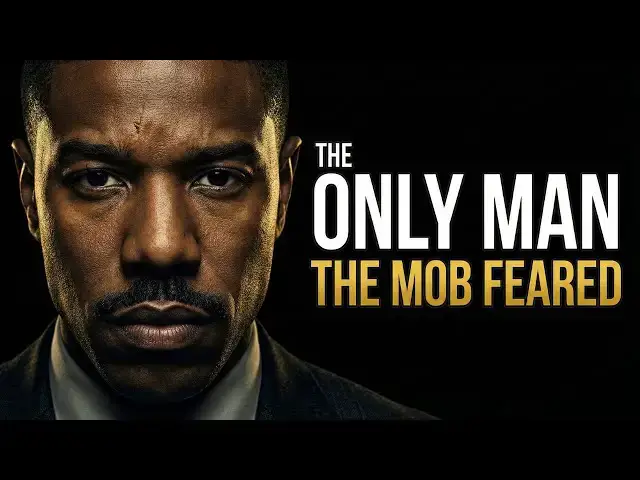
Up next in 10

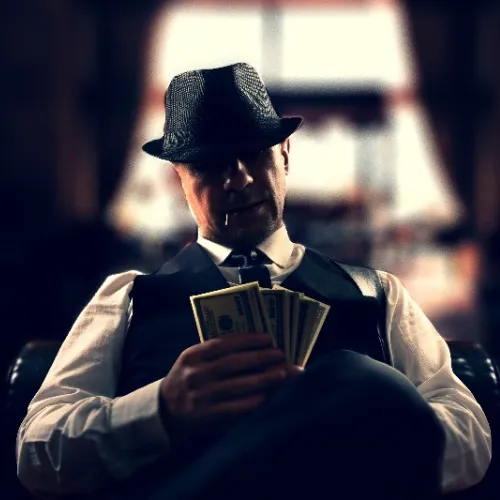
The bullet tore through Dutch Schultz's chest at ten fifteen on October twenty-third, nineteen thirty-five. Six blocks north, in a Harlem brownstone, a Black man answered the telephone. He listened for three seconds. Then he smiled.
The Italian Mafia had just executed one of their own. Because a Black man asked them to.
This is the untold story of Ellsworth Raymond Johnson. The Godfather of Harlem. The only Black man in American history who made the Five Families treat him as an equal. An empire worth two hundred million dollars. An alliance so impossible that the FBI refused to believe it existed for thirty years.
Based on declassified FBI surveillance files, court transcripts, and testimonies from survivors who are no longer alive to protect old secrets. Certain conversations have been dramatically reconstructed from documented outcomes.
Bumpy Johnson. Harlem Godfather. Lucky Luciano. Dutch Schultz assassination. Stephanie Saint Clair. Genovese crime family. Five Families alliance. Numbers racket. Nineteen thirties organized crime. Black gangster history. Mafia documentary.
If the hidden architecture of American power fascinates you, subscribe now. The next secret we uncover might change everything you thought you knew.
-~-~~-~~~-~~-~--~-~~-~~~-~~-~--~-~~-~~~-~~-~-
⚠️ Content Disclaimer:
This video is created for educational and informational purposes only. We do NOT glorify, promote, or encourage any form of criminal activity.
All visuals, audio, and materials used in this video are either:
✔ Created using AI tools, or
✔ Sourced from royalty-free platforms with valid licenses.
Some images and characters have been generated using AI and do not represent real people or events.
No copyrighted content belonging to others has been used without permission.
Show More Show Less View Video Transcript
0:00
Five bullets entered Dutch Schultz's body at 10:15 on the night of October
0:05
23rd before he collapsed onto the bathroom floor of the palace chop house
0:10
in Newark. Before his blood began pooling on the tile, the most violent
0:16
gangster in New York was already a dead man. He just did not know it yet. Six
0:23
blocks north in a Harlem brownstone that smelled of French perfume and old money,
0:30
a black man picked up a telephone. He listened for exactly 3 seconds. Then
0:36
he did something that nobody in the room had ever seen him do before.
0:42
is the Italian mafia had just executed one of their own and they had done it
0:48
because a black man from South Carolina asked them to. This is the story of the
0:54
most impossible alliance in organized crime history. The story of how
0:59
Ellsworth, Raymond Johnson, a man the streets called Bumpy, made the five
1:05
families of New York treat him as an equal. How he built an empire worth over
1:10
$200 million in territory they considered their divine right. How he
1:16
survived for 40 years in a world where black men were supposed to know their
1:21
place and die in Italiano. What you are about to hear is drawn from court
1:28
records, FBI surveillance files and the testimonies of men and women who are no
1:33
longer alive to protect old secrets. Some conversations have been reconstructed from documented outcomes.
1:41
But the truth at the center of this story is not speculation.
1:46
It is not legend. It is exposed, documented, undeniable.
1:52
[Music] And it begins with a woman. Stephanie Stlair arrived in New York from the
1:58
French Caribbean island of Martineique in 1912 with nothing but an accent that could cut glass and a fury that matched.
2:06
By 1929, she controlled the largest numbers operation in Harlem.
2:12
40 runners worked her streets. 12 police officers cashed her envelope. More than
2:19
$250,000 moved through her hands every year. They
2:24
called her Madame Queen.
2:30
And when she walked down Sugar Hill, where the black elite kept their brownstones, doctors and lawyers paused
2:37
mid conversation just to watch her pass. But there was something about Stephanie
2:42
St. Clair that the history books rarely mention. A secret that would not surface
2:48
until decades after her death. She saw something in a young man with scarred
2:53
knuckles and hungry eyes that nobody else could see. something that terrified
2:59
her and something that she could not resist. Ellsworth Raymond Johnson was
3:04
born in 1895 in Charleston, South Carolina in a wooden shack with gaps in
3:11
the walls. His father worked the docks until his back gave out. His mother cleaned houses
3:18
for white families who paid her in loose change and cold silence. By 10, he
3:24
understood a truth that most men never learn. Power is never given. It is
3:31
taken. He arrived in New York in 1919. A 24year-old with a single suitcase and
3:39
a rage burning so deep it would take 40 years to cool. Penn Station swallowed
3:45
him whole. That cathedral of steel and steam and rushing bodies. And somewhere
3:52
in the chaos, something shifted inside his chest. This was the city where he
3:58
would build his throne or die with his hands around someone's throat. For his
4:03
first 5 years in Harlem, Bumpy did what young men with no money and too much
4:09
pride always do. He fought. He stole. He ran with crews that robbed and beat and
4:17
occasionally killed. The scar above his left eyebrow came from a knife fight
4:22
when he was 17. The man who gave it to him did not survive long enough to regret it. But Bumpy was not a common
4:30
street thug. Behind the violence lived a calculating mind. He watched everything. He
4:38
remembered everyone. He learned the geography of power in Harlem with the precision of a cgrapher mapping
4:46
unexplored territory. And one night in the spring of 1929,
4:51
Stephanie St. Clair noticed him. He was standing outside the Lennox Lounge, watching the entrance,
4:58
not drinking, not talking, just watching. His eyes moved like cameras,
5:05
tracking who entered, who left, who spoke to whom, and for how long. She
5:12
stopped walking. Then she sent one of her men to bring him inside. Later, she
5:17
would tell associates that she saw something in his stillness that night. Not just intelligence,
5:24
not just ambition, something rarer. Patience. Within 6 months of that
5:32
meeting, Bumpy Johnson had transformed her weakest territory into her most
5:37
profitable. Within a year, he was collecting more than any runner except
5:43
St. Clare herself. Within 2 years, he was the person she trusted to handle
5:48
problems that no one else could handle. Problems that required permanent
5:54
solutions. But there was something Stephanie did not know. something that
6:00
would not become clear until the bullets started flying and the bodies started
6:06
falling. Bumpy was not just building an operation. He was studying one.
6:12
Every day he spent in her organization. He was learning how she bribed the
6:18
police. How she structured the money. How she negotiated with the Italians who
6:24
controlled everything south of 110th Street. He was preparing for a war that
6:30
had not started yet. A war he could already see coming. His name was Arthur
6:35
Flegenheimer, but he called himself Dutch Schultz because it sounded harder than his birth name. It was Jewish born
6:43
in the Bronx, and he had clawed through prohibition bootlegging with a trail of
6:49
bodies behind him. By 1931, he controlled beer distribution across
6:55
half the city. He had survived six assassination attempts. He was worth $7
7:03
million. And he had just discovered how much money flowed through Harlem's
7:08
numbers racket. $20 million a year from three-digit dreams and penny bits and
7:15
the desperate hope of people who had nothing else to believe in. Dutch Schulz wanted it all. He did not
7:23
send negotiators. He did not make polite offers. He sent men with shotguns and
7:29
baseball bats who made one simple offer to every numbers runner they found.
7:35
Work for the Dutchman or bleed. Within 8 weeks, terror gripped Harlem. Runners
7:43
who had worked for St. Clair for years appeared with broken fingers and swollen
7:48
faces, whispering that they had no choice. The money flow stuttered. The
7:55
operation began crumbling from the edges inward. Stephanie Sinclair fought back
8:01
the only way she knew how. She took out advertisements in black newspapers
8:06
exposing police corruption. She filed lawsuits. She held press
8:12
conferences denouncing the white gangster invasion of black Harlem. It was not enough. By summer of 1932, she
8:20
had lost nearly half her operation. Her runners were terrified. Her police
8:27
contacts were being outbid by Schultz's deeper pockets. For the first time in
8:32
her career, Stephanie St. Clare was losing. And that is when Bumpy Johnson
8:38
asked a question that no one else had the courage to ask. "Why are we fighting this war alone?"
8:45
She stared at him. They were alone, black gangsters in a
8:50
world dominated by Italians. Who would possibly help them?
8:56
Bumpy smiled. The Italians, he said. The five families. The room went silent.
9:04
The idea seemed insane. The Italian mafia had no interest in helping black
9:10
gangsters. They tolerated Harlem's independence only because taking it
9:16
would cost more than it was worth. But Bumpy had been watching,
9:22
listening, learning, and he had noticed something that nobody else had seen.
9:28
Dutch Schulz was a problem for everyone. He was loud when silence was survival.
9:36
He was violent when violence drew attention. He had recently threatened to assassinate Thomas Dwey, the federal
9:43
prosecutor building cases against organized crime across New York. If Schultz killed a federal prosecutor, the
9:51
weight of the entire American government would crash down on every criminal
9:56
organization in the city. The Italians knew this. The commission was already
10:03
discussing what to do about their uncontrollable colleague. Bumpy proposed to give them a reason.
10:10
What happened in that first meeting between Bumpy Johnson and representatives of the Luciano
10:16
organization was buried for decades in classified files and the silence of men
10:22
who took their secrets to the grave. But the outcome was documented. 3 weeks
10:27
after Bumpy made his proposal, an envelope arrived at Stephanie St. Clair's brownstone. Inside was a single
10:36
playing card, the ace of spades. The Italians had agreed. Dutch Schultz
10:45
had to die. And a black man from South Carolina had just become the architect
10:51
of his execution. But the assassination of Dutch Schultz would only be the
10:56
beginning. Because what Bumpy asked for in return in the smoke-filled back room
11:01
of a restaurant where blood had been spilled before and would be spilled again would shock every man at the
11:08
table. He did not ask for money. He did not ask for territory. He did not ask
11:14
for soldiers or weapons or protection. He asked for something they had never given any black man in American history.
11:23
Equality. and the price of that request would be paid in blood for the next 30
11:29
years. Bump Johnson proposed an unprecedented alliance with the Italian
11:35
mafia, offering to orchestrate the justification for Dutch Schultz's execution. The five families sent back
11:42
the Ace of Spades, the death card. They had agreed. Now Bumpy must deliver his
11:49
end of the bargain and negotiate something no black man in America had ever received. Equality at the table of
11:57
power. The assassination was a symphony of violence. October 23rd, 19105 in the
12:06
evening. The Palace Chop House in Newark, New
12:11
Jersey, Dutch Schulz walked in with three of his most trusted men. Otto
12:17
Burman, his accountant, who knew where every dollar lived and died. A Blandar,
12:23
his bodyguard, who had killed 11 men. Barnar Rosen Crrance's driver, who never
12:29
asked questions. They ordered stakes. They talked about money. They had no
12:35
idea that two men were already waiting in a stolen car outside, checking their
12:40
revolvers one final time. Charlie Workman and Emanuel Weiss,
12:46
not Italian, Jewish, members of what history would call
12:52
Murder Incorporated. The commission had chosen them precisely because they could
12:58
not be traced back to the five families. At 10:15, workmen walked through the
13:03
front door. Weiss came through the back. They did not announce themselves. They did not
13:10
hesitate. Workman found Dutch Schultz alone in the bathroom washing his hands.
13:17
The most feared gangster in New York was scrubbing his knuckles when the first bullet punched through his chest. He
13:24
stumbled backward against the wall. Two more bullets followed. He slid to the
13:30
floor. Still conscious, still unable to believe what was happening to him. In
13:36
the dining room, Weiss opened fire on the three associates. Otto Burman took
13:42
four bullets and collapsed across the table, his blood pooling with the
13:48
spilled wine. A Blanda caught two in the chest, but somehow drew his weapon
13:53
before a third shot dropped him. Bernard Rosenrance absorbed seven bullets and
13:58
still staggered toward the door before his legs finally failed. All four men
14:04
would die, but not immediately. Dutch Schultz was rushed to New York City
14:10
hospital. For 22 hours, he drifted between consciousness and delirium,
14:16
babbling fragments that made no sense. Detectives sat by his bed with
14:22
notebooks, hoping for a confession. Instead, they got poetry. A boy has
14:29
never wept nor dashed a thousand Kim. Those were among his final words.
14:37
Nobody ever understood what they meant. Nobody ever will. He died at 8:35 on the
14:44
evening of October 24th, 19. He was 33 years old. And in Harland, six blocks
14:53
from where Dutch Schulz had once threatened to burn every black business to the ground, Bumpy Johnson received a
15:01
telephone call. Three seconds of listening, then the smile.
15:07
The war with Schultz was over. But for Bumpy, the real negotiation was about to
15:14
begin. The meeting took place 3 weeks later, December of 1935.
15:21
The location has been disputed for decades. Some said Rouse on Pleasant Avenue. Others claimed a social club on
15:29
Malbury Street. A few insisted it happened in a suite at the Waldorf neutral ground where no blood had ever
15:35
been spilled. What every source agrees on is who was in the room. Bumpy Johnson
15:42
arrived alone. He wore his best suit, charcoal gray, double- breasted,
15:48
tailored on 125th Street by a Jamaican immigrant who had once dressed Marcus
15:54
Garvey. His shoes were polished to a mirror shine. His tie was burgundy silt,
16:01
knotted with mathematical precision. He carried no weapon. Walking into a
16:08
room full of men who had just demonstrated their willingness to execute one of their own, Bumpy Johnson
16:15
chose to arrive unarmed. It was either an act of supreme confidence or suicidal
16:21
stupidity. With Bumpy, history would prove it was always the former.
16:28
Three men waited inside. Frank Costello sat at the head of the table. They
16:34
called him the prime minister because he preferred bribery to believe. He controlled more judges and politicians
16:40
than any gangster in American history. His voice was quiet. His eyes missed
16:47
nothing. Veto Janeavius sat to his right. Unlike
16:53
Costeo, Janeaves loved violence the way some men love music. He had killed with
16:59
his bare hands and was rumored to have smiled while doing it. The third man was
17:04
not physically present. His voice came through a telephone placed at the center
17:09
of the table, the black cord snaking across white linen like something
17:15
poisonous. Charos Luciano and Lucky Luciano, the most powerful
17:21
criminal in America. Lucky was hiding in Hot Springs, Arkansas, evading Thomas
17:28
Dwiey's prosecutors. But he never missed an important meeting. And this meeting would
17:34
determine the future of organized crime in New York. For a long moment, nobody
17:40
spoke. The espresso sat untouched on the table. The steam had stopped rising.
17:47
Even the clock on the wall seemed to hold its breath. Then Ly's voice
17:52
crackled through the telephone line. You got guts coming here alone? Bumpy did
17:58
not smile. He did not blink. He simply nodded as if this observation was
18:05
beneath response. I came to talk business. Business does not require an
18:12
army. Costello and Genevies exchanged glances.
18:17
This was not how men spoke to them. This was not how anyone spoke to them. But
18:22
there was something in Bumpy's stillness that demanded a different kind of respect.
18:28
Lucky laughed. A warm sound almost friendly.
18:35
Tell me what you want. And here is where Bumpy Johnson proved that he was not
18:40
simply a gangster with good instincts. He was a strategist operating on a level
18:45
that most criminals never reach. He did not ask for money. He did not ask for a
18:52
percentage of Italian operations. He did not ask for soldiers or weapons or
18:57
protection from future threats. He asked for independence. Harlem, he explained,
19:04
was different from the rest of New York. It had its own economy, its own culture,
19:11
its own rules that outsiders would never fully understand. The Italian mob could
19:17
never truly control it not without an investment of blood and money that would far exceed any return. Dutch Schultz had
19:24
tried and failed. Anyone else who tried would fail the
19:30
same way, but partnership, Bumpy said, was another matter entirely. He proposed
19:37
a simple arrangement. Harlem would remain under black control. The numbers
19:43
racket, the nightclubs, the policy banks, the protection operations, all of
19:49
it run by Harlem people for Harlem people. In exchange, the Italians would
19:55
receive 15% of all numbers, profits, paid monthly in cash,
20:03
delivered personally by Bumpy Johnson himself. They would also receive first
20:08
refusal on any business that crossed the boundary between Harlem and downtown Manhattan. Anything that required
20:15
cooperation between the two worlds would be negotiated fairly.
20:21
between equals. The word hung in the air like smoke. Castello's eyebrows rose slightly.
20:28
Jane's jaw tightened with something that looked like anger. Through the
20:33
telephone, there was only silence. Bumpy whitered. He had learned that the first
20:40
man to speak after making a proposal has already lost. So he sat in perfect
20:47
stillness and let the seconds stretch into what felt like hours. Then Lucky
20:53
Lutano spoke. 15% is acceptable, but I want something
20:59
else. Name it. Loyalty. When we need something done in Harlem,
21:06
you do it. No questions, no hesitation. You become our man,
21:14
Uptown. And if what you need conflicts with Harlem's interests,
21:21
another pause. The telephone line crackled with static, then we discuss it
21:27
like partners. The handshake that followed Bumpy Johnson's hand, clasping
21:32
Frank Costello's across white linen, sealed an arrangement that would last
21:37
nearly three decades. It was not friendship. It was not trust. It was mutual
21:44
advantage. The most durable currency in the criminal world. But Veto Genovis did not
21:52
shake Bumpy's hand. He sat motionless. His dark eyes following Bumpy as he rose
21:59
to leave. Later that night, according to testimony that would emerge decades
22:04
afterward, Genev said five words to Frank Costello. He will regret this day.
22:12
Bumpy Johnson walked out of that restaurant at 11:47 on a Tuesday night.
22:18
He was now the unofficial ambassador between Black Harlem and the Italian underworld. The only black man in
22:25
America who could telephone Lucky Luciano and expect an answer. But what
22:30
he did with that power would surprise everyone who thought they understood him. The first thing Bumpy did was not
22:38
consolidate control. It was not eliminate rivals. It was not expound
22:43
territory. The first thing he did was call a meeting. Not with his crew. Not
22:50
with Stephanie St. Clair, though she would hear about it soon enough. He called together every significant
22:57
operator in Harlem. They gathered in the basement of the Lennox Lounge on 125th
23:03
Street. 47 men and women sitting in folding chairs watching the man who had
23:09
just negotiated their survival. Numbers bankers, club owners, policy runners, lone
23:17
sharks, fences who moved stolen goods, madams who ran houses that catered to every
23:25
taste, anyone who made their living outside the law and inside Harlem's
23:31
borders. Bumpy stood at the front of the room. He did not raise his voice. The
23:37
war is over. Dutch Schultz is dead. The Italians have agreed to leave us alone.
23:44
A murmur swept through the crowd. Relief,
23:49
disbelief, hope, but there are conditions. The room
23:55
went silent. First, no more wars between ourselves. Any
24:02
dispute comes to me before it becomes violence. Anyone who starts bloodshed
24:07
without my permission answers to me personally. He paused, letting them
24:12
imagine what that might mean. Second, we pay tribute. 15% of numbers
24:19
profits go downtown every month on time without complaint. This is the price of
24:27
peace. Anyone who does not pay puts everyone at risk.
24:33
Third, we protect our own. Any outsider who tries to move into Harlem, we handle
24:40
it together. He looked around the room, meeting every pair of eyes. Anyone with
24:47
a problem should speak now. Nobody spoke. From that night forward,
24:54
Bumpy Johnson was the unofficial mayor of Harlem. the Godfather. But he
25:00
understood something that would make his reign different from any that came before. Power maintained through fear
25:07
alone eventually collapses. Subjects grow resentful.
25:12
Enforcers grow ambitious. The structure rots from within. Power
25:18
maintained through loyalty lasts. And loyalty must be earned. So Bumpy
25:26
began earning it. He paid rent for families facing eviction. Not publicly,
25:33
quietly. An envelope under a door. A landlord
25:39
suddenly discovering that back payments had been made by an anonymous benefactor. He funded scholarships for
25:45
Harlem children to attend college. He contributed to church building funds. He
25:51
paid for funerals when families had nothing. Every week he walked the
25:57
streets alone. He knew shopkeepers by name. He knew their children's names. He knew
26:04
who was sick and struggling. And he remembered when they needed help, help
26:10
arrived. The community began seeing him differently.
26:15
Not as a criminal, not as a gangster, as a protector.
26:20
Was it calculated? Absolutely. Was it genuine? That was the question
26:26
that haunted everyone who tried to understand Bumpy Johnson. But the answer
26:31
became clear in what he did next. By 1938, his empire was generating over $2
26:38
million annually. His nightclubs hosted the greatest jazz musicians in America.
26:44
His protection operation kept peace in a neighborhood that had known only chaos.
26:50
The Italians received their 15% delivered personally on the first Monday of every month.
26:57
The arrangement ran smoothly. The commission was satisfied.
27:02
Harlon prospered and then veto govies made his move. It started with a
27:08
shipment of heroin 2 kg worth perhaps $50,000
27:15
on the street. Moving through Harlem from Long Island City to Bayas in the Bronx, the shipment vanished.
27:23
Genevies sent a message, not a letter, not a telephone call.
27:30
A body, one of Bumpy's runners, was found in an alley behind the Apollo
27:35
Theater. His throat had been cut. His tongue had been removed. In his pocket
27:42
was a note with a single word written in Italian.
27:47
Ladro thief. Bumpy understood immediately. Genevies was not accusing
27:54
him of stealing the shipment. He was manufacturing a pretext,
27:59
creating justification for what was coming. But before Bumpy
28:04
could respond, before the war that Genevies wanted could fully ignite,
28:10
something unexpected happened. Kenoban [Music] Ferdnan Belcha was a smalltime Italian
28:18
hood who had helped Genevies rig a card game years earlier. The game netted over
28:23
$150,000. Boia wanted his share.
28:28
Genevies decided killing him was cheaper than paying. The murder was sloppy.
28:34
There were witnesses. One was willing to talk. Facing state
28:39
murder charges that his political connections could not make disappear.
28:44
Veto Genevies boarded a ship for Italy in June of 19. He would spend the next 8
28:50
years there. Cozying up to Mussolini's fascist government, waiting for the heat
28:56
to die down. The pressure on Harlem evaporated overnight. Frank Costello assumed full
29:03
control of what would later be called the Genevese family. And Costello,
29:09
unlike his predecessor, cared about one thing only, money. The alliance held. For the next 7
29:17
years, from 1938 to 1945, Bumpy Johnson presided over the golden
29:25
age of his empire. The war brought money to black communities, defense jobs,
29:32
military pay. People who had survived on pennies suddenly had dollars to spend
29:38
and they spent them in Harlem. The numbers racket exploded.
29:44
The clubs packed every night. Jazz legends played two standing room crowds
29:50
while Bumpy sat in reserved booths watching over his kingdom. He married in
29:55
1948. Elegant, educated, cultured, she read poetry and collected art and hosted
30:03
dinner parties where gangsters discussed philosophy with Harlem Renaissance writers. She knew exactly what he was.
30:11
She loved him anyway. They had a daughter,
30:17
Elise. She would grow up on Sugar Hill, surrounded by books and music, shielded
30:24
as much as possible from her father's other life. Bumpy tried to be a good
30:29
father. He tried to give her the childhood he never had. But there were nights when he came home with blood on
30:36
his shirt that he tried to hide. Mornings when he left before dawn for meetings that could not wait. The life
30:43
had chosen him before he could choose differently. And once chosen, it could
30:48
not be unchosen. But the golden age was about to end. In
30:54
1945, World War II concluded. American soldiers came home and so did
31:01
VTO Genevies. He returned with a full pardon, having provided intelligence to
31:07
American forces during the liberation of Italy. The murder witnesses had recanted
31:12
or vanished. The path was clear, and he had not forgotten Harlem. He had not
31:19
forgotten the black man who had spoken to him as an equal. For 8 years, he had
31:25
nursed that memory like a wound that refused to heal. Now he was ready to
31:30
reopen it. The attack came not with guns, but with poison. Genevies had
31:36
built connections during his Italian exile. Corsican smugglers, Turkish poppy
31:43
fields, supply chains that could flood New York with cheap, powerful heroin in
31:48
quantities the city had never seen. He began pushing this product through Harlem.
31:55
Without Bumpy's permission, without tribute, without any
32:00
acknowledgment that boundaries existed, young men and women became addicts.
32:07
Families shattered. The community that had survived the depression and the war began consuming itself from the inside.
32:15
Bumpy faced an impossible choice. Fight a war against the Italian mob that he
32:21
could not win. Surrender and watch addiction ravage his people while Italian pockets grew fat or find a third
32:29
path that nobody expected. He chose the third path. And what he did
32:36
next would cost him 10 years of his life. But it would also prove once and
32:41
for all that Bumpy Johnson was willing to sacrifice everything for the community he had sworn to protect, even
32:49
his freedom. Bumpy Johnson secured an unprecedented alliance with the five
32:55
families and presided over Harlem's golden age for nearly a decade. But Veto
33:01
Jane's returned from Italian exile with a grudge and a weapon more destructive than bullets heroin. Faced with watching
33:09
his community poison itself or fighting a war he could not win, Bumpy chose a
33:15
third path, one that would cost him everything. He became an informant.
33:23
Not for money, not for protection, not to betray his own people,
33:30
for strategy. In 1952, Bumpy Johnson began feeding information
33:36
to federal narcotics agents about Italian heroine operations moving
33:41
through Harlem. names, dates, locations,
33:48
enough to disrupt Geneviesa's distribution network. Enough to cause
33:53
chaos downtown, never enough to implicate himself. At the same time, he
33:59
did something unprecedented for a man in his position. He publicly declared war
34:05
on heroin. He banned anyone in his organization from touching it. He made
34:10
it known on every corner in Harlem that drugs were poison, that anyone who sold
34:15
them was betraying their community, that the white powder flooding the streets
34:21
came from downtown. From Italians who saw black neighborhoods as nothing more
34:26
than a market to be exploited and discarded. It was a calculated move,
34:31
brilliant in its simplicity. If he could not stop the heroine, he could at least
34:37
control the narrative. He could ensure that when the destruction came and it was coming, he knew that the fingers
34:44
would point south toward Little Italy. Not at Bumpy Johnson. For 3 years, the
34:53
strategy worked. Federal raids disrupted Genevies's Harlem operations. Italian
35:00
dealers were arrested. Supply chains fractured. The flood of heroin slowed to a trickle. Bumpy had
35:08
found a way to fight the Italian mob without firing a single shot. But he had
35:13
underestimated Veto Janevis. He had underestimated how deep the hatred ran.
35:20
How patient a man could be when revenge was the only thing keeping him alive. In
35:25
1953, federal agents arrived at Bumpy Johnson's home with an arrest warrant.
35:32
The charge was narcotics trafficking. The evidence was p testimony from
35:38
informants who had clearly been coached, documents that appeared to conveniently
35:44
witnesses who changed their stories depending on who was asking. The case smelled wrong from the beginning.
35:51
Prosecutors who reviewed it years later would call it one of the most obviously manufactured indictments of the era. But
35:58
in 1950s, America, a black man accused of drug trafficking, did not receive the
36:05
benefit of the doubt. The trial lasted 3 weeks. The jury deliberated for 4 hours.
36:13
Guilty. The judge sentenced Bumpy Johnson to 15 years in federal prison.
36:20
They took him first to the Federal Correctional Institution in Atlanta, then to Alcatraz, the Island Fortress in
36:28
San Francisco Bay, where they sent the men they wanted the world to forget,
36:33
finally to Levvenworth. For 10 years, Ellsworth Raymond Johnson, the godfather
36:40
of Harlem, the man who had made the Italian mafia treat him as an equal ratted in federal custody. And while he
36:48
was gone, everything he had built was destroyed. The heroine that Bumpy had
36:54
fought so hard to keep out flooded Harlem like a biblical plague. Addiction
37:00
rates quadrupled within 5 years. Crime exploded. The jazz clubs that had once
37:07
drawn visitors from around the world began closing their doors. The brownstones on Sugar Hill that had
37:14
housed doctors and lawyers and poets started housing dealers and addicts and ghosts.
37:20
The Harlem Renaissance was over. The Harlem nightmare had begun. Stephanie
37:26
St. Clair watched it happen. She was in her 70s now, retired from the numbers
37:32
game, living quietly in a brownstone she had purchased with money from an empire
37:37
that no longer existed. She had tried to hold things together after Bumpy's arrest. She had called in favors. She
37:45
had reached out to old contacts. But she was too old.
37:51
The world had changed too much. And without Bumpy's particular genius for
37:56
navigating between worlds, the alliance with the Italians collapsed. The tribute
38:02
payments stopped. The boundaries dissolved. Harlem became
38:08
territory to be exploited rather than respected. Genevies had won not through strength,
38:16
not through direct confrontation, through patience, through poison, through the systematic
38:24
destruction of everything Bumpy Johnson had spent 20 years building. When Bumpy
38:30
finally walked out of Levvenworth in 1963, he was 68 years old. His hair had gone
38:37
completely gray. His body carried the weight of a decade behind bars. The
38:42
suits that had once fit him perfectly now hung loose on a frame that had grown thin and tired. He had missed his
38:50
daughter's childhood. He had missed his community's destruction. He had missed
38:56
the funerals of men who had been his brothers. But worse than what he had missed was what he now had to see. The
39:03
Harlem he returned to was unrecognizable. The Cotton Club was
39:08
closed. The Seavoy Ballroom was closed. The Linux Lounge, where he had once held
39:15
Corabback booth, where kings and poets had sought his council, was half haunted
39:20
by the ghosts of better years. The streets that had hummed with jazz and
39:26
possibility now echoed with different sounds. The shuffling feet of addicts
39:32
searching for their next fix. The crying of children whose parents had
39:37
disappeared into the fog of heroin. The silence of Brownstones where families
39:43
used to live. Bumpy stood on the corner of 125th Street and Lennox Avenue, the
39:49
crossroads of black America, and he wept. According to those who were there,
39:54
it was the only time anyone ever saw him cry. But Bumpy Johnson was not finished.
40:00
He was 68 years old. His empire was ashes. His enemies had
40:07
won. Any reasonable man would have retired quietly and waited for death.
40:13
Bumpy was not a reasonable man. He began rebuilding. Smaller than before.
40:21
More careful, he gathered the men who had remained loyal through the prison years. And there were some, a handful,
40:29
who had never forgotten what he had done for them. He focused on protection and
40:35
gambling. Clean operations, nothing that touched the heroine trade that had destroyed so
40:42
much. He established new boundaries, not through violence.
40:47
was too old for that now. But through respect, through the weight of his reputation, through the memory of what
40:55
he had been, and the promise of what he might still become, and remarkably,
41:01
impossibly, it began to work. By 1965,
41:06
Bumpy Johnson had carved out a small but stable operation in the New Harlem. Not
41:12
an empire, not a kingdom, just a corner of the world where his word still meant
41:19
something. But something else was happening in Harlem. Something that would define the last years of his life.
41:27
The civil rights movement had arrived. Young men and women were marching. They
41:33
were demanding. They were refusing to accept the limitations that America had
41:39
tried to impose on black lives. And they were being led by men whose names would
41:45
become legend. Malcolm X spoke on street corners in Harlem. His voice carrying
41:51
across crowds of thousands. Adam Clayton Powell Jr. fought in Congress for
41:56
legislation that would change American law. Young activists from SNCC and core
42:02
organized voter registration drives in neighborhoods were Bumpy had once organized something very different. They
42:10
were fighting for what Bumpy had spent his life pursuing through other means.
42:16
Power, respect, the right to exist on their own terms.
42:22
Bumpy watched this new generation with something that witnesses described as
42:27
wonder. He met with Malcolm X on several occasions. The specifics of their
42:33
conversations were never recorded. Both men were too careful for that. But those
42:39
who glimpsed them together spoke of mutual respect.
42:44
The revolutionary and the gangster, the preacher of radical change and the
42:49
architect of criminal empire. They were more alike than either would have publicly admitted. Both understood that
42:57
power in America was never given freely. Both knew that sometimes it had to be
43:03
taken by any means necessary. Bumpy contributed money to causes he believed
43:09
in. He provided protection for activists who had been threatened by forces that
43:15
the law refused to confront. He used his connections to the network of relationships he had built over 40 years
43:23
to help when help was needed. Was it redemption? Some have argued that it was
43:29
that in his final years, Bumpy Johnson tried to atone for a lifetime of sin by
43:35
serving a cause greater than himself. Others say it was simply smart politics.
43:41
The world was changing. The old ways were dying. A man who
43:47
wanted to survive had to adapt. Perhaps it was both. Perhaps Bumpy
43:53
Johnson himself did not know where calculation ended and conscience began.
43:59
On Julie Fort, 1968, Bumpy Johnson had dinner at Wells
44:05
Restaurant on 7th Avenue. It was a warm evening, the kind of summer night that
44:11
made Harlem feel alive despite everything that had happened to it. He ordered fried chicken, his favorite
44:18
since childhood. He joked with the waiters who had known him for decades.
44:24
He spoke quietly with old friends who stopped by his table to pay respects.
44:30
He was 73 years old. He had survived longer than any black gangster of his
44:37
generation. He had outlived most of his enemies and too many of his friends. At
44:43
8:47 in the evening, according to the police report, Bumpy Johnson clutched
44:48
his chest. He fell forward onto the table, scattering plates and glasses.
44:54
Heart attack. He was pronounced dead at Harlem Hospital less than an hour later.
45:00
The funeral was held at St. Martin's Episcopal Church on Lennox Avenue.
45:05
Thousands attended. They lined the streets for blocks waiting to pay respects to a man they had called the
45:12
Godfather. Politicians stood beside gangsters in the pews. Police officers who had taken
45:19
his money stood beside activists who had taken his donations. Jazz musicians
45:25
played hymns alongside gospel choirs. Old women who remembered when Bumpy had
45:31
paid their rent wept openly. He was buried at Woodloun Cemetery in the Bronx. His grave lies not far from Duke
45:40
Ellington and Miles Davis. A gangster among artists. There was a poetry in
45:45
that which Bumpy might have appreciated. So what do we learn from the life of Ellsworth Raymond Johnson?
45:54
Perhaps this that power in America has always been about negotiation, about
45:59
understanding what you have that others need, about finding leverage where
46:05
others see only walls. Bumpy Johnson had no generational wealth, no political
46:12
connections, no army. He had nothing but his mind, his courage, and an absolute refusal to
46:20
accept the limitations that others tried to impose. With those tools alone, he
46:26
built something unprecedented, an alliance between Black Harlem and the
46:32
Italian mafia that lasted three decades. An empire that generated hundreds of
46:38
millions of dollars. A legacy that still echoes through the streets he once controlled.
46:45
Was he a criminal? Yes. Yes. A worthy people. He ordered
46:52
violence. He profited from vice and human weakness. He was not a hero in any
46:58
simple sense of the word, but he was something else as well. He was a man who
47:03
understood that in a world where black lives were considered worthless, power was the only protection. He was a man
47:11
who used that power not just for himself, but for a community that had no
47:16
one else. He was a man who in his own way fought for something larger than
47:22
personal gain. The Harlem he left behind never fully recovered from the heroin
47:28
epidemic that ravaged it in the 1960s and '7s. That destruction was not his
47:34
fault. He had fought against it, sacrificed his freedom, trying to prevent it, but it happened nonetheless.
47:41
Yet the memory of what Harlem was in those golden years when Bumpy sat in his
47:47
booth at the Lennox Lounge and the jazz played until dawn and the numbers
47:52
runners walked their roots without fear that memories survived. It survives
47:58
still in the stories told by old men on street corners who remember when 125th
48:04
Street belonged to them. in the photographs that surface in estate sales
48:10
showing elegant men and women outside clubs that no longer exist. In
48:15
documentaries like this one, which try to capture something of what it meant to be Bumpy Johnson, the godfather of
48:23
Harlem, the man who made the Italian mafia bow. The next time you walk through Harlem, if you'd ever find
48:30
yourself on those streets where history happened, look up at the brownstones on Sugar Hill. Imagine the lights burning
48:38
in 1930. Imagine a young man in a perfect suit climbing those stairs, an
48:43
envelope in his pocket, an empire in his mind. Imagine what it took to build
48:49
something from nothing in a world designed to crush you. And remember his
48:54
name because Harlem certainly does. If this story moved you, if you felt the
49:01
weight of that history pressing against your chest, then you understand why we
49:06
do this. This is not entertainment. Tease is memory. This is bearing witness
49:13
to lives that mainstream history tried to erase. Two empires that rose and fell
49:20
in shadows. To men and women who built worlds with their hands and watched
49:26
those worlds burn, there are more stories waiting to be told. More secrets
49:32
buried in unmarked graves. More kings and queens of the underworld whose names
49:38
deserve to be spoken aloud. The next story we tell might change everything you think you know about power in
49:44
America. Subscribe now. Join us. Because the
49:50
truth is always darker than the legend. And the legend of Bumpy Johnson was just
49:56
the beginning. Until next time, remember what he taught us. Power is never given.
50:04
It is taken. This has been Global Mafia Universe and the shadows are just
50:10
getting started.