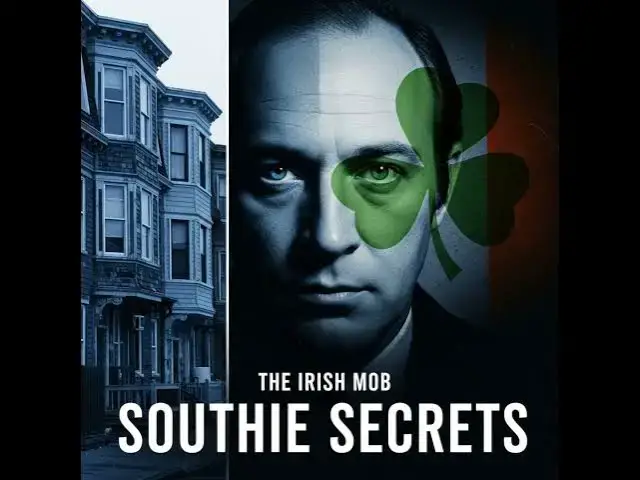
Up next in 10

The FBI gave him permission to kill—and he murdered at least
nineteen people while on their payroll.
This is the complete origin story of the Irish Mob in South
Boston. From the Famine refugees who built a fortress
neighborhood in the 1840s, through the bootlegging wars of
Prohibition, to the bloody rise of James Whitey Bulger and
his unprecedented partnership with corrupt federal agents—
this episode exposes how one square mile of Boston created
a criminal culture that would corrupt American law enforcement
at its highest levels.
Inside this episode, you'll discover:
☘️ The 1931 ambush that killed the "King of the Irish" and
handed Boston to the Italian Mafia for forty years
☘️ The Killeen-Mullen War's true body count—and who was
secretly manipulating both sides
Show More Show Less View Video Transcript
0:00
All right, welcome back to the vault,
0:02
everyone. Today, we're not just opening
0:04
it, we're prying it wide open. Winter
0:07
1930. Picture this. A frozen corpse
0:11
slumped behind a warehouse in Souy.
0:13
Three bullet wounds, steam still rising
0:16
from them in the cold. In his pockets,
0:19
47 cents and an address on West
0:21
Broadway. His name was Danny O'Brien.
0:24
His crime, talking to the wrong people
0:27
about the wrong business. His killers
0:30
never saw a courtroom. This was South
0:33
Boston justice. This was the Irish mob
0:36
announcing its presence.
0:38
It's such a stark image, isn't it? When
0:41
most people think American organized
0:43
crime, they immediately jump to the
0:44
Italians in pinstriped suits, Sicilian
0:47
accents, the Godfather. But honestly,
0:49
that's forgetting a huge part of the
0:51
story. And a lot of people forget who
0:53
really came first.
0:55
Absolutely. Before Lucky Luciano
0:58
reorganized the five families, before Al
1:00
Capone ever ruled Chicago, the Irish
1:03
were running rackets in pretty much
1:05
every major American city. They laid the
1:08
groundwork. They wrote the rules in
1:10
blood. And nowhere, I mean nowhere, did
1:13
they write those rules more brutally
1:15
than in the cramped, desperate streets
1:17
of South Boston.
1:19
Souy, just one square mile of triple-
1:21
decker houses, Catholic churches, and
1:24
generational poverty. A place where
1:26
everyone knew everyone else's business,
1:28
but nobody ever ever talked to cops.
1:31
Loyalty meant everything. Betrayal meant
1:34
death. This tiny patch of Boston
1:36
waterfront, it produced some of the most
1:39
violent, innovative, and ultimately
1:41
self-destructive criminals in American
1:44
history.
1:45
And it's so crucial to understand what
1:47
made Souy different, right? This wasn't
1:49
just another immigrant enclave. It was
1:52
in a very real sense a fortress
1:54
geographically isolated on this
1:56
peninsula connected to the rest of the
1:58
city by just a handful of bridges and
1:59
roads. Outsiders were spotted instantly.
2:03
Cops from other neighborhoods, they
2:05
didn't patrol here.
2:08
And the people living there, they had
2:10
this deep-seated fight for survival.
2:13
Their ancestors arrived in the 1840s
2:16
and50s fleeing the great famine in
2:18
Ireland. They were refugees from, let's
2:21
call it what it was, genocide. British
2:25
policies turned a potato blight into
2:27
mass starvation. A million dead, another
2:30
million fled on what they called coffin
2:32
ships.
2:34
Yeah. And those who survived found
2:35
themselves despised, exploited,
2:38
excluded. No Irish need apply wasn't
2:40
just a slogan. It was policy. That
2:43
prejudice, that's what shaped their
2:45
descendants for generations. It created
2:47
a siege mentality. It was us against
2:50
them, family against the world. And that
2:53
in turn made the criminal organizations
2:56
that emerged from those streets uniquely
2:58
cohesive and uniquely violent.
3:02
So the foundation of this criminal
3:03
culture, it really started with
3:05
desperation and a sense of absolute
3:07
otherness. It wasn't just about making a
3:10
quick buck. It was about survival,
3:12
protection, and carving out a space in a
3:14
world that didn't want them. Exactly.
3:17
And this story, it doesn't even start
3:19
with a gangster. It starts with a
3:21
politician, Patrick Kennedy, who arrived
3:24
in Boston from County Waxford in 1849,
3:27
fleeing the famine like so many others.
3:29
He died young, but his son, Patrick
3:32
Joseph Kennedy, PJ Kennedy, he survived
3:35
to become the first Kennedy dynasty
3:37
builder. And PJ understood something
3:40
fundamental about Irish Boston. Crime
3:42
and politics weren't separate
3:44
enterprises. They were the same
3:46
enterprise just wearing different suits.
3:49
By 1900, the template was set. Saloon
3:52
owners became ward bosses. Ward bosses
3:54
controlled votes. Votes bought police
3:57
protection. Police protection enabled
3:59
gambling, lone sharking, liquor
4:01
distribution. The money flowed upward
4:03
through kickbacks and tributes. The
4:05
protection flowed downward. And anyone,
4:08
I mean anyone, who tried to operate
4:10
outside that system, they weren't just
4:13
arrested. They were crushed.
4:16
This really paints a picture of a
4:18
perfectly integrated, almost
4:19
institutionalized criminal enterprise
4:21
right from the start. It wasn't some
4:23
rogue elements. It was woven into the
4:25
fabric of the community and even its
4:28
governance.
4:28
It's wild how entrenched it became. And
4:31
out of that machinery, the Gustin gang
4:34
emerged as the first true Irish
4:36
organized crime family in Souy. Frank
4:38
Wallace. He led them through the 1920s
4:41
with a mix of charm and brutality that
4:43
earned him the nickname King of the
4:45
Irish. His territory stretched from the
4:48
waterfront warehouses right to the speak
4:50
easys throughout the neighborhood.
4:52
And his revenue streams were classic.
4:54
Bootlegging, gambling, lone sharking,
4:57
labor racketeering on the docks. But
4:59
here's what the official histories often
5:01
miss about Wallace. The man was an
5:03
operational genius. While other
5:05
bootleggers were fighting shootouts over
5:07
smuggling routes, Wallace cornered the
5:09
storage and distribution end of the
5:11
business. He controlled the warehouses
5:13
where Canadian whiskey sat, waiting to
5:15
hit the speak easys. He owned the trucks
5:17
that moved product throughout New
5:19
England. So, he minimized his risk while
5:22
maximizing his reach. His margins might
5:24
have been lower than the smugglers, but
5:26
he was insulated. Let other men get shot
5:28
at by Coast Guard cutters. Wallace
5:30
collected his percentage regardless.
5:33
That's smart business, albeit incredibly
5:35
illicit.
5:36
Absolutely. The Gustin Gang's power
5:38
peaked around 1931. They were pulling in
5:41
an estimated $2 million annually just
5:44
from bootlegging alone. Add another half
5:46
million from gambling, $30,000 from lone
5:49
sharking. Adjusted for inflation, Frank
5:52
Wallace commanded a criminal enterprise
5:54
worth roughly 50 million in today's
5:56
dollars. Not bad for a kid from the
5:59
Triple Deckers. But Wallace made a fatal
6:02
mistake. He got greedy. He started
6:04
musling into Italian territory in the
6:06
North End, encroaching on operations
6:09
controlled by the mafia families that
6:10
would eventually become part of the New
6:12
England Patriarcha organization. The
6:14
Italians warned him. Wallace didn't
6:17
listen.
6:17
And that's often how these things go,
6:19
isn't it? The pursuit of more, pushing
6:21
boundaries until you push too far.
6:24
December 22nd, 1931. Frank Wallace walks
6:27
into a meeting at the CNF importing
6:29
company in the North End, thinking he's
6:31
there to negotiate a territorial
6:33
agreement. His brother and several
6:35
associates are with it.
6:36
What happened next took less than 30
6:38
seconds. Gunfire erupted from concealed
6:41
positions. Wallace took multiple bullets
6:43
to the chest and head. His brother Steve
6:45
was wounded but survived. The king of
6:47
the Irish died on the floor of an import
6:50
company that ironically had never
6:52
imported anything except violence.
6:54
The Gustin gang never recovered. His
6:57
successors just didn't have his
6:58
political connections or his strategic
7:00
vision. Within 5 years, the organization
7:03
had fragmented into smaller neighborhood
7:05
crews, all fighting for the scraps of
7:07
the empire Wallace had built. The
7:09
Italians consolidated their hold on
7:11
major Boston rackets and Souy entered a
7:14
dark period of internal warfare that
7:16
would last for decades. So what filled
7:19
the vacuum wasn't a new single leader
7:21
but chaos. Multiple crews, the Colleen,
7:24
the Mullins, a halfozen smaller outfits
7:27
with names largely lost to history. They
7:29
fought block by block, bar by bar,
7:32
sometimes family by family. Bodies
7:34
appeared in vacant lots. Men disappeared
7:37
and were never found. The Boston police
7:39
counted at least 17 unsolved homicides
7:42
in Souy between 1935 and 1950 that bore
7:46
the signature of organized crime
7:48
violence. The real number was probably
7:50
triple that.
7:51
That's just staggering. It really speaks
7:53
to the absolute lack of external control
7:56
or intervention in the neighborhood like
7:58
a lawless zone within a major city. And
8:00
then the Colleen gang rose to prominence
8:03
in the late60s under Donald Khen, a
8:06
heavy set old school criminal. He
8:08
believed in the traditional Irish way,
8:10
loyalty first, violence when necessary,
8:13
and never ever draw attention. He
8:16
controlled gambling and lone sharking,
8:18
pulling in around $800,000 annually by
8:21
1970.
8:23
But Colleen had a problem, a familiar
8:25
one, a younger generation. They didn't
8:28
respect the old ways. They saw him as
8:30
weak, outdated, unwilling to expand into
8:33
new territories, new rackets. This
8:36
younger faction coalesed around a crew
8:38
called the Mullins, named for a street
8:40
corner where they hung out as teenagers.
8:42
They were hungry, they were violent, and
8:45
they were about to tear Souy apart. And
8:47
this is where some of the most infamous
8:49
names start to surface, isn't it? The
8:51
Mullen gang included people like Patrick
8:53
Knee, Tommy King, Paulie McGonagal, and
8:56
working loosely with them, two brothers
8:58
named William and John Bulier. James
9:01
William Bulier, everyone called him
9:03
Whitey, was already a convicted bank
9:05
robber with federal prison time under
9:07
his belt. He'd done nine years in
9:09
Atlanta in Alcatraz, returning to Souy
9:11
in ' 65 with a reputation for
9:13
intelligence and absolute ruthlessness.
9:16
Whitey Bulier, that name just sends
9:18
shivers. The war between the Colle and
9:21
Mullins erupted in 1971 after a bar
9:24
dispute turned bloody. And what
9:26
followed, it was medieval in its
9:28
brutality. Men shot in front of their
9:30
families, cars bombed. Donald Khen
9:33
himself survived one assassination
9:35
attempt only to be gunned down in his
9:38
own driveway in May 1972, dying right
9:41
there in front of his wife and children.
9:43
At least 15 people died. Some estimates
9:46
go as high as 30. Southeast streets just
9:48
ran red.
9:50
And here's the secret that nobody talks
9:52
about publicly, or at least they didn't
9:54
for a very long time. Both sides were
9:56
being manipulated. The FBI had already
9:59
begun cultivating informants in
10:00
Southeast's criminal underworld. And one
10:02
of those informants, perhaps the most
10:04
important informant in bureau history,
10:07
was playing both sides, feeding
10:09
information that kept the war burning
10:11
while positioning himself to inherit
10:13
whatever remained. That's a masterclass
10:15
in sinister strategy. The piece that
10:18
finally ended the Khen Mullen war in
10:20
1973 created the Winterhill Gang
10:22
Alliance. Howie Winter, a non-souy
10:25
criminal from nearby Somerville,
10:26
brokered the merger that united
10:28
surviving elements of both
10:29
organizations. On paper, Winter led it.
10:32
But in reality, power was rapidly
10:34
shifting to the two men who had
10:36
demonstrated the most cunning and
10:37
violence during that war. James Whitey
10:40
Bulier and Steven Flemmy.
10:42
Bulier's rise within the Winter Hill
10:44
organization was surgical. Truly, he
10:47
eliminated rivals through a combination
10:49
of murder and manipulation. Anyone who
10:52
threatened his position died. Anyone who
10:54
might talk to authorities, they died.
10:57
The bodies just accumulated.
10:59
Conservative estimates credit Bulier
11:01
with at least 19 murders during his
11:03
criminal career. The actual number
11:05
probably over 30.
11:07
But Bulier had a secret weapon,
11:09
something none of his rivals possessed.
11:11
Since 1975, he had been an official
11:14
informant for the FBI, trading
11:16
information about the Italian mafia in
11:18
exchange for protection from
11:19
prosecution. His handler, Special Agent
11:22
John Connelly, was himself a Souy native
11:25
who had grown up idealizing the Bulger
11:27
family. What developed between them
11:29
wasn't a standard informant
11:30
relationship. It was a criminal
11:32
partnership operating under the color of
11:35
federal authority. It's truly
11:37
astonishing. The FBI protected Bulier
11:39
from state and local investigations.
11:42
They warned him about bugs, about
11:43
wiretaps. They even tipped him off to
11:46
informants in his own organization.
11:48
informants who were not surprisingly
11:50
subsequently murdered. In exchange,
11:52
Bulier provided intelligence about
11:54
Italian organized crime figures who were
11:56
competing with him for territory. The
11:59
arrangement was elegant in its
12:00
corruption. Bulier used the federal
12:02
government to eliminate his criminal
12:03
competition.
12:05
And the sheer audacity of it. By 1979,
12:08
Whitey Bulier controlled South Boston
12:10
completely. His operations included drug
12:13
trafficking, extortion, lone sharking,
12:16
gambling, and eventually even
12:18
infiltrating legitimate businesses
12:20
throughout the region. The Winter Hill
12:22
gangs annual revenues under Bulger's
12:24
leadership exceeded $20 million by the
12:27
mid 1980s. He corrupted politicians,
12:30
cops, businessmen, federal agents, and
12:33
equal opportunity briber.
12:35
The bodies kept accumulating too. Bulier
12:38
personally strangled at least two women.
12:40
He shot rivals in the head and buried
12:42
them in basement. He even maintained a
12:44
private graveyard along the Neponet
12:46
River where inconvenient corpses
12:48
mouldered for decades. And through it
12:51
all, the FBI protected him. State police
12:54
investigators would build cases that
12:56
were inexplicably dismissed. Witnesses
12:59
developed sudden amnesia. The fix was in
13:01
at the highest levels. It makes you
13:04
wonder how deep that rabbit hole of
13:05
corruption went, doesn't it? What
13:07
finally brought Bulier down wasn't law
13:09
enforcement. It was exposure. In 1988,
13:12
the Boston Globe started reporting on
13:14
rumors of FBI corruption in the Bulger
13:16
investigation. By 1995, the truth was
13:20
undeniable. Bulier was an informant. His
13:23
protectors in the FBI had enabled a
13:25
decadesl long murder spree. And when
13:27
federal prosecutors finally prepared
13:29
charges, Bulier received advanced
13:31
warning from the FBI and fled.
13:34
Unbelievable. For 16 years, James Whitey
13:37
Bulier lived as a fugitive, appearing on
13:39
the FBI's 10 most wanted list, just two
13:42
spots below Osama bin Laden. He and his
13:45
girlfriend, Katherine Grigg, moved
13:47
constantly, maintaining caches of cash
13:50
and fake IDs. They eventually settled in
13:52
Santa Monica, California, living under
13:55
assumed names in a rent controlled
13:56
apartment. Then on June 22nd, 2011,
14:01
acting on a tip generated by a publicity
14:03
campaign, FBI agents arrested Bulier
14:06
outside his apartment. He was 81 years
14:09
old, had $30,000 in cash hidden in his
14:12
walls.
14:13
The trial exposed everything. The
14:15
murders, the FBI corruption, the
14:17
systematic terror that had gripped South
14:19
Boston for three decades. Bulier was
14:22
convicted in 2013 of 11 murders and
14:25
sentenced to two consecutive life terms.
14:27
He served less than 5 years. On October
14:30
30th, 2018, just one day after being
14:33
transferred to a federal prison in West
14:34
Virginia, Bulier was beaten to death by
14:37
fellow inmates. Someone gouged out his
14:39
eyes. Someone cut out his tongue. Even
14:42
in death, the man couldn't escape souy
14:44
justice. That's a chilling end to a
14:47
chilling life. But the story doesn't
14:49
really end with Bulger's corpse, does
14:51
it? The system that enabled him still
14:53
functions. The neighborhoods that
14:55
produced him still suffer, and the
14:57
secrets buried in Southeast streets
14:58
still haunt the survivors.
15:00
What these streets reveal is something
15:02
much darker than any single criminal
15:04
career. They show us how corruption
15:06
becomes infrastructure. How a
15:08
neighborhood's trauma can be weaponized
15:10
by those who claim to protect it. How
15:12
the line between organized crime and
15:14
organized government can disappear
15:17
entirely when enough money and power are
15:19
at stake.
15:20
The Irish mob didn't die with Whitey
15:22
Bulier. The names changed. The rackets
15:25
evolved. But the fundamental dynamics
15:27
that created South Boston's criminal
15:29
culture persist. Poverty and isolation
15:32
breed insularity. Insolarity breeds
15:34
distrust of outside authority. Distrust
15:37
creates space for alternative power
15:39
structures. And those structures once
15:41
established don't surrender easily. It's
15:44
a cyclical thing, a legacy that's hard
15:46
to break free from. Even with
15:48
gentrification and new faces, those deep
15:50
roots of distrust and self-reliance, for
15:53
better or worse, are still there.
15:55
Walk through Souy today and you'll see
15:57
luxury condominiums where triple-
15:59
deckers once stood. You'll see young
16:01
professionals who've never heard of
16:03
Frank Wallace or Donald Khen. A
16:05
neighborhood transformed. But if you
16:07
know where to look, the old bones show
16:10
through. The bars where men were
16:12
murdered. The corners where crews held
16:14
territory. The harbor where bodies were
16:16
dumped. The ghosts of Southeast still
16:18
walk these streets. And the secrets they
16:21
carry, they'll never be fully told.
16:24
If you want the full cinematic story of
16:26
the groups behind these secrets, a true
16:29
deep dive into the global underworld,
16:31
check out our 100 episode master series
16:33
on our main channel, Global Mafia
16:36
Universe. The link is in the
16:37
description. Go deep.