Up next in 10

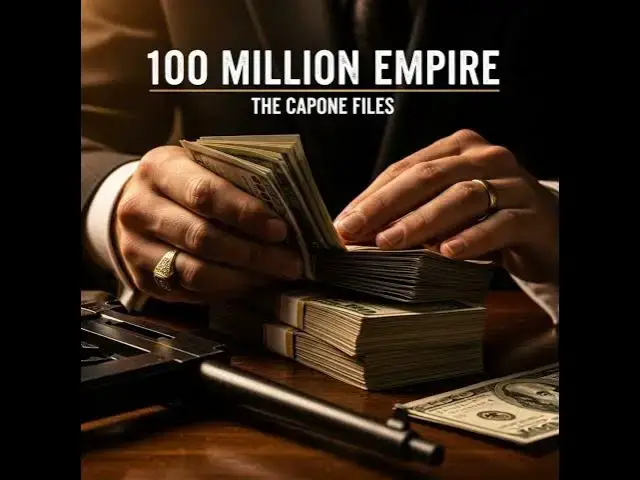
One hundred million dollars a year. One thousand employees.
An entire American city under his control. This is the real
story of Al Capone.
This episode reveals the complete, unfiltered history of how
the Chicago Outfit was built—from Big Jim Colosimo's
brothel empire in 1902, through Johnny Torrio's revolutionary
territorial system, to Al Capone's unprecedented reign as
America's most powerful criminal. We trace every major
development using sealed court records, IRS investigation
files, and testimony from men who worked inside the
organization.
Inside this episode, you'll discover:
🔴 The love affair that got Big Jim Colosimo killed—and
who really ordered the hit in his own restaurant
🔴 Johnny Torrio's secret genius: the corporate structure
that turned street gangs into a hundred-million-dollar
Show More Show Less View Video Transcript
0:00
[Music]
0:00
February 14th, 1929. Imagine if you can,
0:04
seven men face down on a cold concrete
0:07
floor in a Chicago garage. 70 rounds
0:10
from Thompson submachine guns just
0:12
ripped through them. The blood spreading
0:14
like spilled wine across the cement. The
0:16
world would call it the St. Valentine's
0:18
Day Massacre. The police, they'd never
0:20
make an arrest. And the man who ordered
0:22
it, Al Capone, he's 300 m away in Miami,
0:25
smiling for photographers, utterly
0:27
untouchable.
0:29
Just the name Al Capone sends shivers,
0:31
doesn't it? We all think we know him
0:32
from the movies, right? The pinstriped
0:34
suit, the cigar, the Tommy gun. But what
0:36
you're describing, Daniel, sounds far
0:38
more intricate, far more sinister than
0:40
Hollywood ever portrayed. That's exactly
0:42
it, Jesse. By 1929, Capone controlled an
0:45
empire generating a hund00 million
0:47
annually. That's over a billion and a
0:50
half in today's money from just one
0:52
city. But the real story isn't just
0:54
about the money or the violence. It's
0:56
about how he built that empire. the
0:59
systems he created that would outlive
1:00
him by nearly a century and frankly how
1:03
he fundamentally transformed organized
1:05
crime in America.
1:06
Chicago wasn't just a city Capone
1:08
conquered. He turned it into a
1:10
laboratory for organized crime. A
1:12
blueprint that every major criminal
1:14
organization in America would eventually
1:16
copy. But here's the kicker. He didn't
1:18
build this alone. He inherited a
1:20
foundation. A really bloody one laid by
1:23
men whose names have been deliberately
1:24
forgotten. And the organization, it
1:27
didn't die when the feds finally took
1:28
him down. It evolved. It adapted. It
1:32
still exists today.
1:34
Wait, it still exists? That's wild. So,
1:36
we're not just talking about dusty
1:37
history books here, are we? This is like
1:39
a living, breathing entity.
1:41
Precisely. Today, we're opening the
1:43
vault. These are the secrets they
1:45
thought were buried forever. And to
1:47
understand Capone's bloody rise, we have
1:50
to go back to what Chicago was before he
1:52
ever set foot there. Because this wasn't
1:54
virgin territory. This was already the
1:56
most corrupt city in America, controlled
1:59
by men who'd been perfecting graft and
2:01
murder since before Capone was born.
2:03
The information we're about to reveal
2:05
comes from sealed grand jury testimony,
2:07
FBI surveillance transcripts
2:09
declassified decades after the events
2:11
and insider accounts from men who worked
2:13
within the outfit and lived to tell
2:15
about it. Some of this material has
2:17
never been compiled in a single
2:18
narrative. Some of it directly
2:20
contradicts the sanitized version you
2:22
learned in school.
2:24
Okay, I'm hooked. This sounds like the
2:26
real untold story. So, where do we start
2:30
before Scarface?
2:31
We start in 1895.
2:33
Picture it. Smoke hanging thick in a
2:36
back room on South Wabash Avenue. Gas
2:39
light flickering across a table covered
2:41
with cash and ledger books. These men
2:43
are dividing Chicago's first ward into
2:45
territories more valuable than any
2:47
legitimate real estate deal. And at the
2:50
heart of it, Big Jim Colosimo, born in
2:53
Italy, arrived in Chicago as a child,
2:56
grew up in the Levy district, a
2:58
neighborhood so infamous reformers
3:00
called it the most sinful square mile in
3:02
America.
3:03
Colossimo started small, you know,
3:05
street sweeper, pickpocket, a bagman for
3:07
alderman. But he had a true talent for
3:09
organization. By 1902, he married a
3:12
brothel madam, Victoria Moresco, and
3:14
took control of her operations. Within 8
3:17
years, he ran over 200 brothel,
3:19
generating an estimated $50,000 monthly.
3:22
That's 1.5 million in today's currency,
3:25
every single month, from prostitution
3:27
alone. 50,000 a month from brothel back
3:30
then. That's an incredible amount of
3:32
money. And he understood that crime
3:34
needed political protection to scale.
3:36
He's laying the groundwork, isn't he,
3:38
for what's to come.
3:39
Absolutely. He cultivated relationships
3:41
with first ward alderman Michael Kenna
3:44
and John Coughlin, paying them hundreds
3:46
of thousands in tribute over the years.
3:48
In exchange, police raids magically
3:51
avoided his establishments. Competitors
3:53
faced constant harassment. The fix was
3:56
in at every level. His restaurant on
3:58
South Wabash became legendary, too.
4:01
Opera singers, celebrities, politicians,
4:03
all dining together. Colossimo wore
4:06
diamondstudded jewelry worth $50,000. He
4:09
had arrived.
4:10
But here's what nobody tells you about
4:12
Big Jim. His downfall began with a love
4:14
affair. In 1920, he divorced his wife
4:17
and married a young singer named Dale
4:19
Winter. The scandal distracted him from
4:21
business at the absolute worst moment.
4:23
Prohibition had just begun, creating
4:25
opportunities worth 10 times his
4:27
prostitution revenue, but Colossimo
4:29
hesitated to enter bootlegging, calling
4:31
it too dangerous, too competitive. Oh, a
4:34
love affair bringing down a crime boss.
4:36
That's almost poetic. So, he's got this
4:39
massive operation, but he's missing the
4:41
boat on the biggest criminal opportunity
4:43
of the century. Who steps into that
4:45
void?
4:46
His nephew by marriage, Johnny Torio.
4:48
Toriel had been running Colossimo's
4:50
operations for years, building a network
4:52
of talented young criminals. And one of
4:55
those young men had just arrived from
4:57
Brooklyn with a face scarred by a knife
4:59
fight and a reputation for absolute
5:01
loyalty. Alons Gabriel Capone.
5:04
May 11th, 1920. Big Jim Colosimo walks
5:07
into the vestibule of his own restaurant
5:09
for a meeting that didn't exist. Two
5:11
bullets from a 38 caliber pistol entered
5:13
the back of his skull. He died instantly
5:15
among the potted plants and coat racks.
5:18
Over 5,000 people attended his funeral,
5:20
including judges, congressmen, opera
5:22
singers. Nobody was ever charged. And
5:25
Johnny Torio, he inherited an empire
5:27
ready to expand beyond anything
5:29
Colossimo had imagined. So the first big
5:32
boss is taken out by his own family
5:34
essentially and that paves the way for
5:35
Toriel and then Capone. The layers of
5:38
betrayal and ambition are already so
5:40
deep.
5:40
And that brings us to number two on our
5:42
list, the Toriel era. These are the
5:45
crucial years that transformed Chicago
5:47
street crime into industrialcale
5:49
organized crime. Johnny Toriel wasn't a
5:51
flashy character. He didn't crave
5:53
headlines or wear flashy diamonds. He
5:56
was something far more dangerous. a
5:58
genuine criminal genius who preferred
6:00
shadows to spotlights.
6:02
Cigarette smoke curls through a meeting
6:04
room at the four deuces, a saloon,
6:06
gambling den, and brothel allinone.
6:08
January 1920, Toriel stands before a map
6:11
of Chicago, dividing the city into
6:13
territories with the precision of a
6:15
military commander planning an invasion.
6:17
Born in Italy in 1882, he'd apprenticed
6:20
under New York's Five Points gang before
6:22
coming to Chicago to help Colossimo. Now
6:24
with Colossimo gone and prohibition in
6:27
full swing, Toriel implemented a vision
6:29
decades ahead of its time.
6:31
So he's like the corporate strategist of
6:33
crime. Instead of all these gangs
6:35
fighting, he's saying, "Let's work
6:36
together. Divvy it up." That's a huge
6:38
shift, right? A true innovation and
6:40
criminality.
6:41
Exactly. His innovation was simple but
6:44
revolutionary. Cooperation over
6:46
competition. Rather than endless wars,
6:49
Toriel proposed dividing Chicago. Each
6:52
organization would control specific
6:53
neighborhoods, product lines, gambling
6:56
operations. Disputes would be
6:58
arbitrated. Violence reserved for
7:00
outsiders and rule breakers. The major
7:02
players agreed. Toriel's organization
7:05
got the south side. Dean Oan's Irish
7:07
gang got the north side. Smaller Italian
7:10
and Jewish outfits got the west side.
7:12
For nearly four years, this arrangement
7:14
held, generating combined revenues
7:17
exceeding 50 million annually. Toriel's
7:19
organizational charts looked like
7:21
legitimate corporate structures. He
7:23
created specialized divisions for
7:24
brewing, distilling, transportation,
7:27
wholesale, retail. He maintained
7:29
separate accounting for each revenue
7:30
stream. He paid taxes on front
7:32
businesses while hiding the real money.
7:35
And standing right at his hand through
7:36
all of it, that young man from Brooklyn,
7:39
Al Capone, Toriel recognized his
7:41
talents, smart, loyal, charismatic, and
7:44
utterly without mercy when violence was
7:46
required. He made Capone a partner.
7:49
So Capone's getting groomed. He's
7:50
learning the corporate side of crime,
7:52
not just the muscle. But that peace,
7:54
that cooperation, it couldn't have
7:56
lasted, could it? I mean, human nature,
7:58
ego.
7:59
You're spot on, Jesse. The official
8:01
histories minimize this, but Toriel's
8:03
peaceful confederation collapsed because
8:05
of ego and ethnicity. Dean Oan, the
8:08
Irish boss of the north side, never
8:11
truly accepted partnership with
8:12
Italians. He saw the arrangement as
8:15
temporary. In November 1924, Oanyan
8:18
doublec crossed Toriel on a brewery
8:20
deal, leaving Toriel facing federal
8:22
charges.
8:23
The response was swift. November 10th,
8:25
1924, three men entered Oan's flower
8:28
shop on North State Street. One shook
8:30
his hand in greeting and held it while
8:32
the other two opened fire. Six bullets
8:34
killed Oanyan instantly, surrounded by
8:37
chrysanthemums he'd been arranging for a
8:38
gangster's funeral. The North Side gang
8:41
didn't collapse. They reorganized under
8:43
Haimey Weiss and swore revenge. The
8:45
peace was shattered. Chicago would burn
8:48
for the next 5 years and Johnny Toriel
8:50
would nearly die in the flames. This is
8:52
like a Shakespearean tragedy unfolding.
8:55
The corporate agreement falls apart and
8:57
then it's just pure brutal gang warfare
8:59
and Toriel gets caught in it.
9:01
He did. January 24th, 1925. Toriel and
9:05
his wife returned from a shopping trip.
9:07
As they exited their car, two gunmen
9:10
opened fire. Toriel took bullets to the
9:12
jaw, chest, arm, and groin. The killers
9:15
ran when their guns jammed, leaving him
9:17
bleeding on the sidewalk. He survived,
9:19
but something broke inside him. From his
9:22
hospital bed, protected by armed guards,
9:24
he made a decision.
9:25
3 weeks after his release, he summoned
9:27
Capone and handed him complete control
9:29
of the organization. Every brothel,
9:32
every brewery, every gambling den, every
9:34
political connection. Johnny Torio
9:37
walked away with an estimated $30
9:38
million. He retired to Italy for 3
9:41
years, then returned to America and
9:43
lived quietly until 1957. He was one of
9:46
the few major gangsters of his era to
9:48
die of natural causes in a barber's
9:50
chair getting a shave. The man he left
9:52
in charge was 26 years old, and he was
9:55
about to become the most famous criminal
9:57
in American history. Wow. Toriel, the
10:00
silent, efficient genius, just walks
10:02
away clean. That's a rare kind of smarts
10:04
in this world. And then Capone, the
10:07
young, ambitious protegge, takes the
10:09
reigns at 26. Talk about a power
10:11
transfer.
10:12
And the deeper you go, the darker it
10:14
gets. Which brings us to position three,
10:17
the Capone Empire at its peak. The years
10:19
between 1925 and 1930, when one man
10:23
effectively controlled America's second
10:25
largest city. The scale of his operation
10:27
defies belief even today.
10:29
Imagine the sweat dripping down the face
10:31
of a brewery worker on South Wabash. 300
10:34
barrels of beer rolling off the
10:35
production line every single day. Armed
10:38
guards patrol the perimeter. Trucks idle
10:40
in loading docks ready to distribute
10:42
product to 500 speak easys before dawn.
10:44
This is just one of Capone's 12 major
10:46
brewing facilities. Just one piece of an
10:49
empire that never sleeps. 12 major
10:51
breweries. That's not just a gangster.
10:53
That's an industrialist. He's not just
10:55
running a criminal enterprise. He's
10:56
building a vast illicit corporation. And
10:59
he's still so young at this point,
11:01
right? He took Toriel's efficient
11:03
organization and injected it with raw
11:05
ambition. He expanded aggressively,
11:08
absorbing smaller gangs through
11:09
negotiation or more often elimination.
11:12
He fought a brutal war with the north
11:14
side gang that left dozens dead. And he
11:17
spent money on political corruption with
11:18
an openness that shocked even veteran
11:20
Chicago observers.
11:23
The numbers stagger comprehension. By
11:25
1927, Capone's organization employed
11:28
over a thousand people directly. His
11:30
gambling operations alone generated $30
11:32
million annually. Bootlegging brought in
11:34
60 million more. Prostitution added
11:37
another 10 million. His total gross
11:39
revenues exceeded $100 million per year
11:42
at a time when the entire federal budget
11:44
was only 3 billion. Think about that.
11:46
$100 million a year when the federal
11:48
budget is 3 billion. That's almost
11:50
unfathomable. He was practically running
11:53
a shadow government with more resources
11:55
than some legitimate states.
11:57
And he's buying off everyone too, right?
11:59
Police, judges.
12:00
Absolutely. Capone's payroll for police
12:03
corruption alone exceeded $30 million
12:05
during his reign. He owned cops at every
12:08
level. He controlled judges. He even
12:10
installed a mayor, William Thompson,
12:12
whose campaign he funded with an
12:14
estimated quarter million dollars. When
12:16
Thompson won in 1927, Capone literally
12:19
ran Chicago. His headquarters at the
12:22
Metropole Hotel occupied 50 rooms. He
12:25
traveled with an entourage of 18
12:27
bodyguards in armored cars. His custom
12:29
Cadillac had steelplated doors,
12:31
bulletproof glass, a police scanner. He
12:34
hosted parties where politicians mingled
12:36
with killers.
12:37
And here's what the mythology obscures.
12:39
Capone's public persona was a calculated
12:42
performance. The smiling, quotable
12:44
gangster giving interviews was a mask
12:46
designed to build popular support and
12:48
frustrate law enforcement. Behind that
12:50
mask operated a mind capable of
12:52
extraordinary violence and strategic
12:54
calculation. The St. Valentine's Day
12:56
Massacre exemplifies both. So the famous
13:00
massacre that wasn't just random
13:01
brutality. It was a strategic move in a
13:04
long-standing war. It's even more
13:06
chilling when you think of it that way.
13:08
It was the culmination of his war with
13:10
the North Side gang. Bugs Moran, the
13:12
current North Side boss, had survived
13:14
multiple assassination attempts and kept
13:16
encroaching on Capone territory. On
13:19
February 14th, 1929, Capone's men,
13:22
dressed as police officers, entered a
13:24
garage on North Clark Street, where
13:26
Moran's crew was expecting a whiskey
13:28
shipment. They lined seven men against
13:30
the wall. Two shooters with Thompson
13:32
submachine guns and two with shotguns
13:34
opened fire. 70 rounds. Six died
13:38
immediately. A seventh survived 20
13:40
minutes, long enough to refuse
13:42
identifying his killers to real police.
13:44
Moran himself escaped only because he
13:46
arrived late. Capone was in Florida
13:49
establishing an alibi. He was never
13:51
charged, but the massacre backfired
13:53
catastrophically. The brutality shocked
13:56
even corrupt Chicago. National
13:58
newspapers demanded action. President
14:00
Herbert Hoover personally ordered
14:01
federal resources directed at Capone.
14:03
The beginning of the end had arrived.
14:06
Think that's dark? Keep watching because
14:08
what comes next is the hidden war that
14:10
actually brought Capone down. And it
14:12
wasn't the war you think.
14:14
So, not the famous untouchables. That's
14:16
what everyone knows, right? Elliot Ness
14:18
and his crew smashing up breweries.
14:21
What's the real story then?
14:22
Exactly, Jesse. The IRS investigation
14:25
that eventually imprisoned Capone is
14:27
famous, but how it operated and who
14:29
inside Capone's organization helped make
14:31
it possible is less known. Paper rustles
14:34
in a cramped federal office on South
14:36
Lasowl Street. Two men hunch over
14:38
accounting ledgers seized in a raid. The
14:41
documents are coded, but patterns
14:42
emerge. The date is 1930 and these two
14:46
men are about to destroy an empire.
14:48
Elliot Ness got the headlines, but Nes
14:50
didn't bring down Capone. The
14:52
Untouchables raided breweries and made
14:54
spectacular arrests, but they never
14:56
built a case that could survive court.
14:58
The real work happened in the
14:59
intelligence unit of the Internal
15:00
Revenue Service, led by agents named
15:02
Frank Wilson and Mike Malone. Frank
15:05
Wilson and Mike Malone. These are the
15:08
unsung heroes then. So, how did they
15:10
crack through Capone's intricate
15:12
financial empire?
15:13
Wilson developed a strategy targeting
15:15
Capone's only vulnerability, his
15:18
lifestyle. Capone claimed no income,
15:20
filed no tax returns, yet he lived in a
15:23
14 room mansion in Miami. He wore custom
15:26
suits worth $1,500 each. He spent
15:29
$20,000 on dinner parties. The gap
15:31
between his visible spending and his
15:33
reported income was mathematically
15:35
impossible. The challenge was proving
15:37
that illegal income was taxable income.
15:40
Wilson spent over two years tracing cash
15:42
flows through Capone's Byzantine
15:44
financial structure. He turned witnesses
15:46
who could testify about specific
15:48
payments. He documented lavish purchases
15:50
that proved unreported income. Every
15:53
dollar had to be connected to Capone
15:55
personally.
15:56
And Mike Malone went even further.
15:58
Operating undercover as a Philadelphia
15:59
gangster named Michael Leito. Malone
16:02
infiltrated Capone's organization. For
16:04
two years, he gathered intelligence
16:05
while surrounded by men who would have
16:07
killed him instantly if they discovered
16:09
his identity. The information Malone
16:11
provided guided Wilson's investigation
16:13
toward the right witnesses and the right
16:15
documents. An actual undercover agent
16:17
inside Capone's outfit for 2 years.
16:20
That's incredible bravery or maybe sheer
16:22
madness. The pressure must have been
16:25
immense. Did Capone ever catch wind of
16:27
what they were doing?
16:28
Here's the secret nobody talks about.
16:30
Capone knew he was being investigated.
16:33
His political connections fed him
16:35
regular updates. He attempted bribery
16:37
first, offering federal agents enormous
16:39
sums. When that failed, he tried
16:41
intimidation. Witnesses received death
16:44
threats. Some disappeared, others fled
16:46
Chicago. But the government expected
16:48
this. They moved witnesses across the
16:51
country. They provided protection that
16:53
actually worked, which was unusual for
16:54
the era. and they built redundancy into
16:57
their case, developing multiple lines of
16:59
evidence so that losing one or two
17:00
witnesses wouldn't collapse everything.
17:03
June 1931, a federal grand jury indicted
17:05
Capone on 22 counts of income tax
17:07
evasion, alleging over $200,000 in
17:10
unpaid taxes. The number seems absurdly
17:12
small given his actual income, but it
17:14
was enough. Each count carried potential
17:16
prison time. Conviction on even a
17:17
fraction would destroy him. Capone
17:19
initially believed he had fixed the
17:20
outcome, negotiating a plea deal
17:22
promising 2 and 1/2 years. But the
17:24
presiding judge, James Wilkerson,
17:26
rejected the deal and switched jury
17:27
panels at the last moment, foiling
17:29
Capone's attempt to bribe jurors. On
17:31
October 17th, 1931, the jury convicted
17:34
on five counts. Wilkerson sentenced
17:36
Capone to 11 years in federal prison,
17:38
the harshest tax sentence ever imposed
17:40
at that time. America's most powerful
17:42
criminal was going away, and the empire
17:44
he built was about to pass to men who
17:46
would rule even longer than he had.
17:48
So, the judge outsmarted him at the very
17:50
end. That's a satisfying twist, I guess.
17:53
But you're hinting that his fall wasn't
17:54
just about the feds. What else was
17:56
happening to him?
17:57
Indeed. Landing at number five, we
18:00
confront the myth of Capone's fall and
18:02
the truth about what really happened to
18:03
his mind, his money, and his
18:05
organization. The official story says
18:07
the feds beat him. The real story is
18:10
darker and stranger. Antiseptic stings
18:12
the nostrils. Metal doors clang in
18:15
echoless corridors. Seabirds cry
18:17
somewhere beyond walls that will never
18:19
open. The year is 1934 and prisoner 85
18:23
has just arrived at Alcatraz federal
18:25
penitentiary. His name still carries
18:27
weight. His reputation still inspires
18:29
fear, but the man inside that famous
18:32
body is already dying.
18:33
Al Capone entered federal custody in May
18:35
1932. Initially, he was at Atlanta where
18:38
his celebrity brought privileges. He
18:40
received visitors frequently, maintained
18:42
communication with his organization. The
18:44
government transferred him to Alcatraz
18:46
specifically to end this influence.
18:48
Alcatraz was designed to break men. No
18:50
escape, minimal human contact. Capone
18:53
was treated like any other inmate. A
18:55
number, a cell, a job in the laundry
18:57
room. His money couldn't help him here.
18:59
His name meant nothing to guards. So
19:01
Alcatraz was meant to be the final nail
19:03
in the coffin for his power. But you're
19:05
saying something else was truly
19:07
destroying him. Something even more
19:09
insidious than a maximum security
19:10
prison.
19:11
Precisely. Here's what the official
19:13
biographies minimize. Capone had
19:15
contracted syphilis as a young man,
19:18
probably in his late teens. In an era
19:20
before antibiotics, the disease could
19:22
remain dormant for decades before
19:24
attacking the nervous system. By the mid
19:26
1930s, Capone was experiencing the
19:28
tertiary stage of sypholytic infection.
19:31
His brain was literally being eaten by
19:33
the disease.
19:35
Prison doctors documented his decline.
19:37
Memory lapses, confusion, difficulty
19:40
with simple tasks, mood swings, ranging
19:42
from euphoria to violent rage. By 1938,
19:45
Capone was so impaired that guards found
19:47
him making and remaking his bed for
19:48
hours, unable to remember he had already
19:51
completed the task. The most feared man
19:53
in America was becoming a child. That's
19:56
a tragic, almost horrifying end for
19:58
someone who wielded so much power. To be
20:00
reduced to that state by a disease he
20:02
probably acquired so carelessly, it's a
20:05
stark reminder of the realities beyond
20:07
the mythology. The government released
20:09
Capone in November 1939, citing his
20:12
deteriorating health. He was 40 years
20:14
old and had served only 7 and a half
20:16
years. But the man who walked out of
20:18
prison bore no resemblance to the crime
20:20
lord who had entered. His cognitive
20:22
function had declined to that of a
20:24
12-year-old. He would never conduct
20:26
business again. Capone retreated to his
20:29
Palm Island estate where his wife May
20:31
and his mother cared for him. Doctors
20:33
tried experimental penicellin
20:35
treatments, but the damage was
20:36
irreversible. He spent his days fishing,
20:39
listening to music, occasionally
20:41
believing he was still running Chicago.
20:43
January 25th, 1947, Al Capone suffered a
20:46
stroke at his Miami home. He died of
20:48
cardiac arrest the following day,
20:50
surrounded by family. He was 48 years
20:52
old. The official cause of death was
20:54
listed as pneumonia and brain
20:56
hemorrhage, but everyone knew the real
20:58
killer. The disease he'd carried since
21:00
adolescence had finally finished what
21:01
the federal government could only start.
21:03
His estate, once worth over $100
21:05
million, had shrunk to approximately
21:07
800,000. Government seizures, legal
21:10
fees, taxes, and theft by trusted
21:12
associates had consumed the rest. The
21:15
great fortune that built an empire had
21:17
essentially vanished. So, he loses his
21:19
mind, his empire, his money, and dies a
21:22
shadow of his former self. It almost
21:24
feels like a karmic justice, doesn't it?
21:27
But you mentioned the organization
21:28
survived. How?
21:30
Here's the final secret. Capone's
21:32
organization didn't die with him. It
21:34
didn't even pause. The men he had
21:36
trained, the systems he had built, the
21:38
political relationships he had
21:40
established, all continued functioning
21:42
smoothly under new leadership. Frank
21:44
Niti, Paul Ricka, Tony Iardo, and others
21:47
would run the Chicago outfit for decades
21:49
after Capone's imprisonment, expanding
21:51
into new territories and new rackets
21:53
while carefully avoiding their former
21:55
boss's mistakes.
21:58
They learned the most important lesson
21:59
Capone's downfall taught. Never become
22:01
famous. Never grant interviews. Never
22:04
let your face appear on newspaper front
22:05
pages. Power survived better in shadows
22:08
than in spotlights. The Chicago Outfit
22:10
would remain one of America's most
22:11
powerful criminal organizations well
22:13
into the 21st century, influencing
22:15
everything from Las Vegas casinos to
22:17
Hollywood studios to legitimate labor
22:19
unions. Capone's name faded from
22:21
headlines, but his creation endured.
22:24
That's chilling. So, it was never about
22:26
just one man. It was always about the
22:28
machine, the system, and the machine
22:31
learned from its mistakes.
22:33
Exactly. What do these secrets reveal
22:35
when you connect them together? They
22:37
show us something the movies never
22:38
capture. Criminal empires aren't built
22:41
by lone geniuses. They grow from
22:43
environments of corruption and
22:44
desperation, cultivated by political
22:47
machines that profit from illegality,
22:49
sustained by systems designed to
22:51
perpetuate themselves beyond any
22:53
individual leader.
22:54
Big Jim Colosimo built the foundation on
22:56
prostitution and political bribes.
22:58
Johnny Torio added corporate structure
23:00
and territorial agreements. Capone
23:02
contributed scale, ambition, and the
23:04
willingness to use extreme violence
23:06
strategically. Each man contributed
23:08
something essential. And when Capone
23:10
fell, others were ready to continue. The
23:12
deeper truth is uncomfortable. Capone
23:14
didn't corrupt Chicago. Chicago was
23:16
already corrupt. He simply exploited
23:18
that corruption more effectively than
23:20
anyone before him. So the politicians
23:22
who took his money, the police who
23:24
looked away, the citizens who drank his
23:26
beer while deploring his methods, they
23:28
were all participants in the system he
23:30
mastered. It's a complicity that extends
23:33
far beyond just the gangsters
23:34
themselves.
23:35
His legacy isn't the violence or the
23:37
wealth or the celebrity. It's the
23:39
organizational model that survived him.
23:41
The understanding that crime, like any
23:43
business, benefits from specialization,
23:46
hierarchy, and political investment. the
23:48
knowledge that empires endure not
23:50
through the strength of their leaders,
23:52
but through the reliability of their
23:53
systems.
23:55
Some mysteries remain, of course. Where
23:57
did all the money actually go? The 100
23:59
million annual revenue didn't simply
24:01
evaporate. Historians have traced
24:03
portions into legitimate businesses,
24:05
real estate investments, political
24:06
funds, but significant amounts
24:08
disappeared entirely, possibly hidden in
24:10
accounts that have never been
24:11
discovered, possibly stolen by
24:13
associates who took their secrets to the
24:14
grave. But what matters is this. The
24:17
Chicago outfit Capone built still
24:19
operates today. Diminished certainly
24:21
investigated constantly, but functional.
24:23
The FBI estimates they still generate
24:25
tens of millions annually through
24:27
gambling, lone sharking, and
24:28
infiltration of legitimate businesses.
24:30
The machine keeps running nearly a
24:32
century after Capone stood at its
24:34
controls. That's incredible and honestly
24:36
a little unsettling to think about. A
24:38
living legacy of crime adapting and
24:40
surviving all these years. It truly puts
24:43
the organized and organized crime into
24:45
perspective. It's a testament to the
24:47
power of structure even in the most
24:49
illicit of enterprises. And if you want
24:51
the full cinematic story of the groups
24:53
behind these secrets, check out our 100
24:56
episode master series on our main
24:57
channel, Global Mafia Universe. The link
24:59
is in the description. Go deep. For
25:02
Jesse and Lily, I'm Daniel.