Up next in 10

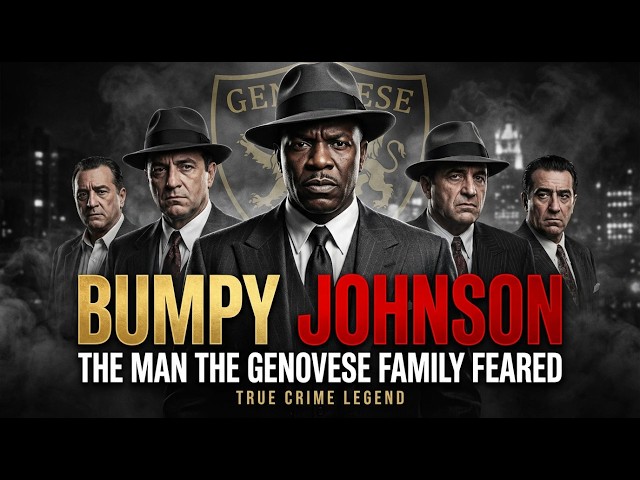
He walked into rooms where most Black men wouldn't leave alive. For thirty years, Ellsworth "Bumpy" Johnson ran Harlem like a country with borders no one dared cross.
From the numbers racket to the protection money, every dollar that moved through those hundred and ten blocks touched his hand first. The Italian Mafia called him an ally. The NYPD called him untouchable. Harlem called him necessary. But was he a criminal mastermind or just a man who exploited a massive power vacuum?
This is the untold story of the man who made the Mafia blink. Using court records, FBI surveillance files, and firsthand accounts, we reconstruct the rise and reign of Harlem's most enigmatic figure.
No textbook covers the patterns Bumpy used to stay alive. This is the strategy behind the thirty-year run that defied every rule of organized crime.
⚠️ HISTORICAL DISCLAIMER: This documentary reconstructs events from historical records, court documents, oral histories, and investigative journalism. Some dialogue and scenes are dramatized based on documented accounts. Sources listed below.
📚 Sources & Further Reading:
→ Harlem Godfather: The Rap on my Husband, Ellsworth "Bumpy" Johnson (Mayme Johnson)
https://www.amazon.com/Harlem-Godfather-Husband-Ellsworth-Johnson/dp/0967602831
→ FBI Records: The Vault - Ellsworth "Bumpy" Johnson (Federal Bureau of Investigation)
https://vault.fbi.gov/
→ The Queen of the Numbers: Stephanie St. Clair (Historical Biography)
https://www.blackpast.org/african-american-history/st-clair-stephanie-1886-1969/
Show More Show Less View Video Transcript
0:00
He walked into rooms where most black men wouldn't leave alive, sat across
0:05
from Genevie's family captains who controlled half of New York, laid his
0:10
terms on the table, and walked out with more territory than he brought in. For
0:15
30 years, Ellsworth, Bumpy Johnson ran Harlem like a country with borders no
0:21
one dared cross. The numbers racket, the policy banks, the protection money, the
0:28
heroine flow. Every dollar that moved through those 110 blocks touched his
0:34
hand first. The Italian mafia called him an ally. The NYPD called him
0:39
untouchable. Harlem called him necessary. But here's the question no
0:44
one's answered. Was Bumpy Johnson a criminal mastermind who built an empire
0:50
through strategic genius? Or was he just a smart man who got lucky when Dutch
0:56
Schultz caught a bullet and left a power vacuum the size of Manhattan? This
1:02
documentary uses court records, FBI surveillance files, and firstirhand
1:08
accounts, including his widow Maim Johnson's memoir. Some scenes have been
1:13
reconstructed based on documented events. Dialogue reflects the substance
1:19
of verified conversations, not exact transcripts. Because the truth about
1:25
Bumpy Johnson isn't in the headlines. It's in the patterns, the moves no one
1:31
saw coming, the alliances that shouldn't have worked. The 30-year run that defied
1:37
every rule of organized crime. And it starts with a night in 1963 when Bumpy
1:44
walked into a room full of men who wanted him dead. The Regency Social Club, a Harlem storefront with blacked
1:52
out windows and a back room that smelled like cigars and old wood. This was
1:58
neutral ground, the kind of [music] place where business got settled without badges or witnesses. Bumpy Johnson
2:05
pushed through the door at exactly 900 p.m. alone. The men waiting for him
2:11
weren't. Three Italian captains, Genov's family. Representatives of the most
2:17
powerful crime organization in America. They'd been skimming Harlem's numbers
2:22
racket for two decades. Bumpy had been cutting into their take for the last 5
2:28
years. Tonight was the reckoning. According to witnesses who were present,
2:33
Bumpy didn't sit immediately. He stood at the edge of the table, looked each
2:38
man in the eye, then pulled out a chair, and sat with his back to the door.
2:44
That's when one of the captains, reportedly Vincent, the Chin Gigant
2:49
cousin, slid a piece of paper across the table. Numbers, percentages, a proposal
2:55
for how Harlem's money would be divided going forward. Bumpy didn't touch it.
3:00
Instead, he reached into his jacket slowly, the kind of slow that makes
3:06
hands drift toward waistbands. [music] He pulled out three photographs, laid
3:11
them on the table face up. The first photo showed a Genovese's bookmaker's
3:16
daughter leaving her high school in Westchester. [music] The second showed a captain's wife at a
3:22
grocery store in Queens. The third showed Vincent Gigant himself entering a
3:28
church in Greenwich Village. No one spoke. Bumpy leaned [music] back in his
3:33
chair. According to later testimony, his words were simple. He said he didn't
3:38
come to negotiate percentages. He came to clarify something. [music] Harlem
3:44
wasn't a neighborhood they controlled. It was a neighborhood he protected. And
3:49
the moment they forgot that distinction, the photographs would matter. The
3:54
captain, [music] who'd slid the paper across the table, reportedly stood up, asked Bumpy if he understood who he was
4:01
threatening. Bumpy didn't stand. He just asked a question back. [music] Did the
4:07
captain understand that Bumpy had been moving through Harlem since he was 12 years old? That he knew every stairwell,
4:14
every rooftop, every alley between Lenox and 8th Avenue, that the people in those
4:20
buildings didn't call the Genov's family. When trouble came, they called him. The room went silent again. Then
4:28
Bumpy stood, pushed the photographs back across the table, [music] and walked out the same door he'd entered. No shots
4:36
fired, no threats shouted, [music] just a new understanding that would hold for the next 5 years. That's the legend. The
4:44
story Harlem told itself about the night Bumpy Johnson made the mafia blink. But
4:50
here's the question. Was that genius? The ability to read a room, leverage
4:56
fear, and walk out with power? Or was it just survival? a man with no army and no
5:02
political protection doing the only thing he could do when the wolves circled. Because the truth is, Bumpy
5:10
Johnson didn't invent the game. He inherited it. And to understand whether
5:15
he was a genius or just lucky, you have to go back to the beginning, to the
5:20
Harlem that made him, to the chaos that gave him room to rise. Ellsworth Raymond
5:27
Johnson was born in Charleston, South Carolina in 1905. His family moved to
5:34
Harlem in 1919, part of the great migration that saw hundreds of thousands
5:39
of black Americans flee the south for northern cities. Harlem in 1919 was a
5:45
pressure cooker, overcrowded tenementss, limited jobs, and a white power
5:51
structure that controlled every legitimate economic opportunity. So
5:56
Harlem built its own economy underground, untaxed, unregulated. The
6:03
numbers racket was the engine, a daily lottery where players bet pennies on
6:08
three-digit combinations drawn [music] from stock market figures or horse race
6:14
results. The odds were terrible. The payouts were rare. But for people locked
6:19
out of banks and savings accounts, it was the only financial system they trusted. And by the time Bumpy turned
6:27
15, that system was already in the hands of white mobsters. Dutch Schultz, Arnold
6:34
Rothstein, Oni Madden. These were the men who controlled Harlem's illegal
6:39
economy in the 1920s and 30s. They ran the numbers. They ran the speak easys.
6:46
They ran the protection rackets. Bumpy Johnson's started as muscle. A kid with
6:52
a reputation for being calm under pressure and brutal when necessary. He
6:58
worked for a black numbers operator [music] named Stephanie St. Clare, a woman who refused to hand her territory
7:05
over to Dutch Schultz without a fight. And that's where Bumpy learned the first rule that would define his entire
7:12
career. Respect in Harlem required different currency than respect in the
7:18
mafia. The Italians controlled through fear and infrastructure. They had
7:24
judges, cops, politicians. They could make charges disappear or make witnesses
7:30
disappear. But in Harlem, fear only worked if the community let it work.
7:36
Bumpy understood something the white mobsters didn't. Harlem wasn't conquered
7:41
by violence. It was earned by being the person who kept the neighborhood functional when the system failed it. He
7:48
paid rent for families facing eviction. He funded funerals. He walked kids home
7:54
from school when gang violence flared. [music] And when Dutch Schultz tried to intimidate Harlem's numbers operators,
8:02
Bumpy didn't just fight back. He made sure Harlem knew who was protecting them. That's not luck. That's strategy.
8:11
But then Dutch Schultz was assassinated in 1935. [music] Shot in a New Jersey chop house by
8:18
fellow mobsters who thought he'd become too unpredictable. And just like that, Harlem's underworld
8:24
had no white overseer. The Italian families could have moved in, taken full
8:30
control, but they didn't. Why? Because Harlem in the 1930s wasn't profitable
8:36
enough to fight over. The numbers racket made money, sure, but the costs of
8:42
maintaining control, [music] paying off black cops who wouldn't cooperate, managing operators who hated you, it
8:50
wasn't worth the trouble. So, the Italians made a deal. Let the black operators run Harlem's numbers. Take a
8:57
percentage off the top. Everyone wins. And Bumpy Johnson became the man who
9:03
made sure that deal held. That's where the question gets complicated. [music] Did Bumpy create the power vacuum? No.
9:11
Dutch Schultz's murder did that. Did Bumpy exploit it brilliantly?
9:16
Absolutely. But does exploiting an opportunity make you a genius? Or does
9:21
it just make you the smartest person in the room when the room caught fire? By
9:26
1940, Bumpy Johnson was the most powerful black man in Harlem's
9:31
underworld. He controlled the numbers. He mediated disputes. He kept the
9:37
Italians happy with their cut and kept Harlem's operators profitable. And then
9:42
he made a mistake. In 1952, Bumpy was convicted of conspiracy to
9:48
sell heroin. Sentenced to 15 years, sent to Alcatraz. Most criminals don't
9:55
survive that. Their territory gets carved up. Their reputation fades. By
10:01
the time they are released, the world has moved on. But Bumpy's 15 years in
10:07
Alcatraz did something unexpected. It made him more powerful. Because Alcatraz
10:13
in the 1950s wasn't just a prison. It was a networking event for organized
10:18
crime. Bumpy shared a cell block with Italian mafia captains, Boston mobsters, and
10:26
West Coast operators. He learned how the Italians structured their families, how
10:31
they insulated bosses from prosecution, how they moved money through legitimate
10:37
businesses. And when Bumpy was released in 1963, he came back to Harlem with something he
10:44
didn't have before. credibility with the Italians, not as a subordinate, as a
10:50
peer. That's the night he walked into the Regency social club. The night he
10:56
put those photographs on the table, [music] the night he made the Genovese's family
11:01
renegotiate. So, let's pause here. Was Bumpy Johnson a genius who turned a
11:07
prison sentence into a graduate degree in organized crime? Or did he just get
11:12
lucky that Alcatraz happened to be full of the exact people he needed to learn from? Because the next 10 years would
11:21
test that question in ways no one expected. Harlem in the 1960s was
11:27
changing. The civil rights movement was rewriting the rules of black political
11:33
power. Malcolm X was preaching self-determination 15 blocks from Bumpy's headquarters. The
11:40
Black Panthers were arming themselves in Oakland. And Bumpy Johnson, a man who
11:46
built his empire on pragmatism and compromise with white power structures,
11:52
was about to face a choice. Adapt to the new Harlem or become a relic of the old
11:58
one. But before we go further, there's something the FBI files never explained.
12:05
How did a man with no political protection, no legitimate business cover, and a federal conviction survive
12:12
in plain sight for 30 years? The NYPD knew who he was. The FBI had files 6 in
12:20
thick. The Italian mafia knew every move he made. [music] And yet, Bumpy Johnson
12:25
died of natural causes in 1968 at a Harlem restaurant, [music] surrounded by
12:31
friends. No ambush, no retaliation, no betrayal. That's not how this story
12:38
usually ends. So, what did Bumpy Johnson understand that [music] everyone else missed? The answer starts with a woman
12:46
most people forgot. Stephanie sent Clare, the Queen of Harlem, a black
12:52
immigrant from Martineique who ran the numbers racket in the 1920s when Dutch
12:57
Schultz was still a smalltime enforcer. She taught Bumpy Johnson the second rule
13:03
that would define his career. Never let them see you as just muscle. Stephanie
13:09
wasn't the toughest operator in Harlem. She wasn't the richest, but she was the
13:14
smartest. She kept meticulous records. She paid her runners on time. She
13:20
settled disputes through arbitration, not violence. And when Dutch Schultz
13:25
tried to take over her territory in 1931, she didn't just fight back with guns.
13:31
She fought back with newspapers. Stephanie leaked stories to [music] black journalists. She documented every
13:39
extortion attempt, every beating, every time Dutch's [music] men threatened a
13:44
Harlem shopkeeper. She turned the numbers war into a public relations battle. The white press didn't [music]
13:51
care, but Harlem did. And that's when Bumpy Johnson, then a 26-year-old
13:57
enforcer, learned the most important lesson of his life. Power in Harlem
14:02
wasn't about controlling territory. It was about controlling the narrative. When Stephanie eventually lost her war
14:10
with Dutch Schultz, it wasn't because she got outgunned. It was because Dutch
14:15
had something she [music] didn't. police protection, judge protection, the
14:20
infrastructure of institutional corruption. [music] But Stephanie made sure Bumpy understood something before
14:27
she stepped back. The Italians could take Harlem's money. They couldn't take
14:32
Harlem's respect. That distinction kept Bumpy alive for three decades. By 1936,
14:39
Dutch Schultz was dead. Stephanie St. Clare had moved into semi-retirement
14:45
and Bumpy Johnson was the bridge between Harlem's black operators [music] and the Italian families who wanted
14:53
their cut. He wasn't a boss yet. He was a facilitator. The Luchano family, later
15:00
reorganized as the Genovese [music] family, needed someone who could collect money from black numbers runners without
15:06
starting a race war every week. Bumpy could do that. He spoke the language. He
15:12
knew the streets. He had credibility. [music] And in exchange, the Italians
15:18
gave him something no black criminal in America had, access. [music]
15:23
Bumpy sat in on meetings about heroine distribution. He learned how the
15:28
Italians laundered money through legitimate businesses. He watched them manipulate union contracts and dock
15:35
worker strikes. This wasn't luck. This was calculated positioning. Bumpy made
15:41
himself useful enough to earn trust, but not threatening enough to get killed.
15:46
That's a tight trope. Most men fall off within a year. Bumpy walked it for 30.
15:52
But there's a darker side to that calculation. Because the thing that made Bumpy valuable to the Italians, the
16:00
thing that kept him alive was the same thing that made him complicit in Harlem's destruction. Heroine. By the
16:08
late 1940s, heroine was flooding into Harlem at a scale no one had seen
16:14
before. The Italian families [music] controlled the importation. Corsac
16:19
smugglers brought it in through Marseilles. The Genov's family distributed it through East Coast cities
16:26
[music] and Bumpy Johnson made sure it moved through Harlem without interference. He
16:33
didn't sell it himself. That's what the court records show. He wasn't a street dealer. He was management. He mediated
16:40
disputes between dealers. He made sure no one robbed the Italian suppliers. He
16:46
kept the flow smooth. In 1952, federal prosecutors built a conspiracy case.
16:53
They couldn't prove Bumpy sold heroin, but they proved he knew about it,
16:58
facilitated it, profited from it. 15 years. Alcatraz. And here's where the
17:05
genius versus luck question gets interesting because most men would see a
17:10
15-year prison sentence as the end. Bumpy saw it as an MBA program. Alcatraz
17:17
in the 1950s [music] housed the most sophisticated criminals in America.
17:23
Mickey Cohen, the West Coast mob boss. Alvin Karpies, the last of the
17:29
depression era gangsters and multiple Italian mafia captains serving time for
17:35
racketeering. These men didn't see Bumpy as a threat. He was already doing time.
17:41
He wasn't competing for territory. He wasn't angling for power, so they talked. According to later accounts from
17:49
guards and fellow inmates, Bumpy spent hours in the yard listening to these men
17:55
explain how their organizations worked. The hierarchy, the insulation, the way
18:02
bosses stayed three steps removed from street level crime. He learned about
18:07
offshore banking from Mayor Lansky's associates. He learned about political
18:12
corruption from Chicago outfit members. He learned about long-term strategic
18:18
thinking from men who planned operations 5 years in advance. And when Bumpy was
18:24
released in 1963, [music] he didn't come back to Harlem as the same man who went
18:30
in. He came back as someone the Italians respected, not feared, respected. That's
18:37
when the photographs happened. The night at the Regency Social Club, the [music]
18:42
meeting with the Genovese's captains, the moment Bumpy laid three photos on
18:47
the table and made them understand that Harlem wasn't negotiable. But here's
18:53
what the legend doesn't tell you. Those photographs weren't a bluff. Bumpy
18:58
actually had people tracking Genevie's family members. He'd hired photographers, surveillance teams. He'd
19:06
invested money into intelligence gathering the same way the Italians [music] did. That's not improvisation.
19:14
That's preparation. So was Bumpy a genius who understood that power requires infrastructure. Or did he just
19:21
copy what the Italians taught him in prison and get lucky that it worked? Stop. [music] Rewind that in your mind
19:29
because it matters. If Bumpy was copying the Italians, then his success was
19:35
derivative. [music] He was a talented student, not an original thinker. But if
19:41
Bumpy adapted Italian methods to a Harlem context where the rules were different, where police protection
19:48
didn't exist, where community support was the only real currency, then he was
19:54
something else entirely. He was an innovator and the [music] next 5 years
19:59
would reveal which one he really was. Between 1963 and 1968,
20:05
Bumpy Johnson did something no other black organized crime figure had done.
20:11
He made the Italians come to him. When disputes erupted over heroine
20:16
distribution, Genov's [music] captains called Bumpy to mediate. When a black numbers runner got robbed by
20:24
Italian freelancers, Bumpy handled it. When the FBI started pressuring Italian
20:30
operations in Harlem, Bumpy provided cover by keeping street violence low. He
20:36
became indispensable. But he also became something more dangerous. He became a symbol. Because
20:43
while Bumpy was negotiating with the mafia, Harlem was waking up. Malcolm X
20:50
was preaching at the Orderbond Ballroom [music] 12 blocks from Bumpy's headquarters. The message was
20:56
self-determination, economic independence, rejection of white power structures. And every time
21:04
Malcolm spoke, he was talking about men like Bumpy Johnson without naming them.
21:09
Men who collaborated with the same systems that oppressed Harlem. Men who got rich while the neighborhood rotted
21:16
from heroin addiction. Men who chose pragmatism over revolution. Bumpy and
21:23
Malcolm knew each other. According to multiple accounts, they had mutual
21:28
respect. Malcolm understood that Bumpy kept a certain kind of order. Bumpy
21:33
understood that Malcolm was asking questions the neighborhood needed to hear, but they also understood they were
21:40
on opposite sides of a question Harlem couldn't avoid anymore. Do you work within the system to survive, or do you
21:48
burn the system down to be free? Bumpy chose survival. Malcolm chose
21:53
revolution. In 1965, Malcolm X was assassinated.
21:59
Three gunmen order ballroom. Harlem erupted in grief and rage. Bumpy Johnson
22:06
reportedly attended the funeral stood in the back. Said nothing. And here's the
22:12
thing no one talks about. After Malcolm died, Bumpy's power in Harlem started to
22:18
shift. Not because he got weaker, because Harlem changed around him. The
22:24
younger generation didn't see Bumpy as a protector. They saw him as a relic, a
22:29
man who made deals with Italians while black children overdosed in tenement stairwells. The Black Panthers rose in
22:37
Oakland, preaching armed self-defense. The civil rights movement was fracturing
22:43
into more radical factions, and Harlem's tolerance for compromise was dying.
22:49
Bumpy Johnson had built his empire on being the bridge between two worlds. But
22:54
when those worlds started to see each other as enemies, bridges [music] became targets. By 1967,
23:02
Bumpy's health was failing. [music] Decades of stress, chain smoking, the
23:08
grind of managing an empire with no legal protection, but he was still sharp, still calculating, and he made
23:16
one final move that would define his legacy. He met with a young man named Frank Lucas. Frank Lucas was everything
23:24
Bumpy wasn't. Flashy, ambitious, hungry for recognition. He'd come up through
23:31
Bumpy's organization as a driver, then an enforcer, then a trusted left tenant.
23:37
And according to Frank's later testimony, Bumpy gave him advice in one of their final conversations.
23:44
He told Frank that the old way was dying. The handshake deals with the
23:49
Italians, the respect-based power structure, [music] the community protector model. Bumpy reportedly said
23:57
the future belonged to men who controlled supply chains, [music] not neighborhoods. Men who thought like
24:04
businessmen, not like godfathers. Whether Bumpy actually said that or
24:09
whether Frank Lucas invented it to justify his own ruthlessness, we'll never know. But what happened next is
24:17
documented. [music] Frank Lucas cut out the Italian middlemen. He went directly to Southeast
24:23
[music] Asia. He smuggled heroin into the United States using military
24:29
transport during the Vietnam War. He flooded Harlem with pure product at
24:34
prices the mafia couldn't match. And he built an empire that made Bumpy
24:39
Johnson's operation look small. But here's the difference. Bumpy Johnson
24:45
died peacefully in [music] 1968 at Wells restaurant in Harlem. Heart attack,
24:52
surrounded by friends, the neighborhood mourned him. Frank Lucas died in federal
24:57
prison after multiple convictions, betrayed by his own family members who
25:03
testified against him. [music] The neighborhood forgot him. So was Bumpy a genius who understood that power in
25:10
Harlem required community trust and that trust was worth more than short-term
25:16
profit. Or was he just lucky that he died before the game changed into something he couldn't control? [music]
25:23
Because the method Frank Lucas used the pure capitalism with no community
25:28
obligation that would have destroyed Bumpy. He couldn't have competed. His
25:34
entire model depended on being more than a drug dealer, on being a figure Harlem
25:40
needed. [music] Once that need disappeared, so did the power. And that brings us to the question the FBI could
25:47
never answer. How did Bumpy Johnson survive 30 years under constant
25:52
surveillance without a single murder charge sticking? The FBI files show they
25:58
knew everything. [music] wire taps, informants, surveillance photos. [music]
26:04
They documented meetings with mafia captains. They tracked money flows. They
26:10
knew about the heroine. And they arrested Bumpy multiple times. But the only charge that ever stuck was the
26:17
conspiracy conviction in 1952. After that, nothing. Bumpy was arrested
26:24
in 1956 for parole violation. Released. Arrested in 1960 for disorderly conduct,
26:32
released. Arrested in 1964 for possession, case dismissed. Every time
26:39
the evidence vanished, witnesses refused to testify. Cops who' made the arrest
26:45
suddenly couldn't remember details. So, what was Bumpy Johnson doing that made
26:50
prosecution impossible? Was he bribing cops? Absolutely. That's documented. Was
26:57
he threatening witnesses? Probably, though no one ever proved it. But there's a third explanation that gets
27:04
ignored. Bumpy Johnson made himself useful to the NYPD, not as an informant,
27:11
as a regulator. Harlem in the 1950s and60s was a tinderbox. Racial tension,
27:18
poverty, overcrowding. One bad police shooting could ignite riots that would
27:24
make national headlines. And Bumpy Johnson kept the temperature down. When
27:29
rival gangs started a turf war that threatened to spill into civilian areas,
27:35
Bumpy mediated. When a white cop killed a black teenager and Harlem was ready to
27:42
explode, Bumpy [music] reportedly met with community leaders and convinced
27:47
them to wait for investigations instead of burning the precinct. He was
27:52
an unofficial power broker, a man the NYPD could use to manage a neighborhood
27:58
they didn't understand and couldn't control. So, when Bumpy got arrested,
28:04
charges disappeared. Not because he was innocent, because he was valuable.
28:09
That's not genius. That's not luck. That's understanding the system well enough to make yourself irreplaceable
28:16
within it. And that might be the most dangerous thing Bumpy Johnson ever did.
28:22
Because it meant Harlem's power structure depended on one man. And when that man died, the structure collapsed.
28:30
The question is whether Bumpy knew that, whether he understood that his survival
28:35
came at the cost of Harlem's independence, or whether he just did what he had to do to stay alive and the
28:42
consequences were someone else's problem. But before we answer that, we
28:48
need to talk about the night Bumpy Johnson walked into a police station with a suitcase full of cash and walked
28:55
out with a detective's badge number in his pocket. Because that story, the one
29:01
almost no one knows, reveals the pattern that defined everything. 1961,
29:08
a Tuesday, 300 p.m., Bumpy Johnson walked into the 28th precinct on West
29:15
123rd Street carrying a leather suitcase. He didn't have an appointment.
29:20
He didn't ask for anyone specific. He just told the desk sergeant he needed to
29:26
speak with someone about a community matter. 20 minutes later, a detective
29:31
named William Foley came downstairs. According to later accounts from
29:36
officers who were present, [music] Bumpy and Foley talked for 10 minutes in an interview room. No lawyers, no
29:44
witnesses, just two men negotiating something the walls would never repeat.
29:49
When Bumpy left, the suitcase stayed behind. And for the next seven years
29:55
until [music] Bumpy's death in 1968, not a single arrest resulted in charges
30:00
that stuck. Now, here's where the story gets complicated because what was in
30:06
that suitcase? Cash. Almost certainly, how much? No one documented it. Was it a
30:13
one-time payment or the start of an ongoing arrangement? [music] The records
30:18
don't say, but what the records do show is a pattern. Every time Harlem
30:24
threatened to explode into violence, Bumpy Johnson was part of the solution.
30:30
[music] Every time the NYPD needed someone to calm tensions between [music] black residents and white authority,
30:37
Bumpy made calls. He wasn't a confidential informant. The FBI files
30:43
make that clear. He never gave up names, never testified, never wore a wire, but
30:50
he was something more valuable. He was a regulator. And that's the third rule
30:55
Bumpy Johnson understood that most criminals miss. Power isn't about
31:00
controlling people. It's about controlling chaos. The NYPD couldn't
31:05
stop [music] Harlem's underground economy. They'd tried for decades. Raids, arrests, undercover operations.
31:14
Nothing worked because the community protected the operators, [music] but Bumpy could stop the chaos that came
31:20
with that economy. He could prevent turf wars from spilling [music] into public shootouts. He could mediate disputes
31:28
before they became revenge killings. He could keep the violence predictable [music] and contained. And in exchange,
31:36
the NYPD gave him something no amount of money could buy, operational space. This
31:43
next detail changes everything we thought we knew. Because if Bumpy
31:48
Johnson was just a criminal who bribed cops, he would have ended up like every
31:53
other criminal who bribed cops. Eventually, the money runs out. The
31:58
political winds shift. A new district attorney wants headlines and the
32:03
arrangement collapses. But Bumpy didn't just bribe cops. He made the NYPD
32:09
dependent on him. When racial tensions exploded after a white officer shot a
32:15
15-year-old black kid in 1964, Harlem was ready to riot. [music] Stores
32:21
were being looted. Fires were starting. The precinct was surrounded by angry
32:27
crowds. And according to multiple witness accounts, Bumpy Johnson walked into that crowd. No security, no weapon
32:36
visible, just him and his reputation. He stood on the hood of a car and told the
32:41
crowd something that newspapers couldn't print and historians couldn't verify,
32:46
but the crowd dispersed. The fires stopped and the NYPD commissioner
32:52
reportedly called Bumpy the next day to thank him. Now pay attention to what
32:57
happens next. It's easy to miss because that moment, that phone call from the
33:03
commissioner, that's when Bumpy Johnson crossed a line most criminals never even
33:08
see. He became infrastructure. Not a criminal the system tolerated.
33:14
Infrastructure the system needed. And once you become infrastructure, you don't get arrested, you get maintained.
33:23
So, was Bumpy a genius who understood power dynamics at a level most
33:28
politicians never reach? Or did he just stumble into a situation where his
33:33
survival instincts aligned with institutional needs, and he rode that
33:38
alignment as long as it lasted? The answer might be in the one person who saw Bumpy operate up close for years
33:46
without being part of his organization. [music] His wife, Maim Johnson. Maim
33:52
married Bumpy in 1948. She wasn't from the criminal world. She
33:57
was a dancer, a woman who, by her own account, had no idea who Bumpy Johnson
34:03
really was when they met. But over 20 years of marriage, she watched him navigate a world that should have killed
34:10
him a hundred times. And in her memoir, published decades after Bumpy's death,
34:16
she described something that doesn't fit the legend. She said Bumpy was terrified
34:21
most of the time. Not of violence. He'd been shot, stabbed, beaten. Physical
34:27
danger didn't shake him. He was terrified of irrelevance. Ma wrote that
34:32
Bumpy would stay up at night reading newspapers, tracking political changes,
34:38
watching which cops got promoted, [music] which judges got appointed, which Italian captains were rising in
34:46
the families. [music] He was obsessed with information, with patterns, with
34:51
knowing what was coming before it arrived. That's not the behavior of a man who's lucky. That's the behavior of
34:58
a man who knows his survival depends on preparation. But it's also the behavior
35:04
of a man who knows he's one mistake away from obsolescence. Because here's what
35:09
Bumpy understood that Frank Lucas never learned. In the criminal world, there
35:14
are two types of power. the power [music] to take and the power to keep.
35:19
Taking power is easy. You find a vacuum. You move fast. You use violence or
35:25
intelligence or both. You claim territory. But keeping power requires
35:31
something entirely different. It requires making yourself harder to replace than to tolerate. Bumpy Johnson
35:39
spent 30 years making himself irreplaceable. He built relationships with the Italians
35:45
that took decades to establish. [music] He built trust with Harlem that couldn't
35:51
be faked. He built arrangements with the NYPD that depended on his specific
35:57
reputation and connections. Frank Lucas tried to take power by cutting out the
36:03
middlemen and going straight to the source. And he lasted [music] 7 years
36:08
before the entire structure collapsed. So, the question isn't whether Bumpy was
36:13
smarter than Frank. [music] He obviously was. The question is whether Bumpy's
36:19
intelligence was [music] strategic genius or adaptive survival. Did he see
36:24
10 moves ahead? Or did he just respond to threats better than anyone else? And
36:30
the answer might be in the one move Bumpy made that nobody understood until
36:35
it was too late. He never built a succession plan. Think about that. 30
36:41
years running Harlem's underworld, relationships with five different Italian mafia families, [music]
36:48
arrangements with the NYPD, control over millions of dollars in
36:54
annual revenue, and Bumpy Johnson never designated a successor, never trained
37:00
someone to take over, never built an organization that could survive without
37:05
him. Frank Lucas claimed Bumpy was grooming him, but Maim Johnson said that
37:11
was a lie. She said Bumpy never trusted Frank, never saw him as anything more
37:17
than ambitious muscle. So why didn't Bumpy build something that would outlast him? Was it ego? Did he believe no one
37:26
else could do what he did? Was it strategy? Did he understand that the moment he designated a successor, he
37:33
became expendable? or was it something darker? Did Bumpy Johnson know that the
37:39
power structure he'd built, the arrangement with the Italians and the NYPD,
37:45
was fundamentally unstable, that it only worked because of his unique position at
37:51
a unique moment in Harlem's history. Did he know that the chaos would return the
37:56
moment he died? And did he just not care because he'd be gone? Because here's
38:01
what happened. Bumpy Johnson died on July 7th, 1968.
38:07
Heart attack at Wells restaurant. Sudden, unexpected. He was 62. Within 6
38:14
months, Frank Lucas had declared himself Bumpy's successor and started restructuring the entire operation.
38:21
Within 2 years, heroine addiction in Harlem had tripled. Within 5 years, the
38:28
Italians had lost control of Harlem entirely to independent black [music] operators who had no respect for the old
38:36
arrangements. Within 10 years, Harlem's underworld had fractured into dozens of
38:42
competing factions, and the violence Bumpy had spent decades controlling
38:47
exploded into the crack epidemic. So, did Bumpy's death cause that collapse?
38:54
or just reveal it was already inevitable. And here's the part that haunts every analysis of Bumpy Johnson's
39:02
legacy. He knew it was coming. According to Maim, Bumpy told her in 1967 that
39:08
Harlem was changing into something he didn't recognize. That the younger generation didn't want protectors.
39:15
[music] They wanted revolution or profit. And neither of those things had room for men like him. [music] He
39:21
reportedly said the game was over, the old rules were dead, and he was too
39:27
tired to learn new ones, so he didn't try. He just kept doing what he'd always
39:32
done, managing relationships, mediating disputes, keeping the temperature down.
39:39
And when his heart stopped, so did the system he'd built. That's not genius.
39:44
That's not luck. That's tragedy. Because Bumpy Johnson understood power better
39:50
than almost anyone in American criminal history. He navigated racial barriers
39:56
that destroyed other men. He built alliances that shouldn't have worked. He
40:01
survived when survival seemed impossible. But he couldn't or wouldn't build something that outlasted him. And
40:08
maybe [clears throat] that's the answer to the question. Maybe Bumpy Johnson was both a genius and lucky. a genius at
40:16
reading systems and exploiting vulnerabilities. Lucky that those systems existed at
40:22
[music] the exact moment he needed them, but unlucky in one crucial way. He was
40:28
born too early to build a legitimate empire. And he died too late to enjoy
40:34
the illegitimate one. The civil rights movement opened doors for black economic
40:40
power that didn't exist when Bumpy was young. Men like Reginald Lewis and
40:46
Robert Johnson would build billiondoll businesses in finance and media. But
40:52
those opportunities came in the 1980s and '90s. Bumpy died in 1968. [music]
41:00
He spent his entire life operating in a system that would only let him be a criminal. And he became the best
41:07
criminal that system ever produced. but he never got to find out what he could
41:12
have been if the system had been different. Now, here's where the FBI files reveal something that contradicts
41:20
almost everything we think we know. Because the FBI didn't just surveil
41:25
Bumpy Johnson, [music] they studied him. Internal memos from the early 1960s
41:32
declassified decades later show FBI analysts trying to understand how Bumpy
41:38
maintained power without the infrastructure the Italian mafia used.
41:44
One memo dated March 1964 describes Bumpy as the most sophisticated criminal
41:51
intelligence operator in Harlem, possibly in the United States. Another
41:57
memo describes his relationship with the NYPD as mutually beneficial
42:03
institutional corruption that may be impossible to prosecute. The FBI knew.
42:10
They understood exactly what Bumpy was doing and they couldn't stop it. Not
42:16
because Bumpy was untouchable, but because stopping him would have created more problems than it solved. If the FBI
42:24
arrested Bumpy and the charges stuck, [music] Harlem would have fractured into chaos, the violence would have spiked.
42:31
The political backlash would have been enormous. So, they watched, documented,
42:37
and waited for him to make a mistake big enough to justify the consequences of taking him down. He never [music] did.
42:45
He died before they got the chance. And that raises the final question about
42:50
Bumpy Johnson's intelligence. Did he know the FBI was waiting? Did he know
42:56
that his survival depended on never crossing the line into prosecutable action? Or was he just disciplined
43:03
enough to avoid the mistakes that got everyone else caught? Because the difference between those two things is
43:10
the difference between genius and skill. Genius sees the trap before it's set.
43:17
skill avoids the trap after recognizing it. And we'll never know which one Bumpy
43:23
Johnson had. But we're about to find out what happened to the people who tried to fill the vacuum he left behind. Because
43:30
Frank Lucas thought he could take Bumpy's throne by being smarter and more ruthless. Nikki Barnes thought he could
43:37
take it by being flashier and more ambitious. [music] Leroy Nikki Barnes thought he could take
43:43
it by building a council, a black version of the mafia's commission. And
43:49
all of them failed. All of them ended up in federal prison. [music] Betrayed,
43:54
broken, forgotten. While Bumpy Johnson, the man who never tried to build an
44:00
empire bigger than himself, died free. So was that genius, knowing that empires
44:07
collapse and freedom is the only real victory. Or was that just the wisdom of
44:12
a man who lived long enough to see every shortcut lead to a dead end? The answer
44:18
is in the last conversation Bumpy Johnson had before he died, July 6th,
44:24
1968. The day before Bumpy Johnson died. According to Maim Johnson's account,
44:31
Bumpy spent the afternoon at their apartment on Convent Avenue, he was reading the newspaper, smoking, quiet.
44:40
She asked him what he was thinking about. He told her he was thinking about a conversation he'd had with Stephanie
44:47
St. Clare 30 years earlier. Stephanie had told him something when she was
44:52
retiring from the numbers racket, something Bumpy said he didn't understand at the time. She told him
44:59
that the game wasn't about winning. It was about knowing when to stop playing.
45:04
Bumpy reportedly said he finally understood what she meant. The game he'd
45:09
mastered, the harlem of handshake deals and respect-based [music] power was already over. The rules had
45:16
changed. The players had changed and the prize wasn't worth what it cost anymore.
45:22
Maim said he seemed at peace with that. The [music] next day, he went to Wells restaurant for lunch, sat down with
45:29
friends, ordered chicken, and collapsed. Heart attack, massive. He was dead
45:35
before the ambulance arrived. Harlem shut down for his funeral. Thousands of
45:41
people lined the streets. The same people who'd feared him, respected him,
45:46
depended on him, and then they moved on. Because that's what Harlem does. It
45:52
survives. It adapts. It moves forward. But the question Bumpy Johnson's life
45:58
forces us to ask doesn't move forward. [music] It stays frozen in that moment
46:03
between genius and luck. Did Bumpy Johnson build his empire through strategic intelligence that let him see
46:10
patterns no one else recognized? Or did he just ride a wave of historical
46:16
circumstances that created a vacuum perfectly sized for someone with his
46:21
specific skills? The answer is both and neither. Here's what we know for
46:27
certain. Bumpy Johnson navigated a world designed to kill men like him. A black
46:33
man in a white criminal ecosystem. An independent operator in a structure
46:39
controlled by institutional power. A man with no political protection in a game
46:45
where political protection was everything. And he survived for 30 years. That's not luck. You don't get
46:52
lucky for three decades. [music] Luck runs out. Luck gets you killed. But it's
46:58
also not pure genius. Because if Bumpy was a true genius, he would have built
47:04
something that lasted. He [music] would have created institutions, trained successors, established systems
47:11
that could function without him. Instead, he built something that only worked because he was the one building
47:18
it. His relationships with the Italians depended on his personal credibility.
47:24
His arrangements with the NYPD depended on his specific reputation.
47:30
His power in Harlem depended on his unique ability to bridge two worlds that
47:36
hated each other. The moment he died, all of that collapsed. Frank Lucas tried
47:42
to replace him by cutting out the Italians and going directly to Southeast [music] Asian suppliers. He thought he
47:49
was smarter, more modern, more ruthless, and for 7 years it worked. Frank made
47:56
more money than Bumpy ever did. Built a flashier empire, got more recognition.
48:02
Then the FBI arrested him in 1975. He cooperated, testified against dozens
48:09
of people, spent the rest of his life in and out of prison, died broke, and
48:15
forgotten. Nikki Barnes tried to replace Bumpy by building a council, a black
48:20
version of the mafia's commission. Seven leaders managing Harlem's heroine trade
48:26
collectively. It lasted 4 years before internal betrayals destroyed it. Barnes
48:33
ended up in witness protection after cooperating with federal prosecutors. [music]
48:38
Leroy Nikki Barnes, the man who put himself on the cover of the New York
48:43
Times magazine under the headline, "Mister untouchable, ended up testifying
48:50
against his own organization to avoid life in prison." So what did Bumpy
48:55
Johnson understand that Frank Lucas and Nikki Barnes missed? He understood that
49:01
power built on flash and profit collapses the moment the money stops [music] or the fear fades. But power
49:09
built on institutional necessity lasts as long as the institution needs it.
49:15
Bumpy [music] didn't make himself the richest man in Harlem. He made himself the most necessary. And necessity is
49:23
harder to kill than wealth. But here's the paradox that defines Bumpy Johnson's
49:29
entire legacy. The thing that kept him alive, his usefulness to systems of
49:34
power is the same thing that makes his story tragic. Because Bumpy Johnson was
49:40
brilliant, strategic, disciplined, a man who could have built empires in any
49:46
field if the doors had been open. But the only door open to a black man in
49:52
1920s Harlem was crime. So he walked through it and he became the best at
49:58
what that world allowed him to be. But he never got to find out what else he could have been. The civil rights
50:04
movement that was reshaping America while Bumpy was dying. That movement opened doors he never got to walk
50:11
through. [music] Created opportunities that didn't exist when he was young. Men
50:17
with Bumpy's intelligence, born 20 years later, became CEOs, senators,
50:24
entrepreneurs. Bumpy became a criminal, not because he was morally worse, because [music]
50:30
history gave him fewer choices. And that's the part of his story that gets lost in the legend. We remember the
50:37
negotiations with the mafia, the confrontations, the power. We forget that Bumpy Johnson
50:45
spent his entire life operating in a system that only valued him as a criminal. And he played that role so
50:52
well that we forget to ask what he could have been if the role had been different. [music] So was Bumpy Johnson
50:58
a genius? Yes, but a genius constrained by history. Was he lucky? Yes, but lucky
51:06
in ways that reveal how unlucky he really was. He was lucky that Dutch
51:11
Schultz died and created a vacuum. Lucky that Alcatraz housed the exact men he
51:18
needed to learn from. Lucky that the NYPD needed a regulator more than they
51:23
needed arrests. But he was unlucky that those were the only paths available.
51:29
[music] Unlucky that his brilliance could only be applied to an underworld that would never let him build something
51:36
legitimate. unlucky that he died just as the doors started opening for men like
51:42
him. And maybe that's the real answer to the question. Bumpy Johnson wasn't a
51:47
genius or lucky. He was a genius who had to rely on luck because the system gave
51:54
him no other option. And he played that impossible game better than anyone
51:59
before or since. The question is what that means. Does it mean we celebrate
52:05
him as a folk hero who beat a rigged system? [music] Or does it mean we recognize him as a
52:11
tragedy? A man whose potential was wasted on survival. Harlem hasn't
52:16
decided. 56 years after his death, Bumpy Johnson is still both a protector and a
52:23
predator, [music] a genius and an opportunist, a symbol of black power and
52:29
a cautionary tale about the cost of that power. The truth is probably simpler
52:34
than the legend. Bumpy Johnson was a man who understood the rules of the game
52:39
better than almost anyone. [music] And he played those rules for everything they were worth. He didn't change the
52:46
game. He didn't break the system. He just survived it longer than anyone thought possible. And in a world
52:53
designed to destroy men like him, survival might be the only genius that
52:58
matters. But survival came with a price. The heroine that flowed through Harlem
53:04
while Bumpy managed the flow. The violence that only stayed controlled
53:10
because Bumpy controlled [music] it. The dependence on criminal infrastructure
53:15
that prevented legitimate economic development. Bumpy didn't create those
53:21
problems, but he managed them, profited from them, became [music] indispensable
53:26
to them, and when he died, those problems didn't disappear. They exploded. So, the final question isn't
53:34
whether Bumpy was a genius or lucky, it's whether the genius and luck mattered. Did Bumpy Johnson's 30-year
53:42
reign make Harlem better or worse? Did his mediation prevent violence or just
53:48
delay it? Did his arrangements with the NYPD protect the community or enable
53:54
institutional corruption? The answer depends on who you ask. Ask the families
54:00
Bumpy helped with rent and funerals and they'll tell you he saved them. Ask the
54:06
families destroyed by heroin addiction and they'll tell you he enabled it. Ask
54:12
the Italian mafia captains who negotiated with him and they'll tell you
54:17
he was a worthy adversary. Ask the young revolutionaries who wanted to burn the
54:22
system down and they'll tell you he was a collaborator. All of those perspectives are true and none of them
54:30
capture the full picture because Bumpy Johnson, like every human being, was
54:36
more complicated than any single narrative allows. He was capable of
54:41
extraordinary strategic thinking and brutal violence, of community protection
54:47
and criminal exploitation, of loyalty and betrayal. He was a man
54:53
navigating impossible choices in a world that gave him terrible options. And he
54:58
chose survival every single time. Whether that makes him a genius or just
55:04
human is something you'll have to decide. So here's the question. This documentary started with was Bumpy
55:11
Johnson a genius or just lucky and here's the answer. He was a genius at
55:18
reading power. Lucky that the power structures of his time created space for
55:23
someone with his skills and tragic that those were the only structures available to him. He built an empire that couldn't
55:31
outlast him. [music] made himself indispensable to systems that never valued him as more than a tool and died
55:39
just as the world started changing into something that might have let him be more. That's not a story about genius or
55:47
luck. That's a story about what happens when [music] brilliance meets barriers,
55:53
when strategy meets systemic oppression, when a man does everything right within
55:58
a game that was rigged from the start. Bumpy Johnson won that game for 30
56:03
years. But the game itself was never worth winning. [music] And maybe recognizing that is the only way to
56:10
honor what he actually was. Not a hero, not a villain, not a genius, not lucky,
56:17
just a man who played the hand he was [music] dealt better than anyone thought possible and left us asking whether
56:24
playing it well was enough. So, was Bumpy Johnson a genius or [music] just
56:29
lucky? Comment one word, genius or lucky. Because this story doesn't end
56:35
with an answer. It ends with a choice about what we choose to see when we look at men who build power in systems
56:42
designed to destroy [music] them. The ghost of Harlem walked through those systems for 30 years and came out the
56:49
other side on his own terms. That's more than most men ever get. Whether it's
56:54
enough is up to you. Subscribe, hit the bell. We go deeper every week.
#Arts & Entertainment
#Online Video
#Law & Government
#Social Issues & Advocacy