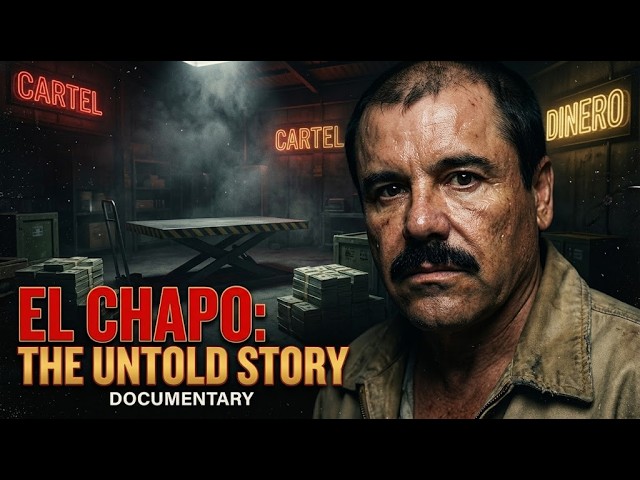
Up next in 10


They found the tunnel entrance hidden under a pool table in Tijuana. It stretched half a mile under the US border. Air conditioning. Rail tracks. Hydraulic doors. This wasn't a hole in the ground. This was engineering.
Joaquín "El Chapo" Guzmán, convicted in two thousand nineteen of drug trafficking and organized crime conspiracy, didn't just move drugs across borders. He moved them under borders. Through one hundred fifty tunnels that turned the Mexico-US boundary into the world's most sophisticated smuggling network.
This documentary investigates the engineering genius behind the tunnels, the corruption economics that built them, and the legacy that outlived the man. From crude drainage pipes to air-conditioned super-tunnels, this is the story of how one cartel boss reimagined the underground.
Some scenes are dramatic reconstructions based on court testimony, DEA reports, and investigative journalism. Dialogue is dramatized from documented accounts.
El Chapo is currently serving life imprisonment. His organization's alleged current activities are not covered in this documentary, which focuses on historical tunnel operations through two thousand seventeen.
📚 Sources & Further Reading:
→ United States v. Joaquín Guzmán Loera (Eastern District of New York Case Files)
https://www.justice.gov/usao-edny/us-v-joaquin-guzman-loera
→ DEA Tunnel Task Force Reports (Public Records)
https://www.dea.gov
→ "The Secret World of El Chapo's Tunnels" (National Geographic)
https://www.nationalgeographic.com
Show More Show Less View Video Transcript
0:00
They said he couldn't touch the surface, so he built an empire 30 ft below it.
0:08
February 9th, 2016. San Diego tunnel task force agents stand
0:14
in a warehouse in Otay Mesa, California. Standard drug bust. They expect bales of
0:21
marijuana, maybe cocaine. They don't expect the floor to open. Beneath a
0:26
hydraulic lift system hidden under pallets, a shaft drops 30 ft into the earth. The agents descend. What they
0:34
find isn't a tunnel. Its infrastructure half a mile long, 6 ft high, reinforced
0:42
concrete, ventilation ducts, electric lighting every 20 ft, a rail system with
0:48
modified mining cart. The walls are smooth, professional, the grade is
0:54
precise. The tunnel runs from Tijuana to California, passing 35 ft below the most
1:00
fortified border on Earth. This wasn't dug by amateurs with shovels. This was
1:06
engineered at the Tijana end. The entrance hides beneath a house. Normal
1:12
from the outside. Inside the floor contains a hydraulic platform. Hit a
1:18
switch. The platform lowers. Beneath it, a vertical shaft with a ladder. at the
1:24
bottom, the tunnel. The system cost an estimated $1 million to build. It moved
1:30
an estimated $30 million in narcotics before discovery. The tunnel is one of
1:37
150, and every single one connects to the same name. Join Gazman Lera, El
1:44
Chapo. convicted in 2019 of running a continuing criminal enterprise,
1:51
conspiracy to distribute cocaine and heroin, and international drug
1:56
trafficking. The charges detailed operations spanning three decades. The
2:02
evidence included testimony about tunnels, lots of tunnels. But this
2:07
documentary isn't about the violence. It's not about the executions or the
2:12
betrayals or the prison escapes that made him famous. This is about something
2:18
quieter, something that took more patience, more vision, more money. This
2:24
is about engineering. Some dialogue and scenes in this documentary are dramatic
2:30
reconstructions based on court testimony, DEA reports, and
2:36
investigative journalism. El Chapo is currently imprisoned. This documentary
2:42
covers historical operations through his 2017 capture and does not address
2:48
current alleged cartel activities. The Oté Mesa tunnel wasn't the first. It
2:54
wasn't even close. To understand how El Chapo became the tunnel king, you have
3:00
to go back back to when the border was just chain link fence and desert. Back
3:06
to when tunnels were crude. Back to when one man looked at the problem of the border and saw it differently than
3:12
everyone else. 1989. The Sinaloa cartel controls drug routes
3:19
from Mexico into the United States. But there's a problem. The border. US
3:25
customs. D. Every surface crossing is a risk. Cars get searched. Trucks get
3:31
x-rayed. People get caught. Joe Quinn Guzman is in his early 30s. Not the boss
3:37
yet, not famous yet, but he's watching, learning. He sees the same problem
3:43
everyone sees. The border is a wall. Except Guzman doesn't see a wall. He
3:48
sees dirt. And dirt can be moved. The first tunnel is discovered in Douglas,
3:53
Arizona. 1990. It's not sophisticated. A drainage pipe reinforced with wood
4:00
planks barely 4 ft high. You have to crawl, but it works. It runs from a
4:06
building in Aua Prietta, Mexico to a warehouse in Douglas, 300 ft. When
4:12
agents find it, there's still cocaine residue on the ground. Nobody knows who
4:17
built it. Not yet. But the method is established. Go under. One year later,
4:23
Nogaras, Arizona, customs agents notice something strange. A warehouse near the
4:29
border. Too much electrical usage. No logical reason. They get a warrant.
4:34
Inside they find the floor or what should be the floor. Instead, there's a shaft hand dug rough. It drops 15 ft,
4:43
then turns horizontal. The tunnel runs 200 ft into Mexico, ending in a house on
4:49
the other side. The walls are shored up with scrap wood. The air is thin.
4:55
There's no ventilation system, just a hole in the ground. Crude, dangerous,
5:00
but functional. Investigators start connecting the dots. Multiple tunnels,
5:06
similar construction, same roots, all moving product for the same organization,
5:12
Sinnoloa. And inside Sinoloa, one name keeps appearing in the intelligence
5:18
Guzman, the short guy, Elcharo. But these early tunnels are just prototypes.
5:24
Test runs because in 1993 something happens that changes everything. Guzman
5:31
gets arrested. Sent to Poente Grand Maximum Security Prison and from inside
5:37
a cell he starts planning something bigger. Prison doesn't stop him. It focuses him. He's got time. He's got
5:44
money. And he's got an idea forming. The border is getting harder. More agents,
5:50
better technology, ground penetrating radar, infrared cameras. The surface is
5:57
closing but underground. Underground is still open. Guzman studies. He talks to
6:03
engineers, architects, mining experts, people who understand earth and concrete
6:09
and structural load. He's not just thinking about moving drugs anymore.
6:14
He's thinking about infrastructure, permanent infrastructure. 2001 Guzman escapes Pente Grand. The
6:23
legend says he hid in a laundry cart. The reality is simpler. He bribed half
6:29
the prison. When he walks out, he's not just a drug trafficker anymore. He's a symbol. The man who beat the system. And
6:37
the first thing he does is go back to the tunnels. But this time, he's not digging drainage pipes. He's building
6:44
monuments. The technology evolves fast. By 2002, tunnels are being discovered
6:50
with electric lighting, ventilation shafts, concrete reinforcement, the
6:56
construction quality jumps. These aren't makeshift smuggling routes anymore.
7:02
These are engineered systems. A tunnel found in Tech 8 in 2003 has a concrete
7:08
floor poured and smoothed. The walls are timber braced every 6 ft. There's a pump
7:14
system for groundwater, a generator for lights. The tunnel cost an estimated
7:20
$200,000 to construct. It moved an estimated $10 million in product in 6
7:28
months. The economics are simple. Spend $200,000, make 10 million, lose the
7:34
tunnel to authorities, build another one. But here's the thing. The tunnels
7:39
aren't just about moving product. They're about psychology. Every tunnel discovered sends a message. We're under
7:46
you. Literally. You can build walls. We'll build worlds beneath them. Now,
7:52
here's where the story takes a turn no one expected. The US responds. 2003. The
7:59
San Diego tunnel task force forms. Joint operation. D. ICE Border Patrol US
8:06
Attorney's Office. Their job is singular. Find the tunnels. Shut them down. prosecute the builders. They start
8:14
mapping. Every tunnel discovered gets documented. Entry point, exit point,
8:19
depth, length, construction quality. They're looking for patterns and they find them. Most tunnels originate in
8:27
Tijana. Most exit in San Diego County. The average depth is 20 to 30 ft. The
8:34
average length is 1,500 ft. But there are outliers. A tunnel found in 2004
8:41
runs 3,000 ft almost a mile. It has a drainage system, a concrete arch
8:47
ceiling, rail tracks. The task force realizes something. These aren't being
8:53
built by random crews. This is coordinated, centrally planned. Someone
8:58
is managing this like a construction company. Hiring engineers, acquiring
9:04
equipment, bribing officials on both sides of the border. Investigators
9:10
interview captured smugglers. The story is always the same. We were hired. We
9:15
don't know by who. We got paid. We moved product. The tunnel was already there.
9:21
But one smuggler talks. He describes the system. The tunnels are built in phases.
9:28
First, a crew digs the shaft on the Mexico side, vertical, 30 to 40 ft down.
9:34
Once they hit the right depth, they start horizontal. A surveyor directs them, someone with engineering
9:41
knowledge, someone who understands grade and trajectory. The horizontal dig is
9:46
the hardest part. The earth has to be removed, hauled up the shaft, disposed
9:52
of secretly, tons of dirt, all vanishing without anyone noticing. That requires
9:58
logistics, trucks, workers, silence, and silence costs money. The smuggler
10:04
estimates each tunnel requires 50 to 100 workers, diggers, engineers, security,
10:11
bribe recipients. Each worker gets paid. The surveyors get paid more. The
10:17
officials get paid the most. A sophisticated tunnel costs $1 million to
10:22
build, maybe more, and El Chapo is building them faster than they can be
10:28
found, 2005. Two tunnels discovered in Nogalas, 2006.
10:35
Four tunnels in San Diego, 2007. Three in Klexico. The pace is accelerating and
10:43
the quality keeps improving. A tunnel discovered in 2008 in Santa Cidro has
10:49
features investigators have never seen. Air conditioning, not just ventilation.
10:55
Actual climate control. The temperature inside is 68°.
11:01
Comfortable. The tunnel has electric outlets every 50 ft. Lighting is
11:06
fluorescent professional. The walls are painted white. At the California exit,
11:12
the tunnel emerges inside a warehouse. The floor is a false floor hydraulic
11:17
lift. Push a button. The floor section rises beneath it the shaft. Lower
11:24
product down. Move it through. Raise it up on the other side. The whole system
11:29
is automated. This isn't a tunnel anymore. It's a machine. The task force
11:35
estimates this tunnel moved 2 tons of cocaine per week for 6 months before
11:41
discovery. That's an estimated street value of $240 million for a $1 million
11:48
investment. The return on investment is obscene. And years later, one name would
11:55
appear in the margins of every tunnel investigation, every intercepted communication,
12:02
every informant testimony. Guzman. But here's what the task force can't
12:07
understand. How is he managing this from the shadows? He's wanted. He's hunted.
12:13
He's moving constantly. And yet, the tunnel construction never stops. The
12:19
quality never drops. the locations are strategic, the execution is flawless,
12:25
someone is running this like a business, and that someone has resources that shouldn't be possible. Pay attention to
12:32
what happens next. It's easy to miss. 2009,
12:38
Mexican authorities arrest a civil engineer in Tijuana. His name is never
12:43
released. His profession is confirmed. He's carrying blueprints, tunnel blueprints, cross-sections, elevation
12:51
drawings, soil density calculations. This isn't amateur work. This is
12:57
professional architectural drafting. The engineer is interrogated. He admits to
13:03
designing 12 tunnels. 12. He describes the process. Clients approach him. They
13:10
provide two locations. Entry point, exit point. He surveys the route, tests soil,
13:17
calculates loadbearing requirements, designs a tunnel that won't collapse.
13:22
He's paid $50,000 per design. He never meets the client's face to face. All
13:29
communication is through intermediaries. He's told the tunnels are for infrastructure. He doesn't ask
13:36
questions. He knows better. The engineer is released. Insufficient evidence. Two
13:42
months later, another tunnel is discovered. His design. The Mexican government realizes something. The
13:49
tunnels aren't just a US problem. They're a Mexico problem. Because to build a tunnel in Tijuana, you need
13:56
permits. Or you need people to ignore the lack of permits. You need construction equipment moving through
14:03
neighborhoods. You need dump trucks removing earth. You need noise. Lots of
14:09
noise. And nobody notices. Nobody reports it. That's not silence. That's
14:15
complicity. Investigators start following the money. Not the drug money,
14:20
the construction money. Where are the building supplies coming from? The concrete, the rebar, the hydraulic
14:27
systems, the rail tracks. They find suppliers, legitimate businesses,
14:32
hardware stores, industrial equipment dealers. None of them are doing anything
14:38
illegal. They're selling supplies to contractors for construction projects.
14:43
The contractors pay cash. They provide fake business licenses. The suppliers
14:49
don't ask questions. One supplier in Tijuana reviews his records. Over 3
14:55
years, he sold 200 tons of concrete, 50 tons of rebar, 20 hydraulic lift
15:02
systems, all to the same shell company. The company doesn't exist anymore. The
15:08
address is abandoned. The supplier describes the buyers professional,
15:14
organized. They knew exactly what they needed, exactly how much they paid on
15:20
time. He thought they were building legitimate infrastructure. Maybe subway tunnels, maybe underground parking. He
15:28
had no idea. This is the part that matters. The tunnels aren't just engineering projects. They're corruption
15:35
projects. Every tunnel represents dozens of people who were paid to look away.
15:40
Border officials, police, inspectors, neighbors. The corruption network is as
15:47
sophisticated as the tunnels themselves. And that network traces back to one
15:52
economic reality. El Cho has more money than entire towns, more money than
15:59
police departments, more money than anyone trying to stop him, and he spends it strategically. A border official
16:06
makes $30,000 a year. El Chapo offers him $50,000 to forget he saw something
16:13
once. That's more than a year's salary. For one act of forgetting, the official
16:19
takes it. And now he's compromised. Now he's an asset. Now he doesn't just
16:25
forget once, he forgets every time. Because if he talks, he goes to prison,
16:30
too. Multiply that official by 100. That's the infrastructure, human
16:36
infrastructure, and it's invisible until it fails. 2010. The tunnels go quiet for
16:43
almost a year. No major discoveries. The task force wonders if they've won. If
16:49
the pressure worked, if El Sharpo moved on to other methods, they are wrong.
16:54
He's not moving on. He's evolving. November 2010. A tunnel is discovered in
17:01
Ot Mesa. But this one is different. This one is a super tunnel, 2,000 ft long,
17:07
more than a third of a mile, 90 ft deep. That's 9 stories underground. The tunnel
17:14
has a concrete floor, smooth, level rail tracks run the entire length. A
17:20
ventilation system with electric fans, lighting every 10 ft. The walls are
17:26
reinforced with steel I beams. The ceiling is arched, engineered to
17:31
distribute load. At the Mexico entrance, an elevator, not a ladder, an elevator.
17:37
It lowers product and personnel 60 ft to the tunnel level. At the US exit,
17:43
another elevator. The whole system is designed for volume, industrial volume.
17:50
When authorities raid it, they find 30 tons of marijuana in the tunnel. In
17:55
transit, 30 tons. The street value is estimated at $20 million and that's just
18:02
one shipment. The task force does the math. This tunnel cost an estimated $2
18:09
million to build. It was operational for less than a year. In that time, it
18:15
likely moved 100 tons of product. The revenue is estimated at $150 million.
18:22
$2 million investment, $150 million return in under a year. This is no
18:30
longer drug trafficking. This is industrialcale logistics. And the
18:36
blueprint spreads 2011. Three super tunnels discovered. 2012
18:43
4 2013 6. All with similar features. elevator
18:48
systems, rail tracks, climate control, industrial lighting. The construction
18:54
expertise is improving with each generation. Engineers are learning from failures, adapting to detection methods,
19:02
going deeper, building stronger, adding redundancy. A tunnel discovered in 2014
19:09
in Sanidro has a backup ventilation system. If the primary system fails, the
19:16
secondary activates automatically. That's not criminal ingenuity. That's
19:22
building code level safety engineering. Another tunnel has a communication
19:27
system. Intercoms at quarter mile intervals so workers at one end can
19:33
coordinate with workers at the other end. Real time underground. The
19:39
sophistication is astounding. And it's all traceable to one strategic vision,
19:45
Elcharo's vision. But before we go further, there's something investigators
19:50
never explained. How did he coordinate this? He's in hiding, constantly moving,
19:56
avoiding phones, avoiding digital communication. And yet the tunnel
20:02
projects continue on schedule, on budget. With precision, the answer is in
20:08
the structure. El Chapo doesn't manage the tunnels directly. He manages the
20:13
managers. He has tunnel bosses. Each one oversees a specific region. Tijana, no
20:20
galas, Mexicali. Each boss has autonomy, budget, authority. They hire the
20:26
engineers, they bribe the officials, they move the product. El Chapo just sets the vision. Go under, go deep, go
20:34
big. and the bosses execute because the incentive structure is perfect. Deliver
20:40
results, get rich, fail, disappear. 2012, one of the tunnel bosses is
20:46
arrested in Tijuana. Filipe Cabra Sabia. Convicted of organized crime. During
20:54
interrogation, he describes the operation. He's responsible for four
20:59
tunnels. He oversees a crew of 200 people. His annual budget is $5 million.
21:06
He reports to a left tenant. The left tenant reports to Guzman. Cabra
21:11
describes the process. A location is chosen. He hires a surveyor. The
21:17
surveyor maps the route, identifies obstacles, underground utilities, water
21:23
tables, soil types. The survey costs $50,000.
21:29
Once the route is approved, construction begins. A shaft crew digs the entry
21:34
point. A horizontal crew starts the tunnel. A concrete crew follows behind,
21:40
reinforcing. A systems crew installs lighting, ventilation, rails. Each crew
21:47
is separate, compartmentalized. If one crew gets caught, the others don't know who they are. Security is
21:55
layered. Lookouts watch the entry points. Bribed officials provide warning
22:00
if law enforcement gets close. If a tunnel is compromised, it's abandoned
22:05
immediately. No rescue attempts, no recovery, just seal it and move on.
22:11
Cabar estimates he lost two tunnels to discovery. Both were abandoned with
22:16
products still inside. Millions of dollars left behind. The cost of doing
22:22
business. And this pattern repeated in no Galas, in Kexico, in Mexali,
22:28
different bosses, same system, same outcome. By 2014, the DEA estimates 120
22:37
tunnels have been discovered since 1990. The actual number built, probably double
22:43
that, maybe more. Because for every tunnel found, another operates
22:48
undetected. The border is no longer a line on a map. It's a layer cake surface
22:54
underground and deeper underground. El Cho owns the depths. But in 2014,
23:01
something shifts. The Mexican government under pressure from the US intensifies
23:07
the manhunt. Not for the tunnels, for the man, for Guzman himself. February
23:14
2014. He's captured in Mazatlan, a seaside resort town. He's in a condo
23:20
with his wife. No security, no tunnel. The arrest makes global news. The
23:26
world's most wanted drug trafficker captured again. He sent to Aliplano
23:31
maximum security prison. The most secure facility in Mexico. Concrete steel.
23:38
24-hour surveillance. No chance of escape. The authorities are confident.
23:44
This time he stays. They are wrong. July 11th, 2015.
23:50
900 p.m. Security footage shows Guzman in his cell. He walks to the shower area
23:56
out of the camera's direct view, and then he's gone. Guards check the cell.
24:01
Empty. They search the shower. There's a hole in the floor, a perfectly cut
24:06
square, 18 in by 18 in. Beneath it, a ladder. Beneath the ladder, a tunnel.
24:14
The tunnel runs one mile, one full mile from the prison to a construction site
24:19
outside the perimeter. The tunnel is lit, ventilated. It has a modified
24:25
motorcycle on rails for transport. The motorcycle is still there, parked,
24:31
waiting. The engineering is flawless. The tunnel is 6 ft high, reinforced. It
24:37
required months to build, tons of earth removed, all without detection. Inside a
24:43
maximum security prison, the escape becomes legend. The tunnel becomes
24:49
proof. Proof that Elcharo's reach extends everywhere. Even inside the
24:54
walls designed to contain him. But here's the question nobody asks in the
24:59
moment. Who built that tunnel? How many people did it take? How much did it
25:04
cost? And how did nobody notice? The answer is the same as every other
25:09
tunnel. money, corruption, expertise. The same system that built 150 smuggling
25:16
tunnels built one prison escape tunnel. Same blueprint, same methods, same
25:22
results. Mexican authorities are humiliated. The US is furious. The
25:28
manhunt resumes. Bigger, more resources, more pressure. And 6 months later,
25:34
January 2016, they find him again in Los Mchis, a coastal town. He's in a safe
25:41
house with a tunnel. Of course, there's a tunnel. This one is crude, an emergency tunnel. It runs from the house
25:49
to a drainage system. When Mexican Marines raid the house, Guzman escapes
25:54
through the tunnel. He emerges in the street, steals a car, drives. He's
25:59
caught hours later on the highway. No tunnel can save him this time. January
26:05
8th, 2016, Guzman is arrested again.
26:10
This time he's extradited to the United States to face trial in the Eastern
26:16
District of New York. The trial starts November 2018. It lasts 3 months. The
26:24
evidence is overwhelming. Testimony from cooperating witnesses, intercepted
26:30
communications, financial records, and tunnels. Lots of testimony about tunnels. Witnesses
26:37
describe the Tijuana super tunnels, the nogalas drainage systems, the elevator
26:43
mechanisms, the rail cars, the ventilation, the lighting, every detail
26:50
documented, every tunnel connected to the organization, every organization
26:55
decision connected to Guzman. February 12th, 2019.
27:01
The jury convicts him on all counts. continuing criminal enterprise,
27:06
international drug trafficking, money laundering, conspiracy. The evidence
27:12
showed he ran a trafficking operation that moved over £440,000
27:18
of cocaine into the United States, billions of dollars in narcotics. July
27:24
17th, 2019, Guzman is sentenced life in prison plus
27:31
30 years. No possibility of parole. He's sent to ADX Florence, the supermax in
27:38
Colorado underground. Ironic. The man who built an empire beneath the earth
27:44
now lives beneath the earth permanently. But the tunnels don't stop. After his
27:50
conviction, the discoveries continue. 2019. Two new tunnels in San Diego 2020. One
27:59
in no galas 2021. A super tunnel in Ote Mesa, longer than
28:05
any previous tunnel, 3,000 ft. It has a drainage system, an elevator, rail
28:11
tracks, the same blueprint. Because here's the thing, El Chapo didn't just
28:16
build tunnels. He built a system, a methodology, a legacy. And that legacy
28:22
is transferable. The engineers he hired still exist. The corrupt officials still
28:29
exist. The economic incentives still exist. The border is still there. And
28:35
underneath the border, the earth is still movable. A new generation learns the blueprint. Go deep. Go long. Go
28:42
hidden. Move volume. Accept losses. Rebuild. The sin lower cartel continues
28:48
operations. New leadership. Same methods. The tunnels are part of the culture now. Part of the strategy.
28:56
They've evolved from Guzman's innovation into standard operating procedure. In
29:02
2023, the San Diego Tunnel Task Force releases updated numbers. Since 1990,
29:10
over 200 tunnels discovered, over 200. And the task force estimates that
29:16
represents only 60% of tunnels actually built. That means over 100 tunnels are
29:23
still out there, operational, hidden, moving product every day. The border
29:29
above is fortified walls, sensors, drones, billions of dollars in security
29:36
infrastructure, and beneath it all tunnels, silent, dark, profitable. El
29:41
Chapo is gone. The blueprint remains. Take a breath because from here on the
29:47
story only gets darker. The legacy isn't just about tunnels. It's about what the
29:53
tunnels represent. The idea that every system has a weakness. Every fortress
29:59
has a flaw. And if you have enough money, enough patience, enough vision, you can exploit it. Guzman looked at the
30:06
most fortified border in human history and saw opportunity, not obstacle.
30:12
Opportunity. And he was right. The numbers prove it. Estimated total cost
30:18
of all tunnels built under his leadership, $200 million. Estimated revenue from product moved
30:25
through those tunnels, $20 billion. 20 billion. That's a 100 to1 return on
30:32
investment over two decades. No legitimate industry matches that. No
30:38
stock, no real estate, no technology. The tunnels weren't just smuggling
30:43
routes. They were the most profitable infrastructure project in criminal history. And that's the lesson the next
30:50
generation learns. Not how to fight, how to build, how to engineer, how to bribe,
30:57
how to think long term. How to see the border not as a barrier, but as a business problem with a solution that
31:04
costs a million dollars and makes a hundred million. The violence gets the
31:09
headlines. The murders, the betrayals, the wars between cartels, but the
31:15
violence is just the surface. Beneath it literally is something more dangerous.
31:21
Infrastructure, systems, engineering, patience. That's what Elcharo
31:26
understood. That's what made him different. Other traffickers moved product over the border through
31:33
checkpoints in cars, in bodies. High risk, low volume. El Cho moved product
31:40
under the border in tunnels. Industrial volume, lower risk, higher reward. He
31:46
didn't just think differently. He built differently. And now sitting in a cell in Colorado, he's a symbol, not of
31:53
violence, of vision. The man who saw the underground as the future and built that
31:58
future one tunnel at a time. But there's a darker layer. the human cost, not the
32:04
rival cartel members, not the betrayers, the workers, the diggers, the people who
32:10
actually built the tunnels. Tunnel construction is dangerous. Cave-ins,
32:15
toxic air, flooding, workers die often, and when they die, they're buried in the
32:21
tunnel, sealed in. The tunnel is abandoned, another one starts. One
32:26
investigator estimates at least 50 workers died during tunnel construction over two decades. 50 buried in the
32:34
earth. No records, no names, no families notified, just gone. The engineer gets
32:40
paid. The boss gets paid. The official gets paid. The worker gets buried.
32:47
That's the hidden cost. The bodies under the border. Literal bodies in collapsed
32:52
tunnels that will never be found. encased in concrete, part of the infrastructure. El Chapo built an empire
33:00
on their backs, on their graves. And that empire's legacy is this. The tunnel
33:06
method is now permanent. It's in the playbook. It's taught. It's replicated.
33:11
Every cartel with resources attempts it. Sinaloa, Jaliscoco, Gulf, Juarez, all of
33:18
them. The innovation becomes standard. The blueprint becomes doctrine. In 2024,
33:25
US border officials testify before Congress. The tunnel threat is
33:30
escalating. New technologies are being detected. Fiber optic communication
33:36
lines inside tunnels, solar powered ventilation systems, modular
33:42
construction that allows rapid assembly. The tunnels are evolving faster than the
33:48
detection methods because the incentive is still there. The profit is still
33:53
massive. The risk is still acceptable and the border despite everything is
33:59
still just dirt and dirt moves. That's what El Chapo proved. Not that crime
34:05
pays. Everyone knows crime pays. He proved that engineering pays, that
34:11
infrastructure pays, that thinking in decades instead of days pays. He's in
34:17
prison. His organization is fractured. His sons run pieces of it. The Mexican
34:23
government has arrested dozens of his left tenants. The US has convicted
34:29
dozens more. But the tunnels keep appearing because the idea is immortal.
34:34
And ideas once planted are harder to kill than men. They can arrest the
34:40
tunnel king. They can lock him in the deepest cell. They can throw away the key, but they can't unbuild what he
34:47
built. They can't erase the blueprint. They can't remove the proof that the system works. 150 tunnels discovered,
34:56
documented, destroyed, and probably 100 more still operational, still moving
35:02
product still generating revenue. That's the empire, not the man, the method. The
35:09
evidence, if verified, would suggest that El Chapo Guzman didn't just run a drug cartel. He ran a civil engineering
35:17
firm specializing in subterranean infrastructure. He employed surveyors,
35:23
architects, electricians, hydraulic specialists. He managed projects worth
35:29
millions. He delivered on time, on budget, under the most hostile
35:34
conditions imaginable. In another life, he could have built subways, sewers,
35:40
underground transit systems, legitimate infrastructure. Instead, he built the
35:45
underworld literally. And that underworld still functions because he
35:50
didn't just build tunnels. He built a culture, a belief system. The belief that the border is theater, surface
35:57
level performance, and real power, real movement, real profit exists beneath it.
36:04
That belief is now embedded in the DNA of trafficking organizations.
36:09
It's taught to new recruits. It's discussed in safe houses. It's proven by
36:15
results. The border wall gets taller. The tunnels go deeper. More sensors get
36:21
installed. Better camouflage gets developed. More agents get deployed.
36:26
More officials get bribed. It's an arms race. Except one side is fighting
36:32
gravity. And gravity always wins. El Chapo understood gravity not as a force
36:38
to fight, as a force to use. go down beneath detection, beneath walls,
36:44
beneath radar, into the earth where sensors don't reach and cameras don't see. He turned physics into profit. And
36:52
now in ADX Florence, in a cell designed to erase identity, he sits. No windows,
36:59
no contact, no future. But beneath the border, the tunnels hum, rails carry
37:05
weight, lights flicker, air moves, product flows, his body is contained,
37:11
his legacy is not. So here's the question that matters. Was Joe Quinn
37:17
Guzman a criminal genius or just a man who understood that every wall has a
37:22
foundation and every foundation has earth beneath it? Did he innovate or
37:27
just exploit the obvious? Did he build an empire or just recognize that the
37:33
empire was already there waiting underground and all he had to do was
37:38
dig? The tunnels don't answer that. They just exist. Silent, dark, functional.
37:45
The evidence raises questions that deserve answers. The pattern invites
37:50
investigation. The scale demands respect even from those who condemn the purpose.
37:56
150 tunnels, billions in revenue, decades of operation, a methodology that
38:02
outlived the man. Some build monuments above ground, towers, temples,
38:08
structures that touch the sky. El Cho built his monuments below, where nobody
38:14
looks, where gravity does the work, where the earth keeps secrets. And those
38:19
secrets are still down there in the dark waiting. The border has a surface, but
38:26
power lives 30 ft below it. Was he a monster or a visionary? Comment one
38:31
word, monster or visionary. The tunnels weren't the end of the cartel's story.
38:36
They were the beginning of a new chapter. A chapter where infrastructure beats violence, where patience beats
38:43
speed, where engineering beats enforcement. That story continues. We
38:48
document it. Subscribe. Hit the bell. We go deeper every week. Every empire
38:55
leaves evidence. El Chapo's evidence is beneath your feet. The San Diego Tunnel
39:01
Task Force thought they were winning. 2006 through 2008, they developed new
39:07
detection methods, ground penetrating radar, seismic sensors, fiber optic
39:13
listening devices, millions of dollars in technology deployed along the border.
39:19
scanning, listening, waiting for the signature vibrations of digging, and the
39:25
tunnels kept appearing in places the sensors said were clear. Agent Scott
39:30
Garola runs tunnel investigations for the task force. 20-year veteran, he's
39:37
seen 40 tunnels, mapped them, documented them, and he can't shake one question.
39:43
How are they invisible until they are not? 2009. His team installs a sensor
39:49
grid in Otay Mesa. 60 sensors covering two square miles, the most concentrated
39:56
detection network on the border. The sensors can detect digging activity 30
40:02
ft down. They transmit data in real time, any vibration, any anomaly,
40:08
instant alert. 3 months later, a tunnel is discovered. Inside the sensor grid,
40:14
700 ft long, 30 ft deep, fully operational. The sensors detected
40:19
nothing. Gary reviews the data. No alerts, no anomalies, just clean
40:25
readings, like the Earth wasn't disturbed at all. He brings in a geologist. Soil analysis. Maybe the soil
40:33
composition masked the vibrations. The geologist tests the soil is standard
40:39
clay and sand. Nothing special, nothing that would block seismic readings. The
40:46
geologist offers another explanation. The digging happened slowly, very
40:51
slowly, over months, maybe a year. The vibrations were so gradual the sensors
40:57
categorized them as natural settling. Background noise. Garyola does the math.
41:03
A 700 ft tunnel dug so slowly the sensors ignore it. That's not
41:08
desperation. That's discipline. Someone is teaching the dig crews patience.
41:14
Teaching them to work in shifts. Move inches per day, not feet, inches. Spread
41:21
the work over time. Let the earth settle between sessions. Avoid the detection
41:26
threshold. That level of operational security doesn't come from street level
41:31
smugglers. that comes from the top from someone who understands the technology
41:37
and how to defeat it. The tunnel isn't just infrastructure. It's counterintelligence.
41:43
And this pattern repeated in no galas in Mexali in Kexico. Sensor grids
41:50
installed, tunnels appearing inside them, all built slowly enough to avoid
41:56
detection. The task force adapts. They install more sensors, closer spacing,
42:02
higher sensitivity. If slow digging is the countermeasure, they'll detect slower vibrations.
42:10
2010, new sensor generation deployed. Sensitivity increased by 40%. Now they
42:17
can detect vibrations from hand tools, shovels, pickaxes, anything metal
42:23
striking earth. The alert system lights up. Constant alerts, hundreds per day.
42:29
Every construction project, every foundation repair, every homeowner digging a pool. The sensors are too
42:37
sensitive. The signal to noise ratio is broken. Agents spend months chasing
42:43
false positives, digging permits for basement, utility line repairs,
42:48
legitimate construction. The sensors are working, but they are working too well.
42:54
And while agents chase false alerts, real tunnels get built. Because now the
42:59
smugglers know the sensors are hyper sensitive. They know every construction
43:04
project creates alerts. So they build tunnels near construction sites. The
43:10
alerts blend in. The digging signature is identical. Legitimate construction
43:17
becomes camouflage. A tunnel discovered in 2011 exits inside a warehouse under
43:24
renovation. The warehouse has permits, legal construction, concrete being
43:30
poured, rebar being installed, and beneath all that activity, a tunnel. The
43:35
sensors flagged it, but so did 50 other construction sites that month. The
43:41
agents checked 12, not this one. Not until the warehouse owner reported
43:47
strange sounds from the basement. By the time agents arrive, the tunnel is
43:52
complete. Operational product is already moving. The task force realizes they're
43:59
not fighting smugglers. They are fighting systems engineers, people who
44:04
understand detection technology who study it, who adapt faster than the
44:09
technology updates. Agent Garyola interviews a captured tunnel supervisor
44:15
in 2012. The supervisor describes the process. Before digging starts, they
44:22
research. What sensors does the US use? What's the detection range? What's the
44:28
sensitivity threshold? They find the specifications. Sometimes from public records, sometimes
44:35
from bribed officials, sometimes from the manufacturers. The sensors are
44:41
commercial technology sold to governments, to mining companies, to construction firms. The specs are
44:48
available for a price once they know the sensor capabilities they design around
44:53
them. Dig below detection depth. Move slower than detection speed. Time the
45:00
work when traffic vibrations are highest. Rush hour. When the freeway nearby generates constant seismic noise,
45:08
the tunnel signature disappears into the background. The supervisor describes one
45:14
tunnel that was dug exclusively between 700 a.m. and 900 a.m. morning commute.
45:21
The freeway vibrations masked everything. 2 hours of work per day over
45:26
18 months. The tunnel was completed. The sensors never flagged it. 18 months.
45:33
That's not a smuggling operation. That's a construction project with project
45:38
management. Timelines, milestones, quality control. The supervisor says he
45:44
reported progress weekly to a boss. The boss reported to someone higher. The
45:50
chain went up. Decisions came down. Adjust the timeline. Change the exit
45:56
point. Increase the depth. Professional feedback. Professional execution. He
46:02
never met the top, never knew the name, but he knew the system worked because the tunnels worked. Now, here's where
46:09
the story takes a turn no one expected. The US isn't just fighting tunnels on
46:15
the Mexico border, 2013. A tunnel is discovered on the Canada
46:20
border in British Columbia. It runs from a house in Canada to a house in
46:25
Washington State. 300 ft climate controlled lit rail system. This isn't a
46:32
cartel tunnel. This is a different organization, but the design is identical. Same methods, same
46:39
engineering, same sophistication. The blueprint has spread beyond Sinaloa,
46:46
beyond Mexico. The methodology is viral. Investigators find evidence of knowledge
46:52
transfer. engineers who worked on Mexico tunnels consulting on Canada tunnels for
46:59
a fee. They're selling expertise. Tunnel construction as a service. The business
47:05
model is globalizing because the economics work everywhere. Any border
47:10
with enforcement creates demand for tunnels. US Mexico, US, Canada, even
47:17
tunnels between US states with different drug laws. A tunnel discovered in 2015
47:24
runs from Colorado to Wyoming. Not international, interstate, moving
47:30
marijuana from legal Colorado to illegal Wyoming. 200 ft. Crude but functional.
47:37
The idea is everywhere now. Where there's a border, dig under it. But back to Mexico. Because that's where the
47:44
innovation continues. That's where the engineering arms race accelerates.
47:50
2014 task force agents discover something new. A tunnel with a false floor. The
47:57
tunnel is obvious, lit, ventilated, clearly operational. Agents document it,
48:03
destroy it. Mission complete. 6 months later, a smuggler is arrested. During
48:09
interrogation, he mentions the Oté Mesa tunnel, the one that was destroyed. He
48:15
says it's still operational. The agents are confused. They destroyed it.
48:20
Concrete poured into the shaft. The entrance sealed. Finished. The smuggler
48:25
laughs. He says they destroyed the decoy tunnel. The real tunnel is 10 ft below
48:31
it. Parallel route. The decoy was meant to be found to satisfy the task force to
48:37
close the investigation. While the real tunnel continued operations beneath.
48:43
Agents returned to the site. Ground penetrating radar. They scan deeper and
48:48
there it is. A second tunnel 40 ft down beneath the destroyed tunnel. Same entry
48:55
point, same exit point, just deeper. The decoy cost an estimated $200,000 to
49:03
build. Its only purpose was to be discovered, to end the investigation,
49:08
while the real tunnel, which cost $2 million, kept operating. That's not
49:13
criminal behavior. That's strategic deception, military level deception. The
49:20
task force realizes they need to assume every tunnel has a backup. Every
49:25
discovery might be a decoy. They can't trust the first find. But resources are
49:31
finite. They can't excavate 40 ft deep at every site. They don't have the
49:36
budget. They don't have the time. And the cartels know it. They're not outspending the task force. They're
49:42
outthinking them. Agent Gary describes the frustration. We find a tunnel. We
49:48
celebrate. We hold a press conference. Tons of drugs seized. Tunnel destroyed.
49:54
Success story. And two weeks later, product is flowing again. Same route,
50:00
different tunnel or the same tunnel deeper. We don't know until someone talks and nobody talks until they are
50:07
caught. The cycle is endless. build, operate, get discovered, build again.
50:14
The losses are acceptable. The profit margin absorbs them because here's the
50:19
math. A super tunnel costs $2 million. It operates for an average of 8 months
50:26
before discovery. In those 8 months, it moves an estimated $50 million in
50:32
product. Even if the tunnel is discovered and destroyed, the return is
50:37
25 to1. 25 times the investment. No business abandons a 25:1 return because
50:45
of risk. They absorb the risk. They budget for losses. They keep building.
50:51
And that's exactly what happens. The tunnel construction never stops. Even as
50:56
arrest rates increase, even as technology improves, even as cooperation
51:02
between US and Mexico intensifies. 2015.
51:07
Mexico creates its own tunnel task force. Collaboration with the US shared
51:14
intelligence. Joint operations. The goal is to hit the tunnels from both sides
51:19
simultaneously. Shut down the entry and exit at the same time. First joint operation. Tijana and
51:27
San Diego teams coordinate. They identify a tunnel under construction.
51:32
Surveillance confirms activity on both sides. They plan a simultaneous raid.
51:38
Timing synchronized. The day of the raid, both teams move. The US team hits
51:44
the San Diego warehouse. Empty. No tunnel entrance, no shaft, nothing. The
51:51
Mexico team hits the Tijana house. Same result. Empty. The intelligence was
51:57
good. The location was right, but the tunnel isn't there. Later analysis shows
52:03
the tunnel was there 3 days earlier, but it was filled in completely. 70 ft of
52:09
tunnel, erased, tons of concrete poured, smoothed over, made invisible. Someone
52:14
warned them, someone inside the operation. Mexican side or US side,
52:20
doesn't matter. The leak exists. And until it's found, every joint operation
52:26
is compromised. The task forces realize the corruption isn't just about
52:31
construction. It's about intelligence. Someone is selling information. Someone
52:37
with access to raid plans, to surveillance schedules, to task force
52:42
strategy. That someone could be an agent, could be an analyst, could be a cler who sees the paperwork. The cartel
52:50
doesn't need to corrupt everyone, just one person, one person with access. And
52:56
finding that person is almost impossible because the moment you investigate internally, the leaks stop. The person
53:04
goes quiet and the tunnels continue. It's a perfect intelligence problem with
53:09
no perfect solution. Stop. Rewind that in your mind because it matters. The
53:16
tunnels aren't just engineering projects. They're intelligence operations. The cartels know what the
53:22
task force knows. They know where the sensors are. They know when raids are planned. They know which officials can
53:29
be trusted and which can't. That intelligence network is as valuable as the tunnels themselves may be more
53:37
valuable because tunnels can be rebuilt. But intelligence networks once exposed
53:43
collapse. So the cartels protect the network. Compartmentalization,
53:49
need to know access, counter surveillance. the same methods intelligence agencies use applied to
53:57
criminal infrastructure. A former DEA analyst speaking anonymously in 2016 describes the
54:05
challenge. We're fighting an organization that operates like a state. They have intelligence divisions,
54:12
engineering divisions, finance divisions, HR. They recruit, they train,
54:19
they promote based on competence. It's a corporation with better operational
54:24
security than most corporations. The analyst describes captured financial
54:29
records from a sin lower cell line items for tunnel construction budgeted at $5
54:36
million annually with subcategories, labor, materials, bribes, engineering
54:44
consultation. Each category has a manager. Each manager reports expenses
54:49
monthly. This isn't a criminal gang. This is a business unit with KPIs,
54:56
performance reviews, profit and loss statements. And the tunnels are just one line item, one division. The
55:03
organization has others. Surface smuggling, money laundering, security.
55:09
Each operates semi-independently. Each has a budget. Each delivers results
55:15
or faces consequences. The tunnel division's KPI is simple product moved
55:21
per dollar invested. The target is 20 to1. Most tunnels exceed that. Some hit
55:28
50 to1. The division is a high performer. So it gets more budget, more
55:34
resources, more autonomy because the organization rewards what works and
55:40
tunnels work. By 2016, the estimated annual investment in tunnel construction
55:47
across all cartels is $20 million. The estimated return is over $1 billion
55:54
billion. The ROI is obscene and sustainable because even with
56:00
discoveries, even with arrests, the math holds. Lose half the tunnels, still
56:06
profitable. Lose 3/4, still profitable. the margin is that high and as long as
56:12
the margin holds the tunnels continue forever or until the economic model
56:18
breaks which would require eliminating demand or eliminating profit. Neither is
56:25
happening. The US invests billions in border security. Walls, sensors, agents,
56:32
drones, all focused on the surface. The cartels invest millions in going beneath
56:37
the surface. And the millions beat the billions because the millions are targeted, specific, efficient. Every
56:46
dollar spent on a tunnel generates 20 in return. How many government programs can
56:51
claim that the efficiency is the advantage and the cartels know it? 2017.
56:59
A super tunnel is discovered in St. Louis, Arizona. This one breaks records.
57:05
4,000 ft. 3/4 of a mile. 45 ft deep. It
57:10
has a ventilation system with solar panels. The tunnel is energy self-sufficient. It has a water drainage
57:18
system with electric pumps, backup power generators. The engineering is cutting
57:24
edge. The construction cost is estimated at $4 million. The revenue before
57:30
discovery is estimated at $200 million 50 to1 return in 14 months of operation.
57:39
When agents raid the exit point, they find meticulous records, manifests,
57:45
shipment logs, maintenance schedules. The tunnel is managed like a shipping facility, which functionally it is. The
57:53
logs show the tunnel moved product three times per week. Each shipment, two tons.
57:59
Consistent schedule, Tuesdays, Thursdays, Saturdays. The regularity is
58:05
stunning. This isn't opportunistic smuggling. This is scheduled logistics.
58:11
A shipping manager is arrested at the site. During interrogation, he describes
58:16
the operation. He's responsible for coordinating pickups. He receives a
58:22
manifest from Mexico. product type, quantity, arrival time. He arranges
58:28
transport on the US side, trucks, drivers, delivery locations. He's paid
58:34
$75,000 per year. Salary, not commission, salary with benefits, health insurance for his
58:42
family, paid through a shell company, legitimate on paper. He's been doing this for 6 years across three different
58:49
tunnels. When one tunnel gets discovered, he's reassigned to another. Same job, same pay, different location.
58:57
He describes his boss. Professional, organized, provides training, conflict
59:03
resolution, performance feedback, annual reviews. He's treated better than his
59:09
previous job in logistics for a legitimate shipping company. The cartel
59:14
offers better management than legitimate industry. because they can, because
59:20
their margins allow it, because keeping good talent is cheaper than training new
59:25
talent. The shipping manager's testimony is damning not because it reveals
59:31
violence, because it reveals benality. The operation is boring, routine,
59:37
professional, like any other logistics job. Except the product is illegal and
59:43
the infrastructure is underground. That benality is the most dangerous thing
59:49
because it's sustainable. Violence burns out. Chaos collapses. But routine
59:55
routine lasts forever. And the tunnels are routine now. For the cartels, for
1:00:01
the task forces, for the border communities, everyone knows they exist.
1:00:07
Everyone knows they'll continue. It's just part of the landscape. Take a breath. Because from here on the story
1:00:14
only gets darker. The human cost of the tunnels isn't just the workers who die
1:00:19
during construction. It's the communities along the border. The neighborhoods where tunnels appear.
1:00:26
Where houses are bought by shell companies. Where strangers move in. Where noise happens at night. Where
1:00:33
everyone knows what's happening but nobody talks. Because talking is dangerous. Not just from the cartels,
1:00:41
from your neighbors who might be on the payroll, who might report you, who might
1:00:46
see you as a threat to their income. A tunnel discovered in 2018 in Ngalas
1:00:52
exited inside a house. A residential neighborhood, families, kids. The house
1:00:58
was purchased 2 years earlier. Cash sale by a Shell company based in Guadalajara.
1:01:05
The neighbors were interviewed. They all noticed the activity. Trucks at odd hours, noise from the basement, strange
1:01:12
people coming and going, but nobody reported it. One neighbor admits why. He
1:01:18
says, "You report it, they know it's you. Your house is next door. Your kids
1:01:23
play in the yard. You think they don't know where you live." Fear creates silence. Silence creates space. Space
1:01:31
allows construction. Construction enables trafficking. The cycle feeds
1:01:36
itself and the economic pressure is real. Border communities are poor. Jobs
1:01:42
are scarce. The cartels pay well. A lookout makes $500 per week just to
1:01:48
watch, to report police activity. To send a text message when agents are
1:01:53
near, that's more than minimum wage. For easier work, no taxes, cash weekly. The
1:02:01
temptation is real and the justification is easy. I'm not hurting anyone. I'm
1:02:07
just watching. What they do with the information isn't my problem. Except it
1:02:12
is. Because every lookout enables the system. Every bribed official enables
1:02:18
the system. Every silent neighbor enables the system. The tunnels don't
1:02:23
exist in isolation. They exist inside a web of complicity. economic, social,
1:02:30
structural, and that web is harder to destroy than the tunnels. Because you
1:02:35
can fill a tunnel with concrete, but you can't fill poverty with concrete. You
1:02:40
can't fill fear with concrete. The task force knows this. They arrest the
1:02:46
builders, the operators, the managers, and within weeks, new people fill those
1:02:51
roles because the demand exists. The infrastructure exists, the economic
1:02:57
incentive exists. Arresting individuals doesn't break the system, it just
1:03:02
creates job openings. Agent Gary in a 2017 interview admits the limitation. He
1:03:10
says, "We can shut down tunnels faster than they build them. But we can't shut down the reason they build them. As long
1:03:18
as there's profit, there will be tunnels. We're not fighting a cartel. We're fighting capitalism. And
1:03:25
capitalism doesn't lose." That statement is the quiet admission. The task force
1:03:31
isn't winning. It's managing. managing the rate of construction, managing the
1:03:36
volume of traffic, managing the public perception, but stopping it. Nobody
1:03:42
believes that's possible anymore. The tunnels are permanent, part of the border infrastructure, like bridges,
1:03:49
like highways, except invisible and illegal and unstoppable. By 2019, the
1:03:57
DEA estimates 150 tunnels are operational at any given time.
1:04:03
50 simultaneously moving product every day. The volume is
1:04:08
staggering. The coordination is impressive. The economic impact is
1:04:14
incalculable. And all of it traces back to one insight, one idea, one man's
1:04:20
vision. Go under. El Cho didn't invent tunnels, but he industrialized them. He
1:04:26
turned a tactic into a strategy, a method into a system, a tool into an
1:04:32
empire. And that empire, even with him in prison, even with his organization
1:04:38
fractured, continues because the idea is bigger than the man. The system is
1:04:44
stronger than the founder. The tunnels are El Chapo's legacy, not the violence,
1:04:49
not the escapes, the tunnels. And that legacy is still being written. Every day, 30 feet underground. August 2019.
1:04:59
Border Patrol agents discover a tunnel in Yuma, Arizona. Standard raid
1:05:04
protocols. They expect drugs. They find people. 47 individuals huddled in the
1:05:10
tunnel waiting, not workers, not smugglers. Migrants paying customers.
1:05:17
Each one paid between $8,000 and $15,000 to be guided through the tunnel into the
1:05:23
United States. The economics are immediate. 47 people. Average payment
1:05:30
$10,000. That's $470,000 for one trip through one tunnel. The
1:05:37
tunnel cost an estimated $300,000 to build. First trip paid for construction.
1:05:43
Everything after is profit. The cartels realized something. Tunnels move weight.
1:05:49
Drugs are weight, but people are weight, too. And people pay more per pound than cocaine. A kilogram of cocaine wholesale
1:05:58
is $30,000. A human smuggling customer is $10,000.
1:06:04
An average person weighs 70 kg. That's 70 times more valuable than the
1:06:10
equivalent weight in cocaine per unit volume. The math is brutal. and clear.
1:06:16
Human smuggling through tunnels is more profitable than drug smuggling. Lower
1:06:21
risk, higher margins, and the demand is infinite. The tunnel network built for
1:06:28
drugs is now dualpurpose infrastructure, product, and people, sometimes
1:06:34
simultaneously. A tunnel discovered in 2020 in Mexalei
1:06:39
had two chambers, separate routes within the same tunnel system. One chamber for
1:06:44
narcotics, one chamber for migrants. They never mixed. Professional
1:06:50
segmentation, different crews, different schedules, maximum efficiency. When
1:06:56
agents raided it, they found manifests for both operations. Drug shipments
1:07:02
logged on Tuesdays and Thursdays, human shipments on Wednesdays and Saturdays.
1:07:08
The logistics were coordinated to avoid overlap, to minimize risk, to maximize
1:07:15
capacity. The tunnel was a multi-use facility. Like a highway with different
1:07:20
lanes, each lane generating revenue, each lane managed separately. The border
1:07:27
patrol realizes the threat has expanded. It's not just narcotics into addiction
1:07:33
anymore. It's human trafficking and human trafficking has different stakes,
1:07:38
different victims, different urgency. Migrants in tunnels face dangers. Drug
1:07:44
shipments don't. Tunnels flood. Ventilation fails. Structural collapses
1:07:49
happen. And when they do, people die. Trapped underground in the dark miles
1:07:56
from either entrance. October 2020. A tunnel is discovered in no galas after a
1:08:03
collapse. The ceiling caved in 300 ft from the US exit. When rescue teams
1:08:09
arrive, they find 12 bodies, migrants crushed by falling concrete and earth.
1:08:15
They'd been dead for approximately 2 weeks. The tunnel operators sealed both
1:08:20
ends and abandoned it. Left the bodies inside. No rescue attempt, no
1:08:27
notification. just seal it and build another tunnel somewhere else. The 12 people paid to cross. They crossed into
1:08:34
graves. The families are never notified. The bodies are never identified. They
1:08:39
are buried as Jon does. Jane does. Unknown. The tunnel becomes a tomb. And
1:08:46
this pattern repeated across the border. Different tunnels, same outcome. A
1:08:51
former smuggler testifying in 2021 describes the business model. He says,
1:08:57
"People are easier than drugs. Drugs get tracked. Drugs get investigated. Drugs
1:09:03
have law enforcement attention. People are just migrants. If they die, nobody
1:09:10
with power cares. No task force. No senator demanding answers. Just another
1:09:16
statistic. The cynicism is staggering, but the assessment is accurate. Tunnel
1:09:22
related migrant deaths don't generate headlines. They don't trigger investigations. They're invisible just
1:09:28
like the tunnels. And invisibility enables the business model. The cartels
1:09:34
charge for passage. They provide no safety, no guarantees. Payment is
1:09:39
upfront, non-refundable. If the customer dies, that's not a refund issue, that's
1:09:46
attrition. The profit margin on human smuggling through tunnels is estimated
1:09:51
at 90%. 90. The costs are minimal. The tunnel is
1:09:57
already built, already operational, adding human traffic is just scheduuling. The revenue is almost pure
1:10:04
profit. By 2021, investigators estimate 30% of tunnel traffic is human
1:10:11
smuggling. 30%. That's a fundamental shift. The tunnels started as drug
1:10:18
infrastructure. They've evolved into multi-threat. And the threats are expanding beyond
1:10:24
drugs and people. Because if you can move cocaine and humans through a tunnel, you can move anything. Weapons,
1:10:33
cash, contraband, fugitives. 2022. A tunnel in Tijana is raided. Agents find
1:10:40
something unexpected. firearms, American firearms, AR-15 rifles, handguns,
1:10:47
ammunition, thousands of rounds moving south from the US into Mexico. The
1:10:54
cartels are using the tunnels in reverse, importing guns because guns are
1:11:00
legal and accessible in the US and expensive and restricted in Mexico. The
1:11:06
profit margin on gun trafficking south is substantial. Buy a rifle in Arizona
1:11:12
for $800. Sell it in Sinoa for $3,000. The tunnel provides the route. The
1:11:19
infrastructure is birectional. Drugs north, guns south, people north, money
1:11:25
south. The tunnels are trade routes, underground trade routes, moving
1:11:31
whatever generates profit. A senior DEA official speaking at a 2023 conference
1:11:38
describes the evolution. He says the tunnels are no longer single purpose.
1:11:43
They are general infrastructure like a highway system. You don't build a highway just for cars. You build it for
1:11:50
trucks, buses, motorcycles, whatever needs to move. The tunnels are the same.
1:11:56
Multi-use, adaptive, profitable. That adaptability is what makes them so
1:12:02
dangerous and so permanent. Because even if drug demand decreased, the tunnels
1:12:08
would still have value. Humans smuggling, gun running, cash transfers.
1:12:14
The infrastructure finds new uses. But before we go further, there's something the task force only recently discovered.
1:12:22
Something that changes the entire threat model. The tunnels aren't just physical
1:12:28
infrastructure. They are becoming digital infrastructure. 2023
1:12:34
a super tunnel is discovered in Ot Mesa. The engineering is expected. Rails,
1:12:40
lighting, ventilation standard. But there's something new. Fiber optic cable
1:12:46
running the entire length of the tunnel. Professionally installed. Terminated at
1:12:52
both ends with network equipment. The tunnel has internet, high-speed internet, redundant connections, backup
1:13:00
power for the network gear. Investigators are confused. Why does a
1:13:05
smuggling tunnel need internet? The answer is in the seized equipment,
1:13:10
encrypted communication systems, realtime inventory management, digital
1:13:16
manifests. The tunnel isworked, connected, managed remotely. Operators
1:13:22
on the Mexico side can see realtime status on the US side. Product loaded,
1:13:28
product in transit, product delivered, all tracked digitally with timestamps
1:13:34
with GPS coordinates at the exit point. The system is sophisticated,
1:13:40
cloud-based, accessible from anywhere. The tunnel operators don't need to be
1:13:45
physically present. They can manage the operation from hundreds of miles away
1:13:50
from different countries. The digital infrastructure makes the tunnels harder to disrupt because arresting the people
1:13:58
at the tunnel doesn't stop the operation. The management is remote,
1:14:03
distributed, replaceable. It's the same evolution that happened in legitimate logistics.
1:14:10
Amazon doesn't need warehouse managers physically present. They manage remotely
1:14:16
through systems through networks. The cartels are applying the same model. And
1:14:22
the implications are terrifying because if the tunnels areworked, they can be
1:14:27
coordinated. Multiple tunnels operating as one system. Load balancing. If one
1:14:34
tunnel is compromised, traffic shifts to another instantly, automatically. The
1:14:40
task force is no longer fighting individual tunnels. They're fighting a network, a mesh network underground. A
1:14:49
cyber security analyst contracted by ICC in 2024 examines the seized network
1:14:56
equipment. She describes the architecture. Multiple tunnels connected to a central management system. Each
1:15:03
tunnel has sensors, motion detectors, environmental monitors. If authorities
1:15:10
breach one end, the system triggers alerts. Operators can shut down
1:15:15
remotely, seal the tunnel, destroy evidence, all from a laptop anywhere in
1:15:21
the world. The analyst says this isn't criminal improvisation.
1:15:26
This is enterprisegrade infrastructure. The kind of system you'd see managing a
1:15:32
shipping company or a data center. Professional, redundant, resilient. She
1:15:39
estimates the digital infrastructure cost an additional $500,000
1:15:44
per tunnel on top of the physical construction costs. That's a significant
1:15:50
investment, which means the return justifies it. And it does because the
1:15:55
digital systems reduce risk, improve efficiency, increase throughput. A
1:16:01
network tunnel can move 30% more product than a non-network tunnel. same physical
1:16:08
capacity, better management. The ROI on the digital infrastructure is clear and
1:16:14
the cartels once again are ahead of law enforcement because the task force
1:16:20
doesn't have equivalent systems. They are still coordinating through emails
1:16:25
and phone calls. The cartels are coordinating through encrypted mesh networks. The technological gap is
1:16:32
widening, not closing. Stop. Rewind that in your mind because it matters. The
1:16:39
tunnels started as holes in the ground. They evolved into engineered infrastructure.
1:16:45
Now they're becoming smart infrastructure connected, monitored, managed by algorithms. The next
1:16:52
generation will likely include AI, predictive models for law enforcement,
1:16:58
patrol patterns, automated traffic routing, machine learning to optimize
1:17:04
dig locations based on soil analysis and detection probability. It sounds like
1:17:10
science fiction, but the trajectory is clear. Every innovation in legitimate
1:17:16
logistics gets adopted by the cartels because they have the money, the
1:17:21
motivation, and the lack of regulatory constraints. A legitimate company can't
1:17:27
experiment recklessly. Regulations, liability, oversight. The cartels have
1:17:34
none of that. They can innovate faster, fail faster, adapt faster, and they do.
1:17:40
Every tunnel generation is more sophisticated than the last. Every defeat teaches a lesson. Every success
1:17:48
gets replicated. The learning curve is steep and relentless. Now pay attention
1:17:54
to what happens next. The tunnels are also changing geopolitically because
1:17:59
they're not just a US Mexico issue anymore. The methodology is spreading
1:18:05
globally. 2023. A tunnel is discovered between Lebanon
1:18:10
and Israel. 600 ft. Concrete reinforced, ventilated. The design is identical to
1:18:18
Mexico US tunnels. Same engineering principles. Same construction methods.
1:18:25
Investigators find evidence of knowledge transfer. Engineers with experience on
1:18:30
cartel tunnels consulting on Middle East tunnels. The expertise is mercenary
1:18:36
available to whoever pays. The tunnel blueprint is now a global commodity
1:18:42
sold, traded, taught. The methods pioneered by El Chapo are being applied
1:18:48
to conflict zones to sanctions evasion to weapons trafficking. A tunnel
1:18:54
discovered in 2024 between North Korea and China shows similar sophistication.
1:19:01
rail system, electrical infrastructure. The purpose is unclear, but the
1:19:07
capability is obvious. Someone is building cartel-grade tunnels in Asia.
1:19:12
The threat is metastasicizing. What started as a drug trafficking innovation is now a global
1:19:19
infrastructure model. Any border, any barrier, any enforcement system. The
1:19:25
solution is the same. Go under. And the tools to go under are increasingly
1:19:31
accessible. Tunnel boring equipment, ground penetrating radar for route
1:19:36
planning, structural engineering software, all commercially available,
1:19:42
legal to purchase. A task force report from 2024 warns that tunnel construction
1:19:48
is becoming democratized. The specialized knowledge that used to be rare is now available. online forums,
1:19:57
dark web marketplaces, consultation services. Anyone with money
1:20:03
can hire tunnel expertise and the expertise is proven. Decades of
1:20:09
successful operations, hundreds of tunnels, billions in product moved. The
1:20:15
return on investment is documented, the methods are refined, the risks are
1:20:20
understood. It's a mature industry now with best practices, standards, vendor
1:20:27
ecosystems. That maturity is what makes it unstoppable because mature industries
1:20:34
don't disappear. They consolidate, they optimize, they grow. And the tunnel
1:20:40
industry is growing. In Mexico, in Central America, in South America,
1:20:45
Colombia has discovered tunnels. Ecuador, Peru, every country with
1:20:50
enforcement and profit incentive. The map of tunnel discoveries is expanding.
1:20:57
The density is increasing. The sophistication is rising. And every
1:21:02
tunnel everywhere traces back to the same intellectual origin, the same
1:21:08
blueprint, the same vision. El Chapo's vision, 30 ft down, beneath the surface,
1:21:15
beneath enforcement, beneath visibility. He's been in prison since 2017, 7 years.
1:21:22
And in those 7 years, the tunnel count has doubled. The technology has advanced. The geographic spread has
1:21:29
exploded. His imprisonment changed nothing because the idea is independent
1:21:35
now, self- sustaining, viral. You can imprison the man. You can't imprison the
1:21:41
method. The legacy is global. The impact is permanent. The infrastructure is
1:21:47
unstoppable. But there's a darker question nobody wants to ask. If the
1:21:52
tunnels can move drugs, people, guns, and money. What else can they move?
1:21:58
Chemical weapons, biological materials, radioactive substances. Anything that
1:22:05
fits in a tunnel can cross a border undetected. A 2024 threat assessment by
1:22:11
the Department of Homeland Security includes a section on tunnel-based WMD
1:22:17
trafficking. The probability is currently low, but the possibility is
1:22:23
non zero and the consequences would be catastrophic. One tunnel, one shipment,
1:22:30
one weapon, and the border infrastructure that moved billions in cocaine could move something infinitely
1:22:36
worse. The report recommends increased tunnel detection investment, enhanced
1:22:43
sensor networks, AI powered analysis, international cooperation. But the
1:22:50
recommendations require funding, political will, sustained attention, and
1:22:56
tunnels don't generate political will. They're invisible, silent, easy to
1:23:01
ignore until they are not. The task force knows the threat is growing, but
1:23:06
resources aren't growing with it. The number of agents is flat. The technology
1:23:11
budget is stagnant. The tunnels are built faster than they can be found. The
1:23:16
ratio is unsustainable. For every tunnel discovered, two are built, the gap widens every year. Agent
1:23:25
Gary, now retired, gives an interview in 2024. He's asked if the tunnels can be
1:23:31
stopped. He pauses. Long pause. Then he says this. We can slow them. We can
1:23:37
disrupt them. We can make them more expensive, but stop them. No, not as
1:23:42
long as the economics work. Not as long as there's demand on one side and supply
1:23:48
on the other. The tunnel is just the connection. You can't break a connection by attacking the middle. You have to
1:23:54
eliminate one end. And nobody's doing that. That statement is the admission,
1:24:00
the quiet surrender. The task force has fought for 25 years, hundreds of agents,
1:24:07
billions of dollars, advanced technology, international cooperation,
1:24:12
and they are losing. Not because they're incompetent, because the problem is structural, economic, systemic. You
1:24:21
can't arrest your way out of economics. You can't regulate your way out of demand. You can't build walls high
1:24:28
enough to stop people from digging down. The tunnels are a symptom, not the
1:24:33
disease. The disease is the border itself. The artificial line that creates
1:24:38
price differentials, that creates risk premiums, that creates profit
1:24:44
opportunities. As long as the line exists, the tunnels will exist because
1:24:49
the economics demand it. And economics always wins. That's the lesson Elcharo
1:24:56
understood. That's the insight that built an empire. That's the legacy that
1:25:01
survives him. The border is theater. The tunnel is reality. And reality, as
1:25:07
always, is underground. 2025, present day. The latest estimates suggest over
1:25:14
300 tunnels are currently operational. 300. Some are crude, some are
1:25:20
sophisticated, all are profitable. The tunnel network is now permanent infrastructure like highways, like
1:25:27
railways, invisible, illegal, unstoppable. And somewhere in a cell in
1:25:33
Colorado, El Chapo sits. No communication, no visitors, no future.
1:25:40
But beneath the border, his empire functions. Rails carry weight, lights flicker, air moves, product flows,
1:25:47
people move, money transfers. The tunnel king is caged. The tunnels are free and
1:25:53
every day more are built by engineers he'll never meet. In organizations he'll
1:25:58
never contact using methods he pioneered, perfected, proved. His name
1:26:04
is legend. His methodology is doctrine. His vision is infrastructure. The man is
1:26:10
finished. The blueprint is immortal, and the earth, indifferent to laws and
1:26:15
borders and enforcement, continues to move, one shovel full at a time, one
1:26:21
tunnel at a time, 1 billion at a time, 30 ft down, where sovereignty ends,
1:26:28
where profit begins, where El Chapo's ghost still digs. The future of tunnels
1:26:34
isn't speculation. It's already here, just not evenly distributed. 2024.
1:26:41
A tunnel is discovered in Tech 8. Nothing unusual. Standard construction,
1:26:47
rails, lights, ventilation. Agents document it, prepare to destroy it. Then
1:26:53
they find the survey equipment, a liar scanner, ground penetrating radar unit,
1:26:59
3D modeling software on a laptop. The tunnel wasn't built by workers with
1:27:04
shovels and instinct. It was built by workers with digital maps, precision
1:27:10
maps showing soil density, underground utilities, optimal routes, every foot of
1:27:17
the tunnel planned in advance on a computer before the first shovel broke
1:27:22
Earth. The software shows previous scans, 15 different routes surveyed,
1:27:28
analyzed, rated by difficulty, cost, and detection risk. The route they chose
1:27:34
scored highest on all three metrics. This wasn't construction. This was
1:27:39
engineering optimization. The shift is profound. Early tunnels were dug by
1:27:44
trial and error. Workers followed instinct. Hit obstacles adapted. The
1:27:51
failure rate was high. Collapses were common. But now, now the tunnel is
1:27:56
designed before it's built. Every variable calculated, every risk assessed. The technology is commercially
1:28:04
available. LiDAR units cost $20,000. Ground penetrating radar, 30,000. The
1:28:12
software is free, opensource, developed for legitimate construction and mining.
1:28:18
The cartels aren't inventing technology. They're adopting it faster than law
1:28:24
enforcement because they have fewer constraints. No procurement processes,
1:28:29
no budget hearings, no oversight committees, just results. If a technology improves outcomes, they buy
1:28:36
it immediately and they learn faster because failure is acceptable,
1:28:42
encouraged, even fail fast, learn, adapt, build again. A captured tunnel
1:28:48
engineer interviewed in 2024 describes the evolution. He says his first tunnel
1:28:55
in 2012 took 8 months to complete. His most recent tunnel completed in 2023
1:29:02
took 4 months. Same length, better quality, half the time. The improvement
1:29:09
came from technology. Digital surveying eliminated guesswork. Prefabricated
1:29:14
components eliminated on-site fabrication delays. Project management
1:29:20
software coordinated crews. every efficiency from legitimate construction
1:29:25
applied underground. He describes the next generation, tunnels with modular
1:29:31
sections, pre-cast concrete segments lowered into shafts assembled
1:29:36
underground like Lego blocks. Construction time 6 weeks for a tunnel
1:29:42
that used to take 6 months. The engineering is approaching legitimate infrastructure standards because the
1:29:49
engineers are legitimate civil engineers, structural engineers, people
1:29:55
with degrees, experience, professional credentials. They are hired, well-paid,
1:30:01
given resources, and they deliver because the cartels don't care where the
1:30:06
expertise comes from. They just care that it works, and it works better every
1:30:12
year. But the technology isn't just improving construction, it's improving
1:30:17
concealment. The same engineer describes new methods, tunnels built beneath
1:30:23
existing infrastructure, under roads, under buildings, using the surface
1:30:28
structure as camouflage. Sensors detect the building's foundation, not the
1:30:34
tunnel 10 ft below it. One tunnel was built directly beneath a water treatment
1:30:40
plant. The plant's operations created constant ground vibrations, pumps,
1:30:45
machinery. The tunnel construction signature was completely masked. Agents
1:30:51
would never scan beneath an active facility. Too much noise, too many false
1:30:57
positives. The tunnel operated for 3 years undiscovered until an informant
1:31:03
revealed the location. That's the new strategy. hide beneath complexity,
1:31:09
beneath places enforcement assumes are safe, beneath critical infrastructure
1:31:15
nobody wants to disrupt. And it's working because the task force can't
1:31:20
excavate beneath hospitals, schools, water plants. The collateral damage risk
1:31:26
is too high. So those locations become safe zones and the cartels exploit them.
1:31:33
The cat and mouse game has reached a new level. It's not about digging deeper or
1:31:38
building stronger. It's about strategic placement, about understanding
1:31:44
enforcement limitations and exploiting them. A 2025 intelligence assessment
1:31:50
describes the threat evolution. The report notes that cartels now employ
1:31:55
strategic planners, people who analyze law enforcement capabilities, budgets,
1:32:02
legal constraints. They map the gaps, the blind spots, and they build tunnels
1:32:08
in those gaps. The tunnels aren't random anymore. They are targeted, precisely
1:32:13
positioned where detection is least likely, where interdiction is most difficult, where legal barriers protect
1:32:20
the operation. It's asymmetric warfare. One side constrained by law, budgets,
1:32:27
and bureaucracy. The other side constrained only by physics and economics and physics is negotiable.
1:32:36
Economics always are. The assessment includes projections. By 2030, tunnel
1:32:42
construction time could drop to 3 weeks. Modular systems, automated assembly,
1:32:50
prefabricated components. The tunnel becomes a product ordered, delivered,
1:32:55
installed by 2035. Tunnels could be built by machines. Tunnel boring robots.
1:33:02
Small, automated, guided by AI. No human workers required. No human risk. Just
1:33:09
programs and machinery. The technology exists. Miniaturized boring systems are
1:33:15
used in utility installation, horizontal directional drilling, sewer line
1:33:22
installation. The equipment is commercially available. The adaptation for smuggling tunnels is trivial. And
1:33:29
when tunnels are built by machines, they become unstoppable because machines
1:33:35
don't inform, don't negotiate, don't have families to threaten. They just
1:33:40
execute instructions. The human element, which is law enforcement's primary
1:33:46
vulnerability point, disappears. an expert in autonomous systems speaking at
1:33:52
a security conference in 2024 describes the scenario. He says once
1:33:58
tunnel construction is automated, the only way to stop it is to control the
1:34:04
supply chain for tunnel boring equipment, ban sales, regulate
1:34:09
components, but the equipment has legitimate uses, thousands of legitimate
1:34:15
uses. Banning it would infrastructure development, utility installation, mining, construction, the
1:34:23
same dilemma, encryption presence. You can't ban encryption because criminals
1:34:29
use it. Too many legitimate applications. Tunneling equipment is the
1:34:34
same. So the technology will remain available and the cartels will continue
1:34:39
to use it and the tunnels will continue to proliferate. The expert's conclusion
1:34:45
is bleak. He says the window to stop tunnel evolution is closing. Maybe
1:34:50
already closed. The technology curve is exponential. Law enforcement adaptation
1:34:56
is linear. The gap widens every year. Eventually, he says, tunnels become
1:35:02
undetectable, too deep, too sophisticated, too well camouflaged. And
1:35:09
at that point, the border becomes meaningless. Not politically, physically, because enforcement operates
1:35:16
on the surface and the traffic operates beneath. The border becomes theater
1:35:21
performance while the real movement happens invisibly underground. That's
1:35:27
not a future scenario. That's the present. In certain locations, already
1:35:33
sections of the Tijuana San Diego border are estimated to have 5 to 10
1:35:38
operational tunnels at any given time. 5 to 10 simultaneously
1:35:44
moving product daily undetected. The border above is fortified walls,
1:35:50
cameras, patrols, and beneath it a highway system. Invisible, efficient,
1:35:56
profitable. The enforcement is for show, for politics, for the appearance of
1:36:02
control. The actual control doesn't exist, and everyone involved knows it. A
1:36:07
border patrol agent speaking anonymously in 2025 admits the reality. He says, "We
1:36:14
stopped the amateurs, the people crossing on foot, carrying backpacks, the cartels, the professionals. We don't
1:36:22
even see them. They are beneath us. Literally, that admission is devastating
1:36:28
because it means billions spent on surface enforcement are largely irrelevant. The real threat is
1:36:35
underground and underground is where enforcement is weakest. The ratio of
1:36:40
resources is inverted. 90% of border security budget goes to surface
1:36:46
enforcement, 10% to tunnel detection, but increasingly 90% of high value
1:36:53
traffic moves through tunnels. The resource allocation is backwards and
1:36:58
changing it requires political will which requires public attention which
1:37:04
requires visibility and tunnels are invisible. So the imbalance continues
1:37:10
and the tunnels proliferate and the cartels profit and Elcharo in his cell
1:37:16
becomes mythology. He didn't build all the tunnels, didn't design them, didn't
1:37:22
operate them, but he proved the concept, industrialized the method, demonstrated
1:37:28
the returns. Every tunnel built today is a descendant of his vision, every
1:37:34
engineer hired, every official bribed, every ton of product moved, all tracing
1:37:40
back to the blueprint he established. The mythology simplifies him. El Chapo
1:37:46
the kingpin, Elcharo the escape artist, El Chapo the villain. But the truth is
1:37:52
more complex and more dangerous. He was an industrialist, a logistics innovator,
1:37:59
a systems thinker who saw the border not as a barrier but as a business problem
1:38:04
with an engineering solution. His violence was strategic, not sadistic.
1:38:10
used to protect infrastructure, enforce contracts, eliminate competition. The
1:38:16
violence served the business, not the other way around. That distinction matters because sadistic violence is
1:38:23
containable. It burns out, collapses under its own chaos. But strategic
1:38:29
violence, strategic violence is sustainable, rational, effective. El
1:38:35
Chapo's violence was always in service of infrastructure. the tunnels, the
1:38:41
roots, the supply chains. The infrastructure was the prize. Violence
1:38:46
was the tool and the infrastructure survived him because he built systems,
1:38:51
not just organizations. Systems that function independently, that adapt, that evolve. That's the mark
1:38:59
of genuine vision. Building something that outlives you, that doesn't need you, that becomes autonomous. Most
1:39:07
criminal empires die with their founders. El Chapo's empire fractured,
1:39:13
but the tunnels didn't stop because the tunnels weren't his personal operation.
1:39:18
They were methodology, doctrine, intellectual property that became public
1:39:23
domain. And now that methodology is global, applied in contexts he never
1:39:29
imagined, by organizations he never knew, in countries he never visited. The
1:39:35
idea escaped him, became viral, self-replicating. That's legacy, not
1:39:41
buildings, not money, not fame. Legacy is changing how people think, how they
1:39:47
solve problems, how they see the world. Elcho changed how criminals see borders.
1:39:54
They're no longer obstacles. They're opportunities. opportunities to go under, to build infrastructure, to
1:40:02
profit from the artificial barriers governments create. Every wall built
1:40:07
makes the tunnel more valuable. Every enforcement increase makes the underground more profitable. The harder
1:40:14
governments try to control the surface, the more attractive the depths become.
1:40:19
It's a paradox. Enforcement creates the profit margin that justifies the
1:40:25
infrastructure. Without enforcement, there's no price differential, no
1:40:30
smuggling premium, no incentive to build tunnels. The border creates the problem
1:40:36
it's supposed to solve. And El Chapo understood that better than anyone. He
1:40:42
didn't fight the border. He monetized it. He turned enforcement into a business advantage, a market
1:40:49
inefficiency to exploit. That's not criminal thinking. That's economic
1:40:54
thinking. applied to illegal markets and economic thinking wins always because
1:41:01
economics is math and math doesn't care about law. As long as the math works,
1:41:06
the tunnels continue. As long as there's demand in one place and supply in another, the connection will be made
1:41:14
over, under, or through. Elcho chose under. And he was right. The tunnels are
1:41:20
his monument, not to crime, to economics, to the inevitability of
1:41:26
markets, to the impossibility of controlling human behavior through barriers. You can build a wall, but you
1:41:33
can't repeal supply and demand. Some call him a monster, some call him a visionary. The truth is he's neither,
1:41:41
and both. He's a man who saw an opportunity, who had the resources to
1:41:46
exploit it, who built systems that worked, who profited enormously, who
1:41:52
caused immeasurable harm, who changed an industry, who left a legacy that will
1:41:58
outlive everyone alive today. The tunnels will still be there in 50 years,
1:42:03
in a 100. As long as borders exist, as long as price differentials exist, as
1:42:10
long as enforcement makes smuggling profitable, the methods will improve,
1:42:15
the technology will advance, the tunnels will go deeper, become smarter, more
1:42:21
autonomous, more invisible. But the core insight remains. El Chapo's insight. The
1:42:28
border is a line on a map. The earth beneath doesn't recognize lines. And in
1:42:33
the earth, beneath the borders, beneath the enforcement, beneath the politics and the rhetoric and the billiondoll
1:42:40
walls, there's space, empty space waiting to be filled with tunnels, with
1:42:46
infrastructure, with profit. That space is infinite and patient and indifferent,
1:42:51
and it belongs to whoever has the vision to claim it. El Chapo claimed it and the
1:42:56
claim persists. Every day somewhere along the border, a shovel breaks earth.
1:43:02
A tunnel begins. A vision continues. 30 ft down where the border ends. Where the
1:43:09
empire never died. Where El Chapo's ghost still digs.
#Arts & Entertainment