Up next in 10


He walked away from twenty million dollars in cash and was never seen again.
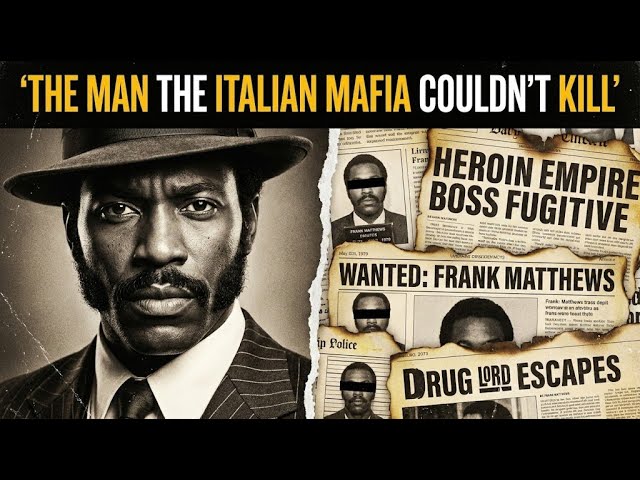
Frank Matthews built America's first independent Black drug empire in the late nineteen sixties. He went direct to French Corsican suppliers, bypassing the Italian Mafia entirely. By nineteen seventy-three, he controlled heroin distribution across twenty-one states.
Then he vanished.
No body. No arrest. No confirmed sighting in over fifty years.
Was it the perfect escape or the perfect murder? The F-B-I searched for decades. The Mafia wanted him dead. His competitors wanted his territory. But Frank Matthews became a ghost.
This documentary reconstructs his rise from Durham poverty to New York power, the Vegas meeting where he declared war on the Mob, and the final seventy-two hours before he disappeared. Some scenes are dramatized based on court testimony, D-E-A reports, and interviews with former associates.
📚 Sources & Further Reading:
→ Black Caesar: The Rise and Disappearance of Frank Matthews (Ron Chepesiuk)
https://www.amazon.com/Black-Caesar-Disappearance-Frank-Matthews/dp/1903854334
→ FBI Vault — Frank Matthews Files
https://vault.fbi.gov
Show More Show Less View Video Transcript
0:00
His
0:08
name was Frank Matthews. Before he
0:11
vanished, he was the richest black man
0:13
in the American underworld. Before the
0:16
law came for him, he controlled heroine
0:19
in 21 states. Before anyone knew his
0:22
name, he made a decision that would
0:24
change organized crime forever. He
0:27
looked at the Italian mafia, the most
0:30
powerful criminal organization in the
0:33
Western Hemisphere, and said, "No, this
0:36
is the story of the man they called
0:38
Black Caesar, the drug lord who built an
0:41
empire the mob couldn't touch, the
0:44
fugitive the FBI never found, and the
0:47
ghost that 50 years of investigation
0:50
couldn't explain. Some dialogue and
0:53
scenes in this documentary are
0:55
reconstructed from court testimony, de
0:58
reports, and interviews with former
1:01
associates. What happened is documented.
1:04
How it felt in the room. We've
1:06
re-imagined. Durham, North Carolina,
1:10
1954. Frank Matthews was 13 years old
1:14
when he watched his mother work three
1:16
jobs and still come up short. watched
1:19
her hands crack from laundry soap in
1:22
white people's homes. Watched her count
1:25
change at the kitchen table under a
1:27
single bulb, moving coins into piles
1:30
that never added up to enough. He didn't
1:33
make a promise to himself that day.
1:36
Promises are for people who believe the
1:38
system works if you just try hard
1:41
enough. Frank looked at those piles of
1:44
coins and understood something simpler.
1:46
The game was rigged, so he'd rig it
1:49
back. By 16, he was running numbers for
1:52
local operators. Small money, pocket
1:56
change compared to what was coming. But
1:58
he learned the first lesson that would
2:00
define everything. The man who controls
2:03
the supply controls the game. Everyone
2:06
else is just a customer with delusions.
2:10
1966,
2:12
New York City. Frank Matthews stepped
2:14
off a Greyhound bus at Port Authority
2:17
with $200 and a single suit. He was 21
2:21
years old. He didn't know anyone. Didn't
2:25
have a place to sleep. What he had was a
2:27
capacity for mathematics that his
2:30
teachers in Durham had wasted on
2:32
homework he never turned in. He could
2:35
calculate odds in his head faster than
2:38
bookies with pencils. could see patterns
2:41
in numbers the way some people see faces
2:44
in clouds. And he looked at New York's
2:46
drug trade and saw the one number that
2:49
mattered. The Italians controlled the
2:52
heroine supply from import to street
2:54
corner, which meant every black dealer
2:57
in Harlem, every Puerto Rican crew in
3:00
the Bronx, every independent operator in
3:03
Brooklyn was paying a tax to men who'd
3:05
never even met them. Frank found work
3:08
with a crew in Bedford Styverscent.
3:10
Powder cocaine, some pills, street level
3:14
nothing. He watched, listened, learned
3:17
the supply chain from the bottom up. The
3:20
Italians brought heroine through the
3:22
French connection. Corsican smugglers in
3:25
Marseilles refined opium from Turkey
3:28
into pure product, then shipped it to
3:31
New York through layers of insulation so
3:33
thick that even the guys at the top
3:36
barely knew where it came from. The
3:39
Italians sold to black distributors at
3:41
markup. The distributors sold to dealers
3:45
at markup. The dealers sold to users at
3:48
markup. By the time powder hit the
3:51
street, it had been stepped on, cut, and
3:53
taxed so many times that the profit
3:56
margin bled out at every level. Everyone
3:59
made a little. The Italians made
4:01
everything. And Frank Matthews looked at
4:04
that system and thought, "Why, 1967,
4:08
a basement in Brooklyn? The meeting
4:11
wasn't supposed to be anything special,
4:14
just another buy." Frank and his
4:16
partner, a guy named Donald Connor,
4:19
sitting across from an Italian crew out
4:21
of the Gallow family. The kind of
4:23
transaction that happened a hundred
4:25
times a day across New York. Black
4:28
dealers buying product from mob
4:30
suppliers. The hierarchy enforced not
4:33
with violence, but with simple
4:35
economics. You want to sell, you buy
4:38
from us. You want to buy, you pay our
4:40
price. The Italian, his name doesn't
4:43
matter. He's dead now. Slid the package
4:46
across the table. 20 kilos of heroine,
4:50
decent purity, terrible price. Frank
4:53
didn't touch the package. He looked at
4:55
the Italian and asked a question that in
4:58
retrospect was either suicidal or
5:01
visionary, depending on how the next 5
5:03
years went. Who's your supplier? The
5:07
room went quiet. Not the kind of quiet
5:09
that means everyone stopped talking. The
5:12
kind that means everyone stopped
5:14
breathing. Donald Connor sitting next to
5:17
Frank didn't move, didn't look at him,
5:21
just stared at the table like a man
5:23
watching a car accident in slow motion.
5:26
Unable to look away, unable to help, the
5:29
Italian leaned back in his chair,
5:31
smiled. Not a friendly smile. The smile
5:35
of a man explaining reality to someone
5:37
too stupid to understand it on their
5:39
own. You don't ask that question. Frank
5:43
nodded slow like he was absorbing the
5:46
lesson. Then he stood up, buttoned his
5:48
jacket, and walked out. He didn't buy
5:50
the heroin that day. Didn't buy from the
5:53
Italians the next day either or the day
5:56
after that. What he did was get on a
5:59
plane. Now, here's where the story takes
6:01
a turn no one expected. Marseilles,
6:05
France, 1968. The Corsacans didn't care
6:09
what color Frank Matthews was. They
6:12
cared about money. They cared about
6:14
reliability. And they cared about one
6:17
thing above all else, not getting
6:19
caught. The Italian mafia had
6:21
relationships with the Corsican
6:23
syndicates that went back decades. Trust
6:26
built over generations, blood ties,
6:30
oldworld respect. Frank Matthews had
6:33
none of that. What he had was an offer.
6:35
He'd buy direct, pay in cash, no credit,
6:39
no favors, no complications. He'd handle
6:42
his own distribution, his own risk. The
6:46
Corsacans would never have to touch
6:48
American soil, never have to meet
6:50
American dealers, never have to navigate
6:53
the chaos of New York's underworld. Just
6:56
pure business, product for money, clean
6:59
and cold. The Corsican he met, we'll
7:03
call him Marcel because his real name is
7:05
lost to history or deliberate obscurity,
7:09
sat in a cafe on the V airport and
7:12
listened to Frank's pitch with the
7:14
expression of a man evaluating a piece
7:16
of machinery. Marcel didn't ask about
7:19
Frank's connections, didn't ask about
7:22
territory or muscle, or how a
7:24
23-year-old black kid from North
7:27
Carolina thought he could move weight in
7:29
a city controlled by the five families.
7:32
He asked one question. How much? Frank
7:36
said a number. 50 kilos to start. If the
7:40
quality was right, 100 the next month,
7:43
200 after that. Marcel didn't blink,
7:46
didn't negotiate, just named his price
7:49
and waited. Frank agreed. They shook
7:52
hands. And just like that, the entire
7:55
power structure of the American heroine
7:57
trade shifted on an axis so small that
8:00
no one even noticed it happening. Not
8:02
yet, but they would. Back in New York
8:06
1968,
8:07
the first shipment arrived hidden in
8:09
furniture. 50 kilos of heroin, purity
8:13
levels higher than anything Frank had
8:15
seen on the street. He cut it, packaged
8:18
it, and distributed it through a network
8:20
of dealers he'd been cultivating for
8:22
months. Guys who were tired of the
8:25
Italian tax. Guys who wanted to make
8:28
real money instead of scraps. The
8:30
product moved in 72 hours. Gone, sold,
8:35
money counted, and ready for the next
8:37
buy. Frank got back on a plane, went to
8:40
Marseilles, bought 100 kilos, came back,
8:44
sold it in a week. By the end of 1968,
8:47
Frank Matthews was moving more heroin
8:49
than some mafia crews, and he wasn't
8:52
paying them a dime. The Italians
8:54
noticed. First, they sent a message,
8:57
polite, professional, an invitation to
9:00
meet, sit down, talk about business
9:03
arrangements that would benefit
9:04
everyone. Frank declined. Then they sent
9:08
a stronger message, less polite, more
9:11
explicit. Territory in New York belonged
9:14
to the five families. Independent
9:16
operators could exist as long as they
9:19
remembered who owned the board. Frank
9:21
was playing a dangerous game. It would
9:24
be wise to reconsider. Frank didn't
9:27
reconsider. He expanded. Philadelphia,
9:31
1969.
9:32
Frank Matthews walked into a city
9:35
controlled by the Bruno family and
9:37
started recruiting. He offered better
9:40
product at better prices than the mob
9:42
could match. Offered partnerships
9:44
instead of taxation. Offered respect
9:48
instead of servitude. Dealers flipped.
9:51
Crews that had been paying tribute to
9:53
the Italians for decades suddenly had an
9:56
alternative. And the alternative was
9:59
making them rich. Angelo Bruno, boss of
10:02
the Philadelphia family, didn't panic.
10:05
Men like Bruno didn't panic. They
10:08
calculated and the calculation was
10:10
simple. Frank Matthews was a problem
10:13
that would solve itself. He'd overstep.
10:16
The Corsicans would cut him off or he'd
10:19
get arrested or he'd get killed by one
10:22
of his own people. Problems like Frank
10:24
Matthews always solved themselves.
10:27
Except this one didn't. By 1970, Frank
10:31
Matthews had operations in 14 cities.
10:35
Baltimore, Washington, D.C., Detroit,
10:38
Cleveland, Los Angeles, Las Vegas. He
10:42
moved heroin and cocaine in volumes that
10:45
rivaled the mafia's biggest earners. He
10:48
had distributors, enforcers,
10:50
accountants, lawyers. He had an
10:52
infrastructure. He had an empire. And he
10:55
was just getting started. But before we
10:57
go further, there's something the
10:59
authorities never explained. How did a
11:02
man with no family connections, no mafia
11:05
protection, no political insulation
11:08
survive this long? The answer is simple.
11:12
Frank Matthews understood the one thing
11:14
that everyone else missed. The mafia's
11:17
power came from scarcity. They
11:20
controlled supply, so they controlled
11:22
everything downstream. But if you broke
11:24
the supply monopoly, if you went direct
11:27
to the source, the mafia was just
11:30
another crew. Dangerous, yes. Connected,
11:33
yes, but not untouchable. Frank didn't
11:36
fight the mob. He made them irrelevant.
11:39
And that was so much worse. 1971,
11:43
Las Vegas. Frank Matthews called a
11:46
meeting, not with the Italians, with his
11:48
own people. black dealers and
11:51
distributors from across the country.
11:53
Men who'd been working under his
11:55
network, moving his product, building
11:58
wealth they'd never imagined possible.
12:00
The meeting happened at a hotel off the
12:03
strip. 21 men in a conference room. No
12:06
weapons allowed, no recording devices,
12:10
just conversation. Frank stood at the
12:13
head of the table and said something
12:14
that would become legend in the
12:16
underworld. We don't work for them
12:18
anymore. Not a declaration of war, not a
12:22
threat, just a statement of fact. He
12:24
laid out the vision. A network of
12:27
independent black operators, coordinated
12:30
but autonomous, supplied directly from
12:33
international sources, cutting the
12:35
Italians out entirely. No tribute, no
12:39
permission, no bowing. Some of the men
12:42
in that room were skeptical. The mafia
12:44
had been the underworld's architecture
12:47
for 50 years. You didn't just opt out,
12:50
but Frank had numbers. He showed them
12:52
profit margins. Showed them what they
12:55
were making now versus what they'd made
12:57
under the Italian system. Showed them
13:00
the future. By the time the meeting
13:02
ended, every man in that room was on
13:05
board. And years later, one name would
13:08
appear in the margins of this empire,
13:11
Nikki Barnes. But that's a different
13:14
story. The Italians heard about the
13:16
Vegas meeting within a week. Their
13:19
response was predictable. Threats
13:21
escalated. Warnings became promises.
13:25
Frank Matthews was told in language that
13:28
left no room for misinterpretation that
13:30
he had a choice. Bend the knee or get
13:33
buried. Frank chose option three. He
13:36
went back to Marseilles, negotiated a
13:39
deal for 500 kilos, the largest single
13:42
heroine purchase by an independent
13:45
operator in American history up to that
13:47
point, paid in cash, took delivery,
13:51
flooded the East Coast. The message was
13:54
clear. You can't starve me out. You
13:56
can't price me out. And you can't scare
13:59
me out. The mob had built an empire on
14:02
fear and control. Frank Matthews looked
14:05
at that empire and built a parallel one.
14:07
Same product, better prices, no fear. It
14:11
was the most dangerous thing anyone had
14:13
done to organized crime in decades. And
14:17
it made him the richest fugitive in
14:19
American history. But that wealth came
14:21
with a price. Because by 1972,
14:25
it wasn't just the mafia watching Frank
14:28
Matthews anymore. The federal government
14:31
was paying attention, too. The Drug
14:34
Enforcement Administration was created
14:36
in July 1973,
14:39
but the bureau that would become the DEA
14:41
had been tracking Frank Matthews since
14:44
1970.
14:45
Not because he was black, not because he
14:48
was successful, because he was
14:50
invisible. The federal government had
14:53
spent decades building cases against the
14:56
Italian mafia. They knew the families,
14:59
knew the structure, knew who reported to
15:02
who, who collected from who, where the
15:04
money flowed. They had wire taps and
15:07
informants and surveillance photos going
15:10
back to the 1950s.
15:12
But Frank Matthews appeared out of
15:14
nowhere, no family tree, no known
15:17
associates in traditional organized
15:20
crime, no pattern that matched anything
15:22
in their files. An agent named William
15:26
Callahan working out of the New York
15:28
field office pulled Frank's file in
15:31
1971. What he found was almost nothing.
15:35
A few arrest reports from Durham, some
15:38
surveillance photos from Brooklyn,
15:41
rumors from informants about a new
15:43
player moving serious weight, but no
15:46
structure, no organization chart, no way
15:49
to map the empire, Callahan wrote in his
15:52
report. subject operates outside known
15:56
criminal networks. Recommend intensive
15:59
investigation.
16:00
That recommendation sat on a desk for 6
16:03
months before anyone acted on it. By the
16:07
time they did, Frank Matthews was
16:09
untouchable. Brooklyn 1972.
16:13
Frank lived in a penthouse in Bedford
16:15
Styverent, drove a Mercedes, wore custom
16:19
suits from a tor in Midtown who dressed
16:22
Wall Street executives. He didn't hide,
16:25
didn't operate from shadows. He lived in
16:28
plain sight because he understood
16:30
something about law enforcement that
16:32
most criminals missed. Visibility isn't
16:35
the problem. Evidence is. The feds could
16:39
watch him all day, could photograph him
16:41
entering buildings, meeting associates,
16:44
eating at expensive restaurants. But
16:47
watching isn't prosecuting. To build a
16:50
case, they needed transactions,
16:53
witnesses, documentation,
16:56
a trail that connected Frank Matthews to
16:58
specific crimes on specific dates with
17:01
specific evidence. And Frank's operation
17:04
was designed to leave no trail. He never
17:07
touched the product, never handled money
17:10
directly in public, never used phones
17:13
that could be tapped. His distributors
17:16
operated independently, insulated by
17:19
layers of cutouts and intermediaries.
17:22
If one got arrested, they couldn't give
17:25
up Frank because they'd never met Frank.
17:27
They'd met a guy who knew a guy who
17:30
worked for someone whose name they
17:32
didn't know. The feds called it a cell
17:34
structure. Revolutionary groups used it.
17:38
Intelligence agencies used it. And now a
17:42
drug dealer from North Carolina was
17:44
using it to move hundreds of kilos
17:47
across the country without leaving
17:49
fingerprints. Callahan knew Frank was
17:52
guilty. He just couldn't prove it. Not
17:54
yet. But in 1972,
17:58
the federal government made a decision
18:00
that would change everything. They
18:02
stopped trying to catch Frank Matthews
18:05
in the act and started trying to flip
18:08
the people around him. The pressure
18:10
campaign began small. Low-level dealers
18:13
getting arrested. Offered deals. Testify
18:16
against your supplier. Walk free. Stay
18:19
silent. Do the time. Some took the deal.
18:22
Most of those who did couldn't give up
18:24
anything useful. They knew street
18:26
corners, not boardrooms. Then the feds
18:29
went higher. They arrested a distributor
18:32
named Charles Walker in Detroit, caught
18:35
him with 40 kilos of heroin in a
18:38
warehouse. Facing life, no possibility
18:41
of parole under the new Rockefeller drug
18:44
laws, Walker's lawyer cut a deal, full
18:47
cooperation in exchange for 20 years
18:50
instead of life. And Walker gave them a
18:53
name. Not Frank Matthews. He'd never met
18:56
Frank Matthews, but he gave them Donald
18:59
Connor. Frank's original partner, the
19:02
man who'd sat next to him in that
19:04
Brooklyn basement. When Frank asked the
19:06
question that started everything, the
19:09
man who'd been with him since the
19:11
beginning, the feds offered Connor a
19:14
choice. Testify against Frank or spend
19:17
the rest of his life in a federal
19:18
prison. Connor said no. Not out of
19:22
loyalty, not out of principle, out of
19:24
survival. because he knew what Frank
19:27
Matthews didn't advertise. But everyone
19:29
in the network understood. The Empire
19:32
stayed invisible because loose ends got
19:35
tied up. Quietly, permanently, Connor
19:39
took the 20-year sentence, never said a
19:42
word. The feds tried 18 more
19:45
distributors over the next year,
19:47
arrested them on everything from
19:49
possession to trafficking to
19:50
racketeering, offered deals, applied
19:54
pressure. Every single one stayed
19:56
silent. And William Callahan, sitting in
20:00
his office reviewing the case files,
20:02
realized something that should have
20:04
terrified him, but instead just made him
20:06
more determined. Frank Matthews had
20:09
built something stronger than the mafia.
20:12
He'd built loyalty without violence,
20:15
wealth without fear, a network that held
20:18
together, not because people were
20:20
terrified of betrayal, but because
20:22
betrayal meant going back to working for
20:25
the Italians, and no one who'd tasted
20:28
independence wanted that. Take a breath,
20:31
because from here on, the story only
20:33
gets darker. Las Vegas, January 1973.
20:38
Frank Matthews married a woman named
20:41
Barbara Hinton. She was 22, beautiful,
20:44
had no involvement in his business, and
20:47
according to people who knew her, didn't
20:49
ask questions. The wedding was private,
20:52
small, no spectacle. Frank didn't
20:55
believe in attracting attention for
20:57
personal matters. But the honeymoon was
21:00
different. Frank and Barbara flew to
21:03
Karacas, Venezuela, stayed at a luxury
21:06
hotel. And while Barbara thought they
21:09
were celebrating their marriage, Frank
21:11
was meeting with suppliers, not the
21:14
Corsicans. The Corsicans were reliable,
21:17
but Frank had learned the cardinal rule
21:20
of supply chains. Never depend on one
21:23
source. He met with Colombian
21:25
traffickers who were just beginning to
21:27
understand the American cocaine market.
21:31
Met with Mexican heroin producers who
21:34
wanted to bypass the border cartels. Met
21:37
with men whose names never appeared in
21:40
deer files because they operated in
21:43
countries where American law enforcement
21:46
had no reach. Frank came back from that
21:49
honeymoon with agreements that would
21:51
double his capacity. But he also came
21:54
back to a problem. The feds had stopped
21:57
going after his network. They were
22:00
coming after him directly now. New York.
22:03
March 1973.
22:05
William Callahan assembled a task force.
22:09
FBI, DEA, IRS, New York Police
22:12
Department. 40 agents dedicated to one
22:15
objective. Build a case against Frank
22:18
Matthews that would stand up in court.
22:21
They started with taxes. The IRS had
22:24
brought down Al Capone. The logic was
22:27
simple. If you can't prove the crime,
22:29
prove the income. Frank Matthews lived
22:32
like a millionaire. Wore expensive
22:35
clothes, drove expensive cars, owned
22:38
property in three states. But when they
22:41
pulled his tax returns, they found
22:43
something unexpected. He'd filed every
22:47
year, reported income from a consulting
22:50
business, paid taxes on it. The numbers
22:53
were modest. 20,000 a year, 30,000.
22:57
Nothing that matched his lifestyle, but
23:00
enough to show he wasn't hiding from the
23:02
IRS entirely. And when they investigated
23:05
the consulting business, they found it
23:08
was real. Frank had set up a legitimate
23:11
company that provided advisory services
23:14
to small businesses in black
23:16
neighborhoods, business planning,
23:18
financial management. The company had
23:21
clients, had revenue, had documentation.
23:25
It was a front obviously, but it was a
23:28
legal front. And the income he reported,
23:31
while laughably low compared to what he
23:34
actually made, was technically accurate
23:37
for the business on paper. The IRS
23:40
agents told Callahan they could maybe
23:42
build a case for under reporting income.
23:45
Maybe, but it would take years and the
23:48
penalties would be minimal. Callahan
23:51
moved on. They tried wiretaps next, got
23:54
warrants for phones associated with
23:57
Frank's known addresses, listened for
23:59
months, recorded hundreds of hours of
24:02
conversations, and heard nothing. Frank
24:06
didn't use those phones for business,
24:08
didn't use them for anything
24:10
incriminating. The taps caught him
24:12
ordering takeout, talking to barber,
24:15
making appointments with his barber. One
24:18
agent listening to a particularly
24:20
mundane conversation about dry cleaning
24:24
noted in his report, "Subject is either
24:27
extremely careful or we are monitoring
24:29
the wrong communications.
24:31
They were monitoring the wrong
24:33
communications.
24:35
Frank used payoneses, rotated them
24:38
daily, never called the same number
24:40
twice from the same location, and when
24:43
he needed to communicate something
24:45
sensitive, he didn't use phones at all.
24:48
He sent people, face-to-face meetings,
24:51
no records, no intercepts. The task
24:55
force spent 6 months and a4 million in
24:58
federal funding, and came up with
25:00
nothing they could take to a grand jury.
25:03
But in May 1973,
25:05
they caught a break. A shipment got
25:08
intercepted at the Canadian border.
25:11
150 kilos of heroin hidden in a truck
25:14
carrying furniture. Canadian authorities
25:17
seized it, arrested the driver, and
25:20
notified the DEA. The driver was a
25:23
low-level courier. Didn't know who owned
25:26
the shipment, but the furniture was
25:28
traced to a warehouse in Brooklyn. a
25:31
warehouse leased to a shell company. A
25:34
shell company with financial ties buried
25:37
under six layers of paperwork to Donald
25:39
Connor. Connor was already in prison,
25:42
but the feds went to him with new
25:44
leverage. Conspiracy to import that was
25:48
federal. That was additional time
25:50
stacked on top of his existing sentence.
25:54
This time, Connor's lawyer advised
25:56
him to consider the offer, and Connor
25:58
asked for something in return. Witness
26:01
protection, new identity, relocation for
26:05
his family. The feds agreed. On June
26:08
15th, 1973, Donald Connor sat down with
26:12
William Callahan and two assistant US
26:15
attorneys and he gave them Frank
26:17
Matthews, not just testimony,
26:20
documentation,
26:21
dates, locations, names of suppliers,
26:25
financial records he'd kept as
26:28
insurance, a map of the entire network
26:31
from Marseilles to the streets. Callahan
26:34
walked out of that interview with enough
26:36
evidence to indict Frank Matthews on 47
26:39
counts of drug trafficking, conspiracy,
26:43
rakateeering, and importation. The
26:46
arrest warrant was signed on June 28th.
26:49
They plan to execute it on July 2nd.
26:53
Early morning raid coordinated across
26:56
multiple locations to grab Frank and his
26:59
top left tenants simultaneously. But on
27:02
July 1st, someone made a phone call.
27:05
Exactly who made it is still disputed.
27:08
Some former agents believe it was a
27:11
dirty cop. Some think it was a clerical
27:14
worker who had family in the
27:15
neighborhood. Some think Frank had
27:17
someone inside the task force itself.
27:20
What's not disputed is this. Frank
27:23
Matthews knew the arrest was coming and
27:26
he had 72 hours to decide what to do
27:29
about it. His lawyers told him to turn
27:32
himself in, fight it in court. The
27:35
evidence from Connor could be
27:36
challenged. Witnesses could be
27:38
discredited. A good defense could create
27:42
reasonable doubt. But Frank had watched
27:44
enough trials to know how federal
27:46
prosecutions worked. They didn't bring
27:49
cases they couldn't win, and they didn't
27:52
offer deals to people like him. If he
27:54
went to trial, he'd lose. And if he
27:57
lost, he'd spend the rest of his life in
27:59
a cell. Frank had built an empire by
28:03
understanding leverage. And in this
28:05
situation, he had none except one
28:08
option. The same option he'd chosen in
28:11
that Brooklyn basement 5 years earlier
28:14
when the Italian told him he didn't get
28:16
to ask questions. He could walk away.
28:19
July 3rd, 1973,
28:22
Brooklyn. Frank Matthews spent the day
28:25
putting things in order. He met with
28:27
associates, not to say goodbye because
28:30
that would have raised questions, just
28:33
routine meetings. Business as usual, he
28:36
withdrew cash not from banks where
28:39
transactions left records from safe
28:42
houses and stash locations scattered
28:45
across the city. Money he'd kept liquid
28:47
for emergencies. How much cash he took
28:50
is still debated. The de estimated 20
28:54
million. Some former associates claimed
28:57
it was closer to 15. Others said 30.
29:01
What's certain is that it was enough to
29:03
disappear. That night, Frank had dinner
29:06
with Barbara at home. Nothing special.
29:10
She later told investigators that he
29:12
seemed calm, maybe quieter than usual,
29:15
but not agitated, not scared. After
29:18
dinner, he told her they were leaving in
29:20
the morning. She asked where. He said it
29:23
was a surprise. July 4th, 1973.
29:27
Frank Matthews and Barbara Hinton left
29:30
the penthouse at dawn. Took two
29:32
suitcases. Left everything else, the
29:35
furniture, the cars, the clothes, $20
29:38
million in assets that couldn't be
29:41
converted to cash overnight. They got
29:43
into a taxi. The driver interviewed
29:47
later said they asked to go to Newark
29:49
airport. Surveillance teams had been
29:51
watching the penthouse, but they were
29:54
coordinating for the July 2nd raid that
29:57
got delayed. No one was actively tailing
30:00
Frank that morning. It was a holiday.
30:03
Agents were thin. By the time anyone
30:06
realized Frank wasn't home, he was gone.
30:09
Airport records show no tickets
30:11
purchased under his name, no flights
30:14
booked. But 1973 airport security wasn't
30:18
what it is now. Cash bought tickets.
30:21
Fake IDs weren't hard to get. He could
30:24
have flown anywhere. Or he could have
30:26
driven to another city and flown from
30:28
there. Or he could have taken a boat or
30:31
crossed into Canada and disappeared from
30:33
there. The trail went cold at Newark
30:36
airport and it never got warm again.
30:39
Barbara Hinton reappeared 3 weeks later.
30:42
showed up at her mother's house in
30:44
Queens, told investigators that Frank
30:47
had left her in a motel in Pennsylvania,
30:50
gave her cash, told her to wait, said
30:53
he'd come back. He never did. She
30:56
maintained for the rest of her life that
30:58
she didn't know where he went, didn't
31:00
know if he was alive or dead. Didn't
31:02
know anything except that one morning
31:04
she woke up and the man she married was
31:07
gone. The deer didn't believe her. kept
31:10
her under surveillance for 2 years,
31:13
monitored her calls, watched her bank
31:15
accounts, nothing. William Callahan
31:19
became obsessed with the case. He
31:21
tracked down every lead, followed rumors
31:24
to Venezuela, to Mexico, to West Africa,
31:28
interviewed informants who claimed to
31:29
have seen Frank in Karacas, in Bogatar,
31:32
in Lagos. Every lead evaporated. In
31:36
1977, a body washed up on the New Jersey
31:39
shore, badly decomposed, male,
31:43
Africanamean,
31:45
approximately the right age and build.
31:48
Callahan requested forensic analysis.
31:51
Dental records, anything that could
31:54
confirm identity. The body wasn't Frank
31:57
Matthews. In 1981, the FBI received a
32:01
tip that Frank was living in Los Angeles
32:03
under an assumed name. They raided the
32:06
address, found a man who looked similar.
32:09
Same height, same build, wrong man. In
32:13
1986, a former associate told
32:16
investigators that Frank had been killed
32:19
in 1974,
32:21
murdered by the mafia in retaliation.
32:24
buried in a construction site in
32:26
Brooklyn. They excavated the site, found
32:29
nothing. Over the next three decades,
32:32
there were sightings in 17 countries,
32:35
tips from informants looking for reward
32:38
money, confessions from dying mobsters
32:41
claiming they'd killed him. None of it
32:43
panned out, and slowly the truth became
32:46
clear. Frank Matthews had done something
32:49
that shouldn't have been possible. He
32:51
disappeared completely. Not just from
32:54
law enforcement, from the underworld,
32:57
from everyone. In the criminal world,
33:00
ghosts don't last. Someone always knows.
33:03
Someone always talks. Enemies find you.
33:06
Old partners betray you. Money trails
33:09
lead back. But Frank left no trail. And
33:12
if anyone knew where he went, they took
33:15
that knowledge to their graves. Now we
33:17
knew the empire. What we didn't know yet
33:20
was whether the disappearance was escape
33:23
or ending. Because there's a question
33:25
that's haunted investigators for 50
33:28
years. How does a man vanish with 20
33:31
million in cash and never surface? Never
33:34
spend in a way that gets noticed, never
33:37
contact family, never make a mistake,
33:40
never leave a single thread to pull. The
33:43
optimistic answer. He was smart enough
33:45
to disappear and disciplined enough to
33:47
stay gone. The darker answer. He never
33:51
got the chance. The underworld doesn't
33:53
forgive debts. When Frank Matthews
33:56
disappeared, he left behind more than an
33:58
empire. He left behind people who owed
34:01
him money. People he owed money.
34:04
Partners who'd invested in shipments
34:06
that were in transit. Suppliers who'd
34:09
fronted product on credit. In the drug
34:12
trade, vanishing with outstanding
34:14
accounts is a death sentence. Not
34:17
metaphorical, literal. Because if you're
34:20
alive, you pay. And if you don't pay,
34:23
people come looking. And when they find
34:25
you, the message sent to everyone else
34:28
watching is clear. You don't get to just
34:30
walk away. But no one came for Frank
34:33
Matthews. No enforcers showed up at
34:36
Barber's door demanding to know where he
34:39
kept the money. No suppliers in
34:41
Marseilles put prices on his head. No
34:43
former partners made moves to seize his
34:46
territory and settle scores. The empire
34:49
just collapsed into silence. That
34:52
silence is evidence. And what it
34:54
suggests depends on which theory you
34:56
believe. Theory one, Frank paid everyone
35:00
before he left. Settled accounts, closed
35:03
loops, disappeared clean with no one
35:06
hunting him because no one had reason
35:08
to. Theory two, the people he owed knew
35:11
he was already dead, and dead men don't
35:14
pay debts. Pay attention to what happens
35:17
next. It's easy to miss. In the 6 months
35:21
after Frank vanished, five people
35:23
connected to his network died. A
35:26
distributor in Philadelphia named Jerome
35:28
Jackson, shot outside his home in
35:31
October 1973,
35:33
unsolved. A courier named William
35:36
Hodgers found in a car trunk in
35:39
Baltimore in December. No arrests. A
35:43
money manager named Raphael Alvarez
35:46
disappeared in February 1974.
35:49
Body never found. Two enforcers who
35:52
worked security for the Brooklyn
35:55
operation. Both killed in separate
35:57
incidents within a week of each other in
36:00
March. Both cases cold. The deer noticed
36:04
the pattern, opened investigations into
36:07
whether the murders were connected, but
36:10
they couldn't establish a clear motive.
36:12
The men killed weren't cooperating
36:15
witnesses, weren't competition, weren't
36:18
obvious threats to anyone unless they
36:20
knew something about where Frank went or
36:23
what happened to him. One former agent
36:26
speaking off the record years later said
36:29
the deaths felt like cleanup. Someone
36:31
tying off loose ends, making sure that
36:35
whatever happened on July 4th stayed
36:37
buried. But who was doing the cleanup?
36:40
The mafia had motive. Frank had
36:42
humiliated them, bypassed them, proven
36:46
their monopoly was breakable. If they'd
36:48
caught him, killing him would have been
36:50
inevitable, and killing anyone who knew
36:53
where he'd gone would have been smart.
36:55
But the mob doesn't usually leave
36:57
mysteries. When they send a message,
37:00
they want people to know who sent it.
37:02
That's the point. Fear only works if
37:05
people know what happens when you cross
37:07
the line. Frank Matthews disappearing
37:10
without a body, without confirmation,
37:13
without proof sent no message. It just
37:16
created questions which suggests maybe
37:19
it wasn't the mafia. Harlem 1974.
37:23
Remember the name we mentioned earlier,
37:26
Nikki Barnes. Leroy Nikki Barnes had
37:29
been one of Frank Matthews distributors.
37:32
Moved product in Harlem and the Bronx.
37:35
Made millions. Learned the independent
37:37
model. Watched Frank build an empire
37:40
outside the Italian system, and
37:42
understood the blueprint. When Frank
37:45
vanished, Nikki saw opportunity. The
37:48
network Frank built didn't disappear.
37:51
The dealers were still there. The demand
37:53
was still there. The supply connections
37:56
were still there. Someone just needed to
37:59
step into the vacuum. Nikki Barnes
38:01
became that someone. He took over
38:04
Frank's Harlem operation, expanded it,
38:07
built his own network using the same
38:10
director to supplier model Frank had
38:12
pioneered. By 1975,
38:15
Nikki Barnes was on the cover of the New
38:17
York Times magazine. They called him Mr.
38:21
Untouchable. The feds called him Frank
38:24
Matthews 2.0,
38:26
but there's a detail about Nikki Barnes
38:29
that matters to this story. He started
38:31
working with Frank in 1971.
38:35
Was part of the inner circle by 72.
38:38
would have known the suppliers, the
38:40
roots, the infrastructure, and after
38:43
Frank disappeared, Nikki had access to
38:46
all of it. Some investigators believed
38:48
Nikki knew where Frank went. Maybe even
38:51
helped him disappear. Maybe took over
38:54
the empire as part of a deal. You
38:56
vanish, I take the network, everyone
38:59
wins. Others believed the opposite, that
39:02
Nikki had Frank killed, took the empire
39:05
by force, made it look like Frank ran
39:08
because a body would have meant war with
39:10
loyalists who still believed in him. The
39:13
deer brought Nikki Barnes in for
39:15
questioning in 1975
39:18
asked him directly about Frank Matthews.
39:21
Nikki's answer, according to the
39:23
interview transcript, Frank who? He
39:26
smiled when he said it. They had no
39:29
leverage to push further. No evidence
39:31
connecting Nikki to Frank's
39:33
disappearance, just suspicion and
39:36
circumstantial timing. Nikki Barnes ran
39:39
Harlem until 1978 when the feds finally
39:42
built a case that stuck. Life in prison.
39:46
But in 1982, facing that life sentence,
39:49
Nikki cut a deal. full cooperation
39:53
testified against his entire
39:55
organization.
39:56
Witness protection, new identity,
40:00
released after 21 years. And when
40:03
federal prosecutors sat him down for
40:05
debriefing, they asked him again about
40:07
Frank Matthews. Nikki said he didn't
40:10
know where Frank went. Said Frank didn't
40:12
tell anyone, just vanished. Said the
40:15
whole network was as shocked as the
40:17
feds. Prosecutors asked if he thought
40:20
Frank was alive. Nikki paused, then said
40:23
something that stuck with the agents in
40:26
the room. If Frank's alive, he's the
40:28
smartest man I ever met. If he's dead,
40:31
someone's the smartest killer. That
40:34
statement went into the case file and it
40:37
never got clarified because in 1987,
40:40
Nikki Barnes was relocated under witness
40:43
protection. his identity sealed, his
40:46
location classified, and if he knew more
40:49
about Frank Matthews, he took it into
40:52
whatever quiet life the government gave
40:54
him. Nikki Barnes died in 2012. Lung
40:58
cancer. The government didn't announce
41:01
it until 2019. Whatever he knew died
41:04
with him. This next detail changes
41:07
everything we thought we knew.
41:10
Marseilles, France, 1976.
41:13
A DEA agent named Robert Doomers was
41:16
working with French authorities on
41:19
Corsican heroine networks. He
41:21
interviewed a smuggler who'd been
41:23
arrested on unrelated charges. Offered
41:26
leniency in exchange for information
41:30
about American connections. The smuggler
41:33
mentioned Frank Matthews. Said he'd met
41:36
Frank twice. once in 1968,
41:40
once in 1972,
41:42
and then he said something that didn't
41:44
make it into official reports until the
41:47
case files were declassified decades
41:50
later. He claimed Frank had come back to
41:53
Marseilles in 1974,
41:56
a year after he disappeared. The
41:59
smuggler described the meeting. Said
42:01
Frank looked different, thinner beard,
42:04
but same eyes, same voice. Said Frank
42:07
was asking about roots into West Africa,
42:10
specifically Liberia and Ghana. Said
42:13
Frank paid cash for information, then
42:16
left. Never saw him again. Dumas
42:18
followed up, checked travel records,
42:21
asked Interpol to search for entry
42:23
stamps, ran the tip through every
42:26
database available. in 1976.
42:29
Nothing came back. The smuggler could
42:32
have been lying. Informants lie for
42:34
leniency all the time. They tell
42:37
investigators what they want to hear.
42:39
And in 1976,
42:41
what the deer wanted to hear was that
42:44
Frank Matthews was still alive and
42:47
trackable. But there's a reason this tip
42:50
is significant. Liberia and Ghana had no
42:54
extradition treaties with the United
42:56
States in the 1970s.
42:59
Both countries had large
43:01
African-American expatriate communities.
43:05
Both had economies where cash could buy
43:08
anonymity and both were exactly the kind
43:10
of places someone like Frank Matthews
43:13
would choose if he wanted to disappear
43:15
permanently. The DEA sent agents to
43:18
Monrovia, Liberia in 1977,
43:22
showed Frank's photo around, asked
43:25
questions in expat communities. One
43:28
person claimed to have seen someone who
43:30
looked like him in 1975,
43:33
running a business, quiet life. Agents
43:36
investigated, found the business, found
43:39
the owner, not Frank Matthews, but close
43:42
enough in appearance that if you were
43:44
remembering a face from 2 years prior,
43:47
you might make the mistake. The lead
43:50
died there. Over the years, other
43:53
sightings followed the same pattern.
43:55
Someone thought they saw him.
43:57
Investigators followed up, found someone
44:00
who looked similar, but wasn't him. It's
44:03
possible every sighting was a mistake.
44:06
Witness unreliability.
44:08
People seeing what they expected to see.
44:11
Or it's possible Frank Matthews
44:13
understood something about hiding that
44:15
most fugitives miss. You don't hide by
44:18
being invisible. You hide by being
44:21
ordinary. If Frank went to Liberia or
44:24
Ghana or anywhere else with $20 million
44:27
and started living like a millionaire,
44:30
he'd stand out. People would notice.
44:33
Word would spread. But if he lived
44:36
modestly, blended in, kept his head
44:38
down, he could disappear into the noise.
44:41
$20 million converted to cash and hidden
44:44
in safe locations could last a lifetime
44:47
if you didn't flaunt it. And if Frank
44:50
Matthews was anything, he was
44:52
disciplined. Brooklyn, 1989.
44:56
A construction crew demolishing an old
44:59
warehouse found a safe buried under the
45:01
foundation. The kind of safe you don't
45:04
move built into the structure. Inside,
45:08
$300,000 in cash. 1970s bills bundled
45:13
and sealed in plastic. The discovery
45:16
made local news. The deer investigated,
45:20
traced the warehouse ownership back
45:22
through Shell Companies, and found a
45:24
connection to one of Frank's old
45:26
operations. The money was seized as
45:29
evidence, but it raised a question. If
45:32
Frank disappeared with 20 million, why
45:35
leave 300,000 behind? Theory one, he ran
45:39
so fast he couldn't grab everything.
45:42
Left money in multiple locations and
45:45
only had time to collect from a few
45:48
before vanishing. Theory two, the money
45:51
was left deliberately. Payment to
45:53
someone, bribe to someone, settlement of
45:56
a debt that kept him alive long enough
45:58
to run. Theory three, he was killed
46:02
before he could collect it, and whoever
46:04
killed him didn't know about every stash
46:06
location. The cash sat in an evidence
46:09
locker for years, eventually absorbed
46:12
into federal asset forfeite. No one came
46:16
looking for it. No one claimed it. Just
46:19
another mystery in a case built on
46:21
mysteries. But here's the thing about
46:23
that safe. If Frank left money behind in
46:26
Brooklyn, he probably left money in
46:28
other cities, too. Philadelphia,
46:31
Detroit, Los Angeles, anywhere he had
46:34
operations. Which means there could be
46:36
millions in cash still hidden, sitting
46:39
in walls, under floors, in storage units
46:42
rented under fake names, money that
46:44
would be evidence he planned to come
46:46
back or evidence he never got the
46:49
chance. Stop. Rewind that in your mind
46:52
because it matters. Every piece of
46:55
evidence cuts both ways. The silence
46:58
from the underworld could mean Frank
47:00
paid everyone off. Or it could mean
47:02
everyone who knew the truth got
47:04
silenced. The sightings overseas could
47:08
mean he escaped. Or they could mean
47:10
people wanted to believe he escaped
47:12
because the alternative was too dark.
47:15
The hidden money could mean he planned
47:17
to return. Or it could mean he died
47:20
before he could. Even the fact that no
47:23
body was ever found proves nothing.
47:26
Bodies disappear in organized crime.
47:29
Concrete, water, unmarked graves in
47:32
places no one would think to look. The
47:35
DEA officially closed the active
47:37
investigation in 1992,
47:40
declared Frank Matthews a fugitive, kept
47:43
the warrant active, added him to the
47:46
most wanted list where he remains to
47:48
this day. But closed investigation
47:51
doesn't mean they stopped wondering.
47:54
William Callahan retired in 1994,
47:57
spent his last years obsessed with the
48:00
case, told colleagues he dreamed about
48:02
it. About the moment Frank walked out of
48:05
that penthouse and vanished into the
48:07
noise of American life. Callahan died in
48:11
2003,
48:12
never got his answer. Other agents who
48:15
worked the case had their own theories.
48:18
Some believed Frank lived out his days
48:20
in Africa. quiet, anonymous, maybe
48:24
remarried under a different name, maybe
48:27
had kids who never knew their father was
48:29
once the richest black criminal in
48:31
America. Some believed the mafia caught
48:34
him within weeks of his disappearance,
48:36
made an example of him in private,
48:39
spread the word through back channels
48:41
that Frank Matthews was dead, and anyone
48:44
who tried to follow his model would end
48:46
up the same way. Some believed he's
48:48
still alive somewhere warm, watching
48:52
documentaries about himself and smiling
48:55
at how close investigators got without
48:58
ever quite reaching the truth. And some
49:01
believed he never left New York, that
49:03
he's buried under a building or a
49:06
highway or a park, that he died on July
49:09
4th or July 5th, 1973,
49:13
and every sighting since has been
49:15
fantasy. The evidence supports all of
49:18
these theories and none of them. Which
49:20
brings us to the final question. Does it
49:23
matter if Frank Matthews is alive or
49:26
dead? His empire is gone. His network
49:29
dismantled. The people he worked with
49:32
are dead or imprisoned or disappeared
49:34
into their own obscurity. The drug trade
49:38
moved on. New players, new roots, new
49:42
empires that rose and fell. Frank
49:44
Matthews changed the game. Proved the
49:47
mafia wasn't untouchable. Showed that
49:50
independence was possible if you were
49:52
smart enough and bold enough and
49:54
ruthless enough. But the game itself
49:57
didn't change. It just got more players.
50:00
So maybe the question isn't where Frank
50:02
Matthews went. Maybe the question is
50:05
what his disappearance meant. Because 50
50:08
years later, he's still the ghost in the
50:10
machine. Still the name that comes up
50:13
when people talk about perfect escapes
50:15
or perfect murders. Still the case that
50:18
haunts retired agents and fascinates
50:21
criminals and creates myths that grow
50:24
larger with every decade. Frank Matthews
50:27
became immortal the moment he vanished.
50:30
Alive, he'd be 90 years old now. Just
50:33
another old man with stories no one
50:35
would believe. Dead, he's frozen at 38.
50:39
Forever young. Forever uncaught, forever
50:43
free. And maybe that was the plan all
50:45
along. Not to live forever, but to never
50:48
be caught. There's a photograph that
50:51
survived the investigation.
50:53
Black and white, taken by de
50:56
surveillance in 1972.
50:59
Frank Matthews standing outside his
51:01
penthouse in Brooklyn, wearing a suit,
51:04
hands in pockets, looking directly at
51:07
the camera, not avoiding it, not turning
51:10
away, looking straight into the lens
51:12
like he knew exactly where it was and
51:14
didn't care. That photograph hung in
51:17
William Callahan's office for 20 years.
51:20
Other agents asked him why he kept it
51:23
up, why he stared at a case he couldn't
51:25
solve. Callahan's answer, according to
51:28
people who worked with him, because he's
51:31
still talking. What Frank Matthews said
51:34
in that photograph depends on who's
51:36
looking. Some saw arrogance. A criminal
51:40
who thought he was untouchable. Some saw
51:43
calculation. A man who understood that
51:46
being photographed meant nothing without
51:48
evidence to prosecute. Some saw
51:50
something else. a man who'd already
51:53
decided he wasn't going to be there when
51:55
the walls closed in. The photograph is
51:58
still in the DEA archives, still labeled
52:02
as evidence in an open case, and Frank
52:05
Matthews, wherever he is, dead or alive,
52:09
is still talking. The question is
52:11
whether anyone's listening to the right
52:13
message. 2007,
52:16
online forums dedicated to unsolved
52:20
mysteries started picking up the Frank
52:22
Matthews case. Not because of new
52:25
evidence, because the mystery had aged
52:28
into legend. 54 years since his
52:31
disappearance, long enough that the
52:33
people who knew him were dying off. Long
52:36
enough that facts and myths blurred
52:38
together. Someone claiming to be Frank's
52:41
nephew posted that the family believed
52:43
he was alive living in the Caribbean,
52:46
that he'd sent money anonymously over
52:49
the years through intermediaries.
52:52
No proof, just family stories. Someone
52:55
else claimed to have met Frank in Ghana
52:58
in the 1980s. Said he was running a
53:00
small import business, living under a
53:03
different name. The post got traction,
53:06
then disappeared. user deleted their
53:09
account. Another poster claiming to be a
53:12
former mob associate said Frank was
53:15
killed in 1973,
53:17
buried in New Jersey, that the mafia had
53:20
spread rumors of sightings to keep
53:22
people looking in the wrong places.
53:25
Again, no verification.
53:27
The internet did what the internet does.
53:30
Turned a cold case into a choose your
53:33
own ending story. But buried in those
53:35
forum threads was something interesting,
53:38
a pattern. Every few years, someone
53:41
would post claiming to know what
53:43
happened. The details varied. The
53:46
locations changed, but the tone was
53:49
always the same. Certainty, not
53:51
speculation, not theory. Certainty. I
53:55
know he's alive. I know he's dead. I
53:58
know where he went. Former investigators
54:01
noticed the pattern, too. Because in
54:04
cold cases, especially ones this famous,
54:07
people confess to things they didn't do.
54:10
Claim knowledge they don't have. Insert
54:13
themselves into mysteries because being
54:15
part of a legend feels better than being
54:17
invisible. But sometimes, buried in the
54:21
noise, there's signal. In 2012, an
54:25
anonymous email arrived at the DEA tip
54:28
line. The sender claimed to have
54:30
information about Frank Matthews. Said
54:33
they'd met him in 2008. Provided a
54:36
location, Johansburg, South Africa,
54:40
described him as older, gray hair,
54:43
living quietly, running a consulting
54:46
business that helped African
54:47
entrepreneurs with international trade.
54:50
The email included details that weren't
54:53
public. the name of Frank's Taylor in
54:56
New York, the brand of cigarettes he
54:59
smoked, a scar on his left hand from a
55:02
childhood accident that only people
55:04
close to him would know. The deer
55:07
investigated, sent an agent to
55:10
Johansburg, checked business registries,
55:13
interviewed people in the expat
55:15
community, found a man matching the
55:17
general description, right age, American
55:21
accent, consulting business. They showed
55:24
him Frank's photograph. He said he'd
55:26
never seen that man before in his life.
55:29
Fingerprints didn't match. Dental
55:31
records didn't match. Another dead end.
55:34
But the details in that email bothered
55:37
investigators.
55:38
The scar, the tailor, the cigarettes.
55:42
Those weren't things you'd know unless
55:44
you'd been close to Frank or unless
55:46
you'd done deep research into the case.
55:49
The email was traced to an internet cafe
55:52
in Durban, South Africa. Paid in cash.
55:56
No surveillance footage available.
55:58
Someone knew something or wanted people
56:01
to think they did. The case file was
56:03
updated. The tip archived. The search
56:07
continued in the only way it could at
56:09
that point, passively, waiting for Frank
56:12
Matthews to make a mistake or waiting
56:15
for a body to surface. 50 years is a
56:18
long time to wait. Let that sink in
56:21
because we're just getting started with
56:23
what it means. Here's what we know for
56:25
certain. Frank Matthews was born in
56:28
1944.
56:30
If he's alive today, he's 80 years old.
56:33
80year-old men leave traces, medical
56:37
records, prescriptions, social security
56:40
claims, death certificates eventually,
56:43
but there's no record of Frank Matthews
56:46
dying anywhere in the world under his
56:48
real name. Interpol has checked. The FBI
56:52
has checked. Private investigators hired
56:55
by journalists have checked. Nothing,
56:58
which means if he's alive, he's living
57:00
under a false identity. so secure that
57:03
it survived 50 years of scrutiny. That's
57:07
not impossible. People disappear into
57:10
new identities. Witness protection does
57:13
it every day, but witness protection has
57:16
resources, government support,
57:19
documentation that passes official
57:21
inspection. Frank Matthews would have
57:24
had to build that infrastructure
57:26
himself. Fake birth certificates, fake
57:29
social security numbers, fake employment
57:32
history, a backstory deep enough to
57:35
withstand background checks and casual
57:37
investigation. It's possible, but the
57:40
level of discipline required is
57:42
extraordinary. No contact with anyone
57:45
from your old life ever. No phone calls
57:48
on anniversaries, no letters, no emails,
57:53
no slips, one mistake, one moment of
57:56
nostalgia or weakness or human
57:58
connection and the whole false identity
58:01
collapses. Could Frank Matthews maintain
58:04
that discipline for 50 years? Some
58:07
people who knew him say yes, absolutely.
58:10
Frank was the most controlled person
58:12
they'd ever met. Never acted on emotion.
58:16
never took unnecessary risks. If anyone
58:19
could disappear and stay disappeared, it
58:21
was him. Others say no. 50 years is too
58:25
long. People crack. They get lonely.
58:28
They want someone to know who they
58:30
really are. They make one call, send one
58:33
message, and that's when they get
58:35
caught. But Frank never got caught.
58:37
Which brings us back to the other
58:39
possibility that he's been dead since
58:41
1973.
58:43
and someone made sure it looked like he
58:45
ran. Think about how that would work.
58:48
Frank gets tipped off about the arrest.
58:50
He panics, starts pulling cash, makes
58:54
plans to run. Someone from the
58:56
underworld, someone with a grudge or a
58:58
debt or ambition, sees the opportunity,
59:02
offers to help. I know a guy who can get
59:05
you out of the country. I know a safe
59:07
house. I know a route. Frank desperately
59:10
trusts them and that trust gets him
59:12
killed. The killer takes the cash or
59:15
most of it. Disposes of the body where
59:18
it'll never be found. Then spreads
59:20
rumors. I heard Frank made it to
59:23
Venezuela. I heard he's in Africa. I
59:25
heard he's living like a king. The
59:28
rumors serve a purpose. They keep law
59:31
enforcement looking in the wrong places.
59:33
They keep the underworld from asking too
59:36
many questions. and they create a legend
59:39
that benefits everyone. The mafia can
59:42
claim they didn't get beaten by a black
59:44
dealer from North Carolina. He just ran.
59:48
Coward's way out. The feds can avoid
59:51
admitting they lost the biggest case of
59:53
the decade. He escaped. Happens
59:56
sometimes. And the killer walks away
59:59
with millions and a secret no one
1:00:01
suspects. It's a theory, one of many,
1:00:05
but it explains the silence. The
1:00:07
mysterious deaths of five people
1:00:10
connected to Frank's network in the
1:00:12
months after he disappeared. That's not
1:00:14
coincidence. That's cleanup. Someone
1:00:17
making sure that anyone who knew what
1:00:19
really happened on July 4th couldn't
1:00:22
talk. Barbara Hinton, Frank's wife,
1:00:25
maintained until she died that she
1:00:27
didn't know anything. Maybe that's true.
1:00:30
Or maybe she knew exactly what happened
1:00:33
and understood that silence was
1:00:35
survival. She never remarried, never
1:00:38
moved far from New York, lived a quiet
1:00:41
life, and refused every interview
1:00:44
request for 40 years. When she died in
1:00:47
2014, her obituary didn't mention Frank
1:00:51
Matthews, just said she was a beloved
1:00:53
mother and grandmother. If she knew the
1:00:56
truth, she took it with her. And that
1:00:59
silence said everything. The federal
1:01:01
warrant for Frank Matthews arrest is
1:01:04
still active. Technically, he could
1:01:06
still be prosecuted if found, though
1:01:09
most of the witnesses are dead. Most of
1:01:11
the evidence is decades old. Any lawyer
1:01:15
could argue that a fair trial is
1:01:17
impossible after 50 years, but the
1:01:20
warrant stays open because closing it
1:01:23
would mean admitting defeat, and the
1:01:25
federal government doesn't like
1:01:27
admitting defeat. So, Frank Matthews
1:01:30
remains on the fugitive list. A ghost
1:01:33
with an active case file. A legend that
1:01:36
refuses to die because the ending was
1:01:40
never written. Maybe that's the point.
1:01:42
In 1973,
1:01:44
Frank Matthews had a choice. Spend the
1:01:47
rest of his life in prison or disappear.
1:01:50
He chose to disappear. And in doing so,
1:01:53
he became something more than a drug
1:01:55
dealer, more than a criminal, more than
1:01:58
a cautionary tale. He became the
1:02:00
question that has no answer. The mystery
1:02:03
that investigators obsess over. The case
1:02:07
that true crime communities debate. The
1:02:10
name that still carries weight in
1:02:12
conversations about the smartest
1:02:14
criminals who ever lived. Alive, Frank
1:02:18
Matthews would be an old man, forgotten,
1:02:21
irrelevant, dead. He's eternal. And if
1:02:24
he planned it that way, if he understood
1:02:26
that the mystery itself was the ultimate
1:02:29
escape, then maybe he won after all. Not
1:02:32
by avoiding capture, but by making sure
1:02:35
that 50 years later, people are still
1:02:38
asking where did he go? Because as long
1:02:41
as that question exists, Frank Matthews
1:02:44
is still out there. In the searches that
1:02:47
go nowhere, in the tips that lead to
1:02:49
dead ends, in the theories that cut both
1:02:52
ways. He's in the photograph on the
1:02:55
archive wall, looking into the camera,
1:02:58
still talking, still untouchable. The
1:03:01
evidence, if you lay it all out, tells
1:03:03
two stories. Story one, Frank Matthews
1:03:07
was a criminal genius who understood
1:03:09
that the only way to beat the system was
1:03:12
to leave it entirely. He planned his
1:03:14
escape meticulously, paid off the right
1:03:17
people, settled his debts, built a new
1:03:20
identity, and walked into a life where
1:03:23
no one knew his name. He's lived 50
1:03:26
years in peace. Maybe in Africa, maybe
1:03:29
South America, maybe somewhere no one's
1:03:32
thought to look. He's had decades to
1:03:35
watch the world move on without him. And
1:03:37
every time someone claims to have seen
1:03:40
him, every time a new theory emerges, he
1:03:43
smiles because the hunt is proof that he
1:03:46
won. Story two. Frank Matthews tried to
1:03:49
run and didn't make it past the first
1:03:51
week. Someone killed him, took his
1:03:54
money, buried him where he'd never be
1:03:56
found, spread rumors to cover the trail.
1:04:00
The sightings are fantasies, the tips
1:04:02
are lies, and Frank Matthews has been
1:04:05
dead for 50 years. his bones turning to
1:04:08
dust in an unmarked grave while the
1:04:10
world builds legends around a ghost.
1:04:13
Both stories have evidence. Both have
1:04:16
logic. Both are possible. And that's the
1:04:19
genius of it. Because the truth is this.
1:04:22
We'll probably never know. The people
1:04:24
who could have answered the question are
1:04:26
dead. The evidence that could have
1:04:29
solved the mystery is gone or buried too
1:04:31
deep to find. And time has turned facts
1:04:34
into folklore. Frank Matthews exists now
1:04:38
in the space between proof and belief.
1:04:41
And maybe that's where he always wanted
1:04:42
to be. Not caught, not free, just
1:04:46
unknown. So here's the final question.
1:04:49
Not where Frank Matthews went, but what
1:04:51
his story means. Was he a criminal who
1:04:54
got away with it? A murderer's victim
1:04:57
who never got justice. A symbol of what
1:05:00
happens when someone beats a rigged
1:05:02
system? Or was he something simpler? A
1:05:05
man who made a choice and that choice
1:05:07
became a legend because we'll never know
1:05:09
if it was the right one. The search for
1:05:12
Frank Matthews continues. Tips still
1:05:15
come in. Investigators still follow
1:05:18
leads. Somewhere in a federal database,
1:05:21
his name is still flagged, still wanted,
1:05:24
still missing. But after 50 years, the
1:05:28
search isn't really about finding him
1:05:29
anymore. It's about refusing to let the
1:05:32
question die because some mysteries
1:05:35
invite belief, others demand
1:05:37
investigation.
1:05:39
This one does both. Frank Matthews,
1:05:42
Black Caesar, the man who walked away
1:05:45
from $20 million and was never seen
1:05:48
again. Ghost or corpse? Comment one
1:05:51
word, ghost or corpse? If you want to
1:05:53
know what happened to the empire he left
1:05:56
behind, we've covered Nikki Barnes and
1:05:58
the Harlem networks that rose from
1:06:00
Frank's ashes. Subscribe, hit the bell.
1:06:05
We go deeper every week. He didn't just
1:06:08
disappear from the law. He disappeared
1:06:10
from the underworld. And in that world,
1:06:13
ghosts don't last long unless they are
#Arts & Entertainment
#TV & Video
#Online Video
#Drug Laws & Policy