Up next in 10

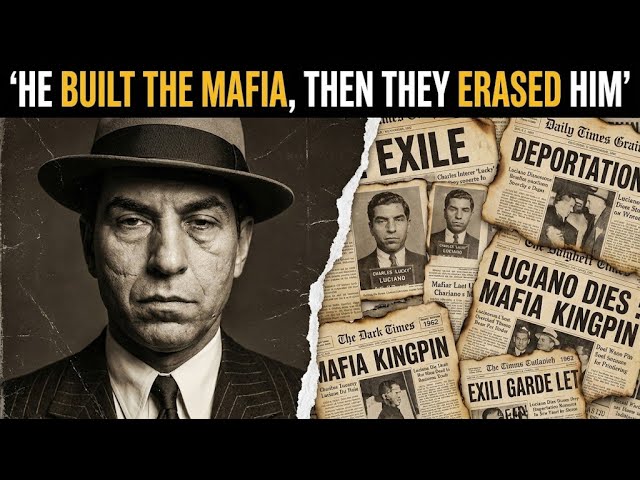
January 26, 1962. A man collapses at Naples Airport. No one recognizes him. No one stops. Charles "Lucky" Luciano didn't just run the mob; he invented it. He turned street gangs into a corporate empire and created the Commission that ruled New York for decades. But when the empire grew too big, it didn't need its architect anymore. This is the untold story of Luciano's brutal exile—the letters that went unanswered, the friends who turned into ghosts, and the final, lonely hours of the Boss of Bosses. No textbook covers the true rot inside the Commission. Power is temporary, but the structures we build are indifferent to our survival.
⚠️ HISTORICAL DISCLAIMER: This documentary reconstructs events from historical records, court documents, oral histories, and investigative journalism. Some dialogue and scenes are dramatized based on documented accounts. Sources listed below.
📚 Sources & Further Reading:
→ The Last Testament of Lucky Luciano (Martin Gosch & Richard Hammer)
→ Five Families: The Rise, Decline, and Resurgence of America's Most Powerful Mafia Empires (Selwyn Raab)
→ The Havana Conference: Declassified FBI Records (FBI Vault)
→ Lucky Luciano: The Real Story (Tim Newark)
→ The Mafia: A History (Thomas Reppetto)
🏷️ Hashtags:
#TrueHistory #Documentary #LuckyLuciano #MafiaHistory #TrueCrime
-~-~~-~~~-~~-~--~-~~-~~~-~~-~--~-~~-~~~-~~-~-
⚠️ Content Disclaimer:
This video is created for educational and informational purposes only. We do NOT glorify, promote, or encourage any form of criminal activity.
All visuals, audio, and materials used in this video are either:
✔ Created using AI tools, or
✔ Sourced from royalty-free platforms with valid licenses.
Some images and characters have been generated using AI and do not represent real people or events.
Show More Show Less View Video Transcript
0:00
Nobody recognizes.
0:03
[music]
0:08
>> January 26th, 1962.
0:11
Naples Capiducino Airport. A man in a
0:14
dark coat collapses near the departure
0:17
gate. His face hits the tile. Travelers
0:20
step around him. Nobody stops. Nobody
0:23
recognizes the body on the floor. The
0:26
man's name is Charles Luchano. You know
0:29
him as Lucky, the boss of bosses, the
0:32
man who invented the commission, the man
0:35
who turned organized crime from street
0:37
gangs into corporate empires. But on
0:41
this day in this airport, he's just
0:43
another old man dying alone. This is the
0:46
story they don't tell. Not the rise, not
0:49
the power, not the legend. This is about
0:52
what happens when the empire you built
0:54
forgets you exist. When the family you
0:57
created stops answering your calls. When
1:00
the myth survives, but the man rots in
1:03
exile. Some dialogue in this documentary
1:07
has been reconstructed from documented
1:09
accounts, court records, and FBI
1:12
surveillance files. The scenes are based
1:15
on historical events. The truth is
1:18
uglier than the movies ever showed.
1:20
Let's go back 14 years before that
1:24
airport floor, 1946.
1:27
The SS Laura Keen pulls into Genanoa
1:30
Harbor. Luchano stands on deck, hands
1:33
gripping the rail. Behind him, America,
1:36
the country that made him a king. Ahead,
1:39
Italy. The country he left at age
1:41
[music] 10. The country that doesn't
1:43
want him back. He's wearing a tailored
1:46
suit that cost more than most men earn
1:48
in a year. His right eyelid droops from
1:51
the razor slash he took in 1929.
1:55
The scar that gave him the name Lucky.
1:58
The scar that made him look like he'd
2:00
survived the electric chair even though
2:02
he'd only survived Salvata Moranzano's
2:06
goons. A dock worker yells up in
2:09
Italian. Luchano doesn't understand half
2:12
of it anymore. He left Sicily speaking
2:15
dialect. [music] He's returning speaking
2:18
New York. He doesn't belong here. He
2:21
doesn't belong anywhere. The deportation
2:24
order was final. Governor Thomas Dwiey's
2:26
gift. The man Luchano allegedly helped
2:30
during the war by keeping the New York
2:32
docks secure. The man who still shipped
2:35
him out the moment the war ended.
2:37
According to some accounts, Luchano
2:40
believed he'd earned his freedom.
2:41
[music]
2:42
Prosecutors believed otherwise. The
2:45
Laura Keen docks. Luchano walks down the
2:48
gang plank. No family waiting. No
2:51
flowers. Just Italian police with
2:54
cameras and questions he can't answer in
2:57
the language they want. One officer asks
2:59
where he plans to [music] live. Luchano
3:02
says Rome. The officer laughs. Rome
3:05
doesn't want you. He says nobody wants
3:08
you. And that's the first crack in the
3:10
myth. Lucky Luchano, the man who
3:13
controlled the New York waterfront, who
3:15
sat at the head of the table with Mayor
3:17
Lansky and [music] Frank Costello, can't
3:19
even pick the city where he gets to rot.
3:22
They send him to Sicily. Back to the
3:24
village he fled as a boy. Lara Fridi,
3:28
population 3,000, no casinos, no
3:32
nightclubs, no power. He rents a house
3:35
on the edge of town. The locals call him
3:38
Don Carlo. Out of fear or respect, he
3:41
can't tell. Probably fear. In Sicily,
3:44
everyone's afraid of something. Luchano
3:47
writes letters to Lansky, to Costello,
3:49
[music]
3:49
to the commission. He writes about
3:52
business opportunities in Europe, about
3:54
drug routes from Marseilles to New York,
3:57
about staying relevant. Most letters go
3:59
unanswered. Mayor Lansky writes back
4:02
once. The tone is polite. The message is
4:06
clear. We've got this handled, Charlie.
4:09
Enjoy retirement. Retirement. Luchano
4:12
reads that word and throws the letter
4:14
into the fireplace. [music] He's 49
4:17
years old. He built the blueprint every
4:20
crime family in America still follows.
4:23
And now they're telling him to enjoy
4:25
retirement like he's some shopkeeper
4:28
closing up for good. But here's what the
4:30
letters don't say. Here's what Luchano
4:34
doesn't realize yet. sitting in that
4:36
house in Sicily, burning Lansk's letter.
4:40
The commission doesn't need him anymore.
4:42
They needed him to build it, to unite
4:44
the families, [music] to end the castle
4:47
war and create the structure. But the
4:50
structure is built. The blueprint is
4:52
copied, [music] and blueprints don't
4:54
need architects once the building is
4:56
standing. Now, here's where the story
4:59
takes a turn no one expected. 1947
5:03
Luchano gets a message, a meeting.
5:06
Havana, Cuba. The commission is
5:08
gathering. Everyone will be there.
5:11
Costello Lanski Veto Genov's. Even the
5:15
Hollywood crowd, Frank Sinatra included,
5:18
according to some accounts. This is it.
5:21
This is Luchano's chance to prove he's
5:23
still the boss. Still the man they can't
5:26
have a meeting without. He books passage
5:29
under a fake name. sails to Havana,
5:32
walks into the Hotel National like he
5:34
owns it. The suite is full cigars,
5:37
whiskey, laughter. Luchano enters, and
5:41
the room goes quiet. Not the good kind
5:43
of quiet, the uncomfortable kind. Mayor
5:46
Lansky stands, shakes his hand. Charlie,
5:50
good to see you. Sit down. Luchano sits,
5:54
waits for someone to ask his opinion, to
5:56
defer to him, to treat him like the boss
5:59
of bosses. Nobody does. They talk
6:02
business, casinos, territories, the
6:05
heroine trade. Luchano tries to
6:08
contribute, tries to steer the
6:10
conversation, but every time he speaks,
6:13
someone politely agrees and then [music]
6:15
keeps talking like he hadn't said
6:17
anything. Frank Costello is running the
6:20
show now. Luchano can see it. The way
6:23
the others look at Costello when a
6:26
decision needs to be made. The way
6:28
Costello doesn't look at Luchano. The
6:31
meeting lasts 3 days. By the end,
6:34
Luchano realizes the truth. He wasn't
6:38
invited because they needed him. He was
6:40
invited because it would have been
6:42
disrespectful not to. Like bringing
6:45
flowers to a funeral. And then the
6:47
hammer drops. The FBI finds out he's in
6:50
Cuba. Pressure comes down on the Cuban
6:53
government. Luchano is too hot, too much
6:56
attention. The Cubans don't want the
6:58
heat. 2 weeks later, Cuban police show
7:01
up at the hotel. Mr. Luchano, you need
7:04
to leave. Now he argues, threatens,
7:07
[music]
7:07
offers money. Nothing works. They put
7:10
him on a cargo ship back to Italy, back
7:13
to exile, [music] back to the village
7:15
where nobody knows his name means
7:17
anything. And here's the thing nobody
7:20
talks about. The commission doesn't
7:22
fight for him, doesn't pull strings,
7:25
doesn't make calls. They let him go
7:27
because letting him go is easier than
7:29
keeping him around. Luchano arrives back
7:32
in Sicily. The house feels smaller. The
7:36
letters from New York stop coming
7:38
altogether. He tries to start
7:40
businesses. A construction company
7:43
fails. A Lemon Grove operation fails.
7:47
Everything he touches in Italy turns to
7:49
dust. Because the thing that made him
7:52
powerful in New York, the network, the
7:54
fear, the respect, none of it travels
7:57
across an ocean. Months pass. Then
8:00
years. Luchano moves from Sicily to
8:03
Naples. Bigger city. More action. Maybe
8:06
he can rebuild. He meets with local
8:09
camera bosses, men who have heard the
8:11
stories, men who want to impress the
8:14
legend. They sit in cafes and talk about
8:17
drug roots, about partnerships. But
8:20
these men don't report to Luchano. They
8:23
listen politely, then do what they were
8:25
going to do anyway. Because in Naples,
8:28
the camera runs the show. And Luchano is
8:31
just an American exile with a droopy
8:34
eyelid and old war stories. 1954,
8:38
8 years into exile, Luchano is sitting
8:42
in a Naples cafe when a young camera
8:44
soldier named Antonio Cderoni
8:47
approaches. [music]
8:48
Cderoni is loud, drunk, disrespectful.
8:53
According to accounts that circulated
8:55
later, Cderon slaps Luchano across the
8:58
face in front of a dozen witnesses,
9:01
calls him a washedup American, tells him
9:04
to go back to New York if he's so
9:06
important. Luchano just sits [music]
9:08
there, doesn't react, doesn't retaliate,
9:12
because if he retaliates, he starts a
9:14
war he can't win. And everyone in that
9:17
cafe knows it. The slap echoes louder
9:20
than the sound [music] itself. Because
9:22
what it really says is this. You have no
9:25
power here. You have no family here.
9:28
[music] You're alone. And Luchano knows
9:31
it's true. Now pay attention to what
9:33
happens next. It's easy to miss. A few
9:37
years later, there's a meeting, a big
9:39
one. Drug trafficking. New routes from
9:42
Europe to America. All the major players
9:45
are invited. Corsican suppliers,
9:48
American distributors, camera middlemen.
9:52
Luchano is not invited. The man who
9:55
allegedly pioneered narcotics
9:57
trafficking on an international scale,
10:00
according to prosecutors, is left out of
10:02
the meeting entirely, not because they
10:05
hate him, but because he's irrelevant.
10:08
Someone asks why Luchano wasn't invited.
10:11
One of the camera bosses shrugs. What's
10:14
he going to contribute? He's got no
10:16
connections anymore, no muscle. He's
10:18
just a name, just a name. That's what
10:21
Lucky Luchano became. A name in stories,
10:24
a ghost in his own legend. He spends his
10:27
days in Naples cafes, reads Italian
10:31
newspapers, watches the world move on
10:34
without him. Sometimes tourists
10:36
recognize him, ask for autographs like
10:39
he's a movie star. He signs, smiles,
10:43
takes their money when they offer. At
10:45
night, he sits in his apartment, writes
10:48
letters that nobody reads, makes phone
10:50
calls that nobody returns. [music]
10:53
The empire he built is thriving. The
10:55
commission is stronger than ever. The
10:58
five families control New York. Mayor
11:01
Lansky is running Havana, and when that
11:03
falls, he'll move the operation to
11:06
Vegas. Frank Costello is making
11:08
millions. And Luchano is eating alone in
11:12
Naples, rationing his money, wondering
11:15
if the myth was ever real or if he just
11:17
got lucky once and the world mistook it
11:20
for genius. But there's one thing nobody
11:23
expected. One last move that Luchano
11:26
tried to make before the end. One final
11:29
play to remind the world that he still
11:31
mattered. [music]
11:32
1960, a writer named Martin Gosh
11:36
approaches Luchano with an offer. Let's
11:39
write your biography. The real story. No
11:43
censorship. We'll make millions.
11:45
Hollywood will option it. You'll be
11:47
famous again. Luchano agrees. Not
11:50
because he needs the fame, because he
11:52
needs someone to remember the truth,
11:55
that he mattered, that he built
11:56
something. They spend months on
11:58
interviews. Luchano talks. Gosh writes,
12:02
"The book is scheduled for release, but
12:04
Luchano dies before it's published. The
12:08
book comes out postumously. Critics
12:10
debate its accuracy. Some call it
12:13
fabrication. Others call it the only
12:15
honest account of the commission's
12:17
origins. Either way, Luchano isn't alive
12:21
to defend it. Isn't alive to claim
12:24
credit. Isn't alive to see if anyone
12:27
cares. [music] January 26th, 1962.
12:31
Naples Capiducino airport. Luchano is
12:34
meeting with a film producer. One last
12:37
attempt to sell the story. One last
12:40
attempt to cash in on the legend. They
12:42
talk for an hour. The producer is
12:45
polite, non-committal. Luchano can feel
12:48
the meeting slipping away. [music] Can
12:50
feel the same pattern, the nods, the
12:53
smiles, the we'll be in touch that means
12:55
goodbye. The producer leaves. Luchano
12:59
stands to follow. And that's when his
13:01
heart stops. He collapses near the gate.
13:04
face hits the floor. Travelers step
13:07
around him. Someone finally calls for
13:09
help. By the time the ambulance arrives,
13:12
Charles Lucky Luchano is dead. [music]
13:15
He dies with $100 in his pocket. No
13:19
family at his side. No commission
13:21
representatives at his funeral. Just a
13:23
few Naples locals who knew him as the
13:26
old American who drank espresso alone.
13:29
The newspapers run his obituary. The New
13:32
York Times gives him four paragraphs.
13:35
The Daily News gives him six. Both
13:37
mention his deportation, his alleged
13:40
crimes, his legendary status. [music]
13:43
Neither mentions how he died. Alone,
13:47
broke, forgotten. Mayor Lansky hears the
13:50
news in Miami, sends [music] flowers to
13:52
the funeral, doesn't attend. Frank
13:55
Costello hears the news in New York,
13:58
tells a reporter Charlie was a good
14:00
friend, [music] doesn't elaborate. Veto
14:03
Genov hears the news in prison, doesn't
14:06
comment. The commission doesn't release
14:08
a statement, doesn't hold a moment of
14:11
silence, [music] doesn't acknowledge the
14:13
death of the man who created them.
14:15
Because by 1962, the commission doesn't
14:19
need to remember Lucky Luchano. The
14:22
structure he built is permanent. The
14:24
families are thriving. The legend is
14:27
set. And legends don't need the men who
14:30
made them. But before we go further,
14:33
there's something the orbituaries never
14:35
explained. How does a man who built an
14:38
empire die with $100 in his pocket? The
14:42
answer isn't what you think. Luchano
14:45
didn't go broke because the commission
14:47
cut him off. He went broke [music]
14:49
because he kept trying to buy his way
14:51
back in. Let's trace the money. 1946,
14:55
Luchano is deported with an estimated
14:58
[music] net worth of $300,000.
15:02
In today's money, that's roughly [music]
15:04
$4 million. Not Rockefeller rich, but
15:07
comfortable. Enough to live well in
15:09
Italy for the rest of his life. By 1950,
15:12
half of it's gone. Where did it go?
15:15
bribes, investments in businesses that
15:18
failed, [music] loans to men who
15:21
promised connections they didn't have,
15:23
payments to lawyers filing appeals for
15:26
his return to America that went nowhere.
15:29
Luchano kept spending like a boss
15:32
because admitting he wasn't a boss
15:33
anymore meant admitting he was nothing.
15:36
Naples, 1952.
15:39
Luchano sits across from a Corsican
15:42
heroine supplier named Henry. Henry has
15:45
access to morphine base from Turkish
15:47
poppy fields. Luchano has theoretical
15:51
connections to American distributors.
15:53
They discuss partnership. Henry is
15:56
interested, but there's a problem. Henry
15:59
says, "I need proof you can move product
16:01
in New York. Names, contacts, people who
16:05
will vouch for you." Luchano gives him
16:08
names. Frank Costello, Mayor Lanski,
16:11
Veto Genovves. Henry makes [music]
16:14
calls, waits for responses. The
16:16
responses never come. According to
16:19
accounts from later interviews,
16:21
Costello's people told Henry that
16:23
Luchano no longer spoke for the
16:25
commission, that any deal with Luchano
16:28
was a personal risk, that the families
16:30
weren't backing him. Henry walks away.
16:33
Luchano loses the deal, loses face,
16:37
loses another 20,000 trying to set up a
16:40
backup route through Sicily that
16:42
collapses when the local mafia refuses
16:45
to work with him. Here's what that
16:47
moment reveals. Luchano's name still
16:50
carried weight, but weight isn't the
16:53
same as power. People knew who he was.
16:56
They just didn't fear what he could do
16:58
anymore. And fear is the only currency
17:01
that matters in that world. 1954,
17:04
the Calderon slap happens. We mentioned
17:08
it in part one. Now, let's talk about
17:10
what it meant. Antonio Cdereroni wasn't
17:13
just some drunk kid. He was connected.
17:17
Low-level camera. The kind of guy who
17:19
takes orders, not gives them. And that's
17:22
the point. If Cderon slaps Luchano and
17:25
lives, it means Cderon's bosses allowed
17:28
it. Maybe even encouraged it. A message
17:31
delivered through a disrespectful hand.
17:34
The message, you're not untouchable.
17:37
You're not even protected. Luchano could
17:39
have had Cderon killed. [music] In New
17:42
York, he would have. But in Naples,
17:44
ordering a hit means asking permission
17:47
from the camera bosses. And asking
17:50
permission means admitting you're not
17:52
the one in charge. So, Luchano does
17:54
nothing. And doing nothing is the same
17:57
as surrender. Word spreads. The old
18:00
American took a slap and didn't respond.
18:03
Suddenly, every hustler in Naples knows
18:06
Luchano is vulnerable. The respect
18:09
evaporates. The myth cracks wider. Take
18:12
a breath. Because from here on, the
18:15
story only gets darker. 1956.
18:19
Luchano receives a letter. It's from
18:21
Veto Genov. The tone is friendly, almost
18:25
warm. Genovese writes about the old
18:28
days, about the Castilamese war, about
18:31
how Luchano made the right call when he
18:34
turned on Joe Maseria, about respect and
18:37
loyalty. Luchano reads it three times,
18:40
tries to find the real message
18:42
underneath the sentiment. Then he gets
18:45
to the last paragraph. Goes writes,
18:48
"Some of the younger guys, they don't
18:50
understand history. [music]
18:52
They think the commission started with
18:54
them. I'm making sure they remember who
18:57
built this thing. You're a legend,
18:59
Charlie. Enjoy your time in Italy. You
19:01
earned it. Luchano puts the letter down.
19:05
Reads that line again. You earned it.
19:07
Translation: Stay there. Don't come
19:10
back. Don't interfere. Your history. Go
19:13
isn't writing out of respect. He's
19:15
writing to make sure Luchano knows his
19:18
place. Retired, [music]
19:20
removed, irrelevant. And here's the
19:22
cruelty of it. Genov is right. By 1956,
19:27
the commission has moved on. Costello is
19:30
consolidating power. Genov is
19:33
positioning himself to take over. The
19:36
families are making more money than
19:37
Luchano ever dreamed of. Drugs,
19:40
gambling, labor unions, construction.
19:44
They don't need the guy who drew the
19:45
map. They've redrawn it themselves. But
19:48
Luchano can't accept that. Won't accept
19:51
it. So, he keeps trying.
19:53
1957
19:55
Albert Anastasia is murdered, shot to
19:58
death in a barber chair at the Park
20:00
Sheratin Hotel. The hit is clean,
20:03
[music]
20:03
professional, commissioner approved.
20:06
Luchano hears about it in Naples, reads
20:09
the details in a 3-day old newspaper. He
20:13
makes a phone call to New York, gets
20:15
through to someone in Costello's orbit,
20:18
asks what happened, who ordered it. The
20:21
voice on the other end is polite but
20:23
distant. It's handled. Charlie, don't
20:26
worry about it. Don't worry about it.
20:28
That phrase guts him more than the slap
20:31
ever did because it means the commission
20:33
made a decision, a major decision, life
20:37
or death, and they didn't consult him,
20:40
didn't inform him, didn't even consider
20:42
whether his opinion mattered. [music]
20:44
Luchano hangs up the phone, sits in
20:47
silence. The empire he built is killing
20:50
its own kings, and nobody thinks to tell
20:53
the architect. Now, here's where the
20:55
drug meeting comes in. The one we
20:58
mentioned earlier, the one Lucho wasn't
21:01
invited to. 1959,
21:04
a summit happens in Palamo. Corsican
21:07
suppliers, American mafia
21:09
representatives,
21:11
Sicilian mafia bosses. The topic heroine
21:15
roots from Europe to the United States.
21:18
This is Luchano's expertise. This is the
21:21
game he allegedly helped pioneer
21:24
according to law enforcement. If anyone
21:26
should be at that table, it's him. He's
21:29
not invited. He finds out about the
21:32
meeting a week after it happens. Hears
21:34
[music] it from a low-level Sicilian
21:37
mafio who mentions it casually over
21:40
coffee. Luchano asks why he wasn't told.
21:43
The guy shrugs. I figured you knew, but
21:46
Luchano didn't know. Because nobody
21:49
thought to include him, not out of
21:51
disrespect, out of irrelevance. He tries
21:54
to reach out after the fact. Sends
21:57
messages to the American reps who
21:58
attended. Offers his insight, his
22:01
connections, his experience. The
22:04
responses are polite. Thanks, Charlie.
22:07
We'll keep that in mind. They don't keep
22:09
it in mind. The roots get [music]
22:11
established, the money flows. Luchano
22:14
gets nothing. Not a cut, not a
22:17
consultation fee, not even a courtesy
22:19
update. He's a bystander in the industry
22:22
he built. And this pattern repeated.
22:25
Different cities, different deals,
22:27
different meetings. Luchano on the
22:30
outside, always hearing about things
22:32
after they happened, always offering
22:34
help nobody wanted. Same outcome. By
22:38
1960, Luchano is barely surviving
22:42
financially. The 300,000 is gone. He's
22:45
living off a small allowance sent by
22:48
Mayor Lansky. Not out of loyalty, out of
22:51
pity. Lansky sends $500 a month, enough
22:55
to cover rent and food, not enough to
22:57
feel like a boss. Luchano cashes the
23:00
checks, hates himself every time, and
23:03
then comes the Gosh biography. Martin
23:06
Gosh isn't a mobster. He's a Hollywood
23:09
producer. He's worked on films, knows
23:12
the business, sees an opportunity. He
23:15
approaches Luchano in 1960 [music] with
23:18
a proposal. Let's write your life story.
23:21
The real story. No censorship, no
23:24
sanitizing. We'll sell it as the
23:26
definitive account of organized crime in
23:29
America. Luchano is skeptical at first.
23:32
[music]
23:32
Why would anyone care? Gosh says, "Are
23:35
you kidding? You're lucky, Luchano. You
23:38
invented the mafia as we know it. People
23:41
will pay to hear the truth." Luchano
23:43
thinks about it. Thinks about legacy,
23:46
about being remembered, about making
23:48
sure the world knows he wasn't just some
23:51
exile who died, broke in Naples. He
23:54
agrees. [music]
23:55
They start meeting regularly. Gosh
23:57
records hours of interviews. Luchano
24:01
talks about everything. [music] his
24:03
childhood on the Lower East Side, his
24:06
partnership with Lansky, the Castle War,
24:09
the Commission, the power, the
24:11
betrayals. He talks about the things the
24:14
commission doesn't want public, names,
24:17
deals, murders. Gosh promises the book
24:20
will make Luchano rich again. Movie
24:22
rights, serialization,
24:25
international editions. Luchano believes
24:28
him, needs to believe him, because this
24:31
book is his last move, his final play to
24:34
prove he mattered. They work on it for 2
24:36
years. By 1962, they're almost finished.
24:40
Gosh is shopping the manuscript to
24:43
publishers. Interest is high and then
24:45
Luchano dies. The book doesn't come out
24:48
until 1974,
24:51
12 years later. published as the last
24:54
testament of Lucky Luchano. Critics call
24:57
it controversial. Some historians claim
25:00
parts are fabricated, that Gosh
25:03
embellished or invented details to make
25:06
the story more sensational.
25:08
Others argue it's the most honest
25:10
account of the commission's inner
25:12
workings ever published. Either way,
25:15
Luchano isn't around to confirm or deny,
25:19
isn't around to defend his legacy, isn't
25:22
around to see if the book vindicates
25:24
him, [music]
25:25
or just becomes another piece of the
25:27
myth. And here's the painful irony. The
25:30
book makes money, not millions, but
25:32
enough. Movie studios option it.
25:36
Documentaries reference it. Luchano's
25:38
name gets mentioned again, but Luchano
25:41
dies broke. The biography that was
25:44
supposed to save him financially only
25:46
pays off after he's gone. The fame he
25:49
[music] wanted comes postumously.
25:52
The recognition arrives 12 years too
25:54
late. Let's talk about his final years.
25:58
[music] 1960 to 1962. Luchano is 74
26:03
years old. 75 when he dies. He lives in
26:07
a modest apartment in Naples. No
26:09
bodyguards, no entourage, just him. He
26:12
spends mornings in cafes, reads
26:15
newspapers, watches people.
26:17
Occasionally, someone recognizes him,
26:20
asks for a story. [music] He tells them
26:22
the same ones. The war, the commission,
26:26
the glory days. They listen politely,
26:28
buy him a coffee, leave. Afternoons, he
26:32
sits in his apartment, stares out the
26:34
window, waits for phone calls that don't
26:37
come. Evenings he eats alone. Small
26:40
restaurants, cheap meals. Nothing like
26:43
the feasts he used to throw in New York.
26:45
The tables crowded with bosses. The wine
26:48
flowing. The respect thick enough to
26:51
choke on. Now it's just him and a plate
26:53
of pasta he can barely afford. He writes
26:56
letters. Fewer now. Most go unanswered.
26:59
The ones that do get responses are
27:01
brief, polite, distant. He's a relic, a
27:05
ghost, a name people recognize but don't
27:08
respect. And the worst part, he knows
27:10
it. There's a story unverified, but it
27:13
circulates in Naples. 1961.
27:17
Luchano is in a cafe. A young Italian
27:20
couple sits nearby. The man is
27:23
explaining organized crime to his
27:26
girlfriend, talking about the mafia like
27:28
he's an expert. He mentions lucky
27:30
Luchano, calls him a hasbin, a guy who
27:34
got lucky once and rode the legend.
27:36
Luchano hears this, sits 3 ft away, says
27:40
nothing. The couple leaves. Luchano
27:43
stares at his coffee. A has been maybe
27:46
the kid was right. January 1962.
27:50
Luchano gets word that a film producer
27:52
wants to meet. Discuss the Gosh project.
27:55
Potential film rights. Luchano sees this
27:58
as a sign, one last chance, proof that
28:01
he still matters. He arranges to meet
28:04
the producer at the airport, Naples,
28:06
Capiducino, [music] January 26th. They
28:09
meet near the departure gates. The
28:11
producer is young, polite, vague. They
28:15
talk for an hour. The producer nods,
28:17
takes notes, asks questions that sound
28:20
interested but feel empty. Luchano can
28:24
sense it. The same pattern, the polite
28:26
dismissal, the we'll be in touch. The
28:29
meeting ends. The producer shakes his
28:31
hand, says he'll call. Luchano knows he
28:34
won't. He stands to leave, feels a
28:36
tightness in his chest, ignores it,
28:39
takes three steps. The tightness becomes
28:42
pain. He reaches for a chair, misses,
28:44
hits the floor, and that's it. Heart
28:47
attack. Instant. Final. Travelers step
28:50
around him. Someone eventually calls for
28:53
help. By the time the ambulance arrives,
28:56
Charles Luchano is dead. He dies holding
28:59
a briefcase. Inside, notes for the Gosh
29:02
book. A few personal letters, $100 in
29:06
cash, no will, [music] no estate, no
29:09
family to claim the body. The Italian
29:12
authorities contact the US consulate.
29:15
The consulate contacts New York. Word
29:18
spreads. The commission doesn't send
29:20
representatives to the funeral. doesn't
29:23
issue a statement, doesn't acknowledge
29:25
the death beyond private conversations.
29:27
[music]
29:28
Mayor Lansky sends flowers, doesn't
29:31
attend. [music] Frank Costello tells a
29:33
reporter Luchano was a good friend,
29:36
refuses further comment. Veto Genov's in
29:40
prison, hears the news, shrugs. The
29:42
funeral happens in Naples. Small,
29:44
[music] quiet, a priest, a few locals, a
29:48
couple of journalists. Luchano is buried
29:51
in a modest grave. No monument, no
29:54
plaque declaring him the boss of bosses,
29:57
just a stone with his name, [music]
29:59
Charles Luchano, 1897 to 1962.
30:04
Later, his body is exumed and shipped
30:07
back to New York, reeried in St. John's
30:10
Cemetery in Queens, near other mobsters,
30:13
near the city that made him. But even
30:16
that feels hollow because he didn't die
30:19
in New York. Didn't die surrounded by
30:21
the empire he built. He died alone in an
30:25
airport in a country that never wanted
30:28
him and the empire kept running without
30:30
him. [music] The commission continued.
30:33
The five families thrived. The structure
30:36
Luchano invented became permanent.
30:39
>> [music]
30:39
>> casinos, drugs, unions, construction,
30:43
billions of dollars flowing through the
30:45
system he designed. [music] But nobody
30:48
carved his name into the foundation.
30:51
Because empires don't remember
30:52
architects, [music] they remember kings.
30:55
And by the time Luchano died, he wasn't
30:58
a king anymore. He was a blueprint
31:00
gathering dust in a drawer nobody
31:03
opened. But there's a question we
31:05
haven't answered. The one that haunts
31:07
every conversation about Lucky Luchano's
31:10
final years. Did he actually have any
31:13
power left or was it all performance? A
31:16
dying man pretending the crown still
31:19
fit? Let's look at the evidence. 1951.
31:23
A heroine shipment arrives in New York
31:26
Harbor. 60 kilos hidden in crates marked
31:30
as olive oil from Naples. Customs finds
31:34
it, seizes it. The FBI opens an
31:37
investigation. They [music] trace the
31:39
shipment back to Naples, back to a
31:42
warehouse district where Luchano is
31:44
known to have business connections.
31:46
[music]
31:46
The bureau writes in their file,
31:49
"Subject Luchano believed to be involved
31:51
in international narcotics trafficking.
31:54
Surveillance indicates contact with
31:57
known smugglers." Believed to be
32:00
involved, not confirmed. Not proven.
32:03
Believed. Here's what that language
32:05
tells us. The FBI suspected Luchano was
32:09
still playing, but they couldn't prove
32:11
it. Couldn't find the direct connection.
32:14
Couldn't put him in the room where the
32:16
deals happened [music] because maybe he
32:18
wasn't in the room. Maybe he was just
32:20
close enough to the room that people
32:22
assumed he was involved. Or maybe he was
32:25
involved, but so far removed from the
32:28
actual operation that his role was
32:30
symbolic, a name to drop, a legend to
32:34
invoke. Either way, the drugs moved, the
32:37
money flowed, and Luchano saw none of
32:40
it. 1953, a Sicilian mafio named
32:45
Giopenko Russo hosts a meeting in
32:48
Palamo. Bosses from across Sicily
32:50
attend. They discuss territories,
32:53
alliances, the heroine trade. Luchano is
32:57
invited not as a boss, as a guest, an
33:00
adviser. He attends, sits at the table,
33:04
offers opinions when asked. According to
33:06
later testimonies from Italian
33:08
authorities, Russo introduced Luchano as
33:12
the American who taught us how to
33:13
organize.
33:15
Past tense, taught, not teaches. Luchano
33:19
speaks about the commission, about how
33:21
the American families structured their
33:24
operations, about avoiding wars and
33:27
maximizing profit. The Sicilian bosses
33:30
listen, nod politely, thank him for his
33:33
insight. Then they make their decisions
33:36
without him. Luchano leaves the meeting
33:39
believing he contributed something, that
33:41
his presence mattered. But the decisions
33:44
would have been the same whether he was
33:46
there or not. His [music]
33:48
value wasn't strategic. It was symbolic.
33:51
A relic they wheeled out to remind
33:53
themselves where the ideas came [music]
33:55
from. Like bringing a retired general to
33:58
a medal ceremony. Respectful.
34:01
Meaningless. Now pay attention to this
34:04
next part. It reveals everything. 1956.
34:09
Mayor Lansky visits Naples. [music]
34:11
Business in Europe. Casinos. Money
34:14
laundering. He stops to see Luchano.
34:17
They meet at Luchano's apartment. Lansky
34:20
brings a bottle of whiskey. Good stuff.
34:22
American, the kind they used to drink in
34:25
New York. They sit. They talk. Old
34:28
times, old friends. Luchano asks about
34:32
New York, about the families, about
34:34
whether there's a way back. Lansky is
34:37
quiet for a moment. Then he says,
34:39
"Charlie, there's no way back. You know
34:41
that." Luchano says, "I know, but I had
34:44
to ask." Lansky pours another drink.
34:46
Says, "I'm making sure you're taken care
34:48
of. The money I send. [music] It's not
34:51
charity, it's respect." Luchano says,
34:54
"Respect would be letting me come home."
34:56
Lansky says, "Respect is keeping you
34:59
alive. You come back, somebody's going
35:01
to feel threatened. [clears throat]
35:03
Somebody's going to make a move. You're
35:05
safer here." And there it is. The truth
35:08
[music] Lansky won't say directly, but
35:10
Luchano hears anyway. You're safer here
35:13
because here you're harmless. The
35:15
monthly checks aren't respect. They are
35:17
retirement. They're the commission's way
35:20
of saying, "Stay gone and we'll make
35:22
sure you don't starve. It's a pension,
35:25
not a partnership." Luchano knows this.
35:28
But hearing it from Lansky, the one guy
35:31
he thought might still see him as an
35:33
equal. That's the knife. Lansky leaves
35:36
the next morning, promises to visit
35:38
again. Doesn't the checks keep coming?
35:41
$500 a month every month like clockwork.
35:45
Luchano cashes them. Hates what they
35:48
represent. Needs them anyway. Let's talk
35:50
about what the commission really thought
35:52
[music] of him. Not what they said
35:54
publicly. What they said behind closed
35:56
doors. 1958. [music]
35:59
Frank Costello is at a sitdown in
36:02
Manhattan. The topic expansion into
36:05
Vegas. Who gets which casinos? How to
36:08
divide the skim. Someone mentions
36:11
Luchano asks if he should get a piece
36:14
out of respect for what he built.
36:16
According to later court testimony from
36:19
informants, Costello laughed, said
36:22
Charlie built the car. That doesn't mean
36:25
he gets to [music] drive it forever. The
36:27
room agreed. No peace for Luchano. No
36:30
cut, no consideration. Costello later
36:33
sent Luchano a letter. Friendly, warm,
36:37
mentioned nothing about the decision.
36:39
Luchano never knew the conversation
36:41
happened. Never knew he was discussed
36:43
and dismissed in the same breath. And
36:46
this happened over and over. Different
36:48
meetings, different cities, different
36:51
deals. Luchano's name came up. Someone
36:54
suggested including him. [music] Someone
36:57
else shot it down. They moved on. The
36:59
empire he built had a rule about him.
37:02
Acknowledge the legend. Ignore the man.
37:06
1959. [music]
37:07
Carlo Gambino is rising, consolidating
37:11
power in New York, restructuring the
37:13
family Anastasia used to run. Gambino
37:17
hears stories about Luchano, the old
37:19
days, the wars, the brilliance. He asks
37:23
an older boss, should I reach out, pay
37:25
respects. The older boss says, Carlo,
37:28
you want my advice? Don't. Charlie's a
37:30
ghost. You start talking to ghosts.
37:33
People think you're weak. Gambino never
37:36
reaches out. Years later, after
37:38
Luchano's death, Gambino is asked about
37:41
him by a journalist. He says Luchano was
37:44
a great man, a pioneer. But when Luchano
37:48
was alive and could have used the
37:50
acknowledgment, silence, because
37:53
acknowledging Luchano meant
37:55
acknowledging that someone came before
37:57
you, that your power wasn't original,
38:00
that you inherited a throne instead of
38:02
building one. And in that world,
38:04
inherited power is weakness. So they
38:07
erased him while he was still breathing.
38:10
Here's another pattern. Different
38:12
players, same outcome. 1954.
38:16
Luchano tries to establish a gambling
38:18
operation in Naples, partners with local
38:21
businessmen, secures a location, plans
38:25
to run highstakes games for American
38:27
tourists and military personnel. The
38:30
operation needs approval from local
38:32
authorities. Luchano pays the bribes.
38:36
Gets the permits. 2 weeks before
38:39
opening, the permits are revoked. No
38:41
explanation. [music] Money not refunded.
38:44
Luchano asks around. Finds out the
38:47
camera told the authorities to shut him
38:49
down. Not because they wanted the
38:52
location, because they didn't want
38:54
Luchano getting too comfortable, too
38:57
established. He loses $30,000.
39:00
Can't fight back. Can't appeal. The
39:03
camera bosses never speak to him
39:05
directly. They don't need to. The
39:07
message is clear. You don't build here.
39:10
You exist here. There's a difference.
39:12
1957. Luchano invests in a construction
39:16
company. Legitimate business. He's got
39:20
connections to cement suppliers. Thinks
39:22
he can make it work. The company bids on
39:25
a government contract. schools, roads,
39:28
big money. Luchano's bid is competitive.
39:32
Fair price, good terms. The contract
39:35
goes to a competitor. Higher bid, worse
39:38
terms. Luchano finds out later the
39:42
competitor is connected to a Christian
39:44
Democrat politician who has mafia
39:46
backing. The fix was in before the bids
39:49
were even opened. He loses another
39:52
20,000. And this pattern repeated in
39:55
restaurants, in shipping, in [music]
39:57
real estate. Every venture Luchano
40:00
touched in Italy collapsed. Not because
40:03
he was bad at business, because the
40:05
systems were rigged against outsiders.
40:08
And in Italy, despite his Sicilian
40:10
birth, Luchano was an outsider. He spoke
40:14
English better than Italian, dressed
40:17
American, thought American. The locals
40:20
saw him as a foreigner. The Americans
40:23
saw him as exiled. He belonged nowhere.
40:26
Stop. Rewind that in your mind because
40:29
it matters. Lucky Luchano built the most
40:33
powerful criminal organization in
40:35
American history. He unified five
40:38
families. [music] He ended decades of
40:40
gang wars. He created a structure so
40:43
efficient it's still operational today.
40:46
But he couldn't open a restaurant in
40:48
Naples without getting shut down. That's
40:51
not irony. That's exile. [music]
40:54
Real exile. The kind that strips you of
40:57
everything except your name. And names
40:59
don't pay rent. [music] Let's go back to
41:02
the Gosh biography. We talked about the
41:04
business side. Now, let's talk about
41:07
what Luchano actually said in those
41:09
interviews. Gosh asked him once, "Do you
41:12
regret anything?"
41:13
>> [music]
41:14
>> Luchano thought about it then said I
41:17
regret trusting people who didn't trust
41:19
me back. Gosh asked who Luchano said all
41:23
of them. He talked about Costello about
41:26
how Costello took over the operations
41:28
Luchano built and never looked back.
41:32
About how their friendship became
41:34
transactional. A monthly check, a
41:37
Christmas card, nothing real. He talked
41:40
about Genoves, about how Genov smiled to
41:44
his face and maneuvered behind his back,
41:47
about how Genov wanted the throne
41:49
Luchano vacated and rewrote history to
41:53
justify taking it. He talked about
41:55
Lansky, the one he thought would stay
41:58
loyal. But even Lansky chose the
42:00
commission over the man, chose stability
42:03
over friendship. Luchano told Gosh,
42:06
"They didn't betray me. That's the
42:08
thing. Betrayal means breaking a
42:10
promise. They just forgot I existed.
42:13
That's worse. Gosh asked, "Do you blame
42:16
them?" Luchano said, "No, I taught them
42:19
too well." And that's the tragedy
42:21
distilled. Luchano built a system
42:24
designed to outlive any individual. A
42:27
structure where no one person was
42:29
indispensable, where the organization
42:32
mattered more than the men running it.
42:34
[music] He designed his own
42:35
obsolescence. The commission didn't need
42:38
to destroy him. The blueprint he gave
42:41
them made him irrelevant automatically.
42:44
1960.
42:45
Luchano is walking through Naples. A
42:48
street kid, maybe 14, approaches, asks
42:51
for money. Luchano reaches into his
42:54
pocket, pulls out a few lera, hands them
42:57
over. The kid looks at the money, says,
42:59
"Is that all?" Luchano stares at him,
43:03
says, "That's all I've got." The kid
43:05
walks away, mutters something about
43:07
cheap tourists. Luchano stands there,
43:11
the boss of bosses, the man who once
43:14
controlled millions getting called cheap
43:16
by a street kid in Naples. He doesn't
43:19
feel angry, just tired. Later that
43:22
night, he writes in a journal. Gosh
43:24
found the journal after Luchano's death.
43:27
Used excerpts in the book. Luchano
43:30
wrote, "I used to be somebody. Now I'm
43:33
the guy people remember used to be
43:35
somebody. I don't know which is worse.
43:37
Being forgotten or being remembered as
43:39
forgotten. That entry is dated April
43:43
1960, 2 years before his death. He knew
43:47
he knew exactly what he'd become. Now
43:50
here's the final piece, the one that
43:52
connects everything. [music] January
43:54
1962,
43:56
the week before Luchano dies, he
43:58
receives a phone call. Long [music]
44:01
distance, New York. The voice on the
44:03
other end doesn't identify itself, just
44:06
says, "Charlie, it's me." Luchano
44:09
recognizes the voice. Costello. Costello
44:13
says, "I heard you're working on a
44:14
book." Luchano says, "Yeah, my story,
44:18
the real [music] one." Costello is
44:20
quiet, then says, "Be careful what you
44:22
put in there, Charlie. Some things are
44:24
better left unsaid." Luchano says, "You
44:28
worried?" Costello says, "I'm worried
44:30
for you. People don't like their
44:32
business." In print. Luchano says, "What
44:35
are they going to do? Kill me? I'm 74
44:38
years old, Frank. I'm already dead."
44:40
Costello says, "I'm just saying be
44:42
careful." Then he hangs up. That's the
44:45
last conversation Luchano has with
44:48
anyone from the commission. A warning,
44:51
not a threat, not concern. A warning.
44:54
Even at the end, they're managing him,
44:56
controlling the narrative, making sure
44:59
he doesn't say too much. And the crulest
45:02
part, Luchano dies before the book comes
45:04
out, so he never gets to see if his
45:07
story mattered. Never gets to see if
45:09
anyone cared. The book publishes 12
45:12
years later. Some people call it gospel.
45:16
Others call it fiction. Luchano isn't
45:18
around to defend [music] it. Isn't
45:20
around to say this is what really
45:22
happened. The commission never publicly
45:25
responds to the book, never confirms,
45:28
never denies. They just let it exist as
45:31
another piece of the myth because myths
45:33
are manageable. Dead men writing memoirs
45:36
are just myths with footnotes. 6 days
45:39
after that phone call with Costello,
45:42
Luchano collapses in the airport. Heart
45:45
attack, death, and the last thought he
45:48
has, if the witnesses are accurate, is
45:50
confusion, not pain. confusion because
45:54
he's falling and [music] nobody's
45:56
catching him and the world is moving
45:58
around him like he's not even there just
46:01
like the last 14 years of his life. So
46:04
let's answer the question. Did the book
46:06
vindicate Lucky Luchano? The last
46:09
testament of Lucky Luchano hit shelves
46:12
in 1974,
46:14
12 years after his death. Martin Gosh
46:17
and Richard Hammer listed as authors.
46:19
The [music] book made claims, big ones,
46:22
that Luchano helped the US Navy secure
46:26
the New York waterfront during World War
46:28
II, that he coordinated with naval
46:31
intelligence to prevent sabotage, that
46:34
the government promised him freedom in
46:36
exchange for cooperation and then
46:39
deported him anyway. [music] Law
46:41
enforcement officials called it
46:43
exaggeration, said Luchano's role was
46:46
overstated, that any help he provided
46:49
was minimal, transactional, not heroic.
46:54
Historians debated the sourcing. [music]
46:56
Some said Gosh's interviews were
46:59
legitimate. Others said he filled in
47:01
gaps with imagination, that the book was
47:04
part memoir, part fiction. The
47:06
commission never commented, [music] not
47:09
publicly, not privately, in any way that
47:11
leaked. Mayor Lansky was asked about it
47:14
in 1975.
47:16
He said Charlie told his story the way
47:18
he remembered it. Memories are funny
47:21
thing. That's not confirmation. That's
47:24
diplomatic silence. So, did the book
47:26
vindicate Luchano? Depends on what
47:29
vindication means. If it means proving
47:32
he was a patriot, a misunderstood
47:35
genius, a man wronged by the government.
47:38
No, the book didn't prove that. It
47:41
claimed it. Claims aren't proof. If it
47:44
means giving him a voice after 14 years
47:46
of enforced silence. Maybe the book let
47:50
Luchano speak. Whether anyone believed
47:53
him is a different question, but here's
47:55
what the book did accomplish. It made
47:58
people remember his name. For a few
48:01
years in the mid70s, Lucky Luchano was a
48:04
topic again. Documentaries referenced
48:07
him. Articles analyzed him. The myth got
48:11
refreshed. And then the world moved on
48:14
again. By 1980, Luchano was back to
48:17
being a footnote, a name in history
48:20
books, a character in movies that got
48:23
the details wrong. The empire he built
48:26
kept running. The five families adapted,
48:30
evolved, survived federal prosecutions
48:32
in the 80s and 90s, [music] survived rio
48:37
statutes designed to destroy them. The
48:40
structure Luchano invented was that
48:42
good, that resilient, [music] but nobody
48:45
carved his name on it. Nobody taught the
48:48
next generation that the blueprint came
48:50
from a guy who died, broke in an
48:52
airport. Let's talk about legacy. real
48:55
legacy, not the myth. What did Lucky
48:58
Luchano actually leave behind? He left
49:02
the commission, the ruling body that
49:04
governed American organized crime for
49:06
decades. The table where the five
49:09
families sat and made decisions without
49:12
going to war. That was his that idea,
49:15
that structure. He left the corporate
49:18
model. bosses under bosses, carpos,
49:20
soldiers, clear hierarchy, clear rules,
49:24
a system that functioned like a business
49:26
[music] instead of a gang. That was his
49:29
innovation. That design he left the
49:32
understanding that crime works better
49:34
when it's organized, when it's calm,
49:37
when it's invisible. Before Luchano,
49:39
mobsters were loud, flashy, public. They
49:42
fought in the streets, made headlines,
49:45
drew attention. After Luchano, the smart
49:48
ones, went quiet, wore suits, opened
49:51
legitimate businesses, [music]
49:53
became respectable on the surface while
49:55
running empires underneath. That was his
49:58
lesson, that evolution. So, his legacy
50:01
is real, tangible, undeniable. But
50:05
here's the thing about legacies. They
50:07
don't need the person who created them.
50:09
The commission didn't need Luchano after
50:12
1936 when he went to prison. [music] It
50:15
functioned fine without him. The
50:18
families didn't need him after 1946 when
50:21
he got deported. They grew stronger in
50:24
his absence. The model didn't need him
50:26
after 1962 when he died. It adapted,
50:30
survived, thrived. Luchano built
50:34
something bigger than himself. And then
50:36
that thing outgrew him. That's the
50:39
[music] price of genius. You create
50:41
something so perfect it doesn't need you
50:43
anymore. Now, here's what nobody talks
50:46
about. The human cost of that genius.
50:49
Luchano spent the last 16 years of his
50:52
life alone. Not physically alone every
50:55
second, but isolated in the way that
50:58
matters. Cut off from the thing he
51:00
built. Watching it succeed without him.
51:03
Imagine that. You design a machine, you
51:06
perfect it, you set it in motion, and
51:09
then you're exiled. You can see the
51:12
machine working from a distance. hear
51:14
reports about how well it's running.
51:16
[music] But you can't touch it, can't
51:18
control it, can't even get close to it.
51:21
And the people operating it, they don't
51:23
call, don't ask your opinion, don't
51:26
acknowledge you built it. They just keep
51:28
the machine running and cash the checks.
51:31
That was Luchano's life from 1946 to
51:34
1962.
51:36
He didn't die in a gang war. Didn't die
51:39
in prison. Didn't die in some dramatic
51:42
shootout. He died waiting for a phone
51:45
call that never came. Let's go back to
51:47
the airport one more time. Not the
51:50
collapse, the moments before. Luchano
51:53
sits across from the film producer.
51:56
They've been talking for an hour. The
51:58
producer is polite, professional,
52:00
non-committal. [music]
52:01
Luchano can read people. He's been
52:04
reading people his whole life. He knows
52:06
this meeting is going nowhere, but he
52:09
keeps talking, keeps pitching, keeps
52:12
trying to convince this stranger that
52:14
his story matters. The producer checks
52:16
his watch, says he has a flight to
52:19
catch, promises to be in touch. They
52:21
shake hands. The producer leaves.
52:24
Luchano sits there alone in an airport,
52:28
surrounded by people going places, and
52:30
he thinks, "This is it. This is all
52:32
that's left. Meetings that go nowhere.
52:35
promises nobody keeps. A story nobody
52:38
wants. He stands, feels the tightness in
52:41
his chest, thinks maybe he should sit
52:43
back down, decides to push through it,
52:46
takes three steps. The pain hits sharp.
52:50
Sudden he reaches for something to hold.
52:53
There's nothing. He falls. The floor is
52:56
cold, hard. He's lying face down. Can't
52:59
move. Can't call for help. People step
53:01
around him. Someone says, "Is he okay?"
53:04
Someone else says, "Probably drunk."
53:07
Nobody stops. And in those final
53:09
seconds, if consciousness lingers, what
53:12
does Luchano think? Maybe he thinks
53:14
about New York, the streets where he
53:17
built his empire, the rooms where he
53:20
made the decisions that changed
53:21
everything. Maybe he thinks about the
53:23
people, Lanske, Costello, Genov, the
53:28
friends who became strangers. Maybe he
53:30
thinks about the myth, the legend of
53:32
Lucky Luchano, and wonders if the real
53:35
Charlie Luchano ever mattered at all. Or
53:38
maybe he doesn't think anything. Maybe
53:40
it's just pain and confusion and the
53:42
cold floor against his face and then
53:45
nothing. Charles Lucky Luchano dies at
53:48
64 years old, 16 years in exile, broke,
53:53
alone, forgotten by the empire he
53:56
created. The ambulance arrives 20
53:59
minutes later. By then, he's gone. The
54:02
newspapers cover it. Not front page.
54:05
Inside sections, a few paragraphs,
54:08
recycled facts, the same story they
54:11
always tell. Gangster, boss of bosses,
54:14
deported, dead. Nobody mentions he died
54:17
waiting for someone to remember he
54:19
mattered. His body is shipped back to
54:21
New York. Eventually, buried in Queens,
54:25
St. John's Cemetery, section 35, near
54:29
other mobsters, near the city that built
54:32
him and then threw him away. The grave
54:34
is simple. No monument, just a
54:36
headstone. His name, his dates. Tourists
54:39
visit sometimes, take pictures, leave
54:42
coins, perform the rituals people
54:45
perform at famous graves. But they're
54:47
not visiting Charlie Luchano. They're
54:50
visiting the myth, the legend, the
54:52
character from movies and books. The
54:55
real man, the one who died, confused on
54:58
an airport floor. He's not in that
55:00
grave. [music] He disappeared long
55:02
before 1962.
55:04
He disappeared the moment the commission
55:06
realized it didn't need him. Here's the
55:09
question that matters. The one we've
55:12
been circling this entire time. Was
55:14
Lucky Luchano a genius who built
55:17
something eternal? Or was he a
55:19
cautionary tale about the cost of
55:21
building something that doesn't need
55:23
you? Both can be true. He was brilliant,
55:27
visionary, strategic. He saw patterns
55:30
other men missed. He unified families
55:33
that had been at war for decades.
55:35
[music] He created a structure so
55:37
efficient it outlasted every attempt to
55:40
destroy it. That's genius. [music]
55:43
But he also built a system that erased
55:46
him, that made him obsolete, that taught
55:49
other men they didn't need the architect
55:51
once the building was standing. That's
55:53
tragedy. The empire survived. The man
55:57
didn't. And maybe that's the only legacy
56:00
that matters, not what you build, but
56:03
whether you're remembered for building
56:05
it. The commission still exists in
56:07
[music] some form. The families still
56:09
operate. The model still functions. But
56:12
ask a random person on the [music]
56:14
street who invented the modern mafia.
56:17
Most won't say lucky Luchano. They'll
56:20
say Al Capone or John Goti or some
56:23
fictional character from a movie. The
56:25
myth consumed the man and the man died
56:28
alone trying to prove the myth was real.
56:31
So what do we take from this? What's the
56:34
lesson? Maybe it's this power is
56:36
temporary. Structure is permanent. If
56:39
you build something designed to outlive
56:41
you, don't be surprised when it does.
56:44
Luchano wanted immortality. He got it.
56:48
His ideas are still alive. His blueprint
56:51
is still in use. But immortality doesn't
56:54
care if you're there to see it. The
56:56
empire he built is his monument. But
56:58
monuments don't remember. They just
57:01
stand cold, silent, [music] indifferent
57:04
to the men who carved them. And Charles
57:07
Luchano died waiting for someone to care
57:10
that he was more than the monument. He
57:12
was the hands that built it, the mind
57:14
that designed it, the man who believed
57:17
it would make him unforgettable. He was
57:19
right about one thing. The empire is
57:22
unforgettable. He just didn't realize
57:25
the empire would forget him. Every
57:27
empire needs a king. [music]
57:30
But every king eventually becomes a
57:32
ghost. The question is whether anyone
57:35
remembers the ghost was once a man.
57:37
[music] For Lucky Luchano, the answer is
57:40
complicated. The myth remembers. The
57:43
movies remember. The history books
57:45
remember. But the people he built the
57:48
empire for. The commission. The
57:50
families. They remembered just long
57:53
enough to make sure he stayed gone. And
57:55
when he died, they didn't mourn the man.
57:58
They inherited the blueprint. Because in
58:01
the end, blueprints are worth more than
58:03
architects. Structures outlive their
58:05
builders. And empires don't bury their
58:08
kings with honors. They bury them with
58:11
silence. Was Lucky Luchano a visionary
58:14
who changed organized crime forever or a
58:18
forgotten exile who died powerless and
58:21
alone? Comment one word, visionary or
58:24
forgotten. We've traced the fall of
58:26
other empires. Kings who built thrones
58:29
they couldn't keep. Bosses who learned
58:32
too late that loyalty has an expiration
58:34
date. The pattern repeats. Subscribe.
58:38
Hit the bell. We go deeper every week.
58:40
Some men build empires. Others become
58:44
ghosts in the empires they built. Lucky
58:47
Luchano did both. And the empire never
58:50
looked
#Arts & Entertainment