Up next in 10


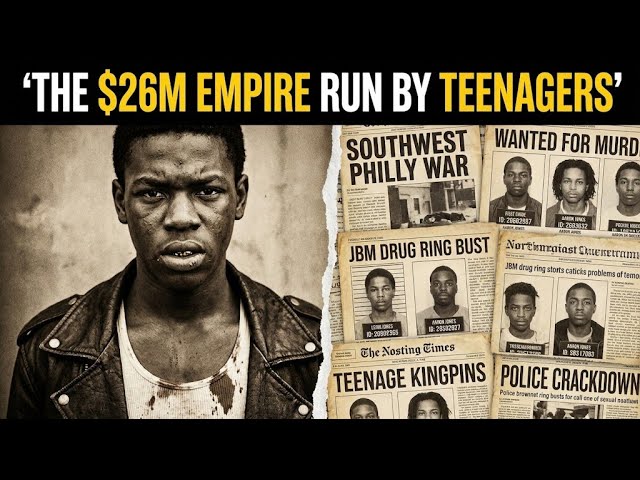
Philadelphia. Nineteen eighty-five. A new kind of criminal emerged from the ashes of the original Black Mafia. They were teenagers. Some barely old enough to drive. And they built a twenty-six million dollar crack cocaine empire in under three years.
The Junior Black Mafia didn't ask for permission. They didn't respect the old codes. They declared war on their own mentors — the men who taught them the game — and left bodies on both sides of the generational divide.
This is the complete story of the JBM. From Southwest Philly projects to federal supermax prisons. From five hundred thousand dollar weekly operations to life sentences handed down to men who were barely old enough to vote. We trace every step of their rise, their war, and their catastrophic fall.
This documentary contains dramatized reconstructions based on court records, federal testimony, and published accounts. Some dialogue has been recreated for narrative purposes. While we strive for historical accuracy, viewers are encouraged to consult primary sources for verification.
Junior Black Mafia Philadelphia documentary crack cocaine empire Aaron Jones JBM federal prosecution Operation Cleanup organized crime drug war nineteen eighties
Subscribe now. Hit the bell. The streets have stories that history tried to bury.
📚 Sources and Further Reading:
→ United States v. Aaron Jones et al. — Federal Court Records
https://www.courtlistener.com
→ Philadelphia Inquirer Historical Archives — JBM Coverage
https://www.inquirer.com/archives
Show More Show Less View Video Transcript
0:00
Philadelphia, 1985.
0:02
A 17-year-old stands in a basement on
0:05
58th Street in Southwest Philly. The
0:08
room smells like mildew and fresh cash.
0:11
He has $6,000 in his pocket. By this
0:14
time next year, according to federal
0:16
prosecutors, he will control a network
0:18
moving $500,000 worth of crack cocaine
0:22
every single week. He hasn't graduated
0:24
high school. He can't legally buy a
0:27
beer. And within 3 years, investigators
0:30
would later allege he will have built a
0:32
$26 million empire that turns
0:35
Philadelphia into a war zone. This is
0:37
the story of the junior black mafia. The
0:40
teenagers who didn't wait their turn,
0:42
the children who, according to court
0:45
documents and federal testimony,
0:47
declared war on the very men who taught
0:49
them the game, and the generation that
0:51
burned so bright so fast that federal
0:54
prosecutors had to build an entirely new
0:57
case strategy just to take them down.
1:00
Before we go further, some of what
1:02
you're about to hear is reconstructed
1:04
from court records, federal indictments,
1:07
and investigative journalism from the
1:09
period. Dialogue has been dramatized for
1:12
narrative purposes. Where events are
1:14
disputed, we present the accounts as
1:16
alleged. This is the story as
1:19
prosecutors and investigators understood
1:21
it. The truth, as always, belongs to
1:24
those who lived it. Now, to understand
1:27
the JBM, you first have to understand
1:30
what came before them. The original
1:32
Black Mafia emerged in Philadelphia in
1:34
the late 1960s.
1:36
They called themselves the Black Muslim
1:39
Movement initially, though federal
1:41
investigators would later characterize
1:43
them as an organized crime syndicate
1:46
that used religious imagery as cover. By
1:49
the mid 1970s, according to court
1:52
documents, they controlled gambling,
1:54
extortion, and heroine distribution
1:56
across significant portions of North and
1:59
West Philadelphia. But here's what
2:01
matters for our story. By 1980, that
2:04
original generation was in trouble.
2:06
Major prosecutions had gutted
2:08
leadership. Key figures were serving
2:10
long sentences. The ones who remained
2:13
were older, cautious, diminished, and
2:15
into that vacuum stepped their children.
2:18
Not literally in most cases, but
2:20
spiritually. The next generation had
2:23
watched. They had learned. And they had
2:25
noticed something the old guard hadn't.
2:27
Crack cocaine. The economics of crack
2:30
changed everything. Powder cocaine
2:32
required infrastructure, connections,
2:35
import routes, capital. Crack could be
2:38
cooked in a kitchen. It could be sold in
2:40
$10 increments. The customer base was
2:43
immediate and desperate. And most
2:45
importantly for our story, a teenager
2:48
with ambition could enter the market
2:50
with almost nothing and scale operations
2:52
within months. The old black mafia had
2:55
built their empire slowly, carefully.
2:58
They had codes, hierarchies, rules about
3:01
who controlled what territory and how
3:03
disputes were settled. The teenagers who
3:05
would form the JBM looked at those rules
3:07
and saw something different. They saw
3:10
obstacles. Pay attention to what happens
3:12
next. It's easy to miss. According to
3:15
federal prosecutors and court testimony,
3:18
the young men who formed the core of the
3:20
JBM didn't announce themselves. There
3:23
was no formal declaration. No single
3:25
moment when the old guard realized what
3:27
was happening. It was gradual. A corner
3:30
here, a block there. Teenagers who
3:33
should have been asking permission were
3:34
instead taking territory. And when the
3:37
old heads complained, the response was
3:39
unlike anything Philadelphia had seen.
3:42
The JBM, according to multiple accounts
3:45
from the period, didn't negotiate. They
3:48
didn't pay tribute. They didn't respect
3:49
the hierarchies that had governed
3:51
Philadelphia's drug trade for 15 years.
3:54
They brought violence at a scale and
3:56
speed that, according to investigators,
3:59
shocked even hardened criminals from the
4:02
previous generation. There was one name
4:04
that kept appearing in the federal
4:06
investigation. one figure that
4:08
prosecutors would later identify as the
4:11
center of the JBM's operations. His name
4:14
was Aaron Jones. Jones, who was later
4:18
convicted and sentenced to life in
4:20
federal prison, was allegedly the
4:22
strategic mind behind the JBM's
4:24
expansion. According to court testimony,
4:27
he understood something that separated
4:29
the JBM from what came before,
4:32
decentralization.
4:33
The old black mafia had operated like a
4:36
traditional organized crime family.
4:38
Hierarchy, chain of command, clear
4:41
leadership that could be targeted. The
4:43
JBM, according to prosecutors, operated
4:47
more like a network of independent
4:49
cells, small crews, local leaders, no
4:52
single point of failure. When federal
4:55
investigators tried to map the
4:56
organization, they found something that
4:59
didn't match their models. There was no
5:01
pyramid to decapitate. But before we can
5:04
understand how the JBM built their
5:06
empire, we need to understand the war
5:08
they fought to claim their territory.
5:11
And that war wasn't just against rival
5:13
drug dealers. It was against the men who
5:16
had taught them everything. The
5:17
generational conflict between the JBM
5:20
and the remnants of the original black
5:22
mafia remains one of the most documented
5:25
aspects of the federal case. According
5:27
to court records and testimony, the
5:30
younger generation didn't just compete
5:32
with their predecessors. They actively
5:34
targeted them. The reasons were partly
5:37
practical. The old guard controlled
5:39
territory the JBM wanted. They had
5:42
established relationships with
5:44
suppliers. They represented competition.
5:47
But according to several accounts from
5:49
the period, there was something else,
5:51
something personal. Some of the JBM
5:53
members, investigators alleged, had
5:56
grown up around the original black
5:58
mafia. They had watched the older
6:00
generation operate. They had seen the
6:02
codes being enforced, and they had
6:04
witnessed what happened when those codes
6:06
failed. By 1980, the original Black
6:09
Mafia was a shadow of its former power.
6:12
Major figures were incarcerated. Revenue
6:15
streams had dried up. The organization
6:17
that had once commanded respect across
6:19
Philadelphia could no longer protect its
6:22
members from prosecution. The teenagers
6:24
who would form the JBM looked at that
6:27
collapse and drew a conclusion. The old
6:29
ways didn't work. The codes didn't
6:32
protect you. The hierarchies just made
6:34
you easier to target. So, they built
6:37
something different. But there's
6:39
something else about this moment in
6:40
Philadelphia that the official accounts
6:43
often miss. Crack cocaine didn't just
6:45
change the economics of the drug trade.
6:48
It changed the demographics. The old
6:50
black mafia had recruited from a
6:52
specific pool. Men with connections. Men
6:55
who had proven themselves over years.
6:58
Men who understood the unwritten rules.
7:00
Crack opened the door to anyone with
7:02
ambition and a willingness to use
7:04
violence. The barriers to entry
7:07
collapsed and suddenly teenage boys from
7:10
southwest Philly housing projects could
7:13
compete with established operators. Some
7:15
researchers who have studied this period
7:17
suggest that the speed of the JBM's rise
7:20
wasn't just about strategy. It was about
7:22
numbers. For every experienced dealer
7:25
from the old guard, there were dozens of
7:27
teenagers willing to work longer hours,
7:30
take bigger risks, and use violence
7:32
without hesitation. The average age of
7:35
JBM members, according to federal court
7:38
documents, was under 21. Some were as
7:41
young as 15. And years later, one name
7:44
would appear at the center of the
7:46
federal investigation into the JBM's
7:48
most violent operations. A name that
7:51
prosecutors would call the key to
7:53
understanding how teenagers built a drug
7:56
empire. Aaron Jones. Remember that name?
8:00
The conflict between the JBM and the
8:02
original black mafia came to a head
8:05
sometime in 1986.
8:08
The exact sequence of events remains
8:10
disputed. But according to multiple
8:12
accounts compiled during federal
8:14
investigations, the younger generation
8:17
made a decision. They weren't going to
8:19
wait for the old guard to fade away.
8:22
They weren't going to share territory or
8:24
pay tribute. They weren't going to
8:26
respect the codes that had governed
8:27
Philadelphia's criminal underworld for a
8:30
generation. They were going to take
8:32
everything. And that decision,
8:35
investigators would later allege, led to
8:37
a wave of violence that transformed
8:40
Philadelphia into one of the most
8:42
dangerous cities in America. But here's
8:44
the question no one at the time fully
8:46
understood. How did teenagers coordinate
8:49
this kind of operation? How did young
8:52
men with no organizational experience
8:55
build a network capable of moving
8:56
millions of dollars in drugs while
8:59
simultaneously waging war against
9:02
established criminal organizations?
9:04
The answer, according to federal
9:06
prosecutors, reveals something about the
9:09
JBM that made them fundamentally
9:11
different from any drug organization
9:13
Philadelphia had seen before. And it
9:16
begins with a meeting that allegedly
9:18
happened in late 1985.
9:21
A meeting where the rules of the game
9:23
were rewritten. A meeting that,
9:25
according to court testimony, Aaron
9:27
Jones himself organized. But what
9:30
happened in that meeting? What did they
9:32
decide? And why did federal
9:34
investigators later call it the moment
9:36
that Philadelphia's drug trade changed
9:38
forever? That's where the story gets
9:41
dark. The meeting allegedly happened in
9:43
a rowhouse basement in southwest
9:45
Philadelphia late 1985.
9:48
According to testimony that would later
9:50
emerge in federal court, fewer than a
9:53
dozen young men gathered in a room lit
9:55
by a single overhead bulb. Most of them
9:58
were teenagers. The oldest, according to
10:01
court records, was barely 22. And
10:04
according to prosecutors, what they
10:06
decided in that basement would transform
10:08
Philadelphia's drug trade for the next
10:10
three years. The first rule, according
10:13
to testimony, no hierarchy, no boss of
10:16
bosses, no single leader who could be
10:19
arrested and used to bring down the
10:21
entire organization. Each crew would
10:24
operate independently. They would share
10:26
suppliers. They would respect
10:28
territorial boundaries agreed upon in
10:31
advance. But no one answered to anyone
10:33
else. The second rule, according to
10:35
multiple accounts, violence was not a
10:38
last resort. It was a first response.
10:41
Competitors would not be warned. They
10:43
would not be negotiated with. They would
10:45
be eliminated. And the third rule, the
10:47
one that prosecutors would later
10:49
describe as the key to understanding the
10:51
JBM's rapid expansion. Age was
10:54
irrelevant. A 15-year-old who could move
10:57
product and handle problems was equal to
11:00
a 20-year-old. The only thing that
11:02
mattered was results. Federal
11:04
investigators would later describe this
11:07
structure as revolutionary, not because
11:09
it was sophisticated, but because it was
11:12
nearly impossible to prosecute.
11:14
Traditional organized crime cases relied
11:17
on hierarchy. You arrested street level
11:19
dealers. You pressured them to testify
11:22
against their supervisors. You worked
11:24
your way up the chain until you reached
11:26
leadership. Then you brought RICO
11:28
charges, but the JBM, according to
11:31
prosecutors, had no chain. There was no
11:34
ladder to climb. Each cell operated with
11:37
enough independence that arresting one
11:39
crew barely impacted the others. For
11:42
investigators, it was like trying to
11:44
kill a hydra by cutting off one head at
11:46
a time. But that structure, the thing
11:49
that made them so difficult to
11:50
prosecute, also created a problem. the
11:53
JBM couldn't solve. Without central
11:56
leadership, there was no one to enforce
11:58
peace between crews, no one to settle
12:01
disputes over territory or product, no
12:04
one to prevent the organization from
12:06
turning on itself, and that instability
12:08
would eventually destroy them. But in
12:11
1986, they were just getting started.
12:14
According to federal court documents,
12:16
the JBM's expansion followed a specific
12:19
pattern. They would identify a block
12:21
controlled by an independent dealer or a
12:24
remnant of the old black mafia. A crew
12:27
of four or five JBM members would
12:29
approach. There would be a single
12:31
conversation, an offer to join or leave.
12:34
If the offer was refused, according to
12:37
testimony, the violence was immediate
12:39
and overwhelming. Within 6 months,
12:42
prosecutors alleged the JBM had absorbed
12:45
or eliminated independent dealers across
12:48
significant portions of Southwest
12:50
Philadelphia. The speed of their
12:52
expansion shocked investigators. The
12:55
brutality shocked even hardened
12:57
criminals. But what made them truly
12:59
dangerous wasn't the violence itself. It
13:02
was who they were willing to use it
13:04
against. This next detail changes
13:06
everything we thought we knew. The
13:08
generational war between the JBM and the
13:11
original black mafia wasn't an accident.
13:14
It wasn't the inevitable result of
13:16
competition for territory. According to
13:18
several accounts that emerged during
13:20
federal prosecution, it was strategy.
13:23
The old guard had relationships,
13:25
connections to corrupt officials,
13:28
arrangements with certain law
13:29
enforcement officers, networks that had
13:32
been built over 15 years. The JBM,
13:35
according to prosecutors, saw those
13:38
relationships as threats. Every
13:40
connection the old black mafia
13:42
maintained was a potential source of
13:44
intelligence about JBM operations. Every
13:48
corrupt official on the old guard's
13:50
payroll was someone who might be turned
13:52
against the younger generation. So, the
13:55
JBM allegedly did something that
13:57
violated every unwritten rule of
13:59
organized crime. They targeted the old
14:02
guard's protection. According to
14:04
testimony, JBM Crews began identifying
14:08
and intimidating the network of
14:09
informants, middlemen, and corrupt
14:12
officials that the original black mafia
14:14
had cultivated. They weren't just taking
14:17
territory. They were systematically
14:19
dismantling the infrastructure that had
14:21
allowed the previous generation to
14:23
operate. For the old guard, this was
14:26
unprecedented. There were codes about
14:28
these things. You competed for drug
14:31
territory. You fought over corners and
14:33
supply routes. But you did not attack
14:35
another organization's ability to
14:38
operate safely. That endangered
14:40
everyone. The JBM's response, according
14:43
to multiple accounts, was simple. They
14:46
weren't interested in operating safely.
14:48
They were interested in dominating
14:50
completely. And that philosophy led to
14:53
the confrontation that defined the
14:55
generational war. According to court
14:57
records and investigative journalism
15:00
from the period, the breaking point came
15:02
in mid 1986. An original black mafia
15:06
figure, a man who had survived the
15:08
federal prosecutions of the late7s,
15:11
allegedly sent word to the JBM
15:13
leadership. The message, according to
15:16
testimony, was an ultimatum. Pay
15:18
tribute. Acknowledge the old hierarchy
15:21
or face consequences. The meeting that
15:24
followed was reconstructed in federal
15:26
court from multiple witness accounts.
15:28
The older man arrived with two
15:30
associates. He expected difference. He
15:33
expected negotiation. He had been in the
15:35
game for nearly 20 years. He had
15:38
survived prison. He had survived federal
15:40
investigations. He had survived rivals.
15:44
He had never dealt with anything like
15:45
what walked through that door. According
15:48
to testimony, the JBM representatives
15:50
who arrived were teenagers. Three of
15:53
them, the oldest was allegedly 19. They
15:56
carried no weapons visibly. They showed
15:58
no nervousness. And when the older man
16:01
began speaking about respect and
16:03
tradition, and the way things were done,
16:05
one of the teenagers allegedly cut him
16:07
off. The conversation that followed, as
16:10
reconstructed from court testimony,
16:13
lasted less than 5 minutes. There was no
16:15
negotiation. There were no terms
16:18
offered. According to witnesses, the
16:20
teenager who spoke told the older man
16:22
that his time was finished, that the
16:25
codes he was citing were the reason his
16:27
organization had collapsed, that the JBM
16:30
didn't answer to ghosts, and then,
16:32
according to testimony, they left. The
16:35
violence that followed in the next 3
16:37
months, investigators alleged,
16:39
effectively ended the original Black
16:41
Mafia as a functioning organization in
16:44
Philadelphia. Take a breath because from
16:47
here on the story only gets darker. What
16:50
the JBM built in 1986 and 87, according
16:54
to federal prosecutors, was not just a
16:56
drug organization. It was a territory.
16:59
Multiple crews operating across
17:01
southwest Philadelphia, parts of West
17:04
Philadelphia, and pockets of North
17:06
Philadelphia. Prosecutors estimated
17:08
weekly revenues exceeding $500,000 at
17:12
the organization's peak and they were
17:14
all teenagers. The youngest JBM members,
17:17
according to court documents, were used
17:19
as lookouts and runners, 12, 13 years
17:23
old, too young to prosecute as adults,
17:26
too young to face serious jail time if
17:28
caught. The violence continued at a
17:30
scale that drew national attention.
17:33
Philadelphia's murder rate climbed.
17:35
Entire blocks became no-go zones for
17:38
residents who weren't involved in the
17:40
drug trade. And police found themselves
17:42
dealing with a phenomenon they hadn't
17:44
trained for. The suspects they were
17:46
arresting weren't hardened criminals
17:48
with decades of experience. They were
17:51
children, boys who should have been in
17:53
high school. Boys who had built a
17:55
multi-million dollar criminal empire
17:58
before they could vote. But before we go
18:00
further, there's something federal
18:02
investigators never explained. How did
18:04
the JBM maintain discipline without
18:07
central leadership? How did independent
18:10
crews coordinate well enough to control
18:12
territory across multiple neighborhoods?
18:15
According to prosecutors, the answer was
18:17
simpler than anyone expected. Fear. The
18:20
JBM's reputation for violence,
18:23
investigators alleged, functioned as a
18:26
form of governance. Every crew knew what
18:28
happened to people who crossed JBM
18:30
interests. Every dealer who considered
18:33
cheating on payments knew the stories.
18:35
Every rival who thought about
18:37
challenging JBM territory had heard what
18:40
happened to the old black mafia. The
18:42
violence wasn't random. It was according
18:45
to prosecutors a management strategy and
18:48
it worked for almost 3 years. But the
18:51
same structure that protected the JBM
18:54
from prosecution created the conditions
18:56
for its collapse. Without central
18:58
leadership, there was no one to prevent
19:00
internal conflicts. Without a boss to
19:03
enforce peace, disputes between crews
19:06
escalated. And without a clear
19:08
hierarchy, ambitious young men saw no
19:11
path to advancement except through
19:13
violence against their own organization.
19:16
By late 1987, according to federal
19:19
investigators, the JBM was beginning to
19:22
fracture. Crews that had cooperated were
19:25
now competing. Territory that had been
19:27
clearly divided was being contested. And
19:30
the same willingness to use overwhelming
19:33
violence that had built the empire was
19:35
now being turned inward. The federal
19:38
investigation that would eventually
19:40
destroy the JBM was already underway.
19:43
But the investigators didn't need to
19:45
infiltrate the organization. They didn't
19:48
need to flip informants. They just
19:50
needed to wait. The JBM was going to
19:52
tear itself apart. And that's exactly
19:55
what happened. But here's the question
19:57
prosecutors struggled to answer. If the
20:00
JBM structure was so unstable, how did
20:03
it survive as long as it did? What kept
20:05
these independent crews aligned for
20:07
nearly 3 years when every incentive
20:10
pointed toward betrayal? The answer,
20:13
according to testimony that emerged
20:15
during the federal trial, goes back to
20:17
Aaron Jones, the man prosecutors
20:20
identified as the closest thing the JBM
20:22
had to a central figure. Jones,
20:25
according to court records, didn't lead
20:27
the JBM in any traditional sense. He
20:30
didn't give orders. He didn't control
20:32
Cruz, but according to multiple
20:34
witnesses, he did something perhaps more
20:37
important. He arbitrated. When disputes
20:40
arose between crews, Jones was allegedly
20:43
the one who resolved them. When
20:45
territorial conflicts threatened to
20:47
escalate, he was the one who negotiated
20:49
boundaries. When the internal tensions
20:52
threatened to explode, he was the one
20:54
who kept the peace just long enough for
20:56
everyone to keep making money. But Jones
20:59
couldn't be everywhere. And as the JBM
21:02
expanded, as more crews joined the
21:04
network, as more territory came under
21:06
their control, the disputes multiplied
21:09
faster than any single person could
21:11
resolve. By 1988, the system was
21:15
breaking down. And that's when the
21:16
federal government decided they had seen
21:18
enough. Operation Cleanup, that's what
21:21
they called it. A multi- agency task
21:24
force involving the DEA, the FBI, and
21:27
the Philadelphia Police Department.
21:29
Their target was the complete
21:31
dismantling of the JBM. But the
21:33
investigators faced a problem. The same
21:36
decentralized structure that had allowed
21:38
the JBM to evade prosecution for years
21:41
meant there was no single case to build,
21:44
no single leader to indict, no single
21:47
network to map. So they did something
21:49
different. They built dozens of cases,
21:52
every crew, every corner, every dealer
21:54
they could identify. They treated the
21:56
JBM not as a single organization, but as
21:59
a collection of criminal enterprises
22:01
that happen to share a name. The
22:03
indictments came in waves. 1988,
22:07
1989.
22:08
Each one targeting a different crew.
22:10
Each one removing another piece of the
22:12
network and then they came for Aaron
22:15
Jones. The arrest, according to
22:17
published accounts, happened without
22:19
drama, no shootout, no chase. Federal
22:23
agents took him into custody on drug
22:25
trafficking charges that, if convicted,
22:27
would carry a mandatory life sentence.
22:30
He was 23 years old. But here's what
22:32
makes the JBM story different from every
22:35
other Drug Empire documentary you've
22:37
ever seen. The federal prosecution
22:40
didn't just target the leaders, it
22:42
targeted everyone. More than 40 JBM
22:45
members were eventually convicted. Many
22:47
were sentenced to decades in federal
22:49
prison. Some received life without
22:52
parole and the average age of those
22:54
receiving life sentences. According to
22:57
court records, several were barely old
23:00
enough to vote when they committed the
23:02
crimes that would keep them locked up
23:03
forever. But the prosecution raised
23:06
questions that have never been fully
23:08
answered. Questions about the system
23:11
that created the JBM in the first place.
23:14
questions about what happens when an
23:16
entire generation of young men sees no
23:18
path forward except through violence and
23:21
questions about whether destroying the
23:23
JBM actually solved anything. Because
23:26
within 5 years of Operation Cleanup,
23:28
according to Crime Statistics,
23:30
Philadelphia's drug trade had
23:32
reorganized. New names, new crews, new
23:36
teenage boys filling the exact same
23:38
role. The JBM was gone, but what they
23:42
represented never went away. And the
23:44
story of what happened to Aaron Jones
23:46
after his conviction, the decades he
23:48
spent in federal prison, the appeals he
23:51
filed, and the question of whether
23:53
justice was served, that's where this
23:55
story takes its darkest turn. The
23:57
federal courthouse in Philadelphia,
24:00
1989.
24:02
Aaron Jones sat at the defense table in
24:04
a suit that didn't quite fit. According
24:06
to courtroom observers, he looked
24:08
younger than his 23 years thinner. The
24:11
confidence that witnesses had described
24:13
from his years running JBM operations
24:16
was gone. He was facing a mandatory life
24:19
sentence. The prosecution's case, built
24:22
over nearly 2 years of investigation,
24:25
presented Jones as the central figure in
24:28
a criminal enterprise that had flooded
24:30
Philadelphia with cracked cocaine and
24:32
left a trail of bodies across southwest
24:35
Philly. According to prosecutors, he had
24:38
personally overseen operations
24:40
generating millions of dollars in drug
24:43
revenue. Jones, who maintained his
24:45
innocence on several charges, faced the
24:48
reality that federal drug laws of the
24:50
era offered judges almost no discretion.
24:54
The quantities involved triggered
24:55
mandatory minimums that meant he would
24:58
die in prison. He was not alone. But
25:00
before we go further, there's something
25:03
the court transcripts never explained.
25:05
Something about the federal prosecution
25:07
that raises questions even today. The
25:10
defendants being sentenced weren't
25:12
hardened criminals with decades of
25:14
violent history. They were young men.
25:17
Some had been teenagers when they
25:19
committed the crimes now sending them to
25:21
prison forever. And the question that
25:23
hung over those proceedings, the
25:25
question no one in the courtroom could
25:27
answer was whether justice meant the
25:30
same thing when applied to a 17-year-old
25:33
as it did to a 40year-old. The
25:36
sentencing hearings stretched across
25:38
months, defendant after defendant, crew
25:40
after crew. The pattern repeated with
25:43
devastating consistency. James Cole,
25:46
convicted of drug trafficking
25:48
conspiracy, sentenced according to
25:50
federal mandatory minimums. He was 20
25:52
years old. Mark Johnson convicted of
25:55
drug distribution and weapons charges.
25:58
Life sentence, he was 22. The names
26:00
accumulated. The sentences accumulated.
26:04
And according to court records, more
26:06
than 40 JBM members received federal
26:09
prison terms. Several received life
26:11
without the possibility of parole. Stop.
26:14
Rewind that in your mind because it
26:16
matters. Life without parole for crimes
26:19
committed when some defendants were 17,
26:22
18, 19 years old. Before they could
26:25
legally drink, before many had finished
26:28
high school, they received sentences
26:30
that meant they would grow old and die
26:32
behind federal prison walls. The judges,
26:35
according to court transcripts, had
26:37
little choice. Federal mandatory minimum
26:40
sentencing laws of the 1980s had been
26:43
designed to crack down on drug
26:45
trafficking. They removed judicial
26:47
discretion. They mandated specific
26:49
sentences based on drug quantities
26:52
regardless of circumstances. background
26:55
or age. The laws had been written to
26:58
target kingpins to ensure that major
27:00
drug traffickers couldn't negotiate
27:03
light sentences. But in practice, those
27:05
same laws fell hardest on young men from
27:08
southwest Philadelphia housing projects
27:11
who had never had a chance to become
27:13
anything else. Some legal scholars who
27:16
have studied this period argue that the
27:18
JBM prosecutions represent a turning
27:21
point in how America understood the war
27:24
on drugs. The spectacle of teenagers
27:27
receiving life sentences forced
27:30
questions that the criminal justice
27:32
system wasn't prepared to answer. Was
27:34
Aaron Jones a criminal mastermind who
27:37
deserved to spend his life in prison? or
27:39
was he a product of circumstances that
27:42
made his path almost inevitable? The
27:44
court never had to answer that question.
27:47
The law didn't require an answer. It
27:49
only required a sentence and the
27:52
sentences came. The immediate aftermath
27:54
of operation cleanup transformed
27:57
southwest Philadelphia. According to
27:59
crime statistics from the period,
28:02
drugrelated violence declined sharply in
28:04
the months following the mass arrests.
28:06
Corners that had been open air drug
28:08
markets went quiet. Residents who had
28:11
been afraid to walk certain blocks
28:13
reported feeling safer. But pay
28:15
attention to what happens next. It's
28:17
easy to miss. Within 18 months of the
28:20
final JBM convictions, according to law
28:23
enforcement reports from the early
28:25
1990s, new organizations had moved into
28:29
the vacuum. Different names, different
28:32
faces, but the same basic structure, the
28:34
same corners, the same customers. The
28:37
JBM had been destroyed, but the
28:40
conditions that created the JBM remained
28:42
unchanged. The crack epidemic continued.
28:46
The poverty in southwest Philadelphia
28:48
persisted. The lack of legitimate
28:50
economic opportunities for young black
28:53
men in the neighborhood stayed constant,
28:55
and the drug trade, as it always does,
28:58
found new workers to replace the ones
29:00
who had been removed. Some researchers
29:03
who have studied Philadelphia's drug
29:05
trade across this period, suggest that
29:07
Operation Cleanup success was always
29:09
going to be temporary. You can arrest
29:12
dealers. You can dismantle networks. You
29:15
can send teenage boys to prison for the
29:17
rest of their lives. But you cannot
29:19
arrest demand. You cannot prosecute
29:22
poverty. And you cannot sentence the
29:24
desperation that makes a 15-year-old sea
29:27
drug dealing as his best available
29:29
option. The JBM's legacy, if it can be
29:32
called that, wasn't the empire they
29:34
built. It was the questions they left
29:36
behind. Questions about a system that
29:39
could create child drug lords and then
29:42
punish them as if they were adults
29:44
making free choices. Questions about
29:47
whether dismantling criminal
29:49
organizations actually addresses the
29:52
root causes of crime. And questions
29:54
about what we owe young men who never
29:56
had a chance to be anything other than
29:59
what their environment made them. Now,
30:01
here's where the story takes a turn no
30:04
one expected. Aaron Jones didn't
30:06
disappear quietly into federal prison.
30:09
According to court records and legal
30:11
filings, he spent years filing appeals,
30:14
challenging his sentence, arguing that
30:17
the mandatory minimums applied to his
30:19
case were unconstitutional.
30:21
He was not alone in this fight. Across
30:24
the federal prison system, defendants
30:26
convicted under the harsh drug laws of
30:29
the 1980s began organizing legal
30:32
challenges. The sentences that had
30:34
seemed permanent began to crack. In
30:37
2010, Congress passed the Fair
30:39
Sentencing Act. The law reduced the
30:42
disparity between crack and powder
30:44
cocaine sentences that had
30:46
disproportionately affected black
30:48
defendants. It was the first major
30:50
reform of federal drug sentencing in
30:53
decades. But the law was not
30:55
retroactive. The men and women already
30:58
serving sentences under the old
31:00
guidelines remained in prison. For Jones
31:03
and others convicted in the JBM
31:05
prosecutions, the reform came too late,
31:08
or so it seemed. In 2018, Congress
31:12
passed the First Step Act. For the first
31:15
time, some provisions of the Fair
31:17
Sentencing Act were made retroactive.
31:20
Defendants who had been sentenced under
31:22
the old crack cocaine guidelines could
31:24
petition for sentence reductions. The
31:27
courtrooms that had sent JBM members to
31:30
prison for life began hearing petitions
31:33
for early release. Some were granted,
31:35
some were denied. The outcomes varied
31:38
based on conduct in prison, the specific
31:40
charges, and judicial interpretation of
31:43
the new law. According to legal records,
31:46
several former JBM members have had
31:48
their sentences reduced under these
31:50
reforms. Men who expected to die in
31:53
prison have been released after serving
31:55
25 or 30 years, but others remain
31:58
incarcerated. The reforms were limited.
32:02
Not everyone qualified, and for some,
32:04
the damage was permanent regardless of
32:06
legal outcomes. The years lost cannot be
32:09
returned. The youth spent behind bars
32:12
cannot be reclaimed and the question of
32:14
whether the original sentences were just
32:17
remains unanswered even as the laws that
32:19
mandated them have been reformed. Aaron
32:22
Jones, the name that appeared throughout
32:25
the federal investigation. The man
32:27
prosecutors identified as closest thing
32:30
the JBM had to a central figure. His
32:33
case has been subject to legal
32:35
proceedings over the decades of his
32:37
incarceration. for specific details
32:40
about his current legal status. Viewers
32:42
should consult recent court records.
32:45
What can be said based on historical
32:47
documents is that he was sentenced to
32:49
life in federal prison in 1989.
32:53
He was 23 years old and the legal system
32:56
has grappled with cases like his ever
32:58
since. But there's another dimension to
33:00
the JBM legacy that court records can't
33:03
capture. the neighborhoods. Southwest
33:06
Philadelphia in the 1990s and 2000s
33:10
continued to struggle with the same
33:11
forces that had created the JBM.
33:14
Poverty, limited opportunity, the drug
33:17
trade, violence. The young men who
33:20
filled the roles once occupied by JBM
33:22
members faced the same choices, the same
33:25
pressures, the same lack of
33:27
alternatives, and many met the same
33:29
fate. prison, death, lives cut short
33:32
before they really began. Some community
33:35
organizers who work in southwest
33:37
Philadelphia today describe the JBM era
33:40
as a wound that never fully healed. The
33:43
violence traumatized a generation. The
33:45
mass incarceration removed fathers,
33:48
brothers, sons from families. The drug
33:51
trade left lasting scars on
33:53
neighborhoods and the cycle continued.
33:55
This is what the federal prosecution
33:57
could never address. You can dismantle
34:00
an organization. You can arrest its
34:02
members. You can send them to prison for
34:05
decades. But you cannot prosecute a
34:07
system. You cannot indict the economic
34:10
conditions that make drug dealing
34:12
rational for a teenager with no other
34:14
options. You cannot sentence the failure
34:16
of schools, the absence of jobs, the
34:19
collapse of institutions that might have
34:21
offered different paths. The JBM was
34:24
destroyed. But what the JBM represented,
34:27
the logical outcome of abandoning
34:30
communities to poverty while flooding
34:32
them with an addictive drug that created
34:34
instant wealth for anyone willing to
34:36
take the risk that never went away. And
34:39
this raises the question that has
34:41
haunted everyone who has studied this
34:43
case, everyone who prosecuted it,
34:46
everyone who lived through it. Did the
34:48
JBM create Philadelphia's violence or
34:51
did Philadelphia's failures create the
34:53
JBM? The answer matters because if the
34:56
JBM was simply a collection of criminals
34:58
who chose evil, then the response was
35:01
appropriate. Arrest them, try them,
35:04
sentence them, remove them from society.
35:07
But if the JBM was a symptom of deeper
35:09
failures, then removing them was never
35:12
going to solve anything. It was treating
35:14
a fever while ignoring the infection.
35:16
The men who built the JBM are now in
35:19
their 50s and 60s. The ones who
35:22
survived, the ones who weren't killed in
35:24
the violence of the 1980s, the ones who
35:27
are still alive in federal prison or who
35:29
have been released after decades behind
35:31
bars. They have had time to reflect.
35:34
Some have expressed remorse. Some have
35:37
maintained that they did what they had
35:38
to do to survive. Some have refused to
35:41
speak publicly at all. and the question
35:44
of what we do with young men who commit
35:46
terrible crimes. Whether we treat them
35:48
as irredeemable monsters or as products
35:51
of circumstances that we collectively
35:53
failed to address, that question remains
35:56
as urgent today as it was in 1989.
36:00
Perhaps more urgent because the
36:02
conditions that created the JBM still
36:04
exist. Different drugs, different names,
36:07
different faces, but the same desperate
36:10
choices facing the same desperate young
36:13
men in the same desperate neighborhoods.
36:15
And if we learned anything from the JBM,
36:18
if there is any lesson in the wreckage
36:20
of their empire, it might be this. But
36:22
wait, before we get to what the JBM
36:25
means, there's one final chapter of this
36:27
story that has never been fully told.
36:30
one piece of the puzzle that changes how
36:32
we understand everything that came
36:34
before. The question of who really
36:37
benefited from the JBM's empire, where
36:40
the money actually went, and why some
36:42
names that should have appeared in the
36:44
federal indictments never did. That's
36:46
where the official story starts to
36:48
crack. The question of who benefited
36:51
from the JBM's $26 million empire is not
36:54
the question most people think it is.
36:56
The obvious answer is the JBM members
36:59
themselves. The young men who drove
37:01
expensive cars, who wore gold chains,
37:05
who carried more cash than their parents
37:07
earned in a year, they benefited briefly
37:10
before prison or death took everything
37:12
back. But some researchers who have
37:15
studied drug economies in American
37:17
cities during the crack era point to a
37:20
different set of beneficiaries, a set
37:23
that never appeared in any indictment.
37:25
The money that flowed through the JBM
37:27
didn't stay in southwest Philadelphia.
37:30
According to economic analyzers of drug
37:33
markets from this period, cash from
37:35
street level sales moved quickly out of
37:37
the communities where it was generated,
37:40
suppliers, distributors, the legitimate
37:43
businesses used for money laundering,
37:45
the lawyers who defended dealers, the
37:48
bail bondsmen, the prison construction
37:51
companies, the rural communities where
37:53
prisons were built. Some critics have
37:55
argued that the crack epidemic created
37:58
an entire economy that depended on its
38:00
continuation. An economy that had no
38:03
incentive to address root causes because
38:06
addressing them would eliminate revenue
38:08
streams. This is not a conspiracy
38:10
theory. It's an observation about
38:12
incentive structures about where money
38:15
flows and who benefits from that flow.
38:18
The young men of the JBM saw very little
38:21
of the wealth they generated. According
38:23
to court testimony, most street level
38:26
dealers earned modest incomes despite
38:28
the risks they took. The real money
38:30
moved upstream to suppliers who were
38:33
never identified, to networks that
38:35
existed above the level federal
38:37
investigators could reach, to systems
38:40
that processed the cash and transformed
38:42
it into legitimate assets. But here's
38:45
something federal investigators never
38:47
fully explained. The JBM's suppliers,
38:51
the people who provided the cocaine that
38:53
JBM crews processed into crack. They
38:56
were never prosecuted. Not a single
38:58
indictment named the source of the drugs
39:00
that fueled the entire operation.
39:03
Operation Cleanup dismantled the street
39:06
level organization. It sent teenagers to
39:09
prison for life. But according to
39:11
critics who have examined the case, it
39:13
never touched the people who made the
39:15
JBM possible in the first place. Some
39:18
law enforcement officials from the
39:20
period have suggested that the suppliers
39:22
operated at a level of sophistication
39:25
that made them difficult to reach. That
39:27
the JBM's decentralized structure
39:30
actually protected suppliers by creating
39:33
multiple layers of separation. That the
39:35
investigation was successful within its
39:38
scope, but that scope had limits. Others
39:41
have raised questions about whether the
39:43
investigation's scope was deliberately
39:46
limited, whether certain relationships
39:48
were too valuable to disrupt, whether
39:51
the decision to focus on street level
39:53
dealers rather than supply networks
39:55
reflected priorities that had nothing to
39:58
do with public safety. These questions
40:00
have never been definitively answered.
40:03
The official record is incomplete, and
40:06
the people who might have answers have
40:07
reasons to stay silent. Pay attention to
40:10
what happens next. It's easy to miss.
40:13
The JBM case file remains one of the
40:15
most comprehensive documentations of a
40:18
street level drug organization ever
40:20
assembled by federal prosecutors.
40:23
Thousands of pages of testimony,
40:25
hundreds of hours of surveillance,
40:27
detailed financial records tracing money
40:30
through the organization. But the file
40:32
has gaps. Sections that reference
40:35
investigations that were opened and then
40:38
closed. Leads that were pursued and then
40:41
abandoned. Names that appear in early
40:43
documents and then vanish from later
40:45
ones. Some researchers have suggested
40:48
these gaps are normal. That all
40:50
investigations have limitations. That
40:53
not every lead can be followed. That
40:55
resources must be allocated
40:57
strategically. Others have suggested the
40:59
gaps tell a different story. that
41:01
certain directions were deliberately not
41:03
pursued, that certain relationships were
41:06
protected. The truth, as always, exists
41:10
somewhere in the documented record.
41:12
Viewers interested in drawing their own
41:14
conclusions can examine the court files,
41:17
the investigative summaries, and the
41:19
journalistic accounts from the period.
41:21
The evidence is available. What it means
41:24
remains a matter of interpretation, but
41:26
this much is beyond dispute. The JBM
41:29
members who were prosecuted came
41:31
exclusively from Southwest Philadelphia
41:34
housing projects. They were young, they
41:36
were black, they were poor, and they
41:39
received sentences that will keep some
41:41
of them in prison until they die. The
41:43
people who supplied them were never
41:45
identified. The people who laundered
41:47
their money were never prosecuted. The
41:50
systems that made their rise possible
41:52
and profitable continued operating long
41:54
after operation cleanup concluded. And
41:57
that pattern, some researchers argue,
42:00
repeated itself across American cities
42:02
throughout the crack era. Street level
42:04
dealers prosecuted, supply networks
42:07
untouched, communities devastated,
42:10
prisons filled, and the conditions that
42:13
created the problem left entirely
42:15
unressed. And that silence said
42:17
everything. The JBM's rise and fall took
42:20
less than 5 years. From the first
42:23
territorial moves in 1985 to the final
42:26
convictions in 1989 and 1990, a
42:31
generation of young men built an empire,
42:33
waged a war, and destroyed themselves in
42:36
less time than it takes to complete a
42:38
college degree. The speed of it still
42:40
shocks investigators who worked the
42:43
case. How quickly teenagers with no
42:45
organizational experience built
42:48
something that required a multi- agency
42:50
federal task force to dismantle. How
42:53
completely they abandoned the codes and
42:56
hierarchies that had governed criminal
42:58
organizations for decades. How willing
43:01
they were to use violence against
43:03
anyone, including the men who had taught
43:05
them the game. Some criminal justice
43:08
researchers have described the JBM as a
43:11
preview of what was coming. The crack
43:13
epidemic was just beginning in 1985.
43:16
What Philadelphia experienced with the
43:18
JBM, other cities would experience with
43:21
their own versions in the years that
43:23
followed. Young, violent, decentralized,
43:27
disposable, the JBM wasn't an anomaly.
43:30
It was a template. And the question that
43:32
haunts this story isn't whether the JBM
43:35
deserved prosecution. They committed
43:37
serious crimes. People died. Communities
43:40
were terrorized. The federal response
43:43
was within the logic of the criminal
43:45
justice system appropriate. The question
43:48
is whether prosecution was ever going to
43:50
be enough. Now we knew what happened to
43:52
the JBM. What we didn't know, what
43:54
perhaps we couldn't know was whether
43:56
anything had actually been solved. The
43:59
corners that JBM crews once controlled
44:01
are still there. The housing projects,
44:04
the unemployment, the failing schools,
44:07
the lack of legitimate pathways to
44:09
economic stability. All of it remained
44:12
after the prosecutions. All of it
44:14
remains today. Different names stand on
44:17
those corners now. Different young men
44:19
make the same calculations. Risk prison
44:22
or death for a chance at money and
44:24
status or accept poverty and
44:26
invisibility as a permanent condition.
44:29
The JBM's story forces a question that
44:32
the criminal justice system cannot
44:34
answer. What do we owe young people who
44:37
grow up in conditions that make criminal
44:39
choices rational? who bears
44:41
responsibility when a 15-year-old looks
44:44
at his options and concludes that drug
44:46
dealing is his best available path. The
44:49
JBM members made choices, real choices
44:52
with real consequences for real victims.
44:55
That is undeniable. But they made those
44:58
choices within a context. A context of
45:01
abandoned neighborhoods, failing
45:03
institutions, an economy that had no
45:06
place for them, a drug that appeared
45:08
precisely when legitimate opportunities
45:11
disappeared. And the question of whether
45:13
we can hold individuals fully
45:15
accountable while acknowledging that
45:17
context, whether justice means the same
45:19
thing for a teenager from southwest
45:21
Philly as it does for a teenager from
45:24
the suburbs. That question has never
45:26
been resolved and that silence said
45:29
everything. Aaron Jones, the name that
45:32
prosecutors identified as central to the
45:35
JBM's operations. The young man who
45:38
allegedly held the fractured
45:40
organization together through
45:41
arbitration rather than hierarchy. He
45:44
received a life sentence in 1989. He has
45:48
spent more than three decades in federal
45:50
prison, more years behind bars than he
45:53
spent free. Whatever he was at 23,
45:56
whatever he might have become, he became
45:58
something else in those decades.
46:01
Something the federal court never
46:02
considered when it handed down his
46:04
sentence. Whether his sentence was just
46:07
depends on what you believe justice
46:09
means, whether punishment should be
46:11
proportional to harm caused, whether age
46:14
and circumstance should mitigate
46:16
culpability, whether decades in prisons
46:18
serves any purpose beyond incapacitation
46:21
and revenge. These are not questions
46:24
with easy answers. They are not
46:26
questions the criminal justice system is
46:29
designed to answer. They are questions
46:31
for citizens, for voters, for all of us
46:34
who inherit the consequences of
46:36
decisions made in courtrooms 35 years
46:39
ago. And the silence around those
46:41
questions has lasted just as long as the
46:43
sentences themselves. The JBM left
46:46
Philadelphia with scars that haven't
46:48
healed. families missing fathers and
46:51
sons and brothers. Neighborhoods
46:53
traumatized by violence they can still
46:56
remember. A generation that learned
46:58
young that the system wasn't built to
47:00
protect them. And they left questions
47:03
that still demand answers about what we
47:05
do with young people who have no good
47:07
options. About whether incarceration
47:10
addresses crime or merely relocates it.
47:13
About who benefits when entire
47:15
communities are fed into the prison
47:17
system. about whether the war on drugs
47:19
was ever really about drugs. The JBM
47:22
rose because conditions allowed them to
47:25
rise. They fell because the federal
47:28
government decided to take them down.
47:30
And after they fell, the conditions
47:32
remained, waiting for the next
47:34
generation to make the same desperate
47:36
calculations. Some patterns repeat
47:39
because no one learns. Others repeat
47:42
because learning would require changes
47:44
no one wants to make. The JBM's pattern
47:46
repeated in Philadelphia, in cities
47:49
across America. Different names,
47:52
different decades, same outcomes, same
47:55
silence about why. And here at the end
47:57
of this story, there are no clean
47:59
conclusions, no satisfying resolutions,
48:02
no easy lessons. There are only
48:04
questions. Was the JBM a criminal
48:07
organization that deserved destruction
48:10
or a symptom of failures that the
48:12
prosecution could never address? Were
48:15
Aaron Jones and the other JBM members
48:18
predators who terrorized their community
48:20
or products of a community that had
48:23
already been terrorized by abandonment
48:25
and poverty? Can justice exist in a
48:28
system that sentences teenagers to die
48:31
in prison while never touching the
48:33
suppliers who made their crimes
48:35
possible? And if the conditions that
48:37
created the JBM still exist, if the same
48:41
corners are still producing the same
48:43
outcomes, then what exactly did we
48:45
accomplish by destroying them? These
48:47
questions don't have answers that fit in
48:49
a courtroom. They don't have answers
48:51
that fit in a documentary. They have
48:54
answers that fit only in the choices we
48:56
make as a society, in the resources we
48:59
allocate, in the futures we decide to
49:01
invest in or abandon. The JBM is gone.
49:05
The young men who built it are old now
49:07
or dead or still behind bars. But the
49:10
question they represent is still
49:12
waiting, still unanswered, still urgent.
49:15
They didn't wait for the throne. They
49:17
burned it and then they burned with it.
49:20
What we do with that knowledge is up to
49:22
us. So here's the question this story
49:24
leaves you with. Were they criminals who
49:26
deserved everything they got? Or were
49:29
they casualties of a war that was never
49:31
really about saving communities? one
49:33
word in the comments, criminals or
49:36
casualties. If this story made you
49:38
think, made you question, made you look
49:40
at your own city differently, then
49:42
subscribe, hit the bell. We go deeper
49:45
every week because the streets have
49:47
stories and someone needs to tell them.
49:50
Until next time, stay aware, stay
49:52
critical, and keep asking the questions
49:55
no one wants to