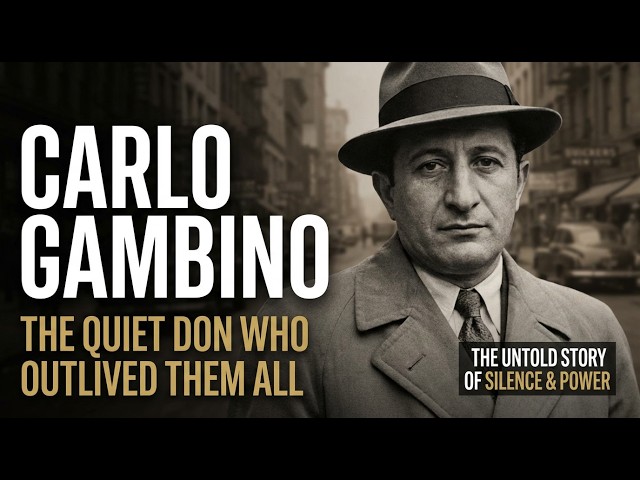
Up next in 10

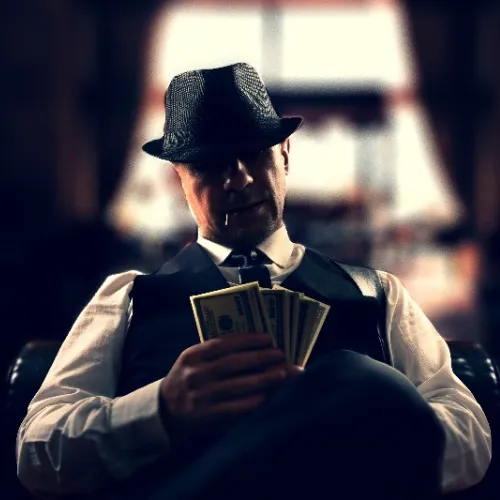
He never made headlines. Never fired a gun in public. Never raised his voice in a room full of killers.
And yet, when Carlo Gambino died in nineteen seventy-six, he controlled the most powerful crime family in American history.
This is the story of a man who understood something his rivals never learned: the loudest boss is usually the first to fall. While others chased newspaper fame and bloody spectacle, Gambino built an empire on silence, structure, and patience.
This documentary explores his rise from Sicilian immigrant to untouchable don, using court records, FBI surveillance files, and firsthand accounts from the era.
What you're about to hear is based on documented history. Some conversations have been recreated for narrative purposes.
Like and subscribe for more stories from the world that operates in shadow.
📚 Sources and Further Reading:
→ Five Families: The Rise, Decline, and Resurgence of America's Most Powerful Mafia Empires by Selwyn Raab
https://www.amazon.com/Five-Families-Americas-Powerful-Empires/dp/0312361815
→ Boss of Bosses: The Fall of the Godfather by Joseph O'Brien and Andris Kurins
https://www.amazon.com/Boss-Bosses-Fall-Godfather-Castellano/dp/0440212294
Show More Show Less View Video Transcript
0:00
They called him the quiet dawn. In a
0:03
world of loud men, he [music] understood
0:05
something they never would.
0:08
>> 1957,
0:10
a police camera captured something
0:11
[music] that wasn't supposed to exist.
0:14
In a farmhouse in a Palachin, New York,
0:17
over 60 men [music] in expensive suits
0:20
scattered across muddy fields like
0:22
startled deer. State troopers grabbed
0:25
whoever they could. The rest disappeared
0:28
into the woods. their polished shoes
0:31
ruined, their dignity in tatters. It was
0:34
the single greatest exposure of
0:36
organized crime in American history.
0:39
Bosses from across the country caught in
0:42
one place. Undeniable proof of a
0:44
national criminal network. The
0:47
newspapers went wild. Faces were
0:50
published. Names were printed. Careers
0:53
were destroyed. But there was one man at
0:55
that meeting whose photograph barely
0:58
circulated. whose name appeared only in
1:01
the back pages, who slipped away so
1:04
quietly that for years afterward, even
1:06
the FBI wasn't entirely sure he'd been
1:09
there at all. His name was Carlo
1:12
Gambino, and the Apalachin disaster that
1:16
ruined so many of his rivals would
1:19
become the foundation of his empire.
1:22
What you're about to hear is based on
1:25
documented history. Some conversations
1:28
have been recreated for narrative
1:30
purposes. Where the record is silent,
1:33
we've used informed interpretation.
1:36
Carlo Gambino was born in Palamo, Sicily
1:40
in 1902. He came from a family already
1:43
connected to the old ways. [music] His
1:46
relatives included men who understood
1:48
how power worked on the island. Not
1:51
through government, not through
1:53
legitimate business, through
1:55
relationships,
1:56
through favors, through silence. He
1:59
arrived in America in 1921 aboard a ship
2:03
that landed in Norfolk, Virginia. He was
2:06
19 years old. He spoke almost no
2:09
English, and according to later
2:11
accounts, he already knew exactly what
2:14
he intended to become. The New York he
2:16
entered was chaos. Prohibition had
2:19
transformed the underworld into a gold
2:22
rush. Irish gangs controlled the docks.
2:26
Jewish gangsters ran gambling
2:28
operations. Italian factions fought each
2:31
other as much as anyone else. The
2:34
Castellamese war was still a decade
2:36
away, but the violence was already
2:39
constant. Young men with ambition and no
2:42
patience were making fortunes overnight
2:45
and dying just as fast. Gambino watched.
2:49
He found work with relatives connected
2:51
to the Sicilian cruise in Brooklyn. He
2:54
ran errands. He kept his mouth shut. He
2:58
observed which men rose quickly and
3:00
which men lasted. The pattern was clear.
3:04
The flashy ones attracted attention. The
3:07
violent ones attracted enemies. The loud
3:10
ones attracted law enforcement. The
3:12
quiet ones survived. Gambino was 28 when
3:16
Salvata Maranzano declared himself boss
3:19
of all bosses after the Castellamese
3:22
war. This was 1931.
3:25
The old Sicilian had won. He had killed
3:29
Joe Maseria. He had reorganized the
3:32
families. He had created a structure
3:34
that would supposedly bring peace. He
3:37
lasted 5 months. Charlie Luchano had
3:41
Maranzano murdered in his own office,
3:44
stabbed and shot by men posing as tax
3:47
agents. The boss of all bosses died on
3:50
September 10th, 1931.
3:53
And with him died the idea that any
3:56
single man could stand above the others.
3:59
Luchano understood something important.
4:02
The title itself was the problem. He
4:05
created the commission instead. Five
4:08
families in New York sharing power,
4:11
resolving disputes, preventing the kind
4:13
of war that destroyed everyone's
4:15
profits. No single boss above the
4:18
others, just equals at a table. Gambino
4:22
was not at that table. He was 30 years
4:25
old, a [music] mid-level figure in what
4:27
would become the Mangano family, not
4:30
important enough to be noticed, not weak
4:32
enough to be dismissed. He was exactly
4:35
where he wanted to be. The next two
4:38
decades would prove the wisdom of his
4:40
approach. [music] Vincent Mangano ran
4:42
the family that bore his name through
4:45
the 1940s. He was old school Sicilian,
4:49
suspicious, territorial, prone to
4:52
grudges that lasted decades. His
4:55
underboss was Albert Anastasia. Where
4:58
Mangano was secretive, Anastasia was
5:02
explosive. He had helped create Murder
5:05
Incorporated, the enforcement arm that
5:08
handled killings for the commission. He
5:10
was feared throughout the underworld,
5:12
and he hated his boss. Gambino
5:15
positioned himself carefully between
5:17
[music] them. To Mangano, he was loyal,
5:20
respectful, a traditional Sicilian who
5:24
understood hierarchy. To Anastasia, he
5:27
was useful, connected, a man who could
5:30
make money without attracting attention.
5:33
He served two masters who despised each
5:36
other, and he made sure both believed he
5:38
was on their side. In April of 1951,
5:42
Vincent Mangano disappeared. His brother
5:46
Philillip was found dead in a marshland
5:48
in Burgon County, shot three times.
5:51
Vincent's body was never recovered.
5:54
Albert Anastasia claimed self-defense.
5:56
[music]
5:58
He told the commission that Mangano had
6:00
been plotting to kill him, that he had
6:02
acted only to protect himself. The
6:05
commission accepted this explanation.
6:08
Some accounts suggest they had little
6:11
choice. Anastasia was too powerful to
6:14
challenge directly. He became boss and
6:17
Carlo Gambino became his under boss. For
6:21
6 years, Gambino served the most feared
6:24
man in the American underworld.
6:26
Anastasia was everything Gambino was
6:29
not. Loud, impulsive, terrifying. He
6:33
ordered killings over minor insults.
6:36
[music] He made decisions that benefited
6:38
no one but himself. He alienated allies
6:42
and created enemies. Gambino watched. He
6:45
waited. He kept his opinions to himself.
6:49
But he also met quietly with Veto Genov
6:52
who had his own ambitions and with Mayor
6:55
Lanski who had his own grievances and
6:58
with the Luci's family who had their own
7:01
concerns about Anastasia's instability.
7:04
[music]
7:05
The conversations were never recorded.
7:08
The alliances were never written down.
7:11
But by the fall of 1957,
7:14
everyone who mattered understood that
7:16
Anastasia had become a problem. On the
7:19
morning of October 25th, 1957, Albert
7:24
Anastasia walked into the barberhop of
7:26
the Park Sheratan Hotel in Manhattan. He
7:30
sat in chair number four. He closed his
7:33
eyes. The hot towel went over his face.
7:36
He never saw the two men who walked in
7:39
behind him. They fired multiple shots.
7:42
Anastasia lurched out of the chair,
7:45
tried to attack the shooters, but he was
7:47
already dying. He collapsed on the floor
7:50
of the barberh shop. The most [music]
7:52
feared man in organized crime brought
7:55
down in a place of steam and soap and
7:57
mirrors. The killers were never
8:00
officially identified. Carlo Gambino
8:03
became [music] boss. Two weeks later
8:06
came a palachin. The meeting had been
8:08
called to ratify changes in leadership
8:10
across the country. Anastasia's death
8:14
needed to be acknowledged. Veto Genov
8:18
who had orchestrated much of the plot
8:20
wanted recognition of his [music] new
8:22
status. Bosses from across the nation
8:26
gathered at the estate of Joseph Barbara
8:28
in upstate New York and a state trooper
8:32
named Edgar Cwell noticed the unusual
8:35
number of expensive cars arriving at an
8:39
isolated farmhouse. The raid that
8:41
followed exposed the entire structure.
8:45
Men who had operated invisibly for
8:47
decades were suddenly photographed,
8:50
fingerprinted, and questioned. [music]
8:52
The Senate held hearings. The FBI, which
8:56
J Edgar Hoover had long insisted had no
8:59
evidence of a national crime syndicate,
9:02
was forced to acknowledge reality. For
9:05
most of those present, [music] a
9:07
palachin was a disaster. For Carlo
9:10
Gambino, it was an opportunity. Veto
9:14
Genov had pushed hardest for the
9:16
meeting. Genovves had wanted the
9:18
recognition, the acknowledgment of his
9:21
role in removing Anastasia. [music]
9:24
Instead, he got exposure and within 2
9:27
years, he would [music] be in federal
9:29
prison on drug charges, convicted with
9:32
evidence that some historians believe
9:34
was arranged by his own supposed allies.
9:38
Gambino never pushed for recognition. He
9:41
had taken power quietly. He accepted a
9:44
palachin as a setback for others, not
9:47
for himself. And he watched as the men
9:50
who craved visibility were
9:52
systematically removed from the board.
9:55
By 1960, he was the most powerful crime
9:59
boss in New York. The empire he built
10:02
was different from what came before.
10:04
Previous bosses had relied on fear.
10:07
[music] Anastasia had been called the
10:09
Lord High Executioner. He ruled through
10:12
terror and everyone understood that
10:15
disobedience meant death. Gambino rarely
10:18
ordered killings. When violence was
10:21
necessary, it was surgical, quiet, and
10:24
deniable. He preferred to solve problems
10:27
through negotiation,
10:29
through patience, through the slow
10:32
accumulation of leverage. He met with
10:34
his captains regularly, but without
10:36
ceremony. decisions were communicated
10:40
indirectly.
10:41
Orders were suggestions that everyone
10:43
understood to be absolute. He lived
10:46
modestly, at least by the standards of
10:49
his position. A house in Brooklyn, a
10:52
summer place on Long Island, no mansion,
10:55
no yacht, nothing that would attract
10:57
attention from neighbors or newspapers.
11:00
His wife was his cousin, a marriage
11:03
arranged in [music] Sicily before either
11:05
of them came to America. They had three
11:08
sons and a daughter. By all accounts, he
11:12
was devoted to his family in ways that
11:14
seemed almost ordinary. This
11:17
ordinariness was deliberate. Every
11:19
public gesture, every visible choice was
11:23
designed to project the image of a
11:25
businessman, an importer, a successful
11:28
immigrant living the American dream
11:30
through hard work and family values. The
11:34
reality was an empire that reached into
11:36
every corner of the New York economy.
11:39
construction, garbage collection, the
11:42
garment district, the waterfront,
11:45
restaurants, nightclubs, trucking. Every
11:49
industry that required labor, materials,
11:52
or protection had a connection to the
11:54
Gambino family. The money flowed upward
11:58
through a system so layered that tracing
12:01
any individual payment back to Gambino
12:03
himself was nearly impossible. He
12:07
touched nothing directly. He signed
12:10
nothing. He appeared at no suspicious
12:13
locations. When wiretaps finally caught
12:16
conversations involving his captains,
12:18
they revealed men who spoke in code,
12:21
even among themselves, referring to the
12:24
old man or our friend, rather than using
12:28
his name. [music] Joe Columbo made a
12:30
different choice. In the late 1960s,
12:34
Columbbo decided to go public. He
12:37
founded the Italian American Civil
12:39
Rights League, organized rallies, gave
12:43
interviews. He claimed that the mafia
12:45
was a myth created by prejudiced law
12:48
enforcement to persecute [music]
12:50
Italian Americans. The rallies drew
12:53
thousands. The media coverage was
12:55
enormous. Columbbo became famous.
12:59
Gambino watched this with growing
13:01
concern. According to multiple accounts,
13:04
he advised Columbbo privately to stop.
13:07
The attention was dangerous. It invited
13:10
investigation.
13:12
It violated every principle that had
13:14
kept them safe. Columbbo didn't listen.
13:18
On June 28th, 1971,
13:22
at the second annual Unity Day [music]
13:24
rally in Columbus Circle, a man named
13:28
Jerome Johnson shot Joe Colombo three
13:31
times in the head. Johnson was killed
13:34
immediately by Columbbo's bodyguards.
13:37
Columbbo survived but remained in a
13:40
vegetative state for 7 years before
13:42
dying. The shooting was never officially
13:45
solved. Gambino attended no rallies,
13:49
gave no interviews, founded no
13:51
organizations.
13:53
He continued to operate in silence. The
13:56
FBI knew he was important. By the early
13:59
1970s, he was listed as a priority
14:03
target. Agents followed him. Wiretaps
14:06
attempted to capture his conversations.
14:08
[music]
14:09
Surveillance teams photographed his
14:11
meetings. They got almost nothing.
14:14
Gambino spoke quietly. He spoke rarely.
14:18
He communicated through intermediaries
14:21
who themselves communicated through
14:23
intermediaries.
14:25
The structure he had built had so many
14:27
layers that penetrating it required
14:29
years of work that never quite reached
14:31
the center. His health began to fail in
14:34
the mid 1970s.
14:36
Heart problems. He was in his early 70s,
14:40
an age few bosses reached without prison
14:43
or bullets. The question of succession
14:46
became critical. His under boss was
14:49
Annello Delro, a traditional Sicilian
14:53
street boss with connections throughout
14:55
the family's criminal operations.
14:58
Delacross expected to inherit the
15:00
position. Many captains supported him.
15:03
Gambino chose differently. He selected
15:06
his brother-in-law, Paul Castalano. The
15:10
choice was strategic in ways that
15:12
weren't immediately apparent. Castalano
15:15
was a businessman by inclination. He
15:18
preferred the white collar side of the
15:20
operation, the legitimate seeming
15:23
companies, the real estate, the
15:26
construction contracts. [music] He was
15:28
less interested in the street level
15:30
violence that Delacro represented.
15:33
>> [music]
15:33
>> Gambino understood that the future
15:35
belonged to those who could integrate
15:38
with legitimate business. The old ways
15:40
of loan sharking and gambling were
15:43
increasingly risky. The money was in
15:46
construction bids and union control and
15:50
garbage contracts. Castellano understood
15:53
that world. The decision created a fault
15:56
line in the family that would eventually
15:59
destroy it, but that was decades away.
16:02
On October 15th, 1976,
16:06
Carlo Gambino died in his sleep at his
16:08
home in Masapqua, Long Island. He was 74
16:12
years old. [music] He died of a heart
16:14
attack in his own bed, surrounded by
16:17
family, no handcuffs, no prison cell, no
16:21
bullets. Of the men who had attended the
16:24
Apalachin meeting 19 years earlier, most
16:27
were dead or incarcerated.
16:30
The bosses who had sought headlines were
16:32
finished. The loud ones had been
16:34
silenced. The quiet one died of old age.
16:38
His funeral drew thousands. Politicians
16:41
stayed away. But the streets of Brooklyn
16:44
were lined with mourers who understood
16:46
what he had represented. Not violence,
16:49
not terror, not the Hollywood version of
16:52
organized crime, control, structure,
16:55
patience, the [music] understanding that
16:58
real power doesn't announce itself. The
17:01
family he left behind would remain the
17:03
most powerful in the country for another
17:06
decade until the internal divisions he
17:09
had created finally erupted. Paul
17:12
Castellano would be murdered on the
17:14
sidewalk outside Spark Steakhouse in
17:18
1985.
17:19
Killed by men loyal to John Goty, who
17:22
represented everything Gambino had spent
17:25
his life avoiding. Goty loved headlines,
17:29
loved cameras, loved the image of
17:32
himself as a celebrity gangster. He
17:35
lasted less than 10 years before federal
17:37
prosecutors put him away forever. the
17:40
pattern held. Some historians argue that
17:44
Gambino's genius was organizational.
17:47
He understood systems, hierarchies, the
17:50
way power flows through institutions.
17:53
Others argue it was psychological.
17:56
[music] He knew how to read people, how
17:58
to wait, how to let rivals destroy
18:00
themselves while he remained invisible.
18:03
Perhaps it was simpler than either
18:05
theory suggests. [music] He understood
18:07
that in a world of loud men, the quiet
18:10
one survives longest. That the boss who
18:14
never raises his voice is the one who
18:16
never has to. That real authority
18:19
doesn't need to prove itself. He built
18:22
an empire on patience. He maintained it
18:25
through silence. He died in a way that
18:28
almost no one in his position ever
18:30
manages. In his bed, at home, surrounded
18:34
by people who loved him. [music] The
18:36
streets he controlled have changed. The
18:39
industries he dominated have evolved.
18:41
The money he moved has cycled through
18:44
generations of hands that never knew his
18:46
name. [music] But the principle he
18:48
embodied remains. Power doesn't look
18:51
like power. Power looks like patience.
18:54
And sometimes the most dangerous man in
18:57
the room is the one who never speaks.
19:00
What you conclude about Carlo Gambino is
19:02
[music] yours to decide. Was he a
19:05
businessman who happened to operate
19:07
outside the law? A criminal who
19:09
understood restraint? A family man whose
19:12
family happened to be something darker?
19:15
The file contains facts. The
19:17
interpretation belongs to you. History
19:20
doesn't judge. It only records. Every
19:24
empire has an ending, but the quiet ones
19:27
last longest. Subscribe for more stories
19:31
from the world that operates in shadow.
#Arts & Entertainment