Up next in 10

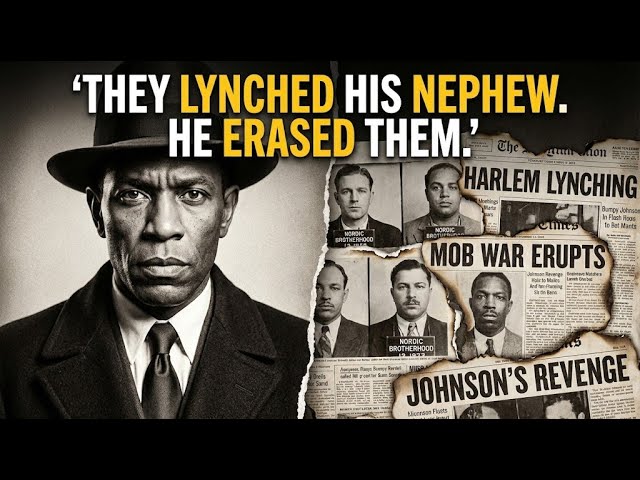
The rope was still warm when Bumpy Johnson arrived at Marcus Garvey Park. His nineteen-year-old nephew hung from an oak tree. The police called it suicide. Harlem called it murder.
What happened over the next seven days would erase the Ku Klux Klan's presence from Harlem forever. Five men connected to the lynching were systematically destroyed. A warehouse on East Ninety-Eighth Street burned to the ground. And detectives who investigated nothing suddenly had nothing to investigate.
This documentary reveals the untold story of September nineteen forty-six. The week that proved some justice never sees a courtroom. Based on oral histories, community testimonies, and historical records of Klan activity in Northern cities during the nineteen forties.
Featuring accounts from Harlem residents who lived through the era, and examining why the N-Y-P-D's case files on these events remain conspicuously thin.
What you conclude about Bumpy Johnson is yours to decide. But what Harlem concluded in nineteen forty-six changed everything.
Subscribe for the stories history books leave out. New documentary every week.
Note: This documentary contains discussions of historical racial violence including lynching. Some dialogue and scenes have been reconstructed based on available accounts. Viewer discretion advised.
-~-~~-~~~-~~-~--~-~~-~~~-~~-~--~-~~-~~~-~~-~-
⚠️ Content Disclaimer:
This video is created for educational and informational purposes only. We do NOT glorify, promote, or encourage any form of criminal activity.
All visuals, audio, and materials used in this video are either:
✔ Created using AI tools, or
Show More Show Less View Video Transcript
0:00
The body was still warm when he arrived.
0:02
Thomas Johnson hung from [music] the oak
0:05
tree with his hands bound behind his
0:07
back, rope burns on his wrists, bruises
0:11
on his face that didn't come from any
0:13
fall, and around his neck, a knot that
0:16
police would later describe as
0:18
consistent with self-infliction.
0:21
He was 19 years old, a student at
0:23
Columbia University,
0:26
and he was Bumpy Johnson's nephew. The
0:28
sun hadn't fully risen over Marcus
0:31
Garvey Park. Frost clung to the grass.
0:35
And Ellsworth Raymond Johnson, the man
0:38
Harlem simply called Bumpy, stood 15 ft
0:41
from his sister's only child and didn't
0:44
move, didn't speak. Witnesses who were
0:48
there said his face showed nothing. But
0:51
his hands his hands shook. Not from
0:55
grief, from something else entirely.
0:59
What happened over the next seven days
1:02
would change Harlem forever. Five men
1:05
connected to this lynching would be
1:07
destroyed. A clan cell that had operated
1:10
in secret for 3 years would cease to
1:13
exist and the New York Police Department
1:16
would investigate.
1:18
Nothing. This is the story history
1:21
doesn't teach. The story of September
1:24
1946,
1:26
the week the clan learned what happened
1:28
when they touched someone who belonged
1:30
to Bumpy Johnson. Before we go further,
1:33
some of what you're about to hear comes
1:35
from oral histories, testimonies passed
1:38
down through families, [music] community
1:41
accounts collected decades after the
1:43
events. Where dialogue appears, it has
1:47
been reconstructed based on these
1:49
accounts. The historical record of this
1:52
week is thin, suspiciously thin. And
1:56
viewers can draw their own conclusions
1:58
about why. Now, to understand what Bumpy
2:02
Johnson did, you first need to
2:04
understand who he was.
2:08
By 1946,
2:10
Ellsworth Johnson controlled Harlem's
2:12
numbers racket. [music] The policy game,
2:16
an illegal lottery that processed an
2:18
estimated $10 million annually through
2:21
barber shops, candy stores, and back
2:24
rooms across 135 blocks. He wasn't just
2:28
a gangster. [music] He was an
2:30
institution. The police knew him.
2:33
[clears throat] The politicians knew
2:34
him. And every family in Harlem knew
2:37
that when trouble came, when landlords
2:40
cheated or store owners refused service
2:43
or outside threats appeared, Bumpy
2:46
Johnson handled it. Not the law, not the
2:50
courts. Bumpy. He'd earned this position
2:54
through 20 years of violence,
2:56
imprisonment, and strategic brutality.
2:59
He'd gone to war with Dutch Schultz.
3:01
He'd survived Sing Singh. He'd watch
3:05
friends die and enemies disappear. And
3:08
he'd built something in Harlem that
3:10
[music] functioned like a shadow
3:12
government. But there was one rule
3:14
everyone understood. You could do
3:17
business with Bumpy. You could even
3:19
oppose Bumpy. If you were prepared for
3:21
the consequences,
3:23
but you never ever touched his family.
3:27
Thomas Johnson was his sister Mabel's
3:30
son. Quiet kid. studied hard, got into
3:34
Colombia on academic merit at a time
3:38
when that meant something different for
3:40
a young black man in America. He had a
3:43
future. He had potential. And someone
3:46
had hung him from a tree in the middle
3:48
of Harlem. The police arrived at 7:15
3:52
that morning. Two detectives [music]
3:54
from the 28th precinct. According to
3:57
reports filed later that day, [music]
3:59
they spent 43 minutes at the scene.
4:03
43 minutes to examine a body, interview
4:06
no witnesses, collect no evidence, and
4:10
determine that Thomas Johnson, a
4:12
19-year-old with his hands tied behind
4:15
his back, had committed suicide. The
4:19
case was closed before noon, but
4:21
something else opened. By that
4:23
afternoon, Bumpy Johnson sat in the back
4:26
room of the Palm Cafe on 125th Street.
4:31
The door was closed. The shades were
4:33
drawn. And six of the most dangerous men
4:36
in Harlem sat around a table covered in
4:40
photographs. Not police photographs.
4:43
These came from Bumpy's own people.
4:46
[music] Men who'd arrived at Marcus
4:48
Garvey Park before the detectives. Men
4:51
who documented everything the police
4:52
would later ignore. The bruises, the
4:55
rope burns, the bootprints in the frost.
4:59
And according to accounts from those
5:01
present, something else. A piece of
5:04
white cloth found near the base of the
5:06
tree. Cotton torn from a larger garment.
5:11
The kind of cloth used to make hoods.
5:14
Now, here's where the story takes a turn
5:16
most people don't expect. The clan in
5:18
Harlem. It sounds impossible. By 1946,
5:23
the Ku Klux Clan was widely understood
5:26
as a southern phenomenon. Burning
5:29
crosses in Mississippi, lynchings in
5:31
Alabama, terror campaigns in Georgia,
5:34
but New York City, Harlem. Accounts from
5:38
residents who lived through this period
5:40
tell a different story. According to
5:42
testimonies collected by community
5:44
historians, a small clan cell had
5:47
operated in upper Manhattan since
5:50
approximately 1943.
5:53
Not publicly, not in robes and hoods
5:56
marching down Lennox Avenue, but quietly
5:59
meeting in the back of a warehouse on
6:02
East 98th Street. 15 to 20 men, mostly
6:06
workers from the meatacking district and
6:08
the rail yards. Men who watched Harlem's
6:12
boundaries creep northward and decided
6:14
to do something about it. They called
6:17
themselves the Nordic Brotherhood. And
6:20
according to community accounts, they'd
6:22
been responsible for at least three
6:24
previous attacks on black residents
6:26
who'd moved into predominantly white
6:28
blocks near their territory. Attacks
6:32
that were never investigated. Cases that
6:35
were never solved. A pattern that Bumpy
6:37
Johnson had noticed and filed away. What
6:41
changed on September 15th wasn't the
6:44
existence of these men. It was that
6:46
they'd finally touched something. They
6:49
shouldn't have. Bumpy didn't speak for
6:52
the first hour of that meeting at the
6:54
Palm Cafe. He sat. He listened. He
6:58
looked at the photographs. And when he
7:00
finally opened his mouth, according to
7:03
those present, he said only seven words.
7:06
I want to know who. By morning, he
7:09
didn't say what would happen after. He
7:12
didn't need to. By midnight, Bumpy's
7:15
network activated. Numbers runners who
7:18
visited every storefront in Harlem.
7:20
Bartenders who listened to
7:22
conversations. Shoe shine boys who
7:25
watched the streets. Hotel porters who
7:28
noted faces. An information apparatus
7:31
that the police couldn't match and
7:33
couldn't buy. The question moved through
7:36
Harlem like electricity. Who killed
7:40
Thomas Johnson? And before the sun rose
7:43
on September 16th, Bumpy had five names.
7:47
Five men who had been seen near Marcus
7:50
Garvey Park after 200 a.m. Five men who
7:54
worked at the consolidated rail yards on
7:57
97th Street. Five men who, according to
8:01
a porter at a nearby hotel, had been
8:04
drinking heavily and talking about, in
8:07
his words, teaching someone a lesson.
8:10
five names and an address. The warehouse
8:14
on East 98th [music] Street. But before
8:16
we get to what happened next, there's
8:19
something else you need to understand.
8:21
Something about power, about the space
8:23
between law and justice.
8:26
In 1946,
8:28
the New York Police Department employed
8:30
approximately 18,000 officers. Of those,
8:34
fewer than 200 were black. The Harlem
8:37
precincts were controlled by white
8:39
commanders, white [music] detectives,
8:42
white patrolmen who viewed their
8:44
assignment above 110th Street as either
8:47
punishment or opportunity for graft.
8:51
Bumpy Johnson had relationships with
8:53
these men, transactional relationships,
8:56
monthly payments that ensured his
8:59
numbers operation continued undisturbed.
9:01
[music]
9:03
Information exchanged in both
9:05
directions. a functional understanding
9:07
[music]
9:08
that certain things wouldn't be
9:09
investigated on either side. But there
9:12
was another layer, a deeper calculation.
9:16
The police didn't fear Bumpy Johnson.
9:19
They managed him. They contained [music]
9:21
him. They took his money and maintained
9:24
order. Their version of order in
9:27
Harlem's streets. What they hadn't
9:30
calculated was what would happen when
9:32
that order broke down. when the
9:35
arrangement no longer served both
9:37
parties. When a 19-year-old Colombia
9:40
student hung from a tree and the police
9:43
decided it was a suicide before the body
9:45
was even cold. In that moment, the
9:49
transaction ended and something else
9:51
began. September 16th, [music]
9:54
day two. Harold Messer was 53 years old,
9:58
a foreman at the rail yards, father of
10:01
two. According to accounts gathered
10:04
later, he attended meetings at the
10:06
warehouse on 98th Street [music] every
10:09
Thursday night. And according to the
10:11
same accounts, he bragged to co-workers
10:14
about activities over the weekend,
10:16
activities he never specified. Messa
10:20
lived in a small house in the Bronx,
10:23
drove a 1939 Ford pickup, kept to
10:26
himself, never caused trouble with
10:29
neighbors. On the morning of September
10:32
16th, his wife found him in the garage
10:35
hanging from a rafter. His hands were
10:38
not bound. The police ruled it suicide
10:41
within 2 hours. Another case closed.
10:45
another death that asked no questions.
10:49
But the people who knew Messa said he'd
10:51
seemed [music] terrified in the hours
10:53
before his death, that he'd received a
10:56
phone call the previous [music] evening,
10:58
that he'd told his wife he was going out
11:00
to fix something and never came back
11:03
inside. That his garage door had been
11:06
found wide open, as if inviting someone
11:09
to see. The rope that killed Harold
11:11
Messa was the same type that killed
11:14
Thomas Johnson. Same knot, same
11:17
thickness, same technique. Coincidence,
11:21
according to the official record, but
11:24
Harlem knew better. Harlem understood
11:27
that this was a message not just to the
11:29
four remaining men, but to everyone to
11:33
the warehouse on 98th Street. To the
11:36
detectives who'd closed a case in 43
11:39
minutes. To anyone who thought they
11:42
could touch Bumpy Johnson's blood and
11:44
walk away. The message was simple. This
11:48
is day one. There are six more coming.
11:51
And in a city that prided itself on law
11:54
and order, no one was coming to help.
11:58
Stop. [music] Rewind that in your mind.
12:01
Because what happens next will only make
12:03
sense if you understand this moment. A
12:06
lynching in Harlem, a suicide ruling, a
12:10
revenge killing staged to mirror the
12:12
original crime. And police [music]
12:15
who investigated nothing, not because
12:18
they couldn't, because they chose not
12:20
to. Some historians have suggested that
12:22
the NEPD's [music] inaction during this
12:24
week reflected an unspoken agreement.
12:27
That commanders calculated the cost of
12:29
intervention against the cost of looking
12:31
away. That protecting clan members, even
12:34
quietly sympathetic ones, wasn't worth
12:37
the war that would follow. Others have
12:39
alleged something darker. That payments
12:41
[music] changed hands. That certain
12:43
detectives received instructions from
12:45
above. that the machinery of law
12:47
enforcement was deliberately powered
12:49
down while Bumpy Johnson did what the
12:52
courts would never do. The truth remains
12:54
buried, but the pattern speaks for
12:56
itself. Five men, 7 days, zero
12:59
investigations, and were just getting
13:01
started. Four men remained, and every
13:04
single one of them knew Harold Messer
13:06
was dead. News traveled fast in 1946 New
13:10
York. Not through newspapers, [music]
13:12
not through radio, through whispers,
13:15
through glances at the railard, through
13:17
the silence that fell when [music]
13:18
certain names came up. By the afternoon
13:20
of September 16th, the four surviving
13:23
men connected to Thomas Johnson's death
13:26
understood something fundamental. The
13:28
police weren't coming to [music] help.
13:30
The warehouse on 98th Street offered no
13:32
protection. And somewhere in Harlem,
13:35
someone was watching, waiting, [music]
13:37
counting down. The second man's name,
13:39
according to accounts from this period,
13:41
was George [music] Keller. 41 years old,
13:44
unmarried, lived alone in a boarding
13:46
house near the [music] East River.
13:48
Worked the night shift at a meatacking
13:50
plant on 14th Street. Kept a photograph
13:52
of his mother on his nightstand and a
13:54
pistol under his mattress. The pistol
13:56
didn't help. On the evening of September
13:58
17th, day three, George Keller left work
14:01
at 11 p.m. He never made it home. His
14:04
body was discovered 4 days later in a
14:06
vacant lot in the Bronx. The medical
14:08
examiner's report, one of the few
14:10
documents that survived from this
14:12
period, noted burns covering over 90% of
14:15
his body. Identification was made
14:18
through dental records [music] and a
14:19
signate ring that had partially melted
14:22
into his left hand. The official cause
14:24
of death was listed as fire of
14:26
undetermined origin. No witnesses,
14:29
[music] no suspects, no investigation.
14:32
But the people who worked at the
14:33
meatacking plant told a different story.
14:35
According to accounts gathered years
14:37
later, [music] Keller had been nervous
14:40
for days, jumping at sounds. Looking
14:42
over his shoulder, Head asked his
14:44
foreman for time off. Said he needed to
14:47
get out of town for a while. The foreman
14:49
refused. Keller didn't push it the night
14:51
he disappeared. Co-workers [music] said
14:54
a black car had been parked across the
14:56
street from the plant. Engine running,
14:58
lights [music] off, waiting. When Keller
15:00
walked out at 11:00, the car pulled away
15:03
from the curb. No one saw what happened
15:05
next, but everyone understood. Bumpy
15:08
Johnson didn't just want these men dead.
15:10
He wanted them to know it was coming. He
15:12
wanted the fear, the sleepless nights,
15:14
the paranoid glances. He wanted them to
15:17
feel, even for a few days, what Thomas
15:20
Johnson might have felt in those final
15:23
hours, bound, helpless, knowing that no
15:26
one was coming to save him.
15:27
>> [music]
15:27
>> This next detail changes everything we
15:29
thought we knew. The third man didn't
15:31
die. Not physically. What happened to
15:34
him was something else entirely. His
15:36
name was William Sweeney, 37 years old,
15:39
railroad worker, married with three
15:41
children. According to accounts from
15:43
community historians, Sweeney was
15:46
considered the true believer of the
15:48
group, the one who' pushed for action,
15:50
the one who' allegedly suggested the
15:52
target. Thomas Johnson, [music]
15:54
a young black man walking through the
15:56
park after dark. A student who didn't
15:58
belong in their eyes in their
16:00
neighborhood. An opportunity. What
16:02
happened to William Sweeney began on
16:04
September 18th, day four. That morning,
16:06
his wife woke to find him standing at
16:09
the bedroom window, staring out at
16:11
nothing. He hadn't slept, [music] hadn't
16:13
moved. When she touched his shoulder, he
16:15
screamed. According to her account given
16:17
years [music] later, Sweeney spent the
16:19
next 3 days in a state of escalating
16:22
terror. He heard voices, saw faces in
16:24
shadows, believed that men were
16:26
following him everywhere. He wouldn't
16:28
eat, wouldn't sleep, told his wife
16:31
repeatedly that they were coming for him
16:33
and there was nowhere to run. On
16:35
September 20th, his wife came home to
16:38
find the front door open and Sweeney
16:40
gone. He [music] was discovered 2 days
16:42
later, wandering in the woods of
16:44
Vancortland Park, barefoot, incoherent
16:46
[music]
16:47
head lost nearly 15 lbs. His fingernails
16:50
were torn from clawing at tree bark, and
16:52
he would not stop talking about a man in
16:54
a dark suit who had visited him each
16:56
night. A man who never spoke, just stood
17:00
at the foot of his bed, [music] and
17:01
smiled. William Sweeney was committed to
17:04
Belleview Psychiatric Hospital on
17:06
September 23rd. He never recovered,
17:09
never worked again, spent the remaining
17:11
19 years of his life [music] in various
17:14
institutions telling anyone who would
17:16
listen about the man who came in the
17:18
darkness. the man who made him pay. Now,
17:21
some historians have suggested this was
17:23
simply a psychological breakdown, guilt
17:26
manifesting as paranoia, a fragile mind
17:29
cracking under the weight of what had
17:31
done. But others who've studied this
17:33
period point to a different possibility
17:35
that Bumpy Johnson understood something
17:38
about punishment that transcended
17:40
physical violence. That sometimes the
17:42
crulest thing you can do to a man
17:44
[music] isn't kill him. It's let him
17:46
live with what he knows. Whether someone
17:48
actually visited Sweeney each night,
17:51
whether the psychological torment was
17:53
engineered or organic, the result was
17:55
the same. A fate worse than death and a
17:58
message to everyone watching. There are
18:00
different ways to destroy a man. And
18:03
Bumpy Johnson knew all of them. Take a
18:05
breath. Because from here on, the story
18:08
only gets darker. The fourth man was
18:11
named Robert Hensley, 51 years old, the
18:14
oldest of the group, a supervisor at the
18:17
railards who'd been involved with the
18:19
Nordic Brotherhood since its founding in
18:21
1943. Hensley was smarter than the
18:24
others. When Harold Messer turned up
18:26
dead, Hensley understood immediately
18:28
what was happening. He didn't wait
18:30
around to become a victim. On September
18:33
17th, the same day George Keller
18:35
disappeared, Robert Hensley withdrew his
18:38
entire savings from First National
18:40
[music] Bank. $11,400,
18:43
everything he had. He told his wife he
18:46
was going to visit family in Ohio, told
18:48
his employer he had a family emergency,
18:50
packed one suitcase, and drove [music]
18:53
west. He made it as far as Scranton,
18:55
Pennsylvania. According to accounts
18:57
pieced together from various sources,
18:59
Hensley [music] stopped at a motor lodge
19:02
outside the city, paid for one night,
19:04
went to his room, and never came out.
19:06
The following morning, the lodge owner
19:09
found Hensley's car [music] still in the
19:11
lot, his suitcase still in the room, his
19:13
wallet on the nightstand with $11,000
19:16
missing. Robert Hensley himself was
19:18
never seen again. Nobody was ever
19:21
recovered. No death certificate was ever
19:23
issued. For all official purposes,
19:25
Robert Hensley simply [music] ceased to
19:28
exist. His wife waited 3 years before
19:31
filing for a death declaration. The
19:33
courts granted it in 1949. Cause of
19:36
death unknown. Location of death
19:40
unknown. Circumstances unknown, but
19:43
Harlem knew. Bumpy Johnson's reach
19:45
extended far beyond 135th Street. His
19:48
network of contacts, associates, and
19:50
allies stretched across the eastern
19:52
seabboard. A man running from Harlem
19:54
wasn't running from one person. He was
19:56
running from a system, [music] an
19:57
infrastructure of eyes and ears and
20:00
hands that could find you in a
20:01
Pennsylvania motor lodge just as easily
20:04
as a Bronx boarding house. Robert
20:06
Hensley took everything he had and tried
20:09
to disappear. And in a [music] way, he
20:11
succeeded, just not the way planned.
20:13
Four men down, one remained. [music] And
20:16
this one, the fifth man, did something
20:18
none of the others attempted. He went to
20:20
the police. Pay attention to what
20:22
happens next. It's easy to miss. The
20:25
fifth man's name was Arthur Brennan, 44
20:28
years old. Unlike the others, Brennan
20:30
wasn't a laborer. He was a clerk at the
20:33
Department of Sanitation, a city
20:35
employee, a man who believed, perhaps
20:37
naively, that his position afforded him
20:40
certain protections. On September 19th,
20:43
[music] Arthur Brennan walked into the
20:45
23rd precinct on East 104th Street. He
20:49
[music] asked to speak with a detective.
20:50
He sat down in an interview room and
20:53
according to accounts from officers
20:54
[music] present that day. He confessed
20:57
not to the lynching directly. He was too
20:59
careful for that. But he told detectives
21:01
that he had information about the death
21:03
of Thomas Johnson, that he knew who was
21:05
involved, that he was willing to testify
21:07
in exchange for protection. Protection
21:10
from Bumpy Johnson. He sat in that room
21:12
for 3 hours. He gave names. He gave
21:15
dates. He described the meetings at the
21:17
warehouse on 98th Street. He explained
21:20
how the group operated, who the leaders
21:22
were, what they planned. He gave the
21:24
police everything they needed to
21:25
investigate a lynching, to make arrests,
21:28
to pursue justice [music] through proper
21:30
channels. And then, according to every
21:33
account available, the detectives
21:35
thanked him for his time, told him they
21:37
would look into it, and sent him home.
21:39
No protective custody, no witness
21:41
protection, no follow-up investigation.
21:44
Arthur Brennan walked out of the 23rd
21:46
precinct at approximately 400 p.m. on
21:48
September 19th. He was seen by neighbors
21:51
entering his apartment on East 99th
21:53
Street at approximately 4:30. [music]
21:56
He was never seen alive again. His body
21:58
was discovered on September 21st.
21:59
[music]
22:00
Inside his own apartment, the door was
22:02
locked from the inside. The windows were
22:05
latched. There were no signs of forced
22:07
[music] entry. Arthur Brennan had been
22:08
beaten so severely that the responding
22:11
officer initially couldn't identify the
22:13
body as human. The medical examiner's
22:16
report noted fractures to every major
22:18
bone. Trauma consistent with a fall from
22:21
significant height except Brennan lived
22:24
on the second floor. The official cause
22:26
of death was listed as internal
22:28
hemorrhaging due to blunt force trauma.
22:30
No suspects, no arrests, no
22:33
investigation. But here is the detail
22:35
that mattered. Harris, what sent shock
22:38
waves through every [music] precinct in
22:40
New York, Arthur Brennan had been killed
22:42
inside a locked apartment. Less than 48
22:45
hours after telling police everything he
22:47
knew in a building that the precinct had
22:49
theoretically been monitoring. Either
22:51
Bumpy Johnson's, people had supernatural
22:54
abilities to pass through walls, or
22:56
someone inside the police department
22:58
[music] had made a phone call. The
23:00
implications were clear and terrifying.
23:02
There was no protection. not from the
23:04
clan, not from Bumpy Johnson, and not
23:07
from the police. Because in 1946 Harlem,
23:10
these forces had achieved a kind of
23:12
equilibrium, a balance of power that
23:14
benefited everyone except the victims.
23:17
Thomas Johnson was dead. His killers
23:21
were dead or destroyed. [music]
23:23
And the system that had failed him
23:24
continued to function exactly as
23:27
designed. But Bumpy Johnson wasn't
23:29
finished. Five men had participated
23:31
directly in his nephew's lynching. Five
23:34
men had been dealt with in five days,
23:36
but they weren't the whole organization.
23:38
They weren't even the leadership. The
23:40
warehouse on East 98th Street still held
23:42
meetings every Thursday night. The
23:45
Nordic Brotherhood still counted 10
23:47
active members beyond the original five.
23:50
Men who hadn't been at Marcus Garvey
23:52
Park that night, but who had created the
23:54
conditions for the killing, [music]
23:56
who had recruited, who had planned, who
23:58
had celebrated afterward. Men who
24:00
believed perhaps reasonably [music] that
24:03
Bumpy's vengeance had been satisfied,
24:05
that the score was settled, that they
24:07
could continue their work in the shadows
24:09
as long as they avoided direct [music]
24:11
confrontation. They were wrong. On the
24:14
morning of September 21st, every member
24:17
of the Nordic Brotherhood received a
24:19
message. According to accounts from this
24:21
[music] period, the messages arrived in
24:23
different forms. Some found notes
24:25
slipped under their doors. Others
24:27
received phone calls from voices they
24:29
didn't [music] recognize. A few found
24:31
the message scratched into the paint of
24:33
their automobiles. [music] The content
24:35
was the same. Seven words, "Leave New
24:37
York or burn with the rest." No
24:40
signature, no return address, no room
24:42
for negotiation. They had until
24:44
September 22nd, sundown. one day to
24:48
decide. And this is where the story
24:50
arrives at its central question. The
24:52
question [music] that historians,
24:54
criminologists, and community members
24:56
have debated for [music] decades. What
24:58
happened on the 7th day? We know the
25:00
outcome. We know that the clan's
25:02
presence in Harlem effectively ended in
25:04
September 1946. We know that the
25:07
warehouse on 98th Street [music] was
25:08
destroyed. We know that men died, but
25:11
the details remain contested, buried in
25:14
conflicting accounts, obscured by
25:16
official silence, [music] protected by a
25:18
conspiracy of forgetting that served
25:20
everyone's interests except [music]
25:23
histories. In part three, well, enter
25:26
that warehouse. Well, hear from the
25:28
accounts of those who claim to know what
25:30
happened, and well, confront the final
25:32
question this story demands. When
25:34
justice [music] fails completely, what
25:37
fills the void? The answer is coming.
25:40
September 22nd, [music] 1946, the 7th
25:44
day. Sundown came at 6:47 p.m. The sky
25:47
over Manhattan bled orange and purple as
25:50
the light died. And in apartments across
25:52
the Bronx and upper Manhattan, 10 men
25:55
faced the same decision. Leave
25:57
everything or stay and face whatever
25:59
came next. According to accounts
26:01
gathered from this period, five of them
26:03
chose to run. They didn't wait for
26:05
sundown. By noon on September 22nd, five
26:09
members of the Nordic Brotherhood had
26:11
packed their families into automobiles
26:13
and driven [music] west toward
26:15
Pennsylvania, toward Ohio, toward
26:17
anywhere that wasn't New York. These men
26:19
were never heard from again, not because
26:21
they died, because they understood
26:23
something the others refused to accept.
26:25
Bumpy Johnson meant exactly what he
26:27
said. But five men stayed. This next
26:30
detail changes everything we thought we
26:32
knew. The five who remained weren't
26:34
cowards. They weren't fools. According
26:37
to testimonies from people who knew
26:39
them, these men believed they had
26:41
protection. They believed that their
26:42
connections, their relationships with
26:45
sympathetic officers, their knowledge of
26:47
certain transactions [music] made them
26:49
untouchable. They gathered at the
26:51
warehouse on East 98th Street at 5:00
26:53
p.m. on September 22nd, 1 hour before
26:56
the deadline not to flee, to prepare.
26:59
According to [music] accounts from
27:00
community members who lived in the area,
27:02
the warehouse was a converted textile
27:05
storage facility, [music] red brick,
27:07
three stories, no windows on the ground
27:09
floor. A single reinforced door facing
27:12
the street, the kind of building
27:13
designed to keep things [music] in or to
27:15
keep people out. The five men who
27:17
entered that building brought firearms.
27:19
They brought supplies. They brought the
27:21
confidence of men who had operated in
27:23
the shadows for 3 years without
27:25
consequence. men who had watched their
27:27
friends die over the past week and
27:29
concluded somehow that the threat had
27:32
been exaggerated, that Bumpy Johnson was
27:34
just one man, that the police would
27:36
eventually intervene, that this was
27:38
still America. They were wrong about all
27:41
of it. What happened inside that
27:43
warehouse over the next 4 hours has been
27:45
reconstructed from multiple sources,
27:48
accounts from neighbors who heard
27:49
sounds, testimonies from individuals who
27:52
claimed to have been present, and
27:53
physical evidence that was never
27:55
officially cataloged, but was witnessed
27:58
by dozens before the scene was cleared.
28:00
The first thing the men noticed,
28:02
according to these accounts, was the
28:04
smell. Gasoline not inside the building,
28:07
around it, seeping under the door,
28:09
pooling in the gutters, a perimeter of
28:12
accelerant that they hadn't seen when
28:13
they entered, but that now surrounded
28:15
them completely. The five men inside
28:18
realized in that moment that they hadn't
28:21
come to make a stand. [music] Dead
28:23
walked into a trap. At approximately
28:25
6:45 p.m., 2 minutes before sundown, a
28:29
black Cadillac [music] pulled onto East
28:30
98th Street. According to witnesses, it
28:33
stopped 50 ft from the warehouse. The
28:36
engine cut, the headlights went dark,
28:38
and a man stepped out. Pay attention to
28:40
what happens next. [music] It's easy to
28:42
miss. Accounts differ on exactly who
28:45
emerged from that vehicle. Some say it
28:47
was Bumpy Johnson himself. Others claim
28:50
it was one of his lieutenants. A few
28:52
witnesses insisted there were multiple
28:55
figures who moved too quickly to
28:57
identify, but everyone agrees on what
29:00
happened next. A voice called out to the
29:02
warehouse, loud enough to be heard
29:04
through the brick walls, clear enough to
29:06
leave no room for misunderstanding. The
29:08
exact words have been reported
29:10
differently by different sources. But
29:12
the message was consistent across all
29:15
accounts. This is your last chance. Walk
29:17
out now. Leave New York tonight. [music]
29:20
Never come back or don't walk out at
29:22
all. Silence followed. 10 seconds,
29:24
[music]
29:25
20, 30, and then, according to multiple
29:28
witnesses.
29:30
Someone inside the warehouse fired a
29:33
shot. The bullet struck the Cadillac's
29:35
front fender, a warning shot, a defiant
29:38
gesture from men who still believed they
29:41
held some power. [music] What followed
29:43
was not a negotiation. Neighbors
29:45
reported seeing a small flame arc
29:47
through the air, a bottle, a rag.
29:49
[music] The gasoline perimeter ignited
29:51
in a ring of blue fire that circled the
29:54
building within seconds. The men inside
29:56
had a choice. [music] Stay and burn or
29:59
exit through the only door. Directly
30:02
into whatever waited outside. According
30:04
to accounts from this period, two men
30:07
chose the door. They emerged with
30:08
weapons drawn. They made it
30:10
approximately 15 ft before gunfire
30:13
erupted from multiple positions. Neither
30:15
man survived long enough to fire back.
30:17
Three men remained inside. The fire
30:19
spread quickly. Textile storage
30:21
facilities from that era contained
30:23
massive quantities [music] of cotton,
30:25
wool, and other combustible materials.
30:28
Within minutes, the lower floors were
30:30
fully engulfed. Witnesses reported
30:33
hearing screams. Some said they heard
30:35
pounding on walls. Others claimed they
30:37
heard nothing at all. By 7:30 p.m., the
30:40
warehouse on East 98th Street was a
30:42
column of flame visible from a mile
30:44
away. Fire companies arrived at 7:42. By
30:48
then, the structure was beyond saving.
30:51
Firefighters focused on preventing the
30:53
blaze from spreading to adjacent
30:55
buildings. They made no attempt to
30:57
enter. When investigators finally
30:59
accessed [music] the ruins the following
31:00
morning, they recovered the remains of
31:03
five individuals. Identification was
31:06
made through personal effects and dental
31:08
records over the following weeks. The
31:10
official cause of death for all five was
31:13
listed as smoke inhalation and thermal
31:16
injuries consistent with accidental
31:18
fire. Accidental, a building surrounded
31:21
by gasoline. Five bodies inside. Two
31:24
additional bodies on the street with
31:26
gunshot wounds. And the official report
31:28
described it as accidental. This is the
31:31
point in the story where some historians
31:32
pause where they ask the obvious
31:34
question. How does something like this
31:37
happen in New York City? How do seven
31:39
men die violently in front of witnesses
31:43
and no arrests follow? No investigation,
31:46
no consequences. The answer requires
31:48
understanding something about power that
31:50
most people prefer not to acknowledge.
31:53
Stop. Rewind that in your mind because
31:56
it matters. In 1946,
31:58
power in New York operated on multiple
32:01
levels simultaneously. There was
32:03
official power. the police, the courts,
32:06
the elected officials who appeared in
32:08
newspapers and made speeches about
32:11
justice. And there was unofficial power,
32:13
the arrangements, the understandings,
32:16
the calculations that determined what
32:18
got investigated and what got ignored.
32:20
[music] Bumpy Johnson operated in that
32:22
second layer. He understood that
32:24
official power was a performance, a
32:26
story told to citizens who needed to
32:28
believe the system functioned. But real
32:30
decisions happened elsewhere. In back
32:33
rooms, in phone calls, in the silent
32:36
agreements between men who understood
32:38
the true [music] cost of disruption. The
32:40
clan's presence in Harlem had been
32:42
tolerated because it served certain
32:44
interests. [music] Working class white
32:46
men needed an outlet for their
32:48
resentment. Property owners needed
32:50
enforcement mechanisms the police
32:52
couldn't officially provide, and certain
32:55
politicians needed voters who felt
32:57
someone was fighting for them. But that
32:59
tolerance had limits. When the clan
33:01
murdered a Colombia student in the
33:02
middle of Harlem, when they created a
33:05
situation that threatened to explode
33:06
into something uncontrollable, they
33:09
exceeded those limits. Bumpy Johnson's
33:11
response wasn't just personal revenge.
33:14
It was, according to some analysts of
33:16
[music] this period, sanctioned, not
33:18
officially, never explicitly, but
33:20
through the machinery of silence that
33:22
allowed it to happen. The police didn't
33:24
investigate because someone decided an
33:26
investigation would be more disruptive
33:28
than justice. The fire was ruled
33:31
accidental because someone calculated
33:33
the cost of ruling it otherwise. And the
33:36
clan's presence in Harlem ended not
33:38
because the law defeated them, but
33:40
because a more fundamental force removed
33:42
them. Fear, not fear of Bumpy Johnson
33:45
specifically. Fear of what his response
33:47
represented. fear of a world where the
33:50
usual protections didn't apply, where
33:52
money and connections and institutional
33:54
sympathy couldn't save you. The five men
33:57
who fled on September 22nd understood
34:00
this. They didn't leave because they
34:02
were weak. They left because they
34:03
recognize something the others couldn't
34:05
accept. [music] The rules had changed
34:07
and they weren't coming back. But here
34:09
is the detail that keeps historians
34:11
awake at night. The question that
34:13
doesn't have a clean answer. Did Bumpy
34:15
Johnson save Harlem? Or did he prove
34:17
that justice was always an illusion?
34:19
Some community members from this era
34:22
remember him as a hero. The man who did
34:25
what the police wouldn't, who protected
34:27
black lives when no one else would, who
34:29
demonstrated that Harlem wasn't
34:31
territory to be terrorized, but a
34:33
community that would fight back. Others
34:35
[music] remember it differently. They
34:37
point out that Bumpy Johnson was not a
34:39
civil rights leader. [music] He was a
34:41
criminal, a gangster who controlled an
34:43
illegal gambling empire and enforced his
34:45
power through violence. His war against
34:48
the clan wasn't about justice. It was
34:50
about territory, about demonstrating
34:52
that no one, not the police, not white
34:56
supremacists,
34:58
not anyone, could operate in Harlem
35:00
without his permission. The truth
35:02
probably [music] contains elements of
35:04
both perspectives. Thomas Johnson was
35:06
Bumpy's nephew. The grief was real. The
35:08
rage was personal. But the response was
35:11
also strategic, [music] calculated,
35:13
designed to send a message that extended
35:15
far beyond five dead clansmen and a
35:18
burned warehouse. The message was simple
35:20
and it echoed through Harlem for
35:22
decades. [music] This is our home and
35:24
there are consequences for what you do
35:26
here. The weeks that followed September
35:28
22nd brought [music] a strange quiet to
35:30
Harlem. According to accounts from this
35:33
period, there were no more attacks on
35:35
black residents moving into previously
35:37
white blocks. No more whispered threats.
35:40
No more mysterious gatherings and
35:41
warehouses. The Nordic Brotherhood,
35:44
whatever was left of it, ceased to
35:45
exist. Some members had fled. Some were
35:47
[music] dead, and the rest, according to
35:50
testimonies collected years later,
35:52
pretended they had never been involved
35:53
at all. But there was something else,
35:56
something that residents noticed, but
35:57
rarely discussed. [music] Police
35:59
presence in Harlem decreased in the
36:01
weeks after the fire. Not dramatically,
36:04
not officially, but patrol cars appeared
36:06
less frequently on certain blocks.
36:08
Detectives asked fewer questions. The
36:10
apparatus of law enforcement, never
36:12
particularly aggressive in Harlem's
36:14
defense, [music] seemed to pull back
36:16
even further. Some interpreted this as
36:19
respect. An acknowledgment that Bumpy
36:21
Johnson had handled a situation the
36:23
police couldn't [music] or wouldn't.
36:25
Others saw something darker, a
36:27
withdrawal that left Harlem even more
36:29
dependent on unofficial power, on
36:31
gangsters and numbers runners and men
36:33
who settled disputes with violence
36:35
because no one else would settle them at
36:37
all. The vacuum left by the clan wasn't
36:39
filled by law enforcement. It was filled
36:42
by Bumpy Johnson. And that came with its
36:44
own costs, its own compromises, its own
36:47
forms of injustice. This is the paradox
36:50
at the heart of this story. [music]
36:51
The question that makes it more than a
36:53
simple tale of revenge. When the system
36:55
fails completely when police rule a
36:58
lynching a suicide and send a witness
37:00
home to die. What options remain? Do you
37:04
wait for reform that may never come? Do
37:06
you accept that some lives matter less
37:08
than others in the eyes of the law? Do
37:10
you tell yourself that patience and
37:13
process will eventually deliver justice?
37:15
Or do you recognize that justice [music]
37:18
in its purest form has nothing to do
37:20
with courts or police or official
37:23
procedures? That it's simply the
37:25
restoration of balance, the answer to a
37:27
wound, the response to an act that
37:29
cannot be allowed to stand. Bumpy
37:32
Johnson chose the second path and Harlem
37:34
remembered for better or worse. In part
37:37
four, well confront what came after the
37:40
silence that protected these events for
37:42
decades. the legacy that complicated
37:45
historians and inspired filmmakers. And
37:48
the final question that Thomas Johnson's
37:50
death still asks us today. When the law
37:53
looks away, who has the right to look
37:56
back? The answer might be simpler than
37:58
we want to admit. The fire burned for 6
38:01
hours. By morning, the warehouse on East
38:04
98th Street was a skeleton of blackened
38:06
brick and twisted metal. [music] Steam
38:09
rose from the wreckage as firefighters
38:11
picked through debris. And somewhere in
38:13
Harlem, Bumpy Johnson ate breakfast at
38:16
his usual table at the Palm Cafe. He
38:19
never spoke publicly about what happened
38:21
that week, never gave interviews, never
38:23
wrote memoirs. In the decades that
38:25
followed, when journalists and
38:28
historians came asking questions about
38:30
September 1946,
38:32
they received the same answer, [music]
38:34
silence. But silence in Harlem was its
38:37
own kind of testimony. The NYPD's case
38:40
files on the events of that week are
38:42
remarkably thin. Exposed to public
38:45
records requests decades later, they
38:48
reveal almost nothing. No witness
38:50
statements from the dozens of residents
38:52
who saw the fire. No forensic analysis
38:55
of the gasoline perimeter. No
38:57
investigation into the gunshot victims
38:59
found outside the warehouse. Just
39:01
[music] paperwork processed, filed,
39:03
forgotten. Some historians have alleged
39:06
that this absence was deliberate, that
39:08
records were purged, that someone,
39:10
perhaps multiple someone's ensured that
39:13
the official history of September 1946
39:16
would remain blank. Others suggest a
39:19
simpler explanation that the police
39:21
simply didn't care. That seven dead
39:23
clansmen in a burned warehouse didn't
39:25
merit the resources of investigation.
39:27
That the system worked exactly as
39:29
designed, protecting some lives and
39:32
discarding others based on calculations
39:35
that had nothing to do with law. The
39:37
truth remains buried, but the pattern
39:39
speaks clearly enough. Before we go
39:42
further to the something that still
39:44
needs addressing, a question planted
39:46
earlier that demands an answer. Arthur
39:48
[music] Brennan, the fifth man, the one
39:50
who went to police and confessed
39:52
everything. The one who walked out of
39:54
the 23rd precinct expecting protection
39:57
and was dead within 48 hours. Someone
39:59
made a phone call. According to accounts
40:02
from individuals who worked within the
40:04
precinct system during this era,
40:06
information about police informants
40:09
occasionally found its way to interested
40:11
parties. Not through official channels,
40:14
through relationships, through payments,
40:16
[music] through the same network of
40:17
unofficial arrangements that governed
40:19
everything else in 1946 New York. A
40:22
detective might mention to a friend that
40:24
someone had come forward. That friend
40:26
might mention it to a business
40:27
associate. And within hours, the
40:30
information would reach whoever needed
40:32
to know. Was it [music] intentional? Was
40:34
Brennan deliberately sacrificed by
40:36
officers who sympathized with the clan?
40:39
Or was it simply carelessness? [music]
40:41
The inevitable result of a system where
40:43
secrets rarely stayed secret. The
40:45
accounts don't provide a definitive
40:48
answer, but they describe a consistent
40:50
pattern. Information flowed,
40:52
consequences followed, and the men who
40:54
should have been protected rarely were.
40:57
Brennan died in a locked apartment
40:59
[music] because someone decided his
41:01
confession was more dangerous than his
41:03
survival. Whether that decision came
41:05
from Bumpy Johnson's network or from
41:08
within the precinct itself, the result
41:11
was identical. The system didn't fail
41:13
Arthur Brennan. The system [music]
41:15
worked perfectly, just not for him. And
41:17
that silence said everything. The weeks
41:19
after the fire brought changes to Harlem
41:21
that residents noticed immediately the
41:23
clan was gone. Not just the Nordic
41:26
Brotherhood. According to accounts from
41:28
this period, every organized white
41:30
supremacist presence in the neighborhood
41:32
dissolved within a month. Men who had
41:35
whispered threats now whispered nothing.
41:38
Warehouses that had hosted meetings sat
41:40
[music] empty. The infrastructure of
41:42
racial terror that had operated for 3
41:44
years simply evaporated. But something
41:47
else changed, too. Bumpy Johnson's power
41:50
consolidated. His numbers operation
41:52
expanded into blocks previously
41:53
contested. His influence over local
41:56
businesses deepened. The vacuum left by
41:58
fear was filled by a different kind of
42:01
order. One that answered to him. For
42:04
some residents, this was an improvement.
42:06
Bumpy's organization provided services
42:09
the city wouldn't. Loans when banks
42:11
refused. Protection when police ignored
42:14
calls. a system of accountability that
42:16
while brutal was at least consistent.
42:19
For others, [music] it represented a
42:21
different kind of trap. Trading one form
42:23
of oppression for another. Exchanging
42:26
the terror of burning crosses for the
42:28
terror of crossed accounts. [music]
42:30
Living under a power that protected you
42:32
only as long as you remained useful. The
42:34
truth probably exists somewhere between
42:36
these perspectives. Most truths do. Let
42:39
that sink in because we're about to
42:41
confront the question this entire story
42:43
has been building toward. Thomas Johnson
42:46
died because the clan believed they
42:48
could kill a black man in Harlem without
42:50
consequences. They believed the police
42:52
would rule it suicide. They believed the
42:55
system would protect them. They were
42:56
right about the police. They were right
42:58
about the system. They were wrong about
43:00
the consequences. But here is what
43:02
complicates the simple satisfaction of
43:04
revenge. Here is what makes this story
43:07
more than a tale of justice delivered.
43:09
Bumpy Johnson didn't destroy the clan
43:12
because he believed in civil rights. He
43:14
didn't burn that warehouse because he
43:16
wanted a better world for black
43:17
Americans. He did it because they
43:19
touched his blood. Because they violated
43:21
the only law he recognized, family. If
43:24
Thomas Johnson had been a stranger,
43:26
another young black man lynched in a
43:28
city that saw dozens of such deaths go
43:30
unpunished, would Bumpy have responded
43:32
the same way? The historical record
43:35
suggests he wouldn't have. The accounts
43:37
from this period describe a man who
43:40
protected his interests [music] first,
43:42
his community second, and abstract
43:44
principles not at all. A pragmatist, a
43:48
survivor, a gangster who understood
43:50
power and used it without apology. This
43:52
doesn't diminish what happened in
43:54
September 1946. It doesn't erase the
43:57
fact that 12 men who participated in or
44:00
supported racial terror were killed or
44:02
destroyed in seven days. It doesn't
44:04
change the outcome, but it does
44:06
complicate the meaning. Some justice
44:08
arrives wrapped in motives wed rather
44:10
not examine. Some protection comes from
44:13
protectors wed rather not need. And some
44:16
victories are won by people who would
44:18
never call themselves heroes and
44:21
wouldn't recognize the word if they
44:22
heard it. Bumpy [music] Johnson was not
44:25
a symbol. He was a man, flawed, violent,
44:28
ruthless, [music]
44:29
loyal to his own, indifferent to most
44:31
others. And in September 1946,
44:34
he did what the courts wouldn't do, what
44:36
the police refused to do, what the
44:38
entire apparatus of American law
44:40
enforcement decided wasn't worth the
44:43
trouble. He answered a lynching with
44:45
annihilation. That's not a comfortable
44:47
legacy. It's not a clean moral. It's not
44:50
the kind of story that ends with lessons
44:52
about working within the system and
44:55
trusting institutions. It's a story
44:57
about what happens when those
44:59
institutions abandon you completely.
45:01
[music] When the people sworn to protect
45:03
you decide your life isn't worth
45:05
protecting. When the only justice
45:07
available is [music] the justice you
45:09
create yourself. And that silence said
45:12
everything. Bumpy Johnson died in 1968.
45:15
[music]
45:15
Heart attack. He was sitting on a bench
45:17
in a Harlem restaurant. had frequented
45:19
for 30 years, surrounded by the
45:22
neighborhood head controlled, protected,
45:24
[music]
45:24
and profited from for four decades. The
45:27
New York Times ran a brief obituary,
45:30
mentioned his criminal record, his
45:31
connections, his reputation as the
45:34
godfather of Harlem. They didn't mention
45:36
Thomas Johnson. They didn't mention
45:38
September 1946. They didn't mention the
45:41
week the clan learned, that Harlem
45:44
belonged to someone, and that someone
45:46
had a long memory. The silence continued
45:48
in official records, in history books,
45:51
in the careful emissions that shape what
45:53
we remember and what we're allowed to
45:55
forget. But silence isn't absence. It's
45:58
a choice, a decision about which stories
46:00
matter and which don't. Which deaths
46:03
deserve investigation and which deserve
46:06
43 minutes and a closed file. Thomas
46:09
Johnson was 19 years old, a Colombia
46:11
student, somebody's nephew, somebody's
46:14
son, somebody's future that never
46:15
arrived. The men who killed him believed
46:18
they were invisible. Believed the system
46:20
that protected them [music] would
46:21
continue protecting them forever.
46:23
Believed that a young black man swinging
46:25
from a tree in Marcus Garvey Park was
46:28
just another body the city would forget.
46:30
They were wrong. And that wrongness,
46:33
that fatal miscalculation about who
46:36
mattered and who didn't [music]
46:38
cost them everything. 12 men dead or
46:41
destroyed. An organization erased. A
46:44
message delivered so clearly that the
46:46
clan never returned to Harlem in
46:48
organized form. Not because of law, not
46:51
because of courts, not because of the
46:53
slow arc of justice bending toward
46:55
righteousness, because of one man, one
46:58
weak. One decision that the powerful
47:00
usually avoid making, that some debts
47:02
are collected regardless of what the
47:04
paperwork says. And that silence said
47:07
[music] everything. History doesn't
47:08
remember Bumpy Johnson as a civil rights
47:11
figure. It remembers him as a gangster,
47:14
a criminal, a man who built an empire on
47:16
illegal gambling and enforced it with
47:18
violence. That's accurate. It's also
47:21
incomplete because history is written by
47:24
the people who control the records.
47:26
[music] And in September 1946,
47:28
the people who controlled the records
47:31
decided that 7 Days of Justice didn't
47:33
fit the narrative. That a black gangster
47:36
protecting his neighborhood from the
47:37
clan was too complicated to explain.
47:40
that it was easier to file the deaths as
47:42
accidents and move on. The community
47:44
remembered differently [music] for
47:45
decades after. Harlem's elders told the
47:48
story, passed it down through families,
47:51
kept it alive in barber shops and church
47:53
basement and living rooms where
47:55
grandchildren listen to grandparents
47:57
describe what it was like when someone
48:00
finally fought back. Not the sanitized
48:02
version, not the version that makes
48:04
everyone comfortable. The real version
48:06
with all its violence and all its moral
48:08
complexity and all its uncomfortable
48:11
questions about who has the right to
48:13
deliver justice [music] when the system
48:15
refuses. That oral history is why this
48:18
story survives. Why you're hearing it
48:21
now. Why some truths persist [music]
48:23
even when every institution works to
48:25
bury them. Thomas Johnson's death meant
48:28
something. Not because the law honored
48:30
it. Because someone refused to let it
48:32
mean nothing. And that's the closest
48:34
thing to justice some people ever get.
48:36
The question this story leaves isn't
48:38
about Bumpy Johnson. It isn't about the
48:41
clan. It isn't even about September
48:43
1946.
48:45
It's about now. It's about the distance
48:47
between the justice we promise and the
48:50
justice we [music] deliver. About the
48:51
calculations that determine whose lives
48:54
merit protection and whose don't. About
48:57
what happens in the spaces where law
48:59
ends and something older begins. Was
49:01
Bumpy Johnson a hero or a monster? Did
49:05
September 1946 represent justice or just
49:09
another form of violence? Is this a
49:11
story about liberation or about the
49:14
tragic absence of better options? Those
49:16
answers aren't mine to give you. They
49:18
are yours to decide. But here is what
49:20
isn't a question. Here is what the
49:22
evidence makes clear. Thomas Johnson was
49:24
murdered. The police called it suicide.
49:27
Five men participated in the killing.
49:29
All five were destroyed within a week.
49:32
An organization that had terrorized
49:33
Harlem for 3 years ceased [music] to
49:36
exist in a single night. And the city
49:38
that enabled all of it pretended none of
49:40
it happened. That's the record.
49:42
Interpret it however you choose. Some
49:44
justice never sees a courtroom. It sees
49:46
a closed casket. And sometimes that's
49:49
the only justice available. So, after
49:52
everything you've heard, after Thomas
49:54
Johnson and the five men and the
49:56
warehouse on 98th Street, after the
49:59
silence that lasted decades and the
50:01
story that survived, anyway, I have one
50:04
question for you. Was this justice or
50:06
revenge? Comment one word, justice or
50:10
revenge? Because the answer says more
50:12
about how you see the world than
50:15
anything I could tell you. If this story
50:17
stayed with you, if you want to
50:19
understand the power structures that
50:21
made Bumpy Johnson necessary, we've
50:23
covered the other forces that shaped
50:25
mid-century [music] Harlem, the Genevies
50:27
family, the policy kings, the deals that
50:30
built and broke empires on those same
50:32
blocks. Subscribe, hit the bell. We go
50:35
deeper every week because some stories
50:37
don't make the textbooks, they make the
50:40
streets, [music] and the streets
50:41
remember everything. This has been
50:43
Global Crime Universe. Until next time.