Up next in 10


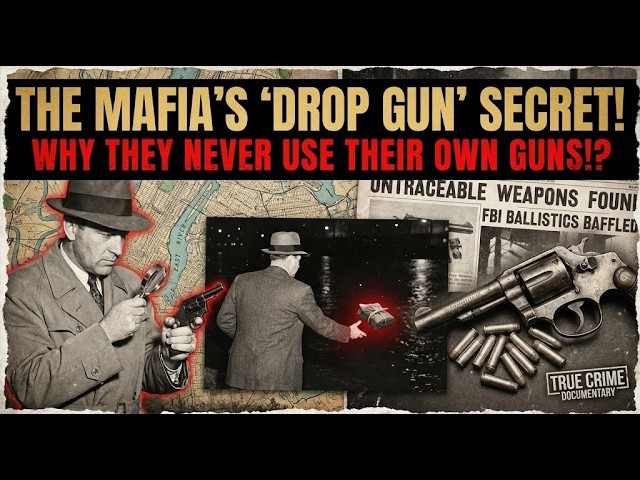
A detective pulls a .38 from a sewer. No serial number. No prints. No history. This wasn't a mistake; it was a masterpiece of criminal logistics.
In the mid-20th century, the American Mafia faced a new enemy: forensic ballistics. As the FBI began matching bullets to barrels with scientific certainty, the underworld had to evolve or face life in prison. Their solution was the 'Drop Gun'—a sterile, untraceable weapon designed to exist for exactly one purpose and then vanish forever.
But this wasn't just about filing off serial numbers. From World War II surplus smuggling to the specific physics of why revolvers were preferred over automatics, the Mob built a global supply chain of ghost weapons. This is the untold story of the logistics of murder and the institutional discipline that kept the bosses on the street while the evidence sank to the bottom of the East River.
This is the secret history of the tools that made the Mafia untouchable.
No textbook covers the 'sterile' supply chain quite like this.
The drop gun protocol proves that in the underworld, the most dangerous witness isn't a person—it's the metal in your pocket.
⚠️ HISTORICAL DISCLAIMER: This documentary reconstructs events from historical records, court documents, oral histories, and investigative journalism. Some dialogue and scenes are dramatized based on documented accounts. Sources listed below.
📚 Sources & Further Reading:
→ Five Families: The Rise, Decline, and Resurgence (Selwyn Raab)
https://www.amazon.com/Five-Families-Resurgence-Americas-Powerful/dp/0312361815
→ The Valachi Papers (Peter Maas)
https://www.google.com/search?q=The+Valachi+Papers+Peter+Maas
→ FBI Records: The Mafia Commission Trial (Vault.fbi.gov)
https://vault.fbi.gov/mafia-commission-trial
→ Forensic Ballistics and the St. Valentine's Day Massacre (Historical Records)
https://www.archives.gov/
🏷️ Hashtags:
#TrueHistory #Documentary #MafiaSecrets #TrueCrime #Forensics #OrganizedCrime #ColdCase
-~-~~-~~~-~~-~--~-~~-~~~-~~-~--~-~~-~~~-~~-~-
🕵️♂️ Global Mafia Universe - https://www.youtube.com/@GlobalMafiaUniverse?sub_confirmation=1
-~-~~-~~~-~~-~--~-~~-~~~-~~-~--~-~~-~~~-~~-~-
⚠️ Content Disclaimer
This video is created solely for educational and informational purposes.
We do not glorify, promote, or encourage any kind of criminal behavior or illegal activity.
All visuals, audio, and materials in this video are either:
✔️ AI-generated, or
✔️ Sourced from royalty-free platforms under valid licenses.
Some images, characters, and scenes have been created using artificial intelligence and are not depictions of real people or events.
No copyrighted material belonging to others has been used without permission.
❤️ Support the Channel
If you enjoy learning about true crime stories, history, and real-life mysteries, please:
✔️ Like the video
✔️ Subscribe to the channel
✔️ Share your thoughts in the comments
Your support helps us continue producing valuable and well-researched content!
🔧 Tools I Use to Grow This Channel
I personally use vidIQ to optimize my videos, find trending keywords, and grow faster on YouTube.
👉 Try it for free and experience the difference.
💼 Contact & Copyright Notice
If you believe any part of this video infringes on your rights, please contact me directly via YouTube.
I fully respect copyright laws and will respond promptly and professionally.
-~-~~-~~~-~~-~--~-~~-~~~-~~-~--~-~~-~~~-~~-~-
This video details the crucial steps involved in proper firearm cleaning and the meticulous nature of evidence handling within a crime scene. We explore how maintaining tidiness and staying clean are not just personal habits, but essential aspects of any thorough investigation. Understanding these police procedure steps is vital, as evidence, once left behind, can have lasting implications.
Show More Show Less View Video Transcript
0:00
the gun had no name no history
0:03
no owner
0:05
that was the whole point
0:08
in 1971 a detective in the Bronx
0:11
pulled a 38 caliber revolver out of a sewer grate
0:15
two blocks from a murder scene
0:17
the gun had been fired twice
0:19
two spent casings two bullets recovered from the victim
0:24
a clean match
0:25
and that was the last useful thing that weapon
0:28
ever told anyone serial number gone
0:31
filed down to bare metal with something coarse
0:34
probably a bench grinder no prints
0:38
the grip had been wiped possibly with bleach
0:41
ownership records LED nowhere
0:44
because there were no ownership records
0:46
the gun for all practical purposes did not exist
0:50
it had never been purchased
0:52
never been registered never been carried in a holster
0:56
by anyone who planned to carry it twice
0:59
the detective filed his report
1:01
he'd seen this before
1:03
everyone in homicide had seen it before
1:06
a gun that appeared did its work
1:08
and ceased to be a gun in any evidentiary sense
1:11
just metal just wait
1:13
they had a name for it not an official name
1:17
nothing in the procedural manual
1:19
but detectives knew the term
1:21
and so did the men on the other
1:23
side of the equation a drop gun
1:26
the events in this documentary are drawn from court
1:29
records
1:30
FBI surveillance files and investigative reporting
1:35
some conversations have been reconstructed
1:38
based on testimony and informed interpretation
1:42
where the record goes silent
1:44
we've noted the gap
1:46
the mechanics described here are historical
1:49
not instructional that distinction matters now
1:54
to understand
1:55
why the Mafia built an entire logistical system
1:58
around weapons that couldn't be traced
2:00
you have to understand a simpler problem first
2:04
the problem of the gun that comes home
2:07
in the early days of organized crime in America
2:10
the 1920s the 30s
2:13
e hits were messy not always
2:15
but often enough shooters used what they had their own
2:19
revolvers guns borrowed from associates
2:23
sometimes
2:24
a weapon purchased that same week from a shop
2:27
two neighborhoods over and
2:28
because forensic ballistics was still in its infancy
2:32
this sloppiness didn't always matter
2:35
rifling marks bore patterns
2:38
land and groove comparisons
2:40
these techniques existed but they weren't standardized
2:44
police departments didn't share databases
2:48
there was no national system
2:49
for matching a bullet to a barrel
2:52
so the risk was manageable
2:54
you shoot a man with your own gun
2:56
you clean the gun you keep the gun
2:59
if nobody saw you do it the gun is just a gun again
3:03
but by the mid 1930s that started to change
3:08
Calvin
3:08
Goddard had already proven that bullet comparison
3:11
could hold up in court
3:13
the Saint Valentine's Day Massacre in 1929
3:18
became a landmark case for forensic ballistics two
3:22
Thompson
3:22
submachine guns were matched to the crime scene
3:26
with scientific certainty
3:28
and that case sent a message
3:30
not just to law enforcement
3:32
but to the men being hunted by law enforcement
3:36
the message was clear your gun is a witness
3:39
your gun will testify against you
3:42
and unlike a human witness
3:44
it cannot be intimidated bribed or buried
3:48
the smarter operators understood this immediately
3:52
according to several historical accounts
3:55
by the late 1930s
3:57
certain organized crime figures in New York
4:00
had already begun separating their personal weapons
4:03
from their work weapons
4:05
the logic was brutal in its simplicity
4:08
if the gun you use for a job
4:10
has never been in your possession before
4:13
and will never be in your possession again
4:15
the ballistic evidence points into a void
4:18
no owner no history
4:21
no connection to the shooter
4:23
a dead end shaped like a revolver
4:26
but understanding the principle
4:28
and building a reliable system around it
4:31
those are two different things
4:34
and this is where the story gets interesting
4:37
because the Mafia didn't just adopt a habit
4:40
over the decades that followed
4:42
according to investigators and turncoat testimony
4:46
they built what amounted to an underground supply chain
4:50
a logistics network
4:52
for weapons that were designed to be used exactly once
4:56
how do you get a gun with no history
4:59
it's not as straightforward as it sounds
5:02
every legally manufactured firearm in the United States
5:06
carries a serial number
5:08
stamped or engraved into the frame or receiver
5:13
that number connects the weapon to
5:14
a manufacturer a distributor
5:17
a retailer and in theory
5:19
a buyer follow the number
5:21
follow the chain that's the system
5:24
that's what makes a gun traceable
5:26
so the first requirement of a drop gun
5:29
is the destruction of that chain
5:31
and the most common method for decades
5:33
was the simplest one
5:35
you file the serial number off a bench grinder
5:39
a hand file a dremel tool
5:42
it takes minutes not hours
5:45
the number disappears into metal dust and with it
5:48
the weapon's official biography
5:51
law enforcement
5:52
eventually developed chemical restoration techniques
5:56
acid etching magnetic particle analysis
6:00
that could sometimes raise serial numbers
6:03
from beneath the surface
6:05
the stamping process compresses the metal underneath
6:08
the visible digits
6:10
and those compression marks can sometimes be recovered
6:14
but this technique had limits
6:16
deep grinding defeated it
6:18
multiple passes defeated it
6:21
and by the 1960s according to several FBI reports
6:26
the more disciplined organizations
6:28
knew exactly how deep to grind
6:31
but filing numbers was only one approach
6:34
the second and in many ways
6:36
more elegant method
6:38
was to acquire guns that were already untraceable
6:43
weapons with no American paper trail at all
6:46
and here
6:47
history provided an enormous gift to organized crime
6:51
World War 2 millions of firearms were manufactured
6:56
between 1941 and 1945 American service weapons captured
7:02
German and Japanese arms
7:04
surplus stock from Allied nations
7:08
when the war ended not all of those weapons came home
7:11
through official channels
7:13
some were smuggled back by returning soldiers
7:16
a Luger here a Beretta there stuffed
7:19
in a duffel bag as a souvenir
7:22
others were diverted during the chaos of post war
7:25
Europe sold on black markets in Naples
7:29
Marseille Berlin
7:31
these weapons had no American serial number
7:34
registration they existed outside the system entirely
7:39
according to court testimony
7:41
from several Mafia informants
7:43
over the years war surplus weapons
7:47
became a primary source of drop guns
7:49
throughout the 1950s and sixties
7:53
a Beretta
7:54
that traveled from a dead German officer's holster
7:57
to a shipping crate in Naples
8:00
to a social club basement in Brooklyn
8:03
that gun carries no American story
8:06
run the serial number and you get nothing
8:09
or you get a record from a foreign military
8:12
that leads to a dead soldier on a battlefield
8:15
30 years in the past there's a particular detail
8:19
that surfaces in multiple accounts from this era
8:23
the preference for revolvers
8:26
semi automatic pistols eject their spent casings
8:30
each casing carries tool marks
8:32
firing pin impressions extractor scratches
8:36
ejector marks that can be matched to a specific weapon
8:40
a casing left at the scene is evidence
8:43
it's a piece of the gun's fingerprint
8:46
scattered on the ground for investigators to collect
8:49
a revolver retains its casings in the cylinder
8:53
fire six rounds and six casings
8:56
stay inside the gun walk away with the revolver
8:59
walk away with the evidence
9:02
according to multiple informants
9:04
including testimony from the 1980s
9:07
Mafia Commission trial
9:09
revolvers were the preferred tool for contract killings
9:13
precisely for this reason
9:16
not because they were more reliable not
9:19
because they were more powerful
9:21
because they were tidier a small caliber revolver
9:25
a 32 or a 38 easy to conceal
9:29
easy to use at close range
9:32
and when the job is done the gun and all its evidence
9:35
leave the scene in one pocket
9:37
now here's where we need to separate what we know
9:40
from what we're reconstructing
9:42
the specific logistics of how drop guns
9:45
moved through organized crime networks
9:48
that picture is incomplete
9:51
it comes to us in fragments
9:53
a cooperating witness here
9:55
a wiretap transcript there
9:58
a seized Ledger that uses coded language
10:01
nobody fully decoded but from those fragments
10:06
a pattern emerges the gun and the shooter didn't meet
10:10
until close to the job sometimes hours before
10:14
sometimes minutes
10:15
the weapon would be delivered by an intermediary
10:19
someone who had no knowledge of the target
10:21
the timing or the reason
10:24
according to testimony from several turncoats
10:27
this intermediary was often a low ranking associate
10:31
whose only role in the operation
10:33
was to physically transfer the weapon
10:35
from one location to another
10:38
he didn't load it he didn't test it
10:41
he moved it
10:42
and this separation of roles wasn't accidental
10:45
it was
10:46
if several cooperating witnesses are to be believed
10:50
a deliberate firewall if the intermediary was picked up
10:54
he knew nothing if the shooter was picked up
10:58
he could say he'd never seen the gun before that day
11:01
and no physical evidence would contradict him
11:04
no gun oil in his home no ammunition in his dresser
11:09
no ballistic match to any weapon registered in his name
11:13
the gun was a stranger to the man who used it
11:16
there's a term that some investigators used
11:20
when describing this arrangement
11:22
they called it sterile a sterile weapon
11:26
one that carried no contamination
11:28
no trace of the shooter's life habits or history
11:32
and achieving sterility required discipline
11:35
the kind of discipline that gets lost
11:38
when individuals improvise
11:40
but gets preserved
11:41
when an institution enforces standards
11:45
and that may be the most important word
11:47
in this entire story institution
11:51
because the drop gun wasn't an individual choice
11:54
it was according to investigators
11:57
who spent careers studying the problem
11:59
and institutional practice
12:02
a rule not written down
12:04
nothing was written down but understood
12:07
expected enforced
12:09
through the same mechanism that enforced everything
12:12
else in that world consequences
12:15
a man who used his own gun on a job
12:18
wasn't just being careless
12:20
he was endangering the organization
12:23
he was creating a thread that investigators could pull
12:27
and threads in this world got people killed
12:30
not the person who made the mistake
12:33
though that happened too
12:34
but the people above him the people who gave the order
12:38
the people whose freedom depended on
12:41
there being no physical evidence
12:43
connecting the violence to the decision
12:45
so the rule held not because it was convenient
12:49
but because the alternative was unacceptable
12:53
let's talk about what happened
12:54
after the trigger was pulled
12:56
because the logistics of disposal were
12:59
in some ways even more elaborate than the
13:03
logistics of acquisition
13:05
the gun had to disappear completely
13:08
permanently and speed mattered
13:11
according to multiple informant accounts
13:14
and FBI investigative summaries
13:16
the most common disposal methods
13:19
included three main approaches
13:21
each with its own advantages
13:23
the first was water rivers harbors
13:27
storm drains The East River alone
13:30
probably contains
13:31
enough discarded weapons to arm a small country
13:35
the advantage of water is finality
13:38
a gun that sinks into the silt of a River Bottom
13:41
in 1963 is not being recovered in 1964
13:46
currents move it MUD buries it
13:50
corrosion destroys the rifling
13:52
even if it's found years later
13:55
the barrel may be too degraded for a reliable
13:58
ballistic comparison
14:00
the water doesn't just hide the gun
14:02
it digests it the second method was destruction
14:06
some weapons were disassembled
14:08
and their parts scattered across multiple locations
14:12
the barrel goes in one dumpster
14:14
the frame goes in another
14:16
the cylinder in a third
14:19
no single piece constitutes a firearm
14:22
no single piece can produce a ballistic match
14:25
according to one cooperating witness
14:28
from the Gambino family certain social clubs
14:31
had access to metal cutting equipment
14:34
for exactly this purpose
14:36
whether that's verifiable independently
14:39
is another question
14:41
but the claim has appeared in multiple
14:43
unrelated testimonies the third method
14:47
and this one is harder to confirm
14:50
involved the destruction of the barrel
14:52
specifically the barrel
14:54
is the component that leaves rifling marks on a bullet
14:58
destroy the barrel
14:59
and even if every other part of the gun is recovered
15:02
the ballistic evidence is
15:04
gone there are accounts
15:06
some from FBI files some from journalistic sources
15:10
of barrels being cut with hacksaws
15:13
melted with acetylene torches or simply crushed
15:18
the rest of the gun could theoretically
15:20
be discarded with less urgency
15:23
though in practice
15:24
most accounts suggest the entire weapon was eliminated
15:28
and then there's a fourth approach
15:30
one that's more unsettling in its cleverness
15:34
according to testimony from several informants
15:37
across different families
15:39
sometimes a drop gun wasn't destroyed at all
15:42
sometimes it was recycled
15:45
passed to a different crew in a different city
15:48
for a completely different job
15:50
the logic being that
15:51
even if the gun was somehow recovered
15:54
and matched to a killing in say Philadelphia
15:58
the investigation would focus on Philadelphia suspects
16:02
Philadelphia motives Philadelphia connections
16:06
meanwhile the actual shooter was 1,000 miles away
16:10
and the actual motive had nothing to do with anything
16:14
happening in Philadelphia
16:16
whether this recycling was systematic or occasional
16:21
investigators have debated for decades
16:24
some FBI analysts have suggested
16:27
that certain weapons
16:28
were circulated through multiple cities
16:31
specifically to muddy the forensic picture
16:34
others argue this gives the Mafia too much credit
16:38
for logistical sophistication
16:40
the truth as with most things in this world
16:44
is probably somewhere in the middle
16:46
but that uncertainty is itself revealing
16:50
because it points to something that law enforcement
16:53
struggled with for a very long time
16:56
the absence of evidence
16:58
not the presence of misleading evidence
17:01
but the complete absence of anything useful
17:04
a homicide detective in the 1960s or
17:07
70s confronted with a mob killing often had a body
17:12
a bullet and nothing else
17:14
no weapon no casings
17:16
no witness willing to talk
17:19
and the bullet itself even if perfectly preserved
17:22
even if the rifling marks were textbook clear
17:26
pointed to a gun that existed in no database
17:30
and would never be found
17:32
it's worth pausing on how frustrating this was
17:35
for investigators
17:37
not just tactically but psychologically
17:40
to know with certainty
17:42
that a crime was committed by a specific organization
17:46
to understand the motive
17:48
to even have a strong suspicion about the shooter
17:51
and to have no physical evidence
17:54
none because the weapon evaporated
17:57
that frustration shaped law enforcement strategy
18:01
for decades
18:03
it's part of why the FBI and federal prosecutors
18:06
eventually shifted their approach
18:08
from trying to solve individual murders
18:11
to building broader conspiracy cases
18:13
under Rico
18:15
the Racketeer Influenced and Corrupt Organizations Act
18:20
passed in 1970
18:22
because if you can't prove who pulled the trigger
18:25
maybe you can prove who gave the order
18:27
and the order unlike the gun
18:30
sometimes left traces wiretaps
18:34
informants financial records
18:37
but the drop gun itself remained
18:39
for a remarkably long time
18:42
one of the Mafia's most effective tactical innovations
18:46
here's something that doesn't get discussed often
18:49
enough gloves
18:50
it seems obvious now wear gloves
18:54
leave no fingerprints but the consistent
18:57
disciplined use of gloves during weapons handling
19:01
not just during the shooting
19:03
but during every phase of contact with the weapon
19:06
that level of discipline took time to develop according
19:10
to FBI behavioral analysts
19:12
who studied organized crime methods
19:15
early mob hits in the 20s and 30s
19:18
frequently yielded usable prints
19:21
shooters would handle the weapon barehanded
19:23
wipe it down afterward sometimes thoroughly
19:27
sometimes not and hope for the best
19:29
and hope for the best is not a strategy
19:32
it's a gamble and gamblers eventually lose
19:37
by the mid century period
19:38
witnesses and informants
19:40
describe a much more rigorous protocol
19:43
the weapon was handled with gloves
19:45
from the moment of receipt
19:47
it was loaded with gloves
19:49
carried with gloves
19:50
fired with gloves and disposed of with gloves
19:54
at no point did skin touch metal
19:57
the weapon arrived clean and stayed clean
20:00
some accounts go further
20:02
certain informants have described weapons
20:05
being wiped with solvents
20:07
before delivery not to remove existing prints
20:10
but as a precaution
20:12
in case whoever sourced the gun had been careless
20:15
a belt and suspenders approach
20:18
trust the gloves but clean the gun anyway
20:21
and then there's the question of ammunition
20:24
bullets and casings can carry prints too
20:27
particularly the casings
20:29
a fingerprint left on a cartridge
20:31
before it's loaded into a cylinder
20:34
that print can survive the firing process
20:37
not always but sometimes
20:40
the heat and pressure don't always destroy the oils
20:43
left by a human finger forensic technicians
20:47
have recovered identifiable prints from spent casings
20:52
in numerous cases over the decades
20:55
did the Mafia know this some of them clearly did
20:59
there are informant accounts of ammunition
21:01
being loaded with gloves and in a few
21:04
cases individual cartridges being wiped before loading
21:09
whether this was universal practice
21:11
or the habit of particularly cautious individuals
21:14
is hard to say but it existed
21:18
and its existence
21:19
suggests a level of forensic awareness that frankly
21:24
surprised some investigators
21:26
when it first came to light
21:27
we should talk about who supplied these guns
21:31
because they didn't materialize out of thin air
21:34
the supply chain for untraceable weapons
21:37
in the mid 20th century ran through several channels
21:42
and organized crime had access to most of them
21:46
street level theft was the most basic source
21:49
guns stolen from homes cars
21:52
pawn shops a stolen weapon
21:55
if the theft isn't immediately reported
21:57
or if the owner doesn't know
21:59
the serial number becomes difficult to trace
22:02
not impossible but difficult
22:04
and if the serial number is then removed
22:07
difficult becomes functionally impossible
22:10
corrupt dealers were another source
22:12
licensed firearms dealers who
22:15
according to court cases spanning decades
22:18
would sell weapons off the books
22:20
no paperwork no background check
22:24
cash transaction in no record
22:27
these dealers risk their licenses and their freedom
22:31
but the profit margins on black market weapon sales
22:34
were substantial
22:36
court records from several federal prosecutions
22:39
in the 1970s and 80s describe
22:43
relationships between specific Mafia associates
22:47
and specific dealers who provided weapons in bulk
22:51
military and law enforcement surplus
22:55
both legitimate and illegitimate
22:57
provided another pipeline
23:00
decommissioned police weapons
23:02
military arms that were supposed to be destroyed
23:05
but weren't
23:07
equipment that walked off bases and out of armories
23:11
the scale of this leakage is debated
23:14
but its existence is documented
23:16
in multiple federal investigations
23:19
and then there's the international channel
23:23
weapons smuggled from overseas
23:25
from Italy from South America
23:27
from the Caribbean
23:29
these guns never entered the American tracing system
23:32
at all no import record
23:35
no domestic serial number registration
23:38
for forensic purposes they were ghosts
23:41
what's remarkable looking at this from a distance
23:44
is how the supply problem was solved
23:47
not through a single brilliant scheme
23:49
but through redundancy multiple channels
23:52
multiple sources if one dried up
23:55
others remained
23:57
the system didn't depend on any single supplier
24:00
or method it was distributed resilient
24:04
the kind of supply chain
24:06
a legitimate business would admire
24:08
if the product weren't instruments of murder
24:11
but let's come back to something
24:13
the human element because all of this
24:17
the filing the sourcing
24:19
the gloves the disposal
24:21
all of it depends on people
24:23
and people make mistakes that's the crack in the system
24:27
not a flaw in the logic but a flaw in the execution
24:30
because somewhere at some point
24:32
someone gets lazy someone gets nervous
24:36
someone forgets in 1981
24:39
a murder weapon linked to a Banano family hit
24:42
was recovered from a storm drain in Queens
24:45
serial number filed no prints
24:48
classic drop gun protocol
24:50
but the gun had a peculiarity
24:53
a custom filed front sight
24:55
someone had modified it and that modification
24:59
that personal touch
25:00
LED investigators to a gunsmith in Long Island
25:04
who remembered doing the work
25:06
he remembered the face and from that
25:08
face a case unraveled one small vanity
25:13
one modification that shouldn't have been there
25:16
and the whole sterile architecture fell apart
25:19
according to investigators
25:21
who worked organized crime cases
25:24
across multiple decades
25:26
this was the recurring vulnerability
25:29
not the system itself
25:31
but the humans operating within it
25:33
a shooter who keeps a weapon because he likes it
25:37
an intermediary who stores guns improperly
25:41
a supplier who keeps records he was told to burn
25:45
a driver who disposes of the weapon
25:47
in a location too close to his own home
25:50
the system was designed to be impersonal
25:53
to strip human attachment from the weapon
25:56
but humans are by nature personal
26:00
they form habits they take shortcuts
26:03
they develop preferences and preferences leave patterns
26:07
and patterns are what detectives look for
26:10
Henry Hill the Luke's associate
26:13
whose cooperation LED to the Goodfellas narrative
26:17
described in his testimony and in interviews
26:21
a casual attitude toward weapons
26:24
that would have horrified
26:25
the more disciplined members of the organization
26:29
according to hill some associates treated guns
26:32
the way a carpenter treats a favorite hammer
26:36
they had one they liked and they used it
26:39
this drove the more serious figures
26:41
the ones who understood the forensic implications
26:45
to genuine fury
26:47
accounts differ on how strictly the drop gun protocol
26:51
was enforced
26:52
across different families and different eras
26:55
what seems clear is that adherence correlated roughly
26:59
with professionalism the most disciplined crews
27:03
the ones that operated for decades
27:05
without successful prosecution were
27:08
according to investigators
27:11
the ones that treated weapons protocol
27:13
with something close to religious observance
27:16
the sloppy crews got caught
27:19
the careful ones stayed ghosts
27:21
there's a particular anecdote that circulates
27:24
in law enforcement circles
27:26
though its specific attribution varies
27:29
it involves a senior Gambino figure
27:33
the name is redacted in the FBI file where this appears
27:37
who allegedly maintained a simple rule for his crew
27:41
if you're found carrying a weapon
27:43
that can be connected to you in any way
27:46
you're done I'm not killed
27:48
just done finished
27:50
no more work no more earning
27:52
exile from the life the punishment wasn't physical
27:56
it was economic and social
27:59
which in that world might actually be worse
28:02
whether that specific anecdote is precisely accurate
28:05
matters less than what it illustrates
28:08
weapons discipline was
28:10
for the more sophisticated elements of organized crime
28:14
a matter of organizational survival
28:17
not just individual survival
28:19
organizational
28:21
because a traced gun doesn't just convict a shooter
28:25
it opens a door and behind that door
28:28
is a room full of evidence
28:30
that a prosecutor can use to build a conspiracy case
28:33
against everyone in the chain of command
28:36
the boss who gave the order
28:38
the underboss who relayed it
28:41
the captain who selected the crew
28:43
the intermediary who delivered the weapon
28:46
every link in the chain suddenly becomes visible
28:50
all because one gun told a story
28:53
it wasn't supposed to tell
28:55
that's the deeper point here
28:57
the drop gun protocol
28:58
wasn't just about evading murder charges
29:01
it was about protecting the entire structure
29:04
compartmentalization through disposability
29:08
no weapon stays long enough to become a thread
29:11
no thread means no tapestry
29:14
wait let me put that differently
29:16
no thread means no case
29:18
no case means the organization survives
29:21
and for decades it worked
29:24
but forensic science doesn't stand still
29:27
and the investigators
29:29
who spent their careers staring at dead ends
29:32
eventually started finding ways around them
29:35
the development of the National
29:37
Integrated Ballistic Information Network
29:40
NIBIN
29:42
in the late 1990s changed the landscape significantly
29:46
for the first time bullet and casing evidence
29:50
from crime scenes across the country
29:52
could be digitally compared
29:55
a bullet recovered in Brooklyn
29:57
could be matched to a casing found in Chicago
30:00
the geographic trick cycling weapons between cities
30:04
to diffuse investigations
30:07
suddenly became far less effective
30:09
chemical serial number restoration improved as well
30:14
techniques that had been unreliable in the 1960s
30:18
became substantially more effective
30:20
by the nineties even deeply ground
30:23
serial numbers could sometimes be partially recovered
30:27
enough to provide leads if not courtroom certainty
30:31
DNA analysis added another dimension entirely
30:35
trace amounts of genetic material
30:38
sweat skin cells on a weapon's grip
30:41
trigger or interior mechanisms could now in theory
30:45
connect a shooter to a gun
30:48
even if no fingerprints were left
30:50
gloves help wiping helps
30:53
but DNA is persistent in ways that fingerprints are not
30:57
a single skin cell
30:58
lodged in the textured grip of a revolver
31:01
invisible to the naked eye
31:03
can survive cleaning survive water immersion
31:07
survive years of neglect did the Mafia adapt
31:12
some evidence suggests they did
31:14
court testimony from cooperating witnesses in the
31:17
2 describes even more extreme disposal measures
31:22
weapons being burned dissolved in acid
31:25
fed into industrial shredders
31:28
the arms race between criminal methodology
31:32
and forensic capability continued
31:35
as it always does but by this point
31:38
the broader landscape had shifted anyway
31:41
Rico prosecutions the Cooperating Witness program
31:46
electronic surveillance these tools
31:49
had already done more damage to organized crime
31:52
than ballistic evidence ever could
31:55
drop gun
31:56
remained effective against individual murder charges
32:00
but the cases that brought down bosses
32:02
and decimated families weren't built on bullets
32:06
they were built on words recorded conversations
32:10
informant testimony financial records
32:14
the gun could be silenced
32:16
the wiretap could not still
32:18
there's something worth sitting with here
32:21
for roughly 40 years
32:23
from the late 1930s to the late 1970s
32:27
the drop gun protocol
32:29
represented one of the most effective evidence
32:32
denial systems in criminal history
32:35
not because it was technologically sophisticated
32:38
it wasn't it was mechanically simple
32:42
file a number wear gloves
32:44
dispose of the weapon three steps
32:47
but three steps executed with absolute discipline
32:51
across an entire organization
32:54
across decades across thousands of operations
32:57
that's not simplicity that's institutional knowledge
33:01
transmitted without manuals
33:04
enforced without written policy
33:06
maintained through a culture that understood
33:09
at every level that the weapon
33:11
is the most dangerous piece of evidence
33:14
a crime can produce
33:16
and so they made it disappear every time
33:19
or almost every time
33:21
the almost is where the cases came from the
33:24
almost is where the convictions lived
33:26
a gun retrieved too slowly
33:29
a serial number ground too shallow
33:32
a glove that tore an intermediary who talked
33:36
the system was nearly perfect
33:38
but nearly perfect over enough iterations
33:41
produces failures
33:43
and each failure taught law enforcement something new
33:47
and each lesson made the next case
33:49
slightly easier to build
33:51
there's no clean ending to this story
33:53
because the story doesn't have one
33:56
the practice evolved the countermeasures evolved
34:00
the cat and mouse dynamic continues
34:02
in forms we might not fully understand
34:05
yet applied by organizations we might not fully see
34:10
but the core question remains
34:12
and it's one worth asking
34:14
was the drop gun system a Mark of criminal genius
34:19
an institution
34:20
solving a problem with elegant discipline
34:23
or was it simply paranoia
34:25
scaled up to an organizational level
34:28
where the fear of evidence
34:29
became its own kind of prison
34:32
every weapon handled at arm's length
34:35
every tool treated as a threat
34:37
every object in the operation
34:40
viewed first as a potential exhibit in a courtroom
34:44
is that sophistication or is that a way of living
34:47
that eats itself from the inside
34:50
drop your answer in the comments
34:52
genius or a cage they built for themselves
34:56
if you made it this far
34:58
you already know there's more to uncover
35:01
subscribe the next secret is already waiting
Arts & Entertainment
Public Safety
News