Up next in 10


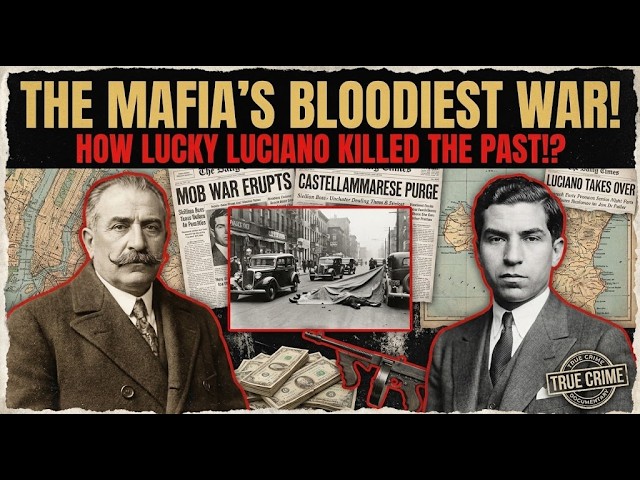
A single mustache was once the most dangerous symbol in New York.
In 1930, the American underworld was a fractured landscape of old-world traditions and new-world greed. The "Mustache Petes" ruled with iron fists and ancient Sicilian codes, refusing to adapt to a changing nation.
But a new generation of gangsters, led by Lucky Luciano, saw these traditions as a death sentence for profit. They didn't just want a seat at the table; they wanted to burn the table down.
This is the untold story of the Castellammarese War—a brutal 18-month purge that replaced the old-world kings with a corporate board of directors known as The Commission.
No textbook covers the psychological shift from the hills of Sicily to the boardrooms of Manhattan, or how a simple grooming habit marked a man for execution.
This is a story of adaptation, survival, and the cold-blooded pragmatism that built the most powerful criminal organization in American history.
⚠️ HISTORICAL DISCLAIMER: This documentary reconstructs events from historical records, court documents, oral histories, and investigative journalism. Some dialogue and scenes are dramatized based on documented accounts. Sources listed below.
📚 Sources & Further Reading:
→ The Five Families (Selwyn Raab)
https://www.amazon.com/Five-Families-Rise-Decline-Resurgence/dp/0312361815
→ The Origin of Organized Crime in America (David Critchley)
→ The Last Testament of Lucky Luciano (Martin A. Gosch)
→ Mafia and the First World War (Salvatore Lupo)
→ The Castellammarese War Archives (Cosa Nostra News)
🏷️ Hashtags:
#TrueCrime #MafiaHistory #LuckyLuciano #MustachePetes #Documentary #AmericanHistory #FiveFamilies
-~-~~-~~~-~~-~--~-~~-~~~-~~-~--~-~~-~~~-~~-~-
🕵️♂️ Global Mafia Universe - https://www.youtube.com/@GlobalMafiaUniverse?sub_confirmation=1
-~-~~-~~~-~~-~--~-~~-~~~-~~-~--~-~~-~~~-~~-~-
⚠️ Content Disclaimer
This video is created solely for educational and informational purposes.
We do not glorify, promote, or encourage any kind of criminal behavior or illegal activity.
All visuals, audio, and materials in this video are either:
✔️ AI-generated, or
✔️ Sourced from royalty-free platforms under valid licenses.
Some images, characters, and scenes have been created using artificial intelligence and are not depictions of real people or events.
No copyrighted material belonging to others has been used without permission.
❤️ Support the Channel
If you enjoy learning about true crime stories, history, and real-life mysteries, please:
✔️ Like the video
✔️ Subscribe to the channel
✔️ Share your thoughts in the comments
Your support helps us continue producing valuable and well-researched content!
🔧 Tools I Use to Grow This Channel
I personally use vidIQ to optimize my videos, find trending keywords, and grow faster on YouTube.
👉 Try it for free and experience the difference.
💼 Contact & Copyright Notice
If you believe any part of this video infringes on your rights, please contact me directly via YouTube.
I fully respect copyright laws and will respond promptly and professionally.
-~-~~-~~~-~~-~--~-~~-~~~-~~-~--~-~~-~~~-~~-~-
-
Show More Show Less View Video Transcript
0:00
They called them the mustache pets. It
0:02
wasn't a term of endearment. By 1930,
0:05
the young men in the American underworld
0:08
used it the way you might describe a
0:10
grandfather who still refuses to use a
0:13
telephone. Affection wrapped in
0:15
frustration. Respect undercut by
0:18
impatience. The mustaches were real,
0:21
thick, carefully groomed, waxed at the
0:24
tips in the Sicilian style. The old
0:27
bosses wore them like uniforms, like
0:30
flags, like statements about who they
0:33
were and where they came from. But the
0:35
mustaches were also a symbol of
0:37
something deeper, something the young
0:40
men had decided needed to die. What
0:43
you're about to hear is based on
0:45
documented history, court records,
0:48
witness testimony, and the accounts of
0:50
men who were there. Some conversations
0:53
have been recreated for narrative
0:56
purposes. The events though, the events
0:59
are real. To understand why a grooming
1:02
choice became a death warrant, you have
1:04
to go back not to the streets of New
1:07
York, but to the villages of western
1:09
Sicily, to a world the old bosses never
1:12
really left. In the hills around Palamo
1:16
and the countryside near Castle Delo,
1:19
the mustache wasn't fashion. It was
1:22
identity. A clean shaven man was a boy,
1:25
a servant, someone who worked for
1:27
others. A mustache meant you had
1:30
arrived. You owned land. You commanded
1:33
respect. You were what the Sicilians
1:36
called Anuomo de Respetto, a man of
1:39
respect. [music] When these men came to
1:42
America, and they came by the thousands
1:45
between 1890 and 1920, they brought
1:49
everything with them. The vendettas that
1:51
had burned for generations, the
1:54
suspicion of outsiders, the codes of
1:57
silence, and yes, the mustaches, [music]
2:00
the men who would become the first
2:02
bosses of the American underworld, were
2:05
formed by this world. Jusp Maseria, who
2:09
everyone called Joe the boss, arrived
2:11
from Sicily in 1902.
2:14
He was short, round, perpetually hungry
2:18
and absolutely convinced that the old
2:20
ways were the only ways. Salvataranzano
2:24
arrived later in 1918,
2:27
tall where Massyia was short, educated
2:30
where Masyia was crude. He had studied
2:33
for the priesthood before discovering he
2:36
preferred power to piety. [music] He
2:39
spoke of Julius Caesar constantly saw
2:42
himself as a general, a statesman, a man
2:46
of destiny. Both men wore magnificent
2:49
mustaches and both men believed with
2:52
absolute certainty that the American
2:55
underworld should remain Sicilian only.
2:58
Sicilian forever Sicilian. This was the
3:02
core of it. Not the facial hair itself,
3:05
but what the facial hair represented.
3:07
The mustache [music] pets wanted to
3:09
build a transplanted Sicily in the
3:12
tenementss of New York. They wanted the
3:14
old feuds, [music] the old hierarchies,
3:17
the old suspicions. They refused to work
3:20
with Jews, with Irish, with anyone whose
3:23
grandfather hadn't breathed Sicilian
3:25
air. The problem was that America didn't
3:28
work that way. The young men understood
3:31
this. Charlie Luchano, born Salvatania
3:36
in Sicily, but raised on the streets of
3:39
Manhattan. [music] Frank Costello, born
3:42
Francesco Castiglia in Calabria, but
3:45
American in every way that mattered.
3:48
Veto Genov, Albert Anastasia,
3:52
and their closest allies, men like Mayor
3:55
Lansky and Bugsy Sieel, Jewish [music]
3:58
gangsters who would never be allowed in
4:00
the old boss's parlors, but whose minds
4:02
were sharper than anyone's. These young
4:05
men looked at the mustache pets and saw
4:07
something simple. Waste, wasted
4:11
opportunity, wasted money, wasted
4:14
potential. [music] Why refuse to work
4:16
with Jewish bootleggers when Jewish
4:19
bootleggers had the best supply roots?
4:21
Why fight an Irish gang for three blocks
4:24
of territory when you could split the
4:26
profits and both get rich? Why carry on
4:29
a vendetta from 1887 when the men who
4:33
started it were already dead? The young
4:36
men were clean shaven. [music] They wore
4:38
American suits. They spoke English
4:41
without accents or worked hard to lose
4:44
them. They went to baseball games and
4:46
prize fights. They dated American women
4:50
and they waited. The Castle War changed
4:54
everything. It started as these things
4:56
often do over insult and territory. Joe
5:00
the Boss Maseria had been the dominant
5:03
force in New York for a decade. But by
5:06
1930, Salvata Maranzano had built a
5:09
rival power base drawing on immigrants
5:12
from his hometown of Castilame Del
5:15
Gulfo. The war lasted about 18 months.
5:19
Somewhere between 40 and 60 men died,
5:23
depending on which historian you
5:25
believe. The exact numbers are difficult
5:27
to verify. Bodies were found in alleys,
5:30
in cars, in rivers. Some bodies were
5:33
never found at all. That was the point.
5:37
Luchano worked for Masseria during this
5:39
war. On paper, he was loyal. In reality,
5:43
he was planning. Here's what we know
5:45
about the meeting. In early 1931,
5:49
Luchano sat down with Maranzano's
5:52
people, not to surrender, to negotiate.
5:55
The deal was straightforward. Luchano
5:58
would arrange Maseria's death. In
6:01
exchange, [music] the war would end and
6:04
Luchano would take over Maseria's
6:06
operation under Maranzano's overall
6:09
leadership. Some accounts say Luchano
6:12
made contact through intermediaries.
6:15
Others suggest he met with Maranzano
6:18
directly. The details are murky. The
6:21
outcome is not. April 15th, 1931,
6:26
a restaurant in Canai Island called
6:29
Newover Villa Tamaro. Joe the boss
6:32
arrived for lunch with Luchano and a few
6:35
others. They ate, they played cards. At
6:39
some point, Luchano excused himself to
6:41
use the restroom. While he was gone,
6:44
four men walked in. Accounts vary on
6:47
exactly who pulled the triggers. Some
6:49
historians named Bugsy Sieel, Albert
6:52
Anastasia, Veto Genovese, Joe Adenis.
6:57
What's certain is that when the shooting
6:59
stopped, Joe Maseria was dead. His body
7:02
slumped over the table. An ace of spades
7:05
supposedly clutched in his hand. That
7:07
detail might be invention. Journalists
7:10
loved a symbol, but the death was real.
7:14
Maranzano had won the war, or so he
7:16
thought. What happened next became the
7:19
template for how the American mafia
7:22
would operate for the next 60 years.
7:25
Maranzano moved fast. Within weeks of
7:28
Maseria's death, he called a meeting of
7:31
every significant Italian crime figure
7:34
in the New York area. Some accounts say
7:37
it was held in a hall in the Bronx.
7:39
Others place it in a resort upstate. The
7:42
location matters less than what was
7:45
said. Maranzano declared himself Karpo
7:48
Datati Kappy, [music] boss of all
7:50
bosses. He laid out a new structure,
7:54
five families in New York, each with a
7:56
boss and under boss, captains, soldiers.
7:59
[music]
8:00
It was organized. It was systematic. It
8:03
was in its way brilliant. But Moranzano
8:06
made a mistake. Maybe the only mistake
8:09
that mattered. He kept the old rules.
8:12
The new structure would be Sicilian
8:14
only. The young men's Jewish partners
8:17
were to be tolerated at best, excluded
8:20
at worst. And anyone who had risen under
8:23
the old regime, anyone who might
8:25
challenge Moranzano's authority was
8:28
marked for death. Luchano was on that
8:31
list. He knew it. Everyone knew it. The
8:35
exact sequence of what happened next is
8:38
still debated by historians, but
8:41
sometime in early September 1931,
8:44
Luchano learned that Moranzano was
8:47
planning to have him killed. Some say an
8:50
informant within Moranzano's
8:52
organization passed the word. Others
8:55
credit Mayor Lansky's intelligence
8:58
network. [music] It didn't matter how
9:00
Luchano found out. What mattered was
9:03
what he did about it.
9:04
>> [music]
9:04
>> September 10th, 1931.
9:08
Maranzano's office on the 9inth floor of
9:11
the Helmsley building in Midtown
9:13
Manhattan. The boss was conducting
9:16
business when four men arrived, claiming
9:19
to be government agents investigating
9:22
tax violations. Maranzano's guards let
9:26
them through. They were not government
9:28
agents. Accounts differ on the details.
9:32
Some say Maranzano fought back, that he
9:34
was stabbed and shot both. Others say it
9:38
was quick and professional. [music]
9:40
What's certain is that by the end of
9:42
that afternoon, the Carpo Dati Cappy was
9:45
dead [music]
9:46
less than 5 months after claiming the
9:49
title. And then came the night that
9:51
legend has exaggerated, but history
9:54
confirms. There's a story that's been
9:56
repeated so often, [music] it's taken on
9:59
the quality of myth. the night of the
10:02
Sicilian vespers when Luchano supposedly
10:06
ordered the execution of 40, 60, or 90
10:10
mustache pets across the country in a
10:14
single coordinated strike. [music]
10:16
The reality is more complicated.
10:19
Historians who have examined the records
10:21
closely, newspaper archives, police
10:24
reports, burial records, have found
10:28
evidence for perhaps three to five
10:30
killings that can be tied to this purge
10:32
with any certainty. Maybe a few more
10:35
that were connected but carried out over
10:38
the following weeks rather than in a
10:40
single night. But here's what's true.
10:43
Even if the numbers are smaller than
10:45
legend [music] suggests, Luchano and his
10:48
allies did target the remaining old
10:50
guard bosses who opposed modernization.
10:54
They did so deliberately. And when it
10:56
was over, the mustache Pete
10:58
>> [music]
10:58
>> era was finished. The men who survived
11:01
were men who understood what Luchano was
11:04
building or men who were smart enough to
11:07
pretend they did. A meeting was called
11:10
maybe in Chicago, maybe in New York. The
11:14
records are unclear, and the men who
11:16
attended weren't taking notes for
11:18
historians. [music]
11:19
What emerged from that meeting was the
11:21
commission. No more boss of bosses, no
11:25
more single point of control that could
11:27
be eliminated with a single bullet.
11:29
Instead, a council. The heads of the
11:32
major families would sit together,
11:35
settle disputes, coordinate when
11:37
necessary, maintain their independence
11:40
when it wasn't. And the rules changed,
11:43
not all at once, not in a single
11:45
proclamation.
11:47
But gradually, as Luchano and his allies
11:50
reshaped the organization,
11:53
certain principles became clear. You
11:55
could work with Jews. You could work
11:58
with Irish. You could work with anyone
12:00
who made you money as long as the core
12:03
family structure remained Italian. The
12:06
old vendettas were discouraged. The
12:08
isolation was abandoned. The parakealism
12:12
that had defined the mustache Pete era
12:15
gave way to something more pragmatic,
12:17
more American, more ruthless in its
12:20
focus on profit. And the mustaches
12:23
disappeared. [music]
12:24
This part is harder to document. There's
12:27
no commission memo banning facial hair.
12:30
No formal rule in any of the codes that
12:33
have surfaced over the years, but the
12:36
pattern is unmistakable.
12:38
Look at photographs of American mobsters
12:40
from the 1920s.
12:43
Mustaches [music] everywhere. Now look
12:45
at photographs from the 1940s, the '50s,
12:49
the60s.
12:51
clean shaven almost without exception.
12:54
The mustache became associated with the
12:57
old ways with the men who had been
12:59
eliminated with a style of leadership
13:02
that had been judged and found wanting
13:05
to wear a mustache was to mark yourself
13:07
as old-fashioned at best. At worst, it
13:11
suggested you hadn't gotten the message
13:13
about how things worked now. Former FBI
13:17
agents who worked [music] organized
13:19
crime cases in the midentth century have
13:23
described the phenomenon. When a new
13:25
associate was brought into a family, one
13:28
of the informal requirements was a clean
13:31
shave. Not because anyone thought facial
13:34
hair was inherently problematic, but
13:37
because it was a symbol of assimilation.
13:40
You were joining the new organization,
13:42
not the old one. It persisted for
13:45
decades [music] through the 1970s
13:48
through the 1980s. Carlo Gambino who ran
13:52
the most powerful family in America
13:54
until his death in 1976.
13:57
Clean shaven. Paul Castalano his
14:01
successor. Clean shaven. John Goti who
14:04
killed Castellano and took power in
14:07
1985.
14:09
Clean shaven. There were occasional
14:11
exceptions. Carmine Galante, who was
14:15
killed in 1979 while eating lunch at a
14:18
Brooklyn restaurant, had a cigar clamped
14:21
in his teeth in the famous [music] crime
14:23
scene photograph, but no mustache. Clean
14:27
shaven to the end. The rules [music]
14:29
softened eventually. By the 1990s, with
14:33
the traditional structures weakened by
14:35
prosecution and generational change,
14:38
facial hair started appearing again. But
14:41
by then, the original meaning had faded.
14:44
Younger men didn't know why their
14:46
predecessors had been so obsessive about
14:49
shaving. They just knew the old guys
14:52
preferred it that way. The truth is that
14:55
the mustache rule [music]
14:57
was never really about mustaches. It was
15:00
about adaptation, about survival, about
15:04
the willingness to let go of identity
15:06
markers that had become liabilities. The
15:10
mustache pets failed not because they
15:12
were bad criminals. Many of them were
15:15
highly effective at what they did. They
15:18
failed because they couldn't see past
15:20
the world they'd come from. [music] They
15:22
wanted to recreate Sicily in Manhattan.
15:25
And Manhattan had other ideas. Luchano
15:29
and his generation understood something
15:31
crucial. In America, power belonged
15:34
[music] to those who could work the
15:36
system, not those who stood apart from
15:39
it. The old boss's isolation wasn't
15:42
strength. It was weakness. Their
15:44
traditions weren't assets. They were
15:46
anchors. The clean shave was a signal to
15:50
law enforcement, to business partners,
15:53
to the broader world. We are modern. We
15:56
are adaptable. We are American. Some
15:59
historians argue that this adaptability
16:02
is exactly what made American organized
16:05
crime so durable. The Italian American
16:09
mafia lasted in recognizable form for
16:13
nearly a century. The structures Luchano
16:16
established in 1931
16:19
survived until the rio prosecutions of
16:23
the 1980s and beyond. Even today,
16:27
weakened and surveiled, the families
16:30
still exist. Compare that to criminal
16:33
organizations that couldn't adapt. The
16:36
Jewish gangs of the same era. Lansky's
16:39
associates largely dissolved within a
16:42
generation, absorbed into legitimate
16:45
business or eliminated by their own
16:47
success. They didn't have the family
16:50
structure, the generational continuity,
16:54
the institutional identity. The Italian
16:57
American mafia survived because it could
17:00
change. And the mustache rule, trivial
17:03
as it might seem, was proof of that
17:06
capacity for change. There's a barber
17:09
shop in Brooklyn that's been operating
17:11
since 1912.
17:13
Different names over the years,
17:16
different owners, but the same chairs,
17:19
the same mirrors, the same morning light
17:22
through the front window. Mobsters used
17:24
to come here. Maybe some still do,
17:27
though they are harder to identify now.
17:30
The owner, a third generation barber who
17:32
was willing to talk in general terms,
17:35
but not specifics, [music] described a
17:37
ritual that used to be common. A young
17:40
man would come in with an older sponsor.
17:42
[music] The sponsor would sit and watch.
17:45
The young man would get a shave, not a
17:47
haircut. Specifically, a shave, hot
17:50
towel, straight razor, the works. It
17:53
meant something. It was a before and
17:55
after. You came in as one thing. You
17:58
left as another. The barber couldn't say
18:01
for certain, but he believed this
18:03
practice continued into the 1980s, maybe
18:07
later. By then, most young men didn't
18:10
need much shaving anyway. They were
18:12
clean-faced by habit. But the ritual
18:15
persisted because the ritual had
18:17
meaning. Or maybe it was just a shave.
18:21
Maybe the meaning has been added by
18:23
outsiders looking for symbols where none
18:26
were intended. That's the thing about
18:28
criminal organizations.
18:30
They generate legends faster than facts.
18:33
The night of the Sicilian vespers might
18:36
have been five killings or 50. The
18:39
mustache ban might have been a formal
18:41
rule or just a strong preference that
18:44
everyone understood. The truth lies
18:48
somewhere in the space [music]
18:49
between what was documented and what was
18:52
remembered. What's not in dispute is
18:55
this. A generation of leaders was
18:58
replaced by another generation and the
19:00
replacement was violent and deliberate.
19:03
The old ways, the isolation, the
19:06
vendettas, the rigid ethnic boundaries
19:09
died with the men who embodied them. The
19:12
new ways brought their own problems. The
19:15
commission meant stability, but it also
19:18
meant bureaucracy, internal politics,
19:21
the kind of disputes that would
19:23
eventually tear families apart. The
19:26
pragmatism that allowed cooperation with
19:28
other ethnic groups also meant fewer
19:31
clear boundaries, more complexity, more
19:34
opportunities for betrayal. Luchano
19:37
himself didn't last long at the top. By
19:41
1936,
19:42
Thomas Dwey had built a case against him
19:45
on [music] prostitution charges, charges
19:48
Luchano always denied, claiming he was
19:51
framed. He went to prison, was later
19:54
deported to Italy, and spent his
19:57
remaining years in exile, occasionally
20:00
meeting with American associates who
20:03
made the trip to Naples. He died in
20:06
1962.
20:08
heart attack at the airport reportedly
20:10
while waiting to meet with a film
20:12
producer who wanted to make a movie
20:14
about his life. The movie was never made
20:18
or rather many movies were made but none
20:20
with his participation.
20:22
His body was brought back to New York
20:24
for burial. The funeral was modest by
20:27
mob standards. [music] The era he'd
20:30
created was still functioning, still
20:32
profitable, still organized along the
20:35
lines he'd established. and the mourers
20:38
were clean shaven, every one of them.
20:41
The mustache rule faded eventually. Like
20:45
most organizational traditions, it
20:48
mattered intensely to one generation and
20:50
barely at all to the next. By the time
20:54
John got his son was running what
20:56
remained of the Gambino family in the
20:58
1990s,
21:00
nobody was checking faces at the door.
21:03
But the principle behind the rule,
21:05
adaptability,
21:07
the willingness to [music] shed the past
21:09
when the past becomes a burden. That
21:13
principle shaped American organized
21:15
crime for most of the 20th century.
21:18
Other criminal organizations have failed
21:21
to learn this lesson. The Sicilian Mafia
21:24
itself, the original model, never fully
21:28
adapted to modernity in the way its
21:30
American offshoot did. [music] It
21:32
remained insular, traditional, tied to
21:36
territory in ways that made it
21:38
vulnerable. The great prosecutions of
21:41
the 1980s and '90s damaged it far more
21:45
permanently than similar efforts in
21:48
America. Maybe there's something about
21:50
immigration itself that teaches
21:52
adaptability.
21:54
The men who left Sicily had already
21:56
proven they could change. They'd crossed
21:59
an ocean, learned a new language, built
22:02
lives in a foreign country. Their sons,
22:05
the Luchanos and Costello, had grown up
22:08
between worlds. They didn't have the
22:10
luxury of tradition. The mustache pets,
22:14
never really left Sicily. They just
22:16
transported it. And in the end, that's
22:19
why they lost a mustache. [music] It
22:22
seems like such a small thing, a
22:24
grooming choice, a personal preference,
22:27
but in the right context, at the right
22:29
moment, it became a marker of everything
22:32
that was about to die. The men who wore
22:35
them weren't fools. Maseria and
22:38
Maranzano were capable, dangerous,
22:41
effective in their own way. They'd
22:43
survived the chaos of early American
22:46
organized crime. They'd built empires.
22:50
They'd commanded genuine loyalty from
22:52
hundreds of followers, but they couldn't
22:55
see what was coming. They couldn't see
22:57
that the world had changed, that the old
23:00
rules no longer applied, that their own
23:02
strength had become weakness. The young
23:05
men could see it, and they acted on what
23:08
they saw. Maybe that's the lesson, if
23:10
there is one, not about organized crime
23:14
specifically, but about power generally.
23:17
The structures that protect you in one
23:19
era can trap you in the next. The
23:22
identity markers that define you can
23:24
become targets painted on your back. The
23:27
mustache pets believed in permanence, in
23:30
tradition, in the way things had always
23:33
been. Their successors believed in
23:36
survival, in adaptation, in becoming
23:39
whatever the moment required. One group
23:42
is remembered as a footnote, the other
23:45
shaped history. If this story stayed
23:47
with you, you know what to
#Arts & Entertainment