Up next in 10


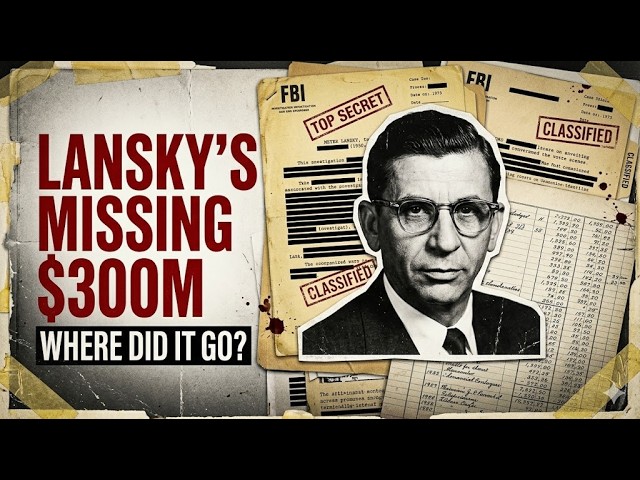
When Meyer Lansky died in 1983, he left behind a modest estate of $300,000 and a mystery worth a thousand times that amount. The FBI spent decades tracking a $300 million fortune that vanished into a labyrinth of Swiss banks and shell companies, but they never found a dime.
This documentary analyzes the life and financial genius of the "Mob's Accountant." Unlike his violent counterparts, Lansky understood that the real power of organized crime wasn't the gun, but the ledger. From the casinos of Havana to the invention of offshore banking loopholes still used by billionaires today, this is the story of how organized crime went corporate—and how one man built a financial ghost ship that no government could board.
What makes this story different is not the crime, but the mechanics. We deconstruct the specific financial systems Lansky pioneered—systems that didn't just hide mob money, but laid the blueprint for the modern global financial underworld.
Timestamps:
00:00 The Modest Death of a Kingpin
00:32 The $300 Million Estimate
01:33 The Brain & The Muscle (Luciano Partnership)
04:02 The Havana Blueprint
07:01 How the Money Laundering Machine Worked
10:06 The Castro Catastrophe
12:11 The Mystery of the Swiss Vaults
13:21 The Flight to Israel
16:11 The Shell Company Theory
19:23 Was the Fortune a Myth?
20:58 The Legacy of the System
Sources & Further Reading:
- Lacey, Robert. "Little Man: Meyer Lansky and the Gangster Life." Little, Brown, 1991.
- Cohen, Rich. "Tough Jews: Fathers, Sons, and Gangster Dreams." Simon & Schuster, 1999.
- U.S. Federal Bureau of Investigation. "Meyer Lansky FBI Files." Freedom of Information Act Release.
- Messick, Hank. "Lansky." G.P. Putnam's Sons, 1971.
#MeyerLansky #MafiaHistory #MoneyLaundering #TrueCrime #FinancialCrime #ColdCase
-~-~~-~~~-~~-~--~-~~-~~~-~~-~--~-~~-~~~-~~-~--~-~~-~~~-~~-~--~-
⚠️ Content Disclaimer
This video is created solely for educational and informational purposes.
We do not glorify, promote, or encourage any kind of criminal behavior or illegal activity.
All visuals, audio, and materials in this video are either:
✔️ AI-generated, or
✔️ Sourced from royalty-free platforms under valid licenses.
Some images, characters, and scenes have been created using artificial intelligence and are not depictions of real people or events.
No copyrighted material belonging to others has been used without permission.
❤️ Support the Channel
If you enjoy learning about true crime stories, history, and real-life mysteries, please:
✔️ Like the video
✔️ Subscribe to the channel
✔️ Share your thoughts in the comments
Your support helps us continue producing valuable and well-researched content!
? Tools I Use to Grow This Channel
I personally use vidIQ to optimize my videos, find trending keywords, and grow faster on YouTube.
? Try it for free and experience the difference.
? Contact & Copyright Notice
If you believe any part of this video infringes on your rights, please contact me directly via YouTube.
I fully respect copyright laws and will respond promptly and professionally.
-~-~~-~~~-~~-~--~-~~-~~~-~~-~--~-~~-~~~-~~-~-
-
Show More Show Less View Video Transcript
0:00
$300 million
0:01
that was the estimate when they open the accounts
0:05
nothing
0:08
in January of 1983
0:10
a man died in a modest house in Miami Beach
0:13
his name was Meyer Lansky
0:15
he was 80 years old lung cancer
0:18
by the end he weighed barely 100 pounds
0:21
the nurses who cared for him described a frail
0:23
old man
0:24
who watched television and complained about the food
0:27
nothing about his death suggested wealth
0:30
the house was small the car was ordinary
0:33
his wife Teddy wore no jewellery worth mentioning
0:36
but the FBI believed something very different
0:39
their estimate built over decades of surveillance
0:43
informants and financial tracing
0:45
was $300 million that was Meyer Lansky's hidden fortune
0:50
the money he'd built across 40 years of organized crime
0:53
laundered through casinos
0:55
offshore banks
0:56
and shell companies spanning three continents
0:59
the events in this story come from court records
1:02
FBI files and published accounts
1:05
where facts are uncertain
1:07
we say so $300 million
1:10
and when they went looking for it
1:11
in Swiss vaults in Israeli banks
1:14
in numbered accounts across the Caribbean
1:16
they found almost nothing
1:18
to this day no one has ever accounted for the money
1:22
this is not just a story about a missing fortune
1:25
it's a story about a man who understood
1:28
long before anyone else
1:29
that the real power in organized crime
1:32
was never the gun it was the Ledger
1:35
to understand how Meyer Lansky hit $300 million
1:39
you first have to understand how he made it
1:41
he was born Maya Sucha Ljanski in 1902
1:45
in Grodno a city in what was then the Russian Empire
1:49
Today it sits in Belarus
1:52
his family arrived in New York in 1911
1:55
they settled on the Lower East Side
1:57
in the same crowded tenement blocks
2:00
that had already produced a generation of young
2:02
criminals Lansky was small
2:05
he never grew past 5 foot 4
2:07
he wasn't physically imposing
2:10
he didn't carry a weapon but he could count
2:12
according to most accounts
2:14
Lansky met Charles Lucky Luciano
2:17
on the streets of the Lower East Side
2:19
when both were teenagers
2:21
the exact circumstances are disputed
2:23
some say it was a dice game
2:25
others say a street fight
2:27
what's not disputed is the partnership that followed
2:30
Luciano had muscle Lansky had numbers
2:34
together
2:34
they formed a relationship that would last decades
2:37
and reshape American organized crime
2:41
the combination was unusual for the time
2:43
Italian and Jewish gangs didn't mix
2:46
there were rigid boundaries
2:48
ethnic loyalty was everything
2:51
Lansky and Luciano didn't care
2:53
by the mid 1920s prohibition
2:56
had turned bootlegging into the most profitable
2:59
illegal enterprise in American history
3:02
Lansky didn't run trucks or shoot rivals
3:05
he organized the supply chain
3:07
he calculated costs margins
3:10
distribution routes
3:11
he figured out which cops needed paying and how much
3:14
a man who worked with him during this period
3:17
his name appears in FBI files
3:20
but not in any trial record
3:22
described the operation
3:24
in terms that sounded more like a corporation
3:27
than a gang the exact words are lost
3:30
but the dynamic is well documented
3:33
Mayer didn't drink he didn't gamble
3:36
he sat in the back room with a pencil and a notebook
3:39
and he knew where every dollar went
3:41
that reputation the man with the pencil
3:44
the man who never forgot a number
3:46
would define Lansky for the rest of his life
3:49
by the early 1930s prohibition was ending
3:53
the gangs that had built empires on bootlegging
3:55
faced a choice go straight or find new rackets
3:59
most chose new rackets but they chose poorly
4:02
numbers running loan sharking Protection
4:05
street level enterprises with street level risks
4:08
Lansky saw further he looked at gambling
4:11
not the numbers game in Harlem
4:13
legal gambling or close enough to legal
4:16
in 1936 he traveled to Havana Cuba
4:20
what he found was a country
4:21
where the government could be bought
4:23
not individual cops but the entire apparatus
4:27
President Fulgencio Batista was a military strongman
4:31
who understood a simple proposition
4:33
no recording of their first meeting survives
4:37
but the outcome is documented by multiple historians
4:40
it might have gone something like this
4:43
I'm not asking for a favor
4:45
I'm offering a partnership
4:47
you provide the licenses I provide the investment
4:51
we both profit Batista agreed
4:55
within three years Lansky controlled
4:57
or had interests
4:58
in several of Havana's largest casinos
5:01
the money was extraordinary
5:03
but more importantly it was clean
5:06
casino revenue looked legitimate
5:08
it could be deposited transferred invested
5:12
Lansky had discovered the principle
5:13
that would guide the rest of his career
5:16
crime makes money but only finance keeps it
5:19
The 1940s brought an unexpected detour
5:22
during World War 2 the United States Navy had a problem
5:27
German U
5:27
boats were sinking supply ships along the East Coast
5:31
sabotage on the New York waterfront was a real concern
5:35
the docks were controlled by the mob
5:37
what followed
5:38
was one of the strangest alliances in American history
5:42
the program was called Operation Underworld
5:45
Naval Intelligence approached organized crime figures
5:49
including according to most accounts
5:52
Luciano and Lansky to help secure the waterfront
5:56
the extent of Lansky's involvement is debated
5:59
some historians describe him as a key intermediary
6:03
others say
6:03
his role has been exaggerated over the decades
6:07
what's clear is that the arrangement
6:09
gave Lansky something more valuable than any payment
6:12
legitimacy or at least the appearance of it
6:16
after the war Lansky accelerated
6:19
he expanded his gambling operations in Cuba
6:22
he invested in casinos in Las Vegas
6:25
though
6:25
his involvement there was typically behind the scenes
6:28
structured through front men and corporate layers
6:32
he helped establish the Flamingo hotel casino
6:35
with Benjamin Bugsy Siegel
6:38
when Siegel's spending spiraled out of control
6:41
and money went missing
6:42
the decision about what to do with him
6:44
fell to the commission
6:46
most accounts agree that Lansky was consulted
6:49
whether he argued for or against Siegel's murder
6:52
depends on which source you trust
6:55
Seigel was shot in his Beverly Hills home
6:58
in June of 1947 Lansky never spoke publicly about it
7:03
but it was in the 1950s
7:05
that Lansky built the machine
7:06
that would eventually hide $300 million
7:10
he didn't invent money laundering
7:12
but most financial crime historians
7:15
credit him with perfecting a system that governments
7:17
would spend decades trying to unravel
7:20
the method worked like this
7:22
casino profits from Havana
7:24
cash untraceable were skimmed
7:28
before they ever appeared on any official Ledger
7:30
this money was physically carried to banks
7:33
in the Bahamas and the Cayman Islands
7:35
from there it was deposited into numbered accounts
7:39
not in anyone's name just a number
7:41
the banks in those jurisdictions
7:43
had no obligation to report to American authorities
7:47
banking secrecy wasn't just a policy
7:49
it was law from the Caribbean accounts
7:52
the money moved to Switzerland
7:55
Swiss banking secrecy was even stronger
7:58
the accounts were protected by criminal penalties
8:01
a Swiss banker who revealed a client's information
8:04
could go to prison
8:06
Lansky understood this architecture completely
8:09
he moved money
8:10
through at least three layers of jurisdictions
8:13
each layer added distance from the source
8:16
by the time the funds reached their final destination
8:19
the connection to any criminal enterprise
8:22
was functionally invisible
8:24
in the late 1950s
8:26
the FBI began to take Lansky seriously
8:29
as a financial target for years
8:31
law enforcement had focused on the bosses
8:34
the men who gave orders who controlled territory
8:37
who showed up at weddings and funerals
8:40
men like Luciano Vito Genovese
8:43
Albert Anastasia Lansky was different
8:46
he didn't control territory
8:48
he didn't attend commission meetings
8:50
at least not officially he didn't fit the model
8:53
but an FBI agent in the Miami field office
8:57
and this is based on accounts from
8:58
agents who served during that period
9:01
began to see the pattern
9:03
the exact conversation is not recorded
9:06
but the realization is documented
9:09
we've been chasing the wrong people
9:11
the bosses come and go they kill each other
9:14
they go to prison but the money keeps flowing
9:17
someone is managing the money
9:18
and it's the same person every time
9:21
that person was Meyer Lansky
9:23
the problem for law enforcement was deceptively simple
9:27
they knew Lansky was rich
9:29
they knew the money came from illegal gambling
9:32
skimming and various forms of racketeering
9:35
but they couldn't prove it
9:36
not in court
9:38
Lansky owned almost nothing in his own name
9:41
his house was modest his bank accounts
9:44
the ones they could find
9:45
showed a man living on a comfortable
9:47
but unremarkable income
9:49
the FBI estimated his real wealth
9:51
based on the operations
9:53
he was known to control or influence
9:56
the figure they arrived at
9:58
300 million was enormous for the era
10:01
adjusted for inflation
10:03
it would be well over $1 billion today
10:06
but estimates are not evidence
10:08
and Lansky knew the difference better than anyone
10:11
in 1959 everything changed
10:14
Fidel Castro overthrew Batista
10:17
the Cuban Revolution
10:18
swept away the entire casino apparatus
10:21
that Lansky had spent two decades building
10:25
Lansky's casinos were seized
10:27
his investments were nationalized
10:29
he was given 72 hours to leave the country
10:33
according to some accounts
10:34
Lansky lost between six and ten million dollars
10:38
in direct casino investments
10:40
a staggering sum at the time
10:42
but most historians who have studied his finances
10:45
believe the losses
10:46
while real represented
10:48
only a fraction of what he had already moved offshore
10:52
the Cuban money was gone
10:54
but the system he'd built to move and hide money
10:57
was intact it didn't depend on Cuba
11:00
it depended on banks and the banks were still there
11:03
The 1960s brought new pressure
11:06
Attorney General Robert Kennedy
11:08
made organized crime a priority
11:10
The Justice Department created the Organized Crime
11:13
and Racketeering Section wiretaps increased
11:17
grand juries were convened
11:19
Lansky was called before a grand jury in 1961
11:23
he invoked the Fifth Amendment
11:25
he gave nothing but the investigations continued
11:29
and Lansky began to worry not about prison
11:32
but about the IRS
11:34
The Internal Revenue Service had brought down Al Capone
11:37
in 1931 not for murder
11:40
not for bootlegging for tax evasion
11:43
Lansky had watched that case carefully
11:45
he knew
11:46
the IRS didn't need to prove where the money came from
11:49
they only needed to prove
11:50
that your spending exceeded your reported income
11:53
and so Lansky lived small
11:56
deliberately strategically
11:58
the house in Miami Beach the modest car
12:02
the quiet life it wasn't poverty
12:04
it was camouflage
12:06
but here is where the story becomes a puzzle
12:08
that no one not the FBI
12:10
not investigative journalists
12:12
not forensic accountants has been able to solve
12:15
if Lansky had $300 million
12:18
where did he put it the first answer
12:20
the obvious one is Swiss banks
12:23
Lansky had accounts in Switzerland
12:25
this is not disputed multiple sources confirm it
12:29
the question is
12:30
what happened to them in the early 1980s
12:33
as Lansky's health declined
12:35
and the FBI intensified its search
12:37
American authorities
12:39
made formal requests to Swiss banks
12:41
for information about Lansky's accounts
12:44
the Swiss banks responded
12:46
their answer was remarkable
12:48
they denied the accounts existed
12:50
not that they wouldn't share the information
12:53
not that banking secrecy prevented disclosure
12:56
they said the accounts were not there
12:58
the FBI suspected and this is their interpretation
13:02
not proven fact
13:03
that the accounts had been emptied and closed
13:06
before the requests arrived
13:08
that someone
13:09
acting on Lansky's instructions had moved everything
13:12
but they couldn't prove it
13:14
Swiss law made it nearly impossible
13:16
to compel disclosure and without the account numbers
13:20
which Lansky kept in his head
13:22
not on paper according to associates
13:25
they had nothing to work with
13:26
the second possibility involves Israel
13:29
in 1970 Lansky did something that
13:33
surprised even people who knew him well
13:35
he flew to Israel
13:37
and applied for citizenship under the law of return
13:40
a provision granting any Jewish person
13:43
the right to settle in Israel
13:45
his motives have been debated ever since
13:48
some historians believe
13:49
he genuinely wanted to retire in Israel
13:52
others argue it was a legal strategy
13:55
if he became an Israeli citizen
13:57
extradition to the United States
13:59
would become vastly more complicated
14:02
the Israeli government initially allowed him to stay
14:05
but the United States
14:07
pressured Israel to deny his application
14:10
the case went to the Israeli Supreme Court
14:13
the arguments lasted months
14:15
the exact words spoken in those proceedings
14:18
are a matter of public record
14:20
but one exchange captures the tension
14:23
an Israeli official
14:24
whose role was to argue against Lansky's admission
14:28
put it bluntly if we accept this man
14:31
we tell the world that Israel is a refuge for criminals
14:35
that is not what this state was built for
14:38
Lansky's attorney argued that his client
14:40
had never been convicted of a serious crime
14:43
in the United States
14:44
that he was a Jewish man seeking his homeland
14:47
but the political pressure was too great
14:50
in 1972 Israel denied Lansky's application
14:54
he was forced to leave he spent months
14:57
trying to find another country that would take him
14:59
Paraguay Argentina
15:01
Brazil each one said no
15:04
some under direct pressure from Washington
15:07
he returned to Miami he had nowhere else to go
15:10
back in the United States
15:12
the IRS finally brought charges
15:15
in 1973 Meyer Lansky stood trial for tax evasion
15:19
the government's case
15:21
centered on income from a casino skimming operation
15:24
at the Flamingo in Las Vegas
15:26
the trial was a disaster for the prosecution
15:29
Lansky's attorneys
15:30
dismantled the government's financial evidence
15:33
key witnesses were unreliable
15:36
the paper trail
15:37
the one thing that should have been ironclad
15:40
had gaps the jury acquitted him
15:42
Lansky walked out of the courtroom and
15:45
according to published accounts
15:47
said almost nothing but one line has survived
15:51
attributed to him by multiple journalists
15:53
who covered the trial though the exact wording varies
15:57
they'll never find it because it was never there
16:01
what did he mean did he mean the money never existed
16:05
that the FBI's estimates were fantasy
16:08
or did he mean it was never where they looked
16:11
that question has haunted investigators
16:13
for four decades
16:15
the third theory about the missing fortune
16:18
involves something more sophisticated than Swiss banks
16:22
some investigators believe
16:23
Lansky pioneered a system
16:25
that wouldn't become common in financial crime
16:28
for another 20 years layered shell companies
16:31
here's how it might have worked
16:33
money from casino skimming
16:35
goes to a bank in the Bahamas
16:37
the Bahamian bank
16:39
lends that money to a company in Panama
16:42
the Panamanian company invests in real estate
16:46
in the United States
16:47
the real estate generates rental income
16:50
that income is taxable but it's clean
16:53
the original
16:54
criminal proceeds have become a legitimate investment
16:57
and the ownership trail
16:58
runs through three jurisdictions
17:01
two shell companies
17:02
and a bank that doesn't answer to American authorities
17:06
if Lansky built this kind of structure
17:08
and several financial crime researchers believe he did
17:12
the money wouldn't be sitting in a vault somewhere
17:15
it would be embedded in the legitimate economy
17:18
invisible generating returns
17:20
possibly still growing
17:22
the FBI's search for Lansky's money intensified
17:25
after his death in 1983
17:28
they searched his home they subpoenaed his bank records
17:32
they interviewed his associates
17:33
his family his lawyers
17:35
what they found
17:36
was a man who appeared to be worth almost nothing
17:39
his estate was valued at approximately $300,000
17:44
that's 300,000 not 300 million
17:47
his wife Teddy
17:49
lived modestly for the rest of her life
17:51
his children did not display sudden wealth
17:54
if the money was hidden with family
17:56
they hid it perfectly
17:58
the FBI assigned agents to the case
18:00
for years afterward they followed leads to Switzerland
18:04
to Israel to the Caymans
18:06
to Hong Kong every lead went cold
18:09
but there are people who believe the money was found
18:12
just not by the people who were looking
18:14
this is where the story enters murky territory
18:17
what follows is speculation
18:19
informed by published accounts
18:21
but not proven by evidence
18:23
some investigative journalists have suggested
18:26
that Lansky's financial network didn't die with him
18:29
that trusted associates a small number
18:32
perhaps two or three had the account numbers
18:35
the corporate structures the keys to the system
18:39
if that's true
18:40
those associates would have had access to the fortune
18:43
after Lansky's death they could have distributed it
18:46
reinvested it or simply kept it
18:49
there's no proof but the alternative
18:52
that $300 million simply evaporated
18:55
strains belief almost as much
18:57
one name comes up repeatedly
18:59
in accounts of Lansky's financial network
19:02
Vincent Jimmy Blue Eyes Alo
19:05
a Genovese family associate
19:07
who was one of Lansky's closest allies
19:09
for over 50 years
19:11
Alo outlived Lansky by nearly two decades
19:14
he died in 2001 at the age of 101
19:18
if anyone knew where the money went
19:20
most researchers point to a low
19:22
but he never talked not to the FBI
19:25
not to journalists not to anyone
19:27
he took whatever he knew with him
19:30
there's a fourth theory
19:31
it's the simplest and it might be the most unsettling
19:35
the money was never $300 million
19:38
the FBI's estimate was based on the operations
19:41
Lansky was believed to control
19:44
but believed to control and actually controlled
19:47
are different things
19:49
what if Lansky's reputation exceeded his reality
19:52
what if the man who was called the mob's accountant was
19:55
in fact a well connected
19:57
but mid level financial operator
19:59
whose legend grew larger than his Ledger
20:02
some historians have argued exactly this
20:05
they point out that Lansky's direct provable income
20:09
what can be traced through court records
20:11
and financial documents
20:13
was substantial but not extraordinary
20:16
the 300 million figure may have been an estimate
20:19
built on assumptions multiplied by reputation
20:22
and never tested against reality
20:25
if that's true the mystery has a simpler answer
20:28
than anyone wants to accept
20:30
there's no hidden fortune
20:32
because there was never a fortune to hide
20:35
but here's why that theory doesn't satisfy
20:37
most people who have studied the case
20:40
Lansky's lifestyle
20:41
was not the lifestyle of a man who had nothing
20:44
it was the lifestyle of a man who was hiding everything
20:47
the modest house the ordinary car
20:50
the careful deliberate invisibility
20:53
that takes discipline it takes intention
20:56
a man with nothing doesn't need to hide
20:59
a man with everything does
21:00
the deeper question
21:02
the one that outlasts the treasure hunt
21:04
is what may Lansky actually built
21:06
not the money the system
21:08
before Lansky
21:09
organized crime was largely a cash business
21:13
money was made and spent it was buried in backyards
21:16
stuffed in mattresses kept in safes behind false walls
21:20
Lansky showed that money could be moved
21:22
transformed made invisible and then made visible again
21:26
wearing a different face offshore accounts
21:29
shell companies layered jurisdictions
21:32
tax havens banking secrecy
21:34
these are the tools of modern financial crime
21:38
and while Lansky certainly didn't invent all of them
21:41
he was among the first to use them systematically
21:44
to treat organized crime
21:45
like a multinational corporation
21:47
with a Treasury Department
21:49
the irony is bitter
21:50
the system Lansky built didn't die with him
21:53
it was adopted and improved
21:56
by people who had nothing to do with organized crime
21:59
corporations billionaires governments
22:03
the Panama Papers the Swiss banking scandals
22:06
the offshore networks exposed by journalists in the 2
22:11
the architecture is the same
22:13
move money across borders
22:15
hide ownership behind layers
22:17
exploit the gaps between jurisdictions
22:20
Lansky would have recognized every page
22:23
he died on January 15th, 1983
22:26
the funeral was small a few family members
22:30
a few old associates no one from the life came publicly
22:34
that would have drawn attention
22:36
his obituary in the New York Times
22:38
called him the mob's accountant
22:40
other papers used the phrase
22:42
financial genius of organized crime
22:45
he would have hated both descriptions
22:47
not because they were wrong
22:49
because they were public Meyer
22:51
Lansky spent his entire life
22:52
making sure no one could see what he was doing
22:55
and in the end he succeeded
22:57
the money
22:58
if it ever existed in the amounts they estimated
23:01
has never been found
23:03
some secrets die with the men who kept them
23:06
others are just waiting for someone
23:08
to know where to look if you've made it this far
23:11
consider subscribing
23:12
there are more stories like this one
23:15
and some of them are even stranger
Arts & Entertainment
Finance
Investing
Law & Government