Up next in 10


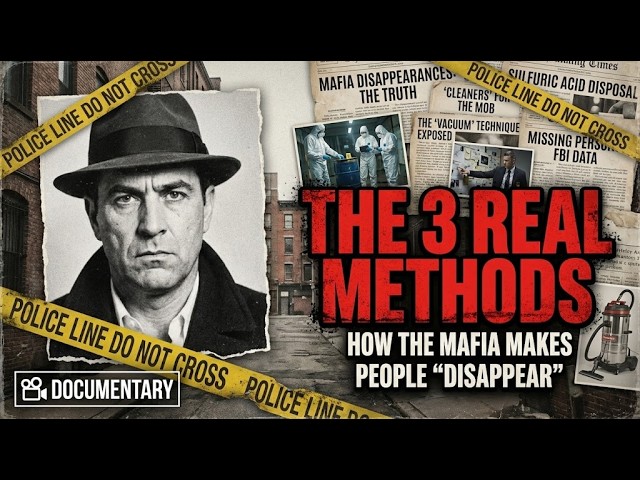
Hollywood taught us about "concrete shoes" and poetic justice. The truth is much darker: the real methods were industrial processes designed to delete humans from existence.
This video explores the forensic reality of organized crime disposal methods during the 1970s and 80s. We analyze the "Gemini Method" perfected by the DeMeo crew, which turned murder into an assembly line of draining and packaging. We also look at the chemical dissolution techniques used by "chemists" to turn bodies into liquid, and the "deep burial" protocols that utilized counter-forensic layering (like burying dead animals above human remains) to fool cadaver dogs.
What truly makes this story terrifying isn't the violence—it's the system. These weren't crimes of passion; they were logistical operations protected by a code of silence that worked perfectly... until the human element failed.
Timestamps:
00:00 The Myth of Concrete Shoes
03:18 The "Vacuum Kill" Concept
04:09 Inside the Gemini Lounge
05:45 Step-by-Step: The Industrial Process
09:50 The Chemical Method ("The Chemists")
14:26 The Deep Burial Protocol
17:34 Counter-Forensics: The Dead Dog Trick
21:00 The Fate of Roy DeMeo
Sources & Further Reading:
- Mustain, Gene, and Jerry Capeci. "Murder Machine." Onyx, 1993. (The definitive account of the Roy DeMeo crew).
- FBI Case Files: United States v. Gaggi, et al. (Federal trials regarding the Gambino crime family).
- Raab, Selwyn. "Five Families: The Rise, Decline, and Resurgence of America's Most Powerful Mafia Empires."
- United States Department of Justice, Federal Bureau of Investigation, "La Cosa Nostra" Archives.
#TrueCrime #Forensics #MafiaHistory #GeminiMethod #OrganizedCrime
-~-~~-~~~-~~-~--~-~~-~~~-~~-~--~-~~-~~~-~~-~-
🕵️♂️ Global Mafia Universe - https://www.youtube.com/@GlobalMafiaUniverse?sub_confirmation=1
-~-~~-~~~-~~-~--~-~~-~~~-~~-~--~-~~-~~~-~~-~-
⚠️ Content Disclaimer
This video is created solely for educational and informational purposes.
We do not glorify, promote, or encourage any kind of criminal behavior or illegal activity.
All visuals, audio, and materials in this video are either:
✔️ AI-generated, or
✔️ Sourced from royalty-free platforms under valid licenses.
Some images, characters, and scenes have been created using artificial intelligence and are not depictions of real people or events.
No copyrighted material belonging to others has been used without permission.
❤️ Support the Channel
If you enjoy learning about true crime stories, history, and real-life mysteries, please:
✔️ Like the video
✔️ Subscribe to the channel
✔️ Share your thoughts in the comments
Your support helps us continue producing valuable and well-researched content!
🔧 Tools I Use to Grow This Channel
I personally use vidIQ to optimize my videos, find trending keywords, and grow faster on YouTube.
👉 Try it for free and experience the difference.
💼 Contact & Copyright Notice
If you believe any part of this video infringes on your rights, please contact me directly via YouTube.
I fully respect copyright laws and will respond promptly and professionally.
-~-~~-~~~-~~-~--~-~~-~~~-~~-~--~-~~-~~~-~~-~-
-
Show More Show Less View Video Transcript
0:08
you've heard the stories concrete shoes
0:11
a body dumped off the Brooklyn Bridge
0:13
some guy sleeping with the fishes
0:16
it makes for great cinema
0:18
Marlon Brando Al Pacino
0:21
Robert De Niro Decades of Hollywood have taught us that
0:24
when the Mafia kills somebody
0:26
there's a ritual to it something almost poetic
0:30
here's the truth the real methods were not poetic
0:33
they were industrial and the men who perfected them
0:37
didn't think of themselves as killers
0:40
they thought of themselves as problem solvers
0:43
specialists
0:44
technicians with a very particular skill set
0:48
what you're about to hear
0:49
is based on documented history
0:51
FBI case files federal trial testimony
0:56
forensic reports that were sealed for years
0:59
before becoming part of the public record
1:02
some conversations
1:03
have been recreated for narrative purposes
1:07
but the methods
1:08
the methods are exactly as described under oath
1:12
this is not a movie this is how it actually worked
1:16
let's start with the myth
1:17
concrete shoes the image is famous
1:21
a man's feet encased in a bucket of wet cement
1:24
the bucket tossed into a river
1:26
the body sinking to the bottom
1:28
it's dramatic it's visual
1:31
and according to nearly every forensic expert
1:33
and FBI agent who ever worked organized crime cases
1:38
it's almost entirely fiction
1:40
the problem is simple physics
1:43
concrete takes time to set
1:45
hours in some cases it's heavy
1:48
unwieldy and incredibly difficult to transport
1:51
without attracting attention
1:54
you'd need a vehicle
1:55
you'd need a dock or a bridge with no witnesses
1:59
you'd need to handle a body
2:01
alive or dead
2:02
while managing AHUNDRED+ pounds of wet cement
2:06
one former agent
2:08
speaking to researchers in the early 2 put it this way
2:13
he said the logistics alone make it impractical
2:16
you're creating more problems than you're solving
2:19
the whole point of disposal is to reduce evidence
2:23
not create it now
2:24
that doesn't mean the river wasn't used
2:27
bodies were found in waterways throughout the northeast
2:30
for decades the East River
2:33
the Hudson
2:34
the Arthur kill between Staten Island and New Jersey
2:38
but the method of getting them there
2:40
was far more straightforward
2:42
weighted down with chains or engine parts
2:46
wrapped in plastic and carpet
2:48
nothing elegant nothing cinematic
2:51
but here's the thing
2:53
the bodies that were found in rivers
2:55
those were the failures the sloppy jobs
2:58
the rushed work the real professionals
3:02
the ones the five families
3:04
trusted with their most sensitive problems
3:07
those men didn't leave bodies to be found at all
3:10
and that's what this story is really about
3:12
not the kills the disappearances
3:15
the FBI has a term for it
3:18
they call it a vacuum kill
3:20
the name is exactly what it sounds like
3:23
the target is removed from existence
3:26
as if sucked out of reality
3:28
no body no crime scene
3:30
no forensic evidence no
3:33
witnesses who saw anything happen
3:35
because technically nothing did happen
3:38
one day a man is alive the next day he simply isn't
3:42
and no one can prove otherwise
3:44
to understand how this works
3:47
you have to understand
3:48
the organizational structure behind it
3:51
a vacuum kill is not one man's job
3:54
it requires coordination planning
3:58
multiple people with specific roles
4:01
and above all it requires a location
4:04
in the Gambino family during the 1970s and early 1980s
4:10
that location had a name the Gemini Lounge
4:14
it sat on Flatlands Avenue
4:15
in the Canarsie neighborhood of Brooklyn
4:18
from the outside
4:19
it looked like any other neighborhood bar
4:22
dark windows a neon sign
4:25
a small parking lot in back
4:27
the kind of place you'd drive past without a second
4:30
look inside
4:32
past the bar past the pool table
4:35
past the jukebox playing Sinatra
4:38
there was a back room and past that back room
4:41
there was an apartment the apartment had been modified
4:45
the walls were covered in plastic sheeting
4:48
the floor was lined with industrial grade drop cloths
4:53
there was a drain in the floor
4:54
connected to the city sewer system
4:57
a commercial grade shower head had been installed
5:01
this was the workshop
5:03
the man who ran it was Roy Demilio the Mayo
5:07
a Gambino family soldier who would eventually
5:11
become one of the most prolific killers
5:13
in American Mafia history
5:15
according to federal investigators
5:18
Damiao and his crew
5:19
were responsible for anywhere
5:21
between 75 and 200 murders
5:24
over a ten year period
5:26
the exact number will never be known
5:29
because that was the point
5:31
the bodies were never found
5:33
D'amelio didn't invent the vacuum kill
5:36
but he industrialized it
5:38
he turned murder and disposal into a system
5:42
a process and according to cooperating witnesses
5:46
who later testified the process had steps
5:50
specific
5:51
repeatable steps that were followed every single time
5:55
here's how federal prosecutors described it
5:58
during trial proceedings
6:00
the target would be lured to the Gemini Lounge
6:03
or to a nearby location under some pretense
6:07
a meeting a card game
6:09
a drink with friends the social aspect mattered
6:13
it meant the target came voluntarily
6:16
no abduction no struggle in public
6:19
no witnesses to a forced entry
6:22
once inside the back apartment
6:24
the target would be shot typically once in the head
6:27
with a silenced pistol
6:29
wrapped in a towel to muffle the sound further
6:33
and to catch the initial blood spray
6:36
this happened fast according to testimony
6:39
the interval between the target entering the apartment
6:43
and the shot being fired
6:45
was sometimes less than 30 seconds
6:48
then the process began
6:50
the body was immediately placed in the shower area
6:54
the crew would begin draining the blood
6:56
this sounds clinical because it was clinical
7:00
the purpose was weight reduction
7:02
and the prevention of blood pooling
7:04
which creates odor
7:06
and accelerates certain types of decomposition
7:09
that are harder to manage
7:11
after draining the body was dismembered
7:14
specific tools were used according to court records
7:19
Damiao's crew favored a combination of knives and a
7:23
small electric saw
7:25
the dismemberment followed a consistent pattern
7:28
separating the body into manageable sections
7:32
the sections were then double wrapped
7:34
first in plastic then in heavy duty garbage bags
7:38
then packed into cardboard boxes
7:41
ordinary cardboard boxes
7:44
the kind you'd see stacked behind any grocery store
7:47
or appliance shop the boxes were loaded into vehicles
7:51
different vehicles each time when possible
7:54
and they were distributed
7:56
not dumped in one location
7:58
distributed one box at a landfill in New Jersey
8:03
another in a dumpster
8:04
behind a commercial building in Queens
8:07
a third at a construction site in Staten Island
8:11
the locations were rotated
8:13
the timing was staggered then the apartment was cleaned
8:17
the plastic sheeting was removed and destroyed
8:21
the floors were scrubbed
8:23
with a mixture of cleaning agents
8:25
new plastic was hung for next time
8:28
next time because there was always a next time
8:32
Frederick Tadaro
8:33
a name that appeared in federal documents
8:36
during the investigation
8:38
one of the cooperating witnesses
8:40
described the efficiency to investigators
8:44
he said you'd walk in
8:45
and it would be done before you finished your beer
8:48
in the front bar the crew had it down to a few hours
8:52
from start to finish think about that for a moment
8:56
a human being entered a building and within hours
9:00
every physical trace that they had ever been there
9:03
was eliminated distributed across multiple barrows
9:07
mixed in with ordinary garbage compacted
9:11
buried incinerated at municipal waste facilities
9:15
no body no crime scene
9:17
no forensic evidence worth pursuing the
9:21
FBI would later refer to this as the Gemini method
9:25
and variations of it appeared across all five families
9:28
the specifics changed different locations
9:32
different crew compositions
9:34
different disposal sites
9:36
but the core logic remained identical
9:39
control the location control the timing
9:42
fragment the remains distribute widely
9:45
clean thoroughly but the Mio's operation
9:49
as efficient as it was wasn't the only approach
9:53
it wasn't even the most disturbing
9:56
because there's a second method
9:58
and this one doesn't involve distribution at all
10:01
it involves elimination total elimination
10:05
and for that you need a different kind of specialist
10:08
in the language of the street
10:10
these men were sometimes called chemists
10:13
not because they had degrees in chemistry
10:16
most had no formal education at all
10:19
but because they understood
10:21
either through experience
10:23
or through very specific instruction
10:26
how to use chemical compounds
10:28
to dissolve organic matter
10:30
the chemistry itself isn't complicated
10:34
strong acids and certain alkaline solutions
10:37
can break down biological tissue
10:40
this isn't a secret
10:42
it's basic science taught in high school classrooms
10:46
the difference is application
10:48
scale and the willingness to do it
10:51
according to testimony
10:52
from multiple cooperating witnesses
10:55
across different FBI investigations
10:58
spanning the 1970s through the 1990s
11:02
the preferred method involved large containers
11:06
industrial drums usually 55 gallon steel drums
11:11
and a combination of chemical agents
11:14
the specifics varied by crew
11:17
some witnesses described acid based processes
11:21
others described lie based approaches
11:24
some described combinations
11:26
court records from the prosecution
11:29
of various Cosa Nostra figures
11:31
reference both hydrochloric
11:33
acid and sodium hydroxide
11:36
as substances found in locations
11:39
connected to disposal activities
11:41
the process was slow unlike the Gemini method
11:45
which could be completed in hours
11:48
chemical dissolution took time
11:50
days in some cases witnesses described
11:54
needing to add solution periodically
11:57
needing to agitate the contents
11:59
needing to monitor the process and manage the fumes
12:03
which were considerable and dangerous
12:06
the location requirements were different too
12:09
you couldn't do this in the back of a bar
12:11
you needed an isolated space with ventilation
12:15
a garage a warehouse
12:18
a rural property
12:19
somewhere the smell wouldn't draw attention
12:22
and where barrels could sit
12:24
undisturbed for extended periods
12:27
one cooperating witness described a property in rural
12:30
New Jersey that was used specifically for this purpose
12:35
during the early 1980s a farmhouse without buildings
12:40
owned through a series of shell companies
12:43
that traced back to associates of a Lukis family crew
12:48
the property had no near neighbours
12:50
no regular visitors just a caretaker
12:53
who understood what those barrels contained
12:56
and whose job was to monitor the process
12:59
and ultimately dispose of the liquid remains
13:02
the liquid that's what it came down to
13:05
given enough time and the right chemical concentration
13:09
a human body could be reduced to liquid
13:11
and Calcium powder
13:13
the liquid could be poured down a drain into soil
13:18
into a septic system the efficiency was devastating
13:22
from a law enforcement perspective
13:25
a detective working organized crime cases in Brooklyn
13:29
during the 1980s explained it to an interviewer
13:32
years later he said
13:34
they knew people were missing
13:36
dozens of people but without a body
13:39
without a crime scene without physical evidence
13:43
they had a missing person report and nothing else
13:47
and missing adults
13:48
especially adults with criminal records
13:51
or connections to criminal enterprises
13:55
those cases
13:56
didn't generate a lot of institutional urgency
13:59
that was the cold calculus behind the method
14:02
the legal system requires evidence
14:05
a body is the primary piece of evidence
14:08
in a homicide investigation
14:10
remove the body entirely don't hide it
14:13
don't bury it remove it from physical existence
14:17
and you've removed
14:18
the foundation of any potential prosecution
14:21
no body no crime
14:23
it's a cliche because it was true for decades
14:27
it was functionally true but there was a third method
14:31
less technical less elaborate
14:34
and in some ways the most effective of all
14:37
because it didn't require a specialized location
14:41
it didn't require chemicals or tools
14:44
it didn't require a trained crew
14:46
it required patience
14:48
and access to the right piece of land
14:50
the deep burial now
14:52
you might think burial is the obvious method
14:55
dig a hole put the body in
14:57
cover it up simple
14:59
and you'd be right that it's simple
15:02
but simple isn't the same as effective
15:04
most buried bodies are eventually found
15:07
construction crews dig them up
15:10
erosion exposes them dogs find them
15:14
land changes hands and new owners develop it
15:17
the Mafia understood this
15:19
and so the men who used burial as their primary method
15:23
developed protocols to counter every one of those
15:26
risks the first protocol was depth
15:29
not 3 feet not 4 feet
15:32
8 feet minimum
15:34
according to several cooperating witnesses
15:37
deeper than any construction crew
15:39
would typically excavate
15:41
deeper than any animal would dig
15:44
at that depth ground penetrating radar
15:48
a technology
15:49
that didn't become widely available to law enforcement
15:53
until the 1990s
15:55
struggles to distinguish a burial from natural
15:58
geological features
16:00
the second protocol was location selection
16:04
not random wilderness not a backyard
16:07
properties
16:08
that were already associated with regular digging
16:11
construction sites were ideal
16:14
particularly in their early phases
16:17
when foundation work was being done
16:20
a body buried beneath a foundation
16:22
that would later be covered by a building
16:25
that's functionally permanent
16:27
you'd have to demolish the structure to investigate
16:31
and
16:31
some of those structures were built by Mafia connected
16:35
construction firms according to court testimony
16:38
during the Gambino family trials of the 1980s
16:42
certain construction projects
16:44
in the New York metropolitan area
16:47
were specifically identified by investigators
16:51
as potential burial locations
16:54
the difficulty was proving it
16:56
you can't tear down a commercial building on suspicion
17:00
you need probable cause
17:02
and probable cause requires evidence that
17:05
by design doesn't exist other preferred locations
17:10
included properties owned by associates
17:13
in rural areas of New Jersey
17:16
upstate New York and Pennsylvania
17:20
land that was used nominally as farms
17:22
or hunting properties land where digging was normal
17:27
where heavy equipment was available
17:29
where neighbours were distant and uninterested
17:32
the third protocol
17:34
was what investigators sometimes called
17:37
counter forensic layering
17:39
this involved placing something above
17:41
the body at a shallow or depth
17:43
an animal carcass typically a dead dog
17:47
a deer something
17:49
that would explain a hit on a cadaver dog's alert
17:52
if a search team swept a property
17:55
and a dog indicated a spot
17:57
and they dug down and found a dead animal at 3 feet
18:01
many teams would stop there
18:04
case closed false alarm
18:07
the real burial was 5 feet below
18:10
according to one former FBI agent
18:13
who worked organized crime cases in New Jersey
18:16
during the 1980s and 90s
18:19
this technique was discovered almost by accident
18:23
a team was excavating a location
18:26
based on a cooperator's tip
18:28
the cadaver dog hit they dug
18:31
found a decomposed German Shepherd
18:34
at roughly three and a/2 feet
18:36
the team lead initially wanted to stop
18:39
the cooperators handler insisted they keep going
18:43
at 7 feet they found human remains
18:46
after that protocol changed
18:49
but the lesson had already been Learned
18:51
and not just by law enforcement
18:54
the fact that this counter forensics technique existed
18:58
and that it worked for years
19:00
tells you something about the level of operational
19:03
thinking that went into these disappearances
19:06
this wasn't impulsive violence
19:08
followed by panicked cleanup
19:10
this was infrastructure institutional knowledge
19:14
tradecraft passed from one generation to the next
19:18
refined through repetition
19:20
protected by omerta o m e
19:22
r t a h
19:24
the code of silence
19:25
that formed the backbone of Cosa Nostra's survival
19:29
and omerta didn't just protect the killers
19:32
it protected the system
19:34
because the men who performed these tasks rarely
19:37
discussed them even among themselves
19:40
compartmentalization was standard
19:43
the shooter didn't always know the disposer
19:46
the disposer didn't always know who ordered the hit
19:50
the driver who transported materials
19:52
didn't know what was in the boxes
19:55
need to know just like an intelligence operation
19:59
and in many ways that's exactly what it was
20:02
but systems have a weakness
20:04
people specifically people who decide to cooperate
20:09
the unraveling of Roy Damiao's crew
20:11
didn't happen because of forensic breakthroughs
20:15
or brilliant detective work
20:17
it happened because people talked
20:19
cooperating witnesses former crew members
20:23
who faced their own murder charges
20:26
and chose testimony over silence
20:29
men who knew the system from the inside
20:32
because they'd operated it
20:34
the testimony they provided was extraordinary
20:37
in its detail not just what happened
20:40
but how step by step
20:42
tool by tool
20:44
the clinical precision of their descriptions
20:46
disturbed even veteran prosecutors
20:49
these weren't confessions delivered with remorse
20:53
they were procedural accounts
20:55
process documentation as if they were describing
20:58
how to assemble a piece of furniture
21:01
and a Mio himself he never stood trial
21:05
on January 10 1983
21:08
his body was found in the trunk of a car
21:10
in the flatlands section of Brooklyn
21:13
shot multiple times
21:15
his own family had authorized the hit
21:18
according to investigators
21:20
the Gambino leadership had determined that Damiao had
21:23
become a liability too much heat
21:26
too many bodies
21:28
too great a risk that he might be arrested
21:30
and choose to cooperate himself
21:33
the man who had perfected the art of making
21:35
people disappear was in the end not disappeared at all
21:40
he was left in a car trunk for anyone to find
21:44
a message in the Mafia
21:46
the manner of your death
21:47
communicates as much as the death itself
21:50
a body left in the open says
21:53
we wanted you found we wanted people to know
21:56
Demio's body was found
21:58
because his bosses chose to leave it there
22:01
which means every body that wasn't found
22:03
was also a choice a deliberate
22:06
systematic repeatable choice
22:09
The Gemini Lounge was eventually demolished
22:12
the property where those barrels sat in New Jersey
22:15
was sold and resold the construction sites
22:19
where bodies may rest beneath foundations
22:22
are now shopping centers
22:24
and office buildings and parking structures
22:27
the FBI estimates that
22:30
during the peak years of Cosa Nostra's power
22:33
roughly 1960 to 1990
22:36
hundreds of victims were disposed of
22:39
using methods that left no recoverable remains
22:42
hundreds the exact number is unknowable
22:46
and that's the point that's the design
22:49
some investigators have put the number higher
22:53
much higher because the count only includes cases
22:56
where there was enough circumstantial evidence
22:59
to classify someone as a probable
23:01
Mafia victim
23:03
it doesn't include the people who simply vanished
23:06
without anyone
23:07
connecting their disappearance to organized crime
23:10
at all the drifters
23:12
the addicts the small time criminals
23:15
who owed money to the wrong people
23:18
the ones nobody filed a missing person report for
23:22
they're not in any file they're not in any statistic
23:26
they're nowhere and that's the most unsettling part
23:29
of all of this not the methods themselves
23:32
though those are disturbing enough
23:35
it's the mathematical reality
23:37
for every case we know about
23:39
for every cooperating witness who described the process
23:43
for every body that was eventually recovered
23:46
through tips or confessions
23:48
or luck there are others cases with no witnesses
23:53
no tips no confessions
23:56
no recovery just absence
23:58
a man who was somewhere and then wasn't
24:01
a gap in the world that closed behind him
24:03
as if he'd never existed his name fading from memory
24:08
his mail piling up his car sitting in a lot somewhere
24:12
gathering tickets gathering dust
24:14
and eventually towed and crushed and recycled
24:18
the system was built for exactly this outcome
24:21
not just death but erasure
24:24
the elimination not only of a person
24:27
but of the evidence
24:28
that they were ever eliminated at all
24:31
a crime
24:32
designed to erase the proof of its own commission
24:36
no body no crime
24:38
no questions that lead anywhere
24:40
useful three methods
24:42
each one evolved over decades
24:44
each one refined through experience and failure
24:48
and the cold logic of self preservation
24:51
the Gemini method chemical dissolution
24:54
deep burial with counter forensics measures
24:57
different in execution identical in purpose
25:00
and all three share one final characteristic
25:03
they worked for years for decades
25:06
they worked until somebody talked
25:09
that's the lesson buried under all of this
25:12
if you'll pardon the expression
25:14
the most sophisticated disposal method in the world
25:18
the most careful planning
25:20
the most thorough cleanup
25:21
all of it undone by one human variable loyalty
25:26
loyalty that holds until it doesn't
25:29
silence that lasts
25:31
until someone decides their own survival
25:34
matters more than the code
25:36
the Mafia's greatest vulnerability
25:38
was never forensic science
25:41
it was never technology or surveillance or wiretaps
25:45
it was the simple
25:46
irreducible fact that the people who knew the secrets
25:50
were also people people with fear
25:53
people with self interest
25:55
people who when facing life in prison
25:58
discovered that omerta had its limits
26:01
everybody that was never found
26:03
represents a system that worked
26:05
every conviction that followed
26:07
represents a system that failed
26:10
not because of the method
26:11
because of the men the file stays open
26:15
some questions remain unanswered
26:18
and somewhere beneath foundations
26:20
and inside sewer lines
26:23
and mixed into the soil of properties
26:25
whose owners have no idea what's beneath them
26:29
somewhere the evidence exists
26:32
it just can't speak if this story stayed with you
26:36
subscribe more cases coming soon
Arts & Entertainment