Up next in 10


A single sentence can be a death sentence.
For decades, the American Mafia ruled the streets of New York with an iron fist, operating under a code of conduct that was never written down, yet strictly enforced through blood.
But it wasn't just betrayal or theft that led to a body in a trunk. Sometimes, it was just a few words arranged in the wrong order.
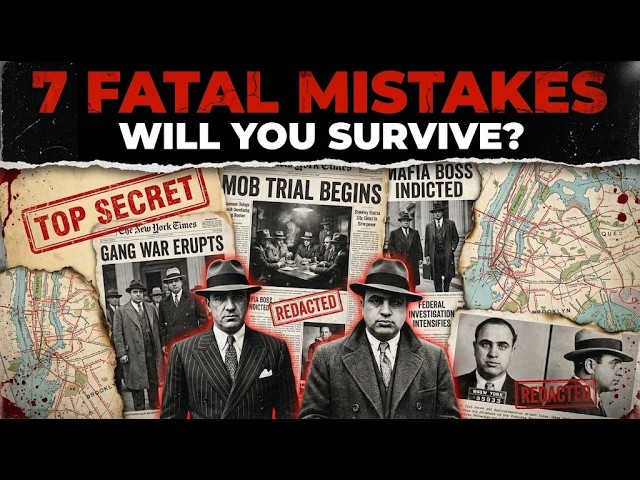
This is the untold story of the 7 unwritten rules of the Five Families. From the fatal mistake of Tommy DeStefano to the public testimony of Joseph Valachi, we decode the categories of speech that the historical record identifies as violations severe enough to warrant death.
No textbook covers this level of structural discipline. We reconstruct these rules using FBI wiretaps, trial transcripts, and the testimony of men like Sammy 'The Bull' Gravano and Henry Hill.
In the world of Cosa Nostra, language was not communication—it was currency. And every word spent carried a lethal risk.
⚠️ HISTORICAL DISCLAIMER: This documentary reconstructs events from historical records, court documents, oral histories, and investigative journalism. Some dialogue and scenes are dramatized based on documented accounts. Sources listed below.
📚 Sources & Further Reading:
→ The Five Families (Selwyn Raab)
→ The Valachi Papers (Peter Maas)
→ Underboss: Sammy the Bull Gravano's Story of Life in the Mafia (Peter Maas)
→ Wiseguy (Nicholas Pileggi)
→ FBI Vault: La Cosa Nostra Investigative Records (https://vault.fbi.gov/)
🏷️ Hashtags:
#TrueHistory #Documentary #Mafia #TrueCrime #CosaNostra #HistoryChannel #FiveFamilies
-~-~~-~~~-~~-~--~-~~-~~~-~~-~--~-~~-~~~-~~-~-
🕵️♂️ Global Mafia Universe - https://www.youtube.com/@GlobalMafiaUniverse?sub_confirmation=1
-~-~~-~~~-~~-~--~-~~-~~~-~~-~--~-~~-~~~-~~-~-
⚠️ Content Disclaimer
This video is created solely for educational and informational purposes.
We do not glorify, promote, or encourage any kind of criminal behavior or illegal activity.
All visuals, audio, and materials in this video are either:
✔️ AI-generated, or
✔️ Sourced from royalty-free platforms under valid licenses.
Some images, characters, and scenes have been created using artificial intelligence and are not depictions of real people or events.
No copyrighted material belonging to others has been used without permission.
❤️ Support the Channel
If you enjoy learning about true crime stories, history, and real-life mysteries, please:
✔️ Like the video
✔️ Subscribe to the channel
✔️ Share your thoughts in the comments
Your support helps us continue producing valuable and well-researched content!
🔧 Tools I Use to Grow This Channel
I personally use vidIQ to optimize my videos, find trending keywords, and grow faster on YouTube.
👉 Try it for free and experience the difference.
💼 Contact & Copyright Notice
If you believe any part of this video infringes on your rights, please contact me directly via YouTube.
I fully respect copyright laws and will respond promptly and professionally.
-~-~~-~~~-~~-~--~-~~-~~~-~~-~--~-~~-~~~-~~-~-
-
Show More Show Less View Video Transcript
0:00
in this life what you don't say keeps you breathing
0:08
Tommy De Stefano talked too much
0:10
that was the consensus anyway
0:13
among the crew that worked under Carmine Far t E E
0:17
Co in the Bronx during the late 1960s
0:20
Tommy was known for two things
0:23
he could move stolen merchandise
0:25
faster than anyone in the borough
0:27
and he could not under any circumstances
0:31
keep his mouth shut on a Tuesday in March of 1969
0:36
Tommy sat in a social club on Arthur Avenue
0:40
and made a comment about the boss's wife
0:42
the specifics vary depending on who's telling the story
0:47
one version says he called her a name
0:50
another says he simply mentioned her by her first name
0:54
in a room full of associates
0:57
a third version
0:58
from an FBI informant's report filed six weeks later
1:03
suggests he made a joke about her spending habits
1:06
Tommy De Stefano was found in the trunk of a Buick
1:10
Skylark 11 days later
1:12
he had been dead for most of those 11 days
1:16
the events are real the words
1:18
we've done our best to stay true to the record
1:22
where the record is silent
1:24
we've used informed interpretation
1:27
what happened to Tommy wasn't unusual
1:29
it wasn't even particularly memorable
1:32
by the standards of the five families
1:34
during that era men disappeared regularly
1:38
bodies surfaced or didn't
1:40
what makes Tommy's case instructive is the reason
1:43
not a betrayal not a theft
1:46
not a power play a sentence
1:48
maybe less than a sentence
1:50
a few words arranged in the wrong order
1:53
directed at the wrong subject
1:55
overheard by the wrong ears
1:58
The American Mafia operated for decades
2:01
on a set of rules that were never printed
2:04
never posted never formally taught
2:07
you absorbed them you watched
2:09
you paid attention to which men were still breathing
2:12
and which men were not
2:14
and you reverse engineered the difference
2:17
the men who survived
2:18
understood that language was not communication
2:22
language was currency every word spent carried risk
2:26
every silence purchased safety
2:29
this is a documentary about seven of those rules
2:33
seven categories of speech that the historical record
2:37
trial transcripts FBI wiretaps
2:41
informant debriefings
2:43
and the testimony of cooperating witnesses
2:47
identifies as violations
2:49
severe enough to warrant punishment
2:51
up to and including death
2:54
they were never numbered they were never listed
2:57
but they were absolute
2:58
let's start with the most fundamental
3:01
you never acknowledge that the thing exists
3:04
it sounds simple in practice
3:06
it was the most commonly
3:07
violated rule in the history of organized crime
3:11
and the one that carried the most consistent penalty
3:15
omerta o m
3:16
e r
3:17
t a h the code of silence
3:20
every school child who seen a gangster movie knows the
3:23
word what fewer people understand
3:26
is the scope of what it covered
3:28
Omerta didn't just mean you don't talk to the police
3:31
that was the obvious layer
3:33
the surface rule
3:35
that even street level associates understood
3:38
on their first day the deeper application was this
3:42
you never use the vocabulary
3:44
you never say the words Mafia
3:47
you never say Cosa Nostra
3:49
you never say this thing of ours
3:52
unless you are in a room
3:53
where every man present has been formally inducted
3:57
and even then you exercise judgment
4:00
you never refer to the organization as an organization
4:04
you don't describe its structure
4:07
you don't name its hierarchy
4:09
you behave in every conversation
4:12
as though the thing you belong to does not exist
4:15
as a thing at all
4:17
Joseph Valachi broke this rule on national television
4:20
in 1963 he sat before the Mcclellan Committee
4:25
looked into the cameras and said the words Cosa Nostra
4:30
in a public forum for the first time
4:32
in the organization's American history
4:35
he described the structure
4:37
he named the families he drew the chart
4:41
Valachi was already in federal custody
4:44
when he testified he'd killed a fellow inmate
4:47
he believed had been sent to murder him
4:50
his cooperation was born from survival
4:53
not conscience
4:55
but the reaction from inside the families
4:58
tells you everything about the weight of this rule
5:01
according to investigators at the time
5:04
Vito Genovese Valachi's own boss
5:07
had placed a contract on Valachi's life
5:10
before the testimony began
5:12
the contract wasn't for cooperating with the government
5:16
Genovese expected that
5:18
the contract was for the specific act
5:21
of naming the thing of saying those words
5:24
of acknowledging structure and hierarchy out loud
5:28
in a room full of civilians and cameras
5:31
court documents from later trials
5:34
indicate that multiple family leaders
5:36
used the Valachi testimony
5:38
as a cautionary tale for decades afterward
5:42
according to the testimony of Sammy the Bull Gravie
5:46
a H no given
5:48
during John Gotti's 1992 trial
5:51
new members were told about Valachi
5:53
the way children are told about the boogeyman
5:56
you don't say the name you don't describe the shape
6:00
you don't confirm the existence
6:02
a wiretap from 1979 admitted as evidence
6:07
during the commission trial of 1985
6:10
captured a conversation between two Gambino associates
6:14
discussing a potential recruit
6:16
one associate asks
6:18
whether the recruit knows what this is
6:21
the other responds he knows enough
6:24
he doesn't need to know what to call it
6:26
the first associate says good
6:29
the minute he starts using words
6:31
he's a problem using words
6:34
that was the phrase not specific words
6:37
not banned vocabulary just using words
6:41
the act of articulating what should remain formless
6:45
now consider what this meant in daily practice
6:48
you're a made member you interact with your wife
6:51
your children your neighbors
6:53
your legitimate business contacts
6:55
anyone of them might ask a direct question
6:58
what do you really do who do you work for
7:01
is it true what they say
7:04
the correct answer was always some variation of nothing
7:07
you deflect
7:08
you change the subject you make a joke
7:11
you deny what you never do is engage with the premise
7:16
you don't say I can't talk about that
7:18
because even that sentence confirms there is a
7:21
that to talk about Henry Hill
7:24
whose cooperation with the FBI
7:26
formed the basis of Nicholas Pileggi's book
7:29
Wise Guy describe this dynamic in his debriefings
7:34
according to hill there were men in the Luke's family
7:38
who had been married for 20
7:40
30 years and their wives
7:42
operated on the understanding that certain questions
7:46
were simply not asked
7:48
not because the answers were dangerous
7:51
because the questions themselves were violations
7:55
asking meant acknowledging
7:57
acknowledging meant the thing had shape
8:00
and the thing was never supposed to have shape
8:03
that was the first rule
8:05
the foundation beneath every other rule
8:08
the second rule is closely related
8:10
but distinct in its application
8:12
and in some ways it was even more dangerous to violate
8:16
because it involved people who were already inside
8:20
you never question a direct order from your captain
8:23
or your boss not the order itself
8:27
not the reasoning behind it
8:29
not the timing nothing
8:31
this requires some context
8:33
about how the hierarchy actually functioned
8:36
in the traditional five family structure
8:39
a soldier a made member at the operational level
8:43
reported to a caporegime commonly shortened to capo
8:48
the capo reported to the underboss
8:50
or directly to the boss
8:52
depending on the family's internal structure
8:55
at any given time instructions flowed downward
8:59
obedience flowed upward and the critical mechanism
9:03
that held this vertical chain together
9:06
was the absolute prohibition on questioning
9:09
the distinction matters you could ask for clarification
9:14
you could say when or where
9:16
you could ask for operational details
9:19
necessary to execute the task
9:21
what you could never say in any formulation was why
9:25
why are we doing this why him
9:28
why now why not someone else
9:30
any form of why directed at an order
9:33
was interpreted as one of two things
9:36
either you were questioning the boss's judgment
9:38
which was an insult
9:40
or you were gathering information you didn't need
9:43
which meant you were either planning to betray
9:46
or you were stupid enough to want details
9:49
that could be used against you later
9:52
neither interpretation ended well
9:55
there's a conversation captured on an FBI wiretap
9:59
in 1983 two Colombo family members are in a car
10:05
the driver has just
10:06
received instructions to deliver a package
10:09
to an address in Bay Ridge Brooklyn
10:12
he doesn't know what's in the package
10:14
he says to the passenger his senior in the family
10:18
can I ask what this is about
10:20
there's a pause on the tape
10:22
almost four seconds of silence
10:25
then the passenger says
10:27
you can drive or you can get out of the car
10:30
according to the FBI case file
10:33
the driver drove he delivered the package
10:36
he never asked another question
10:38
the passenger later told another associate
10:42
also captured on a separate wiretap
10:45
that the driver almost had a problem that day almost
10:50
had a problem was not a figure of speech
10:53
Sammy Gravano addressed this directly
10:56
in his cooperation testimony
10:58
he described an incident in the early 1980s
11:02
when a soldier in the Gambino family
11:05
questioned John Gotti's decision to move
11:08
against a particular target
11:10
the soldier didn't refuse the order
11:12
he didn't challenge it publicly
11:15
he simply asked
11:16
in what he apparently believed was a private moment
11:19
with a fellow soldier whether the timing was right
11:23
according to Gravano Gottie heard about the question
11:27
within 48 hours the soldier was called to a meeting
11:32
he was not physically harmed
11:34
but he was demoted in every practical sense
11:37
his earning operations were reassigned
11:40
his crew was broken up
11:42
and he was effectively frozen out for over a year
11:45
he was in Gravano's words
11:47
put on the shelf
11:49
the man had been a loyal earner for more than a decade
11:53
one question one sentence
11:56
one momentary lapse in the discipline of silence
11:59
and his career inside the family was functionally over
12:03
he was lucky by the standards of Cosa Nostra
12:07
others who questioned orders
12:09
didn't survive the conversation
12:12
but there was something that ran
12:14
even deeper than questioning orders
12:17
something that touched the most volatile nerve
12:20
in the entire system
12:22
you never disrespect a made man in front of others
12:26
especially not in front of anyone beneath him
12:29
in the hierarchy
12:31
this is the rule that killed more men than any other
12:34
not because it was the most serious violation
12:37
in an absolute sense
12:39
but because it was the one most frequently committed
12:42
by men who didn't fully understand what respect meant
12:46
in this context
12:48
respect in the civilian world is earned
12:51
it's based on behaviour achievement character
12:55
you respect someone
12:56
because they've demonstrated something worthy of
12:59
respect in Cosa Nostra
13:02
respect was structural it was attached to the position
13:06
not the person
13:08
you respected a made man because he was made period
13:12
you respected a capo because he was a capo
13:16
you respected the boss because he was the boss
13:19
whether the man holding the title was intelligent
13:22
or stupid brave or cowardly
13:25
generous or cruel
13:27
none of that modified the respect owed to the position
13:31
this meant that any public slight
13:33
any comment gesture
13:35
tone of voice or physical act
13:37
that could be interpreted as diminishing
13:40
a made man's status in front of witnesses
13:43
was a direct attack on the structure itself
13:47
the emphasis on in front of others was critical
13:50
some families tolerated private disagreements
13:53
between men of equal rank
13:56
provided those disagreements stayed private
13:59
and were resolved quickly
14:01
what no family tolerated ever was public humiliation
14:06
there's a well documented case from the Lukies family
14:09
in the mid 1970s two soldiers
14:13
both made both roughly equal in standing
14:17
got into an argument at a card game
14:20
the argument was about money
14:22
which most arguments were
14:24
one of them in the heat of the moment
14:26
called the other a name
14:28
witnesses reported the specific word used
14:31
but the word itself almost didn't matter
14:34
what mattered was that eight other men heard it
14:37
the man who was insulted didn't react immediately
14:41
he went to his capo
14:43
the capo brought it to the underboss
14:45
the underboss consulted the boss
14:48
within a week a sit down was arranged
14:51
the man who had spoken was required to apologize
14:55
formally
14:55
in front of the same men who had witnessed the insult
14:59
he was also required to make a financial payment
15:02
a tribute to the man he defended
15:05
he got off easy the reason he survived
15:09
was that both men were of equal rank
15:12
had the insulted man been a carpo
15:14
or had the insult occurred in front of associates
15:17
or civilians rather than fellow soldiers
15:21
the outcome would likely have been different
15:24
Anthony Gaspipe Caso the Lucchese underboss
15:28
who later became a government cooperator
15:31
described this dynamic in his debriefings
15:34
according to Kaso
15:36
a made man could absorb an insult from an equal
15:40
he couldn't absorb it from someone beneath him
15:43
and a boss could absorb an insult from no one
15:47
Casto described incidents where men were killed
15:50
for nothing more than a perceived tone of voice
15:53
not the content of what was said
15:56
the way it was said
15:57
a sentence delivered with insufficient deference
16:01
a response that sounded dismissive
16:04
an answer that came too quickly
16:07
suggesting the speaker
16:09
hadn't properly considered the weight of the question
16:12
according to certain accounts
16:14
from cooperating witnesses in multiple family trials
16:18
made men developed an almost pathological sensitivity
16:22
to being disrespected
16:25
some of this was performative
16:27
they enforced respect aggressively
16:30
because doing so reinforced their position
16:33
but some of it was genuine
16:35
in a world
16:36
where your survival depended on your perceived status
16:40
any erosion of that status was an existential threat
16:44
the fourth rule operated differently
16:48
it wasn't about what you said to a person
16:50
it was about what you said about a person
16:53
who wasn't in the room
16:55
you never talk about another family's business ever
16:59
the five families Gambino Genovese Luchese
17:03
Colombo Bonanno
17:05
operated as separate entities
17:07
with overlapping territories
17:09
shared interests and occasional mutual enemies
17:13
their coexistence
17:14
depended on a series of formal and informal agreements
17:19
most of which were adjudicated through the commission
17:22
the governing body
17:23
established by Charles Lucky Luciano in 1931
17:28
one of the most important informal agreements was this
17:32
you don't discuss another family's internal affairs
17:36
not their personal decisions
17:39
not their leadership disputes
17:41
not their business operations
17:44
not their problems
17:45
if the Colombo family was dealing with an
17:48
internal conflict
17:50
members of the Gambino family were expected to behave
17:54
as though they were entirely unaware of it
17:57
even if the conflict was common knowledge
18:00
on every street corner in Brooklyn
18:03
the reason was practical
18:05
commentary on another family's business
18:08
could be interpreted as intelligence gathering
18:11
and intelligence gathering
18:13
could be interpreted as preparation
18:15
for a move against that family
18:18
even innocent gossip
18:20
could trigger a diplomatic crisis between families
18:23
that might escalate into something far worse
18:26
but there was a more personal dimension too
18:30
talking about another family's problems
18:32
implied that your own family was somehow
18:35
better managed more disciplined
18:38
more stable that implication was in itself
18:43
a form of disrespect
18:44
directed at the other family's leadership
18:47
there's a case from the early 1980s
18:51
that illustrates this
18:52
the exact details are difficult to confirm
18:56
independently
18:57
but it appears in multiple cooperator debriefings
19:01
and was referenced during the Mafia commission trial
19:05
a Genovese soldier during a dinner conversation
19:09
with members of his own crew
19:11
made a comment about the Banano
19:13
family's leadership situation
19:15
at the time the Banano family was in disarray
19:19
following the Donny Brasco infiltration
19:22
the FBI operation in which Agent Joseph Pistone
19:26
had spent six years embedded inside the family
19:30
the soldier's comment according to the accounts
19:34
was mild something along the lines of
19:37
the bananos having let a fed walk right in
19:41
it wasn't said maliciously
19:43
it was said the way anyone might observe
19:45
an obvious fact
19:47
word reached the Banano family within days
19:50
and word reached the Genovese leadership
19:53
within hours of that
19:55
the soldier was brought before his capo and told
19:59
in terms that left no room for interpretation
20:03
that his observation however accurate
20:05
had created a problem
20:07
the Banano family was demanding an explanation
20:11
the Genovese leadership was furious
20:15
not because the soldier was wrong
20:17
but because he had forced them into a diplomatic
20:20
position they didn't want to be in
20:22
the soldier apologized through channels
20:26
the situation was resolved without violence but
20:29
his standing within the family
20:31
was permanently diminished
20:33
he had demonstrated poor judgment
20:35
and in Cosa Nostra
20:37
poor judgment was a chronic condition
20:40
once displayed it was never forgotten
20:43
now the fifth thing you never say
20:46
this one is different from the others
20:48
because it wasn't always a direct statement
20:51
sometimes it was a question
20:53
sometimes it was a suggestion
20:56
sometimes
20:56
it was just a look that lasted a beat too long
21:00
you never express interest in a made man's wife
21:03
girlfriend daughter
21:05
or any woman associated with him
21:08
the exact sequence of what happened next
21:10
in most of these cases accounts differ
21:14
but the pattern is remarkably consistent
21:17
across families across decades
21:20
across the entire geography of the American Mafia
21:24
a comment about a made man's wife
21:26
a compliment that crossed some invisible line
21:30
an extended conversation at a social event
21:33
a rumor that may or may not have been true
21:37
and then someone disappeared
21:39
the rule extended beyond romantic or sexual interest
21:44
it covered any
21:45
interaction that could be perceived as overly familiar
21:49
you didn't call a maid man's wife by her first name
21:52
unless she specifically invited you to
21:55
you didn't engage her in extended private conversation
22:00
you didn't comment on her appearance
22:02
you didn't offer to help her with anything
22:04
unless the maid man himself asked you to
22:07
this was in part an extension of the respect rule
22:12
a made man's family was an extension of his person
22:16
showing interest in his wife was equivalent to
22:19
challenging his masculinity
22:21
his authority and his ability to protect what was his
22:26
in a culture built on honor codes
22:28
that traced their origins to rural Sicily
22:32
this was among the most ancient
22:34
and most violently enforced prohibitions
22:37
court testimony from the trial of John Gotti
22:41
includes references to at least two incidents
22:44
where men were killed for perceived romantic advances
22:48
toward the wives of made members
22:50
in one case
22:52
the advance consisted of offering to drive a
22:55
Carpo's wife home from a family gathering
22:58
the offer was made in front of other men
23:01
it was interpreted as a suggestion that the
23:04
Carpo
23:05
could not provide for his own wife's transportation
23:09
the man who made the offer was an associate
23:12
not a made member he was found dead within the month
23:16
now it's important to acknowledge something here
23:20
the enforcement of these rules
23:21
was not always proportional
23:24
not always rational not always consistent
23:27
some men broke these rules and suffered nothing
23:30
others followed every rule perfectly
23:33
and were killed anyway
23:35
for reasons that had nothing to do with protocol
23:38
and everything to do with money
23:40
territory or personal grudges
23:43
the rules existed as a framework
23:46
but the framework was applied by men who were
23:49
in the end criminals
23:51
fairness was not a design feature of the system
23:54
but the rules mattered they mattered
23:57
because they gave the violence a structure
24:00
they gave the hierarchy a logic
24:02
and they gave every man in the organization
24:05
a set of standards against which
24:07
he could measure his own survival odds
24:10
which brings us to the 6th rule
24:13
this one was less about specific words
24:16
and more about a pattern of behaviour
24:18
that could be expressed verbally
24:21
you never openly display wealth
24:23
that exceeds what your position should earn
24:26
this was John Gotti's great sin
24:29
not his only sin
24:30
but the one that other bosses pointed to
24:33
most frequently when explaining
24:35
why they considered him reckless and dangerous
24:38
the traditional Mafia boss
24:41
in the model established by men like Carlo Gambino
24:44
and Vincent the chin
24:46
Gigante lived modestly or at least appeared to
24:51
gambino died in 1976 in a modest house in Brooklyn
24:56
giant wandered the streets of Greenwich Village
24:59
in a bathrobe and slippers
25:01
feigning mental illness
25:03
for the better part of two decades
25:06
the appearance of modesty served two purposes
25:10
it avoided attracting law enforcement attention
25:14
and it prevented resentment from soldiers
25:16
and associates who were earning less
25:19
when Gotti took control of the Gambino family in 1985
25:25
following the murder of Paul Castellano
25:28
outside Spark's Steakhouse in Manhattan
25:31
he violated this principle immediately and continuously
25:36
the custom tailored suits
25:38
the limousines
25:39
the reserved tables at the best restaurants
25:42
the media appearances the nickname the Dapper Don
25:47
wasn't just a newspaper invention
25:49
it was a description of a deliberate strategy
25:53
Gotty wanted to be seen he wanted to be known
25:57
he wanted the world to understand his power
26:00
within the families
26:01
this was viewed as something close to insanity
26:04
according to Gravano's testimony
26:07
multiple bosses and underbosses from other families
26:12
expressed private concerns about Gotti's visibility
26:16
not because they cared about his wardrobe
26:19
because his visibility
26:21
attracted exactly the kind of federal attention
26:25
that endangered everyone
26:27
every headline about John Gotti
26:29
was an invitation
26:30
for the FBI to allocate more resources
26:33
recruit more informants install more wiretaps
26:38
but there was a more immediate
26:40
street level dimension to this rule
26:43
if a soldier was seen
26:44
driving a car that was too expensive
26:47
wearing clothes that were too fine
26:50
living in a house that was too large
26:52
relative to what his captain and his boss could see
26:56
it raised a question where is the money coming from
27:00
and more importantly is he holding back
27:03
every made member was required to kick earnings upward
27:07
a percentage went to the Carpo
27:09
a percentage of that went to the boss
27:12
the exact percentages varied by family and era
27:16
but the principle was universal
27:19
if a soldier appeared to be living beyond
27:21
what his known earnings should allow
27:24
it implied
27:25
either that he was earning more than he was reporting
27:28
which was theft from the family
27:31
or that he had a source of income
27:33
his superiors didn't know about
27:35
and which was a security risk
27:37
either way
27:38
the visible display of wealth was a declaration
27:42
and in Cosa Nostra declarations were dangerous
27:46
there were men who earned enormous sums
27:48
and lived in two bedroom apartments
27:51
they drove ordinary cars they wore ordinary clothes
27:56
they put their money in places nobody could see it
27:59
these were the men who lasted
28:01
there were men who bought the Cadillac
28:03
wore the pinky ring and tipped $100 at every restaurant
28:08
some of them lasted too
28:10
if they had enough power to back up the display
28:13
but
28:13
many of them attracted exactly the kind of attention
28:17
from law enforcement and from their own leadership
28:20
that shortened their careers considerably
28:23
and finally the seventh rule
28:27
the one that sits beneath all the others
28:29
the one that most men didn't learn
28:32
until it was too late you never talk about the future
28:35
this sounds abstract it requires explanation
28:39
in the legitimate world ambition is a virtue
28:43
you talk about your goals
28:45
you describe where you want to be in five years
28:48
you identify the position above yours
28:51
and you make it known that you're working toward it
28:54
that's how careers advance
28:56
in Cosa Nostra
28:57
expressing ambition was expressing a threat
29:01
if you're a soldier and you say
29:03
even casually even to a friend
29:06
even after a few drinks
29:08
that you'd like to be a capo someday
29:10
you've just told every capo in the family
29:14
that you're looking at their position
29:16
if you say you think the family could be run better
29:19
you've just told the boss that
29:21
you're evaluating his performance
29:24
if you say the old ways are changing
29:27
and the family needs to adapt
29:29
you've just told the entire leadership
29:31
that you consider them outdated
29:34
these were not hypothetical scenarios
29:37
the FBI wiretap archives
29:40
contain dozens of conversations
29:43
in which men express exactly these sentiments
29:47
and are immediately cautioned
29:48
by whoever they are speaking to
29:51
don't talk like that you don't say things like that
29:55
keep that to yourself
29:57
the caution wasn't about disagreeing with the sentiment
30:00
sometimes the listener agreed completely
30:03
the caution was about the act of speaking
30:06
ambition out loud in a world
30:09
where leadership transitions happened through violence
30:12
where the primary mechanism for promotion
30:15
was the elimination of the person above you
30:18
any statement about the future was potentially
30:21
a preview of a murder plot
30:24
Anthony Tony Duck's Corallo
30:27
the longtime boss of the Lucchese family
30:30
was captured on a wiretap in the mid 1980s
30:34
discussing a young soldier
30:36
who had expressed interest in eventually
30:38
running his own crew Corallo's response
30:42
according to the transcript
30:44
admitted during the commission trial
30:46
was measured but unmistakable
30:49
he said
30:49
the young man talks about tomorrow like he owns it
30:53
and then he added nobody owns tomorrow
30:57
the young man was not killed
30:59
but according to later cooperator testimony
31:02
his progress within the family was deliberately stalled
31:06
for years he was kept at the soldier level
31:09
given modest earning opportunities
31:12
and denied the crew leadership
31:14
he had expressed interest in
31:16
specifically because he had expressed interest in it
31:20
the paradox was total the only way to advance
31:24
was to never appear to want advancement
31:27
the only way to earn trust
31:29
was to seem content with your current position
31:32
the men who rose highest were
31:34
the men
31:34
who appeared to have no interest in rising at all
31:38
until the moment arrived
31:40
and they moved with speed and certainty
31:42
that suggested they'd been preparing all along
31:46
they just never talked about it
31:48
that was the System 7 rules
31:51
none of them written all of them enforced
31:54
not by courts or committees or formal review boards
31:58
but by the men
31:59
who understood that survival and speech existed
32:02
in inverse proportion the less you said
32:06
the longer you lived not always
32:08
there were exceptions
32:10
there were men who talked constantly
32:12
and survived decades
32:14
there were men who said nothing and died young
32:17
the rules were guidelines
32:19
applied by flawed men in a flawed system
32:22
but the guidelines held more often than not
32:26
for the better part of 60 years
32:28
across five families in one city
32:31
the American Mafia's power was built on money
32:34
its structure was built on loyalty
32:37
but its longevity
32:39
the thing that allowed it to persist through wars
32:42
investigations betrayals and generational change
32:47
was built on discipline
32:49
and the most fundamental expression of that discipline
32:52
was the discipline of the mouth
32:55
what you didn't say defined you more than what you did
32:58
the files reflect that the trial transcripts confirm it
33:03
the wiretap recordings prove it
33:05
and the men who broke these rules
33:08
the ones who talked too much
33:09
questioned too loudly
33:11
displayed too openly or dreamed too visibly
33:15
those men became the evidence
33:17
their silence in the end was permanent
33:21
if this story stayed with you you know what to do
Arts & Entertainment