Up next in 10


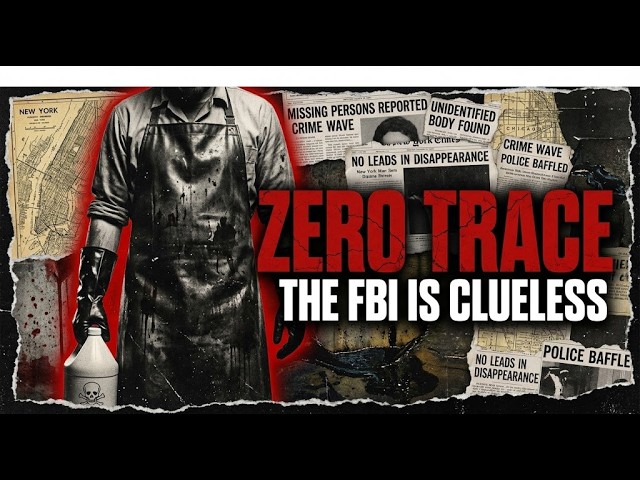
November 14, 1985. A Brooklyn social club. By sunrise, every trace of a murder will be erased. This wasn't a crime scene—it was the opposite.
The American Mafia didn't just master the hit; they mastered the disappearance. While the FBI advanced in forensic science, the Mob developed a clinical, administrative process for making evidence invisible. From the 'No Body' protocol of the Gambino family to the industrial-grade cleaners of the Lucchese, this is the untold history of organized crime's answer to the crime lab.
But as DNA technology and high-level cooperators like Sammy 'The Bull' Gravano emerged, the system began to unravel. This is the story of the men who handled the bleach, the plastic, and the secrets of the Pine Barrens.
This documentary reconstructs the secret infrastructure that kept the Mafia untouchable for decades. No textbook covers this level of procedural erasure.
It is a chilling reminder that in the world of the Mob, the most dangerous weapon wasn't a gun—it was a bottle of bleach and the discipline to use it.
⚠️ HISTORICAL DISCLAIMER: This documentary reconstructs events from historical records, court documents, oral histories, and investigative journalism. Some dialogue and scenes are dramatized based on documented accounts. Sources listed below.
📚 Sources & Further Reading:
→ Underboss: Sammy the Bull Gravano's Story of Life in the Mafia (Peter Maas)
→ Five Families: The Rise, Decline, and Resurgence of America's Most Powerful Mafia Empires (Selwyn Raab)
→ FBI Records: The Ravenite Social Club Surveillance Transcripts (FBI Vault)
→ The Gotti Tapes: FBI Electronic Surveillance (Department of Justice)
→ Murder Machine: A True Story of Murder, Madness, and the Mafia (Gene Mustain)
🏷️ Hashtags:
#TrueHistory #Documentary #Mafia #TrueCrime #SammyTheBull #FBI #Forensics #ColdCase
-~-~~-~~~-~~-~--~-~~-~~~-~~-~--~-~~-~~~-~~-~-
🕵️♂️ Global Mafia Universe - https://www.youtube.com/@GlobalMafiaUniverse?sub_confirmation=1
-~-~~-~~~-~~-~--~-~~-~~~-~~-~--~-~~-~~~-~~-~-
⚠️ Content Disclaimer
This video is created solely for educational and informational purposes.
We do not glorify, promote, or encourage any kind of criminal behavior or illegal activity.
All visuals, audio, and materials in this video are either:
✔️ AI-generated, or
✔️ Sourced from royalty-free platforms under valid licenses.
Some images, characters, and scenes have been created using artificial intelligence and are not depictions of real people or events.
No copyrighted material belonging to others has been used without permission.
❤️ Support the Channel
If you enjoy learning about true crime stories, history, and real-life mysteries, please:
✔️ Like the video
✔️ Subscribe to the channel
✔️ Share your thoughts in the comments
Your support helps us continue producing valuable and well-researched content!
🔧 Tools I Use to Grow This Channel
I personally use vidIQ to optimize my videos, find trending keywords, and grow faster on YouTube.
👉 Try it for free and experience the difference.
💼 Contact & Copyright Notice
If you believe any part of this video infringes on your rights, please contact me directly via YouTube.
I fully respect copyright laws and will respond promptly and professionally.
-~-~~-~~~-~~-~--~-~~-~~~-~~-~--~-~~-~~~-~~-~-
-
Show More Show Less View Video Transcript
0:08
November 14th, 1985.
0:11
A social club in [music] Brooklyn, 2:00
0:13
in the morning. The floor is concrete. A
0:16
single overhead bulb bear casting hard
0:19
shadows. There's a body on the ground,
0:22
face down, arms at wrong angles, blood
0:26
pooling outward in a shape that looks
0:28
almost deliberate, like someone poured
0:30
it from a bucket. Two men stand near the
0:33
door. They're not looking at the body.
0:35
They're looking at their watches. A
0:38
third man arrives 11 minutes later. He
0:41
doesn't knock. The door is unlocked
0:43
because it was always going to be
0:45
unlocked. He carries two duffel bags and
0:48
a 5gallon bucket. His shoes are old. His
0:52
gloves are new. He says nothing to the
0:54
two men at the door. They say nothing to
0:56
him. Then they leave. Within 4 hours,
1:00
every trace of what happened in that
1:01
room will be gone. The blood, the shell
1:05
casings, the body, the smell. By
1:08
sunrise, the only evidence that a man
1:11
died here tonight will be his absence
1:13
from breakfast. This is not a crime
1:15
scene investigation.
1:17
This is the opposite. This is organized
1:20
crimes answer to forensic science and it
1:23
worked for decades. The events depicted
1:26
in this documentary are based on court
1:29
testimony, FBI surveillance records and
1:32
firsthand accounts from cooperating
1:35
witnesses. Some conversations have been
1:38
reconstructed where the record goes
1:41
silent. We've used informed
1:43
interpretation.
1:45
The names, the methods, the protocols,
1:48
those are drawn directly from the
1:50
evidence. The American Mafia didn't
1:53
invent murder. What it invented was a
1:57
system for making murder
1:59
administratively invisible. A process, a
2:02
chain of custody in reverse. Instead of
2:06
preserving evidence, every [music] step
2:08
was designed to destroy it. Instead of
2:11
documenting what happened, the goal was
2:13
to ensure that no documentation could
2:16
ever exist. The men who did this work
2:19
had a variety of names. Some crews
2:22
called them cleaners. Others used the
2:25
Italian. Some families didn't call them
2:28
anything at all because naming a
2:30
function gives investigators something
2:33
to search for. But every organized crime
2:36
family operating in the United States
2:39
from the 1950s through the 1990s
2:43
had access to someone who performed this
2:46
role. It wasn't optional. It was
2:49
infrastructure. To understand how the
2:52
system worked, you have to understand
2:54
why it existed in the first place. And
2:57
that starts with a problem that every
2:59
criminal organization eventually faces.
3:03
Murder creates evidence. That sounds
3:05
obvious, but the implications are
3:08
enormous. A single body generates
3:11
physical evidence, biological evidence,
3:14
ballistic evidence, testimonial
3:17
evidence, circumstantial evidence. A
3:21
corpse is a library of information. It
3:24
tells investigators the caliber of the
3:26
weapon, the approximate time of death,
3:30
the angle of entry. Defensive wounds
3:33
tell a story about the last seconds.
3:36
Stomach contents tell you what a man ate
3:39
and when. Lividity tells you if the body
3:42
was moved. Rigor tells you how long it's
3:45
been. The FBI understood this. Local law
3:49
enforcement understood this. And by the
3:52
late 1960s,
3:53
forensic science was advancing fast
3:56
enough that even a carefully planned
3:58
homicide could unravel from a single
4:01
hair, a single fiber, a single partial
4:05
fingerprint left on the wrong surface.
4:08
The mafia understood it, too. According
4:11
to former Banano family associate
4:14
Salvat,
4:16
who cooperated with federal
4:18
investigators in 1993,
4:21
the families began treating body
4:23
disposal as a specialized skill sometime
4:26
in the mid 1960s.
4:29
Before that, disposal was often left to
4:32
the shooters themselves. The results
4:35
were inconsistent.
4:37
bodies turned up in rivers, in trunks,
4:40
in vacant lots. Each discovery gave law
4:43
enforcement another thread to pull.
4:46
Vitail [music] described it in clinical
4:48
terms during his debriefing. He said the
4:51
old way was sloppy. Guys would panic.
4:54
[music] They'd leave the car running.
4:56
They'd forget about the shoes. One time,
4:59
he said a crew left a body in a dumpster
5:01
behind a restaurant that the family
5:03
owned. The connection took investigators
5:07
about 48 hours to make. The new way was
5:10
different. The new way separated the
5:13
killing from the cleaning. Different
5:15
people, different skills, different
5:18
chain of knowledge. The man who pulled
5:20
the trigger didn't know who would handle
5:23
the aftermath. The man who handled the
5:26
aftermath didn't always know who pulled
5:28
the trigger. This wasn't just about
5:31
efficiency. [music]
5:32
It was about legal insulation.
5:35
If no single person possessed complete
5:37
knowledge of the event, no single person
5:40
could deliver complete testimony. Court
5:43
records from the Gambino family trials
5:46
of the early 1990s
5:48
provide the most detailed picture of how
5:51
a cleaning operation actually
5:53
functioned. Much of this testimony came
5:56
from Sammy the bull graano Sammy Grahno
6:01
who served as under boss to John Goti
6:04
and who in 1991
6:07
made the decision to cooperate with
6:09
federal prosecutors.
6:11
Graano's testimony was not poetic. It
6:15
was procedural. He described the cleanup
6:17
process the way a project manager
6:20
describes a workflow. Step by step, roll
6:24
by roll, tool by tool. Here's how it
6:27
worked. A hit was authorized through the
6:30
chain of command. Boss to under boss to
6:33
captain. Sometimes shorter, sometimes
6:36
longer. But authorization always came
6:39
from above. No freelancing. Freelance
6:42
killings created uncontrolled evidence,
6:45
and uncontrolled evidence was what
6:47
brought families down. Once a hit was
6:50
approved, two parallel tracks activated.
6:53
Track one was the shooting itself. The
6:56
crew selected for the hit, the location,
6:59
the timing, the weapon. Track two was
7:03
the cleanup. And track two began before
7:06
the trigger was ever pulled. The cleanup
7:08
crew, usually two or three men, would be
7:11
notified that a job was coming. [music]
7:14
They wouldn't be told who was being
7:16
killed or why. They'd be given a
7:18
location and an approximate window, a
7:22
night, sometimes a two-day range. Their
7:25
job was to be available and to arrive
7:27
when called. When the shooting was done,
7:30
a call went out, not from the shooters
7:33
directly, through an intermediary. The
7:36
call was brief, a location, nothing
7:39
else. According to Graano, the call was
7:42
sometimes just an address, no names, no
7:45
explanation. If you received the call,
7:48
you knew what it meant. The crew arrived
7:51
with supplies that had been prepared in
7:53
advance. Graano described a standard
7:56
kit. Heavyduty plastic sheeting, the
7:59
kind used for construction available at
8:02
any hardware store, industrial bleach,
8:06
hydrogen peroxide, rubber gloves, duct
8:10
tape, contractor grade garbage bags, a
8:13
mop, clean rags, a change of clothes for
8:17
anyone who'd been present during the
8:18
killing. And the vehicle, the vehicle
8:21
was critical. [music]
8:22
It was never a personal car. It was
8:25
usually a van or a station wagon
8:28
acquired specifically for disposal work,
8:30
stolen, borrowed from a complicit
8:33
dealer, or purchased with cash under a
8:35
false name. The vehicle would be used
8:38
once and [music] then destroyed,
8:40
crushed, burned, or stripped and
8:42
scattered across multiple junkyards. The
8:45
first task upon arrival was assessment.
8:48
How much blood? What surfaces were
8:51
affected? Whether the killing happened
8:53
where planned or whether complications
8:55
had moved the scene, according to
8:58
testimony from multiple cooperators
9:00
[music] across different families, the
9:02
assessment phase took between 3 and 10
9:05
minutes. [music] Speed mattered, but
9:08
accuracy mattered more. Missing a single
9:11
blood stain on a ceiling tile or a
9:14
baseboard could connect a location to a
9:17
missing person months or years later.
9:20
Then the body. The body was wrapped in
9:22
the plastic sheeting [music] tightly.
9:25
Multiple layers sealed with duct tape at
9:28
both ends and the middle. The goal was
9:31
containment. No fluids leaking during
9:33
transport. No biological material
9:36
transferring to the vehicle. Former
9:39
Columbbo family associate Gregory Scarpa
9:42
Jr. Scarpa described this process to
9:45
investigators as clinical. He said it
9:48
was done without conversation. The men
9:51
working knew their roles. One held, one
9:54
wrapped, one taped. Once the body was
9:57
sealed, it was moved to the vehicle.
10:00
This was the highest risk moment. A
10:03
[music] wrapped body being carried from
10:04
a building to a van at 3:00 in the
10:07
morning is the most visible part of the
10:09
entire operation. Crews mitigated this
10:13
risk in several ways. They chose
10:15
locations with private access, garages,
10:18
[music]
10:19
basement, buildings with rear entrances
10:23
that opened directly onto driveways or
10:26
alleys. In cases where the killing
10:28
happened in a less controlled location,
10:31
the body might be placed in a large
10:33
container, a commercial laundry bin, a
10:36
rolled carpet, even a refrigerator box
10:40
to disguise its shape during transport.
10:43
Then the scene. Blood on hard surfaces
10:47
was treated with bleach and hydrogen
10:49
peroxide. The chemical reaction between
10:52
peroxide and hemoglobin [music] destroys
10:55
the molecular structure that allows
10:58
forensic luminol testing to detect blood
11:01
residue. A properly cleaned concrete
11:04
[music] floor will show nothing under
11:06
luminol. Nothing. The chemistry is
11:09
straightforward. The peroxide oxidizes
11:13
the iron in hemoglobin, breaking down
11:16
the catalytic properties that luminol
11:18
relies on to produce its characteristic
11:21
glow. Porous surfaces were more
11:25
complicated. Blood on wood, fabric, or
11:28
unfinished drywall couldn't be
11:30
chemically erased with the same
11:32
reliability.
11:34
In those cases, the material was
11:36
removed. Carpet sections cut out and
11:39
replaced, drywall panels removed and new
11:43
ones installed, wooden floorboards pried
11:46
up if necessary. According to court
11:49
testimony in the 1992 trial of Antony
11:52
Gaspipe, Caso Caro of the Lukis family,
11:57
one cleanup operation involved replacing
12:00
an entire section of lenolum flooring in
12:03
a social club kitchen. The new lenolum
12:06
was the same brand and color, purchased
12:10
from the same store, installed the same
12:13
night. The replaced materials went with
12:15
the body, same disposal route, same
12:19
destination. And where did the bodies
12:22
go? The answer varied by family, by era,
12:25
and by geography. [music] But several
12:28
methods appear consistently across
12:30
decades of testimony and investigation.
12:34
The most common method, according to FBI
12:37
analysis of cooperator testimony
12:40
compiled in a 1997 internal report, was
12:44
burial. Remote locations. Wooded areas
12:48
in New Jersey, Connecticut, [music]
12:50
upstate New York, and parts of
12:53
Pennsylvania served as disposal sites
12:56
for multiple families over multiple
12:58
decades. The Gambino family allegedly
13:02
maintained access to several properties
13:04
in rural areas specifically for this
13:07
purpose. Properties owned through shell
13:10
companies or held in the names of
13:12
associates with no criminal record.
13:15
Burial protocol as described by Graano
13:19
and corroborated by other cooperators
13:22
involved digging deep. 6 ft was a
13:25
minimum. [music] Some crews went deeper.
13:28
The body was placed in the hole still
13:30
wrapped in plastic. Quickite commonly
13:34
known as quicklime or calcium oxide was
13:37
sometimes applied though its
13:39
effectiveness was debated even among the
13:42
men who used it. Quick lime actually
13:45
preserves remains under certain
13:47
conditions rather than destroying them.
13:50
The misconception that it accelerates
13:52
decomposition persisted for decades
13:55
within organized crime circles. Some
13:58
crews knew this, most didn't. The hole
14:02
was filled. The surface was restored to
14:04
match its surroundings. Leaves
14:07
scattered, brush replaced. In some
14:10
cases, concrete was poured over the
14:12
site. Former associate turned informant
14:16
Henry Hill described a burial site
14:18
beneath a garage floor in East [music]
14:20
New York that remained undiscovered for
14:23
over 15 years. But burial had
14:27
limitations. It required travel. It
14:30
required privacy. It required access to
14:33
land. And every burial site was a
14:36
permanent liability, a location that
14:39
could be revealed by any future
14:41
cooperator. [music]
14:42
For this reason, some families preferred
14:45
methods that left no remains at all.
14:48
Cremation was used, though less
14:50
frequently than popular culture
14:52
suggests. Not in funeral home.
14:55
Incrematoriums.
14:56
Those required paperwork identification
15:00
and left traceable records. Instead,
15:03
industrial incinerators, [music] waste
15:06
disposal facilities, pizza ovens,
15:10
enclosed restaurants, anything that
15:12
could sustain temperatures above 1,400°
15:16
F for a sustained period. At that
15:19
temperature, bone calcifies and
15:22
fragments. Teeth. the most durable part
15:25
of the human body crack and crumble.
15:28
What remains is calcium powder and ash,
15:32
indistinguishable from wood, ash, or
15:35
industrial waste. [music]
15:37
Investigators have long suspected that
15:39
certain waste management companies with
15:42
mafia ties facilitated this process,
15:46
though proving it has been
15:47
extraordinarily difficult. The evidence
15:50
by design no longer exists. Then there
15:54
was the ocean. The waters off the New
15:56
Jersey coast, the Long Island Sound, and
16:00
the deeper stretches of the Atlantic
16:02
beyond the continental shelf served as
16:05
disposal sites for an unknown number of
16:07
victims. Bodies waited with chains,
16:11
concrete blocks, or engine parts and
16:13
dropped from boats at night. The depth,
16:16
the salt water, the marine life. Within
16:19
weeks, identification becomes nearly
16:21
impossible. Within months, recovery
16:24
becomes unlikely. Within a year or two,
16:28
what remains is scattered across miles
16:30
of ocean floor. Former Genov's family
16:34
soldier turned cooperator Peter Chio Do
16:39
described participating in two ocean
16:42
disposals during the 1980s. He testified
16:46
that the crew used a commercial fishing
16:49
boat operated by a family associate. The
16:52
trips left from a marina in Sheep's Head
16:55
Bay at approximately 2:00 a.m. They
16:58
traveled [music] roughly 20 nautical
17:00
miles offshore. The entire process from
17:03
departure to return took four to 5
17:06
hours. Kyoto said nobody spoke during
17:09
the ride back, but the body was only
17:12
half the problem. The other half was the
17:16
paper trail, not documents in the
17:18
traditional sense. The mafia didn't file
17:21
reports, but a murdered person leaves
17:24
behind a life, a home, a car, a family
17:28
expecting them for dinner, regular
17:30
appointments, business obligations,
17:33
people who will notice when they stop
17:35
showing up. Managing the absence was as
17:39
important as managing the evidence, and
17:42
it was handled with the same systematic
17:44
approach. In some cases, the
17:47
disappearance was staged to look
17:49
voluntary. [music]
17:50
The victim's car would be driven to an
17:52
airport and left in long-term parking. A
17:56
suitcase would be removed from their
17:59
home. In one case described in court
18:02
records from the Banano family trial of
18:05
1998,
18:06
a crew actually mailed postcards from
18:09
another state in the weeks following a
18:12
killing. postcards written to the
18:14
victim's family, implying he had left
18:17
town voluntarily. The handwriting was
18:20
forged by an associate who had practiced
18:23
from samples found in the victim's home.
18:26
Other times, the disappearance was
18:28
simply allowed to happen without
18:30
explanation. No staged departure, no
18:34
false trail, the person simply vanished.
18:38
This worked best when the victim had a
18:40
reputation for unpredictability,
18:43
a gambler, a drinker, someone whose
18:46
family was already accustomed to sudden
18:48
absences. The assumption of abandonment
18:52
or flight served the same purpose as a
18:55
staged scene. [music] It delayed
18:57
investigation.
18:59
It introduced doubt. And doubt in a
19:02
legal context [music] is almost as good
19:05
as innocence. The families understood
19:07
that the first 72 hours after a
19:10
disappearance were the most critical
19:13
from a law enforcement perspective. If
19:16
no missing person's report was filed
19:18
within that window, [music] the case
19:20
priority dropped. If nobody was found
19:24
within 2 weeks, homicide investigators
19:27
had little to work with. If no forensic
19:30
evidence connected a location to a crime
19:34
within 30 days, the trail was
19:36
functionally cold. The cleaners operated
19:39
with this timeline in mind. Every
19:42
decision, how thoroughly to scrub a
19:45
scene, how far to transport a body, how
19:48
carefully to stage an absence, was
19:51
calibrated against those deadlines.
19:52
[music]
19:53
There's a temptation to describe these
19:56
men as meticulous, and some of them
19:58
were, but the record also shows that the
20:02
system was not infallible. Mistakes were
20:05
made. Crews got lazy. Bodies surfaced.
20:09
In 1989, a hiker in the Pine Baronss of
20:13
New Jersey discovered human remains
20:15
partially exposed by erosion at a site
20:18
that had been used for disposal by
20:20
Gambino family associates. The burial
20:24
had been too shallow. The plastic
20:26
sheeting had degraded faster than
20:29
expected. A hand, still partially
20:32
preserved, was visible from a hiking
20:35
trail roughly [music] 40 yards away. The
20:38
discovery led investigators to three
20:41
additional burial sites within a 2mile
20:44
radius, all connected to the same crew,
20:48
all dating from the mid 1980s. The
20:51
cleanup had been consistent in method
20:54
but inconsistent in execution. Some
20:57
graves were 6 ft deep. One was barely
21:01
three. The 3-FFT grave [music] is the
21:04
one the hiker found. According to
21:06
investigators familiar with the case,
21:09
the difference in depth likely came down
21:11
to something mundane. The crew got tired
21:15
digging in the pine baronss. Sandy soil
21:19
mixed with root systems is physically
21:22
exhausting work. And these weren't
21:24
professional gravediggers. They were men
21:27
who'd been awake since the previous
21:29
evening, who had already completed a
21:31
crime scene cleanup, who had driven 90
21:34
minutes to reach the site, and who
21:36
wanted to go home. Fatigue is not a
21:39
variable that appears in any protocol,
21:42
but it determined the outcome of this
21:45
one. Other failures were more dramatic.
21:48
[music] In the Castalano murder of 1985,
21:52
one of the most public assassinations in
21:54
mafia history, there was no cleanup at
21:57
all. Paul Castellano, boss of the
22:00
Gambino family, was shot outside Spark
22:03
Steakhouse in Midtown Manhattan during
22:06
the evening rush. The killing was
22:09
witnessed by dozens of bystanders. The
22:12
body lay on the sidewalk for hours,
22:15
photographed by news crews. Blood ran
22:18
into the gutter. This was a deliberate
22:20
choice. John [music] Goti, who
22:23
authorized the hit, wanted the killing
22:25
to be visible. It was a message, a
22:28
transfer of power conducted in public.
22:31
In this case, the absence of cleanup was
22:33
itself a communication. The mess was the
22:37
point, but Sparks was the exception.
22:39
[music]
22:40
The vast majority of mafia homicides
22:43
during this era were designed to be
22:45
invisible. And the cleaning crews were
22:48
what made invisibility possible. What
22:51
made these operations effective wasn't
22:53
brilliance. It was discipline. The same
22:57
task performed the same way every time.
23:00
No improvisation,
23:02
no shortcuts, no talking about it
23:05
afterward. The men who did this work
23:07
didn't discuss it with their [music]
23:09
wives. They didn't discuss it with other
23:12
associates outside the immediate crew.
23:15
Some of them, according to cooperator
23:18
testimony, didn't even discuss it with
23:20
each other once the job was complete.
23:23
Graano described [music] a conversation
23:25
with a cleaner whose name he chose not
23:28
to reveal even during cooperation. He
23:31
said the man told him that the secret
23:33
wasn't any particular technique. It was
23:36
patience. Most people, the man said,
23:39
rush. They see the mess and they want it
23:42
gone as fast as possible. But fast is
23:45
how you miss things. Fast is how you
23:48
leave a partial print on a doororknob
23:50
you forgot to wipe. Fast is how you
23:53
overlook the blood splatter pattern on
23:55
the underside of a table [music] you
23:58
never thought to check. The FBI, for its
24:01
part, was not unaware that these
24:03
operations existed. [music] Surveillance
24:06
transcripts from the Rave Social Club,
24:09
the Gambino family headquarters on
24:11
Malbury Street, captured oblique
24:14
references to cleanup work as early as
24:16
1983. [music] But the language was
24:19
coded. Conversations referred to taking
24:22
care of the place or making things right
24:25
or simply finishing. Without context,
24:29
these phrases were meaningless. with
24:32
context. They documented an entire
24:35
infrastructure. The challenge for law
24:37
enforcement was always the same. By the
24:40
time they identified a potential crime
24:43
scene, the scene had already been
24:45
processed. Luminol showed nothing. DNA
24:50
testing, [music] which became available
24:52
in the late 1980s,
24:54
requires biological material to test. If
24:58
the material has been chemically
25:00
destroyed and the surface replaced,
25:03
there is nothing left to swab.
25:05
Investigators adapted. They began
25:08
focusing not on crime scenes but on
25:11
supply chains. Who was buying industrial
25:14
quantities of bleach? Who was purchasing
25:17
heavyduty plastic sheeting? which
25:20
hardware stores near known mafia social
25:23
clubs were selling these items in
25:25
patterns that suggested organized
25:28
procurement. But this approach produced
25:30
circumstantial evidence at best. Buying
25:34
bleach isn't illegal. Buying plastic
25:37
sheeting isn't illegal. And the
25:39
purchases were often made by individuals
25:42
with no criminal record. associates
25:45
wives, girlfriends, or small business
25:48
owners who owed favors. The break when
25:51
it came didn't come from forensics. It
25:55
came from testimony. The cooperator era
25:58
of the late 1980s and early 1990s
26:02
produced witnesses [music] who could
26:04
describe not just killings, but the full
26:06
life cycle of a mafia homicide. From
26:10
authorization to execution to cleanup
26:13
[music] to disposal. Graano, Viteel,
26:17
Kyodo, Scarpa. These men provided the
26:20
procedural detail that physical evidence
26:23
could not. And what they described was a
26:26
system that had been refined over 30
26:28
years, not through innovation, but
26:30
through repetition. Each cleanup taught
26:33
lessons. Each mistake was noted, though
26:36
never written down. knowledge passed
26:38
orally. Senior cleaners trained younger
26:41
ones through observation, not
26:43
instruction. You watched, you learned,
26:47
you did it the same way the next time.
26:49
There was no manual. The absence of
26:52
documentation was itself a security
26:55
measure. Nothing written means nothing
26:58
discoverable. Nothing discoverable means
27:01
nothing admissible. The protocol existed
27:04
only in the minds of the men who
27:06
practiced it. And those men, with very
27:10
few exceptions, never spoke about it to
27:13
anyone outside the operation. Until they
27:16
did, the cooperator era changed
27:19
everything. Not because it exposed new
27:21
methods. Most investigators already had
27:24
reasonable theories about how disposal
27:27
worked. What cooperation provided was
27:30
confirmation and specificity,
27:33
dates, locations, names of the dead who
27:37
had never been officially classified as
27:39
dead, grave sites that could be
27:42
excavated, ocean coordinates where
27:45
weighted bodies had been dropped, and
27:47
most critically, the identities of men
27:50
who had been missing for years, whose
27:53
families had been told they ran off, who
27:55
had been quietly erased from the record
27:58
of the living. Between 1990 and 2005,
28:03
information provided by cooperating
28:05
witnesses led to the recovery of remains
28:09
in at [music] least 47 cases across the
28:12
five families operating in New York
28:15
alone. 47 men whose deaths had never
28:19
been confirmed. [music] 47 families who
28:22
had spent years not knowing. Some of
28:25
those recoveries produced [music] enough
28:27
forensic evidence for identification.
28:30
Others produced fragments, bone chips,
28:34
dental remnants, partial DNA that
28:37
required years of analysis. And some
28:40
produced nothing. The information was
28:42
good. The location was right. But time
28:46
and chemistry and the Atlantic Ocean had
28:48
done what the cleaners intended. Nothing
28:51
left to find. There is a particular
28:54
cruelty in this that goes beyond the
28:56
killing itself. Murder ends a life.
28:59
Disposal denies that the ending ever
29:02
happened. The family doesn't get a
29:04
funeral. The children don't get a grave
29:07
to visit. The wife doesn't get the
29:09
insurance. The official record simply
29:12
shows a person who stopped appearing.
29:15
Not dead, not alive, just absent.
29:19
Federal investigators have described
29:21
[music]
29:21
this as one of the most psychologically
29:24
damaging aspects of organized crime. Not
29:27
the violence, but the administrative
29:30
void it creates. A void maintained by
29:33
men with bleach and plastic sheeting and
29:36
the discipline to do thorough work. The
29:39
system isn't what it was. The cooperator
29:43
era combined with advances in forensic
29:46
technology, DNA analysis, digital
29:50
surveillance, cell tower tracking has
29:53
made the old methods far more difficult
29:56
to execute undetected. The operational
29:59
security that once protected cleanup
30:02
crews [music] has been compromised by
30:05
the same forces that dismantled the
30:07
families themselves.
30:10
informants, wiretaps, and the slow
30:13
erosion of omar. But certain
30:15
investigators, speaking off the record,
30:18
have noted that disappearances with the
30:20
hallmarks of organized disposal still
30:23
occur less frequently in different
30:26
geographies with adaptations that
30:29
suggest awareness of modern forensic
30:32
capabilities.
30:33
Someone somewhere is still doing this
30:35
work with different tools under
30:38
different names in [music] response to
30:40
different threats. The methods evolve,
30:43
the principle doesn't. A body is
30:46
evidence. Evidence leads to prosecution.
30:50
Prosecution leads to prison. Remove the
30:53
body and the chain breaks at the first
30:55
link. It is in its way a perfectly
30:58
logical system built not on genius but
31:01
on the understanding that law
31:03
enforcement operates within rules. Rules
31:06
about evidence, about probable cause,
31:09
about burden of proof and that those
31:11
rules can be exploited by anyone willing
31:14
to eliminate the physical foundation on
31:16
which they rest. [music] No body, no
31:19
blood, no case. The file remains open.
31:23
The rooms remain
Arts & Entertainment