0:08
there is a story they tell in Harlem
0:10
not in books not in court records
0:13
not in the newspaper archives of the Amsterdam News
0:16
or The New York Times they tell it on stoops
0:19
in barbershops at kitchen tables
0:22
late at night when the old timers start remembering
0:25
it's a story about children
0:27
about a monster who came for them
0:29
and about the man who stopped him
0:31
the events in this story come from oral tradition
0:36
and accounts passed down through generations
0:39
in Harlem not every detail can be confirmed
0:43
where facts are uncertain
0:44
we say so the man at the center of the story
0:48
the one who did the stopping
0:49
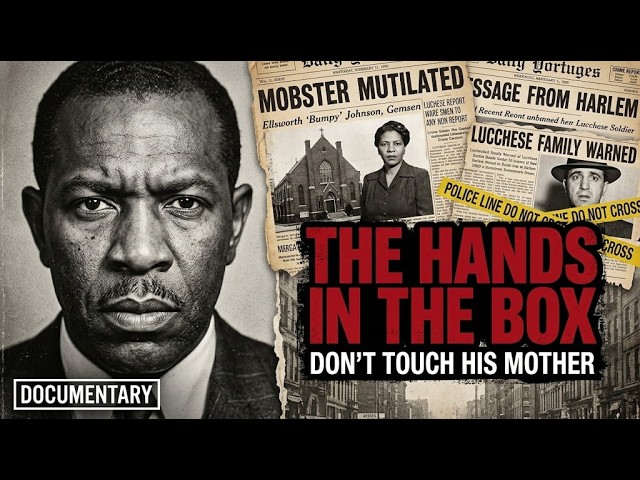
was Elsworth Raymond Johnson
0:52
most people called him bumpy
0:53
he earned the name as a teenager
0:56
a bump on the back of his head
0:57
from a street fight that never quite healed right
1:00
the name stuck in Harlem
1:02
names like that always stuck
1:04
by 1948 Bumpy Johnson was 42 years old
1:08
he had been in and out of prison
1:10
he had fought wars real ones
1:14
against Dutch Schultz's operation in the 1930s
1:18
he had survived things that killed most men
1:20
in his line of work and
1:22
he was something that no other gangster in New York
1:25
could claim to be he was loved
1:27
not feared not tolerated loved
1:30
this is where the story of Bumpy Johnson separates
1:33
from every other crime figure of his era
1:36
and this part unlike the story we're about to tell
1:39
is thoroughly documented Bumpy Johnson paid rent
1:42
for families who couldn't make it
1:44
he bought groceries he funded funerals
1:48
when children in the neighborhood
1:49
needed school supplies
1:51
Bumpy's people showed up with boxes
1:55
described it plainly in later years
1:58
the exact words varied depending on who told it
2:01
but the meaning was always the same
2:04
he couldn't stand to see people suffer
2:07
especially children that wasn't an act
2:10
it was consistent across decades
2:12
across multiple sources
2:14
across people who had no reason to lie about a dead man
2:18
but here's the part that matters for this story
2:21
bumpy didn't just give money
2:23
he gave something the city of New York refused to give
2:27
to understand what happened in the summer of 1948
2:31
or what the legend says happened
2:33
you first have to understand what Harlem was and
2:37
more importantly what it wasn't
2:41
The New York City Police Department in 1948
2:46
the way colonial police operated in occupied territory
2:50
this is not metaphor this is documented history
2:54
black residents who reported crimes
2:56
were routinely ignored
2:58
cases involving black victims were deprioritized
3:01
or never opened officers assigned to Harlem precincts
3:05
treated the posting as either punishment
3:07
or opportunity punishment if they were honest
3:11
opportunity if they weren't
3:13
the corruption was structural
3:15
exposed in investigation after investigation
3:19
the Seabury Commission the nap commission later
3:23
the patterns repeated across decades
3:25
but for the people living on those blocks
3:27
the investigations didn't matter
3:30
what mattered was simpler
3:31
if your child went missing
3:33
nobody came looking now
3:36
the story what follows is legend
3:38
community memory the kind of story that gets told
3:42
with absolute certainty by people who weren't there
3:44
but knew people who were
3:46
some details may be precisely true
3:49
others may have been shaped by decades of retelling
3:52
we tell it because it reveals something important
3:56
not necessarily about what happened
3:58
but about why Harlem needed a man like Bumpy Johnson
4:01
in the first place the way they tell it
4:03
it started in early July of 1948
4:07
a child disappeared not a runaway
4:10
not a teenager who took off for a few days
4:14
from a block where everybody knew everybody
4:17
the mother went to the police
4:18
the exact words nobody recorded
4:21
but every version of this story
4:23
includes the same detail
4:25
they told her the child probably ran away
4:27
a child under 10 years old ran away
4:30
she went home with nothing
4:32
no case number no detective assigned
4:35
no one coming to look within days
4:38
and this is where the versions
4:39
of the story begin to converge
4:41
with unusual consistency there were more
4:46
then another from the same general area of Harlem
4:49
same pattern young vulnerable gone
4:53
the mothers talk to each other
4:55
that part is certain in Harlem in 1948
4:59
the women on the block
5:00
were the real information network
5:02
not the police not the newspapers
5:05
and what they pieced together in kitchen conversations
5:09
whispers was that something was very wrong
5:12
multiple children same neighborhood
5:15
same weeks and the police doing nothing
5:17
so they did what people in Harlem did
5:19
when the system failed them
5:21
they went to bumpy the way the story is told
5:24
bumpy heard about it on a Tuesday
5:26
no one remembers who came to him first
5:29
different people claim different versions
5:31
but every version agrees on his reaction
5:34
he didn't send a lieutenant
5:36
he didn't make a phone call
5:39
he went to the block where the last child had vanished
5:42
he talked to the mothers
5:44
he talked to the men who ran the corner stores
5:46
and the numbers spots and the shoe shine operations
5:50
and then according to every version of this story
5:53
he said something that people remembered for decades
5:57
the exact words changed depending on who's telling it
6:01
but the substance was always this
6:03
nobody sleeps until we find who's doing this
6:06
that was Bumpy Johnson's way
6:09
not a committee not a plan
6:11
a command and in Harlem in 1948
6:15
when Bumpy Johnson gave a command
6:17
it might as well have come from the mayor
6:20
is where the legend becomes most vivid
6:22
and most difficult to verify
6:25
the story says bumpy mobilized the entire neighborhood
6:28
every runner every lookout
6:31
every man who worked for him or owed him a favor
6:33
they became overnight an investigative force
6:37
dozens of eyes hundreds of ears
6:40
they weren't looking for evidence in the legal sense
6:43
they were looking for something simpler
6:45
who doesn't belong here
6:46
in a neighborhood where everyone knew everyone
6:51
a vehicle that didn't belong stood out
6:53
a pattern of behavior that didn't fit stood out
6:56
and here according to the legend
6:58
they found it a truck
7:00
the details vary some say it was blue
7:03
some say it was dark green
7:05
some say it was a delivery truck with no markings
7:08
but every version mentions
7:10
a vehicle that had been seen in the area
7:13
near the places where children had last been seen
7:17
no one had reported it to the police
7:19
why would they the police weren't listening
7:22
but Bumpy's people were listening
7:24
and once they had a lead they followed it
7:26
the story says it took less than 48 hours
7:31
some say it happened in a single night
7:34
what every version agrees on is this
7:37
bumpy's network tracked the vehicle
7:39
they identified who was driving it
7:43
the name that comes up most often in the retellings
7:45
is something like Camp Walter Camp
7:48
though whether that was his real name
7:51
or a name that attached itself to the story later
7:56
what they say about him is consistent
7:59
he was not from Harlem he was an outsider
8:02
he had been operating in the neighborhood for weeks
8:05
and no one in any position of authority had noticed
8:08
or cared except bumpy
8:11
comes the part of the story that the old timers tell
8:14
with the most precision and the most silence
8:17
they say Bumpy's men found the man
8:20
they say they brought him somewhere private
8:22
a building a basement
8:24
a warehouse near the Harlem River
8:27
the versions differ on the location
8:29
they do not differ on what happened inside
8:32
the way it's told bumpy was there himself
8:35
he didn't send someone to handle it
8:37
he was present and the man confessed
8:40
the details of the confession in the legend
8:43
are specific enough to be disturbing
8:45
the old timers don't elaborate
8:47
they say things like he told bumpy everything
8:51
he admitted what he did to those kids
8:53
bumpy heard it all and then they go quiet
8:56
what they say next is always delivered the same way
9:02
like reporting the weather
9:03
the man was never seen again
9:05
some versions say the Harlem River
9:08
some versions say something else
9:10
but every version ends the same way
9:12
he was gone and no more children disappeared
9:16
now let's be clear about what we're dealing with
9:19
this is a story it may be true
9:21
parts of it may be true the broad strokes
9:24
a predator operating in Harlem
9:26
police indifference Bumpy's intervention
9:29
these align perfectly with everything
9:31
we know about the dynamics of that era
9:33
the specific details the truck
9:36
the name the warehouse
9:38
the confession these belong to oral tradition
9:41
they maybe precise memories
9:43
they maybe composites
9:44
they maybe the kind of narrative that a
9:46
community builds around a real event
9:49
shaping it into something that carries a larger truth
9:53
but whether every detail is literally accurate
9:56
the story tells us something that is absolutely
10:01
the people of Harlem trusted a gangster
10:03
more than they trusted the police
10:05
and they had every reason to
10:07
this is where the legend meets the history
10:10
because the pattern Bumpy Johnson
10:12
stepping in where law enforcement refused to
10:15
is not legend it happened over and over across decades
10:19
and it's confirmed by multiple independent sources
10:23
a historian Maime Johnson
10:25
his wife documented it Karen Quinones Miller
10:28
who wrote extensively about bumpy
10:32
the oral histories collected in Harlem over the decades
10:35
document it Bumpy Johnson ran numbers
10:39
he dealt in narcotics at various points
10:44
he was a criminal by any legal definition
10:47
and he protected his community in ways
10:49
that the legal system would not
10:51
there's a tension in that
10:53
a contradiction that doesn't resolve neatly
10:56
and it shouldn't the moment you resolve it
10:59
the moment you make bumpy either a hero or a villain
11:02
you lose the truth he was both
11:04
Harlem understood that
11:06
the rest of the world mostly didn't
11:08
but wait if this story is true or even partly true
11:12
it raises a question
11:14
that's harder than any question about Bumpy Johnson
11:17
why was it possible why could a man like Bumpy Johnson
11:21
conduct a manhunt for a child predator
11:23
while the New York City Police Department did nothing
11:27
the answer isn't complicated
11:30
Harlem in 1948 was a neighborhood of 200,000 people
11:35
overwhelmingly black densely populated
11:39
full of working families churches
11:43
and it was policed like it didn't matter
11:45
the precinct covering central Harlem
11:47
was chronically understaffed
11:49
not because there weren't enough officers in New York
11:53
but because Harlem wasn't a priority
11:55
detectives assigned to cases in Harlem
11:58
carried case loads that were double
12:00
or triple those in white neighborhoods
12:02
reports filed by black residents were processed slower
12:06
follow up was rarer and certain categories of crime
12:10
missing persons domestic violence
12:13
crimes against children
12:14
were treated with open indifference
12:16
when the victims were black
12:18
this is not interpretation
12:21
this is the documented operational reality of the NYPD
12:26
in the 1940s a white child goes missing in 1948
12:30
Manhattan detectives are assigned
12:33
within hours the press is notified
12:36
photographs are distributed
12:38
a search is organized
12:40
a black child goes missing in Harlem in 1948
12:44
the mother is told the child probably ran away
12:47
that gap between what the city owed its black residents
12:51
and what it actually gave them
12:52
is the space where Bumpy Johnson operated
12:56
he didn't create that gap
12:57
the city did the police did
13:00
the political system did bumpy just filled it
13:03
and here's where the story becomes more than a story
13:06
about one man because what happened in Harlem
13:09
happened in black neighborhoods across America
13:12
in Chicago in Detroit
13:14
in Philadelphia in Baltimore
13:17
the police refused to protect black communities
13:20
someone else stepped
13:21
in sometimes that someone was a preacher
13:24
sometimes it was a community organization
13:27
and sometimes it was a gangster
13:29
the pattern repeated so consistently
13:32
across so many cities across so many decades
13:35
that it stopped being coincidence a long time ago
13:38
it was structural the system created the vacuum
13:42
and men like Bumpy Johnson filled it
13:45
let's go back to the story
13:47
because there's a detail
13:48
the old timers include that's easy to miss
13:51
after it was over after the man was gone
13:54
and the children stopped disappearing
13:56
nobody talked about it not publicly
13:59
not to reporters not to anyone outside the neighborhood
14:02
the silence wasn't fear it was agreement
14:06
bumpy had done what needed to be done
14:08
the community understood that
14:10
and they closed ranks around it
14:12
this is something outsiders have never understood
14:15
about neighborhoods like Harlem
14:17
in that era silence wasn't the absence of knowledge
14:21
it was its own form of justice
14:23
there's a version of this story
14:25
where a reporter from the Amsterdam News
14:27
heard something fragments rumours
14:30
enough to know that something had happened
14:32
involving children and a dangerous man
14:35
and Bumpy Johnson the way it's told
14:38
the reporter started asking questions
14:40
carefully through intermediaries
14:43
and eventually word got back to bumpy
14:46
no one recorded the conversation
14:48
but the legend gives us this
14:51
tell him the children are safe
14:52
that's the only story the reporter didn't publish
14:56
whether that exchange happened exactly that way
14:59
is unknowable but the result
15:02
the silence the absence of any news coverage is real
15:06
whatever happened in Harlem in the summer of 1948
15:09
it stayed in Harlem the city never knew
15:13
the police never investigated
15:15
and the children were safe
15:16
20 years later Bumpy Johnson died July 7th, 1968
15:22
he collapsed at Wells restaurant on Lenox Avenue
15:25
heart attack he was 62
15:27
they say 2,000 people came to his funeral
15:31
maybe more and for years afterward
15:33
for decades afterward
15:35
when people in Harlem talked about Bumpy Johnson
15:38
they didn't talk about the numbers racket
15:40
they didn't talk about the wars with the Italians
15:43
they didn't talk about the prison time
15:45
they talked about the children
15:47
the story we just told you may not be perfectly true
15:50
we've been honest about that
15:52
but here's what is true
15:53
and what no honest historian disputes
15:56
in the middle of the 20th century
15:58
in the greatest city in the world
16:00
there were neighborhoods where children could disappear
16:03
and no one in authority would come looking
16:06
that is not legend that is fact
16:09
and in those neighborhoods
16:10
the only Protection available came from men
16:13
who operated outside the law
16:15
that is also fact bumpy Johnson was a criminal
16:18
he broke laws he hurt people
16:21
he profited from the suffering that addiction causes
16:24
and he protected children when the police wouldn't
16:27
both of those things are true at the same time
16:30
about the same man the contradiction doesn't resolve
16:33
it's not supposed to
16:35
it just sits there asking you a question
16:38
what kind of system makes a gangster
16:40
the only one willing to save the children
16:43
if this story stayed with you
16:45
if it made you think consider subscribing
16:48
we tell the stories that history forgot
16:51
or chose to forget the uncomfortable ones
16:54
the ones that don't fit neatly into categories
16:57
there are more coming