Up next in 10


It wasn't just a code of honor. It was a neurological weapon designed to rewire the human mind.
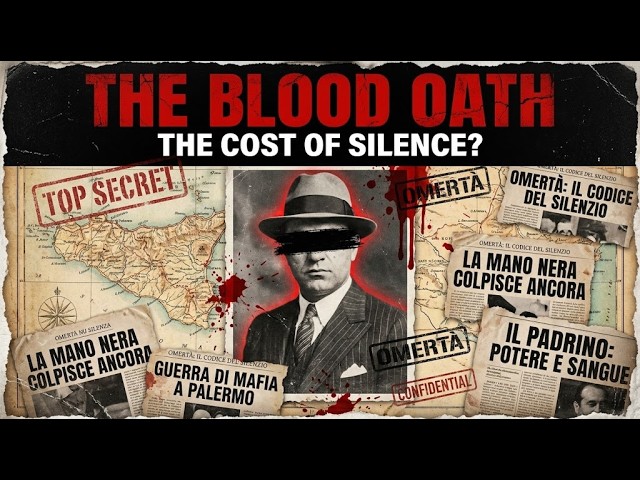
This video is not a standard history of organized crime. Instead, we deconstruct the psychological architecture of Omertà—the code of silence. By analyzing historical records, declassified federal testimony, and clinical research on secret-keeping, we uncover how La Cosa Nostra weaponized human evolution against its own members. From the initiation rituals that induce 'identity fusion' to the physiological damage caused by decades of inhibition, this is the story of what happens when a man becomes a secret.
What differentiates this analysis is the focus on the biological and cognitive cost of the Mafia lifestyle. We explore how the code wasn't enforced solely by fear of death, but by a systematic alteration of the member's reality—a process that has less in common with a criminal gang and more in common with high-control cults.
Timestamps:
00:00 The Practicality of Silence
01:12 Origins in Corleone: The Father's Instruction
02:50 Why The Code Worked (Historical Context)
04:57 The Neuroscience of Honest vs. Deception
09:10 Weaponizing Cognitive Dissonance
10:32 The Initiation Ritual Explained
13:00 Identity Fusion: When The Group Becomes The Self
14:30 Semantic Framing: Redefining Murder
16:47 The Case of Joseph Valachi
20:53 The Biological Cost: Chronic Stress & Atrophy
24:00 Milieu Control & The Loss of Critical Thinking
28:00 The Trauma of The Informant
31:30 Paul Castellano & The Inability to Speak
33:40 The Final Erasure
Sources & Further Reading:
- Pennebaker, J. W. (1997). "Opening Up: The Healing Power of Expressing Emotions."
- Lifton, R. J. (1961). "Thought Reform and the Psychology of Totalism."
- Valachi, J. (1963). "The Valachi Papers" (Congressional Testimony).
- Gambino, R. (1974). "Blood of My Blood: The Dilemma of the Italian-Americans."
- Shay, J. (1994). "Achilles in Vietnam: Combat Trauma and the Undoing of Character."
#TrueCrime #Psychology #Mafia #Neuroscience #History
-~-~~-~~~-~~-~--~-~~-~~~-~~-~--~-~~-~~~-~~-~-
🕵️♂️ Global Mafia Universe - https://www.youtube.com/@GlobalMafiaUniverse?sub_confirmation=1
-~-~~-~~~-~~-~--~-~~-~~~-~~-~--~-~~-~~~-~~-~-
⚠️ Content Disclaimer
This video is created solely for educational and informational purposes.
We do not glorify, promote, or encourage any kind of criminal behavior or illegal activity.
All visuals, audio, and materials in this video are either:
✔️ AI-generated, or
✔️ Sourced from royalty-free platforms under valid licenses.
Some images, characters, and scenes have been created using artificial intelligence and are not depictions of real people or events.
No copyrighted material belonging to others has been used without permission.
❤️ Support the Channel
If you enjoy learning about true crime stories, history, and real-life mysteries, please:
✔️ Like the video
✔️ Subscribe to the channel
✔️ Share your thoughts in the comments
Your support helps us continue producing valuable and well-researched content!
🔧 Tools I Use to Grow This Channel
I personally use vidIQ to optimize my videos, find trending keywords, and grow faster on YouTube.
👉 Try it for free and experience the difference.
💼 Contact & Copyright Notice
If you believe any part of this video infringes on your rights, please contact me directly via YouTube.
I fully respect copyright laws and will respond promptly and professionally.
-~-~~-~~~-~~-~--~-~~-~~~-~~-~--~-~~-~~~-~~-~-
-
Show More Show Less View Video Transcript
0:01
every man has a story he cannot tell
0:05
some men have nothing else
0:08
how long can a man keep a secret
0:10
before the secret starts keeping him
0:12
that question sounds like philosophy
0:15
but for thousands of men across the 20th century
0:19
men who swore an oath in darkened rooms
0:22
men who watched the flame burn their fingers
0:25
and said nothing that question
0:27
was the most practical thing in their lives
0:31
what you're about to hear
0:32
is based on documented history
0:35
psychological research declassified federal records
0:39
and the testimonies of men who lived inside the system
0:43
we're examining
0:45
some conversations have been reconstructed
0:48
for narrative clarity where the record is silent
0:51
we've worked to stay as close to the documented
0:54
evidence as possible
0:56
this is not a story about organized crime
1:00
not exactly
1:01
this is a story about what the human mind does
1:05
when it is forced systematically
1:07
deliberately to work against itself
1:11
it is a story about Omatar
1:13
and it begins not with a murder
1:15
or a court room or a body in a river
1:19
it begins with something far more ordinary
1:22
it begins with a question asked to a child
1:25
in the Sicilian village of Corleone
1:28
sometime in the late 1800s
1:30
The exact year is uncertain
1:33
the records are incomplete in the way
1:35
that records from that era often are
1:38
a boy of perhaps 12 years old
1:41
witnessed something he should not have seen
1:43
exactly what he saw is lost
1:46
what survives is the instruction given to him afterward
1:50
by his father you saw nothing
1:52
you know nothing you will say nothing
1:55
three sentences 12 words
1:58
and they contain the entire architecture
2:02
of what would eventually become the most sophisticated
2:06
psychological control system in criminal history
2:10
the boy understood immediately
2:12
that this was not a request
2:14
but here is the thing
2:16
that historians and criminologists have spent decades
2:19
trying to understand even if it had been a request
2:23
he probably would have complied
2:26
because the conditions that made Omerta possible
2:29
didn't begin with the Mafia
2:31
they began much earlier
2:33
they were baked into the social fabric of southern
2:36
Italy long before LA Cosa Nostra the
2:42
organization whose name translates literally as
2:46
this thing of ours existed in any formal sense
2:51
to understand why the code of silence
2:54
works as a psychological weapon
2:57
you have to understand where it grew
2:59
Southern Italy in the 18th and 19th centuries
3:03
was a place where the state was not a protector
3:06
it was a predator foreign rulers
3:09
the Spanish the Bourbons
3:11
the various aristocracies
3:13
that cycled through the region
3:15
taxed the peasantry into poverty
3:17
and offered nothing in return
3:20
no courts that functioned fairly
3:22
no police that served anyone but the powerful
3:26
no institutions that a working man could trust
3:29
what filled that vacuum was the family
3:32
and then
3:33
when the family needed strength beyond its own walls
3:37
a kind of extended kinship network
3:40
informal at first then increasingly formalized
3:44
that operated according to its own rules
3:48
in that world speaking to an authority
3:50
any authority was not a neutral act
3:54
it was a declaration
3:55
that you had chosen the state over your people
3:59
and in a place
3:59
where the state had never once been on your side
4:03
that declaration was understood as the deepest possible
4:07
betrayal Omerta in its original form
4:11
was not a code invented by criminals
4:14
it was a survival strategy
4:16
developed by people who had no one else to trust
4:20
that matters because it means that
4:22
when the Mafia eventually formalized Omerta
4:26
into a sworn oath
4:28
when they turned a cultural habit into a binding rule
4:31
enforced by death they weren't starting from scratch
4:36
they were taking something
4:37
already embedded in the psychology of the men
4:40
they were recruiting and simply weaponizing it
4:44
that's a very different thing
4:46
and the difference explains almost everything
4:49
about why the code worked for so long
4:52
and why breaking it cost so much
4:54
more than most people understand
4:57
let's start with the neuroscience
5:00
the human brain is at its core a social organ
5:04
this is not a metaphor neuroscientists
5:07
studying social cognition
5:09
have documented what happens in the brain
5:11
when a person is excluded from social groups
5:14
when trust is violated when secrets are kept
5:18
and the findings are not comforting
5:20
when we share information with another person
5:23
when we tell the truth when we confess
5:26
when we disclose
5:27
the brain releases a small cascade of reward chemicals
5:32
oxytocin dopamine serotonin
5:36
the same chemicals associated with physical pleasure
5:40
with connection with safety
5:42
the brain in other words
5:44
rewards honesty it is built to want to speak
5:48
this is not incidental
5:50
it reflects millions of years of evolutionary history
5:54
in which social cohesion
5:56
the ability of human groups to coordinate
5:59
to trust to communicate
6:01
was the primary survival advantage
6:04
our species possessed we are not the fastest animal
6:08
we are not the strongest
6:10
we survived because we talk to each other
6:13
omatar at its most fundamental level
6:17
is an instruction to override this system
6:20
and the brain does not surrender that system easily
6:24
what happens when a person is forced to maintain
6:27
a significant secret over an extended period of time
6:31
is well documented in psychological literature
6:35
the research of James Pennebaker
6:38
a psychologist at the university of Texas
6:41
who spent decades
6:42
studying the health effects of secret keeping
6:45
found consistent patterns
6:48
people who actively suppressed significant information
6:51
showed elevated cortisol levels
6:54
higher rates of hypertension
6:57
compromised immune function
7:00
disrupted sleep architecture
7:02
he called it the work of inhibition
7:05
the psychological and physiological cost
7:08
of continuously blocking
7:10
what the brain is designed to express
7:13
now take that research
7:15
and scale it to a man who has been keeping secrets
7:18
not for weeks or months but for decades
7:22
a man who has perhaps witnessed murders
7:25
participated in crimes
7:28
watched people he knows disappear into the ground
7:31
or into the river or into a car that never came back
7:34
and who has every single day
7:37
performed the work of inhibition
7:40
against the most natural human instinct there is
7:43
what does that cost look like
7:46
the testimonies are there if you know where to look
7:49
Henry Hill the FBI informant
7:52
whose story most people know through the 1990 film
7:56
Goodfellas described something in his later interviews
8:00
that rarely gets discussed
8:02
he talked about a specific kind of exhaustion
8:05
not physical not even entirely emotional
8:09
something more fundamental
8:11
he said that by the end
8:13
he could no longer remember what it felt like
8:16
to have a conversation
8:17
in which he was saying exactly what he meant
8:20
it's like he said in one recorded interview
8:24
you forget what your actual voice sounds like
8:27
like the real voice you're always performing
8:30
always managing and after a while
8:33
the performance is all there is
8:36
that description aligns remarkably closely
8:39
with what clinical psychologists describe as
8:42
depersonalization a dissociative state
8:46
in which the sense of self becomes fragmented
8:49
in which a person experiences themselves
8:52
as an observer of their own behaviour
8:56
rather than its author it is a recognized
8:59
psychological consequence of sustained
9:03
high stakes deception but
9:05
here is where the Mafia's conditioning
9:08
becomes genuinely extraordinary
9:10
because they didn't just impose omerta on their members
9:14
they designed a system
9:16
that made the psychological costs of keeping the code
9:20
feel smaller than the psychological costs of breaking
9:24
it understanding how they did that
9:27
requires understanding what cognitive dissonance
9:30
actually is and how it can be engineered
9:34
cognitive dissonance
9:35
is the psychological discomfort created
9:38
when a person holds two contradictory beliefs
9:41
simultaneously the classic example is a smoker
9:46
who knows smoking causes cancer
9:48
but continues to smoke the dissonance
9:51
the gap between the knowledge and the behavior
9:54
creates psychological pressure
9:56
that the mind works continuously to resolve
10:00
the mind resolves dissonance in one of two ways
10:04
either it changes the behavior to match the belief
10:08
or it changes the belief to match the behavior
10:11
the Mafia understood this intuitively
10:14
long before the psychology had a name
10:18
they built a system specifically
10:20
designed to ensure that men resolve their dissonance
10:23
in the second direction
10:25
by changing their beliefs rather than their behavior
10:29
the mechanism was initiation
10:32
the initiation ritual into LA Cosa Nostra
10:36
was not casual it was designed with extraordinary
10:40
psychological precision the candidate
10:43
was brought into a room
10:45
with the senior members of the family
10:47
a gun and a knife were placed on a table
10:50
the candidate's finger was pricked
10:53
blood was drawn the blood was used to burn a holy image
10:57
usually a saint's card
10:59
held in the candidate's cupped hands
11:02
and then the oath was spoken
11:04
I enter alive into this organization
11:07
and I will leave it only dead
11:10
every element of that ritual was doing specific
11:13
psychological work
11:15
the secrecy of the location created exclusivity
11:19
the presence of senior members created authority
11:23
the blood a physical
11:25
painful irreversible act
11:27
created what psychologists call commitment escalation
11:32
once a person has paid a significant cost
11:35
to join something
11:36
the psychological pressure to justify that cost
11:40
is enormous
11:41
the burning of the holy image served a double function
11:46
for men raised in deeply Catholic communities
11:50
it represented a severing of the old moral framework
11:54
the faith that had previously governed right and wrong
11:58
was symbolically consumed
12:00
what replaced it was the code of the organization
12:04
and the oath itself
12:05
particularly the phrase about leaving only dead
12:09
was a masterwork of psychological engineering
12:12
because it collapsed the future
12:15
it removed optionality
12:17
a man who has sworn that he will never leave
12:20
is no longer a man weighing ongoing choices
12:24
he is a man executing a single
12:27
permanent decision that was made in the past
12:30
this matters enormously
12:32
because one of the primary psychological conditions
12:36
that makes truth telling feel possible
12:39
is the belief that change is possible
12:42
that there is a future self who could be different
12:45
the oath was designed to eliminate that belief
12:49
after the initiation
12:51
a new member didn't just join an organization
12:54
he underwent a process that psychologists now recognize
12:59
as a form of identity replacement
13:02
the academic term is identity fusion
13:05
in identity fusion
13:07
an individual's sense of personal identity
13:11
becomes so merged with the group identity
13:13
that threats to the group
13:15
are experienced as threats to the self
13:18
this is not a metaphor
13:20
brain imaging studies of individuals in fused identity
13:24
states show that when their group is threatened
13:28
the neural regions associated with personal threat
13:32
not abstract concern
13:34
but fight or flight survival response
13:37
become active for a made man in LA Cosa Nostra
13:41
a threat to the organization
13:44
was not a political problem
13:46
it was a personal attack on his sense of self
13:50
and the brain responds to threats to the self
13:53
with the same urgency as threats to physical survival
13:57
that is why for many men inside the system
14:01
betrayal felt genuinely impossible
14:04
not because they were weak or cowardly
14:07
but because their neurological architecture
14:09
after years of conditioning
14:12
had encoded loyalty as survival
14:15
breaking Omata in that state
14:17
would have felt like self destruction
14:20
but the conditioning didn't end with initiation
14:23
it was continuous it was maintained through ritual
14:27
through language
14:29
through the daily enforcement of a parallel
14:31
social reality consider the language
14:35
LA Cosa Nostra had its own vocabulary
14:38
murders were pieces of work
14:41
a killing was a problem being resolved
14:44
victims were never named as people
14:46
they were classified by their role in the business
14:50
the language was not simply slang
14:53
it was a systematic redefinition of reality that
14:56
over time changed how members
14:59
cognitively processed what they were doing
15:02
this is what linguists and cognitive scientists call
15:06
semantic framing the frame around an event
15:09
determines how the mind categorizes it morally
15:14
emotionally practically
15:16
change the words consistently enough
15:18
over a long enough period
15:20
and you change the frame change the frame
15:23
and you change what
15:24
the brain registers as a problem requiring resolution
15:29
a man who participated in a piece of work was not
15:33
in his own cognitive experience
15:35
a murderer
15:36
he was a professional solving a business problem
15:40
the guilt response the neurological discomfort
15:43
that normally follows the violation of a moral code
15:47
was suppressed not through willpower
15:49
but through redefinition
15:51
he hadn't violated his moral code
15:54
he had followed it
15:55
this is the most disturbing aspect of the Omata system
15:59
and the one that gets the least attention
16:02
it was not primarily enforced through fear
16:06
fear was present
16:07
the consequences for breaking the code were explicit
16:11
and lethal but fear
16:12
alone is a poor foundation for long term
16:16
behavioral compliance
16:18
fear can be overcome by greater fear
16:21
if the FBI can offer sufficient Protection
16:24
if the consequences of speaking can be reduced enough
16:28
fear stops working
16:30
what the Mafia built was something harder to dismantle
16:34
they built a system in which silence felt
16:37
not like submission to an external threat
16:40
but like an authentic expression of who a man was
16:44
that is the difference between a prisoner and a convert
16:47
Joe Valle Lecai Joseph Valachi
16:51
was the first made member of LA Cosa Nostra
16:54
to publicly testify before Congress
16:57
the year was 1963 what he said in those hearings was
17:03
by any objective measure extraordinary
17:06
he named names he described rituals
17:10
he confirmed the existence of an organization
17:13
that the FBI under J
17:15
Edgar Hoover had spent years insisting did not exist
17:20
but what rarely gets examined
17:22
is the psychological trajectory
17:24
that LED Valachi to that point
17:26
because it wasn't simply that he decided one day
17:30
that he'd had enough and would testify
17:33
the sequence was far more complicated
17:36
and it illuminates with unusual clarity
17:39
exactly how the psychological system
17:42
we've been describing actually breaks down
17:46
Valachi had spent decades inside the organization
17:50
he was loyal he maintained silence
17:54
he followed the code and then in 1962
17:58
while serving a prison sentence in Atlanta
18:01
he became convinced that his own boss
18:04
Vito Genovese
18:06
one of the most powerful figures in American
18:09
organized crime had ordered his death
18:13
that belief whether entirely accurate or not
18:17
represented something catastrophic
18:19
at the psychological level
18:21
because the identity fusion we described earlier
18:24
works as a protective mechanism
18:27
only as long as the group reciprocates its Protection
18:32
the moment Valachi believed
18:33
that the organization had turned against him
18:37
the fusion collapsed and when the fusion collapsed
18:41
what was left was just a man
18:43
a man with a very long memory and nowhere to put it
18:47
the psychiatrists who worked with Valachia
18:50
during this period noted something specific
18:53
he was not eager to testify
18:55
he was not angry in the way of a man seeking revenge
18:59
he was according to accounts from those sessions
19:03
almost mechanically depressed
19:06
as if something essential had been removed
19:09
and he was functioning on habit alone
19:12
one report described him as
19:14
a man who has lost his narrative
19:16
that phrase is worth sitting with for a moment
19:19
because what Omerta ultimately provides
19:23
for the men who maintain it successfully
19:26
is a narrative a story about who they are
19:29
a structure of meaning the role they play
19:33
loyal soldier trusted keeper of secrets
19:36
man of honor in a world that has no honor
19:39
gives their life a coherence
19:41
that nothing else in their circumstances offers
19:44
when the code breaks
19:46
whether because they choose to speak
19:48
or because the organization itself betrays them
19:52
that narrative dissolves and human beings
19:55
it turns out will tolerate extraordinary suffering
19:59
before they will tolerate the loss of the story
20:02
that explains their suffering
20:04
this is not exclusive to organized crime
20:07
it is a fundamental feature of human psychology
20:11
that researchers have documented across cultures
20:14
and contexts Victor Frankel
20:17
writing from the experience of Nazi concentration camps
20:21
identified meaning
20:22
maintenance as the primary human survival drive
20:27
stronger in extremis than the drive for comfort
20:31
for safety even for food
20:34
the men who maintained Omerta Longest
20:36
were often
20:37
not the most frightened men in the organization
20:40
they were the ones for whom the identity
20:42
provided by the code
20:44
was most deeply integrated into their sense of self
20:48
the code was not something they followed
20:51
it was something they were
20:53
and this is where the neurobiology
20:55
becomes genuinely troubling
20:58
research into long term stress responses
21:01
has identified what physiologists call
21:04
allostatic load the cumulative
21:07
biological cost of sustained stress adaptation
21:11
under normal circumstances
21:14
the stress response system activates
21:16
in response to a threat mobilizes the body's resources
21:21
and then deactivates when the threat passes
21:24
but when threat is constant
21:26
when the body's stress systems are activated
21:29
not occasionally but continuously
21:32
day after day year after year
21:35
the deactivation mechanism begins to fail
21:38
the system gets stuck
21:41
cortisol levels remain chronically elevated
21:44
the hippocampus the brain region
21:47
central to memory formation and emotional regulation
21:51
shows measurable atrophy studies of combat veterans
21:55
abuse survivors and long term prisoners
21:59
show consistent
22:00
patterns of this kind of neurological wear
22:03
the technical term is chronic stress
22:06
induced neuroplasticity
22:08
the brain under relentless pressure
22:11
literally rewires itself for men living inside Omata
22:16
carrying the weight of crimes
22:18
witnessed and participated in
22:20
maintaining constant vigilance against surveillance
22:24
performing normality for family members
22:26
who knew nothing of their actual lives
22:29
the chronic stress load was
22:31
by any reasonable clinical estimate extreme
22:35
what this means practically
22:38
is that many of the men described in mob history
22:41
as cold unreachable
22:44
or emotionally dead were not sociopaths by nature
22:48
they were men whose capacity for emotional processing
22:52
had been systematically degraded
22:54
by the neurological cost of living a perpetually
22:58
secret life
22:59
the emotional flatness was not a personality trait
23:03
it was an injury that distinction matters enormously
23:08
not to excuse what these men did
23:11
but to understand
23:12
how an organization was able to produce them
23:15
at scale because
23:16
if Omata's psychological damage
23:19
were simply the result of individual pathology
23:22
if it required sociopathy to maintain the code
23:26
it would have been a much smaller
23:28
and less effective system
23:31
what made it powerful
23:32
was that it could take ordinary men and
23:35
through a specific sequence of conditioning
23:38
create in them
23:40
the neurological conditions of pathology
23:43
without requiring the underlying disorder
23:46
the organization
23:48
manufactured its own kind of psychological damage
23:52
and then it called that damage loyalty
23:55
there are
23:56
in the clinical literature on high control groups
24:00
the academic term for organizations
24:03
that exercise this level of psychological dominance
24:07
specific markers that distinguish groups
24:10
that damage their members from groups
24:13
that merely demand sacrifice
24:15
researchers Steven Hassan and Robert Lifton
24:19
working from different theoretical frameworks
24:22
and different bodies of evidence
24:24
arrived at similar conclusions
24:26
high control groups systematically deploy
24:29
what Lifton called milieu control
24:33
control not just over behavior
24:35
but over the informational environment
24:38
in which members exist
24:40
for a made member of LA Cosa Nostra Milia
24:43
control was total who he could talk to
24:46
what he could discuss
24:48
what information existed inside the circle
24:51
and what existed outside it
24:54
what was real and what was fiction
24:57
all of it was managed by the organization
25:00
and the effect of media control
25:02
sustained over years is the same
25:05
regardless of whether the controlling group
25:08
is a criminal syndicate
25:10
a religious cult or a political organization
25:15
the member gradually loses access to any perspective
25:19
outside the group's frame
25:20
not because he is stupid or weak
25:23
but because the human capacity for critical thinking
25:27
requires exposure to competing ideas
25:30
seal off the information environment tightly enough
25:34
and critical thinking collapses under its own weight
25:38
this is why former mob informants
25:41
in their testimonies and their memoirs
25:44
so often describe a specific moment of clarity
25:48
a moment when something penetrated the milieu control
25:52
and they suddenly saw the organization from outside it
25:55
for the first time Henry Hill described it as
25:59
like waking up in the middle of a dream
26:01
and suddenly knowing it's a dream
26:04
the clarity he said
26:06
was terrifying rather than liberating
26:09
because it arrived with the full
26:11
retrospective weight of everything he had done
26:14
and been Jimmy the Weasel Frasciano
26:18
James Fratty E
26:19
E Arno
26:21
who became the highest ranking Mafia figure
26:23
to turn government informant
26:25
before Valachi's testimony
26:27
was later surpassed
26:29
described his moment of clarity differently
26:32
more analytically he said
26:34
he simply began to see the organization's promises
26:38
as what they actually were
26:40
debts that were never intended to be repaid
26:43
he started doing the accounting
26:46
and the accounting didn't balance
26:48
but for every man who reached that moment of clarity
26:51
and chose to speak
26:53
there were dozens who reached it and said nothing
26:56
the exact sequence of what drove some men to testimony
27:00
while others maintained silence until death
27:04
accounts differ research is incomplete
27:08
and the internal psychology of these decisions
27:11
may be beyond full reconstruction
27:14
what we can say with confidence
27:16
is that the decision was never simple
27:19
never just fear never just courage
27:22
it was the product of a specific
27:24
psychological architecture
27:26
built over years cracking under specific pressures
27:29
in specific sequences in specific men
27:33
there is no formula for when the human mind breaks
27:36
there is only the weight and the time
27:39
and the particular point
27:40
at which a given man could no longer hold
27:42
what he was holding now
27:45
the aftermath when men did break omerta
27:49
when they entered the FBI's witness security program
27:53
when they sat in front of congressional committees
27:57
when they recorded conversations
27:59
for federal prosecutors
28:02
what happened to them psychologically
28:04
is as revealing as what happened before
28:07
the clinical literature on former mob informants
28:10
is thin the population is small
28:14
the access is restricted and the legal complications
28:18
of treating this patient group are significant
28:21
but what exists is instructive
28:24
therapists
28:25
who have worked with former organized crime members
28:28
in protected status describe a consistent syndrome
28:32
that doesn't map
28:33
cleanly onto any established diagnostic category
28:38
it has elements of post traumatic stress
28:41
elements of identity disorder
28:44
elements of what clinicians describe as moral injury
28:48
the specific psychological wound
28:51
created not by fear or grief
28:54
but by the recognition
28:56
that one has participated in serious harm
29:00
moral injury
29:01
as a concept developed by psychiatrist Jonathan Shea
29:05
from his work with Vietnam veterans
29:08
is distinct from conventional trauma
29:11
in trauma the wound is something that happened to you
29:14
in moral injury the wound is something you did
29:18
or something you failed to prevent
29:20
that violated your own moral code
29:23
for former mob members
29:25
who had maintained omerta for years
29:27
who had through their silence
29:29
allowed crimes to continue
29:32
allowed victims to remain unavenged
29:35
allowed an organization to operate
29:38
the transition to informant
29:40
carried an enormous moral injury load
29:43
not just for what they confessed
29:45
but for everything
29:46
that their previous silence had permitted
29:50
several documented cases describe former informants who
29:54
in the years after their testimony
29:57
exhibited what their therapists characterized as
30:00
a compulsive need to speak
30:03
to tell their story to anyone who would listen
30:06
this was not simply exhibitionism or self promotion
30:11
it was in clinical interpretation
30:13
the overshoot
30:15
the pendulum swinging to the opposite extreme
30:18
after years of enforced suppression
30:21
the brain that had been denied speech
30:23
denied connection
30:25
denied the natural reward cascade of honest disclosure
30:29
found itself in Protection
30:32
suddenly without restriction
30:34
and in some cases it could not stop
30:37
Henry Hill gave interviews for the rest of his life
30:41
hundreds of them he told the same stories
30:44
with variations to anyone who asked
30:47
and many who didn't
30:49
those who knew him in his later years
30:51
described it as compulsive
30:53
he seemed one interviewer noted
30:56
unable to sit in a room with information about himself
31:00
without releasing it that is not personality
31:04
that is physiology that is a brain
31:07
reacting to the removal of a suppression system
31:10
that had been running at full capacity for decades
31:14
but there were men on the other end of the spectrum
31:17
men who maintained the code until death
31:20
and they deserve equal attention
31:22
because understanding them
31:24
is understanding
31:25
the other half of the psychological equation
31:29
in 1985 Paul Castellano
31:32
the boss of the Gambino family
31:35
one of the most powerful
31:36
organized crime figures in the country
31:39
was shot dead outside Spark's Steakhouse in Midtown
31:43
Manhattan
31:44
the killing was organized by his own subordinate
31:48
John Gotti in a move that violated every protocol
31:53
of LA Cosa Nostra Castellano knew
31:56
in the weeks before his death that there was a problem
32:00
associates had warned him
32:02
his own instincts sharpened by decades
32:05
in a world where instinct was survival
32:08
were signalling danger
32:10
he kept no record of what he thought in those weeks
32:14
he made no disclosure to anyone
32:16
outside the organization he did not
32:19
so far as the record shows
32:21
consider speaking to investigators
32:24
he did not attempt to negotiate a protected status
32:28
that might have saved his life
32:30
he drove to the restaurant why
32:32
one reading is simple
32:34
he didn't believe it was as dangerous as it was
32:38
misjudgement another reading
32:40
supported by what we know of identity fusion
32:44
and the psychology of men
32:45
who have lived entirely inside the system
32:48
is more troubling
32:50
Paul Castellano had been Paul Castellano
32:54
the boss the man of honor
32:56
the figure
32:57
whose entire identity was organized around the code
33:01
for so long
33:02
that the alternative wasn't available to him
33:05
not because he couldn't imagine speaking
33:08
but because a version of himself that spoke was
33:11
at that point not recognizable as himself
33:15
he would have had to become someone else to survive
33:18
and some men after long enough
33:20
cannot do that
33:22
the code had not just prevented him from speaking
33:25
it had colonized
33:26
the part of the mind that generates alternatives
33:30
this is the end point of Omata
33:32
as a psychological weapon
33:34
and it is the most quietly
33:36
devastating part of the story
33:38
because we tend to think of silence as passive
33:42
as absence as nothing
33:44
but what the research reveals
33:47
what the neuroscience and the clinical psychology
33:50
and the testimonies all point toward
33:52
is that sustained
33:54
enforced silence is not passive at all
33:57
it is one of the most metabolically
33:59
expensive things a human mind can do
34:02
it costs enormously it reshapes the brain
34:07
it replaces the self incrementally with the secret
34:11
and eventually for the men who go deepest into it
34:15
the secret and the self become indistinguishable
34:18
the Mafia understood something
34:20
that it took neuroscience
34:22
decades to confirm
34:24
the most reliable prison is not made of walls
34:27
it is made of words a man has been trained never to say
34:32
some men found the exit
34:34
paid the price of speaking in Protection programs
34:37
and changed identities
34:39
and the particular loneliness of a life
34:42
lived under a different name
34:44
others carried their silence to their graves
34:48
and left behind nothing that could be verified
34:51
nothing that could be attributed
34:53
nothing the record could use
34:55
and in that emptiness
34:57
in that final total erasure of a life
35:00
Omatar achieved its most complete expression
35:04
the secret didn't just outlive the man
35:07
the man became the secret
35:09
whether that represents an extraordinary act of will
35:12
or the final evidence
35:14
of a system that consumed its subjects entirely
35:17
is a question the evidence doesn't fully resolve
35:21
maybe both things are true at once
35:24
most difficult questions are
35:26
if this stayed with you you know what to do
Arts & Entertainment