Up next in 10


In the winter of 1931, the most dangerous person in Harlem wasn't a mobster with a tommy gun. It was a woman with a pencil, a list of names, and a fearless resolve locked inside a cell on Welfare Island.
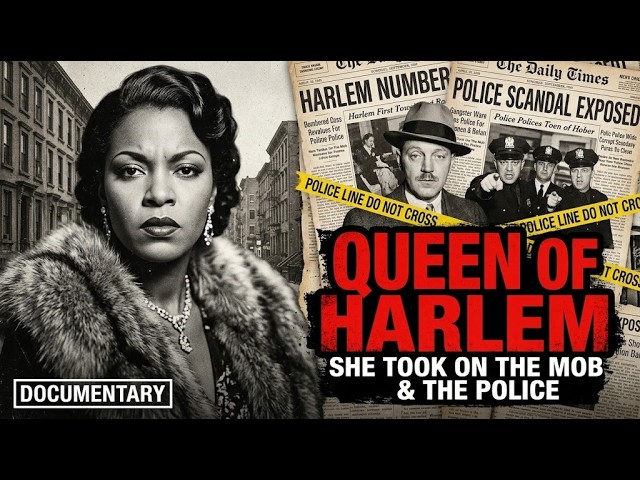
Stephanie St. Clair, known as "Queenie," didn't just run the Harlem numbers racket—she fiercely defended it against the violent encroachment of Dutch Schultz and the systemic corruption of the NYPD. While other gangsters paid off the police or folded under pressure, St. Clair did the unthinkable: she went public. This is the true story of how a Black immigrant woman took on the most powerful criminal organizations and political machines in New York City simultaneously.
What makes this story unique is St. Clair's weapon of choice. While her enemies used violence, she used information—sending telegrams from prison that named corrupt officers and exposed the flow of dirty money, triggering one of the biggest scandals in New York history.
Timestamps:
00:00 The Most Dangerous Woman in Harlem
01:11 From Martinique to Manhattan
02:12 How the "Numbers Game" Worked
03:36 The Wealth of Stephanie St. Clair
05:15 Dutch Schultz Moves In
06:50 "No Meetings With Beer Runners"
08:12 Naming Names in the Press
09:46 The Telegrams from Welfare Island
12:15 The Seabury Investigation
15:30 The Death of Dutch Schultz
17:30 The Aftermath & Legacy
Sources & Further Reading:
- Harris, LaShawn. "Sex Workers, Psychics, and Numbers Runners: Black Women in New York City's Underground Economy." University of Illinois Press.
- Stewart-Burns, Shirley. "The Queen of the Policy Racket."
- The Amsterdam News Archives (1930-1940).
- Court Records, New York City Municipal Archives (Seabury Commission files).
#StephanieStClair #TrueCrime #HarlemHistory #DutchSchultz #NYPDHistory #HiddenHistory
-~-~~-~~~-~~-~--~-~~-~~~-~~-~--~-~~-~~~-~~-~-
🕵️♂️ Global Mafia Universe - https://www.youtube.com/@GlobalMafiaUniverse?sub_confirmation=1
-~-~~-~~~-~~-~--~-~~-~~~-~~-~--~-~~-~~~-~~-~-
⚠️ Content Disclaimer:
This video is created for educational and informational purposes only. We do NOT glorify, promote, or encourage any form of criminal activity.
All visuals, audio, and materials used in this video are either:
✔ Created using AI tools, or
✔ Sourced from royalty-free platforms with valid licenses.
Some images and characters have been generated using AI and do not represent real people or events.
No copyrighted content belonging to others has been used without permission.
❤️ Support the Channel:
If you enjoy learning about real-life crime stories, history, and social issues, don't forget to:
✔ Like the video
✔ Subscribe to the channel
✔ Share your thoughts in the comments
Your support helps us keep creating more valuable content!
🔧 Tools I Use to Grow This Channel:
I personally use vidIQ to optimize my videos, find trending keywords, and grow my YouTube channel faster. Try it for free and see the difference!
💼 Contact & Copyright:
If you believe any part of this video violates your rights, please contact me directly via YouTube. I fully respect copyright laws and will respond promptly.
-~-~~-~~~-~~-~--~-~~-~~~-~~-~--~-~~-~~~-~~-~-
-
Show More Show Less View Video Transcript
0:08
in the winter of 1931
0:10
the most dangerous person in Harlem
0:12
wasn't carrying a gun she was carrying a pencil
0:16
and she was locked inside a cell on Welfare Island
0:19
the events in this story come from court records
0:23
newspaper accounts and published histories
0:26
where facts are uncertain
0:28
we say so her name was Stephanie Saint Clair
0:31
the newspapers called her Queenie
0:33
the police called her a menace
0:35
the men who ran Harlem's underworld
0:38
called her something else entirely
0:40
they called her the problem they couldn't solve
0:43
what she did from that prison cell
0:45
sending telegrams to judges
0:47
naming corrupt police officers by name
0:50
listing addresses and dollar amounts
0:53
would trigger one of the largest police corruption
0:56
scandals in New York City history
0:58
but to understand why those telegrams mattered
1:01
you have to understand who wrote them
1:03
and what she built
1:04
and what they tried to take from her
1:07
this is not just a crime story
1:09
it's the story of a woman who waged war
1:11
against the New York Police Department
1:14
the Dutch mob and Tammany Hall all at the same time
1:18
and she did it alone
1:19
Stephanie Saint Clair was born around 1886
1:23
The exact year is disputed
1:25
some records say 1887 others say 1889
1:30
what is known is this she was born in Martinique
1:33
a French Caribbean island
1:35
she grew up speaking French and Creole
1:38
she arrived in the United States
1:40
sometime around 1911 or 1912
1:43
she came through Ellis Island with almost nothing
1:46
within two decades
1:48
she would control one of the most profitable
1:51
illegal operations in Manhattan
1:53
to understand what Saint Clair walked into
1:56
you have to understand Harlem
1:58
in the 1920s
2:00
Harlem was the center of black cultural life in America
2:04
the Harlem Renaissance was underway
2:06
Langston Hughes was writing poetry
2:09
Duke Ellington was playing the Cotton Club
2:12
but beneath the music and the literature
2:14
was a different economy an underground economy
2:17
and its backbone was the numbers game
2:20
the numbers game was simple
2:22
you picked a three digit number
2:24
you placed a bet sometimes as small as a penny
2:27
if your number came up you won
2:29
the payout was 600 to 1
2:31
for black residents locked out of banks
2:33
locked out of legitimate investment
2:36
locked out of most legal pathways to wealth
2:38
the numbers game was everything
2:41
it was banking it was gambling
2:43
it was community finance it was hope
2:46
and somebody had to run it
2:48
Saint Clair didn't start at the top
2:50
she started as a runner collecting bets
2:53
walking blocks learning the neighborhoods
2:55
learning the people
2:57
according to accounts compiled by historian
2:59
Lashawn Harris
3:01
Saint Clair was methodical from the beginning
3:03
she studied the operation like a business
3:05
because to her it was one
3:07
she saved she reinvested
3:10
she hired carefully by the mid 1920s
3:13
she controlled her own numbers bank
3:16
her territory stretched across several blocks of Harlem
3:19
she employed dozens of runners
3:21
collectors and lieutenants
3:23
her operation
3:24
reportedly brought in several thousand dollars a day
3:27
some estimates
3:28
put her annual income at more than $200,000
3:32
in an era when the average
3:33
American family earned roughly 2,000 a year
3:37
she was by any measure
3:39
one of the wealthiest black women in New York
3:42
but money alone didn't make her powerful
3:44
what made Stephanie Saint Claire different
3:47
what made her dangerous
3:48
was that she refused to be invisible
3:51
she took out advertisements in the Amsterdam News
3:54
Harlem's leading black newspaper
3:56
full page ads she wrote open letters to the community
4:00
she styled herself not as a criminal
4:02
but as a businesswoman a race woman
4:05
a defender of Harlem
4:07
no one in her position had ever done that before
4:09
the men who ran numbers in other neighborhoods
4:12
kept quiet they paid off police
4:14
they disappeared into the machinery
4:17
Saint Clair did the opposite
4:19
she dressed in furs and expensive clothing
4:22
she drove fine cars
4:24
she walked into restaurants and courtrooms
4:26
like she owned them the newspapers couldn't resist her
4:30
neither could the public
4:31
but there was a tension underneath all of it
4:34
she was running an illegal operation
4:36
and she knew
4:37
everyone knew that the police were part of the system
4:40
the way it worked was straight forward
4:42
you ran a numbers bank the police knew about it
4:45
you paid them they left you alone
4:48
every numbers operator in Harlem paid
4:50
it was the cost of doing business
4:52
the money flowed upward
4:54
from beat cops to precinct captains to inspectors
4:56
to headquarters Saint Clair paid
4:59
for years she paid
5:01
but she kept records she wrote down who she paid
5:04
how much when where
5:06
she kept names and addresses
5:09
she filed this information away
5:10
like a woman building a case
5:12
maybe she always planned to use it
5:14
maybe she was just careful
5:16
either way
5:17
those records would become the most dangerous documents
5:20
in Harlem now the story shifts
5:23
by the late 1920s a man from the Bronx
5:26
had started looking at Harlem's numbers game
5:28
with hungry eyes his name was Arthur Fledgling Hammer
5:32
nobody called him that
5:34
the world knew him as Dutch Schultz
5:36
Schultz was a bootlegger a racketeer
5:39
a man comfortable with extreme violence
5:42
he had built his fortune running beer
5:44
during prohibition and now prohibition was ending
5:47
he needed a new revenue stream
5:49
he looked at Harlem
5:51
and saw millions of dollars flowing through a system
5:55
run by black operators with no political Protection
5:58
outside their own community
6:01
he saw opportunity Schultz didn't ask permission
6:04
he didn't negotiate he moved in
6:06
his method was direct
6:08
he sent men to the Numbers Bankers of Harlem
6:11
with a simple message you work for us now
6:13
you keep running your operation
6:15
we take a percentage a large percentage
6:18
if you refuse you have a problem
6:20
one by one the numbers bankers folded
6:23
some were beaten some were threatened
6:26
some simply calculated the odds
6:28
and decided that a smaller
6:29
share of the profits was better than no share at all
6:32
most of them gave in Stephanie Saint Clair did not
6:36
the exact details of what happened next
6:39
are reconstructed from newspaper accounts
6:41
and historical research no recordings survive
6:45
but the confrontation is documented
6:48
what we know is this
6:50
Schultz's men approached Saint Clair's operation
6:53
they delivered the same message
6:54
they delivered to everyone else
6:57
the meeting likely went something like this
6:59
Mr Schultz wants a conversation
7:02
a business conversation Saint Clair's response
7:05
by all accounts was immediate
7:08
you tell Mr Schultz that Madam
7:10
Saint Clair does not take meetings with beer runners
7:13
the man left
7:15
but the message had been received on both sides
7:18
Schultz wasn't used to being told no
7:20
and Saint Clair wasn't used to being pushed
7:23
what followed was a war
7:24
not a single dramatic confrontation
7:27
a grinding ugly
7:28
block by block war
7:30
Schultz's men pressured Saint Clair's runners
7:32
some were beaten some had their money stolen
7:36
some simply disappeared from their corners
7:38
Saint Clair fought back she hired her own muscle
7:41
she organized her runners into a tighter network
7:44
she made alliances with other holdouts
7:47
but Schulz had something she didn't
7:49
he had Tammany Hall Tammany Hall
7:52
was the political machine that ran New York City
7:55
it controlled the police it controlled the courts
7:58
it controlled who got arrested and who didn't
8:01
and Schulz was paying Tammany's man
8:03
James J Heins
8:05
a powerful district leader with Hines in his pocket
8:08
Schultz didn't just have gangsters working
8:10
for him he had the city government
8:13
Saint Clair was fighting the mob and the state
8:16
at the same time here is where the story takes a turn
8:19
that most people don't expect
8:21
Saint Clair did something that no gangster
8:24
male or female black or white
8:26
had ever done in New York City
8:28
she went public she began a one woman campaign
8:31
against police corruption
8:33
she wrote letters
8:34
she took out more newspaper advertisements
8:37
she gave interviews she named names
8:40
not in whispers not through intermediaries
8:43
in print in the Amsterdam News for anyone to read
8:47
she listed the officers who took her money
8:49
she listed how much they took
8:52
she listed when and where the payments were made
8:55
the response from the police was predictable
8:58
in 1930 Stephanie Saint Clair was arrested
9:01
the charge was operating a numbers bank
9:04
this was on its face a legitimate arrest
9:07
she was operating a numbers bank
9:09
but the timing was not coincidental
9:12
she had started naming corrupt officers
9:14
and suddenly she was the one who got arrested
9:17
the trial was swift the court records from this period
9:21
examined by researchers including Lashawn Harris
9:25
paint a picture of a woman
9:26
who treated the courtroom like a stage
9:29
she dressed impeccably she spoke clearly
9:32
she challenged the proceedings
9:34
but the outcome was never in doubt
9:36
she was convicted she was sentenced to prison
9:39
she was sent to the workhouse on Welfare Island
9:42
a grim facility in the East River
9:45
the men who arrested her
9:46
probably thought the story was over
9:48
it wasn't from inside her cell
9:51
Stephanie Saint Clair did something extraordinary
9:54
she began sending telegrams
9:56
Western Union telegrams to newspapers
9:59
to judges to anyone who would listen
10:01
the telegrams named police officers
10:04
specific officers by name
10:06
with details how much they had been paid
10:08
when and by whom she didn't stop at beat cops
10:12
she named captains she named inspectors
10:15
she named the men at the top of the chain
10:17
one telegram widely reported in the Black Press
10:21
was addressed directly to a judge
10:24
it read in substance
10:26
that the officers who had arrested her
10:28
were the same officers
10:29
who had been collecting payoffs from her for years
10:33
she was exposing the system from inside a cage
10:36
now consider what this meant
10:39
here was a black woman a Caribbean immigrant
10:42
a convicted criminal sitting in a prison cell
10:45
sending telegrams that accused
10:47
named members
10:47
of the New York Police Department
10:49
of systematic corruption in 1931
10:53
the white press largely ignored it
10:55
but the black press did not
10:57
The Amsterdam News published her allegations
11:00
the community read them and people believed her
11:03
they believed her because they already knew
11:06
every person in Harlem who played numbers
11:08
knew that the police were on the take
11:11
Saint Clair wasn't revealing a secret
11:13
she was saying out loud what everyone already whispered
11:17
that was what made it so dangerous
11:19
but why telegrams why that specific method
11:23
the answer tells you everything
11:24
about who Saint Clair was
11:26
letters from prison could be intercepted
11:29
they could be read confiscated
11:31
destroyed before they left the facility
11:34
the prison authorities
11:35
had every reason to stop her correspondence
11:38
but telegrams operated on a different system
11:41
you dictated the message the telegraph operator sent it
11:45
it arrived at its destination
11:47
through the Western Union network
11:49
outside the prison's control
11:51
Saint Clair understood systems
11:53
she understood how power moved
11:55
where the gaps were and how to exploit them
11:58
she couldn't make phone calls
12:00
she couldn't hold press conferences
12:02
but she could send telegrams
12:04
and she did dozens of them
12:06
the effect was slow but real
12:09
the telegrams alone didn't bring down the police
12:12
but they became part of a larger pattern
12:14
they added to a growing pile of evidence
12:17
that the NYPD was deeply structurally corrupt
12:21
and then in 1932 something bigger happened
12:25
Samuel Seabury
12:26
a retired judge appointed by the governor
12:29
launched an investigation into municipal corruption
12:32
in New York City the Seabury
12:34
investigation would become one of the most significant
12:37
anti corruption probes in American history
12:40
it targeted the police it targeted the courts
12:44
it targeted Tammany Hall
12:46
and among the evidence it gathered
12:48
among the thousands of documents and testimonies
12:51
were the allegations made by Stephanie Saint Clair
12:54
her telegrams her records
12:57
her names addresses and dollar amounts
13:00
no recording of Saint Clair's testimony survives
13:03
but accounts from the period
13:05
describe a woman who was unafraid
13:07
the exact words are lost
13:10
but the dynamic is documented by multiple sources
13:13
imagine the room investigators across
13:16
the table
13:17
a black woman from Martinique sitting before them
13:20
I paid them every month you want names
13:23
I have names you want amounts
13:25
I have amounts every dollar
13:27
every badge number and you kept these records yourself
13:31
I keep records of everything
13:33
whether those were the exact words doesn't matter
13:37
what matters is this she talked
13:39
she gave them what she had
13:41
and what she had was devastating
13:44
the Seabury investigation tore through the NYPD
13:47
like a fire officers were exposed
13:50
precinct captains were removed
13:52
the investigation revealed a system
13:55
in which vice squad officers
13:56
routinely framed innocent women as prostitutes
14:00
extorted money from businesses
14:02
and protected criminals who paid
14:05
the corruption wasn't a few bad actors
14:07
it was the structure it was how the system operated
14:11
Mayor Jimmy Walker the charming
14:13
charismatic face of Tammany Hall
14:16
was forced to resign in 1932
14:19
he fled to Europe rather than face further questioning
14:22
Tammany Hall's grip on the city began to crack
14:25
and Fiorello Laguardia the reformer
14:28
the outsider won the mayoral election in 1933
14:33
Saint Clair had been one
14:34
small part of a much larger earthquake
14:37
but she had been there at the foundation
14:39
meanwhile Dutch Schultz's empire was under pressure too
14:43
Schultz had taken over most of Harlem's numbers game
14:46
he was making millions but he was also making enemies
14:50
his partnership with Jimmy Heinz had protected him
14:53
but with Tammany weakened and Laguardia in power
14:56
that Protection was eroding
14:58
and then there was Thomas Drewery Dewey
15:01
was a young ambitious prosecutor
15:04
he had been appointed special prosecutor
15:06
to go after organized crime
15:08
and his primary target was Dutch Schultz
15:11
Schultz was indicted for tax evasion
15:13
he was tried twice the first trial ended in a hung jury
15:18
the second in 1935
15:21
ended in a quittal Schultz beat the charge
15:24
but he didn't beat what came next
15:26
Schultz furious at Dewey
15:28
proposed something that even hardened criminals
15:30
found reckless he wanted to kill Thomas Dewey
15:34
he brought the idea to the commission
15:36
the governing body of organized crime
15:38
established by Lucky Luciano and his associates
15:42
the commission said no
15:44
no recording of that meeting exists
15:46
but the outcome is thoroughly documented
15:49
the bosses concluded that killing a prosecutor
15:52
would bring a level of government attention
15:55
that would destroy them all
15:56
Schultz refused to listen
15:58
the commission made their own decision
16:01
on October 23rd, 1935
16:04
Dutch Schultz was shot in the Palace Chop House
16:06
in Newark New Jersey
16:09
he died the following day
16:11
and
16:11
here is where the legend meets the documented record
16:14
the story widely reported
16:16
though its exact origin is difficult to verify
16:20
is that Stephanie Saint Clair
16:21
sent a telegram to Dutch Schultz
16:23
as he lay dying in the hospital
16:25
the telegram reportedly read
16:28
as ye sow so shall ye reap
16:30
did she actually send it
16:32
the story appears in numerous accounts of the era
16:35
Historian Shirley Stewart Burns references it
16:39
it appears in the Amsterdam news coverage
16:41
but no original telegram has been found
16:44
and authenticated it may be true
16:47
it may be embellished
16:48
it may be something that became true through retelling
16:51
what is certain is this Saint Clair had outlasted him
16:55
the man who tried to take everything from her was dead
16:58
and she was still standing
17:00
but the story doesn't end with Schultz's death
17:03
after Schultz fell
17:04
the numbers game in Harlem was reorganized
17:07
by the Italian American mob
17:09
Lucky Luciano's associates moved in
17:12
Vito Genovese other figures
17:15
the pattern repeated itself
17:17
black operators had built the system
17:19
white criminals took it over
17:21
the political machine facilitated the transfer
17:25
Saint Clair fought this too
17:26
but by the mid 1930s
17:28
her direct control over the numbers was diminished
17:31
the landscape had changed
17:33
the players were different
17:35
the power had shifted she adapted
17:38
around this time
17:39
Saint Clair married a man named Sufie Abdul Hamid
17:42
Hamid was a complex figure
17:45
a labor organizer a street corner orator
17:48
a man who LED boycotts of white owned businesses
17:51
in Harlem that refused to hire black workers
17:54
he was charismatic and controversial
17:56
the marriage was turbulent
17:58
according to published accounts
18:00
the relationship deteriorated quickly
18:03
in 1938 during a domestic confrontation
18:07
Saint Clair shot Hamid he survived
18:09
she was arrested she was convicted of assault
18:13
and sentenced to two to 10 years in prison
18:16
Hamid died later that same year in a plane crash
18:20
the circumstances were unrelated to the shooting
18:23
Saint Clair served her time
18:25
when she was released
18:26
she largely withdrew from public life
18:29
she continued to live in Harlem
18:31
some accounts suggest
18:32
she maintained influence in the community
18:35
she reportedly continued writing letters to newspapers
18:39
she continued speaking out
18:40
but the era had moved on
18:42
the numbers game would eventually be replaced
18:45
or absorbed by state run lotteries
18:48
the underground economy that had sustained communities
18:51
like Harlem was slowly
18:53
imperfectly overtaken by legal alternatives
18:57
Saint Clair lived until 1969
19:00
she died in relative obscurity
19:03
she was approximately 83 years old
19:05
now step back
19:07
what did Stephanie Saint Clair actually accomplish
19:11
she built a financial empire from nothing
19:13
as a black immigrant woman
19:15
in a city designed to exclude her
19:17
she refused to surrender that empire to Dutch Schultz
19:21
she was one of the very few who said no
19:23
she used the tools available to her telegrams
19:26
newspapers public spectacle
19:29
to expose a corrupt police department
19:31
her allegations
19:32
were later corroborated by one of the most significant
19:35
investigations in city history
19:38
she outlived her enemies Schulz was murdered
19:41
Heinz was convicted Tammany Hall collapsed
19:45
the police department was reformed
19:47
at least temporarily but here's what often gets lost
19:51
she didn't win not entirely
19:53
the numbers game was taken from black operators anyway
19:57
the Italian mob replaced Schultz
19:59
the economic exploitation continued
20:01
under new management the police reforms
20:04
triggered by the Seabury investigation were real
20:07
but they were incomplete
20:09
corruption returned in different forms
20:11
under different names within a generation
20:14
and Saint Clair herself ended up in prison twice
20:17
not for exposing corruption
20:20
for running numbers and then for shooting her husband
20:23
this is not a simple story of triumph
20:26
it's a story about fighting
20:27
a system that absorbs its own reforms
20:31
but consider this
20:32
she was a woman who arrived in America speaking French
20:35
with no money and no connections
20:37
she built something it was illegal
20:40
but in a legal system designed to exclude her
20:43
legality was a door that only opened one way
20:46
she fought when others surrendered
20:48
she kept records when others destroyed evidence
20:51
she spoke when others stayed silent
20:54
no transcript of her inner thoughts survives
20:56
but the documented pattern of her actions
20:59
tells us something
21:00
she believed that information was a weapon
21:03
that naming names had power
21:05
that even from inside a cage
21:07
a person could be dangerous
21:09
if they were willing to tell the truth
21:11
the exact words are lost but the dynamic is documented
21:15
and there is one more confrontation worth imagining
21:19
late in her life after everything
21:21
the empire the arrests
21:23
the telegrams Schultz Hamid
21:25
the years in prison
21:27
a younger person in the neighborhood asks her about it
21:30
it might have gone like this
21:32
Miss Saint Clair was it worth it
21:34
all of it they wanted me to be quiet
21:36
every single one of them the police
21:39
the gangsters the judges
21:41
I was never quiet not one day of my life
21:45
whether she said those words or not
21:47
her life said them for her
21:49
Stephanie Saint Clair died in Harlem in 1969
21:53
no Monument marks the spot
21:55
no plaque no statue
21:57
but the telegrams existed
21:59
the newspaper advertisements existed
22:02
the records she kept names
22:04
addresses dollar amounts
22:05
they existed she fought the police
22:08
she fought the mob
22:09
she fought a political machine that had run the city
22:12
for decades she didn't destroy any of them
22:15
but she made them bleed
22:17
and she made sure there was a record
22:19
some people fight and win
22:21
some people fight and lose
22:23
and some people fight so loudly
22:25
that the record itself becomes the victory
22:28
Stephanie Saint Clair was the queen of numbers
22:30
and she was never not once quiet
22:33
if this story moved you subscribe
22:35
there are more like it
22:37
stories the history books left out
22:39
stories that deserve to be heard
Arts & Entertainment
Legal
Law Enforcement
Discrimination & Identity Relations