Up next in 10


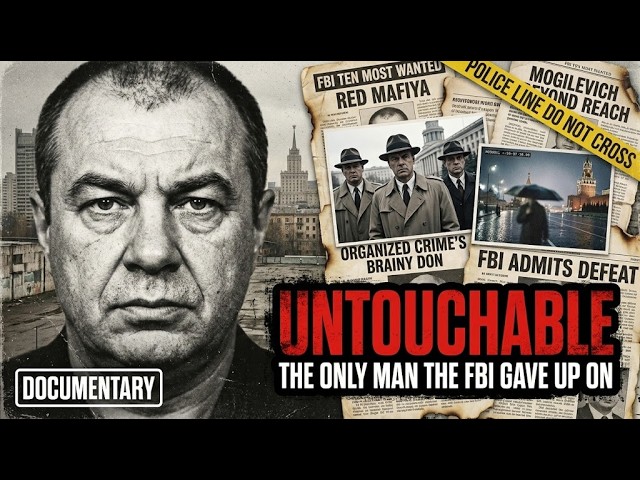
In 2015, the FBI did something unprecedented: they removed a fugitive from the Ten Most Wanted list, not because he was captured or killed, but because they realized they could simply never touch him.
This is the story of Semion Mogilevich, a man who didn't come from the streets, but from an economics classroom. While other criminals used brute force to seize assets during the fall of the Soviet Union, Mogilevich used complex corporate structures, legitimate stock exchanges, and the global financial system against itself. From scamming emigrating families to orchestrating the massive YBM Magnex fraud on the Toronto Stock Exchange, he built an empire that blurred the line between organized crime and state power.
But the true turning point of this story isn't the crime—it's the geography. This video analyzes how one man leveraged the concept of national sovereignty to render a 45-count US federal indictment completely useless, forcing the most powerful law enforcement agency on earth to cap its marker and walk away.
Timestamps:
00:00 - The List of Ten
01:11 - The Education of a "Brainy Don"
03:41 - The Collapse of the Soviet Union
06:40 - The YBM Magnex Corporate Fraud
09:13 - The Raid and The Crash
11:00 - The Extradition Problem
14:46 - Resource Allocation vs. Justice
15:28 - Deleted from the List
18:25 - The Uncomfortable Truth About Sovereignty
Sources & Further Reading:
- Federal Bureau of Investigation. "Semion Mogilevich - Ten Most Wanted Fugitive." (Archived).
- Friedman, Robert I. "Red Mafiya: How the Russian Mob Has Invaded America." Little, Brown and Company, 2000.
- United States District Court, Eastern District of Pennsylvania. "United States v. Semion Mogilevich et al." (Indictment).
- Glenny, Misha. "McMafia: A Journey Through the Global Criminal Underworld." Knopf, 2008.
#TrueCrime #FBI #Geopolitics #OrganizedCrime #Documentary
-~-~~-~~~-~~-~--~-~~-~~~-~~-~--~-~~-~~~-~~-~-
🕵️♂️ Global Mafia Universe - https://www.youtube.com/@GlobalMafiaUniverse?sub_confirmation=1
-~-~~-~~~-~~-~--~-~~-~~~-~~-~--~-~~-~~~-~~-~-
⚠️ Content Disclaimer
This video is created solely for educational and informational purposes.
We do not glorify, promote, or encourage any kind of criminal behavior or illegal activity.
All visuals, audio, and materials in this video are either:
✔️ AI-generated, or
✔️ Sourced from royalty-free platforms under valid licenses.
Some images, characters, and scenes have been created using artificial intelligence and are not depictions of real people or events.
No copyrighted material belonging to others has been used without permission.
❤️ Support the Channel
If you enjoy learning about true crime stories, history, and real-life mysteries, please:
✔️ Like the video
✔️ Subscribe to the channel
✔️ Share your thoughts in the comments
Your support helps us continue producing valuable and well-researched content!
🔧 Tools I Use to Grow This Channel
I personally use vidIQ to optimize my videos, find trending keywords, and grow faster on YouTube.
👉 Try it for free and experience the difference.
💼 Contact & Copyright Notice
If you believe any part of this video infringes on your rights, please contact me directly via YouTube.
I fully respect copyright laws and will respond promptly and professionally.
-~-~~-~~~-~~-~--~-~~-~~~-~~-~--~-~~-~~~-~~-~-
-
Show More Show Less View Video Transcript
0:00
in 25 years this had never happened
0:02
the FBI crossed out a name and walked away
0:08
The Federal Bureau of investigation keeps a list
0:11
10 names
0:12
the 10 most wanted fugitives in the United States
0:16
getting on that list means something
0:18
it means the full weight of the federal government
0:21
every field office every international partner
0:24
every tool available is pointed at you
0:27
since 1950 hundreds of names have appeared on that list
0:31
almost all of them end the same way arrest
0:34
extradition a perp walk in front of cameras
0:38
but in 2,015
0:40
something happened that had almost no precedent
0:43
the FBI removed a name from the list
0:45
not because they caught him
0:47
not because he died because they gave up
0:50
the events in this story are drawn from federal
0:53
indictments
0:54
court filings and published investigative reporting
0:57
where facts remain disputed
0:59
we say so his name was Semion Mogilevich
1:03
and to understand why
1:05
the most powerful law enforcement agency on earth
1:08
walked away from him
1:09
you have to go back decades to a different country
1:13
a different system a world that was about to collapse
1:16
and hand men like him the keys to everything
1:19
Semion Yudkovich Mogilevich was born on June 30th, 1946
1:25
the city was Kiev
1:27
in the Ukrainian Soviet Socialist Republic
1:30
he did not come from the streets
1:32
not in the way most organized crime stories begin
1:35
he studied economics at the university of Lviv
1:39
he earned a degree he understood systems
1:42
how money moved how institutions functioned
1:45
where the gaps were
1:47
that education would matter more than any weapon
1:49
he could have carried
1:50
in the Soviet Union of the 1960s and 70s
1:54
the official economy was one thing
1:57
the real economy the one that actually worked
2:00
was something else black markets favours
2:03
currency manipulation
2:05
connections to the right people in the right ministries
2:08
Modgilvich understood this second economy instinctively
2:12
not as a criminal enterprise
2:14
as the way things actually worked
2:17
his early operations were simple
2:19
he targeted Soviet Jews who were emigrating to Israel
2:23
families leaving the country had to sell everything
2:26
apartments possessions
2:28
whatever they couldn't carry
2:30
they were desperate they needed cash fast
2:33
modjilovic offered to help
2:35
he would buy their assets jewellery
2:37
art property
2:39
he'd promised to send the proceeds later
2:41
once they'd settled abroad
2:43
the exact words are lost
2:45
but the pattern is well documented
2:47
and it likely went something like this
2:50
you focus on getting your family out
2:52
I'll handle the rest
2:53
you'll have the money within 60 days
2:56
most of them never saw a ruble
2:58
it was a simple fraud but it worked at scale
3:01
hundreds of families maybe more
3:04
the emigrants were gone they had no legal recourse
3:07
no one to complain to no one who cared
3:10
and mojalevitch walked away with seed capital
3:13
enough to start building something much
3:15
larger by the late 1980s the Soviet Union was dying
3:20
not dramatically not all at once
3:23
but the structures that held the system together
3:25
the central planning the state monopolies
3:28
the party apparatus were rotting from inside
3:31
and in that rot a particular kind of man thrived
3:35
the men who understood how systems fail
3:37
who could see which assets would be available
3:40
when the state collapsed
3:41
who had already built networks in the shadow economy
3:45
modjilevitch was one of them
3:46
perhaps the smartest of all of them
3:49
when the Soviet Union officially dissolved in 1991
3:53
entire industries went up for grabs oil
3:56
gas metals
3:57
banking real estate
4:00
state enterprises
4:01
worth billions were privatized overnight
4:03
sold to whoever had cash and connections
4:06
most of the men who seized these assets
4:08
used brute force guns intimidation
4:12
the so called Wild East of Russian capitalism
4:16
Modigliani used paper contracts
4:19
shell companies intermediaries
4:21
layers upon layers of corporate structure
4:24
that made ownership impossible to trace
4:26
according to FBI assessments later made public
4:30
Modjilovich
4:31
built one of the most extensive criminal organizations
4:34
in the world during this period
4:36
its operations spanned weapons trafficking
4:39
drug trade extortion
4:41
contract killings and large scale fraud
4:45
but the genius if you can call it that
4:47
was in the structure he didn't run a gang
4:51
he ran a network
4:52
a former European intelligence official
4:55
speaking to journalists years later
4:57
put it plainly
4:58
he is the most dangerous mobster in the world
5:01
because he operates on a level most law enforcement
5:04
agencies cannot even see
5:07
whether that assessment is precisely accurate
5:11
is debatable
5:12
but the sentiment was shared across multiple agencies
5:16
in multiple countries to understand Mogilevich's power
5:20
you need to understand one thing about post Soviet
5:23
organized crime it didn't look like the Mafia
5:26
not like the Italian American version
5:29
not like anything
5:30
Hollywood had prepared the public to recognize
5:33
there were no sit downs no oath ceremonies
5:36
no five family structure instead
5:39
there was a web fluid
5:41
overlapping criminal networks
5:43
merged with legitimate businesses
5:45
which merged with state institutions
5:48
the line between government and organized crime
5:51
in Russia in Ukraine
5:53
in parts of Eastern Europe wasn't blurred
5:56
it didn't exist Mujilovich operated inside that reality
6:01
he had relationships with business oligarchs
6:04
he had connections to energy companies
6:07
and according to multiple law enforcement
6:09
and intelligence assessments
6:11
though the exact nature remains disputed
6:14
he had access to Protection at the highest levels
6:17
some investigators have argued that he
6:19
essentially became too intertwined with state
6:23
adjacent power structures
6:24
to be easily separated from them
6:27
this is interpretation not confirmed fact
6:30
but it's an interpretation
6:32
shared by investigators in at least three countries
6:36
and this is the detail that matters most
6:39
for what comes next because in the mid 1990s
6:43
Modjilovic did something
6:45
that would eventually put him on the FBI's radar
6:48
in a way he could never shake
6:50
he went corporate the company was called YBM
6:53
Magnex International on paper
6:56
it was a publicly traded company
6:58
listed on the Toronto Stock
7:00
Exchange in Canada
7:01
later on the Alberta Stock Exchange as well
7:05
it's stated business manufacturing industrial magnets
7:09
the company claimed to operate factories in Hungary
7:12
producing high tech magnets
7:14
for commercial and military applications
7:17
investors loved it the stock price climbed
7:20
at its peak YBM Magnex
7:22
had a market capitalization
7:24
that approached nearly $1 billion
7:27
there was only one problem
7:28
the magnets didn't exist or more precisely
7:32
the business that justified that valuation didn't exist
7:36
not at the scale the company claimed
7:38
what YBM Magnex actually was
7:41
according to the indictment that would later be filed
7:44
was a fraud a massive
7:47
carefully constructed fraud
7:48
designed to attract investment capital
7:51
inflate stock prices
7:53
and funnel money through a maze of shell companies
7:56
back to Madoff and his associates
7:58
the scheme worked like this
8:00
YBM reported revenues it showed contracts
8:04
it produced financial statements that looked legitimate
8:07
auditors reviewed the books and for years
8:10
nothing triggered alarm but behind the official numbers
8:14
investigators would later allege
8:16
the revenues were fabricated
8:18
contracts were fictitious
8:20
the Hungarian factories existed
8:23
but their output was a fraction of what was reported
8:26
the money flowing into YBM came from investors
8:29
who believed
8:30
they were buying into a real technology company
8:34
the money flowing out
8:35
went into a network of accounts and entities
8:38
controlled by people connected to Mogilevich
8:41
no recording survives of the conversations
8:44
that set this up but the meetings are documented
8:47
through corporate filings
8:49
and later testimony what was said behind closed doors
8:53
we can only reconstruct
8:55
it might have gone something like this
8:57
we don't need real products
8:59
we need real paperwork
9:01
the stock market doesn't buy magnets
9:03
it buys confidence and when they look closer by
9:07
then the money is already somewhere else
9:10
whether those were the exact words doesn't matter
9:13
the structure was real and it worked for years
9:16
on May 13th, 1998 the curtain came down
9:21
The Royal Canadian Mounted Police
9:23
the RCMP raided YBM Magnex's offices in Newmarket
9:28
Ontario the raid was coordinated with the FBI
9:32
what they found
9:33
confirmed what investigators had suspected
9:36
financial records that didn't add up
9:39
shell company documents
9:41
evidence of money being routed through entities
9:44
in Hungary the United Kingdom
9:46
the Channel Islands and elsewhere
9:49
trading in YBM stock was halted immediately
9:53
investors a pension funds
9:55
individuals
9:56
institutional money managers watched the stock collapse
10:00
hundreds of millions of dollars in market value
10:03
evaporated
10:04
the FBI's Philadelphia field office took the lead
10:07
on the American side of the investigation
10:10
in 2003 a federal grand jury
10:14
in the Eastern District of Pennsylvania
10:16
handed down a 45 count indictment
10:19
45 counts the charges included racketeering
10:23
securities fraud wire fraud
10:26
mail fraud
10:27
and the lead defendant listed first on the indictment
10:31
Semion Mogilevich the evidence was substantial
10:34
the paper trail was clear
10:37
investigators had traced the money
10:39
they had cooperating witnesses
10:41
they had the corporate records seized in the raid
10:44
by every measure
10:45
this should have been the beginning of the end
10:47
for Modigliani it wasn't
10:49
here's the problem an indictment is a
10:51
piece of paper a powerful one
10:54
but it requires something else to become a conviction
10:57
it requires the defendant to be present
11:00
mujilevich was not in the United States
11:03
he was not in Canada he was not in any country
11:06
that was going to hand him over
11:07
he was in Moscow
11:09
and Russia does not extradite its citizens
11:12
this is not a loophole it's not a technicality
11:15
it is a foundational principle of Russian law
11:18
Article 61 of the Russian Constitution
11:21
states that a citizen of the Russian Federation
11:24
cannot be expelled from Russia
11:26
or extradited to another state
11:28
the FBI knew this they had always known this
11:32
but the theory had been that
11:33
enough international pressure
11:35
enough visibility
11:37
enough diplomatic engagement might change the calculus
11:41
might make Moscow decide that
11:43
protecting one man wasn't worth the diplomatic cost
11:46
in 2009 the FBI escalated
11:50
they placed Semion Mogilevich
11:52
on the ten most wanted fugitives list
11:55
this was the nuclear option in law enforcement
11:58
visibility the list that had once featured names
12:01
like Osama bin Laden and James Whitey Bulger
12:05
the message was clear
12:07
a senior FBI official addressed the media at the time
12:12
Majalovich is one of the most significant
12:15
organized crime figures in the world
12:18
his placement on this list
12:20
signals our commitment to bringing him to justice
12:23
the commitment was real
12:25
the tools to fulfill it were not
12:27
in 2008 before the most wanted listing
12:30
something happened that should have been a breakthrough
12:33
Russian authorities arrested mojilevich in Moscow
12:37
the charge tax evasion related to a cosmetics company
12:41
a Russian case entirely domestic
12:44
for a brief moment
12:46
western law enforcement held its breath
12:48
if mojilevich was in custody
12:50
even on Russian charges there might be leverage
12:54
there might be a path there wasn't
12:56
he was released on bail
12:58
the charges were eventually dropped
13:00
he walked
13:01
some investigators interpreted this as a signal
13:04
not a legal proceeding but a message
13:07
that Modjilovic's connections
13:08
within Russia were strong enough to survive
13:11
even a direct arrest
13:13
others cautioned against reading too much into it
13:16
Russian tax cases collapse for many reasons
13:19
not all of them are conspiratorial
13:22
but the outcome was the same
13:23
either way Mojilevitch was free in Moscow
13:27
protected by a constitution
13:29
that would not allow his transfer
13:32
the FBI tried other approaches
13:34
they pressured through diplomatic channels
13:37
they worked with Interpol
13:38
they coordinated with European law enforcement agencies
13:42
they monitored his travel
13:44
because here was the thing about the most wanted list
13:47
it wasn't just symbolic it activated a global network
13:51
every border crossing every airport
13:54
every allied intelligence service
13:57
if mojilevich traveled to any country
13:59
with an extradition treaty with the United States
14:02
he could be detained
14:03
but mojilevich didn't travel to those countries
14:06
he stayed in Russia
14:08
or he traveled to countries where he knew or believed
14:11
he would not be touched year after year
14:14
the indictment sat in Philadelphia
14:16
the name sat on the list and nothing happened
14:19
the FBI doesn't discuss internal frustrations publicly
14:23
but people who worked the case
14:25
have spoken to journalists over the years
14:27
and the picture they paint
14:29
is one of institutional exhaustion
14:31
one retired agent speaking to a reporter on background
14:36
described it simply we had the case
14:39
we had the evidence
14:40
we had everything we needed except him
14:42
the sentence contains the entire story
14:46
evidence without a defendant is an archive
14:49
not a prosecution by the early 20
14:52
a quiet debate had begun inside the bureau
14:55
the most wanted list is not just a ranking
14:58
it is a resource allocation tool
15:00
every name on that list consumes investigative hours
15:04
field office attention international coordination
15:08
and the list has only 10 slots
15:11
the question was not whether Modjilovich was guilty
15:14
nobody inside the FBI doubted the case
15:18
the question was whether keeping his name on the list
15:21
was accomplishing anything
15:22
whether those resources that slot could do more good
15:25
pointed at someone who might actually be caught
15:28
it's an ugly question but law enforcement
15:31
like everything else runs on finite resources
15:35
in late 2,015 the FBI quietly removed Semion Mogilevich
15:40
from the ten most wanted fugitives list
15:43
there was no press conference
15:45
no formal announcement
15:47
the name simply disappeared from the website
15:50
when journalists noticed and asked
15:52
the bureau's response was careful
15:55
the indictment remained active
15:57
the charges stood
15:58
if Mladic ever set foot in a cooperating country
16:02
he would be arrested but the most wanted designation
16:06
the signal that this was an active
16:08
resource intensive pursuit
16:09
was gone for all practical purposes
16:13
the FBI had acknowledged what everyone already knew
16:16
they couldn't get him
16:18
and maintaining the pretense wasn't helping
16:20
but wait if the indictment was solid
16:23
45 counts a clear paper trail
16:26
cooperating witnesses
16:28
why couldn't international pressure force the issue
16:31
this is where the story shifts
16:33
from crime to geopolitics
16:35
Russia's refusal to extradite is not about Modigliani
16:38
specifically it is about sovereignty
16:41
about the principle
16:43
that no foreign power can reach into Russia
16:45
and remove a citizen but principles exist in context
16:49
and the context of Mogilevitch's Protection
16:52
raises questions that go beyond constitutional law
16:56
multiple investigative journalists
16:58
and intelligence analysts
17:00
have asked the same question over the years
17:03
why would Russia protect this particular man
17:06
the answers vary and none of them are fully confirmed
17:10
some investigators believe
17:12
mujahideen has provided services to Russian state
17:16
interests over the years
17:18
acting as an intermediary in energy deals
17:21
financial transactions or other activities
17:24
where official channels would be inconvenient
17:27
others argue
17:28
he simply benefits from the same constitutional
17:31
Protection any Russian citizen would receive
17:34
that there's no special arrangement
17:36
just the law applied equally
17:39
the journalist Robert Friedman in his 2000 book
17:42
Red Mafia described Modigliani as
17:45
perhaps the most powerful mobster in the world
17:49
Friedman's reporting linked Modigliani
17:51
to weapons trafficking nuclear material concerns
17:55
and deep connections to post Soviet power structures
17:59
not all of Friedman's claims have been
18:01
independently verified some remain disputed
18:04
but
18:05
his reporting helped shape the western understanding
18:07
of who mujahideen was and
18:10
why he mattered the truth is
18:12
probably
18:12
somewhere in the middle of all these assessments
18:15
and it is almost certainly
18:16
more complicated than any single narrative can capture
18:20
what is not in dispute is the result
18:23
the man stayed free
18:24
the indictment gathered dust and the FBI moved on
18:29
now
18:29
here is the question this story forces you to sit with
18:33
the FBI's decision to remove Modigliani was rational
18:37
pragmatic defensible
18:39
but it creates a precedent
18:41
or at least an example
18:42
that should make anyone uncomfortable
18:45
because Modgilovich
18:46
is not the only person operating in that gray space
18:49
between organized crime and state Protection
18:53
he's not the only figure
18:54
who has Learned that the right passport
18:56
the right country the right connections
18:59
can make an indictment meaningless
19:01
the 45 count indictment against him
19:04
is a Monument to what law enforcement can build
19:07
and simultaneously
19:09
a Monument to what law enforcement cannot do
19:12
the evidence is there the charges are there
19:15
the legal framework is there
19:17
but the man is over there in a country that says no
19:21
and no amount of investigative excellence
19:23
can change that single word
19:25
some researchers have pushed this analysis further
19:29
their argument contested
19:30
not consensus is that
19:32
globalization has created a new category of criminal
19:36
not the street level operator
19:38
not even the traditional organized crime boss
19:41
who eventually gets caught
19:43
something different
19:44
a figure who operates across jurisdictions so fluidly
19:49
that no single country's legal system can contain him
19:52
who understands that sovereignty itself
19:55
the principle that makes nations
19:57
nations can be used as a shield
20:00
mujilevich may be the most visible example
20:03
but the pattern these researchers argue
20:05
is not unique to one man
20:07
how many others operate in the same space
20:10
protected by the same structural realities
20:13
sophisticated enough to stay in countries where the law
20:16
their country's law genuinely protects them
20:20
nobody knows that's the point
20:22
and there's one more layer to this
20:24
one that rarely gets discussed
20:26
the YBM Magnex case didn't just expose Modjilovic
20:30
it exposed a system a publicly traded company
20:34
on a legitimate stock exchange
20:37
reviewed by auditors bought by pension funds
20:41
by ordinary investors who thought they were putting
20:43
money into a technology company
20:46
the fraud didn't succeed
20:47
because Madoff was a criminal genius
20:50
operating outside the system
20:52
it succeeded because he operated inside it
20:55
he used the system's own tools
20:57
stock exchanges corporate filings
21:00
auditing firms investment banks
21:02
against itself the Toronto Stock Exchange
21:06
the Alberta Stock Exchange
21:08
the financial infrastructure of western capitalism
21:11
these weren't victims they were vehicles
21:14
and when it all collapsed
21:15
the people who lost money were the last to know
21:18
the pension funds the individual investors
21:22
the people who trusted that a publicly listed company
21:25
had been properly vetted this is perhaps
21:27
the most uncomfortable part of the story
21:30
the system that was supposed to prevent fraud
21:33
the regulators the auditors
21:35
the exchanges didn't catch it in time
21:38
they caught it eventually
21:40
but by then the money was gone routed
21:43
through shell companies in multiple countries
21:46
layered
21:47
through jurisdictions that don't share information
21:49
easily moved
21:50
by people who understood
21:52
exactly how to exploit the gaps
21:54
between national legal systems
21:56
the 45 count indictment proved the fraud
22:00
it documented the mechanism
22:02
it traced the money but it couldn't reverse the damage
22:06
and it couldn't reach the man at the center
22:08
Semion Mogilevitch is as of this recording
22:11
believed to be alive and living in Moscow
22:14
he is in his late seventies
22:16
the indictment in Philadelphia remains active
22:20
technically he is still a wanted man
22:22
if he crossed into any country
22:24
willing to cooperate with American law enforcement
22:27
he could be arrested extradited and tried
22:30
but no one who follows this case expects that to happen
22:34
he won not in a courtroom
22:36
not by proving his innocence
22:38
he won by being unreachable
22:40
by living in the one place
22:41
where the longest arm of American law cannot extend
22:45
and the FBI the agency
22:47
that put Osama bin Laden's name on the same list
22:51
looked at its options looked at its resources
22:54
looked at the reality of the situation
22:56
and crossed his name off not with a conviction
23:00
not with handcuffs with a red marker
23:02
if this story made you think about power differently
23:06
about where law ends and geography begins
23:09
consider subscribing
23:11
there are more stories like this one
23:13
stories where the system works perfectly
23:16
and still loses we'll see you in the next one
Arts & Entertainment