Up next in 10


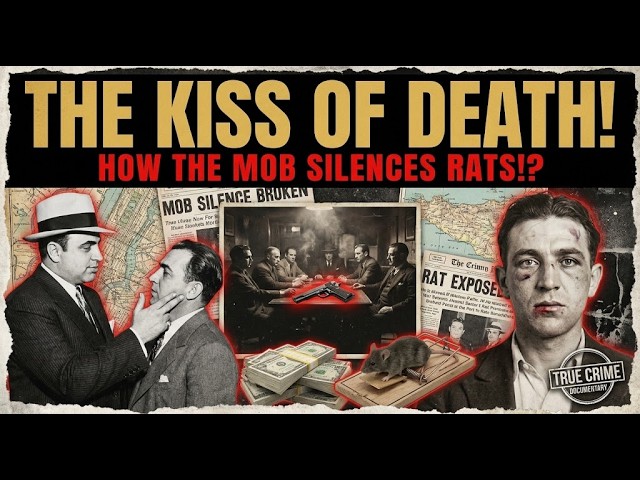
There's a reason the F-B-I spent sixty years trying to break the mafia.
It wasn't the guns. It wasn't the money. It was the silence.
Omertà — the code that turns men into ghosts. The rule that says death is preferable to testimony. For generations, this single word protected an empire worth billions.
But what does it actually cost to keep that silence? What happens inside the mind of a man who watches his friends murdered and says nothing? And what waits for those who finally decide to speak?
This documentary explores the psychological destruction of lifelong silence, the physical annihilation of those who break it, and the rare few who survived both.
🔍 Featuring never-explained details about the most famous informants in organized crime history — and some whose names you've never heard, because speaking cost them everything.
📚 Based on court testimony, F-B-I files, and firsthand accounts from the witness protection program.
📚 Sources and Further Reading:
→ "The Valachi Papers" by Peter Maas — foundational text on first public omertà breach
→ "Men of Honour" by Giovanni Falcone — prosecutor's account of Buscetta cooperation
Show More Show Less View Video Transcript
0:00
The word itself is Sicilian om. And for
0:04
centuries it meant something simpler
0:07
than what it became. Manliness,
0:10
self-reliance.
0:11
The idea that a man handles his own
0:14
problems without running to authorities.
0:16
But somewhere along the way that meaning
0:19
hardened into something else, a rule, a
0:22
law, an absolute. You do not speak. You
0:25
do not testify. You do not acknowledge
0:28
to anyone outside the family that the
0:30
family even exists. And if you break
0:33
this rule, if you violate this sacred
0:36
silence, you die. Your family might die.
0:40
Your memory will be erased from the
0:42
world as if you never existed. What
0:45
you're about to hear is based on
0:47
documented history. Some conversations
0:50
have been recreated for narrative
0:52
purposes, but the suffering was real.
0:55
The deaths were real and the silence
0:58
that was the most real thing of all.
1:01
This is the story of oma not as a
1:03
concept as a lived experience. What it
1:07
costs to keep it. What it costs to break
1:09
it and why even now some men choose
1:12
death over words. The origins trace back
1:15
to Sicily 19th century. The island had
1:19
been invaded, conquered, and ruled by
1:22
foreign powers for so long that its
1:24
people developed a deep and justified
1:27
mistrust of any official authority. The
1:30
Spanish, the Bourbons, the Piedmont,
1:34
each new ruler brought new taxes, new
1:37
soldiers, new laws that served everyone
1:39
except the Sicilians themselves. So the
1:43
people created their own system, their
1:46
own courts, their own justice. If
1:49
someone wronged you, you didn't go to
1:51
the authorities. You went to men who had
1:54
power within the community. Men who
1:57
could solve problems, men who eventually
2:00
became the mafia. And the foundation of
2:03
that entire system was silence. Because
2:06
the moment you spoke to outsiders, you
2:08
betrayed not just a criminal
2:10
organization.
2:12
You betrayed your neighbors, your
2:14
culture, your blood. According to
2:17
historians who have studied Sicilian
2:19
culture,
2:21
wasn't invented by criminals. It was
2:23
adopted by them. They took a cultural
2:26
value and weaponized it. They made it
2:29
absolute. They attached the ultimate
2:31
penalty. A man named Jusp Ferrara wrote
2:35
about this in 1892.
2:38
He described Omata as the law of the
2:40
land in western Sicily. Quote, "Even the
2:44
victim of a crime, bleeding, and near
2:47
death will tell the police nothing. He
2:50
will say he fell. He will say he doesn't
2:53
remember. He will die with the lie on
2:55
his lips." That wasn't hyperbole. Court
2:58
records from the era confirm dozens of
3:01
cases where murder victims, still
3:03
conscious, refused to name their
3:05
killers. Some died looking their
3:08
assassins in the eye and saying nothing.
3:11
Why? Because speaking brought
3:13
consequences worse than death. It
3:16
brought shame. It brought the
3:18
destruction of your family's honor. It
3:20
meant your children would grow up as the
3:22
offspring of an informer. In some
3:25
communities, that stain lasted
3:28
generations. The mafia didn't create
3:30
this culture. They perfected it. They
3:34
systematized it. And when Italian
3:36
immigrants came to America in the late
3:39
1800s and early 1900s, they brought with
3:43
them in the tenementss of New York in
3:46
the neighborhoods of Chicago, Boston,
3:49
Philadelphia, New Orleans, wherever
3:52
Italians clustered together. The old
3:54
rules applied. Don't talk to police.
3:57
Handle things internally. Silence equals
4:01
loyalty. Loyalty equals survival. The
4:05
American authorities didn't even know
4:07
the mafia existed for decades. Not
4:10
officially. As late as 1951,
4:13
FBI director J. Edgar Hoover publicly
4:16
denied that any organized
4:19
Italian-American criminal conspiracy
4:22
operated in the United States. How is
4:25
that possible? How could the most
4:27
powerful law enforcement agency in the
4:30
country miss something this large? Omar,
4:34
that's how nobody talked. Not the
4:37
victims, not the witnesses, not the
4:39
participants. The silence was so
4:42
complete that federal investigators had
4:44
almost nothing to work with. No
4:47
testimony, no confessions, no insiders
4:51
willing to explain how the system
4:53
functioned. For 60 years, the FBI had to
4:56
piece together the mafia's structure
4:58
through surveillance, through wiretaps,
5:01
through informants who provided
5:03
fragments, but never the full picture.
5:06
And then in 1963,
5:09
something changed. His name was Joseph
5:12
Valera. Joseph Vari,
5:15
a low-level soldier in the Genov's crime
5:18
family, a man who had never been
5:21
particularly important, never
5:23
particularly trusted, never particularly
5:26
successful. But Valachi became the first
5:29
made member of the American mafia to
5:31
publicly break Omata to sit before a
5:34
Senate committee to name names, describe
5:38
rituals, explain the structure of Kosa
5:41
Nostra. The question is why him? Why
5:45
then? And the answer tells you
5:47
everything about what Omita actually
5:49
costs. Valache was in prison, federal
5:53
facility, Atlanta. He'd been convicted
5:56
on drug charges and was serving a
5:58
15-year sentence. That should have been
6:01
manageable. Men did long stretches all
6:04
the time. You kept your mouth shut. You
6:07
did your time. You came home to respect
6:10
and possibly a promotion, but Valache
6:13
believed he was going to be killed. His
6:15
boss, Veto Genov, was in the same
6:19
prison. and Genov had received
6:21
information, accurate or not, that
6:24
Valache was already cooperating with the
6:26
FBI that he was an informant. He wasn't,
6:30
not yet. But Genevies believed he was,
6:33
and in that world, belief equals
6:35
sentence. Valache began receiving the
6:38
signs. Men who had been friendly stopped
6:41
speaking to him. Guards reported that
6:44
other inmates were asking about his
6:46
schedule, his cell location, his
6:49
routines. A man he'd known for 20 years
6:52
looked at him one day and made a small
6:55
gesture with his hand across his throat.
6:58
The kiss of death, that's what they
7:00
called it. Once you received it, your
7:03
time was measured in days, maybe hours.
7:07
According to Valach's later testimony,
7:09
he stopped sleeping. He obtained a metal
7:12
pipe and kept it hidden in his cell. He
7:15
watched every face, every movement,
7:18
every shadow. And then on June 22nd,
7:21
1962, he saw a man approaching him in
7:24
the prison yard. Someone he believed had
7:27
been sent to kill him. Valache struck
7:30
first. He beat the man to death with the
7:32
pipe. Except it was the wrong man.
7:35
Joseph Sorp, another inmate, not a mafia
7:39
member at all. just someone who happened
7:41
to be walking in the same direction.
7:44
Valache had killed an innocent man and
7:47
now he faced a murder charge on top of
7:49
his drug conviction, life in prison,
7:53
maybe execution, and he was still going
7:55
to be killed by Genovis's people. The
7:59
only thing that had changed was that now
8:01
he had nothing left to lose. So he
8:04
talked at first just to the FBI, then to
8:08
the Senate Permanent Subcommittee on
8:10
Investigations,
8:12
then eventually to the entire country
8:16
via televised hearings. The
8:18
psychological cost was immediate.
8:21
Valache later described the period after
8:24
he began cooperating as the loneliest
8:26
time of his life. Quote, "I got nobody.
8:30
My family don't want to know me. My
8:32
friends would kill me if they could
8:34
reach me. Even the agents watching me, I
8:37
can tell they think I'm garbage. I'm
8:40
useful garbage, but garbage. He was
8:43
right about his family. His wife refused
8:46
to visit. His children changed their
8:48
names. His brothers issued public
8:51
statements downing him. In the world he
8:54
came from, he was worse than dead. He
8:56
was a non-person, an informer, the
8:59
lowest form of life imaginable. And what
9:02
did he get in return? Protection, a
9:05
private cell. Eventually, a transfer to
9:08
a different facility. He lived until
9:11
1971,
9:12
dying of a heart attack at age 66.
9:16
9 years in protective isolation.
9:19
9 years without a single visit from
9:22
anyone who knew him before. 9 years of
9:25
being alive but not existing. Was that
9:28
better than the alternative? That
9:30
depends on how you measure survival. His
9:33
heart kept beating. But everything else
9:36
that made him who he was had already
9:38
been killed the moment he opened his
9:40
mouth. Here's what the FBI doesn't tell
9:43
you when they recruit informants. Here's
9:46
what the prosecutors don't mention when
9:48
they're making their deals. Talking
9:50
doesn't end when the testimony is over.
9:53
Talking is permanent. It restructures
9:56
your entire reality. You can never go
9:59
back. You can never pretend it didn't
10:02
happen. You can never have a normal
10:04
conversation with anyone from your
10:06
previous life. Because the moment you
10:09
cooperated, you became something else.
10:12
Something the system needs but doesn't
10:15
respect. Something your former
10:17
associates want dead but can't reach.
10:20
Something your family doesn't recognize.
10:23
You exist in a space between worlds and
10:26
that space has no exit. 20 years after
10:30
Valachi, another man made the same
10:32
choice. But this one was different. This
10:35
one actually knew things. His name was
10:38
Tomaso Basetta to Mahhzo Bushetta. And
10:43
in the hierarchy of men who broke, he
10:46
stands alone. Basetta was not a
10:49
low-level soldier. He was a boss, a true
10:52
man of honor within the Sicilian mafia,
10:55
connected to the most powerful families
10:57
in Palamo, the Gambino organization in
11:01
New York, drug networks spanning three
11:04
continents. When he decided to talk in
11:07
1984, he didn't just provide names, he
11:11
provided structure. He explained how the
11:14
Sicilian cup functioned. He mapped power
11:17
relationships that investigators had
11:20
been guessing at for decades. He turned
11:23
the Italian government's understanding
11:26
of organized crime upside down. But
11:29
before he talked, he paid a price that
11:32
would break most men entirely. Between
11:35
1982 and 1984, the Coroni faction of the
11:39
Sicilian mafia killed over a dozen of
11:42
Basetta's relatives. his two adult sons,
11:46
his brother, his nephew, his son-in-law,
11:50
his brother-in-law. They killed his
11:52
first wife's brother. They killed
11:55
friends who had known him since
11:56
childhood. This was not random violence.
12:00
This was a message. You want to oppose
12:02
us? Watch everyone you love disappear.
12:05
Basetta fled Brazil, then back to Italy
12:09
after being extradited and in prison,
12:12
facing either execution by his enemies
12:15
or a lifetime of running. He made a
12:18
decision. He would talk not for money,
12:21
not for immunity, but for what he called
12:23
vendetta. Quote, "They destroyed
12:26
everything I had, my family, my friends,
12:29
my world. The only thing I can do now is
12:32
destroy them in return. and the only
12:35
weapon I have left is my voice. The
12:38
Italian prosecutor Gavanni Falonee
12:40
became his handler. For months, Basetta
12:43
talked, hundreds of hours of testimony,
12:46
names, dates, murders, the exact
12:49
procedure for becoming a maid member.
12:52
The rules about who could be killed and
12:54
who was protected. This testimony became
12:57
the foundation for the Maxi trial in
13:00
Palamo. 474 defendants, 360 convictions,
13:06
the largest organized crime prosecution
13:08
in Italian history. Basetta had kept his
13:12
word. He had used his voice as a weapon.
13:15
He had hurt them badly. And then he
13:17
spent the rest of his life waiting to
13:19
die. The US Marshall's service relocated
13:22
him. New identity, new city, new life.
13:27
He married again. He tried to build
13:30
something normal, but according to
13:32
people who knew him in those years, he
13:35
never slept through the night. He
13:37
checked every car before entering. He
13:40
studied faces on the street, looking for
13:42
anyone who might be from the old world.
13:45
He kept weapons in every room. When he
13:48
died of cancer in 2000, some said it was
13:51
the only death his enemies couldn't
13:53
arrange, but others said the cancer was
13:57
almost a relief. 20 years of waiting for
14:00
assassination, had taken something from
14:03
him that Medson couldn't measure. His
14:06
son, one of the sons who survived, gave
14:08
an interview years later. Quote, "My
14:12
father saved many lives with his
14:14
testimony, but his own life ended the
14:16
day he started talking. Everything after
14:19
that was just aftermath. The physical
14:22
cost of breaking Omata is obvious.
14:25
Death, usually violent, often extended
14:29
to family members, but the psychological
14:32
cost is harder to see, and it might be
14:34
worse. Consider what happens to a man's
14:38
identity when he becomes an informant.
14:40
For most of his life, he understood
14:42
himself through his relationships. He
14:45
was a member of something. He had status
14:47
within that membership. He knew who he
14:50
was because other people confirmed it
14:52
every day. Then he talks and instantly
14:56
he becomes the opposite of everything he
14:58
was before. He was trusted. Now he's the
15:01
definition of betrayal. He was
15:04
respected. Now he's despised. He was
15:07
protected. Now he's hunted. He was part
15:10
of a community. Now he's utterly alone.
15:13
Psychologists who have studied protected
15:16
witnesses describe something they call
15:18
identity dissolution. The informant
15:21
literally doesn't know who he is
15:22
anymore. His old self is dead, killed by
15:26
his own actions. But his new self is a
15:29
fiction created by federal marshals. A
15:32
fake name, a fake history, a fake
15:35
person. Some are just. They build new
15:38
lives, new relationships, new identities
15:42
that eventually feel real. But many
15:44
don't. The statistics on protected
15:47
witnesses are grim. higher rates of
15:50
depression, higher rates of substance
15:52
abuse, higher rates of suicide attempts
15:56
than the general population, and a
15:58
surprising number eventually blow their
16:01
own cover. They contact old friends.
16:05
They return to familiar places. They do
16:08
things that make no logical sense given
16:10
the danger. Why? Because the
16:13
psychological weight of permanent
16:15
disconnection from everything they knew
16:17
becomes unbearable. The loneliness eats
16:20
through the survival instinct. One
16:23
former US marshal who worked in witness
16:26
protection for 15 years put it this way.
16:30
These guys trade one death sentence for
16:32
another. The mob wants to kill their
16:35
body. Protection kills their soul. I've
16:39
seen men choose to leave the program
16:41
knowing they'd probably be murdered
16:43
within weeks. And I understood why. Some
16:46
things are worse than dying. Not
16:49
everyone who breaks Omata becomes a
16:52
public figure. Not everyone testifies on
16:55
television or brings down major
16:57
organizations.
16:59
Some just whisper a name to a detective.
17:03
A warning to a potential victim. a
17:06
single piece of information passed in a
17:08
moment of weakness or conscience. These
17:11
small breaks are more common than the
17:13
big ones, and they're often more
17:15
dangerous because when you testify
17:18
publicly, at least you get protection.
17:21
When you whisper, you get nothing but
17:23
the risk. There was a man in
17:25
Philadelphia, we'll call him Anthony,
17:28
though that wasn't his name, who
17:30
provided information to federal
17:32
investigators in the late 1980s.
17:36
Not testimony, not recorded statements,
17:39
just information passed along quietly,
17:42
never attributed to a source. According
17:45
to investigators who worked the case,
17:48
Antony provided details about a murder
17:51
conspiracy that allowed the FBI to
17:53
prevent at least two killings. He did it
17:56
because one of the potential victims was
17:59
a friend of his brother, a civilian who
18:02
had stumbled into something he didn't
18:04
understand. Antony saved lives, but he
18:07
couldn't tell anyone. He couldn't claim
18:10
credit. He couldn't explain why he'd
18:12
done it. And then about 18 months later,
18:15
he was found in the trunk of his car
18:17
near the Philadelphia airport. The
18:20
official investigation went nowhere. No
18:23
witnesses, no evidence, no one talking,
18:27
but investigators believed they knew
18:29
what happened. Antony had been careless.
18:32
He'd said something to someone in a
18:35
moment of pride or guilt and that
18:37
someone had passed it along. He died for
18:40
whispering. He died without ever
18:42
publicly breaking Omatar. He died with
18:46
his reputation intact in the criminal
18:48
world. Just another unsolved murder.
18:51
Just another body in a trunk. His family
18:54
never knew why he was killed. They
18:57
probably still don't. The people whose
19:00
lives he saved never knew he saved them.
19:03
They went on living having no idea that
19:06
their existence was purchased by a man
19:09
they'd never meet. That's the invisible
19:11
cost of partial silence. The deaths
19:14
nobody counts as a consequence of Omata
19:18
because the connection is never made
19:19
public. So why does anyone keep the
19:22
code? Given everything it costs given
19:25
the fear and the isolation and the
19:27
constant threat, why not just talk? The
19:31
answer is more complicated than it might
19:33
seem. Fear is part of it. Obviously, the
19:37
mafia has demonstrated over centuries
19:40
that breaking Omatar brings death, not
19:43
just possible death. Almost certain
19:45
death eventually. The men who survive
19:48
are exceptions that prove the rule. But
19:51
fear isn't the whole story. Plenty of
19:54
men have overcome fear in other
19:56
contexts. Soldiers face death. Activists
20:00
face death. Whistleblowers face death.
20:04
Fear can be conquered. What can't be
20:06
easily conquered is identity. When
20:09
you've built your entire adult life
20:12
around a specific set of values, when
20:15
your sense of self depends on belonging
20:17
to a particular group, when your status
20:20
and meaning all derive from that
20:22
membership, breaking with the group
20:25
doesn't just endanger your body, it
20:28
destroys your reason for being. A
20:30
psychologist who consulted on several
20:33
organized crime cases described it this
20:36
way. These men don't stay silent
20:39
primarily because they're afraid to die.
20:42
They stay silent because talking would
20:45
make them nothing. In their world, an
20:48
informant isn't even human. He's less
20:50
than an animal. To become that, for many
20:54
of them, death really is preferable.
20:57
This is what law enforcement often
20:59
doesn't understand. They offer
21:01
protection. They offer money. They offer
21:04
reduced sentences. And they are
21:06
genuinely confused when men refuse these
21:09
offers. But they are offering survival
21:12
in exchange for identity. And for some
21:15
people, that's not a trade worth making.
21:18
Henry Hill made the trade. Henry Hill,
21:21
the man who became famous through the
21:23
book Wise Sky and the film Good Fellas.
21:26
He wasn't Italian, which meant he could
21:28
never be formally made, but he was
21:31
deeply embedded in the Luis crime family
21:34
for decades. Hijackings,
21:37
drug deals, the Luansa heist. He was
21:40
there for a lot of it. And then in 1980,
21:44
facing drug charges and the very real
21:47
possibility that his bosses would have
21:49
him killed to prevent him from talking,
21:51
he flipped. The testimony he provided
21:54
helped convict dozens of people,
21:57
including major figures in the Lucis and
21:59
Gambino families. He was placed in
22:02
witness protection. New name, new
22:05
location, new life. But Henry Hill
22:08
couldn't stay hidden. He got arrested
22:11
again. Drug charges, assault over and
22:15
over. He got kicked out of the witness
22:17
protection program. He wrote books. He
22:20
gave interviews. He appeared on
22:22
television under his real name, living
22:25
openly, daring the mafia to find him.
22:28
Why? Because hiding wasn't living.
22:30
Because the person Henry Hill was could
22:33
not survive as someone else. In
22:36
interviews late in his life, Hill was
22:38
remarkably honest about this. Quote, "I
22:41
couldn't be nobody. I know that sounds
22:43
stupid. These guys want to kill me and
22:46
I'm putting my face on TV. But you got
22:49
to understand that other life, the fake
22:52
name, the fake story, pretending I was
22:55
some regular guy from wherever. I was
22:57
dying inside. At least this way. I'm
23:00
dying as myself." He died in 2012.
23:05
natural causes, heart trouble
23:07
complicated by decades of hard living.
23:10
He was 69 years old. He had survived
23:13
over 30 years after breaking Omata. No
23:17
one from his former world ever got to
23:19
him. But the life he lived in those 30
23:22
years was chaotic. Marriages failed.
23:26
Business ventures collapsed. He
23:28
struggled with addiction. He was always
23:31
performing, always selling his story,
23:33
always Henry Hill, the famous informant.
23:37
Some would say he beat the system. He
23:39
talked and he lived. Others would say
23:42
the system beat him in a different way.
23:44
He could never be anything other than
23:46
what he had been. His identity was
23:49
frozen in 1980, the moment he chose to
23:52
cooperate. For all his bravado, Hill
23:56
sometimes let the mask slip. In one
23:59
interview recorded about 5 years before
24:01
his death, he was asked if he had any
24:04
regrets. He paused for a long time and
24:08
then he said, "I miss the friends, not
24:10
the life, not the business, but there
24:13
were guys I loved and they'd kill me now
24:16
if they saw me. That's the thing nobody
24:18
tells you. You don't just lose enemies
24:20
when you flip, you lose everyone." The
24:23
1980s and 1990s saw something
24:26
unprecedented in organized crime
24:29
history. OMA began to crack, not just
24:32
individual exceptions, a pattern. Joe
24:36
Masino, boss of the Banano family,
24:39
became the first official boss of a New
24:41
York family to break the code. Salvat
24:44
Graano, under boss of the Gambino
24:47
family, testified against John Goti and
24:51
became the highest ranking American
24:54
mobster ever to cooperate. In Italy, the
24:57
Pentiti, the penitent ones, multiplied,
25:01
hundreds of mafia members turned states
25:03
evidence following the Betta example.
25:06
What changed? Part of it was Rico. The
25:10
Racketeer Influenced and Corrupt
25:12
Organizations Act, passed in 1970, gave
25:16
federal prosecutors a weapon they'd
25:19
never had before. It allowed them to
25:21
charge entire organizations, not just
25:24
individuals. It carried sentences of 20,
25:28
30, 40 years. Life in some cases. When
25:32
you're facing that kind of time, the
25:35
calculation changes. 20 years of silence
25:38
starts to feel different than 5 years of
25:41
silence. But RICO was only part of the
25:45
story. The men themselves had changed.
25:48
The generation that came of age in the
25:51
1960s and '7s hadn't experienced the old
25:55
country. They'd grown up in American
25:57
suburbs, not Sicilian villages. The
26:01
cultural weight of Omata, the shame
26:04
attached to breaking it meant less to
26:06
them. And perhaps most importantly, the
26:09
organization itself had changed. In the
26:12
old days, the families operated with a
26:15
certain code. You didn't kill civilians.
26:18
You didn't touch families. You didn't
26:21
kill made men without permission from
26:23
the bosses. There were rules. But by the
26:26
1980s, some families had abandoned those
26:29
rules. The Corleó in Sicily killed women
26:33
and children. John Goti in New York
26:36
broke every protocol about publicity and
26:39
restraint. The organization was eating
26:42
itself. When you're part of a system
26:44
that no longer honors its own
26:46
principles, loyalty becomes harder to
26:49
maintain. Why keep faith with men who
26:52
wouldn't keep faith with you? Salvat
26:55
Graano, Sami the bull they called him,
26:58
is an interesting case study in this
27:01
shift. Graano was a killer. By his own
27:05
admission, he participated in 19
27:08
murders. He was as deep in the life as
27:10
any man could be. inducted into the
27:13
Gambino family, rose to under boss John
27:17
Goty's right hand, and then Goti was
27:20
caught on tape in a bugged apartment
27:22
dismissing Graano, calling him greedy,
27:25
suggesting he might become a liability.
27:28
Graano heard those tapes and something
27:31
shifted. According to his later
27:33
statements, the betrayal he felt wasn't
27:36
about danger. It was about respect. He
27:39
had killed for Gotti. He had risked
27:41
everything for Goty and Goty was talking
27:44
about him like he was nobody. Quote, I
27:47
listened to those tapes and I realized
27:50
this guy would give me up in a second if
27:52
it helped him. All that loyalty stuff,
27:55
all that honor talk, it was garbage. It
27:58
only went one way. Whether you believe
28:01
Graano's justification or not, and many
28:04
don't, his decision illustrates
28:06
something important. Omar works when
28:10
everyone keeps it. When men believe
28:12
others will stay silent for them as they
28:14
are staying silent for others. But the
28:17
moment that belief cracks, the whole
28:19
structure becomes unstable. Why
28:22
sacrifice yourself for people who
28:24
wouldn't sacrifice for you? Graano
28:27
cooperated. He testified against Goty
28:31
and dozens of others. He entered witness
28:34
protection and then like Henry Hill, he
28:37
couldn't stay away from crime. In 2000,
28:41
he was arrested in Arizona running a
28:44
major ecstasy distribution operation. He
28:47
went back to prison. Some people said
28:50
this proved he was garbage all along. A
28:52
rat who couldn't even function in
28:55
legitimate society. Others saw it
28:58
differently. A man whose entire identity
29:01
was formed in the criminal world
29:03
couldn't simply become someone else. The
29:06
witness protection program could change
29:08
his name, his location, his documents,
29:12
but it couldn't change who he was
29:14
inside. He's still alive in prison now,
29:18
scheduled for release in the next few
29:21
years, over 80 years old. Whatever life
29:24
remains to him will be spent looking
29:26
over his shoulder. Was it worth it? The
29:29
question assumes there was ever really a
29:32
choice. The families haven't forgotten
29:34
how to enforce Omatar. They've just had
29:37
to become more creative about it. In the
29:40
old days, enforcement was direct. You
29:43
talked, you died, usually quickly.
29:46
Sometimes with a message, the tongue cut
29:48
out, the hands removed. Symbolism
29:51
mattered. But with so many members in
29:54
witness protection with the FBI watching
29:57
known associates with surveillance
30:00
technology making direct hits more
30:03
difficult, the families adapted. They go
30:07
after the things you love instead of
30:09
you. According to federal prosecutors
30:12
who worked organized crime cases in the
30:15
2000s, there was a noticeable shift in
30:18
intimidation tactics. Rather than
30:21
killing informants directly, which was
30:24
often impossible, they targeted their
30:26
unprotected relatives. A brother who
30:29
wasn't in the program, a cousin back in
30:32
the old neighborhood, a childhood
30:35
friend. These killings served multiple
30:38
purposes. They punished the informant by
30:40
destroying people he cared about. They
30:43
demonstrated that cooperation brought
30:46
suffering, even if it didn't bring
30:48
personal death. and they sent a message
30:50
to anyone else who might be considering
30:53
talking. You can hide. Your family
30:56
can't. One case, and I'm being
30:59
deliberately vague because some of the
31:01
people involved are still living,
31:04
involved an informant whose testimony
31:07
brought down a significant portion of a
31:10
New England operation in the early
31:12
2000s. He was relocated. New identity.
31:17
West Coast started over, but his elderly
31:20
mother refused to leave. She'd lived in
31:23
the same neighborhood for 40 years. Her
31:26
church was there, her friends,
31:28
everything she knew. 3 years after his
31:31
testimony, she died in what was
31:33
officially ruled a home invasion
31:35
robbery. Nothing was taken from her
31:38
house. The investigation went nowhere.
31:41
No witnesses, no evidence, nothing that
31:44
could connect the death to the testimony
31:46
her son had given years earlier. But
31:49
everyone understood. The informant gave
31:52
an interview to a journalist about 5
31:54
years later using a pseudonym. He said
31:57
the hardest part wasn't fear for
31:59
himself. It was living with the
32:01
knowledge that his mother might have
32:03
died because of his choices. quote,
32:06
"They couldn't get to me, so they got to
32:09
her, and I have to live with that. Every
32:11
day I wake up knowing that if I had just
32:14
kept my mouth shut, she might still be
32:16
alive. She might have had five more
32:19
years, 10 more years, and I took that
32:22
from her." He paused for a long time
32:25
after saying that. The journalist
32:27
reported that he seemed to be deciding
32:30
whether to continue. Finally, he said,
32:33
"But then I think about the people who
32:35
are still alive because of what I said.
32:38
The guys they would have killed if I
32:40
hadn't testified. Those people have
32:43
families, too. Their mothers are still
32:45
alive. And I just I don't know. I don't
32:49
know if it was worth it. I don't think
32:50
I'll ever know." That's the
32:52
psychological reality of breaking omatar
32:56
in the modern era. Not a clean
32:58
calculation of risk and reward, a
33:01
permanent uncertainty, a wound that
33:04
never closes. There's a school of
33:07
thought among certain organized crime
33:09
researchers that Omata is dying, that
33:13
the code belongs to a different era and
33:16
will eventually fade as the old men die
33:19
off and new generations take over. The
33:22
evidence for this is real. More
33:24
informants than ever before. more
33:27
convictions based on insider testimony.
33:30
A general sense that the old loyalties
33:33
don't hold the way they used to, but
33:35
there's counter evidence, too. In
33:38
certain communities, among certain
33:40
families, the code still holds. Not
33:44
every organization has been penetrated.
33:47
Not every member has been offered a deal
33:49
they couldn't refuse. Some cells still
33:52
operate with near total silence. And the
33:55
cultural power of oma extends beyond the
33:59
actual mafia. Street gangs have adopted
34:02
versions of the code. The stop snitching
34:05
movement that swept through American
34:07
cities in the 2000s was in many ways a
34:11
street level adaptation of oma. The same
34:14
shame, the same consequences, the same
34:18
silence. Wherever there's an illegal
34:21
economy that depends on trust among
34:24
people who can't rely on legal
34:26
contracts, some version of oma emerges.
34:30
It may not be called that. It may not
34:32
have the same rituals, but the principle
34:35
is the same. You don't talk because
34:38
talking destroys everything. Some men
34:41
never break. Not because they are braver
34:44
or more principled than the ones who do,
34:47
just different, wired differently maybe,
34:50
or placed in different circumstances.
34:53
There are men serving life sentences
34:55
right now who could reduce their time
34:57
significantly by cooperating.
35:00
They don't, not because they are stupid,
35:03
not because they don't understand the
35:05
deal being offered, because for them the
35:08
identity cost is simply too high.
35:12
whatever years they might gain aren't
35:14
worth what they'd lose. A federal
35:16
prosecutor who's handled dozens of
35:19
organized crime cases told me once,
35:23
"I've seen guys choose to die in prison
35:26
rather than testify, I've seen guys take
35:30
sentences that will outlive them. And I
35:33
used to think they were just stubborn or
35:35
scared or irrational. But now I think I
35:39
understand it a little better. They are
35:41
choosing who they want to be when they
35:43
die. And for them, dying as a standup
35:46
guy is better than living as a rat. I
35:49
don't agree with it, but I understand
35:51
it. This brings us to something law
35:54
enforcement rarely discusses publicly.
35:57
The failure rate of witness protection
36:00
isn't just about people who get found
36:02
and killed. It's about people who give
36:04
up. According to US Marshall Service
36:07
statistics, the program has a very high
36:11
survival rate. Almost no one who follows
36:14
the rules and stays hidden has been
36:16
killed while in the program, but a
36:19
significant number. The exact percentage
36:22
is not public, choose to leave. They
36:25
break cover. They contact old
36:28
associates. They return to familiar
36:30
places. They essentially opt out of
36:33
protection. Some are killed shortly
36:36
after. Others manage to survive somehow.
36:39
But the decision itself is revealing.
36:42
These are people who know with complete
36:44
certainty that there are men who want
36:46
them dead, who have seen the
36:48
consequences of exposure, who understand
36:51
exactly what they are risking and they
36:54
leave anyway. Why? Because the
36:57
psychological weight of permanent
36:59
disconnection becomes unbearable.
37:02
Because the new identity never feels
37:04
real. Because something in them needs to
37:07
be who they actually are. Even if being
37:10
who they are means being hunted. One US
37:14
marshal who worked in the program for
37:16
over a decade described it as a kind of
37:19
slow suffocation.
37:20
Quote, "These guys come in thinking the
37:23
hard part is not getting killed." And
37:26
yeah, that's part of it. But the really
37:28
hard part is being nobody, having no
37:31
history, no stories to tell, no one who
37:34
knew you before. After a few years, it
37:37
eats them from inside. And eventually,
37:40
some of them decide they'd rather be
37:42
dead than invisible. The question of
37:45
whether breaking Omata is morally
37:48
justified has no clean answer. From law
37:52
enforcement's perspective, obviously
37:55
it's essential. Without insider
37:58
cooperation, many of the worst criminals
38:01
in history would never have been
38:03
convicted. Organizations that killed
38:06
hundreds of people would still be
38:08
operating at full strength. From the
38:11
perspective of the organizations
38:13
themselves, breaking the code is the
38:16
ultimate betrayal. It destroys
38:19
relationships, families, entire
38:22
operations built over decades. But from
38:25
the perspective of the person making the
38:27
choice, the morality is impossibly
38:30
tangled. You might be sending men to
38:33
prison who once saved your life. You
38:36
might be condemning the children of your
38:38
friends to poverty. You're definitely
38:41
guaranteeing that people who trusted you
38:43
will suffer because of your words. And
38:47
you're doing it in many cases to save
38:50
yourself, to get a better deal, to
38:53
reduce your sentence, to survive. Is
38:56
that justified? Is self-preservation a
38:59
good enough reason to destroy others?
39:02
The law says yes. Society generally says
39:05
yes. But in the world where these
39:08
decisions are actually made, the answer
39:10
is more complicated. Many informants
39:13
struggle with guilt for the rest of
39:15
their lives. Not guilt about helping
39:18
convict criminals. They can usually
39:20
rationalize that. But guilt about the
39:22
specific people, the individual faces,
39:26
the men they ate dinner with, whose
39:28
children they knew, whose weddings they
39:31
attended. Those weren't abstract
39:33
criminals. They were relationships. And
39:37
breaking Omata means burning every one
39:39
of them. Some men never recover from
39:42
that burning. Some men are haunted by it
39:45
until they die. I want to tell you about
39:48
a man I can't name. I spoke with someone
39:51
who knew him in the witness protection
39:53
program who described the last years of
39:56
his life in a way that has stayed with
39:58
me. This man had been a significant
40:01
figure in a Midwestern operation. Not a
40:04
boss, but important enough that his
40:06
testimony helped bring down the entire
40:08
structure. After he testified, he was
40:11
relocated to a small town in the
40:14
southwest. New name, new background, a
40:18
fictional history as a retired
40:20
businessman from another state. For the
40:23
first few years, according to the person
40:25
who knew him, he seemed to adjust. He
40:28
joined a local church. He made
40:30
acquaintances, if not real friends. He
40:33
developed hobbies. He seemed to be
40:36
building something like a life. But
40:38
around year five, things started to
40:41
change. He began drinking heavily. He
40:44
would disappear for days at a time, then
40:46
return without explanation. He stopped
40:49
attending church. He stopped maintaining
40:52
the house. The person who knew him tried
40:54
to reach out to understand what was
40:57
happening. And eventually, the man
40:59
explained, quote, and I'm paraphrasing
41:02
from memory, I dream about them every
41:05
night. The men I sent to prison, some of
41:09
them are probably dead by now. And I
41:11
dream about them looking at me and they
41:13
don't say anything. They just look and I
41:16
wake up and I'm nobody. I don't exist.
41:20
The person I was is gone. And I spend
41:22
the whole day waiting to dream about
41:24
them again. He died about 2 years after
41:27
that conversation. The official cause
41:30
was liver failure, but the person who
41:33
knew him said that wasn't really it.
41:35
quote, "He died of loneliness, pure and
41:38
simple. He died because there was nobody
41:41
left in the world who knew who he really
41:43
was. And after a while, you can't
41:46
survive that. The body gives up because
41:49
the soul already did." There's an
41:52
argument to be made that Omita is in the
41:55
end just another mechanism of control, a
41:58
way for the people at the top to ensure
42:01
the silence of the people at the bottom.
42:03
The bosses rarely testify. They rarely
42:07
break the code because the code protects
42:09
them most of all. The soldiers keep
42:12
silent. The soldiers do the time. The
42:15
soldiers make the sacrifices and the
42:18
bosses continue to profit. From this
42:21
perspective, Oma isn't really about
42:23
honor or loyalty. It's about maintaining
42:26
a hierarchy where the people who take
42:29
the risks can never expose the people
42:31
who take the profits. The men who
42:34
enforce oma who kill informants and
42:37
threaten families aren't defending a
42:40
sacred principle. They are protecting a
42:43
business model. And the men who die for
42:45
omata, who sit in prison for decades
42:48
rather than talk, aren't heroes. They
42:51
are tools used by people who would
42:54
sacrifice them without hesitation if the
42:57
roles were reversed. This is what Salvat
43:00
Graano claimed he realized when he heard
43:03
those tapes of John Goty dismissing him.
43:06
The loyalty only went one way. The code
43:10
only applied to people below a certain
43:12
level. Whether you believe Graano or
43:15
not, there's something to the argument.
43:18
The men who have broken Omata most often
43:21
are not the bosses. They're the soldiers
43:23
who finally understood that they were
43:25
keeping a code that their bosses never
43:28
intended to keep for them. And yet there
43:30
are men who kept the code knowing all of
43:33
this. Men who understood they were being
43:35
used. Men who saw the hypocrisy, the
43:38
self-interest, the exploitation, and
43:41
they still didn't talk. Why? Because by
43:45
the time they understood they had
43:47
already invested so much of themselves
43:50
that walking away was impossible.
43:53
Because their identity was formed around
43:55
being a man who keeps his word even when
43:58
others don't. Because the shame of
44:01
breaking after all those years was worse
44:04
than the injustice of keeping silent. Or
44:07
maybe because in the end they didn't
44:10
have anywhere else to go. Talking might
44:13
have freed them from the life but it
44:15
wouldn't have given them a new life. It
44:17
would have given them a new kind of
44:19
prison. The prison of being nobody,
44:21
knowing nobody, belonging nowhere. Some
44:25
prisons have bars. Some prisons have
44:28
fake names and empty rooms in small
44:31
towns where nobody knows your story. The
44:34
choice between them is harder than it
44:36
looks. I want to leave you with
44:38
something I read in an FBI case file
44:42
declassified years after the
44:44
investigation closed. It was a
44:47
transcript of an interview with a
44:48
potential informant. A man who was being
44:51
pressured to cooperate, who was facing
44:54
serious time, who had every reason by
44:58
any rational calculation to take the
45:00
deal being offered. The agent asked him
45:03
near the end of the interview, "Why? Why
45:06
won't you help yourself? We can protect
45:08
you. We can give you a new life. All you
45:11
have to do is tell us what you know."
45:13
And the man answered, "I'm quoting
45:15
directly now. You don't understand. This
45:18
isn't about staying alive. This is about
45:21
being able to look at myself. If I talk,
45:23
I'm nothing. I'm less than nothing. I'm
45:26
the thing mothers warn their children
45:28
about. I'm the worst thing a man can be.
45:31
And I'd rather be dead than be that. So
45:34
do whatever you're going to do. Charge
45:36
me. Send me away. I'll take it. But I'm
45:39
not talking. Not today. Not ever. The
45:42
interview ended. The man was charged,
45:45
convicted, sentenced. He served over 20
45:49
years before dying in federal custody.
45:52
Heart attack. According to the records,
45:54
he never talked. Was he a hero? Was he a
45:58
fool? Was he just a man trapped by his
46:00
own psychology, unable to see any path
46:03
forward except the one he'd been walking
46:05
his whole life? I don't know. I don't
46:08
think there's a way to know. What I know
46:11
is that Omata continues to exist because
46:13
it speaks to something real in certain
46:16
men. A need for identity, a need for
46:20
belonging, a need to be part of
46:22
something larger than themselves. Even
46:24
if that something is brutal and
46:26
exploitative, the code doesn't survive
46:29
because it's enforced. It survives
46:32
because men choose it. They choose the
46:35
silence. They choose the suffering. They
46:38
choose the death. And until we
46:40
understand why they make that choice,
46:42
really understand it, not just explain
46:45
it away as fear or stupidity, we won't
46:48
understand anything about this world.
46:51
Some secrets die with the men who kept
46:53
them. Others wait for someone to ask the
46:56
right questions. The question here is
46:59
simple. What would you choose? Silence
47:02
that costs your life or speech that
47:05
costs everything else? If you know the
47:08
answer instantly without hesitation, you
47:11
probably haven't thought about it hard
47:13
enough because the men who lived this,
47:16
the men who faced it for real, they
47:18
hesitated. Some of them hesitated right
47:21
up until the moment they opened their
47:23
mouths or closed their eyes for the last
47:26
time. The silence or the words, the
47:29
death or the emptiness. Some choices
47:32
have no good options, only different
47:34
kinds of loss. And maybe that's the real
47:37
cost of omatar. Not the bullets, not the
47:40
prison sentences, not the loneliness of
47:43
witness protection. The real cost is
47:46
knowing every single day that there's no
47:49
way out that doesn't destroy something
47:51
essential, something you can never get
47:54
back. Whether you speak or stay silent,
47:57
something is already gone.
#Arts & Entertainment