Up next in 10


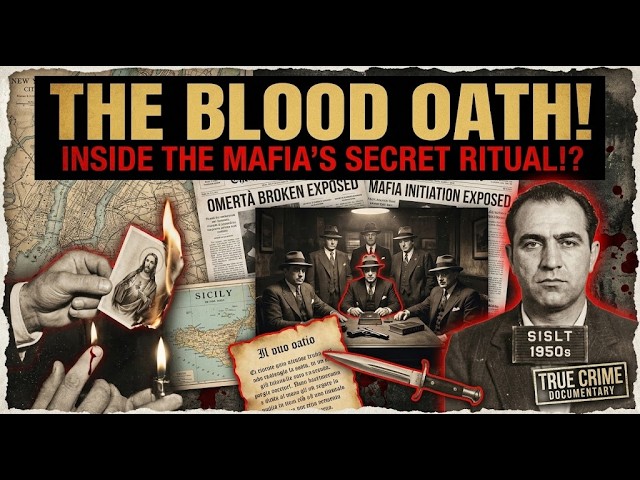
A single drop of blood hits the floor. The saint is burning in your hand. For over a century, the Mafia's initiation remained a myth, protected by a wall of silence and the threat of death.
But the scale of La Cosa Nostra's secrecy is finally crumbling. From the Bronx to Brooklyn, the ritual that transformed common criminals into 'Made Men' has been reconstructed from the shadows.
But what happens when the oath is broken? This is the untold story of the blood, the fire, and the medieval contract that binds a man to the mob forever.
No textbook covers the psychological theater used to create absolute loyalty. This is a journey into a world that officially doesn't exist.
Loyalty isn't earned in this world; it is forged in a room you're not invited to.
⚠️ HISTORICAL DISCLAIMER: This documentary reconstructs events from historical records, court documents, oral histories, and investigative journalism. Some dialogue and scenes are dramatized based on documented accounts. Sources listed below.
📚 Sources & Further Reading:
→ The Valachi Papers (Peter Maas)
https://www.amazon.com/Valachi-Papers-Peter-Maas/dp/0060507425
→ Underboss: Sammy the Bull Gravano's Story of Life in the Mafia (Peter Maas)
https://www.amazon.com/Underboss-Sammy-Gravanos-Story-Mafia/dp/006109664X
→ FBI Records: The DeCavalcante Tapes (FBI Vault)
https://vault.fbi.gov/
→ Five Families: The Rise, Decline, and Resurgence of America's Most Powerful Mafia Empires (Selwyn Raab)
https://www.amazon.com/Five-Families-Resurgence-Americas-Powerful/dp/0312361815
🏷️ Hashtags:
#TrueCrime #Mafia #Documentary #History #LaCosa Nostra #SecretSocieties
-~-~~-~~~-~~-~--~-~~-~~~-~~-~--~-~~-~~~-~~-~-
🕵️♂️ Global Mafia Universe - https://www.youtube.com/@GlobalMafiaUniverse?sub_confirmation=1
-~-~~-~~~-~~-~--~-~~-~~~-~~-~--~-~~-~~~-~~-~-
⚠️ Content Disclaimer
This video is created solely for educational and informational purposes.
We do not glorify, promote, or encourage any kind of criminal behavior or illegal activity.
All visuals, audio, and materials in this video are either:
✔️ AI-generated, or
✔️ Sourced from royalty-free platforms under valid licenses.
Some images, characters, and scenes have been created using artificial intelligence and are not depictions of real people or events.
No copyrighted material belonging to others has been used without permission.
❤️ Support the Channel
If you enjoy learning about true crime stories, history, and real-life mysteries, please:
✔️ Like the video
✔️ Subscribe to the channel
✔️ Share your thoughts in the comments
Your support helps us continue producing valuable and well-researched content!
🔧 Tools I Use to Grow This Channel
I personally use vidIQ to optimize my videos, find trending keywords, and grow faster on YouTube.
👉 Try it for free and experience the difference.
💼 Contact & Copyright Notice
If you believe any part of this video infringes on your rights, please contact me directly via YouTube.
I fully respect copyright laws and will respond promptly and professionally.
-~-~~-~~~-~~-~--~-~~-~~~-~~-~--~-~~-~~~-~~-~-
-
Show More Show Less View Video Transcript
0:08
How do you join something that doesn't
0:10
officially exist? The mafia has no
0:13
application process, no website, no
0:16
recruiting office. You can't volunteer,
0:19
you can't ask. Even expressing interest
0:22
can get you killed. And yet, for over a
0:24
century, men have been initiated into
0:27
Lacosa Nostra through a ceremony. so
0:30
secret that most members never discuss
0:32
it. Not with wives, not with children,
0:36
not even with each other after it
0:38
happens until some of them broke the
0:40
oath. What you're about to hear is based
0:43
on testimony from men who participated
0:45
in the ritual. Court documents, FBI
0:49
briefings, surveillance transcripts. The
0:53
exact words vary by family, by region,
0:56
by decade. But the structure, the
0:59
symbolism, the blood, the fire, those
1:03
remain remarkably consistent. This is
1:06
not one ceremony. This is the ceremony
1:09
reconstructed from the accounts of those
1:11
who lived it and those who investigated
1:14
it. Some details have been lost to time.
1:17
Some were never meant to be recorded.
1:20
But what remains tells us something
1:22
profound about loyalty, about theater,
1:25
about how men bind themselves to
1:27
something larger and darker than
1:30
themselves. The question isn't whether
1:32
this ceremony still happens. It does.
1:36
The question is what it really means
1:38
when you walk into that room as one
1:40
thing and walk out as something else.
1:42
You're not born into this world as a
1:44
made man. You're not hired. You're
1:47
transformed. And transformation requires
1:51
ritual. Let's start with what happens
1:54
before you ever enter the room because
1:56
the ceremony doesn't begin when you
1:59
think it does. It begins the moment you
2:01
realize someone is watching you. The
2:04
mafia doesn't recruit, it observes. You
2:07
might work on a crew for 5 years, 10
2:09
years, doing jobs, earning, proving
2:12
yourself reliable. You think you're
2:14
working towards something. You think
2:16
there's a path. Maybe there is, maybe
2:19
there isn't. Nobody tells you.
2:22
Associates can work their entire lives
2:24
and never get made. The decision happens
2:27
in rooms you're not invited to.
2:30
Conversations you'll never hear. Your
2:32
name comes up. Someone speaks for you.
2:35
Someone else might speak against you.
2:37
You have no say in this. You just wait
2:39
and hope. The first rule, you must have
2:42
Italian blood. Both sides in some
2:45
families. father's side minimum in
2:47
others. No exceptions ever. Second rule,
2:51
you must have proven yourself. This
2:53
usually means you've killed. Not always,
2:56
but usually the organization needs to
2:59
know you can do what's necessary without
3:01
hesitation, that you won't freeze, that
3:04
you won't talk. Blood is a better test
3:06
than words. Third rule, someone must
3:09
sponsor you. A made man must vouch for
3:12
you with his own life. If you flip, if
3:15
you cooperate, if you betray the family,
3:17
your sponsor can be killed for bringing
3:20
you in. It's a heavy responsibility.
3:23
Most men's sponsor may be two or three
3:25
people in their entire lives. Fourth
3:28
rule, there must be an opening. The
3:30
books must be open. For years, sometimes
3:33
decades, families close their
3:36
membership. No new blood. The existing
3:39
structure stays frozen. When the books
3:42
open, it's an event. Men who have waited
3:44
20 years suddenly have a chance.
3:47
Competition becomes quiet and vicious.
3:50
You meet all the criteria. You've
3:52
waited. You've earned. Your sponsor
3:55
believes in you. The books are open. And
3:58
then one day someone tells you to be at
4:00
a specific location at a specific time.
4:04
They don't tell you why, but you know.
4:06
According to Joe Valache, the first man
4:08
to publicly describe the ceremony in
4:11
1963,
4:12
he was told to meet at a building in the
4:14
Bronx. Dress nice. Come alone, tell
4:18
nobody. He knew what it meant. He'd been
4:21
waiting for years. Sammy the Bull Graano
4:24
described being summoned to a social
4:26
club in Brooklyn. Same instructions.
4:30
Suit and tie. Don't be late. Don't bring
4:32
anyone. The waiting, he said, was worse
4:35
than any job he'd ever done. The not
4:38
knowing if this was the ceremony or
4:40
something else. If he'd done something
4:42
wrong, if this was a test or a trap. You
4:46
arrive at the location, usually a
4:48
private room, a basement, a club after
4:52
hours, somewhere secure, somewhere the
4:55
conversation won't be overheard. Other
4:57
men are already there, some you
4:59
recognize, some you don't. All made, all
5:02
silent. Nobody tells you to sit. Nobody
5:06
explains what's happening. You wait.
5:08
More men arrive. The room fills. Still
5:11
no explanation. The tension is
5:13
deliberate. You're being evaluated even
5:16
now. How you carry yourself, whether you
5:19
show fear, whether you ask questions,
5:21
don't ask questions. At some point,
5:24
someone you've never met enters the
5:26
room. older, respected, sometimes a
5:29
boss, sometimes an under boss, sometimes
5:31
a senior captain from another family. He
5:34
looks at you, he looks at the other
5:37
candidates, if there are any. He doesn't
5:39
smile. And then the ceremony begins. In
5:43
some families, they start with a test, a
5:46
final question to see if you understand
5:49
what you're entering. The man in charge
5:52
might ask, "Do you know why you're
5:54
here?" The correct answer is not yes.
5:57
The correct answer is no. But I'm
6:00
honored to be here. You're not supposed
6:02
to assume. You're supposed to show
6:05
respect and humility even at the moment
6:07
of your elevation. If you answer wrong,
6:10
the ceremony might stop right there. You
6:12
might be told to leave. You might never
6:15
get another chance. Assuming you answer
6:18
correctly, the tone shifts. Everyone
6:20
stands. You stand. The room arranges
6:24
itself into a loose circle or a line or
6:27
around a table depending on the space
6:29
and the family's tradition. In front of
6:32
you on the table, several items are
6:34
placed. A gun, usually a revolver,
6:38
sometimes an automatic, always loaded,
6:41
though you won't know that for certain.
6:43
A knife, sometimes a dagger, sometimes a
6:46
simple blade, a saint card. Almost
6:49
always St. Peter, the keeper of keys.
6:52
Sometimes St. Francis, sometimes another
6:55
Catholic saint, depending on regional
6:57
tradition, and a candle already lit.
7:01
Someone, usually your sponsor, explains
7:03
what's about to happen, not in detail,
7:06
just enough. He might say, "We are here
7:09
to make you part of our family. This
7:11
family is bound by blood, by honor, by
7:14
silence. Once you enter, there is no
7:17
leaving. You will live by our rules. You
7:19
will die by our rules. Do you
7:21
understand? You say yes. He continues.
7:25
If you betray this family, you will be
7:27
killed. If you speak of this family to
7:30
outsiders, you will be killed. Your
7:32
loyalty to this family comes before your
7:35
wife, your children, your blood
7:37
relatives. Do you understand? You say
7:40
yes. Nobody asks if you want to
7:42
reconsider. That chance has passed.
7:44
You're in the room now. The only
7:47
direction is forward. Your sponsor takes
7:49
your hand, usually your right hand, the
7:52
hand you shoot with, the hand you swear
7:55
with. He asks which finger you use to
7:57
pull a trigger. You tell him, usually
8:00
the index finger. He takes a pin or a
8:03
needle or the tip of the knife and he
8:05
pricks your trigger finger until blood
8:07
appears. Not a lot of blood, just
8:10
enough. The pain is minimal. The
8:13
symbolism is everything. This blood
8:16
represents your willingness to kill for
8:18
the family. Your willingness to spill
8:21
blood starting with your own. He
8:23
squeezes your finger until a single drop
8:26
of blood falls onto the saint card. In
8:29
that moment, your blood and the sacred
8:31
mix, the criminal and the holy. The act
8:35
binds you to something larger than law,
8:37
larger than nation. Then comes the fire.
8:41
Your sponsor or the man leading the
8:43
ceremony picks up the saint card, the
8:46
one now marked with your blood. He holds
8:49
it over the candle flame. The card
8:52
catches fire. He places the burning card
8:55
in your hands. You must hold it. You
8:57
must let it burn in your palms while you
8:59
recite the oath. The flame hurts. The
9:02
heat increases as the card curls and
9:05
blackens. You're not allowed to drop it.
9:08
You're not allowed to flinch. You hold
9:10
the fire until the oath is finished. The
9:13
words vary by family, by region, by
9:16
decade, but the core remains the same.
9:19
In some families, the oath is in
9:22
Sicilian, in others Italian. In American
9:25
families, after the 1950s,
9:28
sometimes English, but the meaning never
9:31
changes. One version, as described by
9:35
multiple informants, goes something like
9:37
this. I swear on my family, on my blood,
9:41
that I will never betray my friends,
9:43
that I will never violate the wife or
9:45
children of my friends, that I will help
9:48
my friends in times of need. That if I
9:51
betray this oath, may I burn in hell as
9:53
this saint burns in my hand. You say
9:56
these words while the fire consumes the
9:59
card, while the heat blisters your skin.
10:02
While the other men watch in silence
10:05
when the card is ash when there's
10:07
nothing left but black fragments in your
10:09
palm. You're told to scatter the ashes.
10:12
Some families have you blow them away.
10:15
Others have you rub your palms together
10:17
until the ash disappears. The symbolism
10:21
is clear. Just as this saint has burned
10:23
and turned to nothing, so will you. If
10:26
you betray the oath, your hands are
10:28
burned, your blood is spilled, your
10:31
words are spoken. But the ceremony isn't
10:34
over. But now comes the explanation, the
10:37
rules, the structure of the world you've
10:40
just entered. Someone, usually the most
10:42
senior man in the room, begins to
10:45
explain what it means to be a made man.
10:47
He explains the hierarchy. The boss, the
10:51
underboss, the consiglier, the captains,
10:54
the soldiers, where you fit, who you
10:56
answer to, who you never speak to
10:58
directly. He explains the code of
11:02
silence. You do not cooperate with law
11:04
enforcement ever for any reason. Even if
11:08
it means life in prison, even if it
11:10
means death. If you're arrested, you
11:13
stay silent. If you're convicted, you
11:16
serve your time. If someone testifies
11:19
against you, the family will handle it.
11:22
You do nothing on your own. He explains
11:25
the rules of conduct. You do not deal
11:27
drugs. Officially, that rule stands in
11:30
most families, though enforcement
11:33
varies. You do not kill without
11:35
permission. You do not touch the wife or
11:38
girlfriend of another made man. You do
11:40
not steal from the family. These rules
11:43
aren't suggestions. Violation means
11:46
death. He explains the benefits. You are
11:49
now untouchable by other members. An
11:52
associate can be killed for any reason
11:55
at any time. A made man can only be
11:58
killed with approval from the boss. You
12:01
have protection. You have status. You
12:03
have earning potential that was
12:05
previously closed to you. But you also
12:08
have obligations. You kick up a
12:10
percentage of everything you earn to
12:12
your captain. Your captain kicks up to
12:15
the boss. The structure is feudal,
12:18
medieval, and it works. He might explain
12:21
the commission, the ruling body of the
12:24
five families in New York, established
12:27
in 1931 by Lucky Luchano and Mayor
12:31
Lanske. He might explain how disputes
12:34
are settled, how wars are avoided, how
12:37
peace is maintained through structure
12:39
and rules, or he might not. Some of this
12:42
you'll learn later. Some of this you'll
12:45
figure out through observation. The
12:48
ceremony isn't a classroom. It's a
12:50
threshold. At some point, the
12:52
explanation ends. The senior man looks
12:55
at you and says something like, "You are
12:58
now one of us. Welcome to our family."
13:01
And then one by one, the other men in
13:03
the room approach you. They embrace you.
13:06
A kiss on both cheeks, a handshake, a
13:09
moment of acknowledgement. These men are
13:12
now your brothers, bound by the same
13:14
oath, protected by the same rules,
13:17
obligated to the same silence. Some of
13:20
them you'll grow to trust. Some you'll
13:22
grow to hate. Some will betray you
13:24
eventually. Some will die for you. But
13:27
in this moment, you're all equal, all
13:30
made, all part of something that has
13:32
survived law enforcement, prison, war,
13:35
and time itself. The ceremony ends.
13:38
Usually, there's food, wine,
13:41
celebration, the tension breaks, men
13:44
relax. Stories are told, laughter
13:47
happens. You're no longer the outsider.
13:50
You're inside now. The secrets are yours
13:53
to keep. But here's what they don't tell
13:55
you in the ceremony. What you'll only
13:58
learn later through experience, through
14:00
observation, through watching men die.
14:03
The oath protects you until it doesn't.
14:06
Being made means you can only be killed
14:08
with permission, but permission isn't
14:11
hard to get if someone wants you dead.
14:13
The rules are flexible when it's
14:16
convenient. Justice inside the family is
14:19
whatever the boss says it is. Being made
14:22
means you're untouchable by associates,
14:25
but you're now in competition with other
14:27
made men. Men who want your territory,
14:30
your rackets, your position, and they
14:32
can't kill you directly, so they'll find
14:35
other ways to destroy you. Being made
14:38
means you have status. But status makes
14:41
you visible to law enforcement, to rival
14:44
families, to ambitious men below you who
14:47
want what you have. The oath says you
14:50
can never leave. And that's true. But
14:53
what they don't say is that you can
14:55
never fully trust anyone either because
14:58
everyone in that room with you has the
15:00
same incentive to survive. And survival
15:04
sometimes means sacrifice, someone
15:06
else's sacrifice. Joe Valache became a
15:10
made man in 1930. He broke in 1963.
15:15
testified before Congress, described the
15:19
ceremony in detail for the first time in
15:21
public record. He died in prison in
15:24
1971.
15:26
Protected by the government, hated by
15:29
his former brothers, he gained fame, he
15:32
lost everything else. Sammy Graano
15:35
became a maid man in 1976.
15:38
He broke omata in 1991,
15:41
helped convict John Goti, entered
15:44
witness protection with his family. He
15:47
later violated his agreement, went to
15:49
prison for drug trafficking, and now
15:51
lives as a pariah. Neither fully
15:54
criminal nor fully free. Jimmy Frasiano,
15:58
a ladina Jimmy the Weasel Friono, made
16:02
man, acting boss of the Los Angeles
16:05
family, flipped in 1977,
16:08
testified against dozens of mobsters. He
16:11
lived in witness protection until 1993,
16:15
died of natural causes, but he spent his
16:18
final years looking over his shoulder,
16:21
knowing that the oath he broke never
16:23
expires. These men describe the ceremony
16:27
almost identically. The blood, the fire,
16:31
the saint, the words. Across families,
16:34
across decades, the ritual remains. But
16:37
they also describe what comes after. The
16:40
paranoia, the violence, the realization
16:43
that the bond they swore to is only as
16:45
strong as convenience allows. The
16:48
ceremony makes you untouchable in
16:50
theory. In practice, it makes you a
16:53
target. And yet men still take the oath,
16:56
still burn their hands, still swear to a
16:59
code they know will eventually be broken
17:01
by someone for some reason. Why? Some
17:04
say it's honor, the chance to be part of
17:07
a tradition that stretches back
17:09
centuries. To join something bigger than
17:12
yourself, to be recognized as a man of
17:15
respect. Some say it's necessity. If
17:18
you're in the life, being made is the
17:20
only way to survive long-term.
17:23
Associates are disposable. Made men have
17:26
leverage. Some say it's identity. For
17:29
men from certain neighborhoods, certain
17:32
backgrounds, being made is the pinnacle
17:34
of success. It's what your father
17:37
wanted, what your grandfather respected.
17:40
It's legacy. And some say it's theater,
17:43
a ritual designed to bind you
17:45
psychologically, to make you believe the
17:48
family is sacred, to make you
17:50
internalize the rules so deeply that
17:53
breaking them feels like betraying
17:55
yourself. The oath works not because
17:58
it's enforced perfectly, but because
18:00
it's internalized completely. You burn
18:04
your hand, you spill your blood, you
18:07
speak the words, and something changes
18:09
in you. Maybe not immediately, maybe not
18:12
consciously, but you've crossed a line.
18:15
The ceremony isn't just about making you
18:18
a member. It's about making you
18:20
complicit. Once you've taken the oath,
18:22
once you've participated in the ritual,
18:24
you can't claim ignorance. You can't
18:27
pretend you didn't know what you were
18:28
joining. You knew, you chose, you swore,
18:32
and now you belong to something that
18:34
will never fully belong to you. The
18:37
mafia has survived because of this
18:39
ceremony, not despite it. The ritual
18:42
creates loyalty through spectacle,
18:44
through pain, through shared experience.
18:48
Men who burn together, bleed together,
18:50
swear together, they bond in ways that
18:53
are difficult to break. Even when logic
18:56
says you should cooperate, even when the
18:59
evidence against you is overwhelming,
19:02
even when the family has abandoned you,
19:05
the oath whispers, "You swore, you
19:08
burned the saint. You kissed your
19:10
brothers. How can you betray that? Law
19:13
enforcement has tried to infiltrate the
19:15
ceremony for decades. Undercover agents
19:18
have gotten close. They've been proposed
19:21
for membership. They've been sponsored.
19:23
But the mafia has a final safeguard. The
19:27
rule that protects the ritual from
19:29
contamination. You must kill to be made.
19:32
Not in every family, not in every case.
19:35
But usually an undercover agent can
19:38
break many laws. Can participate in many
19:41
crimes. But murder is the line most
19:44
can't cross, won't cross. So the
19:47
ceremony remains protected not by
19:50
secrecy alone, but by blood. Real blood
19:54
spilled before the oath is ever taken.
19:57
If you've killed for the family, you're
19:59
compromised. You can't testify without
20:02
admitting murder. You can't cooperate
20:04
without implicating yourself in a
20:06
capital crime. The ceremony binds you
20:09
legally as much as morally. And that's
20:11
the genius of it. The oath isn't just
20:14
symbolic. It's strategic. Every element
20:18
serves a purpose. The blood proves
20:20
you're capable. The fire proves you're
20:23
committed. The words prove you
20:25
understand. The witnesses prove you're
20:28
accountable. It's a contract written in
20:30
pain and witnessed by killers. Does the
20:33
ceremony still happen today? Yes,
20:36
absolutely. In 2001, the FBI recorded
20:41
audio of an induction ceremony in
20:44
Massachusetts. The Davalcante family.
20:47
Same ritual, same words, same structure.
20:51
In 2011, informants described recent
20:55
ceremonies in New York. Still happening,
20:58
still secret, still binding. The mafia
21:01
has weakened. Membership is down.
21:04
Prosecutions have devastated the
21:07
families. Younger generations don't
21:09
romanticize the life the way previous
21:12
generations did. But the ceremony
21:14
survives because as long as there are
21:17
men willing to take the oath, the
21:19
structure perpetuates itself. You burn
21:22
your hand. You join the family. You
21:25
become untouchable and you become a
21:27
target forever. The question isn't
21:30
whether the ceremony is real. It is the
21:33
question is what it means. Is it a
21:36
sacred bond between brothers or is it
21:39
theater designed to control you? Is it
21:42
an honor to be made? Or is it a death
21:44
sentence disguised as a promotion? Is
21:48
the oath a source of strength? Or is it
21:50
a chain you can never remove? The men
21:53
who have taken it disagree. Some, even
21:56
after breaking Omaha, still speak of the
21:59
ceremony with reverence. They describe
22:02
it as the proudest moment of their
22:04
lives, the moment they became someone.
22:07
Others describe it as the beginning of
22:09
their downfall. The moment they traded
22:12
freedom for belonging, the moment they
22:14
became property of something larger and
22:17
darker than they understood. Both can be
22:20
true. The ceremony transforms you. What
22:24
you become depends on what you bring to
22:26
the room. Your ambition, your morality,
22:29
your capacity for violence, your need
22:32
for identity. The ritual doesn't create
22:35
monsters. It reveals them. And sometimes
22:38
it creates loyalty so deep that men
22:41
choose death over betrayal. Other times
22:44
it creates loyalty so fragile that it
22:46
shatters the moment prison doors close.
22:49
The ceremony is the same. The men are
22:52
different and that's what makes it so
22:54
enduring. It adapts. It survives. It
22:58
binds men who would otherwise have no
23:01
reason to trust each other. And it does
23:04
so with fire, blood, and words spoken in
23:07
a language most don't understand
23:09
anymore. But you don't need to
23:11
understand the language. You only need
23:13
to understand the cost. Your hand burns.
23:17
The saint turns to ash. You become part
23:20
of something you can never leave. Some
23:22
call that honor. Others call that a
23:25
trap. What you call it depends on
23:27
whether you're inside the room or
23:29
outside it. And once you're inside, you
23:32
never see it the same way again. The
23:34
ceremony ends. The celebration begins.
23:38
The men embrace you. You're one of them
23:41
now. But later, alone, you'll look at
23:44
your hand at the faint burn mark where
23:46
the saint card scorched your palm. And
23:49
you'll wonder if it was worth it. Most
23:52
won't admit the doubt. Not out loud, not
23:55
even to themselves. But the doubt is
23:58
there in the quiet moments, in the
24:00
paranoia, in the realization that the
24:03
family you swore to protect might one
24:05
day decide you're expendable. The
24:08
ceremony makes you a made man, but it
24:11
doesn't make you safe. It doesn't make
24:13
you free. It doesn't even make you fully
24:15
trusted. It makes you part of a system.
24:18
And systems have one priority, survival,
24:21
not yours. The systems. If you serve the
24:24
system, you rise. If you threaten the
24:27
system, you disappear. The oath you took
24:30
protects you until the day it doesn't.
24:33
And you won't know which day that is
24:35
until it's too late. So, here's the
24:37
final question. The one the ceremony
24:40
never asks. The one nobody answers
24:43
honestly until they're in handcuffs or a
24:46
coffin. Was the fire worth it? Was the
24:49
blood worth it? Was the oath worth it?
24:52
Or did you trade everything real for
24:54
something that only exists as long as
24:56
it's convenient for someone else? The
24:59
men who have lived it can't agree. Some
25:02
died loyal. Some died as rats. Some
25:05
lived long enough to regret both
25:07
options. But they all burned their
25:09
hands. They all spilled their blood.
25:12
They all took the oath. And not one of
25:15
them can take it back. The ceremony is
25:18
forever. Whether that's a blessing or a
25:20
curse depends on who's telling the
25:22
story. What do you think? If you were in
25:25
that room holding the burning saint
25:28
card, feeling the heat in your palms,
25:30
hearing the words of the oath, would you
25:33
see it as an honor or a trap? Drop one
25:36
word in the comments. Honor or trap? And
25:39
if you want to hear more stories about
25:41
what happens after the ceremony, about
25:44
the men who lived by the oath and the
25:46
men who broke it, subscribe because this
25:50
is just the beginning. More coming soon.
#Arts & Entertainment