Up next in 10

Los Angeles, 1984. FBI agents enter the Biltmore Hotel with a federal warrant — and uncover a story far larger than one man in a hotel suite.
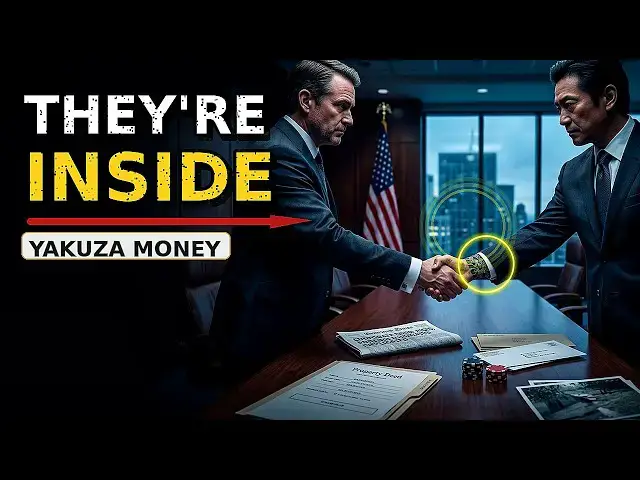
This cinematic true crime documentary traces how Japanese yakuza-linked capital moved quietly into the United States through real estate, casinos, banks, hospitality, shell companies, and legitimate-looking business deals. What made the story so difficult to confront was not that it was hidden — but that so much of it looked legal.
This video analyzes the systemic vulnerabilities that allowed such operations to bypass regulatory oversight.
You’ll follow the trail from Hideaki Kubota’s arrest in Los Angeles to the Yamaguchi-gumi’s overseas expansion, from Hawaii’s real estate boom to Las Vegas baccarat tables, from Little Tokyo property deals to New York financial routing, and from the limits of RICO prosecutions to later immigration exclusions and sanctions under U.S. law.
This is a story about organized crime without the usual headlines — no street war, no dramatic takeover, no loud invasion. Just money, paperwork, institutions, silence, and the question of how much was never traced.
DISCLAIMER
This video is for educational and documentary purposes. It analyzes historical events based on public records and journalistic investigations. While some narrative elements are used for cinematic impact, this content does not encourage or condone any illegal activities.
SOURCES & CONTEXT
This documentary-style account draws from court records, published investigations, declassified law enforcement files, and reporting referenced in the narration, including Yakuza: Japan's Criminal Underworld by David Kaplan and Alec Dubro, along with work connected to Robert Whiting, Robert Friedman, Japanese National Police Agency figures, U.S. financial-crime reporting, and later U.S. sanctions context.
Some details in historical organized crime reporting remain disputed, incomplete, or difficult to verify. This video does not claim that every Japanese investment in the United States was criminal. A major theme of the story is precisely that lawful Japanese corporate capital and alleged yakuza-linked capital often moved through the same financial and real estate systems, making the distinction difficult for regulators and investigators.
Related topics include yakuza history, Yamaguchi-gumi, Japanese organized crime, money laundering, FBI investigations, RICO, transnational crime, Las Vegas casinos, Hawaii real estate, Little Tokyo, financial crime, and the Japanese bubble economy.
Show More Show Less View Video Transcript
0:00
Los Angeles, November 1984.
0:03
FBI agents move through the lobby of the
0:06
Biltmore Hotel with a federal warrant
0:09
and a name most of them cannot
0:11
pronounce. The man they are looking for
0:13
is not hiding. He is sitting in a suite
0:17
on the ninth floor drinking Suntory
0:19
whiskey waiting for a business call that
0:22
will never come. His name is Hideaki
0:25
Kubota. He is a senior member of the
0:28
Yamaguchi-gumi, the largest criminal
0:30
syndicate in Japan and arguably the
0:33
largest in the world. The warrant
0:35
accuses him of laundering over 100
0:38
million dollars through California real
0:40
estate. He does not resist. He does not
0:43
speak. He places both hands flat on the
0:47
table and one of the agents notices his
0:50
left pinky finger is missing below the
0:53
first joint.
0:54
>> [music]
0:54
>> That mutilation has a name. Yubitsume,
0:58
the ritual severing of a finger joint
1:01
performed as an act of penance within
1:03
the Yakuza. According to journalist
1:05
David Kaplan, who spent years
1:07
investigating Yakuza operations in the
1:09
United States, the practice dates back
1:12
centuries, a symbolic weakening of the
1:14
offender's sword grip, a permanent mark
1:17
of submission. In that hotel suite, it
1:20
told the agents something no document
1:22
could. This man had once failed his
1:25
superiors. And he had paid for it with
1:29
his own body. The arrest made a small
1:32
paragraph in the Los Angeles Times. No
1:35
front page. No cable news segment. No
1:39
congressional hearings followed. And
1:41
that silence, that institutional quiet,
1:45
is the real subject of this account.
1:47
This account draws from court records,
1:49
published investigations, and
1:51
declassified law enforcement files. Some
1:54
details remain disputed or incomplete.
1:57
By the time the FBI reached Kubota's
2:00
door, the Yakuza had been operating
2:02
inside the United States for more than a
2:05
decade.
2:06
Not as visitors, not as tourists
2:09
laundering vacation money.
2:11
As investors, as landlords, as business
2:15
partners to American firms that never
2:17
asked where the capital originated. The
2:20
scale of that penetration and the
2:22
institutional reluctance to confront it
2:25
is a story that most Americans have
2:27
never heard.
2:29
Not because it was secret, because it
2:31
was quiet.
2:33
To understand how a Japanese criminal
2:35
organization established itself across
2:38
the Pacific, you first have to
2:39
understand what the Yakuza is and what
2:42
it is not. It is not the mafia, though
2:46
Western journalists have used that
2:47
comparison since the 1960s.
2:50
The Yakuza does not hide.
2:53
In Japan, its organizations have
2:55
published offices, business cards, and
2:58
until relatively recently, legal
3:00
standing as registered entities.
3:03
According to the National Police Agency
3:05
of Japan, at its peak in the early
3:07
1960s, Yakuza membership exceeded
3:10
180,000,
3:13
a number that dwarfs every
3:14
Italian-American crime family combined.
3:18
>> The Yamaguchi-gumi, based in Kobe, the
3:21
Sumiyoshi-kai, in Tokyo, and the
3:23
Inagawa-kai, also in Tokyo. Of these,
3:27
the Yamaguchi-gumi is the largest and
3:30
according to multiple published
3:31
accounts, the most aggressive in its
3:33
overseas expansion. By the 1980s, this
3:37
single organization reportedly
3:39
controlled an estimated annual revenue
3:41
of billions of dollars drawn from
3:44
construction, real estate,
3:46
entertainment, loan sharking, drug
3:48
trafficking, and corporate extortion.
3:51
The man who shaped the Yamaguchi-gumi's
3:53
modern identity was Kazuo Taoka, its
3:56
third-generation Godfather.
3:59
Taoka, who led the syndicate from 1946
4:02
until his death in 1981, transformed it
4:05
from a regional gang of dockworkers in
4:07
Kobe into a national enterprise with
4:10
tens of thousands of members.
4:12
According to journalist Robert Whiting,
4:15
Taoka modeled his expansion strategy on
4:17
legitimate corporate mergers, absorbing
4:20
smaller gangs, establishing formal
4:22
hierarchies, and demanding absolute
4:25
loyalty in exchange for economic
4:27
opportunity. Japan. It was his
4:30
successors and the economic forces of
4:32
the 1980s who would carry the
4:34
organization across the ocean. According
4:38
to one investigator's later account,
4:40
they had not arrived with guns.
4:43
They had arrived with briefcases.
4:45
And with more cash than anyone in Los
4:48
Angeles had ever seen come from a single
4:50
source. The question was not whether the
4:53
Yakuza had arrived. The question was how
4:57
long it would take anyone to care.
4:59
Honolulu, Hawaii, 1977.
5:03
A Japanese investor purchases a
5:05
beachfront hotel in Waikiki for a price
5:08
that local brokers describe privately as
5:11
absurd. He pays in cash. He furnishes
5:15
the lobby with imported art.
5:17
He hosts parties for local politicians.
5:20
He never explains where the money comes
5:22
from. And in Hawaii in the late '70s,
5:26
almost nobody asks.
5:28
Hawaii was the bridge. Geographically,
5:31
culturally, economically, it was the
5:33
natural point of entry for Japanese
5:35
capital flowing into the United States.
5:38
According to David Kaplan and Alec
5:40
Dubro's landmark investigation,
5:43
>> [music]
5:43
>> Yakuza-affiliated investors began
5:45
acquiring Hawaiian real estate as early
5:48
as the mid-1970s
5:50
using a combination of front companies,
5:52
cooperative local attorneys, and the
5:54
sheer volume of legitimate Japanese
5:56
[music] tourism to mask their activity.
5:59
The numbers were staggering.
6:01
By 1988,
6:03
Japanese investors, both legitimate and
6:06
otherwise, owned an estimated 90% of the
6:09
hotel rooms in Waikiki, according to
6:11
published reports in the Honolulu
6:13
Star-Bulletin.
6:14
Not all of this money was dirty.
6:17
Much of it came from entirely lawful
6:19
Japanese corporations riding the bubble
6:22
economy.
6:23
But within that flood, Yakuza capital
6:26
moved freely, and distinguishing clean
6:28
money from criminal proceeds became for
6:31
local regulators nearly impossible.
6:34
What made the Yakuza's Hawaiian
6:36
operations distinctive was not their
6:38
violence. It was their patience.
6:41
According to former Honolulu Police
6:43
Department investigators, Yakuza-linked
6:46
businesses in Hawaii rarely engaged in
6:48
the kind of street-level crime that
6:50
would attract attention. Instead, they
6:53
operated legitimate-seeming
6:54
establishments, restaurants, golf
6:57
courses, nightclubs, tour agencies, that
7:00
served as both money-laundering vehicles
7:02
and intelligence-gathering platforms.
7:05
The intelligence function is critical to
7:08
understand.
7:09
According to Kaplan and Dubro, Yakuza
7:12
operatives in Hawaii monitored Japanese
7:14
businessmen visiting the islands,
7:16
tracking their spending, their
7:18
companions, their indiscretions.
7:21
This information was relayed back to
7:23
Japan, where it became leverage.
7:26
Corporate blackmail, known in Japan as
7:29
sokaiya, was a primary revenue stream
7:31
for several Yakuza factions.
7:34
And Hawaii provided the photographs.
7:37
A former FBI agent assigned to the
7:39
Honolulu Field Office in the early 1980s
7:42
later described the situation in terms
7:45
that remain striking.
7:47
According to published accounts,
7:48
everyone in the bureau knew the Yakuza
7:51
were there. The problem was that on
7:53
paper, no federal crime had been
7:56
committed. They bought property. They
7:59
paid taxes. They hired local workers.
8:03
There was no way to explain to a judge
8:05
why that was a problem. The legal
8:08
architecture of the United States was
8:10
not designed to prosecute foreign
8:12
organized crime operating through
8:15
legitimate business channels. RICO,
8:18
the Racketeer Influenced and Corrupt
8:21
Organizations [music] Act, had been
8:22
built to dismantle domestic syndicates
8:25
like the Italian-American Mafia.
8:27
Applying it to a Japanese organization
8:29
whose primary American activities were
8:32
real estate acquisition and hospitality
8:35
required a kind of legal creativity that
8:37
in the 1980s simply did not exist. And
8:41
so, the money continued to flow.
8:44
Between 1980 and 1990, Japanese
8:47
investment in Hawaiian real estate
8:49
exceeded 10 billion dollars, a figure
8:52
documented by the Hawaii Department of
8:54
Business, Economic Development, and
8:56
Tourism. How much of that was
8:58
Yakuza-linked remains to this day a
9:00
matter of estimate rather than
9:02
certainty.
9:03
Published figures from law enforcement
9:05
sources range from several hundred
9:07
million to over a billion dollars. The
9:11
accounts from that period do not agree
9:13
on the exact proportion.
9:15
What they agree on is the direction. The
9:18
money flowed west to east, and almost
9:21
none of it flowed back. The cost was
9:23
quiet.
9:25
Not bodies.
9:26
Not shootings. Not the kind of violence
9:29
that makes headlines. The cost was
9:31
institutional.
9:33
Local businesses found themselves unable
9:36
to compete with buyers who could pay two
9:38
or three times market value. Housing
9:41
prices in Honolulu climbed beyond the
9:43
reach of Hawaiian residents. And a
9:46
generation of local politicians
9:48
discovered that the donors who funded
9:50
their campaigns sometimes had associates
9:52
whose backgrounds did not survive
9:54
scrutiny.
9:56
But Hawaii was never the destination.
9:59
Hawaii was the staging area. The real
10:02
targets were on the mainland, and by the
10:04
mid-1980s, the Yakuza had already begun
10:08
to arrive. Las Vegas, 1983.
10:12
A Japanese businessman walks into a
10:15
casino on the strip, sits down at a
10:17
baccarat table, and loses $4 million in
10:20
a single evening.
10:22
The pit boss does not blink.
10:25
The losses continue night after night,
10:28
week after week.
10:30
Over 6 months, this single gambler will
10:33
lose an estimated $30 million.
10:36
Casino executives later describe him as
10:39
their best customer.
10:41
What they do not say, and what FBI
10:43
documents would later suggest, is that
10:46
the losses are not losses at all. They
10:49
are transfers.
10:50
The money enters the casino as Japanese
10:53
yen, converted to dollars.
10:55
It leaves as casino chips, comps, wire
10:59
transfers, and eventually as clean
11:02
American currency.
11:04
According to investigative journalist
11:05
Robert Friedman, and corroborated by
11:08
Kaplan and Dubro, Las Vegas became a
11:10
primary laundering corridor for Yakuza
11:13
money throughout the 1980s.
11:15
The mechanism was elegant in its
11:17
simplicity. Gambling losses are not
11:20
subject to the same reporting
11:21
requirements as bank deposits.
11:24
A man who loses $30 at a baccarat table
11:27
has broken no American law, even if the
11:30
money he brought to the table was the
11:31
product of methamphetamine distribution
11:34
in Osaka, the casinos knew. Or more
11:37
precisely, the casinos chose not to
11:40
know.
11:41
According to a 1991 report by the
11:44
President's Commission on Organized
11:45
Crime, several major Las Vegas
11:48
establishments had been warned [music]
11:49
by federal authorities about the origins
11:52
of certain high roller deposits.
11:54
The warnings produced compliance
11:56
meetings.
11:57
The compliance meetings produced
11:59
documentation.
12:01
The documentation produced nothing. The
12:04
math never worked. It was never supposed
12:07
to.
12:08
Los Angeles was different. In Los
12:10
Angeles, the Yakuza did not merely
12:13
launder money. It invested. According to
12:17
published accounts in the Los Angeles
12:19
Times and investigative work by Kaplan,
12:21
Yakuza-linked shell companies purchased
12:24
commercial real estate in Little Tokyo,
12:26
downtown Los Angeles, and along the
12:28
Wilshire Corridor throughout the 1980s.
12:31
The purchases followed a pattern. Shell
12:33
company incorporated in Delaware or
12:35
Nevada, capital originating from a
12:38
Japanese bank, and a local attorney or
12:40
broker who handled all negotiations, and
12:43
whose fees suggested he understood
12:45
exactly what he was facilitating.
12:48
One case in particular illustrates the
12:50
mechanism.
12:51
In 1987, federal investigators
12:54
identified a series of commercial
12:56
property purchases in downtown Los
12:58
Angeles totaling approximately $250
13:02
million.
13:03
The buyer, on paper, was a Tokyo-based
13:06
investment firm.
13:08
The actual capital, according to court
13:10
documents later filed in the Central
13:12
District of California, originated from
13:14
Yamaguchi-gumi affiliated construction
13:17
companies.
13:18
The properties included office
13:20
buildings, parking structures, and at
13:22
least one property adjacent to the Los
13:24
Angeles Police Department headquarters.
13:27
Nobody at the LAPD found this ironic.
13:30
Or if they did, no report survives.
13:34
The sex trade was harder to conceal.
13:37
According to multiple law enforcement
13:38
sources and published investigations by
13:41
Kaplan and Dubro, Yakuza organizations
13:44
operated trafficking pipelines that
13:46
brought young women from Japan, the
13:48
Philippines, and Thailand to work in
13:50
bars, massage parlors in Los Angeles,
13:52
San Francisco, New York, and Honolulu.
13:55
The women entered on tourist or
13:57
entertainment visas.
13:59
Their passports were confiscated upon
14:01
arrival. They were told they owed debts
14:04
for their airfare, their housing, their
14:07
clothing that could only be repaid
14:09
through labor.
14:11
This was not an abstraction.
14:14
According to a 1992 FBI field report
14:17
cited by Kaplan, agents identified at
14:20
least a dozen establishments in the Los
14:22
Angeles area where women were working
14:24
under conditions of debt bondage
14:26
directly linked to Yakuza-affiliated
14:28
operators.
14:30
Several of the women, when interviewed,
14:32
described a system of escalating
14:34
control. The debt grew faster than it
14:37
could be paid, the threats became more
14:39
specific, and the isolation became
14:41
total. A former LAPD detective assigned
14:45
to the Asian Organized Crime Task Force
14:48
later described the difficult. According
14:51
to a published interview, the women
14:53
would not talk. They were not afraid of
14:55
the police.
14:57
They were afraid of what would happen to
14:59
their families in Manila or Bangkok,
15:01
families the department had no way to
15:03
protect.
15:05
And the women knew it.
15:07
New York received less Yakuza investment
15:09
than the West Coast, but its role was
15:11
distinct. According to published
15:13
accounts, Yakuza-affiliated operatives
15:16
used Manhattan, particularly Midtown, as
15:19
a financial routing hub. Money moved
15:22
through Japanese banks with New York
15:24
branches, through import-export
15:26
companies, and through art purchases.
15:29
The art market, in particular, proved
15:31
useful. A painting purchased at auction
15:34
for $5 million
15:35
and resold 6 months later for $4 million
15:38
represented a loss on paper, but a
15:41
successful laundering operation in
15:43
practice.
15:44
The money entered dirty. It left
15:47
documented. The seduction of American
15:50
institutions was quiet and [music]
15:53
total.
15:54
Golf courses, resort developments,
15:56
technology investments.
15:58
According to a 1989 report by the
16:01
Department of Justice, Yakuza-linked
16:03
capital had been identified in at least
16:05
17 states. Not as criminal operations,
16:09
as investments.
16:11
The report noted, with a kind of
16:13
bureaucratic frustration, that existing
16:16
federal statutes provided limited tools
16:18
for addressing foreign organized crime
16:21
operating through ostensibly legal
16:23
channels.
16:24
The strangest part of this record is not
16:26
what was done.
16:28
It is how long it remained invisible.
16:31
Not because it was hidden, but because
16:33
it looked exactly like everything else.
16:36
But by the end of the decade, the bubble
16:39
was already beginning to crack. And when
16:41
it cracked, the fingerprints became
16:43
visible.
16:45
Tokyo, January 1990.
16:49
The Nikkei stock index begins a collapse
16:51
that will erase nearly half its value
16:53
within a year.
16:55
The Japanese bubble economy, the engine
16:57
that had driven billions of dollars
16:59
across the Pacific, deflates.
17:02
Real estate prices in Tokyo, Osaka, and
17:05
Kobe plummet. And with them, the cash
17:08
flow that had sustained Yakuza
17:10
operations in America begins to slow.
17:13
For the first time, the trail of money
17:16
can be traced, because the money has
17:18
stopped moving. In Los Angeles,
17:21
properties that had been purchased at
17:23
inflated prices by Yakuza-linked shell
17:25
companies begin to sit vacant. In
17:28
Honolulu, hotel occupancy rates tied to
17:31
Japanese tourism drop sharply. In Las
17:34
Vegas, the high rollers stop arriving.
17:37
The absence reveals the architecture.
17:41
And the FBI, which had been monitoring
17:43
Yakuza activity in the United States
17:45
since at least 1984,
17:47
finally has a prosecutorial opening. The
17:51
investigation that followed, fragmented
17:53
across multiple field offices,
17:55
constrained by language barriers and
17:57
jurisdictional complexity, represents
18:00
one of the least known federal law
18:02
enforcement efforts of the 1990s.
18:05
According to declassified FBI documents
18:08
and published accounts, the Bureau's
18:10
Asian Organized Crime Unit identified
18:12
over 100 Yakuza-affiliated individuals
18:15
operating in the United States between
18:17
1984 and 1995.
18:20
Of those, fewer than a dozen were
18:23
successfully prosecuted. Fewer than a
18:25
dozen out of 100. The prosecutorial
18:29
difficulty was structural. RICO required
18:33
proof of a pattern of racketeering
18:35
activity, but the Yakuza's American
18:37
operations were designed to avoid
18:39
precisely that pattern. Each property
18:42
was purchased by a separate entity. Each
18:45
entity was incorporated in a different
18:47
state.
18:48
No single transaction was large enough
18:51
to trigger automatic reporting.
18:53
The individual pieces were legal. It was
18:56
only the whole that was criminal, and
18:59
proving the whole required connecting
19:01
fragments across two countries, two
19:03
legal systems, and two languages. One
19:06
case broke through.
19:08
In 1990, Susumu Ishii, the boss of the
19:12
Inagawa-kai, the third largest Yakuza
19:14
syndicate, was publicly linked to
19:17
investments in American companies,
19:19
including a reported relationship with
19:21
Prescott Bush Jr., the brother of then
19:24
President George H.W. Bush. The
19:26
connection, documented by Kaplan and
19:29
Dubro, and reported by multiple
19:31
publications, including the Washington
19:33
Post, involved a business deal related
19:35
to an asset management firm.
19:37
Ishii had reportedly invested in the
19:39
firm through intermediaries.
19:42
The political implications were
19:44
enormous, and the institutional response
19:47
was muted.
19:48
According to published accounts, the
19:50
White House distanced itself from any
19:52
suggestion of direct contact. Prescott
19:55
Bush denied knowledge of Ishii's
19:57
background. The transaction itself may
20:00
not have violated any law, but the
20:02
proximity, a Yakuza Godfather's money
20:05
moving through channels that touched the
20:07
family of a sitting president, exposed a
20:10
gap in the American regulatory framework
20:13
that was less about criminal law and
20:15
more about political will. What the
20:18
files do not show is almost as
20:20
significant as what they do.
20:22
The FBI's [music] Asian Organized Crime
20:25
Unit was chronically underfunded
20:27
throughout this period. According to
20:29
[music] a former bureau official, quoted
20:31
in Kaplan and Dubro's investigation, the
20:33
unit had fewer than 30 agents nationwide
20:36
[music] dedicated to Yakuza-related
20:38
cases at a time when hundreds were
20:41
assigned to Italian-American organized
20:43
crime.
20:44
As one agent reportedly put it, the
20:46
Italians had been treated as a priority
20:49
because they were American,
20:51
while the Yakuza were treated as a
20:53
problem because they were foreign. In
20:56
the bureau's logic, foreign problems
20:58
belonged to someone else. Someone else,
21:01
meaning nobody. The Immigration and
21:04
Naturalization Service, INS, provided
21:07
one tool that RICO could not.
21:10
Beginning in the early 1990s, federal
21:13
agents began using immigration
21:15
violations to exclude known Yakuza
21:17
members from the United States.
21:19
According to published reports, the INS
21:22
maintained a classified list of
21:24
Yakuza-affiliated individuals denied
21:26
entry. The list, by 1995,
21:30
reportedly contained several hundred
21:32
names.
21:33
The deportations were effective at the
21:35
individual level, but they did nothing
21:38
to address the capital already embedded
21:40
in American real estate, business, and
21:42
financial institutions. The men left,
21:45
the money stayed. Japan's own
21:49
anti-Yakuza legislation, which began
21:51
with the Botaicho, the Act for
21:53
Prevention of Unjust Acts by Organized
21:55
Crime Members in 1992, applied pressure
21:58
from the opposite direction. The law
22:01
restricted Yakuza members from operating
22:03
businesses, opening bank accounts, and
22:05
renting office space.
22:07
According to Japan's National Police
22:09
Agency, total Yakuza membership declined
22:12
from approximately 88,000 in 1992 to
22:16
approximately 34,000 by 2015.
22:20
But the decline in membership did not
22:22
mean a decline in activity.
22:24
It meant a decline in visibility.
22:27
The organizations did not dissolve. They
22:30
went underground, and their overseas
22:32
operations became harder to trace, not
22:35
easier.
22:36
By 2000, the loudest period of Yakuza
22:39
activity in America had ended. The
22:42
bubble had burst. The prosecutions, few
22:45
as they were, had made headlines.
22:48
The immigration exclusions had narrowed
22:50
the pipeline.
22:51
But the question that no one had
22:53
satisfactorily answered remained. How
22:56
much Yakuza capital was still embedded
22:59
in the American economy? And who,
23:01
exactly, was responsible for finding it?
23:04
2007,
23:06
a Japanese national is arrested at Los
23:08
Angeles International Airport carrying a
23:10
firearm and several hundred thousand
23:13
dollars in undeclared cash.
23:15
His checked luggage contains documents
23:17
linking him to a construction firm in
23:19
Kobe, a firm that federal investigators
23:22
later identify as a Yamaguchi-gumi
23:25
front. The arrest generates a brief news
23:28
item, then silence. What makes this
23:32
harder to explain is not the arrest
23:34
itself.
23:35
It is that the same pattern, a
23:37
Yakuza-linked individual entering the
23:39
United States with undeclared assets,
23:42
engaging in financial activity, and
23:44
being detected only by accident, had
23:47
been repeating for over 20 years. The
23:50
system had not been dismantled.
23:52
>> [music]
23:52
>> It had simply become less interesting to
23:55
the institutions responsible for
23:57
monitoring it. According to a 2014
24:00
report by the Financial Crimes
24:02
Enforcement Network, FinCEN, Japanese
24:05
organized crime groups continued to
24:07
exploit American financial institutions
24:09
for money laundering purposes. The
24:11
report noted that suspicious activity
24:14
reports filed by US
24:16
US banks referencing Japanese nationals
24:19
or Japanese-linked entities had
24:21
increased, not decreased, in the
24:23
preceding decade. The Yakuza had adapted
24:26
to the post-bubble economy by
24:28
diversifying into cybercrime, into
24:31
cryptocurrency, into online gambling
24:34
platforms hosted on American servers.
24:37
In 2011, President Barack Obama signed
24:40
Executive Order 13581,
24:43
which specifically named the
24:44
Yamaguchi-gumi as a significant
24:46
transnational criminal organization. The
24:49
first time a Yakuza syndicate had been
24:51
formally designated under US sanctions
24:53
law. The order froze any Yamaguchi-gumi
24:56
assets within US jurisdiction and
24:59
prohibited American citizens or
25:01
companies from engaging in transactions
25:04
with the organization. The executive
25:06
order was, in one sense, an
25:08
acknowledgement of the problem.
25:11
In another sense, it was an admission
25:13
that decades of conventional law
25:15
enforcement had failed to solve it.
25:17
Sanctions are a tool of last resort,
25:20
used when criminal prosecution has
25:22
proven insufficient and when the
25:24
target's assets cannot be reached
25:26
through courts alone.
25:28
Designating the Yamaguchi Gumi under the
25:30
same framework used against terrorist
25:32
organizations and rogue states was a
25:35
statement about the scale of the threat.
25:38
It was also a statement about the limits
25:40
of the response.
25:42
The moral inversion of this account is
25:44
not difficult to locate.
25:46
The Yakuza did not invade the United
25:49
States through violence.
25:50
They invaded through capitalism. They
25:53
purchased property at a fair market
25:55
value. They deposited money in American
25:58
banks that were happy to accept it. They
26:01
hired American lawyers, American
26:04
brokers, American accountants, all of
26:06
whom performed their services legally.
26:10
The system that was supposed to detect
26:12
them was the same system that
26:14
facilitated them.
26:15
Consider the institutional architecture.
26:19
The Bank Secrecy Act requires financial
26:21
institutions to report suspicious
26:23
transactions exceeding $10,000.
26:26
But the act was designed to catch
26:28
domestic criminals making cash deposits,
26:31
not foreign syndicates routing millions
26:33
through legitimate corporate structures.
26:36
The reporting threshold was, for the
26:38
Yakuza, a minor inconvenience.
26:41
According to published accounts,
26:42
Yakuza-linked operators in the United
26:45
States routinely structured their
26:46
transactions to avoid triggering
26:48
reports, a practice known as
26:50
structuring, which is itself illegal,
26:53
but almost impossible to prove when the
26:55
transactions are conducted through
26:56
multiple entities in multiple
26:58
jurisdictions.
26:59
Former investigator Jim Moynihan, who
27:02
worked on Asian organized crime cases in
27:05
the 1990s, described the fundamental
27:07
problem in terms that remain relevant.
27:10
According to his account, the Yakuza
27:13
understood the American system better
27:16
than the agencies chasing them did. They
27:18
knew the reporting thresholds.
27:21
They knew the incorporation rules. They
27:24
knew which states asked questions and
27:26
which ones didn't.
27:28
Investigators were playing catch-up with
27:30
people who had read the rulebook cover
27:32
to cover.
27:33
The cultural dimension compounds the
27:35
institutional one.
27:37
In Japan, the Yakuza operated for
27:40
decades in a kind of tolerated
27:42
semi-legality,
27:43
occupying a space between the underworld
27:46
and the overworld that has no precise
27:48
equivalent in American law or custom.
27:51
Yakuza bosses attended public events,
27:54
made charitable donations after natural
27:56
disasters, and maintained relationships
27:58
with politicians that were open if never
28:01
officially endorsed.
28:03
Translating that complexity into
28:05
American criminal categories, where
28:07
organized crime is defined by conspiracy
28:10
and predicate offenses, proved
28:12
consistently inadequate. Even now, the
28:15
institutional logic of it is difficult
28:17
to follow.
28:19
The organizations that invested in
28:20
American real estate in the 1980s were,
28:23
in many cases, the same organizations
28:26
that trafficked women into debt bondage.
28:29
The money that built golf courses funded
28:31
methamphetamine distribution.
28:34
The business cards handed to American
28:36
executives in mahogany boardrooms were
28:39
printed by the same syndicates that
28:41
enforced discipline through finger
28:43
amputation. The contradiction was not an
28:46
anomaly.
28:47
It was the business model. Today, the
28:50
Yakuza's American presence is smaller,
28:53
more diffuse, and significantly harder
28:55
to measure.
28:57
The executive order of 2011 curtailed
29:00
some financial activity.
29:02
Japan's domestic crackdowns have reduced
29:04
membership and visibility.
29:06
Immigration enforcement has narrowed the
29:09
pipeline of known operatives.
29:11
But the capital, the real estate, the
29:14
business interests, the financial
29:16
structures established during the boom
29:18
years, much of it was never traced,
29:20
never seized, never repatriated. The
29:23
accounts from law enforcement, from
29:25
journalism, from the scattered
29:27
declassified files, they agree on the
29:30
broad outlines, but diverge on the
29:32
details.
29:33
How much money?
29:34
How many properties?
29:36
How deep the relationships extended into
29:39
legitimate institutions?
29:41
What survives is not a complete picture.
29:44
It is a partial one, viewed through the
29:46
gap between what was documented and what
29:49
was deliberately left undocumented.
29:52
The Yakuza did not conquer the United
29:54
States.
29:56
That was never the objective.
29:58
They used it as a laundry, as a vault,
30:02
as a market. And when the conditions
30:04
changed, when the bubble burst, when the
30:07
laws tightened, when the political
30:09
attention briefly flickered on, they
30:11
adapted. They did not leave. They became
30:15
quieter.
30:16
They are quieter still.
#Arts & Entertainment