Up next in 10

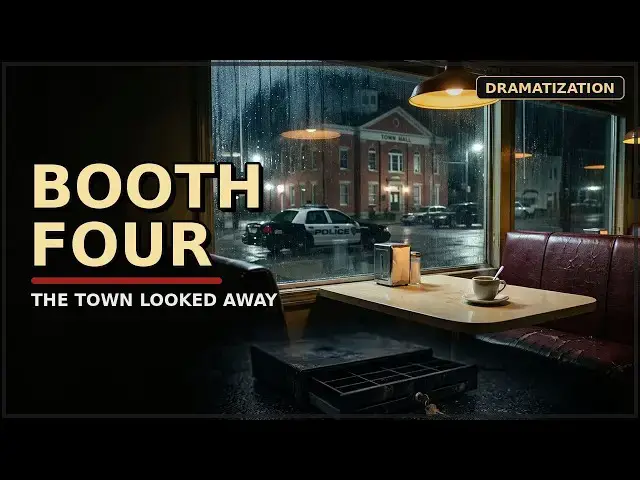
This is a dramatized narrative inspired by documented patterns of small-town organized crime influence. In Bellwether, Pennsylvania, a burned cash drawer appears outside Town Hall after a family hardware store refuses to cooperate. Decades later, a retired waitress opens a shoebox of napkins, names, and warnings — all pointing back to one diner booth.
Everyone knew where power sat. It was not the mayor’s office. It was not the police station. It was booth four at the Rialto Diner, where permits, jobs, favors, and silence quietly passed through the same morning table.
This fictionalized true crime story explores how corruption can survive without spectacle: through paperwork, hiring decisions, delayed permits, civic favors, and a town that learned to call obedience survival.
DISCLAIMER
This video is for educational and documentary purposes. It analyzes historical events based on public records and journalistic investigations. While some narrative elements are used for cinematic impact, this content does not encourage or condone any illegal activities.
Subscribe for cinematic true crime narratives, cold-case-style investigations, and stories about the systems that hide in plain sight.
Dramatized narrative inspired by real patterns of organized-crime influence, small-town corruption, witness intimidation, civic silence, and informal power networks. All characters, locations, and specific events are fictionalized.
#TrueCrime #CrimeDocumentary #OrganizedCrime #SmallTownMystery #MobStory #Corruption #Dramatization #BoothFour
Show More Show Less View Video Transcript
0:00
On the Tuesday after the Ferris Hardware
0:02
fire, somebody placed a blackened cash
0:05
drawer on the sidewalk in front of town
0:07
hall, still smelling of smoke with one
0:09
brass key melted into the lock.
0:12
The following is a dramatized narrative
0:15
inspired by documented patterns of
0:17
small-town organized crime influence.
0:20
By sunrise, half of Bellweather,
0:22
Pennsylvania had walked past it.
0:24
Nobody touched it.
0:26
Nobody asked who put it there.
0:29
When the fire marshal called the blaze
0:31
accidental, the Ferris family understood
0:34
something the report did not say.
0:36
In Bellweather,
0:38
the punishment usually arrived before
0:40
the explanation. The hardware store had
0:43
stood on Mercer Avenue for 31 years.
0:46
It's old storm windows, fishing lines,
0:48
stove bolts, garden hoses, and the kind
0:51
of paint locals bought on credit because
0:54
everybody knew everybody else's name.
0:56
That was the town's favorite sentence.
0:59
Everybody knew everybody.
1:01
But the question after the fire was
1:03
different. If everybody knew who
1:06
controlled Bellweather, why did it take
1:08
40 years for one retired waitress to say
1:11
it out loud? Her name, in this
1:14
dramatized account, is Clara Voss.
1:17
She was 76 when she finally opened the
1:20
shoebox.
1:22
Inside were napkins from the Rialto
1:24
diner, three Polaroids, a church raffle
1:28
ticket, and a handwritten list of names
1:30
she said had once meant more than names.
1:33
They were warnings. They were favors.
1:36
They were debts.
1:38
And at the bottom of the box was one
1:41
sentence written in blue ink in a hand
1:44
that shook harder near the end.
1:47
If I die before I speak,
1:49
ask who ate at booth four. Booth four
1:53
sat beneath the diner's front window.
1:55
From there, a man could see the police
1:57
station, the pharmacy, the municipal
1:59
building, and the bank entrance without
2:02
standing up. For decades, according to
2:04
Clara, that was the point.
2:07
The man who sat there most mornings was
2:09
not the mayor. He was not the police
2:10
chief. He held no office, wore no badge,
2:14
and signed no permits.
2:16
Yet, when people in Bellweather said
2:17
they needed something fixed, they did
2:19
not go first to town hall. They went to
2:22
breakfast.
2:23
The town would later deny it had been
2:25
afraid. [music]
2:26
Fear sounds too innocent. Fear suggests
2:30
clean victims and obvious villains.
2:33
Bellweather's silence was more useful
2:36
than fear and more durable [music]
2:38
because it had been taught as common
2:40
sense.
2:41
Keep your business open. Keep your son
2:43
employed. Keep your daughter away from
2:45
certain cars after dark. Smile at Booth
2:48
4.
2:49
Clara Vass worked the morning shift at
2:51
the Rialto Diner from 1968 until 2007.
2:56
She could balance six coffee cups on one
2:58
forearm, remember 12 orders without
3:01
writing them down, and tell from a man's
3:03
shoes whether he was there to eat or to
3:05
be seen.
3:07
The diner was narrow, chrome-sided, and
3:09
always too warm near the griddle.
3:12
The windows fogged in winter. The sugar
3:14
dispenser stuck in July.
3:17
Truckers stopped there because it opened
3:18
before the mill whistle.
3:20
City men stopped there because it was
3:22
one highway exit from nowhere.
3:24
And every weekday at 6:45, a black
3:27
Lincoln pulled up outside.
3:30
Clara later described the routine to a
3:32
young reporter from the county weekly.
3:34
She did not offer it like gossip. She
3:36
offered it like inventory.
3:38
The driver got out first, then the older
3:41
man. Dark coat, soft hat, no hurry.
3:45
Clara would fill his coffee before he
3:46
asked. He never raised his voice. That
3:50
was how you knew he didn't have to.
3:52
>> She called him Mr. Vale, not his first
3:55
name. Never his first name.
3:58
The consequence of that habit was small,
4:00
but permanent. An entire town learned to
4:03
speak around a man instead of to him.
4:07
In the spring of 1983, Peter Ferris made
4:09
the mistake of saying no in public.
4:12
He owned Ferris Hardware with his wife,
4:15
Elaine.
4:16
Their son Michael had just come home
4:17
from a trade school in Ohio and wanted
4:20
to expand the store into the empty
4:21
laundromat next door.
4:23
The permit should have been boring. A
4:25
wall removed, new shelves, a loading
4:28
door in the alley.
4:29
But Bellwether had a second permit
4:31
office and it met over eggs.
4:35
According to Clara's account, Peter came
4:37
into the Rialto one wet morning and
4:39
stopped beside booth four.
4:41
His raincoat was still dripping on the
4:42
tile.
4:43
>> I'm not paying for permission twice.
4:46
>> Clara said every fork in that corner
4:49
went still. Mr. Vale looked up from his
4:52
toast.
4:53
>> Then only ask once.
4:56
>> A week later, the hardware store burned.
4:59
The official explanation was electrical
5:01
fault near the rear stockroom. Old
5:04
wiring, paint thinner nearby, no sign of
5:07
forced entry.
5:09
That last phrase did a great deal of
5:11
work.
5:12
No sign of forced entry can mean nothing
5:14
happened. It can also mean whoever
5:16
entered had a key or did not need one or
5:19
knew which back window never latched in
5:21
humid weather.
5:23
The record in a town like Bellwether
5:25
often tells the truth only by refusing
5:28
to look directly at it.
5:30
Elaine Ferris stood across the street in
5:32
a borrowed coat while firefighters broke
5:34
her front windows with axes.
5:36
Her husband said nothing.
5:38
Their son Michael tried to run toward
5:40
the alley until two men held him back.
5:43
By morning, the expansion was dead.
5:46
By the end of the month, so was the
5:48
store.
5:49
Years later, Clara would remember not
5:51
the flames, but breakfast the next day.
5:55
Mr. Vale arrived at 6:45. He sat in
5:58
booth four. He ordered poached eggs.
6:01
When Clara set down the plate, there was
6:04
ash on the cuff of her uniform from
6:06
helping Elaine sort through ruined
6:07
invoices the night before.
6:09
Mr. Vale noticed it.
6:12
He touched the cuff with two fingers,
6:14
almost gently.
6:16
>> Hard week for business?
6:18
>> Clara did not answer. She later said
6:20
that that was the first time she
6:22
understood the diner was not where the
6:24
town ate. It was where the town learned
6:26
what had happened to it. The fire did
6:29
not make the front page of any major
6:31
paper. It did not bring federal agents
6:33
into town. It did not produce a
6:35
confession, a trial, or even a scandal
6:38
that could be clipped and saved.
6:40
It produced something quieter.
6:43
For 6 months, no one applied for a
6:45
commercial renovation permit on Mercer
6:47
Avenue.
6:48
A plumber withdrew a bid for a county
6:50
contract after lunch at the Rialto.
6:52
The owner of a used car lot began making
6:54
weekly donations to a youth baseball
6:56
league run by Mr. Vale's nephew.
6:58
A town does not need many examples.
7:01
One is usually enough.
7:03
The first chapter of Bellweather secret
7:06
did not end with violence in the street.
7:08
It ended with forms left unsigned, loans
7:12
delayed, jobs offered to cousins, and
7:15
mothers telling sons to stop asking
7:17
questions because questions had a cost.
7:20
Clara kept waiting for someone else to
7:22
say it. No one did. So, she began saving
7:26
napkins.
7:28
Before the fire, before the shoebox,
7:30
before Clara's list, Bellweather had
7:33
already surrendered in pieces so small
7:36
most residents could pretend they were
7:38
ordinary.
7:39
A favor was a man getting hired at the
7:42
textile plant after Mr. Vale made one
7:44
phone call.
7:45
A favor was a parking ticket
7:47
disappearing for the mayor's
7:49
brother-in-law.
7:50
A favor was a police cruiser taking 40
7:53
minutes to respond to a broken window at
7:55
the wrong store and 4 minutes to respond
7:58
when someone dented a car outside the
8:00
Rialto.
8:01
Such a quiet arithmetic. The town sat in
8:05
a valley of brick row houses, church
8:07
steeples, ball fields, and low
8:09
industrial buildings that exhaled lint
8:12
from their vents.
8:13
Bellweather had been built by work, dye
8:16
shops, metal stamping, canning,
8:18
trucking, and then the plant, which
8:21
locals simply called the plant because
8:23
nothing else employed enough people to
8:24
deserve a name.
8:26
Who got hired there mattered. Who got
8:28
laid off mattered more.
8:31
Clara said the plant manager ate lunch
8:33
at booth four every second Thursday. He
8:35
never stayed long. He did not need to.
8:38
In 1974,
8:40
a young father named Daniel Reif lost
8:42
his job at the plant after refusing to
8:44
let a trucking company associated with
8:46
Vale's circle use his cousin's garage
8:49
for overnight storage.
8:51
The next Monday, Daniel came into the
8:53
diner with his work boots unlaced.
8:56
Clara said he sat at the counter and
8:57
stared at a cup of coffee until it went
8:59
cold.
9:01
Mr. Vale was already in the booth.
9:04
Daniel turned on the stool.
9:06
You took my job.
9:08
Mr. Vale folded his newspaper.
9:10
>> No, I heard you didn't want help.
9:13
>> The cruelty was in the grammar, not
9:16
threat, not confession,
9:19
a lesson disguised as weather.
9:21
Daniel got his job back 3 weeks later
9:24
after his cousin signed the storage
9:25
lease. People in Bellweather told that
9:27
story as if it proved Mr. Vale was
9:30
reasonable.
9:31
That is how corruption survives in a
9:33
polite town.
9:35
It does not always arrive as a demand.
9:37
Sometimes it arrives as a solution to a
9:39
problem it quietly created.
9:41
>> [music]
9:41
>> And the grateful person becomes the
9:43
witness least able to testify against
9:45
it.
9:46
Daniel bought a house four years later.
9:49
His daughter went to college on a
9:50
scholarship from a civic fund tied to
9:52
the same men who had nearly ruined him.
9:55
Bellwether [music] learned to call that
9:57
balance.
9:58
The police station was a squat building
10:00
across from the diner with a flag that
10:02
snapped hard in winter and drooped in
10:04
summer heat. Officers came and went.
10:07
Chiefs changed. The shape of obedience
10:10
did not.
10:11
Clara kept a small calendar under the
10:13
register.
10:14
Not because she thought of herself as an
10:15
investigator, because waitresses notice
10:18
patterns other people dismiss as
10:20
manners.
10:21
The same officers came in after certain
10:23
meetings. The same envelopes appeared
10:25
under newspapers.
10:26
The same patrol car sat outside the
10:28
Rialto on nights when union arguments
10:30
got loud.
10:32
Evidence is not always a smoking gun.
10:34
Sometimes it is a coffee refill at the
10:36
wrong table repeated for 20 years.
10:39
One October night, a teenage dishwasher
10:42
named Joey Pike found a brown envelope
10:45
behind the paper towel dispenser in the
10:47
men's room.
10:48
He brought it to Clara because he
10:49
thought someone had left a paycheck.
10:52
Inside was cash.
10:55
Clara said she was still holding the
10:56
envelope when Mr. Vail's driver stepped
10:59
through the kitchen door.
11:00
He did not shout. He did not reach for
11:03
her.
11:03
He only held out his hand.
11:06
>> Kitchen's no place for lost property.
11:09
>> Joey quit before Thanksgiving. His
11:11
mother told neighbors he had found
11:13
better work in another county.
11:15
Maybe he had. Maybe leaving was the
11:17
better work.
11:19
The most frightening part of
11:20
Bellwether's arrangement was not that it
11:23
touched everything. It was that it made
11:25
everything deniable.
11:27
A zoning variance could be delayed for
11:29
legitimate reasons. A job could
11:32
disappear in a downturn. A patrol route
11:34
could change by coincidence. A school
11:37
board seat could open because someone
11:39
wanted more time with family.
11:41
A town can bury a body with a shovel.
11:45
It can bury a system with paperwork.
11:48
By the early 1980s, Bellweather had
11:51
mastered the second method. Clara's
11:54
husband, Owen, wanted her to stop
11:56
writing things down.
11:58
They sat in their apartment above a
12:00
barber shop, the television low, the
12:02
radiator hissing like an old warning.
12:05
She had spread napkins across the
12:07
kitchen table, each one marked with a
12:09
date, a name, and a booth number.
12:13
Owen stood in the doorway in his
12:14
undershirt.
12:15
Clara,
12:17
paper makes people brave until somebody
12:20
finds it.
12:21
>> Then I'll hide it.
12:23
>> That isn't the same as being safe.
12:26
>> The next morning, she moved the shoebox
12:28
from the closet to a loose floorboard
12:31
beneath the bed. She did not stop. The
12:35
easiest version of Bellweather is the
12:36
one the town would later prefer. One bad
12:39
man, one booth, one frightened
12:42
population held hostage by a shadow.
12:45
That version is comforting. It makes
12:47
innocence available in bulk.
12:49
But Clara's list complicated the myth
12:52
because some of the names inside the
12:53
shoebox were not criminals in the usual
12:56
sense.
12:57
They were councilmen, charity
12:58
organizers, school trustees, church
13:01
ushers, landlords, and men who coached
13:04
Little League badly but with devotion.
13:07
They were respectable.
13:09
That was the problem. In 1989, Mayor
13:12
Leland Price [music] announced a
13:14
downtown renewal plan from the steps of
13:16
the municipal building. New sidewalks,
13:19
new storefront grants, a parking lot
13:21
where three older buildings stood near
13:23
the rail spur.
13:25
The plan sounded civic. It photographed
13:28
well.
13:29
What the public version did not show was
13:31
that two of those [music] buildings had
13:32
recently been purchased through
13:34
companies locals could not trace
13:36
by men who spent weekday [music]
13:38
mornings at the Rialto.
13:40
Clara clipped the mayor's announcement
13:42
from the county paper and placed it in
13:43
the shoe box beside a napkin that said
13:46
Price, Vail,
13:48
booth four, 5:10 p.m.,
13:51
back door locked. That evening,
13:53
according to Clara's traumatized
13:55
account, the mayor entered the diner
13:57
after closing. Rain ticked against the
14:00
front glass.
14:01
The chairs were upside down on the
14:03
tables except booth four, which remained
14:05
set.
14:06
Mr. Vail sat facing the window.
14:09
Mayor Price kept his coat on.
14:11
You said it would stay quiet.
14:13
>> It is quiet.
14:15
>> The grant committee is asking about
14:18
ownership. Mr. Vail stirred his coffee,
14:21
though there was no sugar in it.
14:23
>> Committees ask. Mayors answer.
14:26
>> By the next meeting, the grant question
14:29
had vanished from the minutes.
14:31
Here the story turns. Because if the
14:33
mayor had been merely threatened,
14:36
Bellwether could forgive him. If the
14:38
police chief had been merely afraid, the
14:40
town could mourn him.
14:42
If businessmen had paid because they had
14:44
no choice, history might file them under
14:46
victims of a stronger hand.
14:49
But the record Clara assembled suggested
14:52
something uglier.
14:53
Many people benefited just enough to
14:56
keep the system alive.
14:58
Not richly, not flamboyantly. This was
15:01
not a town of mansions and yachts.
15:04
It was a town of stable jobs, waived
15:07
fees, quiet loans, forgiven mistakes,
15:11
and the warm human desire not to lose
15:13
what little security had been granted.
15:17
That is a harder crime to narrate
15:19
because the villain has too many
15:21
familiar faces. The family that refused
15:24
to cooperate after the Ferris fire was
15:27
not only the Ferris family, it was also
15:30
for a short time the Alvarez family.
15:33
They ran a small grocery on the east
15:34
side, the kind with phone cards near the
15:37
register and green bananas stacked by
15:39
the window.
15:40
In 1991, they declined to sell their
15:43
building to a development company
15:45
connected through two intermediaries to
15:47
Velez's circle.
15:49
The pressure began and politely, a
15:51
health inspection, then a parking
15:53
complaint, then a rumor about unpaid
15:56
taxes.
15:57
The Alvarezes lasted 7 months.
16:00
No flames this time.
16:02
Just exhaustion.
16:04
Clara saw Mrs. Alvarez outside the diner
16:06
one morning holding a cardboard box of
16:09
receipt books and old photographs. The
16:11
grocery's front windows had been papered
16:13
over.
16:14
Clara stepped onto the sidewalk with two
16:16
coffees.
16:17
Mrs. Alvarez did not take one.
16:20
>> If I say it was them, can you make it
16:22
matter?
16:23
>> Clara had no answer.
16:25
The honest answer would have been no.
16:27
Instead, she stood there while the
16:29
traffic light changed from red to green
16:32
over an empty intersection. And she
16:34
understood that knowing the truth is not
16:36
the same as possessing power.
16:39
By the mid-1990s, Mr. Velez was older,
16:42
slower, and seen less often in public.
16:45
The black Lincoln was replaced by a gray
16:47
sedan. The driver changed. The booth
16:50
remained.
16:51
The system had become less dependent on
16:53
his body because it had entered the
16:55
habits of everyone around him.
16:58
That is the moment organized power
17:00
becomes most dangerous.
17:02
Not when one man controls the town, but
17:04
when the town anticipates his wishes
17:07
before he speaks.
17:09
Clara wrote fewer napkins then.
17:11
She said there was less to observe.
17:13
Not because things had stopped, but
17:15
because people had learned the
17:17
choreography.
17:18
The midpoint of Bellweather's silence
17:21
came not with an arrest, but with a
17:22
funeral. Mr. Vale died in winter. The
17:26
church was full. The mayor attended. Two
17:29
former police chiefs attended. The plant
17:31
manager attended. So did Peter Ferris,
17:34
whose ruined hardware store had become a
17:36
discount carpet outlet owned by a
17:38
company nobody in town could quite
17:40
explain.
17:41
Clara stood in the back near the
17:43
radiator.
17:44
She watched men who had cursed Vale in
17:46
private kneel like mourners in public.
17:49
After the service, the mayor shook hands
17:52
outside under a gray sky and told
17:54
reporters Vale had been a devoted
17:56
supporter of local charities.
17:58
Clara went home and added the funeral
18:00
program to the shoebox.
18:02
That was the day she stopped believing
18:04
the town had been silenced.
18:06
The town had learned to speak perfectly
18:08
well.
18:09
It had simply chosen the language of
18:11
survival.
18:12
In 2008, a year after Clara retired, her
18:16
husband died.
18:17
The apartment above the barber shop went
18:19
quiet in a way that made every old paper
18:22
sound louder.
18:24
She began waking before dawn, still
18:26
expecting the breakfast rush.
18:28
She would sit at her kitchen table with
18:29
coffee and look at the floorboard
18:31
beneath the bed.
18:33
For 40 years, the shoebox had been
18:36
evidence of nothing official and
18:38
everything human.
18:40
Then a county reporter named Mara
18:42
Ellison knocked on her door.
18:44
Mara was 26, new to the weekly paper,
18:47
and working on a harmless anniversary
18:49
piece about closed businesses on Mercer
18:51
Avenue.
18:52
Ferris Hardware was supposed to be one
18:54
paragraph.
18:56
Clara gave her 3 hours.
18:59
>> The first interview happened at Clara's
19:01
kitchen table. The wallpaper had yellow
19:03
[music] roses. The tape recorder sat
19:06
between them beside a plate of uneaten
19:08
toast.
19:09
Mara asked why the hardware store
19:11
mattered.
19:12
Clara looked toward the bedroom.
19:14
>> Because that was when everybody learned
19:16
the price.
19:18
>> The price of what?
19:20
>> Clara stood, crossed [music] the room,
19:22
and lifted the loose floorboard with a
19:24
butter knife.
19:26
>> Of saying no.
19:27
>> When she placed the shoebox on the
19:29
table, Mara did not touch it at first.
19:32
Some objects carry accusation before
19:35
anyone opens them.
19:36
The series Mara eventually wrote did not
19:39
accuse a named crime family of
19:41
controlling Bellweather. It could not.
19:44
The older men were dead or unreachable.
19:46
Companies had dissolved, records were
19:48
missing, memories had become careful,
19:51
lawyers were awake.
19:53
Instead, the articles followed patterns,
19:56
property transfers, hiring decisions,
19:59
inspection records, campaign donations,
20:01
police response logs, and the strange
20:04
gravitational pull of one diner booth.
20:08
That restraint frustrated readers who
20:10
wanted a clean villain.
20:12
But in towns like Bellweather, restraint
20:14
may be the only honest form of
20:16
accusation.
20:17
The paper trail [music] did not shout.
20:19
It leaned.
20:21
The backlash arrived faster than the
20:23
truth. Letters to the editor called
20:25
Clara confused, bitter, lonely,
20:29
attention-seeking.
20:30
Former officials said the allegations
20:32
insulted the town's good name.
20:34
The current mayor called for healing
20:36
without naming the wound.
20:39
At the diner, now renovated with exposed
20:41
brick and Edison bulbs,
20:43
booth four had been removed during
20:45
remodeling.
20:47
That detail became its own argument.
20:49
Some said it proved nothing. Others said
20:52
it proved everything.
20:54
Clara received one unsigned note in her
20:56
mailbox.
20:57
It contained no threat,
20:59
just a photocopy of the Ferris Hardware
21:01
fire report with the word accidental
21:04
circled three times.
21:07
The old grammar had survived the old
21:09
man.
21:10
Mara visited Peter Ferris in a ranch
21:12
house outside town. He was widowed by
21:15
then, his hands bent from arthritis, his
21:18
son living two states away.
21:20
On the coffee table sat a framed
21:22
photograph of the hardware store before
21:24
the fire. Striped awning, paint cans in
21:27
the window, Peter standing in the
21:29
doorway with one thumb hooked in his
21:31
belt.
21:32
Mara asked whether he believed the fire
21:34
was set.
21:35
Peter did not look at the recorder.
21:38
>> Belief is what they leave you when proof
21:40
is gone.
21:41
>> It was the closest he came to
21:43
accusation. It was also enough to
21:46
understand what had been stolen from
21:47
him.
21:48
Not only a business,
21:50
certainty.
21:52
No grand indictment followed. No
21:54
courtroom confession arrived to rescue
21:56
Bellwether from ambiguity.
21:58
A state review found irregularities in
22:01
old municipal records, but no
22:03
prosecutable case.
22:05
Several families filed civil claims that
22:07
went nowhere.
22:08
One retired officer admitted, carefully,
22:11
that certain people received deference
22:14
in town decision-making.
22:16
Deference.
22:18
There are words people choose when the
22:19
honest ones are too expensive.
22:22
Clara kept the clipping of that
22:23
interview beside the funeral program.
22:26
The final public meeting took place in
22:28
the high school auditorium because town
22:30
hall was too small.
22:32
Residents lined up at a microphone
22:34
beneath championship banners from
22:36
seasons long past. Some thanked Clara.
22:39
Some accused her of tearing open wounds.
22:42
Some said everyone had known and no one
22:44
could have done anything.
22:46
Others said that was exactly the lie
22:48
that kept the system fed.
22:50
A woman whose father had lost his plant
22:52
job stood and said the quiet part
22:54
plainly.
22:55
>> We didn't stay silent because we trusted
22:58
them. We stayed silent because we needed
23:00
groceries.
23:02
>> No one clapped. For once, the room knew
23:05
better.
23:06
Bellweather did not become clean after
23:08
that meeting. Towns do not launder
23:10
history by admitting it exists. The
23:13
diner still served breakfast. The plant
23:16
eventually closed.
23:17
Mercer Avenue gained a pharmacy chain,
23:19
lost a movie theater, and kept the
23:21
discount carpet outlet where Ferris
23:23
Hardware used to stand.
23:25
People who had benefited from the old
23:26
arrangement grew old with reputations
23:28
mostly intact. Clara moved into a
23:31
smaller apartment near her niece. Mara
23:33
left the weekly for a city paper.
23:36
The shoebox went to a private archive
23:38
with a label so cautious it almost
23:39
apologized for itself. Local civic
23:42
influence allegations, mid to late 20th
23:44
century. What remains is not proof of
23:47
every whispered story. It is not a neat
23:50
ledger of guilt. It is a portrait of how
23:53
power behaves when it does not need to
23:55
announce itself.
23:57
It sits by the window. It pays for
23:59
coffee. It remembers who asked for a
24:02
permit, who needed a job, who had a son
24:05
with a record, who owed back taxes,
24:08
who wanted peace badly enough to call
24:10
obedience wisdom.
24:12
And then one morning, long after the
24:14
powerful men are buried, an old waitress
24:17
opens a shoebox, and the town discovers
24:20
that silence was never empty.
24:22
It was full of names. The blackened cash
24:25
drawer disappeared from the sidewalk
24:27
before noon. No report mentions who
24:30
removed it. But Clara said that in
24:32
Bellweather, the message was never the
24:35
fire. The message was that everyone knew
24:37
where to look and still walked past.
#Arts & Entertainment