Up next in 10

Explore historical newspaper headlines and rare archival documents that shaped public opinion on critical social issues and crises.
This collection of primary source documents offers a direct look at how major events were reported across different eras. From evolving perspectives on gay marriage and gender recognition to the specific language found in old entertainment contracts, these records provide a tangible connection to the past. Historians, students, and anyone interested in media evolution will find these artifacts essential for understanding shifting cultural narratives.
By examining these historical newspaper headlines, you get a clearer picture of the social history that defines our modern world. Whether you are tracing the development of specific rights or analyzing how international crises were communicated, these archival documents serve as a vital record of human progress and conflict. We also look at visual markers of history, including memorial sites and European streetscapes, to ground these stories in physical reality.
Subscribe for weekly historical document breakdowns, and let me know in the comments which era you want me to feature next.
#ChristineJorgensen #Documentary #History #LGBTQHistory #1950sAmerica
Show More Show Less View Video Transcript
0:00
The letter was never meant for the
0:02
public. It was written in Copenhagen in
0:05
the summer of 1952 by a 26-year-old
0:08
American addressed to her parents in the
0:11
Bronx. The handwriting was careful, the
0:14
tone measured. She told them what the
0:17
doctors had done, what she had chosen,
0:20
what she was becoming. that letter would
0:23
be stolen not by a spy, not by a
0:26
government, by a friend of the family
0:29
who understood its market value. Within
0:32
weeks, the New York Daily News ran a
0:34
front page headline that would be read
0:36
by more Americans than any story that
0:38
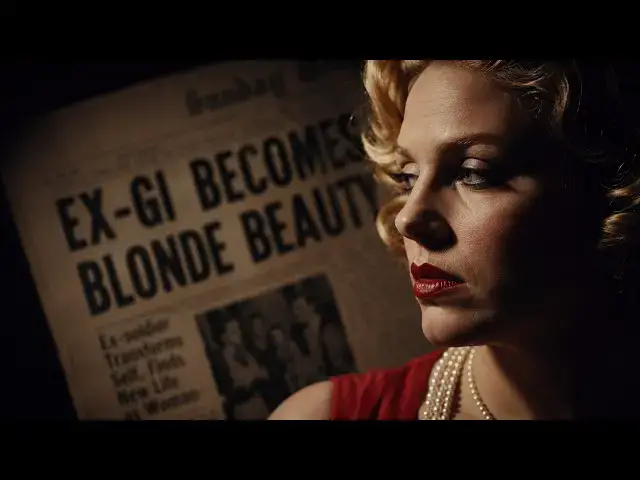
year. XGI becomes blonde beauty. Five
0:43
words, no consent, no context. And from
0:48
that morning forward, Christine
0:50
Jorgensson, formerly George William
0:52
Jorgensson Jr., became the most publicly
0:55
dissected human being in America. This
0:58
account draws from published interviews,
1:01
medical correspondents, and Christine
1:03
Jorgensson's own autobiography. What
1:06
made the story dangerous was not the
1:08
surgery. It was the exposure. The
1:11
machinery of mid-century American media
1:14
did not report on Christine Jorgensson.
1:17
It consumed her. Editors, columnists,
1:20
nightclub owners, politicians, each one
1:24
extracted something. Fascination,
1:27
revenue, outrage, moral authority. And
1:31
Christine, who had wanted only to live
1:34
quietly, found herself managing an
1:36
empire she never built. an empire of
1:39
attention built on her body, sustained
1:43
by public appetite and defended by no
1:46
one but herself. The betrayal began
1:49
before she ever set foot back on
1:51
American soil. Someone inside her own
1:54
circle, the accounts do not agree on
1:56
exactly who, had taken that private
1:59
letter and delivered it to a reporter.
2:02
According to those who later described
2:04
the sequence, the family learned about
2:06
the headline the same morning as the
2:08
rest of New York. The question that no
2:11
one asked in December of 1952 was
2:14
simple. Who profited? Not Christine. She
2:18
had no publicist, no agent, no contract.
2:22
She was a patient in a Danish hospital
2:25
recovering from a procedure that at the
2:27
time had no legal framework, no public
2:30
precedent, and no cultural language. And
2:34
yet, someone decided her body was news.
2:37
The structure of what followed resembled
2:40
something closer to an industry than a
2:42
human life. Newspapers sold millions of
2:45
copies. Nightclub owners began making
2:48
offers before she had even left Denmark.
2:51
Comics, editorials, and radio segments
2:54
fed on the story for months. Every
2:56
institution that touched Christine
2:58
Jorgensson extracted value. She was not
3:01
a person to them. She was inventory. The
3:05
Bronx, 1936.
3:08
George William Jorgensson Jr. was 10
3:11
years old, slight, quiet, and already
3:14
aware that something about the way he
3:16
moved through the world did not match
3:18
what was expected of him. The
3:20
neighborhood was Danish American
3:22
workingass and precisely the kind of
3:25
place where difference was noticed but
3:27
never named. What survives from those
3:30
years is mostly silence. Jorgensson
3:33
later described the childhood not as
3:36
traumatic in any dramatic sense, but as
3:39
a sustained experience of wrongness, a
3:42
feeling that the body was a costume no
3:44
one else could see. In her 1967
3:48
autobiography, she wrote about watching
3:50
other boys with a kind of
3:52
anthropological distance, studying what
3:54
came naturally to them, trying to
3:56
replicate it, failing. Then came the
4:00
war. In 1945,
4:02
George Jorgensson was drafted into the
4:05
United States Army. The military did not
4:08
know what to do with a frail 105-lb
4:11
clerk from the Bronx, so they made him a
4:13
filing clerk at Fort Dicks. He served.
4:16
He was honorably discharged. And he came
4:19
home with the same unbearable question
4:22
he had carried since childhood. Only now
4:25
the question had a name. What Jorgensson
4:28
did next was not impulsive. It was
4:31
research. Quietly, methodically in
4:35
public libraries, in medical texts, in
4:38
conversations with doctors who mostly
4:40
refused to help, Jorgensson began
4:43
assembling a private understanding of
4:45
what was medically possible. This was
4:48
1948. The language barely existed. The
4:52
word transsexual had not yet entered the
4:55
American medical vocabulary. Harry
4:57
Benjamin, the endocrinologist who would
4:59
later become the foremost authority on
5:01
the subject, had not yet published his
5:03
landmark work. Jorgensson was building
5:06
the map alone and then a name. A friend
5:10
mentioned a doctor in Denmark, an
5:13
endocrinologist named Christian
5:14
Hamburger working at the Staten Serum
5:17
Institute in Copenhagen. Hamburger was
5:20
conducting research into hormones,
5:22
specifically into the relationship
5:24
between hormonal treatment and gender
5:26
identity. Jorgensson sold everything,
5:29
borrowed what was left, and in 1950
5:32
booked a one-way ticket to Denmark, not
5:35
as a tourist, as a patient who did not
5:38
yet have a doctor. Copenhagen, autumn of
5:42
1950.
5:43
George Jorgensson arrived with almost no
5:46
money, a suitcase, and a letter of
5:48
introduction that was barely a letter,
5:51
more a request, a hope. What happened
5:54
next is one of the more remarkable
5:56
medical relationships of the 20th
5:59
century. Dr. Christian Hamburger agreed
6:02
to see Jorgensson. Then he agreed to
6:05
treat him without charge. Hamburger
6:07
later described the case in clinical
6:09
terms, but the decision was not purely
6:12
clinical. According to published medical
6:14
correspondents, Hamburger recognized in
6:17
Jorgensson a patient whose psychological
6:19
suffering was genuine, measurable, and
6:22
he believed treatable. The treatment
6:25
began with hormones, estrogen,
6:28
administered carefully over months. The
6:31
physical changes were gradual but
6:33
unmistakable. According to Jorgensson's
6:36
autobiography, the effect was not only
6:38
physical, it was cognitive, emotional. a
6:42
realignment so fundamental that she
6:44
later described it as waking up inside
6:47
the correct body for the first time.
6:50
As later recounted by those who knew her
6:52
during this period, Christine, she had
6:55
begun using the name privately, became
6:57
calmer, more present, more herself in a
7:01
way that was visible even to strangers.
7:04
>> For the first time, I was becoming the
7:07
person I had always known I was. The
7:10
surgical procedures followed. Between
7:13
1951 and 1952,
7:16
Jorgensson underwent a series of
7:18
operations performed by Danish surgeons
7:20
under Hamburger supervision. The
7:23
specifics were later documented in
7:25
medical journals. What matters here is
7:27
not the clinical detail. What matters is
7:30
what the procedures meant inside the
7:33
life of one person. a resolution to a
7:36
question that had consumed every waking
7:38
hour since childhood. She wrote letters
7:41
home, careful, loving letters to her
7:45
parents, Florence and George Senior,
7:47
explaining what was happening, asking
7:50
for understanding, describing the
7:52
relief. Those letters were the most
7:55
vulnerable documents Christine
7:56
Jorgensson ever produced. and one of
7:59
them, at least one, ended up in the
8:02
hands of someone who saw dollar signs.
8:05
The accounts from that period do not
8:07
agree on exactly how the leak occurred.
8:10
Some historians point to a family
8:12
acquaintance. Others suggest a chain of
8:15
loose talk that reached a reporter at
8:17
the Daily News. What is certain is that
8:21
the information was not offered by
8:23
Christine, not authorized by her family,
8:26
and not cleared by her doctors. The most
8:29
private medical decision a person could
8:31
make became overnight the most public
8:34
story in America. December 1st, 1952,
8:38
the New York Daily News, circulation 2.4
8:42
million ran the headline across its
8:44
front page. No qualifier, no medical
8:47
framing, no privacy. XGI becomes blonde
8:51
beauty. Within 48 hours, the story had
8:55
been picked up by every wire service in
8:57
the country. Christine Jorgensson was
9:00
still in Copenhagen. She learned about
9:03
the headline from a phone call. Not from
9:05
her editor. She didn't have one. Not
9:07
from her lawyer. She didn't have one of
9:09
those either. From her mother. According
9:12
to Jorgensson's later account, Florence
9:15
Jorgensson was calm on the phone. More
9:17
calm than Christine expected. What her
9:20
mother said in words to this effect was
9:23
simple.
9:24
>> We've known for a long time, dear. We
9:27
just didn't know the world would find
9:28
out this way.
9:29
>> The institutional machinery of
9:31
mid-century media had found its newest
9:34
commodity. Within weeks, Christine
9:37
Jorgensson received, according to her
9:39
autobiography, hundreds of interview
9:42
requests, dozens of entertainment
9:44
offers, and more than a thousand letters
9:47
from strangers. Some were hostile. Some
9:50
were desperate. Many of those letters
9:52
came from people who recognized their
9:54
own experience in Christine's story.
9:57
People who had no language for what they
9:59
felt, no doctor willing to help, and no
10:02
reason to believe the world would let
10:04
them survive what they were. The press
10:06
coverage was relentless. Columnists
10:09
competed to produce the cleverest
10:11
insult. Walter Winshell referenced the
10:14
story repeatedly in his column.
10:16
editorial cartoonists made her a
10:18
punchline. The medical community largely
10:21
refused to comment, leaving the public
10:24
conversation entirely in the hands of
10:26
people who understood neither the
10:27
science nor the patient. And through all
10:30
of it, no one was paying Christine
10:33
Jorgensson. The newspapers profited, the
10:36
columnists profited, the comedians
10:39
profited. She was the product, not the
10:43
beneficiary. Then she made a decision
10:45
that changed the terms. Rather than
10:48
hide, rather than retreat to the Bronx
10:51
and hope the story would die, Christine
10:54
Jorgensson returned to New York
10:56
publicly, deliberately. She stepped off
11:00
the plane at Idle Wild Airport, later
11:02
renamed JFK, in February 1953,
11:07
wearing a fur coat, full makeup, and a
11:09
composure that startled the reporters
11:11
who had come expecting a freak show. As
11:14
later recounted by the press corps
11:16
present, she answered questions with
11:18
precision, warmth, and an absolute
11:21
refusal to apologize.
11:23
I am a woman and I have been one in my
11:26
heart for as long as I can remember.
11:29
>> The photograph from that airport arrival
11:31
became one of the most reproduced images
11:33
of the decade. Not because of scandal,
11:36
because of poise. Christine Jorgensson,
11:40
who had been treated as a joke, a
11:42
curiosity, a headline, walked through
11:45
that crowd and for 30 seconds made every
11:48
reporter in the room feel slightly
11:50
small. But poise does not pay rent. And
11:54
the empire of attention that had been
11:57
built around her without her consent was
11:59
now something she had to either manage
12:02
or be destroyed by. She chose to manage
12:05
it. The nightclub circuit. It was not
12:09
what Christine Jorgensson had imagined
12:11
for herself. But by 1954, it was the
12:15
only industry willing to pay her. And
12:17
the currency it traded in was spectacle.
12:20
She performed not as a singer, though
12:23
she sang. Not as a comedian, though she
12:26
was sharp and funny. She performed as
12:29
herself. The most famous woman in
12:32
America, standing on a stage, daring the
12:35
audience to look at her without
12:37
flinching. The money was real. For the
12:41
first time, Christine controlled the
12:43
terms of her own visibility. She hired
12:45
management. She negotiated contracts.
12:48
She understood earlier than most
12:50
performers of her era that fame without
12:53
ownership was exploitation. But the cost
12:56
was continuous. Every performance was a
12:59
negotiation with an audience that had
13:01
been told she was a novelty. Every city
13:04
brought new reporters with the same
13:06
questions. Every engagement was shadowed
13:09
by the knowledge that the applause was
13:11
partly curiosity. And curiosity has a
13:15
shelf life. Then came the legal battles.
13:18
In 1959, Christine Jorgensson applied
13:21
for a marriage license in New York. Her
13:24
fiance was a labor union statistician
13:27
named Howard Knox. The application
13:30
listed Christine as female. The city
13:32
clerk's office reviewed it and denied
13:34
it. The stated reason, her birth
13:37
certificate still listed her as male.
13:40
The denial was not quiet. It became
13:43
national news again. And this time the
13:46
coverage was not fascination. It was
13:49
punishment. Columnists who had treated
13:51
her as a curiosity now treated her as a
13:54
legal problem. Editorialists debated her
13:57
right to exist within institutions she
14:00
had not asked to define her. According
14:03
to published accounts, the engagement
14:05
did not survive the publicity. Knox, who
14:08
had been willing to marry Christine, was
14:10
not willing to marry the controversy.
14:13
>> I love her, but I didn't sign up to
14:16
fight the state of New York. That quote,
14:19
attributed to Knox by Contemporary Press
14:21
reports, was, according to Christine's
14:24
later accounts, the last thing he said
14:26
to her on the subject. The pattern was
14:29
always the same. Build something
14:32
private. Watch it be made public. watch
14:35
the public destroy it. The marriage
14:38
denial, the nightclub circuit, the
14:41
interviews that always return to the
14:43
same question, as if her entire humanity
14:46
could be reduced to one medical fact.
14:49
What is remarkable is not that Christine
14:52
Jorgensson survived this. It is that she
14:54
survived it with such visible dignity
14:57
that the system, which had tried to
14:59
humiliate her, eventually began to look
15:02
worse than she ever did. The military
15:05
came next. In 1953, the United States
15:08
Army retroactively reviewed Christine
15:11
Jorgensson's service record. There was
15:13
no legal basis for action. She had been
15:15
honorably discharged, but the review
15:18
happened anyway. The documents that
15:20
survived from that review tell only part
15:23
of the story. What they show is an
15:25
institution uncomfortable with the idea
15:28
that one of its veterans had done
15:29
something that fell outside every
15:31
category the institution recognized.
15:34
They did not revoke her discharge. They
15:37
did not need to. The review itself was
15:40
the message. And then there were the
15:42
doctors. Dr. Harry Benjamin, who by the
15:46
mid 1950s had become the most respected
15:49
voice on transsexualism in America,
15:52
publicly defended Christine Jorgensson.
15:54
He described her case as medically
15:56
legitimate, psychologically sound, and
15:59
ethically defensible. But Benjamin was
16:02
one voice. The American medical
16:04
establishment as a whole remained silent
16:07
or hostile. The few doctors willing to
16:10
discuss the subject publicly did so with
16:12
qualifications so heavy that the support
16:15
was barely audible. According to
16:17
published medical literature from the
16:19
period, the prevailing institutional
16:21
position was not that Christine
16:23
Jorgensson was wrong. It was that she
16:25
was inconvenient. Inconvenient because
16:29
her existence demanded answers to
16:31
questions no institution wanted to face.
16:34
If gender could be medically addressed,
16:37
then what was gender? If a person could
16:40
transition and live as a woman
16:42
functionally, socially, legally, then
16:45
what did the birth certificate mean?
16:47
What did the draft card mean? What did
16:49
the marriage license mean? Christine
16:51
Jorgensson did not set out to dismantle
16:54
legal categories. She set out to live.
16:58
But living in her case was itself an act
17:01
of institutional disruption. The
17:04
financial architecture of her career
17:06
tells its own story. By the early 1960s,
17:10
Christine had performed at venues across
17:12
the country, from Las Vegas to smalltown
17:15
supper clubs. She had appeared on
17:17
television, given hundreds of
17:18
interviews, and published her
17:20
autobiography in 1967.
17:23
The autobiography Christine Jorgensson,
17:26
a personal autobiography, sold well. It
17:29
was honest, measured, and deliberately
17:32
composed. She wrote about her childhood,
17:34
her military service, her medical
17:36
journey, and her return to America with
17:39
a precision that left little room for
17:41
the sensationalism the press preferred.
17:44
But the financial reality behind the
17:46
public image was more fragile than
17:48
anyone knew. The nightclub circuit was
17:51
not a career. It was a survival
17:53
mechanism. Venues booked her because she
17:56
drew crowds. When the crowds thinned, as
17:59
they inevitably did, the bookings dried
18:02
up. She was not being paid for talent.
18:04
She was being paid for novelty. And
18:07
novelty, by definition, expires. By the
18:11
late 1960s, Christine Jorgensson was
18:14
still famous, but the fame had become a
18:17
cage. Too recognizable to live
18:19
privately, too unusual to be cast
18:22
normally, too dignified to be the freak
18:25
the industry wanted. ran the whole
18:28
operation from a telephone and a
18:30
one-bedroom apartment. The strange thing
18:32
about Christine Jorgensson's later years
18:34
is how ordinary they were and how hard
18:37
she had to fight for that ordinariness.
18:40
She continued performing into the 1970s.
18:43
She lectured at universities. She spoke
18:45
to medical students. She answered for
18:47
the thousandth time the same questions
18:50
from reporters who had not bothered to
18:52
read her book. In 1979, she told an
18:55
interviewer, and this quote is
18:57
documented in published sources,
18:59
>> "I am a woman. I have lived as a woman.
19:03
I have paid the price of being a woman,
19:06
and I have earned the right not to have
19:08
to explain it anymore."
19:10
>> The interviewer, according to the
19:12
published account, asked the next
19:14
question. Anyway, Christine Jorgensson
19:16
was diagnosed with bladder and lung
19:18
cancer in 1986.
19:21
She died on May 3rd, 1989.
19:24
She was 62 years old. The obituaries
19:27
were kinder than the headlines had been.
19:30
The New York Times ran a respectful
19:32
notice. The medical community, which had
19:35
spent decades avoiding her, acknowledged
19:38
belatedly that her case had advanced the
19:40
field more than any clinical paper. Here
19:43
is the moral inversion at the center of
19:46
this story. Every institution that
19:49
punished Christine Jorgensson, the
19:51
press, the legal system, the military,
19:53
the medical establishment, eventually
19:56
adopted some version of what she had
19:58
proven with her life. The press that
20:00
mocked her now uses language she helped
20:03
make necessary. The legal system that
20:06
denied her a marriage license now
20:08
adjudicates gender recognition as a
20:10
civil right. The military that reviewed
20:13
her service record now permits
20:15
transgender service members. The medical
20:18
establishment that refused to speak now
20:21
treats gender affirming care as standard
20:23
practice. She won. But she won the way
20:27
pioneers always win. Too late to enjoy
20:30
it and too early to be thanked. What
20:33
makes this harder to explain is not the
20:35
suffering. It is the mathematics of
20:38
extraction.
20:40
Every newspaper that sold copies on her
20:42
story. Every nightclub that filled seats
20:45
with her name. Every columnist who built
20:48
a career mocking her. Every politician
20:51
who used her existence as a talking
20:53
point. Every institution that studied
20:56
her case without paying her, quoted her
20:58
without crediting her, and profited from
21:01
her visibility without protecting her
21:03
privacy. The ledger is not close to
21:06
balanced. Dr. Harry Benjamin, who had
21:09
defended her publicly for decades,
21:12
considered Christine not merely a
21:14
patient, but a person who had by the act
21:17
of living honestly contributed more to
21:19
the medical understanding of gender than
21:22
most researchers would in a career. The
21:25
letter, the one stolen from her family,
21:27
the one that started it all, was never
21:30
recovered in its original form. What
21:33
survives is the story of its theft. The
21:37
fact that someone looked at the most
21:39
vulnerable words a person could write to
21:41
their parents and saw only currency.
21:44
That theft is the smallest crime in this
21:47
story and it is also the most revealing.
21:51
Christine Jorgensson did not ask to be a
21:54
symbol. She asked to be a woman. The
21:57
world made her a symbol anyway and then
22:01
punished her for the visibility it had
22:03
imposed. The system consumed her, used
22:07
her, mocked her, denied her legal
22:10
personhood, exploited her fame, reduced
22:14
her to a headline. And she outlasted
22:17
every single one of them. Not with
22:20
power, not with money, not with
22:23
institutional backing, with composure.
22:26
Even now, the institutional logic of
22:29
what happened to Christine Jorgensson is
22:31
difficult to follow. Not because it was
22:33
hidden, but because it was so visible
22:35
that no one thought to call it what it
22:37
was. Extraction performed in broad
22:41
daylight with applause. She is buried in
22:44
the family plot in San Fernando Valley,
22:47
California. The headstone reads
22:50
Christine Jorgensson, 1926,
22:53
1989.
22:55
No qualification, no asterisk, just the
22:59
name she chose and the life she earned.
#Arts & Entertainment