Up next in 10

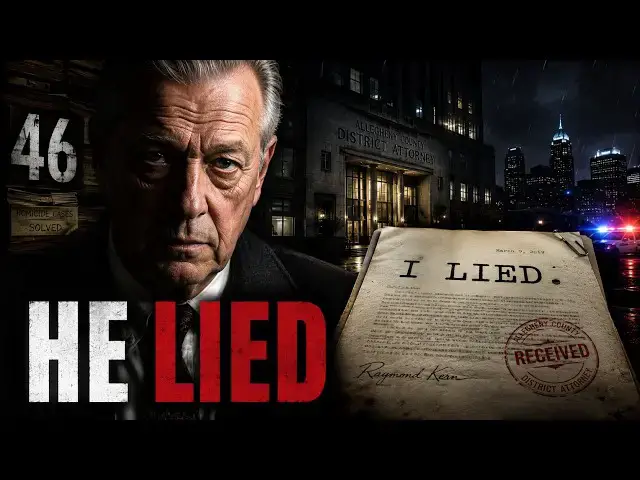
Raymond Kern spent 30 years as a criminal prosecutor sending individuals to prison. See the reality of his long legal career and high-stakes courtroom work.
This video examines the professional life of Raymond Kern, a man who dedicated three decades to the justice system. We look at his time in the interrogation room, his office, and the intense environment of the courtroom where he built his reputation. If you are interested in the mechanics of a murder case investigation or the day-to-day life of a veteran attorney, this footage provides a direct perspective on his work.
Beyond the courtroom drama, the footage highlights the public perception of his cases, including news reports regarding a murder case that shocked the city. Understand the pressure of handling serious criminal trials and the weight of the decisions made behind closed doors. This analysis is for those interested in the history of legal proceedings and the reality of long-term prosecution work.
Subscribe for weekly true crime stories and legal career breakdowns, and let us know in the comments which case you want to see analyzed next.
Historical Context & Notes
📚 This documentary is presented as a cinematic retelling based on the provided narrative and incorporates historical locations and investigative context associated with Allegheny County and Pittsburgh. Certain scenes may include reconstructed dialogue or visual dramatizations for storytelling purposes while remaining faithful to the narrative structure. Viewers are encouraged to consult official court records and historical sources when researching real criminal investigations. General background on Allegheny County law enforcement and homicide investigations informed contextual elements.
If you enjoy deeply researched true crime documentaries, detective stories, unsolved mysteries, criminal investigations, courtroom history, police interrogations, and cinematic documentary storytelling, subscribe for new long-form documentaries every week.
▶ Watch next for another gripping true crime investigation and uncover the stories hidden behind the official record.
#TrueCrime #Documentary #MurderMystery #Detective #CrimeStory #ColdCase #Investigation
Show More Show Less View Video Transcript
0:00
On the evening of March 9th, 2019, a
0:03
letter arrived at the Allegheny County
0:05
District Attorney's Office in
0:06
Pittsburgh, Pennsylvania.
0:08
It was postmarked from a suburb 20
0:10
minutes east. It was addressed to no one
0:12
in particular.
0:14
It was four pages long, typed in
0:16
12-point Courier, single-spaced.
0:19
The signature at the bottom belonged to
0:20
a man who had spent 30 years sending
0:23
other people to prison.
0:25
His name was Raymond Kern. For three
0:28
decades, he had been the department's
0:30
most reliable closer.
0:32
46 homicide cases solved. 46 convictions
0:36
that held on appeal.
0:38
He had testified in court more than 200
0:41
times.
0:42
He had trained a generation of younger
0:43
detectives.
0:45
He had retired eight days earlier with
0:47
full honors, a plaque, and a pension
0:50
that would carry him to the end of his
0:51
life.
0:53
The letter confessed to three murders.
0:55
It named the victims by first and last
0:58
name. It provided dates, locations, and
1:01
methods.
1:02
It included details that had never been
1:04
released to the public.
1:06
The details matched the evidence in
1:08
three unsolved cases that had gone cold
1:11
years before Raymond Kern ever became a
1:13
detective.
1:15
The prosecutor who opened the letter
1:16
that night would later say it read less
1:19
like a confession and more like a case
1:22
file.
1:23
There was no remorse, no justification,
1:26
no plea.
1:27
Just the facts, arranged in
1:29
chronological order, as if Raymond Kern
1:32
were briefing a colleague on someone
1:34
else's work.
1:36
This is a story built on trust.
1:39
The kind of trust that lets a man move
1:41
freely through crime scenes, handle
1:44
evidence alone, write reports that no
1:46
one questions.
1:48
For 30 years, Raymond Kern solved
1:51
murders no one else could crack.
1:54
The question no one thought to ask was
1:57
why he was so good at reading the mind
2:00
of a killer.
2:02
The following account is based on court
2:04
records, police files, witness
2:06
interviews, and investigative reporting.
2:09
Some dialogue has been reconstructed
2:11
from official testimony and
2:13
contemporaneous accounts.
2:15
Out of respect for the victims and their
2:16
families, certain identifying details
2:19
have been altered.
2:21
This is not entertainment.
2:23
This is consequence.
2:25
Raymond Kern joined the Pittsburgh
2:27
Police Department in 1988. He was 26
2:31
years old. He had a degree in criminal
2:33
justice from a state school no one
2:35
remembers, and a military record clean
2:37
enough to pass the background check. He
2:40
spent 2 years in patrol. He was quiet.
2:43
He was thorough. He never missed a
2:45
shift.
2:46
In 1990, he applied to the detective
2:48
bureau. He was accepted on the first
2:51
try.
2:52
His first homicide case was a domestic
2:55
shooting in the Hill District. Open and
2:57
shut. The husband confessed within an
2:59
hour.
3:00
Raymond Kern wrote a report so detailed
3:03
that the prosecutor used whole
3:05
paragraphs verbatim in the charging
3:07
documents.
3:08
His sergeant noticed. Within a year,
3:10
Kern was getting the harder cases. The
3:13
ones where the shooter had fled. The
3:15
ones where witnesses refused to talk.
3:17
The ones where the evidence was thin and
3:19
the pressure was high.
3:21
He cleared them at a rate no one else
3:24
could match. Not through luck. Not
3:26
through shortcuts. Through patience.
3:28
[music]
3:30
He would sit with a case for weeks,
3:32
rereading witness statements, revisiting
3:35
crime scenes at different hours,
3:37
tracking down people no one else thought
3:39
to interview. He built timelines on
3:42
graph paper. He worked alone whenever
3:44
possible.
3:46
By the mid-90s, Raymond Kern had a
3:48
reputation. If a case was going cold,
3:51
you gave it to Kern. If the family was
3:53
losing hope, you gave it to Kern. If the
3:56
press was circling and the chief needed
3:58
a win, you gave it to Kern.
4:00
He delivered every time.
4:03
In 2003, he solved a double homicide
4:06
that had been unsolved for 11 years. The
4:09
victims were two women found in a vacant
4:11
row house in Homewood. No witnesses, no
4:14
murder weapon, no suspects.
4:16
The case had been worked by four
4:18
different detectives before it landed on
4:20
Kern's desk. He spent 6 months on it. He
4:23
found a witness who had been 14 years
4:25
old at the time of the murders and had
4:27
never been interviewed. The witness gave
4:29
up a name. The name led to a conviction.
4:33
The chief called it the best detective
4:35
work he had ever seen.
4:37
>> [music]
4:37
>> Raymond Kern accepted the commendation
4:39
in a ceremony at City Hall. He shook
4:41
hands with the mayor. He posed for a
4:44
photograph with the victims' families.
4:46
He went back to work the next morning
4:48
and requested another cold case.
4:51
No one questioned his methods. No one
4:54
asked why he preferred to work alone. No
4:57
one wondered why his solve rate was so
4:59
much higher than anyone else's.
5:01
Success in law enforcement tends to shut
5:04
down curiosity.
5:06
The letter he mailed on March 9th began
5:09
with a single sentence.
5:11
Raymond Kern via typed letter.
5:15
I am writing to inform you of three
5:17
errors in the historical record.
5:20
He did not call them crimes. He did not
5:23
call them murders.
5:24
He called them errors.
5:27
As if the problem was not what he had
5:29
done, but that the cases had remained
5:31
unsolved while he had the answers all
5:34
along.
5:35
The first victim named in the letter was
5:37
a woman named Lacy Hollis. She was 22
5:41
years old when she disappeared in
5:42
November of 1986.
5:44
Her body was found 3 weeks later in a
5:47
wooded area near the Monongahela River.
5:49
She had been strangled.
5:51
There were no signs of sexual assault,
5:53
no robbery, no clear motive.
5:56
The case went cold within 6 months.
5:59
Raymond Kern was 19 years old when Lacy
6:02
Hollis was killed. He was a sophomore at
6:05
Indiana University of Pennsylvania, an
6:07
hour north of Pittsburgh. He was not yet
6:09
a cop. He was not yet anyone the
6:11
investigators would have had reason to
6:13
notice.
6:14
The second victim was a man named Curtis
6:17
Frame. He was 41 years old when he was
6:19
found dead in his apartment in the South
6:21
Side in March of 1991.
6:24
He had been struck in the head with a
6:25
blunt object. The weapon was never
6:28
recovered. There were no witnesses.
6:30
The case was assigned to a detective
6:32
named Malcolm Geary who worked it for 8
6:34
[music] months before moving on to other
6:36
assignments. It remained open. It
6:39
remained unsolved.
6:41
Raymond Kern was a patrol officer when
6:43
Curtis Frame was killed. He was assigned
6:45
to zone two which did not include the
6:47
South Side. He had no official
6:49
connection to the case.
6:51
But the letter explained in two short
6:53
paragraphs exactly how Curtis Frame had
6:56
died and why.
6:58
The details matched the autopsy report.
7:01
The third victim was a teenage boy named
7:04
Jordan Pelletier. He was 17.
7:07
He disappeared after leaving a friend's
7:09
house in Brookline in August of 1994.
7:12
His body was discovered 4 days later in
7:14
a drainage culvert near the Parkway
7:16
West.
7:17
Cause of death, asphyxiation.
7:20
No arrests were ever made.
7:22
By 1994, Raymond Kern was a detective.
7:26
He was assigned to the homicide unit. He
7:28
did not work the Jordan Pelletier case.
7:31
That case belonged to a detective named
7:33
Louise Anderman who later said she
7:35
remembered Kern offering to help. She
7:38
told him she had it under control.
7:40
She never solved it.
7:42
>> The letter provided coordinates. It
7:44
provided times of death down to the
7:47
estimated hour. It described Lacy
7:49
Hollis' final moments in language so
7:52
clinical, it could have been copied from
7:54
a medical examiner's report. It
7:56
described Curtis Frame's last words,
7:59
words no one else had ever heard. It
8:02
described the ligature used on Jordan
8:04
Pelletier, a type of nylon cord that had
8:06
been mentioned in the original autopsy,
8:09
but never released to the press.
8:11
At the end of the letter, Raymond Kern
8:13
wrote, "Raymond Kern, via typed [music]
8:16
letter.
8:17
I have included these details so that
8:19
you will know this is not a hoax. I have
8:21
included my full name and my badge
8:23
number so that you will know who is
8:25
providing this information. I do not
8:27
wish to be contacted by phone. I will
8:29
make myself available for interview at
8:31
your convenience."
8:33
He signed it. He mailed it. He went home
8:36
and waited.
8:38
The interview took place on March 11th,
8:40
2019,
8:42
at a state police barracks east of the
8:44
city.
8:45
Raymond Kern arrived on time. He was
8:48
dressed in a suit. He was 61 years old.
8:51
He looked like what he had been for 30
8:54
years, a man you would trust to tell you
8:56
the truth.
8:58
The lead investigator was a state
9:00
trooper named Carla Voss. She had worked
9:03
with Kern twice before, years earlier,
9:05
on task force cases.
9:07
>> [music]
9:07
>> She knew his reputation. She had read
9:09
his reports. She had watched him
9:11
testify.
9:13
She later said that sitting across from
9:15
him that day felt like stepping into a
9:17
negative image of the world.
9:20
Voss began by reading him his rights.
9:23
Kern waived his right to an attorney. He
9:25
said he did not need one. He said he was
9:28
there to clarify the record.
9:30
>> Why now? [music]
9:32
>> Because I'm finished.
9:34
>> Finished with what?
9:37
>> The work.
9:39
>> He did not elaborate. Voss asked him to
9:41
start with Lacey Hollis. Kern did.
9:44
[music]
9:45
He described meeting her at a bar in
9:46
Oakland in November of 1986.
9:49
He described driving her to a location
9:51
near the river.
9:52
He described what happened next in the
9:54
same tone he had used for 30 years to
9:57
describe the crimes of other men.
10:00
Voss stopped him twice to ask if he
10:02
wanted to take a break. He said no. He
10:05
continued.
10:06
When he finished describing Lacey
10:08
Hollis, he moved on to Curtis Frame
10:10
without prompting.
10:12
He described entering Frame's apartment
10:14
under a pretext. He described the
10:16
confrontation.
10:18
He described the sequence of events that
10:19
led to Frame's death.
10:21
He did not justify. He did not explain
10:24
motive. He simply reported.
10:27
When Voss asked why he had killed Curtis
10:30
Frame, Kern paused for the first time.
10:34
>> I don't know. I knew it at the time. I
10:37
don't remember now.
10:39
>> He said it the way someone might admit
10:41
they had forgotten the name of a street
10:43
or the title of a song. As if memory,
10:46
not morality, was the thing [music] that
10:48
had failed him.
10:50
Jordan Pelletier was last. Kern
10:53
described picking him up under the
10:54
pretense of giving him a ride. He
10:57
described the route he drove. He
10:59
described the place he stopped. He
11:01
described the boy's final minutes in a
11:03
voice that never wavered.
11:06
When he was finished, Voss asked if
11:08
there were others.
11:09
>> No.
11:11
>> Just these three.
11:13
>> Just these three.
11:15
>> Voss would later say she believed him.
11:18
Not because she trusted him, but because
11:20
his confession had the texture of
11:22
something that had been planned.
11:24
Three victims. Three detailed accounts.
11:28
Three cases that could be verified.
11:30
If there had been more, she believed he
11:32
would have included them.
11:34
This was not a breakdown.
11:36
This was a presentation.
11:38
The interview lasted 4 hours. At the
11:41
end, Kern was placed under arrest. He
11:44
did not resist. He asked if he could
11:47
call his daughter.
11:48
He was allowed one phone call.
11:50
The conversation lasted less than 2
11:52
minutes.
11:54
When he hung up, he looked at Voss and
11:56
said,
11:57
"You'll want to look at the files."
12:00
>> "Which files?"
12:01
>> "The case files for the three. I kept
12:04
copies."
12:06
>> Voss asked what he meant.
12:08
Kern explained that he had worked
12:10
unofficially on all three cases, not as
12:13
the lead investigator, but as someone
12:15
who had offered assistance, someone who
12:18
had reviewed evidence, someone who had
12:20
written supplemental reports that were
12:22
later filed away and forgotten.
12:25
He had been inside the investigations of
12:28
his own crimes, and no one had noticed.
12:32
The file for Lacy Hollis was stored in a
12:35
warehouse in Wilkinsburg, where the
12:37
department kept old case records. It
12:39
took investigators 2 days [music] to
12:41
locate it.
12:42
When they opened it, they found 12
12:44
folders organized by date.
12:47
The primary detective's notes filled
12:48
[music] the first six folders. The last
12:51
three folders contained supplemental
12:53
reports.
12:54
One of those reports had been written by
12:56
Raymond Kern.
12:58
It was dated April of 1992,
13:01
6 years after Lacy Hollis was killed, 2
13:04
years after Kern became a detective.
13:06
The report was labeled voluntary
13:08
investigative review.
13:11
Kern had gone back to the crime scene.
13:13
He had re-interviewed a witness who
13:14
lived near the location where the body
13:16
was found.
13:17
He had written three pages of
13:19
observations.
13:20
Most of it was useless, speculative.
13:24
But buried in the second page was a
13:27
single sentence.
13:29
Raymond Kern via case file report.
13:33
The positioning of the body suggests the
13:35
suspect was familiar with the area and
13:38
may have accessed it during non-daylight
13:40
hours on previous occasions.
13:43
It was the kind of sentence that sounded
13:45
like insight,
13:47
but reading it now, knowing what they
13:49
knew,
13:50
it sounded like something else.
13:52
It sounded like a man describing his own
13:54
behavior and disguising it as analysis.
13:58
The file for Curtis Frame was thinner.
14:00
Frame had no family pushing for answers.
14:03
The case had been deprioritized within a
14:05
year.
14:06
But tucked into the back of the folder
14:08
was a memo from Raymond Kern to the lead
14:10
detective, Malcolm Geary.
14:12
It was dated October of 1991, 7 months
14:16
after Frame was killed.
14:18
Kern had offered to run a secondary
14:20
canvas of the apartment building where
14:22
Frame lived. Geary, overworked and
14:25
grateful for the help, had agreed.
14:26
[music]
14:27
Kern's report came back empty. No new
14:30
witnesses, no new leads.
14:32
The case went cold.
14:35
But the memo included a detail that had
14:37
not been in the original reports. Kern
14:40
noted that the door to Frame's apartment
14:42
had been unlocked when the body was
14:44
discovered. He suggested that the victim
14:46
may have known his attacker.
14:49
It was a reasonable theory,
14:51
but it was also a detail that only the
14:53
killer would have thought to emphasize.
14:56
The Jordan Pelletier file was the most
14:58
disturbing because Raymond Kern had not
15:01
just assisted on that case. He had been
15:03
in the room [music] when the boy's
15:05
mother was notified of his death.
15:08
The notification had been handled by
15:10
Louise Anderman, the lead detective. But
15:13
according to her report, Kern had been
15:15
present as a courtesy. He had offered to
15:17
come along because Anderman was new to
15:19
homicide and had never done a death
15:21
notification before.
15:23
She had been grateful. She later
15:25
described Kern as calm, professional,
15:28
and kind.
15:29
>> Anderman remembered Kern sitting across
15:31
from Jordan Pelletier's mother in her
15:33
living room.
15:35
His hands folded in his lap. His voice
15:38
low and steady. She remembered him
15:41
saying, "Louise Anderman, testimony
15:44
reconstruction." He said, "We are going
15:46
to find the person who did this. I give
15:49
you my word."
15:51
>> Jordan's mother later said that Raymond
15:53
Kern had been the only investigator who
15:55
seemed to care. She said he had called
15:58
her twice in the months after her son's
16:00
death to check in.
16:01
She said he had told her he was
16:03
reviewing the case in his spare time.
16:05
She said he had promised her he would
16:07
not let it go cold.
16:09
Carla Voss and her team spent 3 weeks
16:12
reinvestigating all three cases. They
16:15
re-interviewed witnesses. They
16:17
reprocessed evidence using technology
16:19
that had not existed in the '80s and
16:21
'90s.
16:22
They found no physical evidence linking
16:25
Raymond Kern to the crimes. But they did
16:27
not need it. They had his confession.
16:30
They had his knowledge of unpublished
16:32
details. They had his presence in some
16:35
form inside all three investigations.
16:39
In May of 2019,
16:41
Raymond Kern was indicted on three
16:44
counts of first-degree murder. He pled
16:46
guilty to all three. He waived his right
16:49
to trial.
16:50
He was sentenced to three consecutive
16:52
life terms without the possibility of
16:54
parole.
16:55
At the sentencing hearing, the families
16:58
of the victims were allowed to speak.
17:00
Jordan Pelletier's mother stood at the
17:02
podium and looked directly at Kern.
17:06
"You sat in my living room.
17:08
You looked me in the eye.
17:10
You promised me you would find the
17:12
person who killed my son.
17:14
And the whole time
17:16
it was you.
17:18
Raymond Kern did not react. He did not
17:21
look away. He did not apologize.
17:24
When the judge asked if he had anything
17:26
to say, he stood and said,
17:29
"I have nothing to add to the record."
17:32
After the sentencing, investigators were
17:35
granted access to Raymond Kern's home.
17:38
It was a small two-bedroom house in Penn
17:40
Hills, the same house he had lived in
17:42
for 23 years.
17:44
It was clean, organized,
17:47
unremarkable,
17:49
except for the basement.
17:51
In the basement, they found a metal
17:53
filing cabinet. Inside the cabinet were
17:56
12 folders.
17:58
Three of them were labeled with the
17:59
names of his victims: Lacey Hollis,
18:02
Curtis Frame, Jordan Pelletier.
18:05
The other nine were labeled with the
18:06
names of some of the cases he had
18:08
solved.
18:09
The three victim files were not
18:11
confessions. They were investigations.
18:14
Each one contained copies of crime scene
18:17
photographs, autopsy reports, evidence
18:19
logs, and witness statements, most of
18:22
which Kern should not have had access to
18:24
unless he had made copies while working
18:26
on the official cases.
18:28
But, they also contained something else.
18:31
In each file, Kern had written a
18:33
supplemental narrative.
18:35
Not a confession,
18:37
a case summary
18:39
written in the third person,
18:41
as if he were documenting someone else's
18:43
crime.
18:44
He described the perpetrator's
18:46
movements, the perpetrator's decisions,
18:49
the perpetrator's mistakes.
18:51
He wrote about himself the way he had
18:53
written about every other killer he had
18:55
ever hunted.
18:57
In the Lacey Hollis file, he noted,
19:00
"Raymond Kern, via personal file.
19:03
The suspect displayed familiarity with
19:06
the victim's habits and likely observed
19:08
her on multiple prior occasions.
19:10
The suspect exercised control over the
19:13
scene and removed potential trace
19:15
evidence before departing.
19:17
In the Curtis frame file, Raymond Kern,
19:20
via personal file.
19:22
The suspect entered the residence under
19:24
a pretext that suggested prior knowledge
19:27
of the victim's routine.
19:28
The confrontation was brief. The suspect
19:31
left no weapon at the scene.
19:33
The suspect selected a victim of
19:35
opportunity, but demonstrated restraint
19:38
in method and disposal, indicating
19:40
experience or prior planning.
19:43
The suspect returned to monitor the
19:45
investigation and inserted himself into
19:48
the official inquiry without detection.
19:51
He was profiling himself, and he was
19:54
good at it.
19:56
>> Carla Voss later said the files read
19:58
like a master class in criminal
20:00
investigation.
20:01
Everything was accurate. Everything was
20:03
detailed. Everything was written with
20:05
the clinical detachment of a
20:07
professional investigator analyzing
20:09
someone else's work.
20:11
Except it was his own.
20:13
The question that haunted the
20:15
investigators was not whether Raymond
20:17
Kern had killed three people. He had
20:19
confessed. He had pled guilty.
20:22
The question was why he had spent 30
20:24
years documenting it. Why he had kept
20:27
files. Why he had inserted himself into
20:30
the investigations. Why he had waited
20:32
until retirement to confess.
20:35
Voss interviewed him one more time,
20:37
months after his sentencing. She asked
20:40
him directly,
20:42
>> Why did you keep the files?
20:44
>> Because they were unsolved.
20:47
>> You could have destroyed them.
20:50
>> I could have, but then no one would have
20:52
known.
20:54
>> Known what?
20:55
>> That I solved them.
20:57
>> He said it without irony, without
21:00
bitterness. He genuinely seemed to
21:02
believe that by confessing, he had
21:04
closed the cases, that he had done what
21:06
no other investigator had been able to
21:08
do. That he had solved the unsolvable.
21:12
Voss asked if he felt remorse. He said
21:15
he did not know what that meant anymore.
21:18
She asked if he understood the harm he
21:20
had caused.
21:21
He said he understood it the same way he
21:23
understood the harm caused by the 46
21:26
other killers he had put away.
21:28
As a fact, as evidence, as something
21:31
that had happened.
21:32
When the interview ended, Kern was
21:34
escorted back to his cell.
21:36
Voss sat alone in the interview room for
21:38
a long time.
21:40
She later said she kept thinking about
21:41
all the families he had helped, all the
21:44
cases he had solved, all the killers he
21:46
had caught.
21:47
She kept thinking about the mothers and
21:49
fathers and brothers and sisters who had
21:51
looked at Raymond Kern as their last
21:53
hope.
21:54
The man who had delivered justice when
21:56
no one else could.
21:58
And she kept thinking about the three
22:00
families who had looked at him the same
22:02
way, never knowing he was the one they
22:05
[music] should have been afraid of.
22:07
Raymond Kern is currently incarcerated
22:10
at SCI Fayette, a maximum security
22:12
prison in southwestern Pennsylvania. He
22:15
is 71 years old. He has never given
22:18
another interview. He has never provided
22:20
additional information. He has never
22:23
explained why he killed Lacy Hollis,
22:25
Curtis Frame, or Jordan Pelletier.
22:28
The department conducted an internal
22:30
review of all 46 cases he solved. None
22:34
of them were overturned. Every
22:35
conviction held. Every piece of evidence
22:37
was legitimate. Every testimony was
22:40
corroborated. Raymond Kern had been, by
22:43
every measurable standard, an
22:45
exceptional detective.
22:47
He had also been a killer. And for 30
22:50
years, he had managed to be both.
22:53
In his home, investigators found one
22:56
more document. It was not in the filing
22:58
cabinet. It was in a desk drawer in the
23:01
bedroom.
23:03
It was a single sheet of paper,
23:04
handwritten, undated. It contained a
23:08
list of [music] names.
23:09
49 names total.
#Arts & Entertainment