live_tv
Livestream Starting Soon
00
Hours
:
00
Minutes
:
00
Seconds
Up next in 10

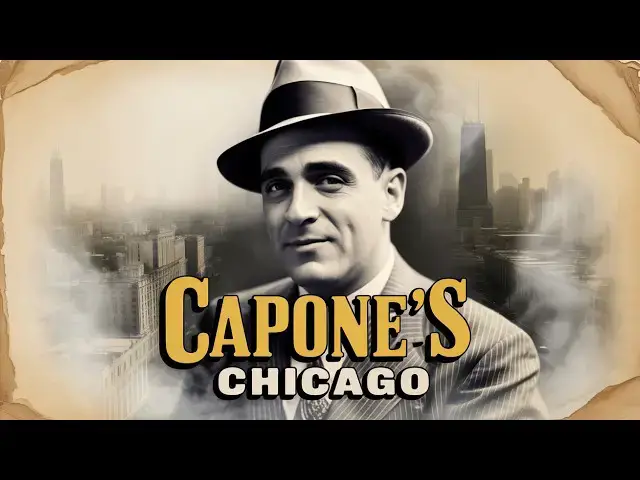
Imagine a city where the police chief answers to a gangster, and every business owner pays tribute to the mob. This was Al Capone's Chicago—a major American city completely controlled by organized crime from 1923 to 1931. But how did one man build a criminal empire so perfect that it survived decades after his downfall?
In this documentary investigation, we reveal the shocking truth about how Al Capone didn't just run a gang—he built a parallel government. Through systematic corruption, he controlled politicians, police, judges, and businesses, transforming Chicago into a criminal enterprise disguised as a legitimate city. From the secret handshakes with corrupt cops to the shadow bureaucracy that ran the streets, discover the hidden mechanisms that made Capone the true ruler of Chicago.
This isn't just mob history. This is the blueprint that organized crime still uses today to infiltrate legitimate institutions worldwide. Learn how Capone perfected corruption, weaponized bureaucracy, and created a system so embedded in Chicago's foundations that elements of it exist even now.
🔍 What You'll Discover:
How Capone bought entire elections and created puppet politicians
The three-layer system of control that made him untouchable
Why violence was theatre—and bureaucracy was his real weapon
How honest cops were neutralized through promotions
The shadow economy that generated $100 million annually
Why his empire survived long after he went to prison
Subscribe to Mafia Crime Secrets for more untold stories of organized crime, hidden histories, and the secrets they tried to bury forever.
💬 What shocked you most about Capone's control over Chicago? Let us know in the comments!
👍 Like this video if you want more deep-dive mafia documentaries
🔔 Turn on notifications so you never miss our next investigation
Show More Show Less View Video Transcript
0:00
There's a photograph that survived from
0:02
1928. It shows a Chicago police sergeant
0:04
shaking hands with a well-dressed man
0:07
outside a downtown hotel. The photo
0:10
looks innocent enough. A friendly
0:12
exchange between law enforcement and a
0:14
citizen. But if you know what you're
0:15
looking at, you're witnessing something
0:18
far more sinister. That well-dressed man
0:21
is Alapone. And that handshake isn't a
0:24
greeting. It's a transaction. The
0:26
sergeant is receiving his weekly
0:28
payment. captured accidentally by a
0:30
newspaper photographer who didn't
0:32
understand what he documented until
0:34
years later when the negative was
0:36
discovered in archives. The photo was
0:39
never published. It was buried because
0:43
by the time anyone realized what it
0:45
showed, the sergeant had become a
0:47
captain. Capone had become untouchable
0:49
and Chicago had become something
0:51
unprecedented in American history. A
0:53
major American city completely
0:55
controlled by organized crime. Not
0:58
influenced, not corrupted, controlled.
1:02
Every level of government, every police
1:04
precinct, every judges chambers, every
1:06
union hall, every business association,
1:09
all of it operating under a shadow
1:11
authority that made decisions the public
1:13
never saw and enforced rules that were
1:16
never written down. This wasn't just
1:18
corruption. This was a parallel
1:20
government, a criminal state operating
1:23
inside a legitimate one so thoroughly
1:25
embedded that removing it would have
1:27
required dismantling the city itself.
1:29
The question isn't how Al Capone became
1:32
powerful. The question is how he built a
1:34
machine so perfect that Chicago kept
1:36
running exactly as he designed it for
1:38
decades after he was gone. But to
1:41
understand why this secret was buried
1:42
for so long, we have to go back. Chicago
1:46
in 1920 was already a city built on
1:48
deals nobody talked about. The great
1:50
fire of 1871 had destroyed the old city,
1:54
and what rose from the ashes was
1:55
constructed by men who understood that
1:57
fortunes were made not through honest
1:59
labor, but through strategic corruption.
2:01
The politicians who rebuilt Chicago
2:04
created a system where every contract,
2:06
every permit, every license came with an
2:09
unofficial fee. The police force was
2:11
established not to serve the public, but
2:14
to protect the interests of whoever paid
2:16
the most. The ward bosses who controlled
2:18
neighborhoods operated like feudal
2:20
lords, delivering votes to politicians
2:22
in exchange for the right to run their
2:24
territories however they wanted. By the
2:26
time prohibition became law in 1920,
2:29
Chicago had spent 50 years perfecting
2:31
the infrastructure of corruption. The
2:33
city was readymade for someone who
2:35
understood how to exploit it. What
2:37
nobody expected was how completely one
2:39
man would seize that infrastructure and
2:42
transform it into something far more
2:44
sophisticated than simple graft. Alapone
2:47
didn't invent Chicago's corruption. He
2:49
inherited it, studied it, and then
2:52
rebuilt it into an organization that
2:54
functioned better than the legitimate
2:56
government it had replaced. He arrived
2:58
in Chicago in 1919. A 20-year-old
3:01
enforcer from New York sent to work for
3:03
Johnny Tio, the boss who controlled the
3:05
South Side. Capone was muscle, a thug
3:08
with a scarred face and a talent for
3:10
violence. Nobody saw him as a future
3:13
king, but Capone understood something
3:15
the other gangsters didn't. He
3:17
understood that Chicago's corruption
3:19
wasn't just an opportunity for crime. It
3:21
was a blueprint for total control. The
3:24
other bootleggers were content to bribe
3:26
individual cops and pay off specific
3:28
politicians. Capone saw the entire
3:30
system as a machine that could be owned,
3:33
operated, and per. Therefore, he set out
3:36
to do exactly that using methods so
3:38
systematic and so ruthless that within 5
3:41
years he would control not just the
3:43
criminal underworld but the legitimate
3:45
world above it. The key to Capone's
3:47
takeover was understanding that Chicago
3:49
operated on three separate but
3:51
interconnected systems of power. There
3:53
was the official government, the mayors
3:56
and alderman and police chiefs whose
3:58
names appeared in newspapers and on
4:00
ballots. There was the shadow
4:01
government, the ward bosses and
4:03
political fixers who actually made
4:05
decisions and delivered results. And
4:08
beneath both of those was the criminal
4:10
underworld, the bootleggers and gamblers
4:12
and vice operators who generated the
4:14
money that funded everything else. Every
4:16
previous gangster had operated only in
4:18
that third layer, bribing their way into
4:20
the second layer when necessary, but
4:22
never attempting to control the first.
4:25
Capone's innovation was to reverse the
4:27
hierarchy. He wouldn't be a criminal
4:28
paying off politicians. He would be the
4:31
political power using criminals as
4:33
employees. Therefore, he began
4:36
systematically purchasing Chicago from
4:38
the top down. Starting with the 1923
4:41
mayoral election. Capone backed William
4:44
DVA, assuming he could be controlled.
4:46
But DVA, once elected, attempted to
4:49
actually enforce prohibition laws,
4:51
raiding Capone's operations and
4:53
threatening the whole enterprise. It was
4:56
a mistake. Capone never made again. He
4:58
learned that you couldn't buy
5:00
politicians after they took office. You
5:02
had to own them before they ran. Select
5:05
them carefully. Fund their campaigns
5:07
completely and ensured they understood
5:09
from the beginning that they worked for
5:11
you, not the voters. Therefore, in the
5:14
next election cycle, Capone didn't just
5:16
support candidates.
5:18
He created them. He identified weak men
5:21
with ambitions, men who wanted power but
5:23
lacked the connections or funding to
5:25
achieve it. He approached them quietly,
5:28
offered unlimited campaign resources,
5:30
and made it clear that accepting his
5:32
help meant permanent obligation. Once
5:35
elected, these men weren't corrupt
5:37
politicians taking bribes. They were
5:39
Capone's employees collecting salaries.
5:42
The difference was everything. By 1927,
5:44
Capone had elected a mayor, 11 alderman,
5:47
a chief of police, and had purchased
5:49
influence with 17 judges. But the genius
5:52
of his system was that most of these men
5:55
never met Capone directly. He operated
5:57
through intermediaries, lawyers, and
6:00
businessmen who handled the transactions
6:02
and maintain deniability. A politician
6:05
might know his campaign was funded by
6:06
the organization, but could honestly
6:08
claim he'd never taken money from Al
6:10
Capone personally. This layer of
6:12
protection meant that even when
6:13
individual politicians were exposed or
6:15
arrested, the system remained intact
6:18
because the connections couldn't be
6:19
proven. But controlling politicians was
6:22
only the first step. The real power was
6:24
in the bureaucracy. The inspectors and
6:27
clerks and low-level officials who
6:29
actually ran the city dayto-day. These
6:31
were the people who issued licenses,
6:34
processed permits, conducted
6:36
inspections, and enforced regulations.
6:39
Therefore, Capone created a separate
6:41
network for this layer, paying
6:43
consistent salaries to hundreds of city
6:45
employees who functioned as his
6:47
intelligence service and enforcement
6:48
arm. A building inspector on Capone's
6:51
payroll would approve speaky seas and
6:53
gambling dens while shutting down
6:55
legitimate businesses whose owners
6:58
refused to pay protection. A clerk in
7:00
the licensing office would delay permits
7:02
for Capone's competitors while rushing
7:04
approvals for his operations. A health
7:06
inspector would find violations in
7:08
restaurants that didn't buy Capone's
7:10
beer while ignoring actual health
7:12
hazards in establishments that did. This
7:14
army of bureaucratic soldiers gave
7:16
Capone something no previous gangster
7:18
had possessed. The ability to use the
7:21
government itself as a weapon against
7:23
anyone who opposed him. You couldn't
7:25
compete with Capone through better
7:27
service or lower prices because his
7:29
competitors would be shut down by the
7:31
very agencies supposed to regulate fair
7:34
competition. The police force required a
7:36
different approach because cops were
7:38
more visible and more vulnerable to
7:40
public pressure. Capone couldn't simply
7:42
pay off every officer in Chicago. There
7:45
were too many and some were genuinely
7:47
honest. Therefore, he implemented a
7:50
tiered system. Beat cops who worked
7:53
neighborhoods where Capone operated
7:54
received weekly payments for looking the
7:56
other way. These men weren't asked to
7:58
actively help criminal operations just
8:01
to be elsewhere when crimes occurred.
8:03
Sergeants and lieutenants who commanded
8:04
these officers received larger payments
8:07
and were expected to manage their men,
8:09
ensuring nobody got overly zealous about
8:11
enforcing laws in Capone's territories.
8:13
Captains who ran entire precincts became
8:16
partners, receiving percentages of the
8:18
gambling and bootlegging profits
8:20
generated in their districts. They
8:22
weren't just protecting crime, they were
8:25
invested in it. But the brilliant part
8:27
of Capone's police system was how he
8:29
handled the honest cops, the men who
8:31
couldn't be bought. Rather than fighting
8:34
them, he promoted them. Capone used his
8:36
political connections to ensure that
8:38
incorruptible officers were transferred
8:40
to prestigious positions in departments
8:43
that didn't affect his operations. A
8:45
crusading detective who refused bribes
8:47
would find himself promoted to a
8:49
downtown administrative role. a desk job
8:51
with better pay and no opportunity to
8:53
interfere with actual criminal activity.
8:55
The honest cops thought they were being
8:57
rewarded for their integrity. In
8:59
reality, they were being neutralized,
9:02
removed from the streets, and placed
9:04
where their honesty was harmless.
9:06
Meanwhile, the corrupt cops who
9:08
understood the system rose through the
9:09
ranks in the departments that mattered,
9:11
creating a police force where the higher
9:13
you climbed, the more deeply you were
9:15
embedded in Capone's organization. But
9:18
perhaps the most insidious aspect of
9:19
Capone's control was how he embedded
9:21
himself into Chicago's legitimate
9:24
business community. Every business in
9:26
the city required things: supplies,
9:29
services, licenses, labor, protection
9:32
from competition. Capone created a
9:34
network of front companies and shell
9:36
corporations that positioned themselves
9:38
as essential middlemen in every
9:40
industry. If you owned a restaurant, you
9:43
bought your alcohol from Capone's
9:44
distributors, your linen service from
9:46
Capone's laundry, your bread from
9:48
Capone's bakery, and your meat from
9:50
Capone's slaughterhouse. If you tried to
9:52
use other suppliers, you would face
9:54
sudden problems. Your deliveries would
9:56
be delayed. Your employees would face
9:59
union troubles. Inspectors would
10:01
discover violations. Competitors would
10:04
somehow manage to undercut your prices.
10:06
Therefore, business owners learned that
10:08
the path of least resistance was to buy
10:10
from Capone's companies, pay slightly
10:13
inflated prices, and avoid problems.
10:15
This system generated millions in
10:17
seemingly legitimate revenue while
10:20
giving Capone complete economic
10:22
intelligence. Through his network of
10:24
front companies, he knew which
10:25
businesses were succeeding, which were
10:27
struggling, and which were vulnerable to
10:30
takeover. He could manipulate entire
10:32
industries, driving competitors out of
10:35
business and consolidating control. And
10:37
because it all looked like normal
10:39
commerce, there were no laws being
10:41
broken that prosecutors could easily
10:43
identify. A baker who bought flour from
10:45
a Capon supplier wasn't committing a
10:48
crime. He was just a customer. That the
10:51
supplier was owned by a gangster through
10:53
six layers of shell companies was nearly
10:55
impossible to prove. The violence
10:57
everyone associates with Al Capone, the
11:00
Tommy guns and the St. Valentine's Day
11:02
massacre and the bodies in the streets,
11:05
that was rail. But it was also theater,
11:08
a distraction from the real mechanism of
11:10
control. Capone used violence
11:12
strategically,
11:13
not constantly. When rivals needed to be
11:16
eliminated, when examples needed to be
11:18
made, when fear needed to be renewed,
11:21
violence was deployed with maximum
11:23
visibility. a bombing in broad daylight,
11:26
a shooting outside a crowded theater,
11:29
buddies left where they'd be discovered.
11:31
But these spectacular acts of violence
11:33
were rare compared to the daily, quiet
11:36
operations of Capone's political and
11:38
economic machine. Most people who
11:40
crossed Capone didn't get shot. They got
11:43
ruined. Their businesses failed. They
11:46
lost their city contracts. They found
11:48
themselves under investigation for tax
11:51
violations. They were destroyed through
11:53
paperwork and bureaucracy. Methods that
11:55
didn't make headlines but were far more
11:58
effective at maintaining control.
12:00
Therefore, Capone's reputation for
12:02
violence actually worked in his favor.
12:04
People were so afraid of being murdered
12:06
that they complied immediately, never
12:09
realizing that murder was the exception,
12:11
not the rule. The threat of violence was
12:14
more powerful than violence itself. And
12:16
because everyone believed Capone killed
12:18
anyone who opposed him, nobody opposed
12:21
him, which meant he rarely had to kill
12:23
anyone. It was a perfect psychological
12:26
operation. By 1929, Capone's Chicago had
12:30
become something unprecedented in
12:31
American urban history, a major city
12:34
where the criminal organization was so
12:36
thoroughly integrated with legitimate
12:38
government and business that separating
12:40
them would have been impossible.
12:41
Capone's annual income was estimated at
12:44
over $100 million, more than the city's
12:47
official budget. He employed more people
12:49
than Chicago's largest legitimate
12:51
corporation. His decisions affected more
12:53
lives than the mayors, but he held no
12:56
elected office, paid almost no taxes,
12:59
and officially didn't exist in any
13:01
government record. He was a shadow
13:03
emperor, ruling a city that pretended he
13:05
didn't exist, even as it took orders
13:08
from him daily. The citizens of Chicago
13:10
lived under this system. mostly unaware
13:12
of how complete the control was.
13:15
They knew there was corruption. They
13:16
knew bootleggers operated openly. They
13:19
knew the police looked the other way.
13:21
But they didn't understand that the
13:23
corruption wasn't a bug in the system.
13:26
It was the system. The government they
13:29
thought they had, the democracy they
13:31
believed they participated in was a
13:33
facade. The real decisions were made in
13:36
the back rooms of Capone's headquarters
13:38
at the Lexington Hotel. And those
13:39
decisions were enforced through a
13:41
network so vast and so embedded that it
13:43
would survive Capone's own downfall and
13:46
continue operating for decades after he
13:49
was gone.
13:51
What was it like to live in this city?
13:53
For most people, it was surprisingly
13:55
normal. If you ran a small business and
13:57
paid your protection money, you were
13:59
left alone. If you were working class
14:01
and avoided trouble, the mob didn't
14:03
affect your daily life. The violence
14:06
happened, but it happened to gangsters,
14:08
not civilians. The corruption existed,
14:11
but it kept the city running smoothly.
14:14
The trains ran on time. The garbage was
14:17
collected. The streets were maintained.
14:19
What people didn't see was that every
14:21
city service, every public work, every
14:24
municipal function was generating profit
14:26
for Capone through inflated contracts,
14:29
no bid deals, and kickbacks. They were
14:32
living in a criminal enterprise
14:34
disguised as a city. The beginning of
14:36
the end came not from Chicago's
14:38
government, which Capone controlled, but
14:40
from Washington, where his reach was
14:42
limited. Federa investigators,
14:45
particularly Elliot Ness, and the
14:47
Treasury Department, began building
14:49
cases that didn't rely on Chicago's
14:51
corrupted institutions. They focused on
14:53
tax evasion, a federal crime that
14:56
couldn't be fixed by bribing local
14:57
judges. But even as the federal news
14:59
tightened, Capone's machine in Chicago
15:02
remained intact. When he was finally
15:04
convicted in 1931 and sent to prison,
15:07
the organization didn't collapse. It
15:09
continued operating under new
15:11
leadership. Using the same systems
15:13
Capone had built. His successor, Frank
15:16
Niti, ran Chicago using Capone's
15:18
playbook for over a decade. When Niti
15:20
was gone, the outfit, as it became
15:22
known, continued the same operations.
15:25
The politicians stayed bought. The
15:28
police stayed corrupt. The businesses
15:30
stayed controlled. Because Capone hadn't
15:32
built a criminal gang that depended on
15:34
one leader. He'd built a system, a
15:37
machine that ran itself, embedded so
15:39
deeply into Chicago's legitimate
15:41
structures that it became permanent.
15:43
Prohibition ended in 1933,
15:46
eliminating bootlegging. But the outfit
15:49
simply shifted to other rackets.
15:51
Gambling, labor racketeering, lone
15:54
sharking. The revenue sources changed.
15:57
The control mechanisms remained
15:59
identical. What nobody talks about is
16:01
how many elements of Capone's Chicago
16:04
still exist today. The city reformed,
16:07
cleaned up, became legitimate over
16:09
decades of effort. But some of the
16:11
structures Capone built never fully
16:13
disappeared. The relationship between
16:16
organized crime and certain unions. The
16:18
way construction contracts are rewarded.
16:21
The invisible taxes that businesses in
16:23
certain neighborhoods still pay. These
16:26
aren't as blatant as they were in
16:27
Capone's era. They're sophisticated,
16:30
hidden, deniable, but the DNA is there.
16:33
Capone's innovation of embedding
16:35
criminal enterprise so deeply into
16:37
legitimate systems that the two become
16:39
inseparable. Other cities have had
16:41
organized crime. Other bosses have been
16:44
powerful. But what Al Capone did in
16:46
Chicago was unique. He didn't just run a
16:49
criminal organization in a city. He
16:51
transformed the city itself into a
16:53
criminal organization. one where
16:55
millions of people lived, worked, voted,
16:59
and raised families, never fully
17:01
understanding that they were citizens of
17:02
a gangster's empire. The lessons he
17:05
proved in Chicago, that you could own a
17:07
democratic government through systematic
17:09
corruption, that you could control
17:11
commerce through invisible monopolies,
17:13
that you could make crime look like
17:15
legitimate business. Those lessons were
17:17
studied and applied by organized crime
17:19
groups worldwide. The modern
17:22
understanding of how to infiltrate and
17:23
control legitimate institutions comes
17:26
directly from Capone's Chicago
17:28
blueprint. The photographs from that era
17:30
show a prosperous city, modern buildings
17:32
rising into the sky, well-dressed crowds
17:35
on Michigan Avenue, the 1933 World's
17:38
Fair, celebrating Chicago's century of
17:41
progress. But underneath that prosperity
17:43
was a hidden architecture of control,
17:45
deals made in whispered conversations,
17:48
money flowing through unmarked channels,
17:50
power exercised by men whose names
17:52
appeared in no official records. For 8
17:55
years from roughly 1923 to 1931, Chicago
17:59
was Capone's city more completely than
18:01
it was anyone else's. The mayor was his
18:04
employee. The police were his security
18:07
force. The businesses were his revenue
18:09
streams. The government was his tool.
18:12
And the terrifying thing is that most
18:14
people living through it never fully
18:16
understood what they were part of. They
18:18
saw the symptoms, the violence, the
18:21
speak easys, the corruption, but they
18:24
never saw the complete picture of just
18:26
how thoroughly one man had seized
18:28
control of their entire city. That
18:30
photograph from 1928, the police
18:32
sergeant shaking hands with Al Capone in
18:34
broad daylight, wasn't an aberration. It
18:37
was the system working exactly as
18:39
designed. A criminal and a cop meeting
18:42
openly, conducting business. Because in
18:45
Capone's Chicago, they weren't enemies.
18:48
They were colleagues. Partners in an
18:50
enterprise that had consumed the city so
18:52
completely that the lines between law
18:54
enforcement and organized crime had
18:56
simply ceased to exist. For more untold
18:59
mafia secrets, subscribe and go deeper
19:01
into the shadows with mafia crime
19:03
secrets.
#Crime & Justice
#Law Enforcement
#Politics