live_tv
Livestream Starting Soon
00
Hours
:
00
Minutes
:
00
Seconds
Up next in 10


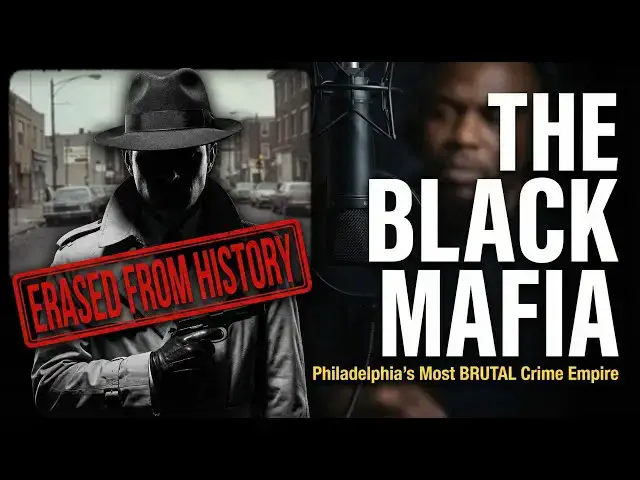
This documentary traces the rise and fall of the Black Mafia, from Samuel Christian's 1968 blueprint to build a criminal empire under the Nation of Islam's protection, to their systematic collapse under FBI pressure. Discover how faith became a shield for extortion, heroin trafficking, and murder—while the community they claimed to serve paid the ultimate price.
Understanding this story reveals how ideology can be twisted into a weapon and how organized crime infiltrates communities from within—even those fighting for liberation.
Like the Italian Mafia before them, the Black Mafia proves that criminal empires share the same blueprint: discipline, fear, and a veneer of respectability. Their rise reshaped Philadelphia's underworld and exposed vulnerabilities in both law enforcement and community trust.
Subscribe for deeper dives into the criminal organizations that shaped America.
Music: Cinematic noir score by The Grand Score
Research: FBI archives, Philadelphia Inquirer archives, "The Black Mafia" by Sean Patrick Griffin
#BlackMafia #PhiladelphiaCrime #OrganizedCrime #NationOfIslam #CriminalEmpire #DrugTrafficking #UrbanHistory #TrueCrime #HistoryDocumentary #CriminalUnderworld #Philadelphia #FaithAndCrime
-~-~~-~~~-~~-~--~~~-~~~-~~-~--~-~~-~~~-~~-~-
🕵️♂️ Global Mafia Universe - https://www.youtube.com/@GlobalMafiaUniverse?sub_confirmation=1
-~-~~-~~~-~~-~--~-~~-~~~-~~-~--~-~~-~~~-~~-~-
⚠️ Content Disclaimer
This video is created solely for educational and informational purposes.
We do not glorify, promote, or encourage any kind of criminal behavior or illegal activity.
Show More Show Less View Video Transcript
0:00
Philadelphia, 196. A man named Sam
0:03
Christian walks into a meeting room on
0:05
the second floor of a North Philly
0:06
social club. 12 men wait inside. By the
0:10
time he leaves, an organization will be
0:12
born that challenges everything
0:14
historians thought they understood about
0:16
organized crime in America. For decades,
0:19
scholars, law enforcement, and the
0:21
public accepted a simple truth. The word
0:23
mafia belonged to one group and one
0:26
group only.
0:28
Italian, Sicilian,
0:31
men with vowels at the end of their
0:33
names who trace their traditions back to
0:35
the old country. The term itself seemed
0:37
locked to a specific ethnicity, a
0:39
specific code, a specific history. So
0:42
when FBI files started referencing
0:44
something called the Black Mafia, the
0:47
question wasn't just about crime. It was
0:49
about language, about power, about who
0:53
gets to define what organized really
0:55
means. This isn't a story about street
0:57
gangs who happen to grow large. This is
0:59
a story about sophisticated criminal
1:01
enterprises that built enforced codes of
1:04
silence, corrupted politicians, lundered
1:07
me and operated with a level of
1:09
discipline that rivaled anything coming
1:10
out of Malbury Street or Bath Avenue.
1:12
But because they didn't fit the accepted
1:14
definition, they remained invisible in
1:16
plain sight, erased from the official
1:19
history of American organized crime.
1:21
Tonight, we're rewriting that history.
1:24
We're pulling back the curtain on
1:25
organizations that rose and fell in the
1:27
shadows, whose leaders lived and died by
1:30
rules as rigid as any Kosan Nostra oath.
1:32
The question isn't whether the black
1:35
mafia existed. The question is why it
1:37
took so long for anyone to acknowledge
1:39
what was right in front of them. The
1:41
debate starts with a single word, mafia.
1:45
In academic circles, in law enforcement
1:47
briefings, in congressional hearings,
1:50
this word carried a specific meaning for
1:52
most of the 20th century. It meant
1:54
Sicilian. It meant blood oaths. It meant
2:00
the code of silence
2:03
that bound men to secrecy. It meant a
2:06
hierarchical structure imported from the
2:08
villages around Polarmo and adapted to
2:10
American streets. By this definition,
2:12
the term black mafia was an
2:14
impossibility, a contradiction in terms
2:17
how could you have a mafia without the
2:19
cultural DNA that supposedly made a
2:21
mafia possible. This wasn't just
2:24
semantics. It had real consequences. For
2:27
decades, federal resources,
2:29
investigative tools, and legal
2:31
frameworks were designed around the
2:33
Italian model. The RICO statutes that
2:36
eventually brought down the five
2:37
families were written with Lacosa Nostra
2:40
in mind. When black criminal
2:41
organizations developed the same
2:43
characteristics, the hierarchy, the
2:45
code, the enterprise structure, they
2:48
fell outside the paradigm.
2:50
Prosecutors didn't know how to classify
2:52
them. Historians didn't know where to
2:54
put them. And the organizations
2:56
themselves operated in a peculiar kind
2:58
of freedom, invisible because they
3:01
didn't match the expected template. But
3:03
here's what the purists missed. The
3:05
mafia model isn't really Sicilian.
3:08
It's human. When marginalized
3:10
communities face economic exclusion.
3:12
When legitimate pathways to power are
3:14
blocked. When a group develops internal
3:16
cohesion and external distrust of
3:18
authorities, organized crime becomes
3:20
inevitable. The specific cultural flavor
3:23
changes. The underlying structure
3:25
doesn't. What emerged in black
3:27
neighborhoods across America in the
3:28
midentth century wasn't an imitation of
3:31
Italian organized crime. It was a
3:33
parallel e. The same pressures produced
3:35
the same results. Philadelphia became
3:37
the laboratory. The city's black
3:39
neighborhoods in the 1960s were pressure
3:41
cookers, overcrowded, undermployed,
3:44
overpolished, and underserved. The civil
3:47
rights movement had awakened a political
3:48
consciousness, but it hadn't yet
3:50
delivered economic transformation. Into
3:52
this gap stepped Sam Christian.
3:55
Christian came out of the Nation of
3:56
Islam, where he'd learned discipline,
3:58
organization, and the power of
4:00
collective action. But he saw another
4:03
kind of opportunity. The numbers racket
4:05
illegal lottery operations had been
4:07
running in black neighborhoods for
4:08
decades, mostly controlled by small-time
4:11
operators without coordination or
4:13
protection. Christian saw fragmentation.
4:16
He saw vulnerability. He saw a chance to
4:20
consolidate. What Christian built wasn't
4:22
a gang. It was a corporation. By 19, the
4:26
organization that would become known as
4:27
the Black Mafia had absorbed or
4:29
eliminated most independent numbers
4:31
operators in North and West
4:33
Philadelphia. They didn't just collect
4:34
gambling debts. They created a
4:36
structure, leadership, lieutenants,
4:40
soldiers. An enforcement arm that
4:42
handled problems with surgical
4:44
precision. A political arm that
4:45
cultivated relationships with ward
4:47
leaders and city officials. A financial
4:50
arm that moved money through legitimate
4:52
businesses, barber shops, restaurants,
4:54
social clubs. This wasn't chaos. This
4:58
was architecture. Tibolenzi
5:01
when it came served a purpose. Not
5:05
random, not emotional.
5:07
Strategic. In 1970, a numbers operator
5:10
named Tieran Palmer refused to pay
5:13
tribute to the organization. His body
5:15
was found in an alley off Colombia
5:17
Avenue, shot three times. The message
5:20
was clear. Within a month, every
5:22
remaining independent operator in that
5:24
territory had made arrangements. The
5:26
Black Mafia didn't need to kill often.
5:28
They killed efficiently and the
5:30
efficiency sent its own message. By
5:32
1971, the organization had expanded
5:35
beyond numbers. Heroin was flooding
5:38
American cities and the traditional
5:40
suppliers, Italian families who
5:42
controlled importation through their
5:43
connections to Sicilian and Turkish
5:45
sources were looking for distribution
5:47
networks in black neighborhoods. They
5:49
found willing partners. The Black Mafia
5:52
became wholesale customers, buying
5:55
weight from Italian sources and
5:56
retailing it through their own
5:58
distribution channels. This wasn't
6:00
subordination. It was collaboration.
6:03
Both sides profited. Both sides
6:05
maintained their independence. The
6:07
street level narrative of Italian bosses
6:09
controlling black dealers was in many
6:11
cases precisely backward. The black
6:14
mafia controlled their territories. They
6:17
simply purchase product from available
6:19
suppliers just like any business. But
6:21
heroin was different from numbers.
6:23
Numbers was a community tradition with
6:25
deep roots and minimal visible harm.
6:28
Heroin destroyed families, killed
6:30
children, hollowed out neighborhoods.
6:33
Within the organization itself, this
6:35
created tension. Some members had come
6:37
out of the Nation of Islam where drug
6:39
dealing was forbidden. Others saw the
6:42
prophets and didn't ask questions. The
6:45
conflict never fully resolved. It just
6:47
simmered one of several fault lines that
6:50
would eventually crack the foundation.
6:52
1973
6:54
brought a different kind of threat. The
6:56
FBI, after years of focusing almost
6:58
exclusively on Italian organized crime,
7:01
began to acknowledge that something else
7:03
was happening. A memo from the
7:04
Philadelphia field office used the term
7:06
black mafia for the first time in
7:08
official documentation. Surveillance
7:10
began. Wiretaps followed. The same
7:14
techniques that had brought down Angelo
7:15
Bruno's organization were turned on Sam
7:17
Christian and his lieutenants. The
7:20
organization adapted. Meetings moved to
7:22
safe locations. Conversations went
7:25
indirect, but the pressure was mounting.
7:28
What happened next? Surprised even the
7:31
investigators. The Black Mafia didn't
7:33
retreat. They expanded into Atlantic
7:37
City where casino development was
7:39
creating new opportunities into
7:41
narcotics trafficking on a larger scale
7:44
into extortion rackets targeting
7:45
blackowned businesses that had
7:47
previously been off limits. The
7:49
organization was making a choice growth
7:51
over caution empire over sustainability.
7:54
It was the same choice that had
7:56
destroyed other criminal organizations
7:58
before them and it would have the same
8:00
result. But before the fall came, the
8:02
apex. The black mafia controlled an
8:04
estimated $30 million annually in
8:07
gambling revenue alone. They had
8:08
corrupted enough police officers to
8:10
receive advanced warning of raids. They
8:12
had enough political connections to
8:14
influence municipal contracts. They had
8:17
installed members in leadership
8:18
positions of several community
8:20
organizations using legitimate
8:22
structures as fronts for illegitimate
8:24
activity. This wasn't a street gang that
8:27
got lucky. This was organized crime in
8:29
its fully developed form. The question
8:31
historians still debate is whether this
8:33
organizational sophistication was
8:36
imported or indigenous. Did some
8:38
Christian and his associates study the
8:40
Italian model and adapt it or did they
8:42
arrive at similar structures
8:44
independently because similar problems
8:46
demand similar solutions? The evidence
8:49
suggests both. Some members had done
8:51
prison time alongside Italian organized
8:53
crime figures and learned techniques.
8:56
Others came from the Nation of Islam's
8:58
strict hierarchical structure. Still
9:00
others brought military experience from
9:02
Vietnam. The Black Mafia was a
9:04
synthesis, not a copy. But something new
9:06
built from multiple influences across
9:09
the country. Similar patterns emerged.
9:11
In Harlem, a man named Loy Nikki Barnes
9:16
built what he called the council a
9:17
consortium of seven major heroin
9:20
distributors who agreed to coordinate
9:22
rather than compete. Barnes studied the
9:24
commission, the body that supposedly
9:26
governed relations between the five
9:27
families, and adapted its model. His
9:30
organization wasn't subordinate to
9:31
Italian organized crime. It was a pure
9:34
they met in conference rooms. They had
9:37
formal rules for resolving disputes.
9:39
They divided territory by agreement
9:41
rather than by warfare. The
9:43
sophistication disturbed federal
9:45
investigators who had assumed black drug
9:47
dealers operated in disorganized chaos.
9:50
Barnes became a symbol of something new.
9:52
He dressed flamboyantly.
9:54
He frequented public events. He
9:56
cultivated media attention. When the New
9:59
York Times magazine put him on the
10:00
cover, calling him Mr. Untouchable, he
10:02
became the first black organized crime
10:04
figure to achieve the kind of public
10:06
recognition that Italian bosses had
10:09
received for decades. But the attention
10:11
was double-edged.
10:12
Federal prosecutors made him a priority.
10:15
In 1977, Barnes was convicted and
10:18
sentenced to life without parole. The
10:20
council survived him briefly, then
10:23
fractured into competing factions. The
10:26
pattern repeated in city after city. In
10:29
Detroit, the Chambers brothers built a
10:32
cocon empire in the 1980s that grossed
10:34
$55 million annually at its peak. Their
10:37
organization employed 300 people and
10:40
operated like a legitimate business with
10:42
regular paydays, performance reviews,
10:45
and advancement opportunities. In
10:47
Oakland, Felix Mitchell turned the 69
10:49
mob from a neighborhood crew into a
10:51
heroin distribution network that
10:53
dominated East Oakland for nearly a
10:55
decade. Mitchell ran his empire from a
10:57
public housing project, but his reach
11:00
extended to wholesale sources in
11:01
Southeast Asia and distribution networks
11:04
in multiple states. What connected these
11:06
disperate organizations wasn't
11:08
ethnicity. It was methodology,
11:11
hierarchy, discipline, codes of conduct,
11:15
strategic violence, political
11:17
corruption, financial sophistication.
11:20
These were the hallmarks of organized
11:22
crime everywhere in the world. The only
11:24
thing missing was the official
11:26
recognition that what was happening
11:27
qualified for the label. The answer
11:29
partly lay in racism. Not the crude
11:32
racism of explicit hostility, but the
11:34
subtler racism of lowered expectations.
11:37
Law enforcement and scholars alike
11:39
assumed that black criminal
11:40
organizations couldn't achieve the level
11:42
of sophistication associated with
11:44
Italian organized crime. When they did
11:46
achieve it, the evidence was dismissed
11:49
or minimized. Our ICO prosecutions that
11:52
should have targeted these organizations
11:53
as criminal enterprises instead
11:55
fragmented cases into individual drug
11:57
charges and murder counts. The
11:59
analytical framework couldn't
12:01
accommodate what the evidence showed.
12:03
The 1980s brought a transformation.
12:06
Crap. Cocaine created new opportunities
12:08
and new organizations. The violence
12:10
intensified. The money multiplied and a
12:14
new generation of leaders emerged who
12:16
had no connection to the civil rights
12:18
generation or the Nation of Islam. They
12:21
built organizations that were less
12:23
ideological and more purely commercial.
12:25
The Junior Black Mafia in Philadelphia,
12:27
the Black Mafia family in Detroit and
12:29
Atlanta, the Bloods and Crips in Los
12:31
Angeles represented a different
12:33
evolution of black organized crime
12:36
shaped by local conditions and national
12:38
drug markets. The Junior Black Mafia
12:41
deserves particular attention. Founded
12:43
in Philadelphia in the early 1980s by
12:46
Aaron Jones, they explicitly claimed
12:48
inheritance from the original Black
12:50
Mafia of Sam Christian's era. But the
12:52
junior black mafia was more violent,
12:54
more decentralized, and more focused on
12:57
street level cocaine distribution than
12:59
their predecessors. They also faced more
13:01
sophisticated law enforcement
13:03
opposition. By 1991, federal prosecutors
13:06
had developed the tools and the will to
13:08
pursue black organizations under RICO.
13:11
The Junior Black Mafia became one of the
13:13
first black organizations to be targeted
13:15
as an enterprise rather than as
13:17
individual criminals. The prosecutions
13:19
devastated the organization, but they
13:21
also proved something that had been
13:22
denied for Deca's black criminal
13:24
organizations met the legal definition
13:26
of organized crime. The Black Mafia
13:29
family wrote the next chapter, founded
13:31
by Demetrius Big Meech Fenery and his
13:33
brother Terry in Detroit during the late
13:35
1980s. BMF eventually controlled cocaine
13:38
distribution networks spanning 14
13:41
states. Their annual revenues approached
13:43
hundreds of millions of dollars. They
13:45
laundered money through entertainment
13:46
industry investments, record labels, and
13:49
real estate. They corrupted law
13:50
enforcement officers in multiple
13:52
jurisdictions. They maintained codes of
13:55
silence enforced by violence. By any
13:58
objective measure, BMF was one of the
14:00
largest and most successful drug
14:02
trafficking organizations in American
14:04
history. Yet, even as prosecutors built
14:06
the case that would eventually bring
14:08
them down, the debate continued. Was
14:11
this a mafia or just a very large drug
14:15
gang? The distinction matters less than
14:17
we might think. The word mafia has
14:19
always been partly mythology. The
14:22
romantic image of honorbound men
14:24
following ancient Sicilian codes was
14:26
largely invented by fiction writers and
14:29
amplified by criminals who saw marketing
14:31
value in the mystique. Real Italian
14:33
organized crime was always more prosaica
14:36
business, primarily concerned with
14:39
profit. Above all, the codes existed,
14:41
but they were honored in the breach as
14:43
often as in the observance. Men informed
14:45
on each other. Leaders betrayed
14:48
followers. Alliances shifted based on
14:51
financial advantage. If we strip away
14:53
the mythology, what remains is simply
14:56
organized crime die. By that standard,
14:58
black organizations qualified as fully
15:00
as Italian ones. The government
15:02
eventually agreed. Even if the language
15:04
lagged behind the reality, our ICO
15:07
prosecutions became standard against
15:09
major black criminal organizations. The
15:12
FBI created task forces specifically
15:14
targeting black organized crime.
15:16
Scholars began publishing academic
15:18
analyses that placed these groups within
15:20
the broader history of American
15:22
organized crime. Rather than treating
15:24
them as something separate and lesser,
15:26
the oxymoron resolved itself through
15:28
sheer weight of evidence. But a question
15:31
remains,
15:32
why does classification matter? Who
15:34
benefits from calling something a mafia
15:37
versus a gang? Part of the answer is
15:39
resources. Law enforcement agencies
15:41
receive funding based on the threats
15:43
they identify. For decades, Italian
15:46
organized crime commanded the lion's
15:48
share of federal organized crime
15:50
resources because it was seen as the
15:52
most sophisticated and therefore most
15:55
dangerous threat. Black criminal
15:56
organizations dismissed as mere gangs
15:59
received less attention and fewer
16:01
resources. This created a peculiar space
16:04
more freedom to operate but less
16:06
recognition and therefore less
16:08
historical memory. The men who built
16:11
these organizations are largely
16:12
forgotten. Sam Christian died in prison,
16:16
his name unknown to most Americans.
16:18
Nikki Barnes became a government witness
16:20
and disappeared into the witness
16:21
protection program. His empire reduced
16:24
two footnotes in legal documents. Felix
16:26
Mitchell was stabbed to death in federal
16:28
prison in 1986 at 32 years old. Big
16:32
Meech in Southwest TR serving 30-year
16:34
sentences that are only now approaching
16:36
completion. These were consequential
16:38
figures who shaped American cities for
16:40
decades. Their absence from popular
16:43
memory isn't accidental. It reflects
16:45
what we choose to remember and what we
16:47
choose to forget. The streets haven't
16:49
forgotten. In neighborhoods where these
16:51
organizations operated, the memories
16:54
remain vivid. The violence they
16:56
inflicted is remembered alongside the
16:58
order they imposed. The drugs they
17:00
distributed destroyed lives. But they
17:02
also employed people in communities
17:04
where legitimate employment was scarce.
17:06
The moral arithmetic is complicated.
17:09
These weren't Robin Hood figures robbing
17:11
from the rich to give to the poor. They
17:13
were criminals who profited from
17:15
suffering. But they were also products
17:17
of a society that offered few
17:19
alternative paths to power and
17:21
recognition. What comes next is still
17:23
being written. Black organized crime
17:26
continues to evolve as all organized
17:28
crime does. New organizations emerge.
17:32
New markets develop. New leaders rise
17:35
and fall. The debate about terminology
17:37
has largely been settled. These are
17:39
organized crime groups meeting any
17:41
reasonable definition. But the deeper
17:43
questions remain.
17:45
Why do these organizations form? What
17:48
conditions allow them to thrive? And
17:50
what would it take to offer genuine
17:52
alternatives? The answer isn't more
17:56
policing. Philadelphia in the 70s was
17:58
heavily policed. The black mafia
18:00
flourished anyway. The answer isn't
18:02
tougher sentences. American prisons are
18:04
full of men who ran organizations like
18:06
these, and new organizations formed to
18:09
replace them. The answer lies somewhere
18:11
in the conditions that create demand for
18:14
underground economies and unofficial
18:16
power structures conditions of
18:17
exclusion, marginalization, and limited
18:20
opportunity that organized crime has
18:22
always exploited regardless of the
18:24
ethnicity of the criminals. Tonight,
18:27
we've excavated a chapter of American
18:29
history that has been systematically
18:30
undervalued and deliberately overlooked.
18:33
The Black Mafia wasn't an oxymoron. It
18:35
was an inevitability at a predictable
18:38
result of predictable conditions. The
18:40
same forces that created Italian
18:42
organized crime in the early 20th
18:44
century created black organized crime in
18:46
the mid 20th century. Different cultural
18:49
expressions, same underlying structure,
18:52
same human dynamics of power, profit,
18:56
and survival. The term black mafia
18:59
remains contested. Some scholars reject
19:01
it as appropriating a culturally
19:03
specific term. Others embrace it as
19:05
reclaiming definitional power. The men
19:08
who built these organizations rarely
19:10
used the term themselves. They called
19:12
themselves families, councils,
19:14
enterprises, organizations. The labels
19:17
mattered less than the reality end. The
19:19
reality was undeniable. Sophisticated
19:22
criminal enterprises that controlled
19:24
territory, generated revenue, corrupted
19:27
institutions, and enforced discipline
19:29
through strategic violence. The
19:31
implications extend beyond academic
19:34
debate. Understanding black organized
19:36
crime as organized crime rather than as
19:38
mere street level c how we allocate
19:40
resources, design interventions, and
19:43
write history. It acknowledges that
19:45
criminal sophistication isn't ethnically
19:47
determined. It recognizes that the same
19:49
conditions produce the same results
19:51
regardless of who happens to be living
19:53
in the affected neighborhoods. And it
19:55
forces a confrontation with the reality
19:57
that organized crime is as American as
19:59
any other institution.
20:01
An import from foreign shores, but an
20:04
inevitable product of American
20:06
conditions. The archives hold more
20:08
secrets. The stories we've told tonight
20:10
are fragments of a larger picture that
20:12
remains partially obscured. Connections
20:14
between organizations in different
20:16
cities, relationships with political
20:18
machines, and legitimate businesses.
20:21
Networks that spanned decades and
20:22
generations. The full history has yet to
20:25
be written. Perhaps it never will beat.
20:27
Many witnesses are dead, too many
20:29
records destroyed, too many memories
20:31
faded. But what survives is enough to
20:34
overturn the old assumptions. The Black
20:36
Mafia was real. It was organized. It was
20:40
crime. And it changed America in ways
20:42
we're still only beginning to
20:44
understand. The underworld doesn't care
20:46
about academic definitions. It adapts.
20:50
It evolves. It finds opportunity in
20:53
exclusion and profit in prohibition. The
20:55
next chapter is already being written by
20:57
people whose names we don't yet know in
21:00
places we're not yet watching. The
21:03
pattern will repeat it always does. The
21:06
only question is whether we'll recognize
21:07
it this time or whether we'll spend
21:09
another generation pretending that
21:11
organized crime has only one face and
21:13
speaks only one language.
21:15
Subscribe now. The stories from the
21:17
shadows have only just begun.
#Religion & Belief
#Violence & Abuse