live_tv
Livestream Starting Soon
00
Hours
:
00
Minutes
:
00
Seconds
Up next in 10


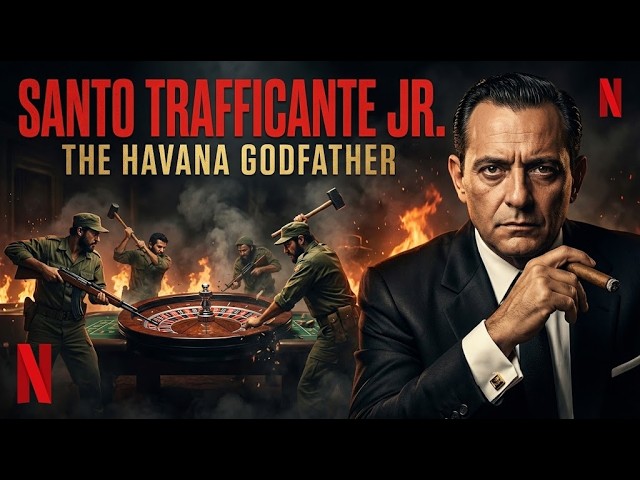
New Year's Eve, nineteen fifty-eight. While Americans celebrated, one man watched his empire crumble as Castro's rebels marched into Havana. Santo Trafficante Jr. didn't run. He rebuilt. And what came next connected mob casinos to CIA assassination plots to questions that still haunt Dallas.
This is the story of the most powerful mobster you've never heard of. The man who turned Tampa into a pipeline, Cuba into a playground, and his silence into a weapon. When the government needed someone who could operate where they couldn't, they knew exactly who to call.
Fifty years of power. Zero convictions that stuck. One question that won't go away.
This investigation uses declassified government documents, Senate testimony, and verified historical records. Some dialogue is reconstructed based on documented accounts and should be understood as dramatization.
📚 Sources & Further Reading:
→ The Trafficante Family: A History of Organized Crime in Tampa (Scott M. Deitche)
https://www.amazon.com/dp/1439666946
→ Havana Nocturne: How the Mob Owned Cuba and Then Lost It (T.J. English)
https://www.amazon.com/dp/0061712766
→ Church Committee Reports (Senate Select Committee on Intelligence, 1975-1976)
https://www.intelligence.senate.gov/resources/intelligence-related-commissions
→ House Select Committee on Assassinations Final Report (1979)
Show More Show Less View Video Transcript
0:00
The fireworks weren't a celebration. They were cover. While Havana burned
0:05
champagne and danced in the streets, Fidel Castro's rebel army rolled into
0:10
the city. And Sto Trafocante Junior sat in his suite at the Hotel National,
0:17
watching $50 million in casino investments turned to smoke. He didn't
0:23
run. He didn't panic. He made a phone call that would connect the American
0:28
mafia to CIA assassination plots, to Vietnam heroine roots, to questions
0:34
about Dallas that still don't have answers. This is the story of the most
0:40
powerful mobster you've never heard of. Before we begin, a transparency note.
0:46
This documentary uses verified historical records, declassified
0:52
government documents, and Senate testimony. Some scenes are reconstructed
0:58
based on documented accounts and eyewitness reports. Dialogue in certain
1:03
scenes represents probable conversations based on established patterns and should
1:10
be understood as dramatization. where uncertainty exists, we'll tell
1:16
you. 1924, Tampa, Florida. The city's cigar
1:21
factories pumped smoke into humid air. While a different kind of enterprise took root in Iba City, Santo Trafocante,
1:30
Senior, ran the Bolita lottery, an illegal numbers game that had Cuban and
1:35
Italian immigrants betting nickels and dimes on daily drawings. It seemed
1:40
small. It wasn't. By the time Santo Jr. was 10 years old, he understood the
1:47
family business. Not from sitting in classrooms at Jesuit high school, but
1:53
from watching his father's men collect cash from corner groceries, from cigar
1:58
rollers, from dock workers. The Bolita slips were everywhere. The money flowed
2:04
like the Hills sparrow river, steady and unstoppable. Trafocante senior taught
2:10
his son one principle that would define 50 years of power. Geography is
2:16
everything. Tampa wasn't just another southern city. It was 90 mi from Cuba.
2:22
It was the gateway to the Caribbean to Central America to South America.
2:28
Controlled Tampa and you controlled the pipeline. 1946 the war ended and American soldiers
2:36
came home to find the mob had evolved. While they'd been fighting fascism overseas, organized crime had
2:44
consolidated. In New York, the five families carved up the burers. In
2:50
Chicago, the outfit controlled the unions. And in Tampa, Santo Trafocante
2:56
Jr., now 32 years old, took over after his father's death. He didn't announce
3:02
it with violence. No public executions, no newspaper headlines. He simply
3:09
stepped into the role like a man putting on a suit tailored exactly to his measurements. But Junior had a vision
3:16
his father never imagined. Cuba, 90 mi of water separated Tampa from Havana.
3:23
For most Americans, Cuba meant sugar plantations and rum. For Trafocante, it
3:30
meant something else. The Cuban government under Batister was for sale.
3:35
The American tourists wanted gambling and nobody in the traditional mob
3:41
families understood Latin America the way he did. 1952 Trafocante walked into
3:49
the Hotel National for a meeting that would change everything. Mayor Lansky
3:54
was already there. So was Mod Dallas. The Jewish mobsters who'd built Las
4:00
Vegas wanted to build another paradise. This one with Caribbean beaches and no
4:05
federal heat. They needed a local connection. Someone who spoke Spanish.
4:11
Someone who understood how to move money through Havana without the American government noticing. Someone who could
4:18
sit across from Cuban colonels and make them understand that partnership was
4:23
more profitable than opposition. Santo Trafocante Jr. became that bridge.
4:30
Within 2 years, he had a piece of the Sands Saai Casino, then the Tropicana.
4:37
By 1957, American mob money had transformed Havana into a glittering playground
4:44
where celebrities, politicians, and criminals mixed under crystal
4:50
chandeliers while dealers shuffled cards and showgirls danced until dawn.
4:56
Trafocante didn't just run casinos. He controlled the entire ecosystem. The
5:03
drugs that kept the party going. the girls who entertained the high rollers,
5:09
the corrupt cops who looked the other way. He'd built an empire that generated
5:14
millions of dollars every month, and most Americans had no idea his name
5:19
existed. Then came 1959, and years later, one name would appear
5:26
in the margins of this revolution. Someone whose beard and fatigues would haunt every American mobster who'd bet
5:33
their fortune on Batista's Cuba. Fidel Castro. Now, here's what most people
5:39
miss about the Cuban Revolution. It wasn't sudden. Castro had been fighting
5:45
in the mountains for years. But Batista's government was so confident, so corrupt, so convinced of American
5:53
support that they ignored the signs until rebel troops were literally marching down the mail convey
6:12
by dawn on January 1st, Castro's army controlled Havana. Anna and Santo
6:18
Trafocante Jr. who'd spent 7 years building the most profitable criminal
6:23
enterprise in the Western Hemisphere found himself trapped in a socialist revolution. The Sands Saai closed. The
6:32
Tropicana shuttered. Armed rebels walked into casinos and smashed roulette wheels
6:38
with rifle butts. Trafocante watched dealers and pit bosses rounded up,
6:44
accused of corrupting Cuban society. Some were executed, others imprisoned.
6:51
Most mobsters would have run. Trafocante stayed, not because he was brave,
6:57
because he understood something the other Americans didn't. Revolutions are expensive. New governments need money,
7:05
and men who know how to move money across borders are valuable, no matter what flag flies over the palace. For 67
7:14
days, Castro's government held Trafocante in a detention camp called
7:20
Tiscornia. Not a prison exactly, more like a holding pen, while they decided what to
7:27
do with the American gangsters who'd propped up the old regime. During those
7:32
67 days, something happened that remains murky even now. According to some
7:38
accounts, Trafocante made a deal. According to others, he simply waited
7:44
while his lawyers worked diplomatic channels. What's documented is this. In
7:49
March of 1959, Santo Trafocante Jr. walked out of
7:54
Tiscornia, flew back to Tampa, and never spoke publicly about what arrangements
8:00
were made. But here's what investigators would later discover. While other
8:06
mobsters lost everything in Cuba, Trafocante maintained connections. Money
8:12
still moved through Havana. Certain operations continued under new management with new names, with
8:19
revolutionary rhetoric covering the same old corruption. The casinos were gone.
8:25
The empire had collapsed, but the pipeline remained open. Pay attention to
8:30
what happens next. It's easy to miss. 1960
8:35
Tampa Trafficante reorganized his operations with the quiet efficiency of
8:42
a man who just received a graduate education in survival. Cuba taught him
8:48
that political systems change, but human appetites don't. Gambling, drugs,
8:54
prostitution. The products stayed the same. Only the delivery systems needed
9:00
adjustment. He expanded the Bolita operations throughout Florida. He
9:05
strengthened connections to New Orleans where Carlos Marello controlled the Gulf
9:11
Coast. He looked at the heroine trade coming through Montreal and Marseilles.
9:16
the French connection that supplied New York and asked himself a simple question. Why let other families control
9:24
the pipeline when geography gave him the advantage? Tampa to Miami, Miami to the
9:31
Caribbean, the Caribbean to South America. Santo Trafocante Jr. had just
9:38
lost his casinos, but he'd gained something more valuable. He'd learned
9:43
how to operate in the space between governments where official power ended
9:48
and unofficial influence began. And that education would make him interesting to
9:54
people in Washington who were learning the same lesson. But before we go further, there's something the church
10:01
committee investigation never fully explained. How does a regional mob boss,
10:08
a man whose name barely appeared in newspapers, become the person CIA
10:13
officers call when they need something done that can't be traced back to Langley? The answer starts with a
10:21
Belgian arms dealer, a pill, and the most desperate covert operation in
10:27
American intelligence history. That's where this story stops being about organized crime and becomes something
10:34
darker. Something that connects gambling dens in Havana to assassination plots
10:40
against foreign leaders to questions about November 22nd, 1963
10:46
that still echo in Dallas. Take a breath because from here on the story only gets
10:53
darker. 1960. The CIA had a problem named Fidel
10:59
Castro. The bearded revolutionary who'd seized American casinos had now
11:05
nationalized oil refineries, sugar plantations, and anything else
11:12
with American ownership. President Eisenhower wanted him gone. The State
11:17
Department wanted him gone. And the CIA needed someone who could get close enough to make it happen. They couldn't
11:24
use their own officers. Too obvious. They couldn't use Cuban exiles. Castro's
11:31
intelligence service had infiltrated every resistance group in Miami. They
11:37
needed someone with connections inside Cuba. Someone who understood how to move
11:42
through Havana without triggering alarms. Someone expendable enough that
11:47
if the operation failed, Washington could deny everything. They needed
11:53
organized crime. Robert Matthew made the first call. Former FBI agent turned CIA
12:00
contractor. Matthew had spent years in the shadows where government work and criminal enterprise blurred together. In
12:08
September 1960, he approached Johnny Reli, a Los Angeles mobster with
12:14
connections to the Chicago outfit and Las Vegas casinos. Reli knew exactly who
12:21
to call. Sam Jen Carana in Chicago, Santos Trafocante in Tampa. Here's what
12:28
the church committee would later document. In a suite at the Fontaine Neblo Hotel in Miami Beach sometime in
12:36
late 1960, CIA officers sat across from mob bosses and discussed methods for
12:43
assassinating a foreign head of state. They talked about poison pills,
12:48
contaminated cigars, rifles. They discussed payment, logistics, and the
12:55
complete deniability that would protect everyone involved. The United States
13:00
government, the most powerful intelligence apparatus on Earth, had just partnered with the American mafia,
13:08
and Santo Trafocante Jr., The quiet man from Tampa who barely made headlines had
13:15
just become essential to national security. Why Trafocante?
13:20
Why not one of the more famous bosses from New York or Chicago? Because Trafocante still had what the others had
13:28
lost access. Those 67 days into Scornia hadn't been imprisonment. They'd been
13:35
negotiation. According to accounts that surfaced years later during
13:40
congressional investigations, Trafocante had made arrangements with certain Cuban officials before leaving.
13:48
The casinos were dead, but relationships weren't. He could still get people into
13:54
Cuba. He could still move through networks that CIA officers couldn't
13:59
touch. The church committee testimony from 1975
14:05
reveals the operation's blueprint. Trafocante would use his Cuban contacts
14:10
to place poison pills near Castro. The pills developed by CIA technical
14:16
services would dissolve in liquid and cause death that resembled food
14:22
poisoning or natural causes. Someone close to Castro, someone in his inner
14:28
circle, would receive payment to slip the poison into his drink. It never
14:33
worked. Multiple attempts, multiple failures. According to declassified
14:39
documents, the pills were delivered. The contacts were made, but Castro survived.
14:45
Whether the plots failed due to incompetence, betrayal, or Castro's
14:51
legendary paranoia remains disputed. What's not disputed is this. Santo
14:57
Trafocante Jr. spent the early 1960s traveling between Tampa, Miami, and
15:03
points south, coordinating with CIA officers and Cuban assets, all while
15:10
maintaining his domestic criminal operations. the Bolita games, the
15:15
heroine distribution, the lone sharking and labor union corruption that had been
15:21
Trafficante family business for 40 years. He'd become something unprecedented in American organized
15:29
crime. A mob boss with intelligence agency protection. Think about what that
15:34
meant. The FBI knew about Trafocante. They'd been surveilling him for years,
15:41
but suddenly cases stalled. Investigations lost momentum. Witnesses
15:47
became unavailable because somewhere in the bureaucratic maze of Washington, someone had decided
15:55
that Sto. Trafocante Jr. was more valuable as an asset than as a
16:01
defendant. Now, here's where the story takes a turn no one expected. 1963
16:08
Dallas, Texas. President John F. Kennedy was assassinated on November 22nd.
16:15
Within hours, investigators identified Lee Harvey Oswald. Within days, Jack
16:22
Ruby killed Oswald on live television, and within weeks, conspiracy theories
16:28
began connecting dots that led back to organized crime. The House Select
16:33
Committee on Assassinations, convened in 1976, would spend years investigating those
16:41
connections. They subpoenaed Santo Trafocante Jr. in 1978.
16:47
Under oath in federal testimony that's now public record, Trafocante was asked
16:53
directly, "Did you have any involvement in President Kennedy's assassination?"
16:59
His answer, "No, but investigators had questions. Jack Ruby, the man who killed
17:06
Oswald, had connections to organized crime. Phone records showed Ruby had
17:12
called associates of Carlos Marello, the New Orleans mob boss who'd been deported
17:18
by Attorney General Robert Kennedy. Ruby had also called numbers connected to
17:24
Trafocante's operations in the months before the assassination.
17:29
The HSCA's final report released in 1979
17:35
stated that while they found no direct evidence of Trafocantes involvement,
17:40
they believed President Kennedy was probably assassinated as a result of a
17:46
conspiracy and that organized crime figures had the motive, means, and
17:52
opportunity to carry out such an act. That word probably has generated 50
17:58
years of investigation, speculation, and debate. Here's what's documented. The
18:05
Kennedy administration had declared war on organized crime. Robert Kennedy, as
18:11
attorney general, had pursued mob bosses with unprecedented aggression. He'd
18:16
deported Marello. He'd prosecuted Teamsters President Jimmy Hoffer. He'd
18:22
turned the Justice Department into a weapon aimed at destroying the traditional families, and organized
18:29
crime had fought back. According to FBI surveillance transcripts, multiple mob
18:36
figures discussed the Kennedy problem in 1962 and 1963.
18:42
Some conversations were vague. Others were explicit about wanting the president dead. Did talk become action?
18:50
Investigators have argued both sides for decades. What connects to Trafocante
18:56
specifically is this. He had relationships with the CIA officers who'
19:02
trained auntie Castro Cubans in assassination techniques. He had
19:07
connections to Jack Ruby through gambling and Cuban operations. He had
19:12
motive. The same motive every mob boss had after Robert Kennedy's prosecutions
19:18
destroyed their businesses. But motive isn't evidence. Connections aren't
19:24
proof. And Santo Trafocante Jr. when questioned under oath denied everything.
19:31
The HSC testimony shows a man who understood exactly how much to say and
19:37
when to stop talking. He confirmed his CIA contact. He admitted knowing Johnny
19:43
Reli and Sam Jen Carana. He acknowledged the Castro assassination plots, at least
19:50
the outline of them. But when questions turned to Dallas, to Ruby, to Oswald,
19:56
his memory became selective. He didn't recall. He couldn't say for certain.
20:02
He'd heard rumors like everyone else. It was a masterclass in testimony. Answer
20:07
enough to appear cooperative. Reveal nothing that creates liability. Let the
20:14
investigators chase shadows while the real operations continue. And they did
20:20
continue. Vietnam 1965 to 1975.
20:26
While American soldiers fought in Southeast Asian jungles, another war
20:31
operated in the shadows, the heroine war. According to investigators and
20:37
journalists who spent years documenting the connections, the CIA's covert
20:43
operations in Laos and Vietnam created opportunities for drug trafficking on a
20:49
scale that dwarfed anything the French connection had managed. Some researchers
20:55
have alleged that Santo Trafocante had connections to those roots that his
21:01
organization received heroin refined in Laos, shipped through military channels
21:08
or Air America flights and distributed through the same networks that once
21:13
moved Cuban rum and casino profits. These claims remain unverified and
21:19
contested. No criminal charges were ever filed connecting Trafocante to Vietnam
21:26
era heroine trafficking, but congressional investigators, most
21:31
notably during the Church Committee hearings, asked questions about the overlap between CIA operations and
21:39
organized crime drug networks. Trafocantes answer, again, he couldn't
21:46
recall specifics. What is documented is the expansion of Trafocante's influence
21:52
during the 1960s and 70s. Tampa remained his base, but his reach extended to
21:59
Miami, to Caribbean islands, to Central American countries where strong men
22:05
ruled and American businesses needed connections to protect their investments. He'd evolved from a
22:12
regional operator to an international broker. Not flashy like the New York
22:18
families, not violent like the Chicago outfit. Santo Trafocante Jr. built his
22:25
empire on silence, on relationships, on understanding that real power doesn't
22:31
hold press conferences. Pay attention to what didn't happen. In an era when FBI director J. Edgar Hoover
22:39
was destroying mob families with rio prosecutions when bosses were dropping
22:45
like flies. Santo Trafocante remained untouched. He was arrested multiple
22:52
times. Gambling charges, tax issues, but convictions, the kind that sent other
22:58
bosses to prison for life, they never materialized. Cases fell apart. Evidence disappeared.
23:06
Witnesses changed their stories. Some investigators believed he had protection
23:12
from his CIA work. Others thought he was simply better at insulation than his
23:17
peers. The truth probably lies somewhere between those explanations.
23:23
What we know for certain is that by 1975 when Senate committees were
23:28
investigating CIA abuses and mob connections, Santo Trafocante Jr. had
23:35
survived everything that destroyed his contemporaries. Sam Janka shot to death in his basement
23:43
before he could testify. Johnny Reli found chopped up in an oil drum floating
23:49
off Miami. Carlos Marello, prosecuted and imprisoned. Trafocante testified,
23:56
walked out of the hearing room and went back to Tampa. He'd learned the ultimate lesson in criminal survival. The most
24:04
dangerous position isn't the soldier who follows orders or the boss who gives
24:09
them. It's the man in between. The one both sides need too much to eliminate.
24:15
And that position came with privileges other mobsters could only imagine. But
24:21
there was someone else watching these hearings. Someone in federal law enforcement who'd spent decades building
24:29
cases against organized crime. Someone who understood that silence isn't the
24:35
same as innocence and that person's investigation would connect Trafocante
24:40
to operations so vast, so intricate that they'd redefine what organized crime
24:47
meant in the modern era. That investigation starts with a phone number found in a hotel room in Las Vegas. a
24:56
single piece of paper that linked Tampa to Sicily, to Marseilles, to Bangkok, a
25:02
network that showed the American mafia hadn't been destroyed by Rico,
25:08
it had globalized. And Santo Trafocante Jr. wasn't just a participant. According
25:15
to federal investigators who tracked these connections through the 1970s,
25:20
he was the architect, the quiet genius who understood before anyone else that
25:27
criminal empires couldn't be built on territory anymore. They had to be built
25:32
on relationships that crossed borders, languages, and legal jurisdictions.
25:38
The next part of this story requires understanding something most people miss. When you hear organized crime, you
25:46
picture violence, shootings, bombings, bodies in car trunks. But the real
25:52
power, the kind that lasts generations, operates in boardrooms, in shell
25:58
corporations, in banks on Caribbean islands where questions aren't asked and records
26:05
disappear. That's the Empire Trafocante built while everyone else was fighting
26:10
street wars. 1976, a DEA agent named Frank Monasterero was
26:17
investigating heroine distribution in Las Vegas when he found a piece of paper
26:23
that shouldn't have existed. A phone number scrolled on hotel stationary. The
26:29
number traced back to a business in Tampa, Florida. a business with no
26:35
employees, no inventory, and financial records that showed money moving in
26:41
circles that made no economic sense. The business was connected to Santo
26:47
Trafocante Jr. What Monasterro discovered over the next 18 months was a
26:53
network so sophisticated that it made traditional organized crime look
26:58
primitive. Shell corporations in Panama, bank accounts in Nassau, import export
27:05
companies that shipped nothing but moved millions through customs declarations
27:10
and shipping manifests. Trafocante had built something unprecedented,
27:16
not a crime family, a crime corporation. The old model was dying. The model his
27:23
father had used that Lucky Luchano had used that Mayor Lansky had perfected.
27:29
Soldiers, Karpos, street level operations that required constant
27:35
enforcement, constant violence, constant risk. Every arrest, every wiretap, every
27:42
informant threatened the entire structure. Trafocante had learned from
27:47
Cuba that empires built on physical territory collapse when governments change. So he built something fluid,
27:55
something that existed in the space between jurisdictions in the gaps where American law enforcement stopped and
28:03
foreign sovereignty began. According to federal investigators who spent years
28:08
tracing these connections, here's how it worked. Heroine refined in Southeast
28:14
Asia would ship to Europe, specifically Marseilles, where Corsican organized
28:20
crime controlled the ports. From there, the product moved through legitimate
28:25
shipping companies to Caribbean islands. The islands were critical. No
28:30
extradition treaties, banking secrecy laws, governments small enough that the
28:36
right payments to the right officials guaranteed cooperation. From the Caribbean, drugs entered Florida through
28:44
fishing boats, cargo ships, even small aircraft that landed on remote air
28:50
strips in the Everglades. The product never touched trafficante directly. It
28:56
moved through intermediaries, through people whose connection to him couldn't be proven in court. The money
29:03
followed an even more complex route. Cash collected in American cities would
29:09
be deposited in small amounts, never enough to trigger reporting requirements. The deposits would wire to
29:16
shell companies in Panama. Those companies would invoice other companies
29:21
for consulting services that never happened. for products that were never
29:27
delivered. The invoices created paper trails that justified moving millions
29:33
across borders. Eventually, the money would arrive in Tampa, cleaned through
29:39
so many transactions that its criminal origin had been laundered into
29:44
legitimatel looking business revenue. Monaster's investigation
29:50
documented this network. He presented evidence to federal prosecutors. He
29:56
requested wiretaps, surveillance, undercover operations. And then
30:01
something happened that he wouldn't understand until years later. The investigation stalled. Not because of
30:09
lack of evidence, because somewhere in the chain of command, someone decided
30:14
that Santo Trafocante Jr. remained too valuable to prosecute. His CIA
30:21
connections from the Castro plots had created a protective shield that
30:27
extended into the 1970s. Or maybe it was simpler than that. Maybe the
30:33
investigation revealed connections to people who couldn't afford public exposure to banks that served both
30:41
criminal enterprises and legitimate corporations. to politicians who'd
30:47
accepted campaign contributions from businesses that existed only on paper.
30:53
Trafocante had learned the ultimate protection. Make yourself too connected
30:59
to destroy without causing collateral damage to the system itself. But agent
31:05
Monastero wasn't the only person asking questions about Santo Trafocante Jr.
31:12
1978. The HSC called Trafocante to testify
31:17
about President Kennedy's assassination. They'd spent two years investigating and
31:23
their evidence pointed toward organized crime involvement. Not proof, not the
31:29
smoking gun that would close the case, but patterns, connections, coincidences
31:35
that stretched probability until it snapped. The committee wanted to know about Jack Ruby, about phone calls made
31:44
in the months before Dallas, about conversations with other mob figures who'd expressed rage at the Kennedy
31:51
brothers. Chief counsel Robert Blakey led the questioning. A former Justice
31:57
Department prosecutor who'd written the RICO statutes, Blakey understood how
32:03
criminal enterprises operated. He knew that bosses insulated themselves, that
32:09
orders flowed through layers of intermediaries, that the men who made decisions never
32:15
pulled triggers. Trafocante sat across from him, 74 years old, dressed in an
32:22
expensive suit, his face showing nothing, not defiance, not fear, just
32:28
the practiced neutrality of a man who'd spent 50 years refusing to acknowledge what everyone knew. The transcript of
32:35
that testimony runs hundreds of pages. Most of it is Trafocante saying
32:41
variations of I don't recall and I can't say for certain. When pressed about his
32:47
relationship with Jack Ruby, he admitted they'd met once, maybe twice in Cuba
32:54
before the revolution. Ruby had been involved in some kind of business.
32:59
Trafocante couldn't remember the details. When asked if he'd ever discussed President Kennedy with other
33:06
organized crime figures, Trafocante acknowledged that people talked.
33:12
Everyone talked in those years. The Kennedy administration was making life
33:17
difficult for everyone in the business, but talk wasn't action. Blakey pushed
33:23
harder. He presented phone records showing calls between Ruby and
33:28
Trafocante Associates in September and October of 1963.
33:34
He asked what business Ruby would have had with these men. Trafocante suggested
33:40
that Ruby knew a lot of people. The committee could interpret the calls however they wanted. It was brilliant
33:47
testimony, admitting nothing while confirming nothing, leaving investigators with exactly what they'd
33:54
had before. Suspicion without proof, pattern without evidence, questions
34:00
without answers. The HSC final report released in 1979
34:07
concluded that President Kennedy was probably assassinated as a result of a
34:12
conspiracy. It stated that Santo Trafocante Jr. had the motive, means,
34:18
and opportunity to participate in such a conspiracy, but it stopped short of
34:24
accusation. They couldn't prove it. And in American law, suspicion isn't enough.
34:31
Trafocante walked out of that hearing room and returned to Tampa. He'd survived another investigation,
34:38
another attempt to connect him to crimes that destroyed other men. He was 74
34:44
years old and still free. But let's return to that word from the Tuscornia
34:50
detention camp. The deal that Trafocante made in 67 days of Cuban imprisonment.
34:58
Investigators have spent decades trying to understand what happened during those
35:04
two months. Some researchers suggest Trafocante provided Castro's government with
35:12
information about CIA operations that he traded intelligence for his freedom,
35:18
becoming a double agent who fed Cuban intelligence details about exile groups
35:24
and assassination plots. Others believe he simply paid his way out. that money
35:30
exchanged hands through intermediaries and Castro's revolutionary government
35:36
proved just as corruptible as Batista's dictatorship. What's documented is this. Trafocante
35:44
maintained connections to Cuba long after other mobsters were expelled.
35:49
According to declassified FBI reports, he traveled to Cuba as late as 1963
35:57
using intermediaries and false documentation. The purpose of these trips remains
36:04
unclear, but investigators suspected he was coordinating operations that
36:10
continued despite the revolution. If Trafocante had become an intelligence
36:16
asset for Cuba while simultaneously working with the CIA against Cuba, that
36:22
would explain something that's puzzled investigators for 50 years. How did he
36:28
survive? How did a man connected to so many sensitive operations, to so many
36:34
dangerous secrets, live to old age without being eliminated by either side?
36:40
Because both sides needed him. The CIA needed his Cuban networks. Cuban
36:46
intelligence needed his information about exile operations and American
36:51
plans. And Trafocante, the quiet genius from Tampa, played both against each
36:58
other while maintaining his criminal empire. It's a theory, one that certain
37:04
researchers have proposed based on patterns in declassified documents and
37:09
testimony. But like everything else in Santo Trafocante Junior's life, proof
37:15
remains elusive. What isn't elusive is the empire he built during the 1970s and
37:22
early 80s. Stop. Rewind that in your mind because it matters. While other mob
37:29
families were collapsing under RICO prosecutions, while bosses were flipping
37:36
and testifying, while the FBI was dismantling the traditional structures
37:41
that had defined American organized crime for 50 years, Santo Trafocante Jr.
37:49
expanded. He partnered with the Sicilian mafia on heroine importation. He
37:56
established relationships with Colombian cocaine traffickers as that market
38:02
exploded in the late 1970s. He maintained control over illegal gambling
38:08
operations throughout Florida. He had interests in legitimate businesses,
38:14
casinos in the Bahamas, connections to politicians who protected his operations. And he did it all while
38:21
maintaining the lowest profile of any major organized crime figure in America.
38:27
No magazine covers, no best-selling books about his exploits, no movies.
38:34
Most Americans had never heard his name. Even in Tampa, where his influence
38:39
touched everything from labor unions to real estate development, he remained a
38:45
ghost, a rumor. The man behind the curtain that nobody could quite see.
38:50
This happened four more times in four different cities, different names,
38:56
different operations, same outcome. investigations that should have ended
39:01
with indictments instead ended with stalled cases and transferred agents. By
39:08
1980, Santo Trafocante Jr. had achieved something no other mob boss ever
39:14
managed. He'd outlived his enemies, outmaneuvered his rivals, and built a
39:20
criminal empire that transcended the traditional model of organized crime. He
39:25
wasn't a dawn in the Italian sense. He was a chairman of the board. His power
39:31
came from relationships, from being the connector between networks that never would have cooperated without his
39:38
mediation. He was the man who could introduce a Colombian cocaine supplier
39:44
to a Sicilian money launderer to a corrupt banker in Nassau. He took a
39:50
percentage of everything, but owned nothing that could be seized. The empire
39:55
he built didn't require his presence. It was a self- sustaining system of
40:01
relationships and transactions that would continue long after he was gone.
40:06
And in 1987, at the age of 72, Santo Trafocante Jr. died of natural causes in
40:14
a hospital in Houston, Texas. Heart failure, no violence, no dramatic final
40:21
stand. He died in a hospital bed like any other elderly man. There was no
40:27
massive funeral, no procession of black limousines stretching for miles like the
40:32
oldtime mob bosses received. A small service, family members, a few close
40:39
associates and then burial in Tampa. The newspapers ran short obituaries. Tampa
40:46
businessman dies. Some mentioned allegations of organized crime
40:51
connections. Most focused on his legitimate businesses, his charitable
40:56
contributions, his community involvement. Within weeks, investigators
41:02
noticed something. The operations continued. The money still moved. The
41:08
network still functioned because Trafocante had built something that didn't depend on his survival. That's
41:16
the real legacy. Not the casinos in Cuba, not the CIA plots, not the
41:22
questions about Dallas. The legacy is that Santo Trafocante Jr. proved
41:28
organized crime could evolve beyond the traditional family structure. It could
41:33
become corporate, global, invisible. And that evolution changed everything about
41:40
how criminal enterprises operate in the modern world. But that evolution came at
41:46
a cost. A question that investigators still debate, that conspiracy theorists
41:52
still obsess over, that historians still can't definitively answer. Did Santo
41:59
Trafocante Jr. know what was going to happen in Dallas before it happened? Did
42:04
he participate? Did he provide resources, connections, the kind of
42:10
infrastructure that makes the impossible suddenly possible? Or was he simply a
42:15
criminal opportunist who understood how to survive in a world where the line
42:21
between government operations and organized crime had blurred beyond
42:27
recognition. The evidence invites investigation. The
42:32
patterns demand explanation, but proof, the kind that ends arguments and closes
42:38
cases, died with him in that Houston hospital. The file remained open for 11
42:44
years after Santo Trafocante Jr. died. Not officially. The FBI doesn't maintain
42:51
active investigations on dead men. But certain agents, the ones who'd spent
42:57
careers chasing connections that always dissolved before reaching courtrooms,
43:03
kept digging. They wanted to know if the empire survived. If the networks
43:08
Trafocante built continued operating without him, the answer came from an
43:14
unexpected place. 1998 Palamo, Sicily. Italian authorities
43:21
arrested a 73-year-old man named Jusp Jenko Russo, not for current crimes, for
43:28
murders committed 40 years earlier. During interrogation, Russo mentioned an
43:35
American, someone who'd served as liaison between Sicilian families and
43:41
American distribution networks in the 1960s and '7s. He described Santo
43:48
Trafocante Jr. without using his name, the quiet one, the man who understood
43:55
that power doesn't announce itself. That testimony buried in Italian court
44:00
documents confirmed what investigators had suspected. Trafocante's reach had
44:07
extended further than anyone documented while he lived. The heroine networks,
44:13
the money laundering systems. They'd been operating on a scale that made
44:18
previous estimates look conservative. But here's what that testimony couldn't
44:23
answer. The question that matters most. In November of 1963,
44:29
did Santo Trafocante Jr. know? Did Jack Ruby's phone calls to Trafocante
44:36
associates mean something? Did conversations between mob bosses who
44:41
hated the Kennedys ever transform from rage into action? The HSC believed they
44:48
came close to proving it. Robert Blakey, the chief counsel, spent the rest of his
44:54
life convinced that organized crime killed President Kennedy not as the sole
45:00
conspirators, but as the mechanism, the infrastructure that made the impossible
45:06
suddenly executable. Blakey's theory went like this. Auntie Castro, Cuban
45:12
exiles wanted Kennedy dead for abandoning them at the Bay of Pigs.
45:18
elements within the CIA wanted Kennedy dead for threatening to dismantle their
45:23
agency after that failure. Organized crime wanted Kennedy dead for Robert
45:29
Kennedy's prosecutions and all three groups had worked together during the
45:35
Castro assassination plots. They had relationships. They had shared
45:40
resources. They had training camps in Louisiana and Florida where exiles
45:46
learned to handle weapons. They had financial networks that moved money
45:52
without traces. They had everything required except the willingness to cross
45:57
the final line. According to Blakey's theory, someone crossed it. and the
46:03
somebody who could coordinate all these elements, who had connections to CIA
46:08
contractors and Cuban exiles and organized crime, who understood how to
46:14
insulate the actual decision makers from the triggermen was Santo Trafocante Jr.
46:20
It's a compelling theory. Thousands of pages of investigation support elements
46:26
of it, but it remains a theory. Other researchers have proposed different
46:32
explanations. Lone gunman, Soviet involvement, Cuban
46:37
intelligence retaliation. The evidence allows multiple interpretations.
46:43
What we know for certain is this. Jack Ruby, the man who killed Lee Harvey
46:49
Oswald and closed the door on public interrogation, had connections to
46:54
organized crime figures in Dallas, Chicago, New Orleans, and Tampa. Phone
47:01
records document those connections. Ruby's background in Cuban gun running
47:06
and gambling operations documents his involvement in the same world
47:11
Trafficante operated within. Ruby claimed he killed Oswald to spare Jackie Kennedy the
47:19
trauma of a trial. He said he acted alone, impulsively out of grief and
47:24
rage. Those were his public statements. But in private conversations with
47:30
lawyers and psychiatrists, according to testimony that surfaced years later,
47:35
Ruby suggested there was more to the story. He feared for his life. He
47:41
believed he'd been set up. He wanted to talk but couldn't. Not in Dallas. Not
47:46
where people were watching. Ruby died of cancer in 1967 before he could testify
47:53
again. Convenient timing for anyone who needed his silence. And Santo Trafocante
47:59
Jr. when asked about Ruby under oath remembered almost nothing. They'd met
48:05
maybe in Cuba a long time ago. Beyond that his memory failed. that selective
48:12
amnesia protected him for 24 more years. Now, let's address what happened in
48:18
those 67 days at Tuscornia, the detention camp, the deal that
48:24
investigators have speculated about for decades. Former CIA officer Frank
48:30
Sturgis, who later gained notoriety for his involvement in Watergate, gave
48:36
testimony suggesting that Trafocante had been doubled. That during his
48:41
imprisonment, he'd agreed to provide information to Cuban intelligence about
48:47
exile operations in exchange for his freedom and continued business
48:53
relationships. If true, that would mean Trafocante spent the 1960s working simultaneously
49:00
for American intelligence against Castro and for Cuban intelligence against
49:06
American operations. A double agent playing both sides. It would explain his
49:12
survival, his protection from prosecution, his ability to travel and
49:18
operate when other mobsters were being arrested or killed. Both American and
49:24
Cuban intelligence had reasons to keep him alive and functional, but again,
49:30
proof remains elusive. Sturgis made these claims, but Sturgis was also
49:36
involved in disinformation operations. His credibility on any topic related to
49:43
Cuba and the CIA is questionable. The claims remain unverified and contested
49:50
by other researchers. What isn't contested is the pattern. Santo
49:56
Trafocante Jr. operated in shadows where government power and criminal enterprise
50:03
became indistinguishable. He built relationships that transcended
50:08
traditional boundaries and he survived when survival should have been impossible. The question is whether that
50:16
survival came from skill or protection, from being smarter than his peers or
50:22
from being too valuable to eliminate. Probably both. Let's talk about legacy.
50:28
What Sto Trafocante Jr. left behind wasn't a traditional crime family. His
50:35
sons didn't inherit an organization with soldiers and territories. They inherited
50:41
something more diffuse. relationships, bank accounts, phone numbers for people
50:47
who could make things happen in places where American law enforcement couldn't reach. By the late 1980s, when
50:55
Trafocante died, the American mafia was collapsing. RICO prosecutions had
51:02
devastated the five families. The outfit in Chicago was broken. New Orleans had
51:08
fallen. The traditional structures were finished. But the model Trafficante
51:13
pioneered, the corporate model, survived. It evolved into what we now
51:18
call transnational organized crime, networks without borders, criminals who
51:25
operate through shell corporations and legitimate businesses. Empires built on
51:31
relationships rather than territory. Walk through Tampa today and you won't
51:36
find monuments to Santo Trafocante Jr., No plaques, no historical markers. Most
51:44
residents under 50 have never heard his name. The restaurants he owned have
51:49
changed hands. The social clubs are closed. The visible empire dissolved.
51:55
But investigators who track modern organized crime, who follow money
52:00
laundering networks from Miami to Panama to Eastern Europe, recognized the
52:06
blueprint. The system Trafocante built didn't die with him. It metastasized.
52:12
Colombian cartels adopted it. Russian organized crime refined it. Chinese
52:19
triads expanded it. The principles remained constant. Insulation,
52:25
compartmentalization, operating in the gaps between jurisdictions.
52:31
Santo Trafocante Jr. proved it could work. that a criminal enterprise could
52:37
grow powerful enough to partner with intelligence agencies influential enough
52:42
to impact political events, sophisticated enough to survive
52:47
everything law enforcement could deploy against it. And he did it without becoming famous, without writing a book,
52:55
without seeking publicity or power beyond what he needed to operate. Some
53:00
men built kingdoms. Santo Trafocante built something quieter and it lasted
53:07
longer. There's one final piece to this story. One question that researchers
53:13
still investigate, that conspiracy theorists still debate, that historians
53:19
still can't definitively answer. If organized crime did participate in
53:24
President Kennedy's assassination, if elements within the CIA provided
53:29
support, if Cuban exiles supplied triggermen, if all the theories that
53:34
investigators have proposed contain fragments of truth, then one question
53:40
matters above all others. Who made the decision? Who gave the order that set
53:45
everything in motion? The answer, if it exists, died with the men who knew. Sam
53:52
Janka, killed before testifying. Johnny Reli, murdered and dismembered. Carlos
53:59
Marello, who allegedly confessed on his deathbed to involvement, but whose
54:04
confession can't be verified. Santo Trafocante Jr., who took his secrets to
54:10
a grave in Tampa. The HSC concluded that President Kennedy was probably killed by
54:17
a conspiracy. Probably. That word carries decades of investigation,
54:24
mountains of evidence, and the fundamental limitation of criminal justice. Without proof beyond reasonable
54:31
doubt, without witnesses who will testify, without documentation that survives, history becomes
54:38
interpretation. An interpretation allows everyone to see what they want to see. Some see a lone
54:45
gunman. Others see the CIA. Others see organized crime. Others see Castro.
54:53
Others see a convergence of interests so perfectly aligned that no single person
54:58
made the decision because the decision was inevitable. Santo Trafocante Jr.'s
55:05
role in that question remains what it was during his lifetime. suspicious,
55:11
connected, unproven. He had relationships with everyone involved. He
55:16
had motive, means, and opportunity. He had expertise in covert operations and
55:23
insulated decisionmaking. He had everything required except the
55:28
evidence that would transform suspicion into fact. And in the absence of that
55:33
evidence, we're left with what we've always had. Questions that demand
55:38
answers, patterns that invite investigation, and the recognition that
55:44
some mysteries don't get solved because the people who could solve them chose
55:49
silence over truth. That silence served Santo Trafocante Jr. for 72 years. It
55:57
protected his empire, his family, and his freedom. It allowed him to die
56:02
peacefully in a hospital bed instead of violently in a federal courtroom or a
56:08
back alley. Whether that silence concealed guilt or simply reflected the
56:14
wisdom of a man who understood that power comes from what you don't say. We'll never know for certain. The
56:21
evidence raises questions that deserve answers. The patterns suggest
56:26
connections that warrant investigation. The coincidences strain probability
56:32
until it breaks. But proving what happened in the shadows requires light that doesn't exist. Documentation that
56:39
was destroyed. Witnesses who are dead. Confessions that were never made. What
56:45
we're left with is a story. The story of how a quiet man from Tampa built an
56:51
empire that connected Havana casinos to CIA plots to questions about Dallas that
56:58
still echo 60 years later. The story of how organized crime evolved from street
57:06
gangs to global networks. The story of how the line between government power
57:12
and criminal enterprise blurred until it disappeared. and the question of whether
57:18
Santo Trafocante Jr. was a criminal mastermind who changed the nature of
57:23
organized crime or something darker, something that reached into the heart of
57:29
American power and pulled triggers that changed history. What you conclude is
57:35
yours to decide. The official story says Lee Harvey Oswald acted alone. The
57:42
investigations say conspiracy was probable. The evidence invites
57:47
interpretation. The pattern demands examination. Santo Trafocante Jr. never confessed, never
57:55
bragged, never wrote his memoirs or sought redemption. He simply operated,
58:02
survived, and vanished into a grave that offers no answers. Some empires crumble.
58:09
Others just go underground. Was Santo Trafocante Jr., a brilliant criminal
58:15
businessman who built a global empire through intelligence and restraint or
58:20
was he a conspirator in the darkest moment of American history? Comment one
58:25
word, businessman or conspirator. The connections between organized crime and
58:32
intelligence agencies didn't end with Trafocante. They evolved. Next time we investigate
58:40
how those same networks operate today in the digital age where the empire he
58:46
pioneered has transformed into something even more invisible. Subscribe, hit the
58:52
bell. We go deeper every week. The most dangerous empires aren't the ones that
58:58
make headlines. They're the ones that never need