live_tv
Livestream Starting Soon
00
Hours
:
00
Minutes
:
00
Seconds
Up next in 10

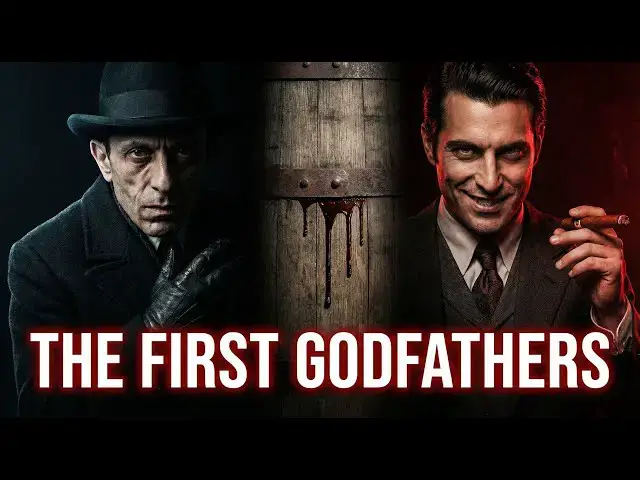
The REAL First Godfathers: The Brutal Origin Story Hollywood Doesn't Want You To See
Dec 21, 2025

The American Mafia didn't begin with Al Capone. It didn't start in Chicago. And the true origin story is far more brutal than anything Hollywood has ever shown you.
In April of nineteen oh three, a sugar barrel was discovered in a Manhattan alley. Inside was a body so mutilated that hardened police officers vomited at the scene. This wasn't just a murder. It was a declaration of war. A signature. The birth announcement of an empire that would eventually swallow America whole.
The men responsible? Giuseppe Morello, known as "The Clutch Hand" for his deformed claw-like fist. And Ignazio Lupo, called "The Wolf" for his insatiable appetite for violence. Together, they invented the blueprint that every crime family would follow for the next century.
This is the true story of the First Godfathers.
━━━━━━━━━━━━━━━━━━━━━━━━━━━━━━
📍 IN THIS DOCUMENTARY:
⚫ The Barrel Murder of nineteen oh three - The crime that shocked New York
⚫ The Black Hand - The original extortion operation that terrorized immigrants
⚫ The Murder Stable - Where up to sixty men were tortured and killed
⚫ Giuseppe Morello - The criminal genius with the deformed hand
⚫ Ignazio Lupo - The charismatic psychopath known as The Wolf
⚫ Joseph Petrosino - The only American cop ever assassinated on foreign soil
⚫ The Counterfeiting Empire - Five million dollars in fake currency
⚫ How the Morello family became the Genovese crime family
Show More Show Less View Video Transcript
0:00
April 14th, 1903. Lower East Side, Manhattan. A horsedrawn wagon rattles
0:08
down a cobblestone alley off East 11th Street. And a dock worker catches a smell that stops him dead in his tracks.
0:15
It is not the garbage rotting in the gutters. It is not the fish markets bleeding into
0:22
the streets. This smell is different. It is the unmistakable stench of human
0:29
decay. He finds the source beneath a pile of discarded wood shavings. A sugar
0:36
barrel, 53 gallons of oak stamped with the logo of a wholesale grocery
0:42
distributor. But when police pry open the lid, they do not find sugar. They
0:48
find a man. His body has been folded in half, knees pressed against his chest,
0:54
arms bound behind his back with rope. His throat has been cut so deeply that
1:00
his head nearly separates from his torso. 17 stab wounds perforate his
1:05
chest and abdomen. His ears have been sliced off and stuffed inside his mouth
1:12
as a final indignity are his own genitals. New York City has
1:19
seen violence before, but this is something else entirely.
1:24
This is a message, a signature, a declaration of war against anyone who
1:30
would dare betray the invisible empire rising in the shadows of Manhattan's tenementss. The dead man's name is
1:37
Binadetto Madonia. And the men who killed him, the men who stuffed his
1:42
mutilated corpse into that barrel and left it in the street like garbage, are about to become the most powerful
1:49
criminals America has ever seen. Their names are Jeppe Mel and Ignazio Lup.
1:57
And everything you think you know about the birth of the American mafia is wrong.
2:03
Forget Al Capone. Forget Luciano. Forget the glamorized gangsters of prohibition
2:10
era mythology. The true genesis of organized crime in America begins not
2:16
with Tommy guns and speak easy, but with extortion letters signed in black ink,
2:23
counterfeit bills printed in Sicilian basement, and bodies disposed of in ways
2:28
that would make even the most hardened killers pause. This is the story of the
2:34
first godfathers, the men who established the blueprint, the architects of an empire that would
2:40
eventually swallow the entire nation. And their methods were so brutal, so
2:46
psychologically sophisticated that they remain the template for organized crime
2:51
to this day. To understand how two Sicilian immigrants came to dominate the criminal underworld of the most powerful
2:59
city on Earth, you first have to understand what New York looked like at the turn of the 20th century. Because it
3:07
was not the gleaming metropolis of postcards and tourist fantasies. It was
3:12
a pressure cooker of desperation, exploitation, and violence waiting to
3:18
explode. Between 1880 and 1910, more than 4 million Italians poured through
3:24
Ellis Island. Most of them came from the impoverished south, from Sicily and
3:30
Calabria and Naples, where feudal poverty had crushed their families for
3:35
generations. They arrived with nothing, no money, no English, no understanding
3:44
of American law or institutions. They were packed into the tenementss of lower
3:49
Manhattan like sardines, sometimes 12 people to a single room, paying rent to
3:56
landlords who viewed them as barely human. Little Italy was not a neighborhood.
4:03
It was a cage. Malbury Street, Mont Street,
4:08
Elizabeth Street. These blocks became a world unto themselves, a compressed
4:14
universe where the old country and the new collided in ways that bred both solidarity and predation. Because when
4:22
you have hundreds of thousands of frightened immigrants who do not trust the police, who cannot communicate with
4:29
authorities who have brought with them a cultural suspicion of government that dates back centuries. You have created
4:36
the perfect ecosystem for a certain kind of criminal to thrive. And Jeppe
4:44
Mel understood this better than anyone alive. Mel arrived in New York in 1892,
4:52
though some records suggest he may have made an earlier aborted attempt in 1884.
4:59
He came from Corleon, Sicily, a town that would later become synonymous with
5:04
fictional mob mythology, but was in reality a cradle of very real organized
5:11
crime. The Mel family had connections to the early Sicilian mafia, and young
5:17
Jeppe had already been implicated in a murder before he ever set foot on
5:22
American soil. He was not an imposing figure at first glance.
5:28
short, gaunt, his face weathered beyond his years. But there was one feature
5:35
that everyone remembered. His right hand was deformed, a birth defect that had
5:41
left him with only a single functioning finger, a gnarled pinky that curled
5:46
inward like a claw. This disfigurement earned him the nickname that would follow him for the rest of his life, the
5:53
clutch hand. But if his body was flawed, his mind was razory. Mel possessed an
5:59
organizational genius that was decades ahead of its time. He understood that
6:05
crime, like any business, required structure,
6:10
hierarchy, discipline, and most importantly, he
6:15
understood that the greatest weapon was not a knife or a gun, but fear. Within
6:22
years of his arrival, Mel had established himself as the head of what historians would later call the first
6:29
true mafia family in American history. He gathered around him a network of
6:35
relatives, Pisanos from Corleó, and ambitious young criminals willing to do
6:41
whatever was necessary to survive. His half-brothers, the Terteranova clan,
6:47
became his enforcers. His stepson would eventually take over operations. But his
6:54
most important ally was a man whose capacity for violence was so legendary
6:59
that even other murderers feared to speak his name. Ignathio
7:04
Sieta, known to the streets as Lup the Wolf.
7:10
Lup arrived in New York in 1890, fleeing Sicily after allegedly committing a
7:16
murder in his hometown of Polarmo. He was everything Mel was not. Tall,
7:22
handsome, charismatic. He dressed impeccably, wore expensive
7:28
jewelry, and operated a legitimate grocery store on Elizabeth Street that
7:34
served as a front for his criminal enterprises. To the uninitiated, he looked like a successful immigrant
7:41
businessman. But behind those charming eyes lurked something genuinely monstrous. Lup the wolf earned his
7:49
nickname not because of his cunning, though he possessed that in abundance.
7:54
He earned it because of his appetite for violence. His willingness to kill was
8:00
not reluctant or strategic. It was enthusiastic. A enjoyed Italiano
8:06
and he had developed methods of murder and body disposal that would terrorize little Italy for nearly two decades. On
8:14
East 107th Street, Lupo operated what became known in whispered conversations
8:20
as the murder stable. It was an ordinary horse stable to anyone walking past, a
8:27
brick building that smelled of hay and manure. But inside those walls, Lup and
8:32
his associates conducted interrogations that lasted 4 days. They tortured men
8:39
who had crossed them, extracting confessions that were as useless as they were, agonizing because the victims were
8:47
going to die regardless. And when the screaming finally stopped, the bodies
8:53
were disposed of with industrial efficiency. Some were buried beneath the
8:58
stable floor. Some were dismembered and scattered across multiple locations.
9:04
Some were stuffed into barrels and deposited in neighborhoods far from Lupos's territory, sending a message
9:11
that his reach extended everywhere. Police would later estimate that as many
9:17
as 60 men died inside those walls. The true number may have been higher. The
9:23
murder stable was so feared that even hardened criminals would cross to the
9:28
other side of the street rather than walk past it. And Lupo was just getting
9:34
started. When Mel and Lup joined forces through marriage with Lup Mel's have
9:42
they created a criminal partnership that combined strategic brilliance with
9:47
homicidal fury. Mel was the brain. Lup was the blade.
9:54
Together they would perfect a form of extortion that would haunt immigrant communities for generations. They called
10:01
it Lmanonra. The Black Hand. The Black Hand was not,
10:07
as many believed, a single organization with membership cards and secret
10:14
handshakes. It was a method, a brand, a franchise of terror that any criminal
10:21
could adopt. But Mel and Lup elevated it to an art form. The operation worked
10:28
like this. A prosperous Italian businessman, perhaps a grosser or a
10:33
contractor or a saloon owner, would receive a letter. The letter would be written in formal Italian, almost poetic
10:42
in its threats. It would demand a specific sum of money, usually hundreds
10:47
or thousands of dollars. It would specify where and when the payment must be delivered. And at the bottom of the
10:54
letter, stamped in thick black ink, would be the image of a hand. If the
11:00
money was paid, the victim might be left alone for a few months. Then another
11:06
letter would arrive and another and another. The black hand did not extort once. It
11:14
extorted forever. victims became permanent sources of income, trapped in
11:20
a cycle of payments that would drain their savings, their businesses, and
11:25
their sanity. If the money was not paid, the consequences were swift in public.
11:32
A bomb might explode in the victim's storefront. His children might be
11:37
kidnapped on their way to school. His wife might be attacked in the street. Or
11:43
if the victim was particularly stubborn, he might simply disappear, his body
11:49
surfacing weeks later in a sugar barrel or a ditch outside the city. The genius
11:55
of the Black Hand was psychological. Most victims never reported the extortion to police. They came from
12:02
villages in Sicily where cooperating with authorities was not just dangerous
12:08
but culturally unthinkable. The concept of omea, the code of silence, was not a
12:15
criminal invention. It was a survival mechanism that had evolved over centuries of oppression by foreign
12:21
governments. Sicilians did not talk to police because police in their experience were just another form of
12:29
occupying army. Mel understood this. He exploited it ruthlessly and in doing so
12:37
he built an extortion empire that generated hundreds of thousands of dollars annually. Money that flowed
12:44
invisibly through the streets of Little Italy and into his growing criminal treasury. But extortion was not enough
12:50
for a man with Mel's ambitions. A wanted mo. He wanted to manufacture money
12:57
itself. Counterfeiting had been a Sicilian specialty for generations, and
13:02
Mel brought the expertise with him to America. By the early 1900s, he had
13:08
established a counterfeiting operation that produced some of the most sophisticated fake currency in the
13:15
country. His bills were printed in hidden locations across New York and New
13:20
Jersey using equipment that was carefully guarded and frequently moved.
13:26
The operation involved dozens of people. From the printers who produced the notes
13:31
to the distributors who spread them across the eastern seabboard. The scope
13:36
was staggering. Mela's counterfeit bills turned up in New Orleans. In Chicago, in
13:43
Pittsburgh, they infiltrated banks and businesses and personal transactions. At
13:49
the height of his operation, Mel was responsible for an estimated $5 million
13:55
in fake currency circulating through the American economy. In today's money, that
14:00
would be equivalent to roughly $150 million. The Secret Service was
14:07
desperate to stop him, but every time they got close, witnesses disappeared.
14:13
Informants were found dead. Prosecutors received threatening
14:19
letters. The wall of fear that Mel had constructed around his operation was
14:24
nearly impenetrable. And then Benadetto Monia made a fatal mistake. Madonia was
14:31
a counterfeit from Buffalo, New York, connected to the Mel network through various criminal channels. In the spring
14:39
of 1903, he traveled to Manhattan to settle a financial dispute with the
14:45
clutch hand. The exact nature of the disagreement remains unclear. Some historians believe
14:52
Monia was skimming prophets. Others suggest he was suspected of talking to
14:58
federal agents. What is certain is that Mel summoned him to a meeting in Little
15:03
Italy and Medonia was foolish enough to attend. He arrived on April 13th. By the
15:11
following morning, he was dead. The murder was not just brutal.
15:17
It was theatrical. Mela wanted to send a message that would echo through every
15:22
Italian community in America. He wanted anyone who might consider betraying him
15:27
to understand exactly what awaited them. And so, Madonia's body was not simply
15:33
disposed of. It was displayed left in a barrel on a public street positioned to
15:40
be found, designed to generate headlines. And it worked. The barrel murder, as
15:48
newspapers called it, became a sensation. Front pages screamed about
15:54
the mysterious Black Hand, about the savage rituals of Italian criminals,
16:00
about the impossible task of controlling the immigrant hordes flooding American cities. The story stoked nivist fears
16:08
and confirmed the worst stereotypes about southern European immigrants. But it also attracted the attention of a man
16:15
who would become Mel's most dangerous enemy. His name was Joseph Petro and he
16:21
was about to declare war. Petrosino was an anomaly. Born in Padulla, Italy, he
16:29
had immigrated with his family as a child and grown up in the tenementss of
16:34
lower Manhattan. He understood the Italian community from the inside. He
16:39
spoke the language. He knew the customs. He could read the subtle signals that
16:45
American-born detectives missed entirely. And unlike most police officers of his era, he genuinely cared
16:53
about protecting Italian immigrants from predators. He had joined the New York Police Department in 1883, one of the
17:01
first Italian Americans to do so. For years, he worked ordinary cases,
17:07
building a reputation for intelligence and tenacity. But by the early 1900s, he
17:13
had become obsessed with a single target, the destruction of the Black
17:19
Hand. In 1904, police commissioner William Macadu created a special unit to
17:25
combat Italian crime. He called it the Italian squad, and he put Petraino in
17:31
charge. It was a small team, never more than a few dozen men. But under
17:37
Petraino's leadership, it became the most effective anti-mafia force in
17:42
American history. Petroino's methods were unconventional. He went undercover
17:48
in Little Italy, disguising himself as a gangster, a laborer, a blind beggar. He
17:55
cultivated informants in places where other detectives could not penetrate. He
18:00
learned the internal politics of the Mel organization, identifying key players and mapping
18:07
their relationships. And unlike his colleagues, he refused to be bought. In
18:13
an era when police corruption was not just common but expected, Petroino was
18:19
incorruptible. He arrested blackand extortionists by the dozens. He broke up
18:25
counterfeiting rings and kidnapping operations. He personally received hundreds of death threats. His
18:32
photograph was circulated among criminals with instructions to kill him on site. But he kept working, kept
18:40
investigating, kept building cases against the men at the very top of the criminal hierarchy. The barrel murder
18:47
gave him his best opportunity. The victim had been identified through a distinctive watch chain found on the
18:54
body. Witnesses placed Mononia in the company of Mel associates shortly before
19:00
his disappearance. Petraino was convinced he could prove that the clutch hand himself had ordered the killing,
19:07
but proving it was another matter entirely. The investigation into the barrel murder consumed a Petraino for
19:15
months. He interviewed dozens of witnesses, most of whom suddenly developed memory problems when
19:22
questioned. He gathered circumstantial evidence that pointed directly at Mela's
19:27
inner circle. He even managed to arrest several suspects, including Mela's
19:33
brother-in-law, Tomaso Pto, nicknamed Pto the Ox, for
19:39
his massive physical strength. But the case fell apart.
19:44
Witnesses recanted. Evidence disappeared.
19:49
Jurors were intimidated. In the end, no one was ever convicted for Mononia's
19:55
murder. The barrel murder case became a symbol of the mafia's seeming invincibility. Proof that Amerta could
20:02
defeat even the most determined investigator. Petrino was devastated,
20:07
but not deterred. He realized that to truly destroy the Mela organization, he
20:14
needed to attack it at its source. Many of the black hand criminals operating in
20:19
New York were fugitives from Italian justice. Men who had fled murder charges
20:25
and warrants that still awaited them in the old country. If Petroino could document these fugitives, he could have
20:32
them deported. He could dismantle the Mel network by removing its soldiers one
20:38
by one. In February of 1909, Petraino sailed for Italy on a secret
20:45
mission. He planned to coordinate with Italian police, gather records on wanted
20:51
criminals, and return with the evidence needed to expel dozens of dangerous men
20:56
from American soil. The mission was supposed to be confidential, but someone
21:02
talked. On the evening of March 12th, 1909, Joseph Petroeno walks through the
21:09
Piaza Marina in Polmo, Sicily. The square is quiet at this hour. The
21:16
Mediterranean air still carrying the warmth of the day. He has been in Italy
21:21
for 3 weeks, working with local authorities, gathering the documents he
21:27
needs. His mission is nearly complete. He plans to return to New York within
21:33
days. He does not see the men approaching from the shadows. He does not hear them until they are already
21:41
upon him. For gunshots shatter the silence of the patza. The first bullet
21:47
strikes Petroino in the shoulder. The second pierces his chest. The third and
21:52
fourth hit him as he falls, ensuring there will be no survival, no recovery,
21:59
no continued investigation. He collapses on the cobblestones,
22:05
bleeding out beneath the Sicilian stars. He is 48 years old. He will be the only
22:12
American law enforcement officer ever assassinated on foreign soil. The news
22:18
reaches New York the following morning. The city erupts in grief and rage. More
22:25
than 250,000 people line the streets for Petroino's funeral procession, the
22:31
largest such gathering in the city's history. Politicians give speeches about justice and vengeance. Newspapers demand
22:40
action against the Black Hand. For a brief moment, it seems like the
22:45
full force of American law enforcement will finally crush the Mel Empire. But
22:51
nothing changes. The men who ordered Petraino's assassination are never
22:57
prosecuted. The triggermen disappear into the labyrinth of Sicilian villages
23:02
and are never found. Donvito Ferrara and other Polarmo mafia figures are
23:09
suspected but never charged. And in New York, Jeppe Morel reads the headlines
23:15
with quiet satisfaction. His greatest enemy is dead. His
23:22
operation continues uninterrupted, or so he believes. The death of Petroino
23:29
paradoxically, sealed Mel's fate. The national outrage over the assassination focused
23:37
unprecedented attention on Italian organized crime. Federal agencies that
23:42
had previously considered the Blackhand a local problem, suddenly prioritized
23:47
its destruction, and the Secret Service, still hunting Mela's counterfeiting
23:53
operation, redoubled its efforts. In November of 1909, agents finally caught
24:00
a break. A counterfeitter in Pennsylvania was arrested with a suitcase full of fake bills, and under
24:06
interrogation, he agreed to cooperate. He led investigators through the distribution network, revealing
24:13
connections that stretched back to Manhattan, witness by witness, document
24:18
by document. The Secret Service constructed a case against the clutch hand himself. On February 15th, 1910,
24:28
federal agents arrested Jeppe Mel at his home on East 116th Street. Lup the Wolf
24:36
was arrested the same day. The trial that followed was a spectacle with
24:41
prosecutors presenting evidence of counterfeiting, extortion, and murder.
24:46
Both men were convicted and sentenced to lengthy prison terms. Morela received 25
24:54
years. Lup received 30. For the first time in nearly two decades, the first
25:00
Godfathers were behind bars. But here is what the newspapers did not understand.
25:07
what the prosecutors failed to grasp, what even the Secret Service could not
25:12
see. The men were imprisoned, but the structure they had created survived. The
25:18
Mel family did not collapse when its leader went to prison. It adapted. Mel's
25:25
half-brother, Nicholas Terteranova, assumed control. The extortion rackets continued. The
25:32
counterfeiting operations relocated. The network of fear remained intact. Jeppe
25:39
Mel had built something that was larger than himself. He had created a system
25:45
that could survive the loss of any individual component. He had in effect
25:51
invented the modern American mafia. Mel was released from prison in 1920. His
25:58
sentence reduced for good behavior. He emerged into a world transformed by
26:04
prohibition. a world where the sale of illegal alcohol had created criminal fortunes beyond anything his black hand
26:11
operations had ever generated. He was now an old man by gangster standards.
26:17
His power diminished, his territory reduced, but his strategic mind remained
26:23
sharp, and the rising generation of mobsters recognized his value. Akame a
26:30
consigerian advisor to the new bosses who were carving up New York's
26:35
underworld. He brokered disputes. He offered counsel. He watched as younger, more
26:43
violent men like Joe Maseria and Salvator Moranzano fought for supremacy
26:50
in what would become known as the Castella Marie War. and he witnessed the rise of a new
26:57
generation of criminals, men like Charles Luchano and Veto Jan, who would
27:03
eventually systematize organized crime on a national scale. On August 15th,
27:09
1930, Jeppe Mel was shot to death in his East Harlem office. He was 63 years old.
27:18
His killers were associates of Maranzano, settling scores in the gang war that was
27:24
reshaping the underworld. The clutch hand died as he had lived, a victim of
27:29
the violence he had helped institutionalize. Lupa the Wolf outlived his partner by 17
27:36
years. He was released from prison in 1920, violated his parole almost
27:43
immediately by returning to extortion, and was imprisoned again until 19. He
27:49
spent his final decade in obscurity, a forgotten relic of a previous era. He
27:55
died in 1947, allegedly impoverished. The fortune he
28:01
had accumulated through decades of crime long since vanished. But their legacy
28:06
endures. The Mel crime family did not die with its founders. It evolved.
28:13
It merged. It became under subsequent leadership what is now known as the
28:20
Govi's crime family. One of the original five families that still dominate
28:25
organized crime in the northeastern United States. The organizational structures that Mel pioneered, the
28:33
hierarchy of boss and unerb boss and cappos and soldiers became the template
28:39
for every crime family that followed. The tactics of the black hand, the
28:45
psychological warfare, the exploitation of immigrant fear, the weaponization of
28:51
cultural mistrust. These techniques are still employed today, not just by the
28:57
Italian mafia, but by criminal organizations around the world. Every gang that has ever extorted a community
29:04
using threats and cultural isolation owes a debt to Mel and Lupo. and Joseph
29:10
Petraino's sacrifice, his lonely crusade against impossible odds, established the
29:17
model for organized crime investigation that federal agencies still follow. The
29:23
FBI, the D, the modern secret service, they are all in some sense Petrainos
29:31
descendant. When tourists walk through Little Italy today, past the restaurants
29:36
and gift shops and sanitized streetscapes, they have no idea what
29:41
blood soaked into those cobblestones. They do not know about the bodies and barrels, the terror letters signed with
29:49
black hands, the screams that echoed from the murder stable on East 107th
29:55
Street. They do not know about the clutch hands deformed grip or the wolf's
30:00
hungry smile. The city has forgotten.
30:05
The city always forgets. It paves over its nightmares with concrete and
30:11
commerce, erecting monuments to progress a top unmarked graves. But the truth
30:17
remains. Buried in police archives and court transcripts and faded newspaper
30:23
clippings, waiting for those willing to dig. Jeppe Mel and Ignazio Lupo did not
30:31
invent crime, but they invented something far more dangerous. They invented a system,
30:39
a franchise, a methodology of terror that could survive any individual death,
30:45
any prison sentence, any law enforcement crackdown. They proved that crime could
30:50
be organized, that violence could be industrialized, that fear itself could be commodified
30:57
and sold. The men who came after them, the Capones and the Lanskies and the
31:03
Lucanos, they merely built upon foundations that were already laid.
31:09
They refined what Mel created. They expanded what Lupo enforced. But the
31:15
architecture was already in place. Designed by two immigrants from Sicily
31:21
who saw in America's chaos not a challenge but an opportunity. The
31:26
American Mafia did not emerge from nowhere. It was built deliberately,
31:33
strategically, ruthlessly. And the builders were not the glamorous
31:39
gangsters of Hollywood mythology. They were a man with a claw for a hand and a
31:44
man with the appetite of a wolf working together in the shadows of a city too
31:49
distracted to notice until it was far too late. The streets may forget, the history
31:57
books may neglect, the mythology may obscure, but here at
32:02
Mafia Crime Secrets, the record remains forever.