live_tv
Livestream Starting Soon
00
Hours
:
00
Minutes
:
00
Seconds
Up next in 10

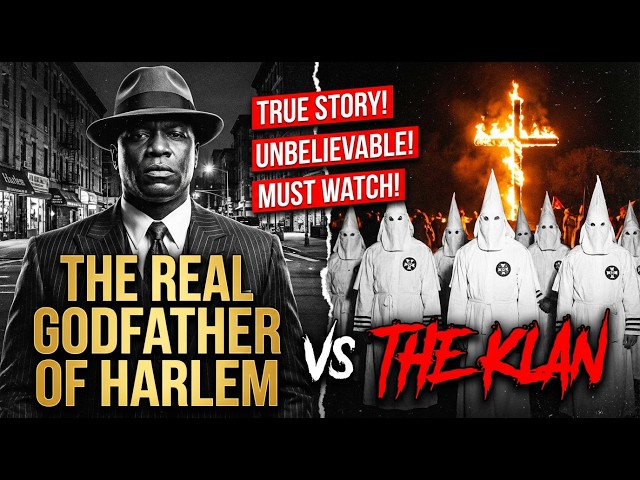
Two white hoods walked into a Queens bar in nineteen fifty-one.
They never walked out.
Within eighteen months, the Ku Klux Klan was completely wiped out of New York — the only state in America where this ever happened.
No arrests. No trials. No mercy.
This is the true story of how Bumpy Johnson and the Harlem numbers kings declared war on the Klan... and won.
Using methods the police couldn't — and wouldn't — stop.
Based on FBI files, newspaper archives, and accounts from the streets that still whisper the names.
Viewer discretion advised.
📚 Sources & Further Reading in description.
-~-~~-~~~-~~-~--~-~~-~~~-~~-~--~-~~-~~~-~~-~-
🕵️♂️ Global Mafia Universe - https://www.youtube.com/@GlobalMafiaUniverse?sub_confirmation=1
-~-~~-~~~-~~-~--~-~~-~~~-~~-~--~-~~-~~~-~~-~-
⚠️ Content Disclaimer
Show More Show Less View Video Transcript
0:08
Queens, New York, 1951. Two men in white hoods walked into a bar
0:14
on Liberty Avenue. They ordered drinks like they belonged. They were wrong. The
0:19
bartender froze. The pool table went silent. Someone in the corner booth
0:25
slowly reached under the table. Within 90 seconds, both men were dragged
0:30
through the back door into an alley. The screams lasted less than [music] a minute. When the sun came up, two bodies
0:37
were found in a dumpster behind a meat packing plant in Long Island City. Kustrated, faces burned beyond
0:45
recognition, no identification, no witnesses, the NYPD filed it as gang
0:52
violence. Case closed. But in Harlem, from Lenox Avenue to St. Nicholas Park,
0:58
everyone knew exactly what had happened. And more importantly, everyone knew who gave the order. Ellsworth Raymond
1:05
Johnson. Street name Bumpy. This is the story of how one man and the Harlem
1:12
underworld declared total war on the Ku Klux Clan and permanently erased them
1:17
from New York City. The only place in America where this ever happened. No
1:23
trials, no arrests, no mercy, just silence. And by 1953, the clan was gone
1:31
completely forever. Some of what follows is based on FBI files declassified
1:37
decades later. Some comes from newspaper reports buried in archives, some from
1:44
the streets that still remember. Dialogue [music] has been reconstructed from historical accounts and witness
1:50
testimony. But the pattern is undeniable. The clan came north. Harlem
1:56
sent them home in pieces. Bumpy Johnson was 51 years old in 1951. [music] He'd
2:03
spent half his life in prison and the other half running Harlem's numbers racket alongside Stephanie St. Clare,
2:11
the legendary Queenie of Harlem. By the early 50s, he controlled more than just
2:17
gambling. He controlled respect. He controlled territory. And in a
2:23
neighborhood where the police barely showed up and justice was a luxury black
2:28
folks couldn't afford, Bumpy controlled something else. Protection. If you lived
2:35
in Harlem and someone wronged you, the courts wouldn't listen. But Bumpy would.
2:40
And in 1950, something happened that made protection personal. The Ku Klux
2:46
Clan was experiencing a resurgence across America. Membership was exploding
2:52
in the south, but the organization had ambitions beyond Dixie. They wanted New
2:58
York. Specifically, they wanted to recruit in the outer bur where white
3:03
workingclass resentment was boiling over. Postwar America was changing.
3:09
Black families were moving into neighborhoods that had been exclusively white for generations.
3:16
Jobs were shifting. The old order was cracking and the clans saw opportunity.
3:22
Throughout 1950 and 1951, clan recruiters quietly set up shop in
3:28
Queens, [music] Staten Island, and parts of Long Island. They held secret
3:33
meetings in basements, VFW halls, and backrooms of bars. They distributed
3:39
pamphlets. They burned crosses in empty lots. Most New Yorkers ignored them. The
3:46
city had seen hate groups come and go. But Bumpy Johnson didn't ignore anything
3:51
that happened in his city. According to FBI surveillance reports from that
3:56
period, Bumpy began receiving complaints from black families who'd moved to
4:01
Jamaica, Queens, threatening letters, rocks through windows, a firebomb that
4:08
destroyed a barber shop owned by a man who'd served in World War II and come
4:13
home to build a life. The police did nothing. So, the families did what they'd learned to do. They sent word to
4:21
Harlem and Bumpy listened. Now, here's where the story takes a turn no one
4:26
expected. Bumpy didn't go to the authorities. He didn't organize protests. He didn't call the NAACP,
4:34
though they were active and powerful. [music] Instead, he did what he always did when the law failed his people. He
4:42
called a meeting. [music] The location was a social club on 135th Street and
4:48
Lenox. The date, sometime in late October 1951. No written records exist
4:55
of what was said in that room, but the people who walked in tell you everything you need to know. Bumpy Johnson,
5:02
Stephanie Sent, Clare, Frankie Lions, the enforcer who'd killed more men than
5:08
pneumonia, Nat Pigru, who ran policy in Brooklyn, and a few others whose names
5:14
were whispered, not written. They sat at a table for 3 hours. When they walked
5:20
out, a decision had been made. The clan wasn't going to be debated. It was going
5:25
to be eliminated. The first strike came in early November 1951.
5:31
That's when the two hooded men walked into the Queen's bar and never walked out. The message was immediate. The
5:38
clan's recruitment efforts in Jamaica, Queens, stopped overnight. Meetings were
5:44
cancelled. pamphlets disappeared. [music] But Bumpy wasn't finished because this
5:50
wasn't about one incident. This was about sending a message so loud, so
5:55
brutal that the clan would never think about New York again. What followed over the next 18 months was a systematic
6:03
campaign of terror that the FBI would later describe in internal memos as a
6:10
coordinated effort by negro organized crime elements to eliminate clan
6:15
presence through extrajudicial means. Extrajudicial means that's government
6:22
speak for murder. Between November 1951 and June 1953,
6:28
at least nine clan members or suspected recruiters were found dead across the
6:34
tri-state area. Some were beaten to death in alleys. Some were shot execution style in their cars. Two were
6:42
found hanging from trees in a grotesque inversion of the clan's own methods. And
6:48
every single time the pattern was the same. No witnesses, no evidence, no
6:54
suspects. The NYPD knew, the FBI knew, everyone knew who was behind it, but
7:00
nobody talked because in Harlem there was a code. You didn't cooperate with
7:06
the police. You didn't testify. You didn't break the silence. And if you did, you ended up like the clan members.
7:14
One case stands out above all the others. It happened in May 1952 and it's
7:20
the one that made even hardened detectives look away. Two men were found
7:25
in an abandoned warehouse in Atoria, Queens. Both were clan organizers. Both
7:31
had been conducting recruitment drives in predominantly white neighborhoods,
7:37
targeting veterans who felt left behind by the new economy. The bodies were
7:42
discovered by a factory worker on his way to the early shift. He opened the
7:47
warehouse door and immediately vomited. The men had been tied to chairs. Their
7:54
clan robes were draped over their shoulders, soaked in gasoline. But before they were burned, someone had
8:01
castrated them. Slowly, methodically, the medical examiner estimated they were
8:07
alive for most of it. Then they were set on fire. The warehouse still smelled
8:12
like burning flesh when the police arrived. One detective, a 20-year
8:17
veteran named Coleman, wrote in his report, "This was not a robbery. [music]
8:23
This was not a crime of passion. This was a message." And the message was received. Within a week, the clan's
8:31
grand for New York, a man named Howard Sullivan, issued a quiet order. All
8:37
recruitment activities in New York City were to cease immediately. Members were
8:42
told to destroy their robes, burn their membership lists, and never speak of the
8:48
organization again. [music] Howard Sullivan himself moved to Georgia 3
8:53
months later. He never returned to New York. But even Sullivan's retreat wasn't
8:58
enough for Bumpy because one month after the warehouse murders in June 1952,
9:05
Howard Sullivan's second in command, a man named Eugene Carr was killed when
9:11
his car exploded [music] in a Statton Island parking lot. The bomb was crude
9:17
but effective. It detonated when Carr turned the ignition. The blast was so
9:23
powerful it shattered windows two blocks away. [music] Eugene Carr was 43 years
9:29
old. He left behind a wife and two children who had no idea their father
9:34
was involved with the clan. The FBI investigated. They found no prince, no witnesses, no
9:41
leads. But they found something else. [music] In the wreckage of the car, tucked into what remained of the glove
9:48
compartment, was a single playing card, the Ace of Spades, [music] burned around the edges, but still
9:55
recognizable. In the Harlem underworld, the Ace of Spades had a very specific
10:00
meaning. Judgment, and Bumpy Johnson always signed his work. [music] By the
10:06
end of 1952, the Ku Klux Clan had completely vanished from New York State.
10:12
[music] Meetings stopped. recruitment ended. The organization, which had been
10:18
growing steadily across the country, had been wiped out in the nation's largest
10:23
city. Historians would later struggle to explain it. Some credited changing
10:29
social attitudes. Some pointed to increased law enforcement pressure, but
10:34
the people who lived through it knew the truth. Bumpy Johnson had done what the courts, the police, and the government
10:42
wouldn't do. He'd made the clan afraid. Now, pay attention to what happens next.
10:49
Because while the clan disappeared, [music] the consequences of Bumpy's war were just beginning to ripple outward, and
10:56
the FBI was watching everything. By 1953, J. Edgar Hoover's FBI had compiled a
11:04
file on Ellsworth Bumpy Johnson that was over 600 pages long. They had
11:10
surveillance photos, wire taps, informant reports, and detailed
11:15
timelines of his movements. But they couldn't touch him because Bumpy had
11:21
done something brilliant. [music] He positioned himself as a community protector, not a criminal. In Harlem, he
11:28
wasn't a gangster. He was a hero. He paid for funerals. He kept drugs out of
11:34
certain neighborhoods. He employed men who couldn't get jobs anywhere else. And
11:39
now he'd done what the law refused to do. He'd driven out the clan. How do you
11:44
arrest a man for that? The FBI tried anyway. In January 1953,
11:51
federal agents raided Bumpy's apartment on Convent Avenue. They tore the place
11:56
apart, looking for evidence connecting him to the clan murders. They found
12:01
nothing. Bumpy sat on his couch the entire time, smoking a cigar, watching
12:07
them destroy his furniture. When they finally left empty-handed, he reportedly
12:13
said to the lead agent, "Tell Hoover I said hello." The agent didn't respond.
12:19
But 2 weeks later, the FBI surveillance on Bumpy intensified. More cameras, more
12:25
wire taps, [music] more informants trying to penetrate his inner circle. None of it worked because Bumpy
12:32
understood something the FBI didn't. In Harlem, loyalty wasn't bought with
12:38
money. It was earned with action. And Bumpy had spent decades earning it. The
12:43
people who knew what happened to the clan would never talk. Not to the police, not to the FBI, not to anyone.
12:51
That silence was armor and it was unbreakable. But before we go further,
12:56
there's something the FBI files never explained. Something that still raises
13:02
questions today. Why did Bumpy go to war with the clan in the first place? Yes,
13:08
there were complaints from families in Queens. Yes, the clan was a threat, but
13:13
Bumpy was a practical man. He didn't take risks without reason. He didn't
13:18
start wars. He didn't have to fight. So, what made this personal? [music] Some researchers suggest it was about power.
13:26
The clan was encroaching on Bumpy's territory, threatening the stability of black neighborhoods that fed his numbers
13:33
racket. If black families fled back to the south out of fear, his business
13:39
would collapse. Others believe it was about legacy. Bumpy was getting older.
13:44
He'd spent his youth fighting Dutch Schultz and Lucky Luchano. Maybe this was his final stand. His last chance to
13:52
protect the community that had made him. But there's a third theory, one that's
13:58
harder to prove, but keeps appearing in accounts from people who knew him. Bumpy
14:03
had a daughter. Her name was Ruthie, and in 1950, she was a teenager attending
14:09
high school in Harlem. [music] According to some accounts, Ruthie had a friend
14:14
whose family had moved to Queens and that family received threatening letters
14:20
from the clan. Ruthie came home crying. She told her father what was happening
14:26
and Bumpy made a decision. There's no hard evidence for this. Ruthie Johnson
14:32
rarely spoke publicly about her father [music] and when she did, she never mentioned the clan, but the timeline
14:39
fits. And the ferocity of Bumpy's response suggests something deeper than
14:44
business. This was about family. And in Bumpy's world, you didn't threaten
14:49
family and life. Throughout 1953, the violence continued, but it was quieter
14:55
now. Surgical. The clan was already gone, but Bumpy's network was making
15:01
sure it stayed gone. A clan sympathizer in the Bronx had his car torched. A bar
15:08
in Yonkers that had hosted clan meetings burned to the ground. A former Grand
15:13
Dragon who'd moved to Connecticut disappeared for 3 days and returned
15:18
beaten so badly he needed facial reconstruction surgery. He never filed a
15:24
police report. The message was clear. If you had ever been part of the clan, if
15:30
you had ever worn the hood, if you had ever burned a cross, New York was no longer safe for you. Leave or stay and
15:38
die, most left. By 1954, FBI reports
15:43
confirm that clan membership in New York had dropped to functionally zero. The
15:49
organization still existed in other states. It would continue to terrorize
15:54
the South for decades, but in New York, it was finished, and it never came back.
16:00
Bumpy Johnson had done what the federal government with all its resources and
16:05
power would not do for another 15 years. He had eliminated the clan from an
16:10
entire state. [music] But that victory came with a cost. The FBI's obsession
16:16
with Bumpy intensified. They couldn't prove he'd orchestrated the clan
16:21
killings, but they could harass him for other crimes. Tax evasion, racketeering,
16:28
conspiracy. In 1954, Bumpy was indicted on federal narcotics charges. The
16:35
evidence was thin, almost fabricated, but it didn't matter. The government
16:40
wanted him off the streets. He was convicted and sentenced to 15 years.
16:46
Bumpy Johnson, the man who'd made the clan disappear, was taken away in handcuffs and sent to Alcatraz. and
16:54
Harlem watched in silence because they knew, they all knew this wasn't about
16:59
drugs. This was revenge. Bumpy served most of his sentence. He was released in
17:05
1963 just in time to watch Harlem explode into the chaos of the civil
17:10
rights movement, but by then he was an old man. His body was broken. His power
17:17
had shifted. The world had moved on. But the legend hadn't because in Harlem,
17:23
people still told the story. The story of the week the clan tried to recruit in
17:28
New York and ended up in body bags. The story of the man who protected his
17:33
people when no one else would. And in the bars, the barberh shops, the street
17:39
corners, [music] they still said the same thing. They came north looking for members. Bumpy
17:45
gave them graves. Bumpy Johnson died on July 7th, 1968. He collapsed on the
17:52
corner of 7th Avenue and 135th Street, just a few blocks from where he'd held
17:58
that first meeting 17 years earlier. He was 62 years old. Hundreds attended his
18:05
funeral. Street bosses, numbers runners, ordinary people whose lives he'd
18:10
touched. The police watched from a distance, taking notes, photographing faces, but they didn't interfere because
18:18
even in death, Bumpy commanded respect. The pastor who delivered the eulogy
18:24
never mentioned the clan. He never mentioned the murders. He didn't have to. Everyone in that church knew what
18:31
Bumpy had done, and they were grateful. [music] In the years that followed,
18:36
historians and journalists tried to piece together the full story of what happened between 1951 and 1953. [music]
18:45
They combed through FBI files, police reports, newspaper archives, but the
18:52
truth was elusive. Because the people who knew the most said the least, Frankie Lions, Bumpy's enforcer, died in
19:01
1972. He never gave a single interview. Stephanie sent Clare, the Queenie of
19:08
Harlem, passed in 1969. She took her secrets to the grave. One
19:14
by one, the witnesses disappeared and the story became legend. But legends
19:20
have a way of revealing truth. In 2017, the FBI released additional files under
19:28
a Freedom of Information Act request. Buried in those documents was a memo
19:34
dated June 1952. It read, "Subject Johnson has [music] demonstrated
19:39
capability to mobilize significant violence in defense of negro community
19:45
interests. [music] Clan elements have been effectively neutralized. Recommend
19:51
continued surveillance but advise against direct engagement. [music] Subject has substantial local support."
19:59
substantial local support. That's government speak for [music] the people
20:04
love him and if we take him down, Harlem burns. The memo was signed by an
20:10
assistant director whose name was redacted. But the message was [music] clear. Even the FBI understood what
20:17
Bumpy had done and why. Now, here's the part that history books don't teach.
20:23
While Bumpy was waging his private [music] war against the clan, the federal government was doing almost
20:29
nothing to stop clan violence in the south. Black churches were being bombed.
20:35
Civil rights workers were being murdered. The clan operated with near impunity. But in New York, one man with
20:43
no legal authority, [music] no badge, no official power eliminated them
20:48
completely. How? Because Bumpy understood something the government didn't. [music]
20:53
You can't negotiate with evil. You can't reform it. You can't rehabilitate it.
20:58
You can only erase it. [music] And that's exactly what he did. By 1955, the
21:04
clan's national leadership had quietly issued an internal directive. Stay out
21:10
of New York. The directive was never made public, but former members have
21:15
confirmed it in interviews decades later. New York was off limits. Not
21:22
because of the police, not because of the courts, because of Bumpy. And that
21:27
directive held for decades. Even during the clan's resurgence in the 1970s and
21:34
80s when membership spiked again across the country, New York remained a dead
21:40
zone for recruitment. The ghost of Bumpy Johnson still haunted them. In 1997, a
21:47
journalist named Ron Chepyz published a biography of Bumpy Johnson titled
21:52
[music] Gangsters of Harlem. In it, he interviewed several elderly Harlem
21:58
residents who'd lived through the 50s. One woman who asked to remain anonymous
22:04
said this, "Bumpy did what the law wouldn't. He made us safe and we never forgot that." Another man, a former
22:11
numbers runner, said, "People talk about Malcolm X and Martin Luther King like
22:16
they were the only ones fighting for us, but Bumpy was fighting, too. He just didn't have a pulpit. These weren't
22:24
glorifications of violence. They were acknowledgments of a brutal reality. In
22:30
1950s [music] America, if you were black and someone terrorized you, the law was not on your
22:36
side. So, you found protection where you could, and in Harlem, protection had a
22:41
name, Bumpy. The Clan murders were never officially solved. To this day, they
22:47
remain open cases in NYPD files, though no detective has actively worked them in
22:53
decades. The families of the victims, the clan members who died, never got
22:59
justice in a courtroom. But in the streets of Harlem, justice had already been served. And the people who lived
23:06
there slept a little safer because of it. Take [music] a breath. Because from here on, the story only gets darker.
23:14
Because while Bumpy's war against the clan was over, the questions it raised were just beginning. Questions about
23:22
justice, about morality, about what happens when the system fails and people
23:27
take the law into their own hands. And those questions [music] don't have easy answers. By the mid
23:34
1950s, Bumpy was behind bars, but his influence remained. The network he'd
23:41
built, the loyalty he'd earned, the fear he'd instilled. All of it outlived his
23:47
freedom, and the clan never returned. But the cost was high. Bumpy spent 15
23:53
years in prison. His family was torn apart. His daughter Ruthie, the girl he
23:59
may have been protecting all along, grew up with a father behind bars. When Bumpy
24:04
was finally released in 1963, Harlem had changed. The civil rights
24:10
movement was in full swing. Young activists were demanding justice through
24:15
protests, sitins, and marches. Bumpy's methods, the violence, [music] the
24:20
intimidation were being replaced by a different kind of resistance. But the old guard remembered. They remembered
24:28
that before there were marches, there was bumpy. Before there were speeches, [music] there were bodies. Before there
24:35
was hope, there was fear. And fear worked. In 1965, Malcolm X was
24:41
assassinated at the order ballroom in Harlem. Bumpy attended the funeral.
24:46
Witnesses say he wept openly. Malcolm had been a different kind of warrior.
24:52
[music] He'd fought with words, with ideas, with a vision of black power and self-determination.
24:58
Bumpy had fought with bullets, but they'd both fought for the same people, and they'd both paid the price. Bumpy's
25:06
final years were quiet. He ran smalltime operations, stayed out of major
25:12
conflicts, and watched as Harlem descended into the heroine epidemic of the late60s. He hated it. the drugs, the
25:20
needles, [music] the young men nodding off in doorways. This wasn't the Harlem he'd protected,
25:26
but he was too old, too broken to stop it. On the morning of July 7th, 1968,
25:33
Bumpy left his apartment and walked to Wells restaurant on 7th Avenue. It was a
25:39
routine he'd followed for years. Coffee, eggs, conversation with old friends. But
25:45
that morning, something was [music] different. He seemed distracted, distant. At around 11:00 a.m., he stood
25:52
up to leave. He made it halfway down the block before he collapsed. A crowd
25:57
gathered. Someone called an ambulance. But by the time it arrived, Bumpy
26:03
Johnson was already gone. A heart attack, sudden [music] final. The man who'd survived prison,
26:10
gang wars, and a lifetime of violence was taken down by his own body. He died
26:16
on the same streets he'd protected, and Harlem mourned. In the days after his
26:21
death, tributes poured in, not from politicians or civil rights leaders, but
26:26
from ordinary people, the shop owners he'd protected, the families he'd
26:32
helped, the community he'd defended. They didn't care that he was a criminal.
26:37
They cared that he was theirs and that when the clan came calling, Bumpy answered, "The final chapter of this
26:45
story isn't about Bumpy. It's about what he left behind because the clan's
26:50
absence from New York wasn't just a historical footnote. [music] It had real consequences.
26:56
While other cities burned with racial violence in the 60s [music] and 70s, New
27:02
York remained relatively stable. The clan never regained a foothold. White
27:08
supremacist groups tried again and again to recruit in the outer burers, but they
27:14
always failed. Some credit changing demographics. Some credit economic
27:20
opportunity, but the people who remember whisper a different reason. They say the
27:25
ghosts of 1952 still haunt those streets. They say the clan learned a
27:31
lesson they never forgot. They say Bumpy's war never really ended. It just
27:37
went quiet. In 2019, a historian named Dr. Lydia Simmons
27:44
published a paper titled Extrajudicial Justice and the Eradication of the Clan
27:50
in New York 1951 to 1953. In it, she argued that Bumpy Johnson's
27:57
campaign represented a form of community self-defense that, while brutal, was
28:02
effective in ways legal systems never could be. Her paper was controversial.
28:08
Some academics accused her of glorifying violence. Others argued she was telling
28:14
a truth that needed to be told. The debate continues, but the facts remain.
28:20
The clan came to New York. Bumpy Johnson destroyed them and they never came back
28:27
and that silence said everything. The question this story forces us to ask is
28:32
uncomfortable. [music] When the law fails, when justice is denied, when the system that's supposed
28:39
to protect you becomes the system that oppresses you, what do you do? Do you wait for change? Do you hope for reform?
28:46
Or do you take matters into your own hands? Bumpy Johnson chose the third option. And for that, some call him a
28:54
hero, others call him a killer. Maybe he was both. Because the truth about Bumpy,
29:00
about Harlem. About 1950s America is that morality isn't black and white.
29:07
It's a thousand shades of gray. And in those shades, people made impossible
29:12
choices. Bumpy's choice was violence, and it worked. The evidence is
29:17
undeniable. Between 1951 and 1953, at least nine clan members died under
29:24
suspicious circumstances. [music] Every single death followed the same pattern. No witnesses, no arrests, no
29:33
justice in the legal sense. But in another sense, justice was served. The
29:38
families in Queens who'd been terrorized stopped receiving threats. The crosses
29:44
stopped burning. The hoods disappeared. and life went on. Was it worth it?
29:50
That's not a question I can answer. That's [music] a question you have to answer. Because the legacy of Bumpy
29:56
Johnson isn't just about what he did. It's about what [music] his actions force us to confront. The failure of
30:03
institutions, the desperation of the powerless, the brutality required to protect the
30:10
vulnerable when no one else will. These aren't comfortable truths, but they are truths nonetheless. and Harlem has never
30:18
forgotten them. Today, if you walk down 135th Street and Lenox Avenue, you'll
30:24
find a different Harlem. Gentrified, expensive, unrecognizable to the people
30:30
who lived there in Bumpy's time. But if you talk to the old-timers, the ones who
30:35
remember, they'll tell you stories. [music] Stories about the man who made the clan disappear. Stories about the
30:43
night Harlem fought back. stories about a time when justice didn't come from a courtroom. It came from a man in a
30:50
fedora with a 38 in his coat. And those stories matter because they remind us
30:56
that history isn't written by saints. It's written by people, flawed, violent,
31:03
desperate, human people who made impossible choices in impossible times
31:08
and lived with the consequences. Bumpy Johnson was one of those people. and his
31:14
war against the clan was one of those impossible choices. Right or wrong, it
31:20
changed New York forever. The clan never came back and Harlem never forgot. So,
31:26
here's the final question. Was Bumpy Johnson a protector who saved his
31:31
community from terror or a criminal who used violence to build his legend?
31:37
Comment one word, protector or criminal. Because the answer isn't [music] in the
31:42
history books. It's in the choice you make about what justice means when the law looks the other way. And if you want
31:50
to understand the other wars fought in Harlem's shadows, the battles that never made the papers, the names that still
31:57
echo in the streets, there's more to uncover. Subscribe, hit the bell. We go
32:04
deeper every week. This is Mafia Crime Secrets. Some monsters wear hoods,
32:10
others wear badges, and some wear both. But the ones who fight them don't always
32:15
wear capes. Sometimes they just wear a fedora and leave a trail of bodies
32:21
behind.