live_tv
Livestream Starting Soon
00
Hours
:
00
Minutes
:
00
Seconds
Up next in 10


On June eleventh, nineteen sixty-two, three men crawled through holes the size of a mailbox and vanished into the black water of San Francisco Bay.
The FBI declared them drowned. Their families swore they survived.
Sixty years later, a letter arrived that changed everything.
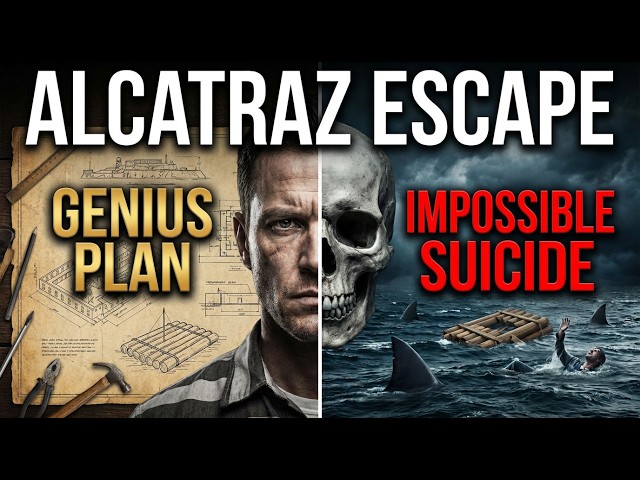
This is the complete story of the Alcatraz escape—the ingenious plan, the brutal night, and the evidence that suggests the impossible might have happened. We examine the papier-mâché heads, the raft made from fifty raincoats, the witness reports from Brazil, and the forensic analysis that keeps investigators divided to this day.
Some historical dialogue has been reconstructed from documented accounts and official records.
🔍 Sources & Further Reading:
→ FBI Vault - Alcatraz Escape Files (FOIA Records)
https://vault.fbi.gov/Alcatraz%20Escape
→ Escape from Alcatraz: The True Crime Classic (J. Campbell Bruce)
https://www.amazon.com/Escape-Alcatraz-Crime-Classic/dp/1580423000
→ U.S. Marshals Service - Alcatraz Case Files
https://www.usmarshals.gov/what-we-do/fugitive-investigations/most-wanted/alcatraz-escape
Show More Show Less View Video Transcript
0:01
The FBI closed the case.
0:08
There's a sound that concrete makes when a man carves his way through it with a spoon. A wet scraping metal on stone.
0:17
Patience measured in millimeters. Frank Lee Morris heard that sound for 9
0:22
months. Every night, every stroke of stolen silverware against the ventilation great at the back of cell
0:29
block B. The sound that would either set him free or bury him alive. This is not
0:35
a story about three men who escaped Alcatraz. Dozens tried that. This is
0:41
about three men who might have actually survived it. And 60 years later, the FBI
0:48
still doesn't know which side of the water they ended up on. Some of the dialogue and specific details in this
0:55
account have been reconstructed from documented witness statements, official
1:00
reports, and historical records. What follows is the most complete picture
1:07
available of what happened the night America's most secure prison became
1:12
America's greatest mystery. June 11th, 1962,
1:17
9:30 p.m. The final bed check before lights out. Officer Bill Long walked
1:24
cell block B like he'd done for 6 years. Counted heads through the bars. 36 3738.
1:32
Cell 138. Frank Morris, dark hair visible on the pillow, face turned
1:37
toward the wall. Cell 140, John Angland, same position, breathing steady. Cell
1:44
142. Clarence Anglin, John's younger brother, also asleep. Long marked his
1:50
clipboard, moved on. What he didn't know was that he just said good night to three lumps of soap, toilet paper, and
1:57
human hair. heads molded over weeks, painted with flesh tones stolen from the
2:03
prison barberh shop, positioned on pillows in the exact sleeping posture
2:08
each man used, the real Morris was already 30 ft above him inside the
2:14
ventilation shaft, crawling through darkness toward the roof. The Angland
2:20
brothers were right behind him. To understand what that moment meant, you need to understand what Alcatraz was
2:27
built to be. 1934, the height of America's war on organized
2:32
crime. Capone, machine gun Kelly, the Birdman, men who'd corrupted every
2:39
prison they touched, bribed guards, ran operations from cells, made a mockery of
2:45
federal authority. The Justice Department needed a solution. They found
2:50
an island, Alcatraz, 1 and a half miles off San Francisco, surrounded by water
2:57
so cold it stops your heart in 15 minutes. Currents so violent they've
3:03
pulled bodies out to sea and never given them back. The military had used it as a
3:08
fortress. Now it would become something worse. A prison designed not just to
3:13
hold men, but to break them. Toolproof steel bars, gun galleries on every tier,
3:20
one guard for every three inmates, cells 5 feet by 9 ft, a cot, a sink, a toilet,
3:27
nothing else. And the water, always the water, cold, loud, close enough to see
3:34
the lights of San Francisco. Freedom visible, untouchable. By 1962, Alcatraz
3:41
had held over 1,500 of the most dangerous men in America. 14 had tried
3:46
to escape. Seven were shot. Two drowned. Five were dragged back to their cells.
3:53
Zero made it off the island alive. The prison had a saying, "Break the rules
3:58
and you go to prison. Break the prison rules and you go to Alcatraz."
4:03
Frank Morris arrived in January 1960. transferred from another federal
4:09
facility after repeated escape attempts. IQ tested at 133, genius level, orphaned
4:17
at 11, arrested at 13. By 30, he'd escaped from institutions in Louisiana,
4:24
Florida, and Georgia. The warden's assessment was three words: high escape
4:30
risk. They put him in cell block B, the toughest block, where they kept the men
4:36
who couldn't be trusted anywhere else. Within 6 months, Morris had studied
4:41
every inch of his cell. The ventilation great at the back wall. Standard issue 6
4:47
in by 9 in bolted into concrete poured in 1934. That concrete was the key.
4:55
Alcatraz sat in the middle of salt water. For 28 years, moisture had seeped
5:01
into the walls. The concrete was deteriorating. Slowly, invisibly, Morris
5:07
pressed his finger against the great mounting. Felt it give. Just slightly. He'd found the floor. John and Clarence
5:14
Anglin arrived. In early 1961, brothers, bank robbers, transferred from Atlanta
5:21
because they'd tried to escape during a work detail. The brothers had a reputation not for violence, for
5:28
loyalty. They'd been inseparable since childhood. Arrested together, sentenced
5:34
together. Every escape attempt they'd ever made was together. The wardens separated them anyway. Different cells,
5:42
different work assignments. It didn't matter. By spring, they'd connected with Morris and a fourth man, Alan West,
5:50
another escape artist with a history of institutional defiance. The four of them
5:56
shared one thing. They believed Alcatraz was beatable. What they needed was time,
6:03
tools, and an obsessive attention to detail that bordered on madness. Morris
6:09
started with the spoon sharpened on the concrete floor of his cell until the edge could scrape. He worked the great
6:17
mounting a few minutes each night after the 10 p.m. count before the midnight
6:23
check. The sound was hidden by the prison itself, machinery, plumbing, the
6:29
wind off the bay that rattled cell bars and covered the wet scraping of metal on
6:34
stone. Within a month, he'd loosened the bolts enough to remove the grate entirely. Behind it was a utility
6:42
corridor, unguarded, unmonitored. A vertical shaft that ran the height of
6:48
the cell block to the roof. The hole was barely big enough for a human body.
6:53
Morris was 6 ft tall, 140 lb. He could fit. Barely, he told the Anglins. They
7:01
started digging, but there was a problem. The evening counts. 9:30 p.m.
7:06
and midnight. Guards walked the tier, looked into every cell. If a man wasn't
7:12
in his bunk, alarms went. They needed a way to be in two places at once. The
7:17
dummy heads were Clarence Angland's idea. He'd worked in the barber shop, had access to hair clippings, soap came
7:25
from the showers, toilet paper from the cells, paint from the maintenance shop
7:30
where West worked. They built the heads over weeks, molded features, painted
7:36
skin tones, attached real hair strand by strand. The result was grotesque up
7:42
close, but from 6 ft away through bars in dim light, they looked human enough.
7:48
By December 1961, all four men had removed their ventilation grates. All
7:55
four had access to the utility corridor. Now they needed a way off the island.
8:01
The water was the problem. 15 minutes in that bay and hypothermia shuts down your
8:07
body. Another five and you're unconscious. Currents pull anything that
8:12
floats toward the Golden Gate Bridge and out to the Pacific. You couldn't swim it. You needed a raft. Morris found the
8:20
material in the most unlikely place, the prison raincoat storage. Alcatraz issued
8:27
every inmate a rubberized raincoat for outdoor work details. Dozens of them,
8:33
all made of vulcanized fabric that when sealed properly was waterproof. If you
8:39
had enough of them, you could make a flotation device. They started stealing
8:44
raincoats, one every few weeks, slow enough that inventory discrepancies
8:50
looked like clerical errors. By May 1962, they had over 50. West's job in
8:57
maintenance gave him access to an unused area on the top floor, an old shower
9:03
room, locked, forgotten. They turned it into a workshop. At night, after the
9:09
counts, Morris and the Anglins would climb through their ventilation holes, up the utility shaft, and onto the roof
9:16
of cell block B. From there they accessed the shower room through a ventilator fan. Inside that room they
9:24
built the raft. Raincoats glued together with stolen contact cement seams
9:30
reinforced with steam pipe insulation. Paddles carved from wood scavenged from
9:37
the prison furniture shop. They tested the glue seals with water smuggled from
9:42
the cell sinks. Adjusted, rebuilt, tested again. By early June, the raft
9:48
was finished. 12 ft long, capable of holding three men if the seams didn't
9:54
fail. If the plan was set for June 11th, a Tuesday, chosen because the guard
10:01
rotation put the least experienced officer on the midnight check. 9:30 p.m.
10:07
Final count. Officer Long walked the tier, saw three heads on pillows, marked
10:13
his sheet. At 10:15 p.m., Morris removed his ventilation grate, slid into the
10:19
utility corridor, started climbing. John Angland followed. Then Clarence Alan
10:25
West was supposed to be right behind them. His great wouldn't budge. West had made a mistake weeks earlier. He'd
10:33
resemmented his great too well to avoid suspicion. Now he couldn't remove it. He
10:38
scraped, clawed, whispered through the wall to the others. Morris made a
10:44
decision. They couldn't wait. The midnight count was coming. They left West behind. Three men climbed the
10:51
shaft, reached the roof, crossed to the shower room, retrieved the raft and
10:56
paddles. At 11 p.m., they were on top of cell block B. Below them, the prison
11:02
yard, guard towers, search lights sweeping in patterns they'd memorized
11:07
for months. They waited for the gap. 30 seconds when the lights crossed away
11:12
from the north fence. When it came, they moved down a drain pipe across 50 yards
11:18
of open ground over a 15 ft barbed wire fence that should have been impossible
11:24
to climb silently, but they'd practiced the motion. Cloth wrapped around the
11:29
wire to muffle sound. Slow pressure. Patience. At 11:20 p.m., they reached
11:36
the northeast shore of the island. The water was black, 48°.
11:42
The current was running west toward the Golden Gate. They inflated the raft using a makeshift bellows they'd
11:49
constructed from accordion parts stolen from the music room. It took 8 minutes.
11:55
Every second they expected search lights, sirens, gunfire, nothing came.
12:02
At 11:30 p.m., Frank Lee Morris, John Angland, and Clarence Angland pushed the
12:08
raft into San Francisco Bay and started paddling north. The last anyone ever saw
12:14
of them for certain. Midnight count. Officer Lawrence Bartlett walked cell
12:19
block B, cell 138. Morris asleep, cell 140. John Angland asleep, cell 142.
12:28
Clarence Anglin asleep. Bartlett marked his sheet, moved on. At 1:30 a.m., a
12:35
different guard noticed something. The blanket in cell 138 seemed odd, too
12:40
flat. He opened the cell door, pulled back the blanket, stared at a head made of soap and human hair. The alarm
12:48
sounded at 1:45 a.m. Every guard in Alcatraz mobilized. Cell block B was
12:55
sealed. Account revealed three missing inmates. Then they found the ventilation
13:00
holes, the utility shaft, the rooftop access, the abandoned shower room with
13:07
contact cement still wet on the floor. By 2:30 a.m., the Coast Guard had boats
13:13
in the water. Search lights swept the bay. Police surrounded the San Francisco
13:18
waterfront. They found nothing. At dawn, a prison launch discovered something
13:24
floating near Angel Island. two paddles, fragments of raincoat material, a wallet
13:31
belonging to Clarence Anglin wrapped in plastic. The FBI took over the
13:36
investigation within hours. Agents interviewed every inmate, searched every
13:42
inch of the prison, reconstructed the escape route. What they found was
13:47
staggering. The workshop, the raft, the dummy heads, so realistic that even in
13:53
daylight, they looked disturbingly human. and the holes. Three ventilation
13:59
shafts carved wide enough for a man's body. Nine months of work, done in
14:04
silence, in darkness, with hand tools that shouldn't have been able to cut through concrete. The FBI's official
14:12
position came within a week. The Escapes had drowned. The bays temperature, the
14:18
currents, the distance to shore, all factors made survival impossible. But
14:24
they couldn't find the bodies. Days became weeks. Weeks became months.
14:29
Search teams dragged the bay. Checked every beach from the Golden Gate to the Pacific. Interviewed witnesses along the
14:37
coast. Nothing. The prison grapevine told a different story. Inmates reported
14:44
conversations they'd overheard. Morris talking about Brazil. The Anglins
14:49
mentioning a boat they'd arranged to meet them north of the bridge. Guards dismissed it as fantasy. Desperate men
14:57
tell themselves stories. But then reports started coming in. A farmer in
15:02
Marin County reported three men matching the descriptions stealing a car from his
15:08
property. The morning of June 12th. The car was found abandoned near a bus
15:13
station. A woman in Montana claimed two men matching the Angland brothers description had shown up at a family
15:20
gathering in 1975, stayed for hours, left before police
15:25
arrived. Photographs surfaced, blurry, taken in Brazil. Two men on a farm. The
15:33
faces were similar. The FBI's photo analysis division said the images were
15:39
inconclusive. The Angland family maintained their brothers had survived.
15:44
A sister claimed she'd received Christmas cards for years, unsigned,
15:49
postmarked from different countries. The US Marshall Service kept the case open.
15:55
Active, the men were still on the wanted list, still considered fugitives because
16:01
no one could prove they were dead. Alan West, the man left behind, was
16:06
questioned for days. He told investigators everything, the plan, the
16:12
tools, the workshop. He cooperated fully, hoping for leniency. He got
16:17
transferred to another prison. Spent the rest of his sentence answering the same question over and over. Do you think
16:24
they made it? West's answer never changed. If anyone could do it, Frank
16:30
could. West died in 1978. Heart attack. He never stopped believing
16:36
Morris had beaten the rock. The warden's report was blunt. The escape represented
16:41
a systemic failure, deteriorating infrastructure, insufficient
16:47
surveillance, complacency born from 28 years without a successful breakout.
16:53
Alcatraz closed permanently in March 1963, officially due to operational costs.
17:01
unofficially because three men had exposed the institution as fallible. The
17:07
island became a tourist attraction. The cells where Morris and the Anglins had
17:12
dug their way to freedom were preserved exactly as they'd left them. Ventilation
17:18
grates removed, dummy heads still on the pillows. Millions of visitors have stood
17:23
in those cells, looked at the holes, asked the same question the FBI couldn't
17:29
answer. How far did they get? For 50 years, the case stayed cold. Then in
17:35
2013, something arrived at the San Francisco Police Department. A letter
17:41
handwritten postmarked from inside the United States. The writer claimed to be
17:47
John Angland. The letter said Frank Morris had died in 2008. Clarence Anglin
17:53
had died in 2011. But the writer, claiming to be John, was
17:59
still alive, 83 years old, battling cancer. He offered a deal, medical
18:06
treatment, in exchange for surrender. The FBI analyzed the letter. Handwriting
18:12
experts said it could be authentic, could be a hoax. DNA testing was
18:17
proposed, but the writer refused. The letter contained details only someone
18:23
involved in the escape would know, but it also contained inconsistencies that
18:29
suggested fabrication. The Marshall's service investigated.
18:34
The trail went cold. No one ever came forward. No arrest was made. John
18:40
Angland, if he wrote that letter, took his location to the grave. The FBI
18:45
officially closed the case in 1979. Their conclusion remained unchanged. The
18:52
men had drowned. The bodies were lost to the Pacific, but the Marshall Service
18:57
never closed it. To this day, the case file remains open, active. The three men
19:04
are still listed as wanted fugitives because proving someone drowned without
19:09
a body is legally impossible. Over the decades, forensic experts have tried to
19:15
recreate the escape. Mythbusters built a raft using the same materials. They
19:21
launched it into the bay under similar conditions. The raft floated. The
19:26
currents carried it north. It reached land. The experiment proved survival was
19:32
possible. Not likely, but possible. Oceanographers analyzed the tides on
19:38
June 11th, 1962. The current that night ran northwest
19:43
toward the Marin headlands. If the men paddled with the current instead of against it, they could have reached
19:49
shore in under two hours. Cold, yes. Exhausted, absolutely, but alive. The
19:57
question was never could they survive the water. It was could they survive what came after. Three escaped convicts,
20:04
soaking wet, no money, no connections in the area, every law enforcement agency
20:11
in California hunting them. The odds were impossible unless they'd planned
20:16
for that, too. There are reports unverified, unconfirmed, of a car seen
20:21
near the Marin shore the morning of June 12th. Engine running, empty, reports of
20:28
a boat launching from a private dock around the same time, heading north. The
20:33
FBI investigated all of it, found nothing conclusive, but they also found
20:39
no bodies, no confirmed sightings, no arrests for men who supposedly drowned.
20:46
Morris and the Anglins left very little evidence of death. In 2015, a forensic
20:53
artist used age progression technology to create images of what the men would look like in their 80s. The images were
21:01
circulated, published, shared across databases. A few tips came in. None led
21:08
anywhere. The Angland family commissioned their own investigation, hired private detectives, forensic
21:15
analysts. They believed their brothers had made it to Brazil, started new lives. They pointed to family photos,
21:24
images of two men at a farm, the facial structure, the resemblance. The FBI said
21:30
the photos proved nothing. Faces change. Resemblance isn't evidence, but they
21:36
also couldn't disprove it. 60 years later, Alcatraz is a monument. The cells
21:43
are museum exhibits. Tourists take selfies in front of the dummy heads. But
21:48
in the Marshall Service headquarters, there's a file cabinet. Third drawer,
21:53
case number 87-451. Inside are three photographs, three
22:00
names, three dates of birth. Frank Lee Morris, born September 1st, 1926.
22:07
John William Anglin, born May 2nd, 1930. Clarence Anglin, born May 11th, 1931.
22:16
All three listed as wanted. All three still considered fugitives. Because the
22:22
United States government doesn't close cases on assumptions, and assuming three
22:27
men drowned without proof is exactly that, an assumption. This is what we
22:33
know for certain. Three men spent 9 months carving their way through concrete with stolen spoons. They built
22:40
a raft from raincoats. They fooled guards with fake heads. They climbed
22:46
into water cold enough to kill them in minutes. And then they disappeared. What
22:51
happened after that depends on which evidence you trust. The FBI says the currents were too strong, the water too
22:59
cold, the distance too far. The marshals say the lack of bodies means the case
23:05
stays open. The family says their brothers sent them signs for years.
23:10
Forensic experts say survival was possible if everything went perfectly.
23:16
And perfect is a strange word to use for men escaping the most secure prison in
23:22
America with a raft held together by glue and hope. Maybe they drowned 50 ft
23:28
from shore. Maybe they made it to Brazil and lived as farmers for 60 years. Maybe
23:35
Frank Morris died in 2008 and John Angland wrote that letter from a
23:40
hospital bed somewhere trying to make peace before the end. We'll never know
23:45
for certain because the greatest escapes aren't the ones where you get away. They
23:50
are the ones where no one can prove you didn't. Morris and the Anglins didn't just escape Alcatraz. They escaped
23:58
certainty itself. They turned a prison built on absolutes into a question mark
24:04
that's lasted six decades. Some walls are made of concrete. Others are made of
24:10
doubt. The Anglins understood which one keeps men imprisoned longer. So here's
24:16
the question you have to answer. Not what you hope happened. Not what the FBI
24:22
concluded, but what the evidence actually proves. Did three men drown in
24:27
San Francisco Bay on June 11th, 1962? Or did they pull off the only successful
24:34
escape in Alcatra's history and vanish into a life the law could never touch?
24:40
Comment one word, drowned or survived. If you want to know how institutions
24:46
decide what gets remembered and what gets erased, we've covered stories that
24:51
make this one look simple. Subscribe, hit the bell. We go deeper every week.
24:57
They didn't break out of Alcatraz to become famous. They did it to become ghosts. 60 years later, they succeeded.
25:06
The question everyone asks is how three men carved holes through concrete with
25:11
kitchen utensils for 9 months without anyone noticing. The answer is simpler
25:16
than you'd think. Alcatraz wasn't beaten by genius. It was beaten by routine.
25:23
Officer Bill Long walked cell block B the same way every night. Same route,
25:29
same timing, same quick glance through each set of bars. He had 38 cells to
25:35
check in 12 minutes. That's 18 seconds per cell. 18 seconds to look at a man
25:41
lying in a bunk 6 ft away in dim light. Morris understood something the prison
25:47
architects didn't. Human beings aren't surveillance cameras. They see what they
25:53
expect to see. A guard expects to see an inmate in a bunk. So that's what he
25:58
sees. A lump under a blanket, hair on a pillow, the shape of a body. The dummy
26:05
heads didn't have to be perfect. They just had to be good enough for 18 seconds, and they were. But the heads
26:12
were only half the system. The real innovation was the work schedule. Morris
26:18
tracked the guard rotations for 6 months before he moved the first spoonful of
26:23
concrete. He knew which officers walked fast, which ones used flashlights, which
26:30
ones actually counted heads versus which ones just marked their clipboards. He
26:35
knew that between the 9:30 p.m. count and the midnight check, cell block B was
26:41
effectively unmonitored for 2 and 1/2 hours, that was his window. Every night
26:47
after the first count cleared, Morris would stuff his dummy into the bunk, remove the ventilation grate he'd been
26:54
loosening for weeks, and slip into the utility corridor behind his cell. The
27:00
corridor was 3 ft wide, pitch black, filled with pipes that rattled and
27:06
dripped. It ran the full height of the cell block. From basement to roof,
27:12
Morris would climb 30 ft straight up using pipe brackets as hand holds. At
27:18
the top was the old shower room, abandoned since the 1940s when the prison stopped using that section. The
27:26
door had been sealed, but the ventilation shaft was still accessible.
27:31
Morris squeezed through, dropped into the shower room, turned on a stolen flashlight, and got to work. The Angland
27:39
brothers joined him by March 1962. Same routine, same route. Three men in a
27:46
forgotten room on top of a maximum security prison, building a raft out of
27:51
stolen raincoats while guards walked beneath them, completely unaware. Alan
27:56
West was there, too, until the night he wasn't. West had been part of the plan
28:02
from the beginning. He'd worked maintenance, had access to tools, materials, storage areas the others
28:09
couldn't reach. He'd stolen the contact cement, the wire, the wooden paddles.
28:16
But West had a problem. Paranoia. He worried constantly that someone would
28:21
notice his loosened grate, so he'd resment it before every inspection, then
28:26
chip it out again when he needed access. In early June, he cemented it too well.
28:32
The night of the escape, West scraped at that grate for 40 minutes, used a metal
28:38
spoon he'd sharpened for months, clawed at the concrete with his fingernails. It
28:43
wouldn't budge. He could hear the others in the utility shaft above him, moving,
28:48
climbing, leaving. John Angland whispered down through the ventilation system, asked if West was coming. West
28:57
said he needed five more minutes. Morris made the call. They couldn't wait. The
29:02
midnight count was 90 minutes away. If they weren't in the water by 11 p.m., the current would shift. The window
29:09
would close. West heard them climb away. Heard the roof access open and close.
29:15
Then silence. He kept digging faster now. Desperate, the spoon broke. He used
29:21
the handle, then his hands. By the time he got the great loose, it was nearly midnight. Too late to run. Too late to
29:29
join them. He put his dummy in the bunk, climbed into bed next to it, waited for
29:34
the count. When the alarm went off at 1:45 a.m., West was still in his cell.
29:40
The only member of the escape team the prison could actually punish. The FBI
29:46
interrogated him for 3 days straight, wanted every detail, every conversation,
29:52
every piece of the plan. West told them everything. He had nothing left to lose.
29:58
He described the workshop, the raft construction, the paddle design, the
30:04
route they'd planned to take once they hit the water. North toward Angel
30:09
Island, then east to the Marin shore, a two-mile paddle with the current. If the
30:16
raft held, if the cold didn't stop their hearts, if the Coast Guard didn't spot
30:21
them. West told the FBI he believed they'd made it. He'd seen Morris plan
30:27
escapes before. The man thought 10 steps ahead. Always had a contingency. The
30:33
agents asked what contingency could possibly account for hypothermia and drowning. West's answer was recorded in
30:41
the official report. Frank didn't plan to swim. He planned to float. There's a
30:47
difference. What he meant was this. Morris had studied the bay currents for months, talked to inmates who'd worked
30:54
on the dock, fishermen, coast guard veterans doing time. He knew the current
31:00
ran northwest on certain tides. He knew that if you didn't fight the water, it
31:05
would carry you. Most drowning victims in the bay die because they panic, swim
31:11
against the current, exhaust themselves in minutes. Morris wasn't going to
31:16
fight. He was going to let the Pacific Ocean deliver him to shore. That's the
31:21
theory. Anyway, the FBI's counter theory was simple. The water was 48°.
31:28
The men were wearing prison clothes, no wets suits, no thermal protection.
31:34
Hypothermia shuts down cognitive function in 10 to 15 minutes. At that temperature, you stop thinking clearly,
31:41
stop coordinating movement. Your body prioritizes keeping your core warm.
31:48
Everything else shuts down. Even if the raft stayed intact, even if they paddled
31:53
perfectly, the cold would have incapacitated them before they reached land. The bureau's official statement
32:01
called survival highly improbable. But highly improbable isn't impossible. And
32:07
that word impossible kept appearing in the case file next to things the men had
32:13
already done. Impossible to carve through concrete with spoons. They did
32:18
it. Impossible to build a functional raft in secret. They did it. Impossible
32:24
to fool experienced guards with fake heads. They did it for months. At a
32:29
certain point, investigators had to consider that these men had a pattern of making impossible things happen. The
32:37
search operation lasted two weeks. Coast Guard cutters dragged the bay. Police
32:43
helicopters swept the coastline. Divers checked underwater caves and rock
32:48
formations where bodies might have gotten trapped. They found pieces of the raft, paddle fragments, a wallet, but no
32:57
bodies. The official explanation was that the currents had pulled the bodies out to sea, past the Golden Gate into
33:05
the Pacific, where they'd sink or be consumed by marine life. It's plausible.
33:11
It happens. But then the reports started coming in. June 12th, less than 24 hours
33:18
after the escape, a man in Marin County reported his car stolen, a blue
33:24
Chevrolet taken from his property around dawn. The car was found 3 days later,
33:31
abandoned near a bus station in Stockton, wiped clean. No prince. The
33:36
FBI investigated. The timing worked. Three men could have made it to that
33:42
farm by sunrise if they'd reached shore around midnight, but there was no proof
33:47
it was them. June 15th, a gas station attendant in Oregon reported three men
33:53
matching the description. Bought fuel, paid cash, drove north. The lead went
33:59
nowhere. July 1962, a woman in Montana told police two men
34:05
had shown up at a family funeral, claimed to be distant relatives, stayed
34:11
in the back, left before anyone could talk to them. She said one of them looked exactly like John Anglin. The FBI
34:18
sent agents, interviewed witnesses. No one could confirm the identification.
34:24
The sightings continued for years, different states, different countries.
34:30
Brazil, Mexico, Argentina. Some were obviously false, attention seekers,
34:36
people who wanted to be part of the story, but others were harder to dismiss. In 1975, a photograph surfaced
34:45
taken in Brazil. Two men standing next to a farm fence, middle-aged, weathered.
34:52
The facial structure was similar to the Angland brothers. The family swore it was them. The FBI's photo analysis unit
35:00
said the image quality was too poor to make a definitive match. Facial recognition technology in the 70s was
35:08
primitive, the angles were wrong, the lighting inconclusive,
35:13
but they also couldn't rule it out. That's what made the case so maddening for investigators.
35:20
Every piece of evidence had two interpretations. The raft pieces in the water, proof they drowned, or proof they
35:28
ditched the raft after reaching shore, the lack of bodies, proof the ocean
35:33
claimed them, or proof they survived and disappeared, the sightings, mistaken
35:39
identity, or actual fugitives staying one step ahead. In 1979, the FBI
35:46
officially closed the case. Their conclusion, the men had drowned. The
35:52
evidence of survival was circumstantial at best, but the US Marshall Service
35:58
didn't close it. Marshalss don't close fugitive cases based on probability.
36:03
They close them based on proof. Death certificates, confirmed remains, legal
36:10
declarations. None of those existed for Morris or the Anglins, so the case
36:16
stayed open, active. The photograph stayed in the database. The wanted
36:21
posters stayed in circulation. By 2000, most law enforcement assumed the men
36:28
were dead. Even if they'd survived the escape, they'd be in their 70s, old,
36:34
probably using real names by then. But then 2013 happened. The letter arrived
36:41
at the San Francisco Police Department in January. Handwritten neat addressed
36:47
to the authorities. The writer identified himself as John Angland. He
36:53
claimed Frank Morris had died in 2008. Clarence Anglin had died in 2011.
37:00
Cancer, both of them. But John, if it was really him, was still alive, 83
37:06
years old, sick, willing to turn himself in exchange for medical treatment. The
37:12
letter included details, specific, personal, things only someone involved
37:17
in the escape would know. The SFPD forwarded it to the FBI. Handwriting
37:23
analysts compared it to samples from John Angland's prison records. The
37:28
analysis came back inconclusive. The handwriting had similarities, but 50
37:34
years had passed. People's handwriting changes with age, with illness. They
37:40
couldn't confirm it, couldn't dismiss it. The FBI reached out through intermediaries,
37:46
offered to negotiate, no response. The Marshall's service investigated, tracked
37:53
the postmark, interviewed potential contacts, nothing. Whoever wrote that
37:58
letter disappeared back into silence. And here's the thing that keeps investigators awake at night. If the
38:05
letter was fake, if some stranger was playing a prank, why include the detail
38:11
about Morris and Clarence dying? A hoaxer would claim all three were alive.
38:17
Make it dramatic. Claim they'd been living in South America for decades, but
38:22
this letter said two were dead, only John remained, that specificity felt
38:28
real, or it was written by someone smart enough to know that specificity sells
38:33
authenticity. Either way, the case file got thicker. The mystery deepened. Pay attention to
38:40
what happens next, because this is where the story stops being about whether they
38:45
survived and starts being about why we need to believe they did. There's a
38:50
reason Alcatraz became a myth instead of just a closed prison. It's not because
38:56
three men escaped. It's because nobody could prove they didn't make it. And
39:01
that difference between failure and uncertainty is what transforms a story
39:07
into a legend. The morning of June 12th, 1962, Warden Olen Blackwell stood on the
39:15
northeast shore of Alcatraz Island and stared at the water. Coast Guard boats
39:21
circled. Helicopters hammered overhead. Divers were suiting up. Blackwell had
39:27
run this prison for 3 years. Never lost a man. The Rock's reputation was built
39:33
on one promise. Nobody leaves. Now that promise was drowning in San Francisco
39:39
Bay along with his career. A correctional officer approached, handed
39:44
him something wrapped in plastic. Clarence Anglin's wallet found floating
39:49
near Angel Island, 2 mi north of Alcatraz, exactly where the currents
39:55
would carry something or someone who entered the water around 11 p.m. Inside
40:01
the wallet, photos, letters, personal items carefully sealed in watertight
40:07
plastic. Blackwell stared at it, asked the question that would define the
40:12
investigation. If they drowned, why protect the wallet? Dead men don't waterproof their personal
40:19
effects. Dead men don't think about what happens after, but men planning to survive do. The FBI agents standing next
40:28
to Blackwell had a different interpretation. The wallet was staged, left deliberately to send a message,
40:36
make authorities think they'd survived by time. Classic misdirection.
40:42
Except misdirection requires someone alive to benefit from the confusion. The
40:47
search teams found more debris over the next 72 hours. Paddle fragments washed
40:54
up on the marine shore. Pieces of rubberized raincoat material tangled in
40:59
rocks near the Golden Gate and a life vest, homemade, constructed from the
41:05
same materials as the raft. The vest was inflated, still functional, found
41:11
intact. If the men had drowned, that vest should have been on one of their bodies, still attached, still keeping
41:17
them afloat enough for recovery. Instead, it was empty, drifting. The
41:23
FBI's explanation, the men had tried to use it, failed, succumbed to
41:28
hypothermia, and the vest had separated from the body during decomposition.
41:34
plausible, but it required the body to decompose in less than 48 hours in water
41:40
cold enough to significantly slow bacterial breakdown. Forensic oceanographers noted the inconsistency,
41:48
but couldn't offer an alternative explanation that fit the evidence better. By June 15th, the active search
41:56
was scaled back. By July, it was officially suspended. No bodies, no
42:03
witnesses, no confirmed sightings, just debris that told two contradictory
42:09
stories depending on how you interpreted it. Inside Alcatraz, the investigation
42:15
took a different turn. The workshop in the old shower room was dismantled.
42:21
Every piece cataloged, photographed, analyzed. What they found was staggering
42:28
in its complexity. The raft was nearly complete. 12 ft long, 3 ft wide, made
42:35
from over 50 raincoats glued together with contact cement and sealed with heat from an improvised steam source. Pipes
42:43
they'd rigged to blow hot air across the seams. The paddles were carved from plywood stolen from the furniture
42:49
workshop, shaped, sanded, balanced for actual use. They'd built a bellows from
42:56
accordion parts to inflate the raft. tested it, refined it. They'd even
43:01
created flotation vests. Individual, one for each man. This wasn't desperation.
43:08
This was engineering. One FBI analyst wrote in his report. The level of
43:14
planning and execution suggests these men treated the escape as a full-time
43:19
job for 9 months. The likelihood they failed to plan for survival after
43:25
reaching the water seems inconsistent with the meticulous preparation evident
43:31
in every other phase. In other words, men this careful don't drown by
43:37
accident. But men this wanted don't just walk free either. The FBI began tracking
43:43
the families. The Angland brothers relatives in Florida. Morris's known
43:48
associates from previous incarcerations. Phone lines were tapped. Mail was
43:54
monitored. Agents showed up at family gatherings unannounced. Asked questions,
44:00
watched reactions. The Angland family said nothing, gave nothing, mourned in
44:06
private, and refused to cooperate, which was either grief or loyalty. Then in
44:12
1963, something strange happened. The Angland family held a funeral. No bodies, no
44:19
death certificates, just a ceremony for both brothers. The FBI attended, watched
44:25
from a distance, photographed everyone who showed up. No suspicious attendees,
44:31
no unknown men lurking in the back, just a family burying two empty caskets. When
44:37
agents approached the mother, Marie Anglin, she said six words, "My boys are
44:42
with God now." They asked if that meant she believed they'd drowned. She didn't
44:47
answer, turned away, ended the conversation. That moment, that refusal
44:53
to confirm or deny, became the template for how the family handled inquiries for
44:58
the next 50 years. They never said the brothers were alive. They never said
45:03
they were dead. They existed in the space between. By 1965, the FBI's active
45:10
pursuit had cooled. Agents still followed leads, still investigated
45:16
sightings, but the case was no longer a priority. Alcatraz had closed. The
45:22
facility was empty. The escape was old news until the photographs started
45:28
appearing. 1975. A contact in Brazil sent the FBI a
45:34
photograph. Two men, middle-aged, standing on a farm. The informant
45:40
claimed it was the Angland brothers. FBI photo analysts examined the image,
45:46
measured facial proportions, compared bone structure to prison photographs
45:52
taken 13 years earlier. Their conclusion possible but not definitive. The image
45:58
quality was insufficient for positive identification. The faces were similar.
46:04
The age progression was consistent, but similar isn't proof. A second photograph
46:10
surfaced in 1992. This one clearer. Taken at a family
46:16
gathering. Two men in the background avoiding the camera partially obscured.
46:22
The Angland family refused to comment. A private forensic team hired by a
46:28
documentary crew in 2009 analyzed both photographs using modern facial
46:34
recognition technology. Their conclusion 70% probability the men in the photos
46:41
were John and Clarence Anglin. 70% high enough to be compelling. Low enough to
46:48
be deniable. The Marshall Service kept the case active. kept the photos in the
46:54
database, kept checking because here's what changed between 1962 and 2009.
47:02
Technology, DNA testing, facial recognition, digital forensics, tools
47:09
that didn't exist when the escape happened. If the men were alive, if they'd left any biological trace
47:15
anywhere, modern science could find it. So, the marshals started re-examining
47:21
old evidence. the wallet, the life vest, the raft fragments, looking for DNA,
47:28
fingerprints, anything that could be run through modern databases. They found
47:33
traces, degraded, partial, not enough for a definitive match, but enough to
47:39
keep hope alive that a break might come. Then 2013, the letter, it arrived at the
47:46
San Francisco Police Department on a Tuesday morning. Plain envelope, handwritten address, no return
47:53
information. Inside three pages, neat handwriting, dated January 2013. The
48:02
letter opened with a sentence that stopped investigators cold. My name is
48:07
John Anglin. I escaped from Alcatraz in June of 1962 with my brother Clarence
48:13
and Frank Morris. it continued. I am 83 years old and in bad shape. I have
48:20
cancer. Yes, we all made it that night, but barely. Frank passed away in October
48:26
2008. His body is buried near a church in the town where he lived. Clarence
48:31
died in 2011. I'm the only one left. The letter offered a deal. Medical treatment
48:39
in exchange for surrender. One year in prison, then freedom. It ended with,
48:45
"This is no joke." The SFPD forwarded it immediately to the FBI and Marshall
48:51
Service. Analysts tore it apart. Handwriting, phrasing, details. The
48:57
handwriting was compared to known samples from John Angland's prison records. The comparison showed
49:04
similarities in letter formation, spacing, and pressure patterns. But 50
49:09
years had passed. handwriting changes with age, with illness, with
49:14
neurological decline. The conclusion consistent with John Anglin, but not
49:20
definitively provable. The details in the letter were examined. Some were
49:25
accurate. The escape route, the timing, the raft construction, but those details
49:32
had been published in books, documentaries, websites. Anyone could have researched them. The FBI reached
49:39
out through public channels, offered to negotiate, set up a secure line. No
49:45
response. The marshals investigated the postmark, Northern California, but the
49:51
location was vague enough to cover hundreds of square miles. They checked hospitals, cancer treatment centers,
49:59
looking for an 83year-old man matching John Angland's descriptions, seeking
50:05
care. Nothing. Within 6 months, the trail went cold. The letter became
50:11
another piece of inconclusive evidence in a file full of them. But it did something else. It reignited public
50:19
fascination. News outlets covered the story. Podcasts dissected the letter.
50:25
Amateur investigators launched their own searches. And the Angland family, after
50:31
50 years of silence, released a statement. It said, "We've always
50:36
believed our family members survived. This letter supports what we've known in
50:42
our hearts for decades. They didn't confirm it was John's handwriting. They
50:47
didn't offer new evidence. They just restated their belief." Because belief
50:52
doesn't require proof. It requires faith. And for some families, faith is
50:58
the only thing left when certainty is impossible. Stop. Rewind that in your
51:04
mind because it matters. Three men escaped one of the most secure prisons
51:09
in American history. They vanished into water cold enough to kill them in minutes. No bodies were ever found. For
51:17
60 years, the evidence has been a raw shest. You see what you bring to it. If
51:24
you believe institutions don't make mistakes, you see a failed escape and three drowned convicts whose bodies were
51:31
claimed by the Pacific. If you believe human will can overcome impossible odds,
51:37
you see three men who outsmarted the system and lived free under new names until old age finally caught them. Both
51:45
interpretations fit the evidence. Both require assumptions. The FBI made their
51:51
assumption in 1979. Case closed. Men drowned. The marshals
51:58
made a different one. Case open. Men unaccounted for. The family made theirs.
52:04
Boys survived. Living proof isn't required when you've already decided to
52:10
believe. And maybe that's the real story here. Not what happened to Morris and
52:15
the Anglins, but what happens when a mystery becomes more valuable than the truth. Alcatraz needed the escape to
52:23
fail. It validated the prison's reputation, confirmed the island was
52:28
unbeatable. The family needed the escape to succeed. It meant their loved ones
52:34
chose freedom over surrender, died free, if they died at all. The public needed
52:40
it to remain unsolved because mysteries are more interesting than conclusions.
52:46
Everyone got what they needed except the truth which is still out there somewhere
52:52
between the cold water of San Francisco Bay and a farm in Brazil. Between a
52:57
grave near a church and a hospital room where an 83year-old man may or may not have written a
53:04
letter. The evidence exists. the raft pieces, the photographs, the wallet, the
53:11
letter. What doesn't exist is consensus on what it means. And after 60 years,
53:17
that ambiguity has become the answer. They escaped Alcatraz. That's certain.
53:23
Everything after is interpretation. In 2015, the US Marshall Service did
53:30
something unusual. They commissioned age progression images of Frank Morris and
53:36
the Angland brothers, computerenerated portraits showing what the men would
53:41
look like in their 80s. The images were released to the public, published in
53:47
news outlets, shared across law enforcement databases worldwide. Morris
53:52
would be 89, gaunt, white-haired, deep lines carved into weathered skin. John
53:59
Angland would be 85. similar features to his younger self, but softened by age.
54:05
Clarence would be 84. The youngest, still recognizable if you knew what to
54:10
look for. The Marshalss asked a simple question. Has anyone seen these men?
54:16
Tips came in. Dozens of them. A man in Alabama who looked like Morris.
54:21
Someone's neighbor in Arizona who matched John Angland's build. a patient
54:26
in a Florida nursing home with Clarence's eyes. Every lead was
54:32
investigated. Every tip followed to its conclusion. None of them were the escapes. But the
54:39
fact that the marshals commissioned those images says something important.
54:44
They weren't just keeping the case open as a formality. They genuinely believed
54:49
there was a chance, however small, that these men were still alive or had been
54:55
alive recently enough that someone might remember them. Think about that. 53
55:01
years after the escape, federal agents were still actively searching, not
55:06
because they had new evidence, because they didn't have closure. And in law enforcement, cases without closure are
55:14
cases that haunt you. The same year those images were released, a retired
55:20
FBI agent named Art Rodrik gave an interview, Rodri had worked the Alcatraz
55:26
case in the '90s, spent years chasing leads, examining photos, interviewing
55:32
family members. He was asked point blank, did they survive? His answer,
55:38
part of me wants to believe they made it. The other part knows how cold that water was. That's the duality, the push
55:46
and pull. Even the investigators can't commit to one side because committing
55:51
requires ignoring half the evidence. In 2016, a team of Dutch scientists used modern
55:59
tidal modeling software to recreate the exact conditions of San Francisco Bay on
56:06
the night of June 11th, 1962. They input the water temperature, the
56:12
current speed, the wind patterns, the tidal flow. Then they simulated the raft
56:18
launch, calculated drift patterns projected where a 12 ft rubber raft
56:24
carrying three men would end up if it entered the water at 11 p.m. near
56:29
Alcatraz's northeast shore. The simulation ran hundreds of scenarios,
56:35
different paddling speeds, different wind resistance, different points of departure. In 73% of the simulations,
56:44
the raft reached landfall, either at Angel Island or the Marin Headlands. In
56:51
27%, the raft was pulled out through the Golden Gate into the Pacific. Those
56:58
numbers stunned investigators because the official FBI conclusion for
57:03
decades had been that survival was nearly impossible. But the modeling
57:09
suggested it was actually more likely than not. The scientists added a
57:14
critical note. The simulations assumed the raft remained intact and the men
57:20
maintained paddling effort despite hypothermia. Both assumptions were significant, but
57:27
the data was clear. If the raft held together, and the evidence suggests it
57:33
was well constructed, the odds of reaching shore were in their favor. The
57:38
FBI never formally responded to the study. The case had been closed for 37
57:44
years by that point. Reopening it based on computer modeling wasn't going to happen. But the marshalss noted the
57:52
findings, added them to the file because their case was still open. Here's what
57:58
that means in practical terms. If John Angland walked into a police station
58:04
tomorrow, produced identification and said, "I'm the man from Alcatraz, he
58:09
would be arrested immediately. The warrant is still active. The charge is
58:15
still valid. Escape from federal custody. 62 years old, but legally
58:20
enforcable. That's why the 2013 letter was so fascinating. If it really was
58:27
John Angland he was offering to surrender, trading freedom for medical care. The fact that no one came forward
58:35
suggests one of three things. The letter was a hoax. Someone playing with the
58:40
mystery for attention or amusement. or John Angland wrote it but changed his
58:45
mind, decided dying free was better than dying in custody. Or he wrote it, never
58:52
intended to follow through, and just wanted people to know he'd made it. One last message, proof of survival without
59:00
the consequences of confession. All three explanations fit the evidence. All
59:06
three are plausible. None can be proven. And that's where this story lies. In the
59:13
space between proof and belief, the Angland family has never wavered. They
59:18
maintain their brothers survived, lived long lives, died as free men. In 2020, a
59:25
nephew named David Whidner, went public with a claim. He said his grandmother, the brother's mother, had received a
59:32
Christmas card every year for decades. No return address, no signature, just a
59:38
card postmarked from different locations. Brazil, Seattle, Montana. The
59:44
family kept the cards. Whidner offered to provide them to investigators for
59:49
analysis. The marshals examined them, looked for fingerprints, DNA,
59:56
handwriting samples. The results were never publicly released, which means either they found nothing conclusive or
1:00:03
they found something they are not ready to disclose. Both possibilities keep the
1:00:08
mystery alive. Let that sink in because we're just getting started with what
1:00:14
this case really means. There's a question beneath the question here. It's
1:00:19
not just did they survive, it's why does it matter 60 years later, three men
1:00:24
escaped prison. That's a crime. If they drowned, justice was served by the
1:00:30
ocean. If they survived, they lived as fugitives and likely died of old age by
1:00:36
now. Either way, they are beyond the reach of the law. So, why do the marshals keep the case open? Why do
1:00:44
investigators still analyze photos and letters? Why does the public still care?
1:00:51
Because the Alcatraz escape isn't about three criminals. It's about the limits
1:00:56
of control. Alcatraz was built to be unbeatable, the ultimate expression of
1:01:02
institutional power, a prison that couldn't be escaped, a system that
1:01:07
couldn't be defied. For 29 years, it held that reputation. Then three men
1:01:14
with spoons and stolen raincoats made it a liar. And the fact that no one can
1:01:19
prove they failed is a permanent crack in the foundation of that authority.
1:01:24
Every unsolved escape is a question mark, a reminder that systems, no matter
1:01:30
how secure, have flaws, and human determination can find them. That's what
1:01:36
keeps the case alive, not evidence. Meaning, the evidence stopped producing
1:01:42
answers decades ago. What's left is interpretation. And interpretation is shaped by what you
1:01:49
need the story to be. The FBI needed it to be a failure. Proof that rebellion
1:01:55
ends in death. Order restored. The family needed it to be a triumph. Proof
1:02:01
that love and loyalty are stronger than walls. The public needed it to be a
1:02:06
mystery. Proof that not everything can be known or controlled. All three groups
1:02:11
got their version because the evidence supports all three. And that ambiguity,
1:02:17
frustrating as it is for investigators, is exactly what makes the story
1:02:22
immortal. Certainty ends conversations. Mystery sustains them. For 62 years,
1:02:30
people have argued about what happened in the water that night. The debates are no closer to resolution now than they
1:02:37
were in 1962. But the debates continue because the story serves a function that transcends
1:02:45
facts. It represents something larger. The possibility that impossible things
1:02:51
can happen. That institutions can be beaten. That ordinary men with enough
1:02:57
patience and planning can achieve the extraordinary. Whether Morris and the Anglins drowned or survived is almost
1:03:05
irrelevant at this point. What matters is that they made the attempt. And no
1:03:10
one can definitively say they failed. That uncertainty is their legacy. So,
1:03:16
here's the evidence. All of it. Stripped of interpretation. Three men carved
1:03:21
holes through concrete using improvised tools over 9 months. They built a
1:03:27
functional raft from stolen materials. They fooled guards with decoy heads.
1:03:33
They entered water cold enough to induce hypothermia in minutes. They were never
1:03:38
seen alive again by confirmed witnesses. Pieces of their raft were found intact.
1:03:45
A life vest was recovered inflated. A wallet was found waterproofed. No bodies
1:03:51
were ever recovered. Photographs surfaced showing men who resembled the escapes in locations consistent with
1:03:59
survival. Family members claimed contact. A letter appeared claiming one
1:04:04
man survived into old age. None of it is conclusive. All of it is documented.
1:04:11
Modern tidal modeling suggests survival was more likely than original estimates
1:04:17
indicated. Forensic analysis of photographs shows possible but not
1:04:23
definitive matches. The FBI closed the case in 1979,
1:04:28
declaring the men drowned. The US Marshall Service keeps the case open
1:04:35
with active warrants. The family maintains the brothers survived. All
1:04:40
three positions are based on the same evidence interpreted through different priorities. No new evidence has emerged
1:04:48
in over a decade that changes the calculation. Which means the question
1:04:53
isn't what happened. It's what you choose to believe happened. And that choice says more about you than it does
1:05:00
about the evidence. If you believe systems are ultimately unbeatable, you
1:05:06
believe they drowned. If you believe human will can overcome impossible odds,
1:05:11
you believe they survived. If you believe mysteries should remain mysteries, you're comfortable not
1:05:18
knowing. There's no wrong answer because there's no provable answer. Frank Morris
1:05:24
would be 98 years old now, almost certainly dead. John Angland would be
1:05:29
94. Same likelihood. Clarence Anglin would be 93, also beyond reasonable life
1:05:36
expectancy. If they survived the escape, they're gone now anyway. Time claimed
1:05:42
what the water might not have. The case will likely never be solved. short of a
1:05:48
deathbed confession with verifiable details or remains discovered with
1:05:53
dental records intact. There's nothing left to find. The evidence has been
1:05:58
examined. The witnesses are dead. The trail is 60 years cold. What remains is
1:06:05
the story and the question, did three men beat the rock or did the rock win
1:06:10
like it always did? Your answer reveals what you need to believe about power,
1:06:15
control, and the possibility of freedom. Some walls are made of concrete. Others
1:06:21
are made of doubt. The Anglins and Morris understood which one keeps people imprisoned longer. They escaped the
1:06:28
concrete and then they weaponized the doubt. For 62 years, investigators have
1:06:35
searched for proof. Bodies, confessions, DNA, anything definitive. And for 62
1:06:42
years, the bay has kept its secrets. Maybe that's the answer. Maybe the water
1:06:48
took them and they're resting somewhere on the ocean floor where currents don't reach. Or maybe they are buried in a
1:06:55
churchyard near a town whose name we'll never know. Headstones marked with
1:07:00
different names. Lives lived in quiet obscurity. Both versions honor what they
1:07:06
accomplished. Both acknowledge the risk they took because whether they made it
1:07:12
10 ft or 10,000 mi, they did something no one else managed. They made Alcatraz
1:07:19
uncertain. And uncertainty is the only escape that lasts forever. So here's
1:07:25
your question. Not what the evidence proves, not what investigators
1:07:30
concluded, but what you believe when you strip away everything except the human
1:07:35
element. Three men crawled into the coldest water in America with nothing but a raft held together by glue and
1:07:43
desperation. Dead or alive? Comment one word. Drowned
1:07:48
or survived. If you want to see how ordinary people execute the impossible
1:07:54
when institutions say it can't be done, we've documented stories that make this
1:07:59
look simple. Subscribe. Hit the bell. We go deeper every week. They didn't just
1:08:06
escape Alcatraz, they escaped certainty itself. 62 years later, we're still
1:08:13
arguing about it. And that might be the greatest escape of