Up next in 10

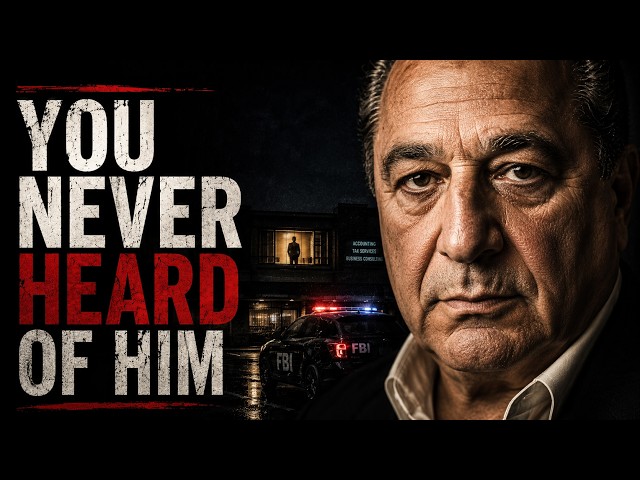
For nearly three decades, one man quietly built the most profitable faction in the Lucchese crime family.
Operating from an ordinary office above a strip mall in suburban New Jersey, Anthony Accetturo created a criminal empire that generated millions through gambling, loansharking, cargo theft, labor racketeering, and extortion.
Federal investigators spent years wiretapping his organization, collecting evidence, and preparing what would become one of the largest organized crime prosecutions in American history. Yet after the longest criminal trial in New Jersey history, Accetturo walked free.
This documentary follows the rise of the Lucchese family's powerful New Jersey faction, the men who controlled it, the FBI investigation that nearly destroyed it, and the internal war that ultimately brought the empire down.
From hidden headquarters and secret meetings to racketeering trials, informants, betrayals, and federal surveillance, this is the story of one of the most successful Mafia operations ever built outside New York City.
#Mafia #Lucchese #TrueCrime #OrganizedCrime #MobHistory #AnthonyAccetturo #NewJersey #Documentary
TIMESTAMPS
00:00 — The Man on the Witness Stand
02:15 — Who Was Anthony Accetturo?
04:01 — The Boss Who Ran New Jersey from a Strip Mall
06:24 — Building the Most Profitable Lucchese Crew
07:46 — The Secret Headquarters in Livingston
08:28 — The Taccetta Brothers and the Inner Circle
Show More Show Less View Video Transcript
0:00
Lake Success, New York. Nineteen ninety-four. A federal courtroom on Long Island.
0:05
The defendant is not famous. His name has appeared in newspapers, but rarely on front pages.
0:12
He is sixty-five years old. He is wearing a suit that does not fit him well.
0:17
He has spent the last three years in protective custody.
0:21
He stands when the prosecutor calls his name. He raises his right hand.
0:25
And he begins to dismantle, from memory, the structure he spent four decades building.
0:32
The Lucchese crime family had five boroughs of New York and a corridor of New Jersey that
0:37
produced more revenue, year over year, than any other faction in the Five Families.
0:43
The man taking the oath had run that corridor for almost twenty years.
0:47
He had survived the longest criminal trial in New Jersey history.
0:51
He had walked out of a Newark courtroom in nineteen eighty-eight acquitted on all counts.
0:57
What follows is not the story of a famous gangster.
1:00
It is the story of the man no one was supposed to remember — the one who ran the most
1:06
profitable arm of an American crime family from a strip mall office in suburban New Jersey,
1:11
and whose name, even now, does not appear on most lists of the men who mattered.
1:17
This account is drawn from federal trial transcripts, sworn testimony, declassified F-B-I
1:23
surveillance files, and reporting in The New York Times, The Star-Ledger, and the Asbury
1:29
Park Press.
1:30
Some details remain contested. Some witnesses contradicted each other under oath.
1:36
Where the record is incomplete, that absence is noted. The story begins not with a killing.
1:42
It begins with a question that took the federal government almost two decades to answer.
1:48
Who was actually running New Jersey?
1:50
Lake Success, New York. Nineteen ninety-four. A federal courtroom. Wood paneling.
1:56
Fluorescent light. The kind of room designed to absorb attention rather than focus it.
2:02
The defendant rises. He is sixty-five years old. His hair has gone almost entirely white.
2:09
He has the build of a man who once worked with his hands and has not for a long time.
2:15
The prosecutor reads his name into the record. Anthony Accetturo .
2:20
Known on the street as Tumac .
2:22
Former capo and de facto boss of the New Jersey faction of the Lucchese crime family.
2:29
He raises his right hand. He swears to tell the truth. Then he begins to speak.
2:35
What he describes, over the course of weeks of testimony, is not the cinematic mafia of the
2:41
public imagination.
2:43
It is a logistics operation. A management structure.
2:46
A pyramid of earners and tribute payments. A bureaucracy that happened to be illegal.
2:53
He names men he had known for thirty years. He names the men who tried to kill him.
2:58
He names himself.
3:06
For most of the public, the Lucchese family meant Manhattan. The Bronx.
3:11
The garment district. The names that surfaced in tabloid headlines.
3:16
But the money — the real money, year over year, decade over decade — did not come from
3:22
Manhattan.
3:23
It came from the Garden State.
3:25
From cargo theft at Newark Airport. From video poker machines in roadside bars.
3:30
From the construction sites along the Garden State Parkway.
3:34
From the gambling networks that ran through Livingston, Florham Park, and the long
3:39
industrial spine of Essex County.
3:41
And the man who ran all of it was almost never photographed.
3:45
Federal agents who tracked him for fifteen years described him, in internal memos, as quote
3:52
— disciplined, deliberate, and exceptionally cautious.
3:55
End quote. He did not give interviews. He did not appear at the Ravenite social club.
4:01
He did not court reporters. He ran New Jersey from a strip mall.
4:06
Anthony Accetturo was born in nineteen thirty-eight, in Orange, New Jersey.
4:11
His family was Italian-American, working class, the kind of immigrant household that arrived
4:17
in the United States with nothing and built upward in increments.
4:22
He left school in the ninth grade.
4:24
By the time he was twenty, he was working as a low-level enforcer for a Newark loan shark
4:30
named Anthony Boy Boiardo , a soldier in what was then known as the DeCavalcante faction but
4:36
operated, in practice, in the orbit of the Lucchese family.
4:40
The story is familiar from a thousand other mafia biographies.
4:44
What is less familiar is what came next.
4:48
By the mid nineteen sixties, Accetturo had been formally inducted into the Lucchese family.
4:54
By the early nineteen seventies, he had been promoted to capo.
4:58
And by nineteen seventy-six, the family's leadership in Manhattan had given him something
5:04
almost no other capo in the Five Families ever received.
5:08
Operational autonomy.
5:09
The Jersey crew was his. He would run it without daily supervision from New York.
5:15
He would manage its earners directly. He would handle its disputes internally.
5:20
He would only answer upward when a percentage of the take needed to be delivered.
5:25
In the language of the family, he was a capo. In practice, he was a regional boss.
5:30
The question of why the Manhattan administration gave Accetturo this kind of authority is,
5:36
even now, not fully settled.
5:38
Some former federal investigators who reviewed the period later described the arrangement as
5:44
a deliberate experiment.
5:45
The Lucchese family had been weakened by the prosecutions of the early nineteen seventies.
5:51
The leadership wanted earners.
5:53
They wanted a stable, productive arm of the organization that did not require constant
5:58
management.
6:00
Other accounts suggest the answer was simpler. Accetturo was producing.
6:04
The tribute payments arriving from New Jersey were larger than from any other crew.
6:09
As long as the money flowed upward, the structure above him did not interfere.
6:14
The historical record does not fully resolve the question.
6:18
What is documented, in F-B-I surveillance reports and later in sworn testimony, is that by
6:24
nineteen seventy-eight, the Jersey faction under Accetturo's command was generating revenue
6:29
at a scale that placed it among the most profitable single units in the American mafia.
6:35
And almost no one outside the bureau knew his name.
6:39
There is a detail in the F-B-I files from this period that did not become public until much
6:44
later.
6:45
A man inside the Jersey crew, whose identity remains protected in court records, began
6:51
cooperating with federal investigators in nineteen seventy-seven.
6:55
He provided information for nearly fifteen years before his role was disclosed.
7:00
He sat in meetings. He delivered envelopes. He drove men to sit-downs.
7:04
And he reported everything he saw to a federal handler. Accetturo never identified him.
7:11
Investigators who later reviewed the case described what they found as more deliberate than
7:16
anyone had realized at the time.
7:18
The bureau had a window into the Jersey faction for almost the entire length of its
7:23
operation.
7:24
The reason no indictment landed for so long was not lack of evidence. It was strategy.
7:29
The bureau was waiting for the structure above.
7:38
The headquarters of the most profitable arm of the Lucchese crime family was not a Manhattan
7:43
penthouse.
7:44
It was not a Brooklyn social club.
7:46
It was an office above a strip mall in Livingston, New Jersey.
7:50
Federal surveillance photographs from the late nineteen seventies and early nineteen
7:56
eighties show a one-story commercial building, fluorescent lighting visible through the
8:01
front windows, a parking lot shared with a pizzeria and a dry cleaner.
8:06
The men who came and went carried briefcases. They wore unremarkable clothes.
8:11
They did not arrive in expensive cars. This was deliberate.
8:15
Accetturo had given his deputies one operating principle, repeated by multiple cooperators
8:21
in later testimony.
8:23
Do not look like what you are.
8:25
The Jersey faction did not run on one man.
8:28
Beneath Accetturo, three names recurred in nearly every federal report.
8:33
Michael Taccetta , a soldier turned acting captain, described in court documents as
8:38
Accetturo's most trusted operational lieutenant.
8:41
He handled the day-to-day administration of the crew when Accetturo was unavailable.
8:48
Martin Taccetta, Michael's brother, who ran the loan-sharking and bookmaking operations.
8:53
And Thomas Ricciardi , a younger soldier who would, in time, become the most consequential
8:59
figure in the faction's collapse — though no one in the early nineteen eighties could have
9:05
predicted it.
9:06
These three men, together with roughly twenty made members and a much larger network of
9:11
associates, formed the operational core.
9:14
A federal investigator who later testified before a Senate subcommittee on organized crime
9:20
described the structure as follows.
9:22
It was the most professionally organized faction we ever encountered. They kept records.
9:28
They had territories. They had internal dispute resolution.
9:31
It functioned like a corporation that had decided, for whatever reason, to be a criminal
9:37
enterprise.
9:38
The revenue streams were extensive.
9:40
Illegal gambling — sports books and numbers operations across northern New Jersey,
9:46
generating, according to federal estimates entered into court records, in excess of forty
9:52
million dollars per year by the mid nineteen eighties.
9:55
Loan-sharking — short-term high-interest lending to gamblers, small business owners, and
10:01
individuals who could not access conventional credit.
10:05
The interest rates were measured in points per week.
10:09
Labor racketeering — particularly in construction, where the faction held influence over
10:14
several union locals and extracted payments from contractors in exchange for labor peace.
10:20
Cargo theft — Newark Airport and the surrounding industrial corridors.
10:24
Pharmaceuticals, electronics, clothing, anything that could be moved off a loading dock and
10:30
resold through legitimate-seeming intermediaries.
10:33
And then there was Florida.
10:35
In the late nineteen seventies, Accetturo began spending significant time in southern
10:40
Florida.
10:41
Federal records indicate he established a second base of operations in the Hollywood and
10:47
Hallandale Beach areas of Broward County.
10:50
He purchased property. He developed relationships with local figures.
10:54
He extended the Jersey faction's gambling operations southward.
10:58
The Florida expansion did two things. It diversified the revenue base.
11:03
And it physically removed Accetturo from New Jersey for long stretches, making federal
11:08
surveillance more complicated.
11:10
The bureau's response was to expand surveillance into Florida.
11:14
The cooperator inside the Jersey crew, still unnamed in the public record, made the journey
11:20
south with him.
11:22
The numbers were extraordinary.
11:24
But the men producing them were not, by any honest measure, free.
11:28
Wiretap transcripts from this period, later entered into evidence, capture the texture of
11:34
the life.
11:35
Conversations clipped, paranoid, full of code words.
11:39
Meetings held in cars, in parking lots, in walks along beaches because indoor spaces could
11:45
not be trusted.
11:46
Family relationships strained under the constant surveillance. Marriages collapsed.
11:51
Children grew up under names that drew attention from teachers, neighbors, and law
11:56
enforcement.
11:57
One soldier in the Jersey faction, in a wiretapped conversation from nineteen eighty-three,
12:03
said the following to another member.
12:06
We make more money than anyone. We can't spend any of it. I drive a five-year-old car.
12:11
I live in the same house I bought in seventy-two. What is this?
12:15
The other man's response was not recorded clearly.
12:19
But the question — what is this — would echo through the next decade of the faction's
12:24
history.
12:25
By the mid nineteen eighties, the Jersey faction had a reputation.
12:29
Inside the family, they were considered the golden child. The crew that produced.
12:34
The crew that did not embarrass the leadership. The crew that handled its own problems.
12:40
Outside the family, in the broader landscape of American organized crime, they were a
12:45
curiosity.
12:46
In Manhattan, the leadership of the Lucchese family changed hands during these years.
12:52
Old bosses died. New ones rose.
12:54
Accetturo's relationship with each successive administration was conducted at a careful
13:00
distance.
13:01
He paid what he owed. He attended what he was required to attend.
13:05
And he returned, as quickly as possible, to the strip mall in Livingston.
13:10
In nineteen eighty-six, federal prosecutors in Newark began assembling a case.
13:16
It would become the largest racketeering indictment in New Jersey history.
13:21
It would name Accetturo, the Taccetta brothers, Ricciardi, and seventeen other defendants.
13:27
The prosecutors believed they had everything. The wiretaps. The cooperator.
13:32
The financial records.
13:34
What they did not have — what no one had — was a sense of how this particular jury was going
13:40
to respond.
13:46
Newark, New Jersey. Nineteen eighty-six. The indictment ran to more than seventy counts.
13:53
Racketeering. Conspiracy. Gambling. Loan-sharking. Extortion. Murder conspiracy.
14:00
Twenty-one defendants in total.
14:03
The prosecution team described it to reporters as the most comprehensive case ever brought
14:09
against an organized crime faction in the state.
14:12
Accetturo was the lead defendant. Bail was set. Surrender dates were arranged.
14:17
The defense team began its preparation.
14:19
What followed was not a trial in the conventional sense. It was a marathon.
14:25
The trial began in late nineteen eighty-six and did not end until August of nineteen
14:30
eighty-eight.
14:31
Twenty-one months in a single courtroom.
14:34
It became, at the time, the longest criminal trial in New Jersey history.
14:38
Some sources describe it as the longest federal racketeering trial in American history to
14:44
that point.
14:45
The transcript ran to more than forty thousand pages.
14:48
The jury heard from more than eighty government witnesses.
14:52
They reviewed thousands of pages of financial records, hundreds of hours of wiretap
14:57
recordings, and surveillance photographs covering nearly a decade.
15:02
And at the end of it, in August of nineteen eighty-eight, the jury returned its verdict.
15:08
Not guilty. On all counts. For all twenty-one defendants.
15:15
The acquittal was, by almost any standard, an extraordinary outcome.
15:20
In the days that followed, prosecutors spoke to reporters in terms that ranged from
15:26
disbelief to resignation.
15:28
The defense team gave press conferences.
15:31
The defendants left the courthouse and returned to their lives in northern New Jersey.
15:37
The press coverage was extensive.
15:39
The New York Times described the verdict as a stunning rebuke to the federal racketeering
15:45
strategy.
15:46
The Star-Ledger called it a courtroom catastrophe.
15:50
Inside the Jersey faction, the verdict was received with what cooperators later described as
15:56
a strange combination of relief and unease.
15:59
Relief, because they had walked free.
16:02
Unease, because the trial had taken almost two years of their lives, exposed their
16:07
operations in extraordinary detail, and made every man in the courtroom permanently aware of
16:14
who they were.
16:15
The myth of invincibility grew. The reality, in private, was that something had shifted.
16:21
The legal acquittal did not change the underlying facts.
16:25
The Jersey faction was still under federal surveillance.
16:28
The cooperator was still embedded inside it. The financial records still existed.
16:34
The wiretap recordings still existed. What the verdict had established was not innocence.
16:39
It was the difficulty of obtaining a conviction with the case as constructed.
16:45
Federal prosecutors began, almost immediately, to think about how a second case might be
16:51
built.
16:52
They had learned, in twenty-one months of trial, exactly which elements of their evidence
16:58
had failed to persuade the jury.
17:00
They had learned which witnesses had been effective and which had not.
17:04
They began rebuilding. The Jersey faction, meanwhile, returned to business.
17:09
But in Manhattan, the verdict raised a different question.
17:13
The Lucchese family had a new leadership.
17:16
Vittorio Amuso had taken over as boss in the mid nineteen eighties, with Anthony Casso as
17:21
his underboss.
17:22
Both men came from a different tradition within the family — more violent, more centralized,
17:29
less tolerant of regional autonomy.
17:31
The Jersey faction's twenty-one-month acquittal had made them, in the eyes of the public,
17:37
the most prominent and most successful crew in the family.
17:40
It had also made them, in the private calculations of the new administration in Manhattan, a
17:45
problem.
17:46
A capo who could not be convicted by the federal government had a kind of independent
17:51
authority.
17:52
And the new administration was deeply interested in routing everything through Manhattan.
17:57
In early nineteen eighty-nine, according to testimony later given by Thomas Ricciardi and
18:03
others, Amuso and Casso summoned Accetturo to a meeting.
18:07
The exact location is disputed in court records. Some accounts place it in Brooklyn.
18:13
Others in Manhattan. What is not disputed is the substance.
18:17
The Manhattan leadership demanded an increased percentage of the Jersey faction's earnings.
18:23
Cooperators who later testified about the meeting characterized the demand in different
18:29
ways.
18:30
Some described it as a routine tribute adjustment.
18:34
Others described it as a deliberate provocation — a demand the new administration knew
18:39
Accetturo would refuse.
18:41
Either way, Accetturo refused. He returned to New Jersey. He gathered his deputies.
18:46
And he told them, according to testimony later given under oath, that the Manhattan
18:52
administration could not be trusted.
18:54
The accounts from that period do not agree on the exact words he used.
18:59
But the substance survived.
19:01
What Accetturo could not have known, in that meeting with his deputies, was how quickly the
19:07
situation would deteriorate.
19:08
Within months, Amuso and Casso would begin compiling a list.
19:12
Names of men inside the Lucchese family they considered disloyal.
19:17
Men who had refused orders. Men who had failed to deliver tribute.
19:21
Men whose independent authority they wanted dissolved.
19:25
The bodies would begin to appear before the year was out.
19:34
Federal investigators who later interviewed cooperators from this period described what they
19:40
called, in internal documents, simply — the list.
19:43
It was not a formal document.
19:45
It was a verbal directive that circulated through the Lucchese family between nineteen
19:51
eighty-nine and nineteen ninety-one.
19:54
Men were marked.
19:55
The exact number of names varies depending on which cooperator testified.
20:00
Some accounts say nine. Others say more than thirty.
20:03
What is documented is that between nineteen ninety and nineteen ninety-one, multiple
20:09
Lucchese family members and associates were killed under circumstances that prosecutors
20:15
later attributed directly to Amuso and Casso's directives.
20:18
The Jersey faction was specifically targeted.
20:22
Anthony DiLapi , a Lucchese capo who had moved to California, was killed in a Los Angeles
20:28
parking garage in February of nineteen ninety.
20:31
Bruno Facciolo , a soldier suspected of cooperating with federal authorities, was killed in
20:37
Brooklyn in August of that same year.
20:40
His body was found in the trunk of a car with a canary placed inside his mouth — a
20:45
deliberate signal, prosecutors later argued, of the offense the leadership believed he had
20:51
committed.
20:52
In New Jersey, Michael Pappadio, an associate connected to the Jersey faction, disappeared.
20:58
The pattern was clear.
21:00
What was less clear, to the men inside the Jersey faction, was how far up the list their own
21:05
names were.
21:06
In the early months of nineteen ninety-one, the men around Accetturo began to make
21:12
decisions.
21:13
Some left the country. Some went into hiding.
21:15
And some began, quietly, to consider the one option that thirty years of code had told them
21:21
was unthinkable.
21:22
Cooperation with the federal government.
21:25
Thomas Ricciardi was the first.
21:27
He approached federal authorities in early nineteen ninety-one.
21:31
He offered to testify against members of his own faction, against the Manhattan leadership,
21:37
against the structure he had spent his adult life inside.
21:41
His reasoning, as later described in court documents, was straightforward.
21:46
He believed he was on the list.
21:48
He believed his death was a matter of months, possibly weeks. He chose to live.
21:53
Ricciardi's decision triggered what federal prosecutors later described as the most
21:59
significant cascade of cooperators in the history of the New Jersey mafia.
22:04
Michael Taccetta did not cooperate. He chose to fight the charges that followed.
22:09
Martin Taccetta did not cooperate. But others did.
22:13
Soldiers who had spent decades inside the faction came forward.
22:17
Associates who had handled money, driven men to meetings, sat in on conversations — they
22:23
came forward.
22:24
The structure that Accetturo had built — the disciplined, deliberate, exceptionally cautious
22:30
organization — began to collapse from the inside.
22:34
And Accetturo himself, in nineteen ninety-three, after his own arrest on new charges and
22:40
after confirmation that his name was on the list, made the decision that no one in the New
22:46
Jersey mafia had ever expected him to make.
22:48
He agreed to cooperate.
22:50
The man who had run the most profitable arm of the Lucchese crime family for almost twenty
22:56
years.
22:57
The man who had walked out of a Newark courtroom in nineteen eighty-eight, acquitted on all
23:02
counts.
23:03
That man was now sitting in a federal facility, in protective custody, giving the United
23:09
States government a complete accounting of everything he had built.
23:12
His reasons, in the limited public statements he made over the following decades, were
23:17
consistent.
23:18
The leadership in Manhattan had broken the contract. They had marked his men for death.
23:24
They had violated the principle that had governed the structure since its founding.
23:28
He owed them nothing.
23:30
In late nineteen ninety-three, Vittorio Amuso was convicted in federal court and sentenced
23:36
to life in prison.
23:37
Anthony Casso was arrested in nineteen ninety-three.
23:41
He would eventually cooperate as well, though his cooperation was later terminated after
23:47
federal authorities determined he had committed additional crimes while in custody.
23:53
The men who had compiled the list became, themselves, the subjects of federal prosecutions
23:59
that would consume the rest of their lives.
24:02
But the structure they had threatened — the Jersey faction — was already gone.
24:12
Lake Success, New York. Nineteen ninety-four.
24:15
Anthony Accetturo took the witness stand and began to testify.
24:20
The format was familiar to federal prosecutors. He answered questions.
24:25
He identified men he had known for decades.
24:28
He described meetings, transactions, hierarchies, decisions.
24:32
His testimony was not a single revelation.
24:35
It was a long, patient, administrative dismantling of a structure he had once built.
24:42
The cases that resulted from Accetturo's cooperation, and the cooperation of others from the
24:48
Jersey faction, ran for years.
24:50
Michael Taccetta was convicted in nineteen ninety-three on racketeering and murder
24:56
conspiracy charges.
24:57
He was sentenced to life in prison. Martin Taccetta was convicted on related charges.
25:03
His sentence ran to multiple decades.
25:05
Numerous soldiers and associates received sentences ranging from years to life.
25:11
The empire was gone.
25:13
Accetturo's own sentence reflected the value of his cooperation.
25:17
He had faced what federal prosecutors initially indicated would be a life sentence.
25:23
After his testimony, his sentence was reduced substantially.
25:27
He served additional time, in federal protective custody. He was eventually released.
25:33
He entered witness protection. He died in two thousand nineteen, at the age of eighty-one.
25:40
The obituary in The Star-Ledger was brief.
25:43
What is harder to document, and what the historical record only partially captures, is the
25:50
cost to the people around him.
25:52
His wife. His children.
25:53
The extended family that had grown up under his name in northern New Jersey.
25:59
Witness protection requires the abandonment of identity.
26:03
New names, new locations, new histories.
26:06
For some family members, the transition was accepted. For others, it was not.
26:11
Court records and reporting indicate that the family's relationships became, in the years
26:17
after his cooperation, fragmented in ways that were never publicly resolved.
26:22
The man who had built an empire to provide for his family had, in the end, traded that
26:28
empire for the right to keep them alive — but at the cost of every continuity they had
26:34
known.
26:35
What the files do not show is almost as significant as what they do.
26:39
A former federal prosecutor who worked on the New Jersey cases in the nineteen nineties
26:44
offered the following assessment in an interview given for an academic study of the period.
26:50
If you measure success in the mafia by money — which is how they measured it — Tumac was the
26:56
most successful capo of his generation.
26:58
He just wasn't the most famous. And in his world, those two things were not the same.
27:10
The Lucchese family did not collapse. It contracted. It reorganized. It survived.
27:16
By the early two thousands, federal investigators were tracking a substantially reduced
27:22
organization — fewer made members, smaller territories, less revenue.
27:27
The New Jersey faction, as a distinct organizational entity with operational autonomy, did
27:33
not return.
27:35
In the public memory of the American mafia, Accetturo occupies an unusual position.
27:40
He is not unknown.
27:41
His name appears in academic studies, in federal court documents, in retrospective
27:47
journalism about the era.
27:49
But he is not famous in the way that John Gotti was famous.
27:52
The discipline that had made him effective as a capo — the avoidance of publicity, the
27:58
refusal of interviews, the deliberate suppression of personal celebrity — made him, in
28:04
retrospect, almost invisible.
28:06
The strangest part of this record is not what he did.
28:09
It is how thoroughly he succeeded in being overlooked while doing it.
28:15
The federal files generated by the investigation of the Jersey faction remain, in part,
28:21
sealed.
28:22
Some elements have been released through court proceedings, through Freedom of Information
28:28
requests, through academic research.
28:30
But significant portions remain classified or restricted.
28:34
The cooperator from the early years — the man who had operated inside the Jersey crew for
28:41
nearly fifteen years before his role was disclosed — has never been publicly identified.
28:47
The documents that survive tell only part of the story.
28:51
What did Anthony Accetturo build? In one sense, the answer is straightforward.
28:56
He built an organization that generated, by federal estimates, several hundred million
29:01
dollars in revenue over its operational lifetime.
29:04
He survived the longest criminal trial in New Jersey history.
29:08
He died in his eighties, in his own bed, of natural causes.
29:12
In another sense, the answer is more difficult.
29:15
The men he was responsible for received sentences that consumed the remainder of their
29:21
lives.
29:22
He outlived almost everyone he had worked with.
29:25
The cost of that outliving is not measured in the federal documents.
29:29
In a federal surveillance photograph from the late nineteen eighties — one of the few in
29:35
which Accetturo appears clearly — he is leaving the Livingston office building.
29:40
He is wearing a dark overcoat. He is carrying a folded newspaper.
29:44
He is walking toward a car parked in the strip mall lot. He is not looking at the camera.
29:50
He almost certainly does not know it is there.
29:53
The photograph captures what he was for most of his career.
29:57
A man walking out of a building no one was watching, to a car no one would remember, to a
30:03
meeting no one would record.
30:04
For almost twenty years, that invisibility was his greatest professional asset.
30:09
For the last twenty-five years of his life, in witness protection, it became his only one.
30:16
The account that has been presented here draws from federal trial transcripts, sworn
30:21
testimony, declassified F-B-I surveillance files, court documents, and contemporary
30:26
reporting in The New York Times, The Star-Ledger, the Asbury Park Press, and academic
30:32
studies of the period.
30:33
Some details remain contested.
30:35
Where the historical record is incomplete or where witnesses disagreed under oath, that
30:41
uncertainty has been noted.
30:43
What is remarkable about the Lucchese family's New Jersey operation is not that it existed.
30:49
The American mafia operated regional factions for most of the twentieth century.
30:54
What is remarkable is how well it worked.
30:56
For almost twenty years, in plain view of federal investigators, the most profitable arm of
31:02
one of the Five Families was run from a strip mall in suburban New Jersey by a man whose
31:07
face almost no one outside law enforcement could have identified.
31:11
And then it ended — not because the federal government finally broke through, but because
31:17
the leadership above made a decision that the man at the center of it could not accept.
31:22
He chose his life over the structure. The structure was already finished.
31:27
He merely confirmed it. The strip mall in Livingston no longer houses the office.
31:32
The Garden State Parkway still runs through the territory the faction once controlled.
31:37
The construction projects along it are now overseen by different authorities.
31:43
The men who worked under Accetturo are, by now, mostly dead. Some died in prison.
31:49
Some died after release, in their seventies and eighties, in homes their illegal earnings
31:56
had paid for decades earlier.
31:58
Some, like the man they had answered to, died under names that the federal government will
32:05
not release.
32:06
The institution they built has been studied, prosecuted, and written about.
32:12
But it is not — in any meaningful sense — remembered.
32:16
There is a final detail in the federal record that is worth observing.
32:20
In the years after his cooperation, Accetturo gave a small number of interviews.
32:25
Most were to academic researchers studying organized crime. The interviews were brief.
32:31
He answered some questions. He declined others.
32:34
In one of them, conducted in the early two thousands, he was asked what he believed his
32:39
legacy would be.
32:41
The answer, as transcribed in the academic study where it appeared, was a single sentence.
32:48
He said — quote — I made a lot of money, and I gave it all back. End quote.
32:54
The interviewer asked him to clarify. He did not.
32:58
The man who had built the most profitable arm of the Lucchese crime family, who had survived
33:04
its longest trial and its deadliest internal purge, who had outlived almost everyone he had
33:10
worked with — sat in a small room in an undisclosed location, and gave the only answer he
33:16
was prepared to give.
33:17
Then he stopped speaking. And the record, on him, closes.
#Arts & Entertainment