Up next in 10

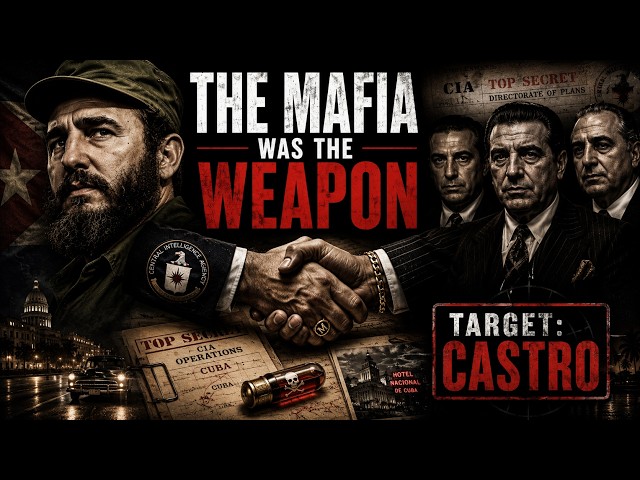
The strangest Cold War weapon was not a missile.
It was the Mafia.
During the early 1960s, as fear of communism spread through Washington, the CIA allegedly turned to organized crime figures in secret plots against Fidel Castro. Mob-connected intermediaries, poison capsule schemes, deniable operations, Senate investigations, and shadow alliances blurred the line between government power and the criminal underworld.
This documentary explores the real history behind the CIA–Mafia connection:
• Johnny Roselli
• Sam Giancana
• Santo Trafficante Jr.
• Robert Maheu
• Castro assassination plots
• The Church Committee investigations
• Plausible deniability during the Cold War
Using declassified records, Senate testimony, and historical reporting, this video separates documented fact from enduring myth.
The deeper question remains:
When governments use criminals in secret operations… who is really controlling whom?
Show More Show Less View Video Transcript
0:00
The strangest Cold War weapon was not always a missile. Sometimes, it was a mobster.
0:07
In the early nineteen sixties, American intelligence officials faced a problem ninety miles
0:14
from Florida.
0:15
His name was Fidel Castro. The public enemy was communism. The private problem was access.
0:23
Some claims in this story remain disputed.
0:26
We separate the record from the legend wherever possible.
0:31
But one thing did enter the official record.
0:35
CIA officials made contact with men connected to organized crime. The target was Castro.
0:42
The method was deniability.
0:45
The contradiction was almost too sharp to believe.
0:49
Publicly, the United States was fighting the Mafia.
0:53
Federal agents pursued bosses, bookmakers, casino men, and corrupt fixers.
0:58
Privately, parts of the intelligence world looked at the same underworld and saw something
1:05
useful.
1:06
Contacts. Smugglers. Casino networks. Men who knew Havana before the revolution.
1:12
That did not make the Mafia patriotic. It made them convenient.
1:17
And in covert action, convenience can become a policy before anyone admits what it is.
1:23
The official language was colder than the story itself.
1:28
The Senate Church Committee later investigated alleged assassination plots involving foreign
1:35
leaders.
1:36
Its findings did not treat the Mafia connection as street gossip.
1:42
They placed it inside a broader pattern of covert action, poor control, and plausible
1:49
denial.
1:50
The committee's record introduced a phrase that still feels almost unreal.
1:56
The narrator introduces the committee record before the voice switch.
2:02
CIA officials made use of known underworld figures. The sentence was short.
2:08
The damage was not.
2:09
That line raises the real question.
2:12
Why would an intelligence agency approach criminals at all? The answer was not trust.
2:19
It was distance.
2:20
A government officer could not easily walk into Havana and remove a foreign leader.
2:26
A mob-connected intermediary could move through older channels.
2:31
A cutout could speak without showing the hand behind him. A favor could become an operation.
2:38
A rumor could become a weapon. That was the logic. Not clean. Not legal in spirit.
2:45
But useful to men who believed history was closing in.
2:49
The first visible bridge was Robert Maheu.
2:53
Maheu was a former FBI agent and private investigator.
2:57
He worked in the world of Howard Hughes, Las Vegas, and quiet influence.
3:03
According to later investigations, Maheu served as a cutout. That word matters.
3:09
A cutout is not just a messenger. A cutout is insulation.
3:13
If the operation collapses, the official center can claim distance. The paper trail thins.
3:20
The voice on the phone becomes harder to prove.
3:25
Maheu's path led to Johnny Roselli.
3:27
Roselli was a polished underworld figure with deep connections in Las Vegas and Hollywood.
3:33
He was not the loudest gangster in America. That made him more useful.
3:39
He could sit in a hotel lounge without looking like a street soldier. He understood money.
3:45
He understood introductions. He understood the difference between a favor and a trap.
3:51
Through Roselli, the chain moved toward two heavier names. Sam Giancana.
3:56
Santo Trafficante Junior.
4:05
The government did not need a Mafia army. It needed access to a door it could not open.
4:13
That is why the chain mattered more than the men's reputations.
4:19
Maheu could approach Roselli. Roselli could reach Giancana.
4:25
Giancana could connect the operation to Trafficante. Trafficante knew Cuba.
4:32
Before Castro, Havana had been more than a city to organized crime.
4:38
It was a gambling economy. A playground. A cash machine.
4:44
After Castro, that machine was under threat. The CIA had a geopolitical motive.
4:51
The Mafia had a financial wound.
4:59
Before the revolution, Havana was not only beaches and music. It was casino floors.
5:05
Hotel suites. Private rooms. Politicians. Fixers.
5:09
A city where American tourists could spend money, and organized crime could take its
5:16
percentage.
5:17
Santo Trafficante had deep interests in Cuba.
5:20
Other mob-connected figures had relationships with casinos and gambling operations.
5:27
This was not mythology. The underworld had treated Havana like a territory.
5:33
Then Castro's revolution changed the terms. Casinos were disrupted. Assets were threatened.
5:40
Old arrangements collapsed. For men who measured loyalty in cash, Cuba became personal.
5:47
Castro's rise did not begin as a Mafia story. It became one because power changed hands.
5:54
The revolution promised to break corruption and foreign control.
5:59
That meant the old casino order could not simply continue.
6:03
For the mob, this was economic exile. For Washington, Castro became a Cold War problem.
6:10
His alignment with the Soviet Union sharpened every fear.
6:14
In that atmosphere, conventional pressure looked too slow. Diplomacy looked uncertain.
6:21
Invasion carried risks. So officials looked toward darker tools.
6:26
And darker tools often require darker partners.
6:30
This is where the myth becomes dangerous.
6:33
Some retellings make the plot sound like a gangster movie with government funding.
6:40
That is too simple. The record shows confusion. Compartmentalization. Conflicting accounts.
6:47
Men using fake names. Officials protecting themselves through layers of distance.
6:53
The Mafia may have wanted Cuba back. The CIA may have wanted Castro removed.
6:59
But shared interest is not the same as trust. Each side had a reason to use the other.
7:06
That was the alliance. Not friendship. Mutual contamination.
7:11
The proposed payment later became part of the record.
7:16
One account described an offer of one hundred and fifty thousand dollars.
7:21
Roselli reportedly declined payment. That detail sounds noble if heard carelessly.
7:28
It was not. For organized crime figures, removing Castro could be worth far more than a fee.
7:35
A restored Havana might mean casinos, gambling routes, influence, and revenge.
7:41
The money was not only the envelope on the table. The money was the island.
7:47
That was the seduction. A state wanted a political result.
7:52
The underworld wanted a lost market.
7:55
The evidence does not move like a clean confession.
7:59
It moves through reports, testimony, memoranda, and later declassifications.
8:05
That is why this story must be handled carefully. There were plots. There were contacts.
8:12
There were denials. There were men who changed their stories depending on what they needed.
8:19
And there was a phrase that shaped the entire operation. Plausible deniability.
8:25
Not innocence. Not transparency.
8:27
A structure built so the truth could survive in fragments, while responsibility disappeared
8:34
between them.
8:35
The narrator introduces the Senate record before the voice switch.
8:41
The concept of plausible denial was used in covert operations.
8:47
The phrase sounds bureaucratic. But in practice, it meant something human. A man could die.
8:55
A government could deny. A witness could vanish into legal fog.
9:01
That was the moral architecture. Nobody wanted fingerprints. Everybody wanted results.
9:13
The plot most often remembered involved poison. Not a battlefield. Not a public coup.
9:20
Poison.
9:21
According to official investigations and later reporting, assassination schemes against
9:28
Castro included efforts connected to organized crime figures.
9:33
The details vary across sources. But the broad record is clear enough to disturb.
9:40
Officials explored ways to use intermediaries and underworld contacts.
9:45
The target was a foreign leader. The method was designed to hide the state.
9:51
This is where the story turns from covert action into something colder.
9:57
The government did not merely tolerate criminals. It tried to borrow their distance.
10:10
The poison-capsule accounts became some of the most infamous details.
10:17
The CIA's internal materials and later Senate investigations described capsules intended for
10:25
use against Castro.
10:27
The capsules did not produce the intended result. That failure matters.
10:34
Not because it makes the plot harmless. Because it reveals the fantasy inside the operation.
10:42
Officials imagined the underworld could deliver a clean solution to a messy geopolitical
10:50
problem.
10:51
But criminals are not instruments. They have agendas. They protect themselves.
10:59
They use secrets as currency.
11:01
Once the agency opened the door, it could not control everything that entered.
11:11
Johnny Roselli became the man who kept reappearing. He had the contacts. He had the stories.
11:19
He also had legal problems. That made him valuable and dangerous.
11:24
A witness with secrets can become a weapon against everyone who once used him.
11:30
Roselli later appeared before Senate investigators under extraordinary attention.
11:37
The press understood the stakes. The old rumor was becoming public record.
11:42
The narrator introduces a Senate-era press account before the voice switch.
11:48
The premise was pretty well laid on the record. That line did not close the case.
11:55
It opened the archive.
11:57
Sam Giancana's role made the story even darker. Giancana was a Chicago Outfit boss.
12:04
He was no ordinary contact.
12:06
He represented a level of organized crime that federal law enforcement had spent years
12:12
trying to penetrate.
12:14
Yet his name became linked to a covert anti-Castro channel.
12:18
That is the central contradiction again.
12:21
The same government that wanted mob bosses prosecuted also let intelligence logic reach
12:28
toward them.
12:29
Not openly. Not cleanly. Not with a public vote. Through men like Maheu.
12:35
Through men like Roselli. Through the quiet corridor between state power and criminal power.
12:42
Giancana never gave the Church Committee the testimony it wanted.
12:47
In June nineteen seventy-five, before he could testify, he was shot to death in Illinois.
12:54
His murder has generated theories for decades.
12:58
The responsible documentary answer is restraint.
13:02
We do not know enough to turn suspicion into certainty.
13:06
But the timing intensified the atmosphere around the investigation. A dead mob boss.
13:13
A live Senate inquiry. An intelligence scandal. A Castro plot.
13:18
This was no longer only a Cold War file. It had become a national trust problem.
13:25
The public was watching institutions bleed secrets.
13:29
Santo Trafficante Junior was another essential name. Trafficante had long Cuban connections.
13:37
He understood Havana's pre-revolutionary underworld better than most American officials ever
13:44
could.
13:45
That made him exactly the kind of figure covert planners might find useful.
13:51
It also made him exactly the kind of figure a democracy should fear using.
13:57
Because when a state borrows criminal networks, it does not only borrow their access.
14:03
It borrows their silence. Their leverage. Their habit of keeping two truths alive at once.
14:10
One truth for the room. Another for the record.
14:14
The operation also shows how intelligence work can corrupt language.
14:20
A plot becomes an asset channel. A gangster becomes a contact.
14:25
A killing becomes an executive action. A moral breach becomes a capability.
14:31
This vocabulary does not remove the violence. It sterilizes it.
14:36
That is why documents matter.
14:39
They show how institutions describe acts they would never defend in plain speech.
14:45
A mobster says he can reach someone. An official says the channel has potential.
14:52
Between those sentences, a democracy changes shape.
14:57
The narrator introduces the committee's moral finding before the voice switch.
15:03
The United States should not make use of underworld figures. It sounds obvious now.
15:10
But obvious truths often arrive late. The warning came after the plots. After the denials.
15:17
After the public learned how far covert logic had stretched. That is the cost of secrecy.
15:25
The public usually hears the lesson only after the machinery has already worked.
15:37
The Church Committee did more than expose one story. It exposed a system of weak control.
15:43
Officials sometimes acted under assumptions about what higher authorities wanted.
15:49
Higher authorities could remain insulated from operational details.
15:54
That is the power of plausible deniability. It protects leaders from knowledge.
16:00
It protects operators from clear orders.
16:03
It protects institutions from the full moral weight of what they set in motion.
16:09
But it also creates a dangerous vacuum. In that vacuum, men improvise.
16:14
And when men improvise in secret, the law becomes a suggestion.
16:20
The public scandal landed in a country already shaken by distrust. Vietnam. Watergate.
16:27
Domestic surveillance revelations. Now assassination plots.
16:32
The CIA Mafia connection did not appear in isolation.
16:36
It arrived as part of a broader crisis over secret government.
16:42
Americans were forced to ask whether national security had become a language for bypassing
16:49
accountability.
16:51
That question outlived Castro. It outlived Giancana. It outlived Roselli.
16:57
Because the real subject was not only Cuba.
17:00
The real subject was what fear allows institutions to justify.
17:06
Roselli's own end deepened the myth. In nineteen seventy-six, his body was found in Florida.
17:14
He had been killed.
17:15
The circumstances fed speculation, especially because of his public connection to the Castro
17:23
plots.
17:24
But again, responsible history requires restraint. Suspicion is not proof.
17:30
The record does not allow every dark line to become a solved conspiracy.
17:36
Still, the image remains hard to shake. A mob intermediary. A Senate investigation.
17:43
A body in Florida. The story did not end like a memo.
17:48
It ended like the underworld had reclaimed one of its own.
17:53
The Mafia did not defeat Castro. The plots failed.
17:57
The casinos did not return to their old Havana order.
18:01
The intelligence community did not escape scrutiny.
18:05
And the United States did not emerge untouched. That is the final reversal.
18:11
The state turned to the underworld to solve a foreign problem.
18:16
Instead, the alliance exposed a domestic one.
18:19
A government can keep secrets for reasons of national security.
18:24
But when secrecy becomes a shield for moral outsourcing, the damage does not stay overseas.
18:32
It comes home. It enters hearings. Archives. Headlines. Public memory.
18:38
By the time the files surfaced, the men had become symbols. Roselli became the connector.
18:45
Giancana became the danger. Trafficante became the lost Havana channel.
18:51
Maheu became the cutout. Castro became the target who survived.
18:56
The CIA became the institution forced to answer for methods it once tried to bury.
19:03
But symbols can flatten the truth. The truth is messier.
19:08
This was not one smoky room where every fact was agreed.
19:12
It was a chain of motives, denials, contacts, and records. A dirty file, slowly opened.
19:24
The most disturbing part is not that criminals acted like criminals. That was expected.
19:32
The disturbing part is that official men believed criminals could perform unofficial work
19:41
for the state.
19:42
That is where the boundary broke. The Mafia understood silence.
19:48
The intelligence world understood denial.
19:51
Together, they created something harder to prosecute than a street crime and harder to
19:59
defend than policy.
20:01
No public ceremony marked the alliance. No law announced it. No monument remembers it.
20:09
It survived in testimony, declassified pages, and the uneasy knowledge that the line moved.
20:18
So the question is not only what happened. It is what the episode revealed.
20:24
During the Cold War, fear made strange alliances possible. Anti-communism created pressure.
20:31
Cuba created urgency. Havana created motive. The Mafia created access.
20:37
And secrecy created permission. That combination did not produce a clean victory.
20:44
It produced a record that still feels contaminated. A democracy can fight enemies.
20:51
It can even fight in secret.
20:53
But when it hires the underworld to touch what the state cannot admit, it risks becoming
21:00
what it claims to oppose.
21:03
The strangest Cold War weapon was not always a missile. Sometimes, it was a mobster.
21:10
And the real explosion came years later. Not in Havana. Not in Moscow. Not in a casino.
21:18
In a Senate hearing room, where the paper finally spoke.
21:23
The file did not answer every question. It never could.
21:29
But it answered enough to leave one behind.
21:32
When the state turns to the underworld, who is really using whom?
#Arts & Entertainment