live_tv
Livestream Starting Soon
00
Hours
:
00
Minutes
:
00
Seconds
Up next in 10

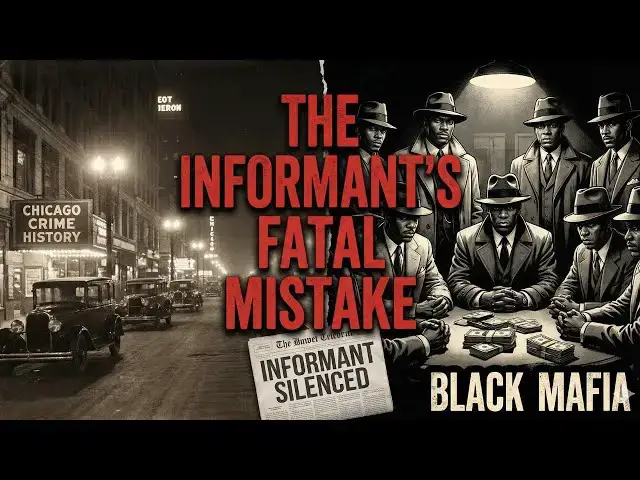
The phone booth on Sixty-Third and Cottage Grove hadn't rung in three years. When it finally did on a freezing February night in 1971, three cities would burn.
This is the true story of the Triangle—the most ambitious organized crime network in Black underworld history. Connecting Chicago's South Side policy operations, Detroit's Canadian heroin pipeline, and Harlem's international supplier connections, it was supposed to be unstoppable.
For nearly two years, it worked. Moses controlled Chicago with precision. Easy ran Detroit like a military operation. Claudette dominated Harlem with elegance and ruthlessness. Together, they built an empire.
Then came the sit-down in Gary, Indiana. A meeting meant to resolve tensions. Instead, it triggered a collapse that would leave bodies across three cities, destroy three criminal empires, and teach the underworld a lesson it's never forgotten.
This is The Triangle Burns.
🔔 SUBSCRIBE to Global Mafia Universe for more true crime stories from the underworld
💬 COMMENT: Which city had the most powerful operation?
👍 LIKE if you want more Black Mafia history
#Mafia #TrueCrime #BlackMafia #Chicago #Detroit #Harlem #OrganizedCrime #CrimeHistory #Underworld
──────────────────────────────────
🎬 SOURCES & HISTORICAL NOTES:
This story is based on documented Black organized crime operations in Chicago, Detroit, and Harlem during the late 1960s and early 1970s, including policy racket consolidation, heroin distribution networks, and the federal investigations that followed.
Show More Show Less View Video Transcript
0:00
The phone booth on 63rd in Cottage Grove
0:02
hadn't rung in 3 years. It was
0:05
understood among those who understood
0:07
such things that the line was dead. The
0:10
number retired, the glass box, nothing
0:12
more than a relic from a time when
0:14
certain conversations required certain
0:17
precautions. So when it rang at 217 on a
0:20
February morning in 1971, the sound cut
0:23
through the Chicago cold like a scream.
0:26
The man who answered it caller turned up
0:28
against the wind. Didn't speak first. A
0:32
leen 30 seconds later he walked away
0:35
from the booth without hanging up. The
0:37
receiver swinging in the wind and within
0:40
the hour. Three bodies would be found in
0:42
a Detroit chop shop. Two more in a
0:45
Harlem brownstone. And the most
0:47
ambitious criminal expansion in black
0:49
organized crime history would collapse
0:51
into blood and suspicion. The triangle
0:54
was burning. and nobody knew who struck
0:56
the match. But to understand how this
0:58
night became inevitable, we have to go
1:01
back. Chicago's Southside in the late
1:04
1960s wasn't just a neighborhood. It was
1:06
a nation within a nation governed by
1:09
rules older than the laws written
1:11
downtown, enforced by men whose names
1:13
never appeared in newspapers, but whose
1:15
word could shut down entire blocks. The
1:18
policy rackets had been running since
1:20
prohibition. numbers slips passing
1:22
through beauty salons and barber shops,
1:24
through church basement and cab
1:26
companies, generating thousands daily in
1:29
cash that never saw a bank. But policy
1:32
was old money, steady money, and by
1:35
1968, there was new money on the table.
1:38
Heroin was flooding in from New York and
1:41
Detroit and the traditional operators.
1:44
Men who'd built empires on dice games
1:46
and Bolita tickets saw the writing on
1:48
the wall. Either they organized the new
1:50
trade, controlled it, taxed it, kept it
1:53
from turning the streets into war zones,
1:55
or someone else would. The meeting that
1:57
changed everything happened in a
1:59
Southshore apartment above a record
2:00
store. No more than eight men in the
2:02
room. No guns allowed at the door. They
2:06
called it a business summit. History
2:08
would call it something else. The man
2:10
who orchestrated that meeting was known
2:12
as Moses, though that wasn't the name on
2:14
his birth certificate. He'd earned the
2:16
title moving weight through three
2:18
states. never serving more than 6 months
2:20
despite four arrests. And he understood
2:23
something most street dealers didn't.
2:26
Territory meant nothing if you couldn't
2:27
hold it, and you couldn't hold it alone.
2:30
Chicago had muscle and infrastructure.
2:33
Detroit had the Canadian pipeline and
2:35
automotive industry cash to wash clean.
2:37
Harlem had the New York, the supplier
2:40
relationships that went back to Corsican
2:42
smugglers and Turkish poppy fields.
2:45
separately. Each city was making money.
2:48
Together, they could build something
2:50
that looked like a corporation,
2:52
functioned like a government and
2:54
generated wealth that would make the old
2:56
policy kings look like small-time
2:58
hustlers. The plan was elegant. Each
3:01
city would control its own distribution,
3:02
but share supply lines, enforcement, and
3:06
political protection. Profits would be
3:08
pulled and redistributed based on volume
3:11
and risk. disputes would be settled by a
3:13
council, not by bullets. It was
3:16
organized crime in the truest sense. And
3:18
for nearly 2 years, it worked better
3:21
than anyone imagined. Detroit came into
3:23
the structure through a man named
3:24
Ezekiel Grant, though everyone called
3:27
him easy. There was nothing easy about
3:29
him. He'd done four years in Jackson for
3:32
aggravated assault. Came out leaner and
3:34
colder and built his operation around
3:36
the auto plants, recruiting workers who
3:38
moved packages in lunch pales and hid
3:41
stash houses in the sprawl of
3:42
neighborhoods that police had stopped
3:44
patrolling years ago. EA understood
3:47
logistics. He knew shift changes and
3:49
union halls. Knew which cops were on
3:51
which payrolls. Knew that the best
3:53
security wasn't guns, but silence. His
3:56
people didn't flash money. They didn't
3:59
talk. When Detroit became part of the
4:01
triangle, Ezy brought discipline, a
4:04
military precision that Moses respected.
4:06
The Canadian border was Ezy's gold mine.
4:09
He had people in Windsor who brought
4:11
powder across the river in every
4:12
conceivable waheden and car frames,
4:15
inside shipments of car parts, even sewn
4:17
into the linings of worker uniforms.
4:20
Once it hit Detroit, it was cut,
4:22
packaged, and sent south to Chicago or
4:25
east to Harlem, depending on demand. The
4:27
system hummed, but systems built on
4:30
trust between criminals are only as
4:32
strong as the last handshake, and
4:35
someone was already planning the
4:36
betrayal. Harlem's entry into the
4:38
network came through a woman, which
4:40
surprised some of the old-timers who
4:42
still thought the underworld was a man's
4:44
game. Her name was Clawudet Marorrow,
4:46
and she'd inherited her late husband's
4:48
connections after he died in a police
4:50
shootout in 1967.
4:53
She didn't mourn long. Within 6 months,
4:55
she doubled his operation, cut deals
4:58
with suppliers her husband had been too
5:00
proud or too stupid to approach, and
5:02
established herself as the gatekeeper
5:04
between the Harlem streets and the
5:06
European smugglers who controlled the
5:08
raw product. Claudet was elegant, spoke
5:11
three languages, and could negotiate a
5:13
kila price with the same charm she used
5:15
hosting charity dinners in Sugar Hill.
5:18
She also had no illusions about loyalty.
5:21
She knew the triangle was built on
5:23
mutual benefit, and the moment that
5:25
benefit shifted, the whole thing would
5:28
shatter. What she didn't know was that
5:30
the shift had already begun. Initiated
5:32
by someone inside her own crew, someone
5:35
who believed the future didn't require
5:37
partnerships, only power. The first sign
5:39
of trouble came in the summer of 1970,
5:42
almost 18 months after the triangle was
5:44
established. A shipment that was
5:46
supposed to arrive in Chicago from
5:48
Detroit, never showed. 10 kilos, worth
5:51
over 200,000 once cut and distributed,
5:54
simply vanished between the two cities.
5:57
Ez claimed it left Detroit clean. Moses
5:59
insisted it never arrived. Accusations
6:02
were made carefully, wrapped in polite
6:05
language during a phone call that lasted
6:06
less than 3 minutes, but the damage was
6:09
done. A week later, one of Eey's
6:11
couriers was found beaten nearly to
6:13
death in a Chicago alley. His car
6:15
stripped, his cargo gone. Ez wanted
6:18
blood. Moses wanted answers. Clawdette,
6:22
watching from New York, saw an
6:24
opportunity. She proposed a sit-down
6:26
neutral ground. All three principles and
6:29
their top people a chance to resolve the
6:31
issue before it turned into something
6:33
worse. The meeting was set for late
6:35
January 1971 in a union hall outside
6:38
Gary, Indiana, halfway between Chicago
6:41
and Detroit, far enough from Harlem to
6:43
keep Claudet's involvement quiet. It was
6:45
supposed to be a reset. Instead, it was
6:48
the beginning of the end. The Union Hall
6:51
was a squat brick building surrounded by
6:53
snow-covered lots and rusting machinery.
6:56
The kind of place where factory workers
6:58
once fought for better wages and now
7:00
came to collect unemployment. It was
7:03
chosen for its isolation and its
7:05
neutrality. None of the three
7:06
organizations had a presence in Gary.
7:10
Moses arrived first with two men, both
7:13
unarmed as agreed. Easy came 10 minutes
7:15
later, also with too clean. Clawdet flew
7:19
in from New York and drove down with a
7:22
driver and a lawyer. A older man who'd
7:24
been handling her legal troubles since
7:26
before her husband died. The meeting
7:28
started civil. Coffee was made. Coats
7:32
were hung. There was small talk about
7:34
the weather. The Nixon administration,
7:36
the latest police crackdown in
7:38
Philadelphia. Then Moses laid out the
7:41
problem. The missing shipment wasn't an
7:43
isolated incident. There had been three
7:46
others. Smaller losses, discrepancies in
7:49
counts, late payments that were blamed
7:51
on banks or postal delays. Separately,
7:54
they looked like bad luck. Together,
7:56
they looked like a pattern. Someone was
7:59
skimming. Someone was stealing and if
8:01
they didn't identify who, the whole
8:04
network would collapse under the weight
8:05
of suspicion. Easy didn't deny the
8:07
losses, but he pushed back hard. His
8:10
operation was tight. His people were
8:13
loyal. If something was going wrong, it
8:15
was happening on the Chicago end where
8:18
the streets were hotter, where police
8:20
pressure was increasing, where maybe
8:22
someone in Moses's crew had decided to
8:24
supplement their income. Moses stayed
8:26
calm, but his eyes went cold. He'd built
8:29
his reputation on being unshakable, and
8:32
the implication that he couldn't control
8:34
his own people was a direct challenge.
8:37
Claudet, reading the room, stepped in.
8:40
She suggested an audit, a full
8:42
accounting of every shipment, every
8:44
payment, every transaction over the past
8:47
6 months. If the problem was internal,
8:49
they'd find it. If it was external cops,
8:52
rival crews, freelancers, they'd deal
8:55
with it together. It was a reasonable
8:57
proposal.
8:58
too reasonable because what Claudette
9:01
didn't say was that she'd already
9:02
conducted her own audit and she knew
9:05
exactly where the leaks were coming
9:06
from. She just needed confirmation
9:09
before she made her move. The meeting
9:11
should have ended there. Tensions he but
9:15
manageable, a plan in place. But then
9:18
Ezy's phone rang. He'd been told not to
9:20
bring one, but he had it anyway. Clipped
9:23
to his belt under his jacket. He looked
9:25
at Moses, then at Clawudette, and
9:28
stepped into the hallway to take the
9:29
call. He was gone less than 2 minutes.
9:32
When he came back, his face had changed.
9:36
The call was from Detroit. Two of his
9:38
stash houses had just been raided
9:39
simultaneously, which was impossible
9:42
unless someone had given up the
9:43
addresses. The timing was too perfect,
9:46
too coordinated with the city. Easy
9:48
looked at Moses, then at Clawudette, and
9:50
said one word.
9:53
set up. The room exploded, not with
9:56
gunfire. No, one was armed but with
9:58
accusations, with rage, with a kind of
10:01
anger that doesn't cool down. Moses
10:03
denied everything.
10:06
Claudet called for calm. Ey's men moved
10:09
toward the door, and in that moment, the
10:11
triangle shattered. What happened next
10:14
unfolded across three cities in less
10:16
than 12 hours. a cascading collapse
10:19
driven by fear, anger, and the brutal
10:22
mathematics of criminal survival. Ezy
10:24
left the Union Hall, convinced that
10:25
Moses had sold him out to take over the
10:27
Detroit pipeline. Moses, watching Easy
10:30
leave, believed that the whole meeting
10:32
had been a trap orchestrated by Claudet
10:35
to weaken both operations so she could
10:37
fill the vacuum. Claudette, still in the
10:40
Union Hall, as the others stormed out,
10:43
made a single phone call back to Harlem
10:45
and set in motion a plan she'd been
10:47
preparing for months. By dawn, the war
10:50
was on and the streets were paying the
10:52
price. In Detroit, Ezy's response was
10:55
immediate and ruthless. He assumed that
10:58
if the raids were coordinated with the
10:59
meeting, then someone in the Chicago
11:01
pipeline had flipped. He shut down every
11:04
connection to Moses's operation, called
11:07
back every package in transit, and put
11:09
word out that anyone caught dealing with
11:11
Chicago crews would be handled
11:13
permanently. Two of Moses's couriers,
11:16
men who'd been running product between
11:17
the cities for over a year, were picked
11:19
up by EY's enforcers within hours. They
11:22
were questioned in a basement on the
11:24
east side. Only one of them walked out,
11:26
and he did so with a message. Detroit
11:29
was closed. But Ezy's paranoia didn't
11:31
stop at Chicago. If the raids were that
11:34
precise, someone inside his own
11:36
operation had talked. He started pulling
11:38
in his own people, demanding
11:40
explanations, looking for the leak. The
11:43
pressure created panic, and panic
11:46
created mistakes. By the end of the
11:48
week, three of his most trusted dealers
11:51
had disappeared, and the streets were
11:53
whispering that Easy had lost control.
11:55
In Chicago, Moses took a different
11:57
approach. He didn't believe the raids on
12:00
Eey's houses were random, but he also
12:02
didn't believe he was responsible.
12:04
Someone was playing them against each
12:05
other, and the most likely candidate was
12:07
Claudet. She had the most to gain from a
12:10
Chicago Detroit war. While they tore
12:12
each other apart, she could dominate the
12:14
East Coast supply and cut separate deals
12:16
with whoever survived. Moses started
12:19
making calls. Not too easy. That bridge
12:21
was burned. But to his own New York
12:23
contacts, people who operated outside
12:26
Claudet Circle. What he learned
12:28
confirmed his suspicions. Clawdet had
12:30
been holding back product, creating
12:32
artificial shortages, driving up prices
12:35
while stockpiling supply. She was
12:37
preparing for something big. A move that
12:39
required her competitors to be weakened
12:41
first. Moses realized he'd been
12:43
outmaneuvered.
12:45
But he wasn't finished. If Claudet
12:47
wanted a war, he'd give her one, but not
12:50
on the streets. He'd hid her where it
12:52
hurt most. Her supplier connections. He
12:55
started reaching out to the Corsacans,
12:58
the Cubans, the Turks, offering better
13:01
terms, faster payments, fewer middlemen.
13:05
It was a long game, but Moses had always
13:08
been patient. Harlem moved fastest
13:10
because Claudet had been ready the
13:12
longest. The sitdown in Gari had been a
13:15
test, a way to confirm that Moses and E
13:18
trusted each other less than they feared
13:20
her. The raids on EY's stash houses
13:22
weren't police operations. They were
13:25
Clawudette's people dressed like cops
13:27
armed with addresses she'd purchased
13:29
from an informant months earlier. The
13:31
goal wasn't to take product was to
13:33
create chaos. To make easy paranoid to
13:36
fracture the triangle before it could
13:38
turn on her with Chicago and Detroit at
13:40
each other's throats. Clawdet moved to
13:43
consolidate. She reached out to
13:44
independent operators in Philadelphia,
13:46
Baltimore, and DC, offering them product
13:49
at prices that undercut what they'd been
13:51
paying through fragmented local sources.
13:53
She positioned herself as the new
13:55
central hub, the single point of contact
13:58
for the entire eastern seabboard. It was
14:01
brilliant and ruthless, the kind of move
14:04
that would have made her late husband
14:05
proud if he'd been smart enough to think
14:08
of it. But brilliance in the underworld
14:10
has a cost, and Claudet's bill was
14:12
coming due faster than she realized. The
14:14
batties started appearing in early
14:16
February. A Chicago enforcer found in a
14:19
dumpster behind a Gary motel, two
14:22
bullets in the back of his head. A
14:23
Detroit courier pulled from the river,
14:26
hands tied, throat cut. A Harlem dealer
14:29
who'd been skimming from Claudet's
14:30
supply discovered in his apartment with
14:32
a bag over his head. The violence wasn't
14:35
random. Each killing was a message, a
14:38
response, a retaliation for something
14:40
real or imagined. The police, who'd been
14:43
content to let the black underworld
14:46
regulate itself as long as the violence
14:48
stayed contained, started paying
14:50
attention. Federal agents, already
14:52
monitoring heroin flows as part of
14:55
Nixon's new drug war, saw an
14:57
opportunity. Wiretaps went up.
15:00
Informants were flipped. Surveillance
15:02
teams camped outside known meeting
15:04
spots. And the pressure, already intense
15:07
from within the triangle, became
15:09
unbearable from without. Moses was the
15:11
first to feel the federal heat. Two of
15:13
his top lieutenants were picked up on
15:15
conspiracy charges in March, held
15:18
without bail, and offered deals they
15:20
couldn't refuse. One of them took it.
15:22
The testimony he provided didn't just
15:25
implicate Moses in distribution. It
15:27
mapped out the entire triangle, named
15:29
names in Detroit and New York, detailed
15:32
the sitan and Gary, and handed
15:34
prosecutors a blueprint for dismantling
15:36
the whole network. Moses, sensing the
15:38
walls closing in, did what survivors do.
15:42
He disappeared, not into witness
15:44
protection, not into custody, but into
15:47
the shadows, abandoning his Chicago
15:50
empire and resurfacing months later in
15:52
Los Angeles under a name nobody
15:54
recognized. The kingdom he built
15:57
collapsed within weeks. Carved up by
15:59
smaller crews who lacked his vision, but
16:01
thrived in the chaos he left behind.
16:03
Ezy's downfall was faster and more
16:06
violent. The paranoia that had gripped
16:08
him after the Gary meeting turned into
16:09
full-blown instability. He started
16:11
seeing traitors everywhere, making
16:13
accusations that didn't hold up, cutting
16:16
off people who'd been loyal for years.
16:18
His enforcers, the men who'd kept his
16:20
operation running through discipline and
16:22
fear, began to question whether Easy was
16:24
still capable of leading. In late March,
16:27
during a meeting in a warehouse near the
16:29
Packard plant, three of his top people
16:31
confronted him.
16:33
It wasn't a coup. Not exactly, but it
16:36
was close. They wanted him to step back,
16:39
let someone else handle operations until
16:41
the heat died down. Easier refused.
16:46
The argument escalated. Guns were drawn.
16:49
When the shots stopped, Eyes was on the
16:51
ground, bleeding from two wounds to the
16:54
chest, and the men who' built Detroit's
16:56
piece of the triangle were scattering
16:58
into the night. Knowing that the empire
17:00
was finished, Claudette outlasted them
17:03
both. But survival isn't the same as
17:06
victory. By summer, the federal
17:08
indictments started rolling in. Her
17:10
lawyer, the man who'd been with her
17:12
since her husband's death, was arrested
17:14
on racketeering charges. Two of her
17:16
suppliers were extradited from France.
17:19
Her Harlem operation, once the envy of
17:22
the eastern seabboard, was gutted by
17:24
raids and arrests. She managed to avoid
17:27
prosecution, protected by layers of
17:29
insulation and a legal team that made
17:31
sure her name never appeared on anything
17:33
incriminating.
17:35
But the network was gone. The triangle
17:37
that was supposed to revolutionize black
17:39
organized crime that was supposed to
17:41
bring structure and stability to an
17:43
industry built on chaos had burned to
17:45
the ground in less than 6 months.
17:47
Claudet walked away free, but powerless,
17:51
watching as younger, hungrier operators
17:54
divided up the territory she'd once
17:56
controlled. The triangle's collapse sent
17:58
shock waves through the underworld that
18:00
lasted 4 years. The idea of a multi-ity
18:03
black crime syndicate organized along
18:06
corporate lines, didn't die. It just
18:08
went underground became more cautious,
18:11
more secretive. The lessons from
18:13
Chicago, Detroit, and Harlem were clear.
18:17
Trust was a liability. Expansion
18:19
required more than ambition. And the
18:22
moment you gathered everyone in one
18:24
room, you created a target too big to
18:27
miss. The phone booth on 63rd and
18:29
Cottage Grove was torn down in 1973,
18:33
replaced by a parking lot that still
18:35
exists today. The Union Hall in Gary was
18:38
demolished in 1985. The Harlem
18:40
Brownstone, where two bodies were found
18:42
that February night, is now a boutique
18:45
hotel. Its history scrubbed clean for
18:47
tourists who will never know what
18:49
happened in the basement. But the story
18:51
lives on, passed down through
18:53
generations of operators. A cautionary
18:56
tale about the cost of ambition and the
18:58
impossibility of trust in a world built
19:01
on betrayal. The triangle burned because
19:04
it was always going to burn. Not because
19:06
of bad luck or bad timing, but because
19:08
the very structure that made it
19:10
powerful, the pooling of resources, the
19:12
shared intelligence, the interconnected
19:15
supply lines also made it fragile. One
19:18
weak link, one moment of doubt, one
19:20
phone call at the wrong time, and the
19:22
whole system collapsed. Moses understood
19:25
logistics.
19:26
Easy understood discipline. Claudet
19:29
understood leverage, but none of them
19:31
understood that the criminal underworld
19:33
doesn't reward cooperation. It rewards
19:36
ruthlessness, isolation, and the
19:38
willingness to burn everything down
19:40
before someone else does it for you. The
19:42
triangle was an attempt to rewrite those
19:44
rules to build something that could
19:46
last. It lasted 22 months. In the
19:49
underworld, that's not a failure. That's
19:52
just the cost of doing business. For
19:54
more real mafia crime stories, subscribe
19:57
and step deeper into the underworld with
19:59
Global Mafia Universe.