live_tv
Livestream Starting Soon
00
Hours
:
00
Minutes
:
00
Seconds
Up next in 10


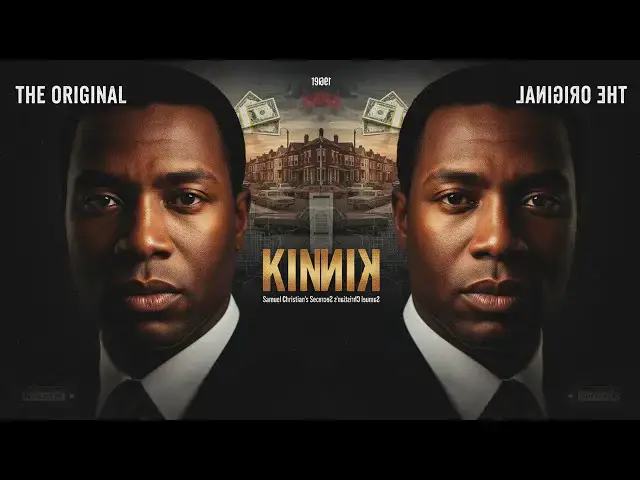
Graterford Prison, 1966. A thirty-three-year-old man named Samuel Christian sits in his cell surrounded by books most prisoners never touch: corporate management theory, military strategy, Malcolm X speeches. He's six months from release on an armed robbery conviction. Statistical recidivism rates suggest he'll be back in prison within eighteen months.
Instead, he'll build one of the most sophisticated criminal organizations in American history—and almost nobody will know his name.
This is the untold origin story of Samuel Christian, the invisible architect who transformed fragmented North Philadelphia street crews into the Black Mafia—a hierarchical criminal syndicate that generated fifteen million dollars annually while remaining virtually unknown to a media obsessed with Italian mobsters. Between 1967 and 1973, Christian applied organizational principles learned from studying corporations, military hierarchies, and Nation of Islam discipline to create an empire that challenged established crime families.
Through FBI surveillance reports, federal RICO trial transcripts, and sealed court documents, this documentary reveals how Christian built his invisible empire: the barbershop meetings where strategy was planned, the calculated negotiations with Italian crime families, the systematic consolidation of criminal operations, and the federal investigation that finally brought him down.
But here's the mystery that defines his story: Christian maintained such complete invisibility that almost nothing is known about his early life, his private thoughts, or what happened during the twenty-six years he lived quietly after prison release. He gave no interviews, wrote no memoir, and died in obscurity in 2013.
Was Samuel Christian a criminal genius who revolutionized urban organized crime, or an exploiter who used Black empowerment rhetoric to justify destruction? The answer is more complex than simple judgment allows.
Subscribe for more untold stories from the Mafia Universe—the invisible kings, hidden architects, and secret empires that changed organized crime forever.
Keywords: Samuel Christian, Black Mafia, Philadelphia organized crime, criminal syndicate, RICO prosecution, 1960s crime, urban organized crime, mafia documentary, true crime, federal investigation, North Philadelphia, organized crime history, criminal empire, invisible king, untold mafia story
-~-~~-~~~-~~-~--~-~~-~~~-~~-~--~-~~-~~~-~~-~-
⚠️ Content Disclaimer:
This video is created for educational and informational purposes only. We do NOT glorify, promote, or encourage any form of criminal activity.
All visuals, audio, and materials used in this video are either:
✔ Created using AI tools, or
Show More Show Less View Video Transcript
0:00
Ratford State Correctional Institution, Pennsylvania, September 1966.
0:05
2:17 a.m. A guard makes his rounds past cell D47.
0:11
Inside, a 33-year-old man named Samuel Christian sits beneath a single flickering bulb, surrounded by books
0:19
most prisoners never touch. Malcolm X's speeches, corporate management theory,
0:25
military strategy texts. On the concrete floor beside his bunk, a
0:30
notebook filled with organizational charts, hierarchies, and what looks like business plans, except the business
0:36
being planned will generate $15 million annually within 7 years and won't appear
0:41
on any tax return. Christian is 6 months from release. He served 3 years for
0:47
armed robbery, his second adult conviction. By every statistical measure, he should return to the same
0:53
North Philadelphia streets that produced him. commit the same opportunistic crimes and end up back in this cell
1:00
within 18 months. Recidivism rates for men like him approach 70%. But here's
1:06
the contradiction that will define the next decade of Philadelphia's criminal underworld. Samuel Christian isn't
1:12
planning to return to street crime. He's planning to revolutionize it. The books surrounding him aren't random prison
1:18
library selections. They're a curriculum. He's studying organizational theory the way MBA
1:24
students study at Wharton, except he's applying these principles to something Harvard Business School doesn't teach.
1:31
How to transform fragmented street crews into a criminal syndicate sophisticated enough to challenge Italian crime
1:37
families that have controlled Philadelphia for generations. Within 2 years of this moment, Christian will
1:43
have organized what federal prosecutors will later call one of the most disciplined criminal enterprises they've
1:48
ever investigated. Within 5 years, the organization he builds will control
1:54
significant portions of Philadelphia's illegal economy. Within 7 years, he'll be back in federal prison, but this time
2:01
as the convicted leader of a criminal empire that stretched across multiple states and influenced how urban
2:06
organized crime operates even today. Yet, here's what makes Samuel Christian's story different from every
2:12
other crime boss in the mafia universe. Almost everything about his early life remains shrouded in deliberate
2:18
obscurity. No childhood photographs in newspaper archives. No detailed biographical information in court
2:25
records. No interviews with family members. He appears in the historical record fully formed as if he
2:32
materialized from nowhere with a sophisticated criminal blueprint already designed. So, get ready to enter the
2:38
shadows of the mafia universe, where the most dangerous leaders are often the most invisible, and where Samuel
2:44
Christian built an empire by understanding something his contemporaries missed. In the criminal underworld, organization defeats chaos
2:52
every single time. Act one, origins. The invisible years, 1933 to 1966.
3:01
The truth is, we don't know everything about Samuel Christian's early life. Unlike Italian mob bosses whose
3:07
childhoods have been documented in countless books and films, Christian left almost no biographical footprint
3:13
before his first arrest. What we do know comes from fragmentaryary court records,
3:18
FBI surveillance reports compiled years later, and scattered testimony from associates who spoke to investigators
3:25
decades after the fact. The picture that emerges is deliberately incomplete. Christian understood early that
3:31
invisibility was power. Court records indicate Samuel Christian was born March 12th, 1933 in Philadelphia,
3:39
Pennsylvania. The birth certificate lists his mother's name, but no father. The address given a North Philadelphia
3:47
Roas on Ridge Avenue was in a neighborhood that would later become the heart of his criminal operations. Beyond
3:52
these bare facts, his childhood exists only in absence. No school records
3:57
preserved in archives, no juvenile arrest records available through standard channels, no mentions in local
4:03
newspapers. This absence itself tells a story. North Philadelphia in the 1930s
4:09
and 1940s was a neighborhood where poverty, racism, and limited opportunity
4:14
created conditions that pushed many young black men toward criminal activity. The Great Depression had
4:20
devastated economic prospects. Wartime manufacturing offered some relief, but the best paying union jobs remained
4:27
closed to black workers through systematic discrimination. The neighborhood's economy operated on two
4:32
levels. The visible legitimate world of low-wage labor and the invisible underground world of numbers running:
4:40
illegal gambling and smalltime hustling. But there was a problem with the underground economy as it existed. When
4:47
Christian came of age in the late 1940s and early 1950s, it was completely
4:52
controlled by people who didn't live in the neighborhoods where the money was generated. Italian organized crime
4:57
families, particularly the emerging Bruno organization, controlled the profitable criminal enterprises.
5:04
They owned the numbers banks that paid out large winds. They supplied the narcotics that street level dealers
5:10
sold. They provided the protection that allowed illegal operations to function without constant police interference.
5:16
Black operators worked for them as subordinates, generating revenue that flowed out of black neighborhoods into
5:22
white hands. Therefore, any young black man with ambition and intelligence in 19
5:29
North Philadelphia faced a fundamental choice. accept subordinate status in someone else's criminal operation.
5:36
Pursue the limited legitimate opportunities available or find a third path that nobody had successfully
5:42
navigated before. Christian's first arrest came in 1952 at age 19 for armed
5:49
robbery. Court records from the case are sparse, but they indicate he and two associates held up a grocery store on
5:56
Colombia Avenue, escaping with approximately $300. The store owner was a white merchant who lived in the
6:02
suburbs a detail that would later seem significant given Christian's developing philosophy about economic exploitation.
6:09
Nevertheless, the robbery was clumsy, opportunistic, and resulted in Christian's first conviction. He served
6:16
18 months at a state facility during which time he apparently began the self-education program that would define
6:22
his approach to criminal enterprise. A former inmate who served time with Christian in 1,952
6:29
1,953 later told researchers that Christian was different from other guys inside.
6:35
While most prisoners spent recreation time gambling or fighting, Christian read everything from newspapers to
6:42
whatever books the limited prison library offered. He asked questions about how things worked. Prison
6:47
administration, guard schedules, inmate. He was, according to this source, always
6:53
studying the system. Yet, upon release in 1954, Christian apparently returned to street level criminal activity
7:00
without immediately applying whatever lessons he'd learned. Between 1954 and 1959, he was arrested three more times
7:07
on charges, including assault, illegal gambling, and possession of illegal
7:12
substances. Two arrests resulted in dismissed charge suggesting either witness intimidation or police
7:19
corruption. one resulted in probation. However, during these years, Christian
7:24
was also building networks that would later prove crucial. He developed connections to various street crews
7:30
operating in North Philadelphia. He cultivated relationships with numbers runners, lone sharks, and small-time
7:37
operators. He attended a local mosque where Nation of Islam ministers preached about black economic independence. And
7:43
the NOI's influence on Christians later organizational thinking cannot be overstated. Their emphasis on
7:49
discipline, hierarchy, and economic nationalism provided ideological framework that Christian would adapt to
7:56
criminal enterprise. The turning point came in 1960 when Christian was convicted of armed robbery for a second
8:02
time. The details of this case are better documented. He and three associates robbed a check cashing
8:08
business in North Philadelphia, escaping with approximately $6,000. one associate
8:14
turned informant providing testimony that resulted in Christian's conviction and a six-year sentence at Gratifford
8:21
State Correctional Institution. Therefore, at age Samuel Christian entered prison facing the prospect of
8:27
emerging in his early 30s with a serious criminal record limited legitimate prospects and the statistical likelihood
8:35
of spending much of his remaining life incarcerated. But something happened during those six years at Gratifford
8:40
that transformed Christian from a street criminal into a strategic thinker about criminal organization. Multiple sources
8:47
suggest he became obsessed with understanding why Italian organized crime families succeeded while black
8:53
criminal operators remained fragmented and subordinate. He studied the structure of the mafia through whatever
8:58
sources were available. newspaper articles about high-profile prosecutions, true crime books in the
9:04
prison library, conversations with Italian inmates who had family connections to organized crime. He read
9:09
business management texts, analyzing how corporations organized divisions, managed personnel, and resolved internal
9:17
disputes. He studied military history, particularly how successful armies maintained discipline and chain of
9:24
command. Nevertheless, Christian also understood something that separated him from armchair theorists.
9:31
Knowledge without power was meaningless. When Malcolm X was assassinated in February 1965,
9:37
Christian was still in prison. According to a prison chaplain who later spoke to researchers, Christian was profoundly
9:43
affected by the assassination. He'd been reading Malcolm's speeches and philosophy, particularly the emphasis on
9:49
black self-determination and economic independence. The murder convinced Christian that political movements alone
9:55
couldn't change the economic realities facing. Black communities power required taking control of existing economic
10:02
systems, legal or otherwise. Yet Christian also learned from Malcolm X's fate. Visibility made you a target.
10:09
Leaders who became public figures attracted law enforcement, attention, government surveillance, and violent
10:16
opposition. The most effective power was power that remained invisible. Therefore, when Samuel Christian was
10:23
released from Gratifford in September 1966, he returned to North Philadelphia with a plan that was simultaneously
10:30
ambitious and deliberately obscure. He would organize black criminal operators into a hierarchical structure modeled on
10:36
Italian crime families and corporate management principles. But unlike traditional mob bosses who courted
10:42
publicity and reputation, Christian would remain as invisible as possible. Building power through organization
10:48
rather than personal notoriety. However, transforming theory into reality
10:54
required something Christian didn't have. Capital connections and credibility. His
11:00
first months of freedom were spent rebuilding relationships with street level operators he'd known before
11:06
prison. He reconnected with mosque contacts, attending services and participating in community activities
11:13
that provided legitimate cover. He worked briefly at a legitimate Jabba furniture warehouse owned by a childhood
11:19
friend establishing visible employment while planning invisible operations, but this was only the beginning and his next
11:26
decision would echo for decades. Act two, the rise.
11:31
Building the invisible empire, 1967 to 1973. The transformation from street
11:38
operator to criminal architect began quietly in early 1967.
11:44
Samuel Christian started with something other organizers overlooked. Systematic recruitment based on specific criteria
11:51
rather than just personal relationships. We're in March 1967 and Christian has begun holding informal meetings at a
11:58
barber shop on Ridge Avenue owned by a childhood friend who'd made enough money from numbers writing to invest in
12:04
legitimate businesses. The barber shop operated normally during business hours, but after closing, its backroom became
12:11
the planning center for what would become the Black Mafia. Therefore, Christian began recruiting with a
12:17
message that resonated in North Philadelphia's economic reality. Black operators were generating millions of
12:22
dollars in revenue for Italian crime families while receiving subordinate positions and minimal percentages.
12:29
Organization could change this power dynamic not through direct confrontation
12:34
but through systematic control of street level operations that the Italians needed but didn't want to manage
12:39
directly. His first recruits included men he'd known before prison and others he'd met through mos connections. Among
12:46
the earliest, Lonnie Dawson, a numbers runner who understood the mechanics of the racket but resented working for
12:52
absentee Italian bosses. Ronald Harvey, younger than Christian but already developing a reputation for intelligence
12:58
and discipline. Walter Hajins, who' done time and emerged with connections to
13:04
various street crews, and several others whose names would appear in later FBI files, but who remained deliberately
13:10
obscure even in subsequent prosecutions. However, recruiting ambitious street
13:16
criminals was easy. Organizing them into a disciplined hierarchy was the challenge. Between March and August
13:22
1967, Christian held what participants later described as seminars on organization using the barbershop's
13:29
backroom as classroom. He taught recruits about hierarchical structure, division of labor, conflict resolution,
13:37
and operational security. He explained how Italian crime families operated not
13:42
as collections of individual criminals, but as corporations with defined roles,
13:47
reporting structures, and rules for internal governance. Nevertheless, theory needed to be proven through
13:53
practice before street hardened criminals would accept organizational discipline. Christian's first operation
13:59
demonstrated the power of coordination over individual action. In September 1967, his crew, approximately 15 members
14:07
at this point, conducted what federal investigators would later describe as a systematic consolidation of independent
14:14
numbers, writers in a specific North Philadelphia territory. The approach was calculated to avoid attracting law
14:20
enforcement attention. They didn't use violence initially. Instead, they offered independent
14:26
operators a proposition. Join the organization. contribute 20% of
14:31
proceeds and receive protection from competitors, support during police crackdowns, and access to better banking
14:38
for large payouts, or refuse and face coordinated economic competition that
14:43
would drive them out of business. Yet, this wasn't just economic pressure. It was a demonstration of what organization
14:50
could accomplish. Christian's crew offered better odds to betterers in territories where independent operators
14:55
worked, absorbing short-term losses to capture market share. They provided muscle to collect debts that independent
15:02
operators couldn't collect alone. Then returned most of the money keeping a percentage as demonstration of value
15:08
provided. They created situations where cooperation became more profitable than independence. But he didn't know this
15:15
move would create his deadliest enemy. His own success would attract attention from established powers who saw any
15:22
challenge to the existing order as existential threat. By late 1967,
15:28
according to FBI surveillance reports obtained decades later through FOSA requests, the Bruno crime family began
15:34
receiving reports that their revenue from North Philadelphia numbers operations was declining. Independent
15:41
operators who'd been paying tribute to Italian bosses were now paying it to this new organization led by someone
15:47
named Samuel Christian. The Bruno family's initial response was predictable. They sent representatives
15:53
to remind Christians organization that they operated under Italian protection and that interference would bring
16:00
consequences. What happened next would define the Black Mafia's relationship with traditional organized crime for
16:06
years to come. Therefore, Christian requested a meeting with Bruno family representatives not to surrender or
16:12
apologize, but to negotiate territorial boundaries. The meeting allegedly occurred in early 1968 at a restaurant
16:19
in South Philadelphia. According to multiple accounts reconstructed from testimony by participants who eventually
16:25
cooperated with prosecutors, Christian brought three associates, all impeccably
16:31
dressed, all maintaining perfect composure despite meeting with representatives of an organization that
16:36
could order their elimination with a phone call. Christian's position was strategic rather than emotional. He
16:42
explained that black neighborhoods were becoming increasingly difficult for Italian operators to manage directly.
16:48
Racial tensions following the 1964 riots meant white faces attracted attention in
16:54
predominantly black areas. Community activists were protesting white-owned businesses exploiting black
16:59
neighborhoods. The political climate made Italian crime families direct operations in North Philadelphia
17:05
increasingly risky. However, Christian offered a solution. His organization would control street level operations,
17:12
managing the complexities of operating in black neighborhoods while kicking a percentage to the Bruno family in
17:18
exchange for recognition of territorial boundaries and access to certain resources, particularly wholesale
17:25
narcotics supply. The Italians were caught between anger at the challenge to their authority and pragmatic
17:31
recognition that Christian's proposition solved problems they were facing. After
17:36
consultation with higher level Bruno family leadership, they reached an uneasy accommodation. The black mafia
17:43
would control street level operations in predominantly black neighborhoods in exchange for percentage payments and
17:49
respect for overall Bruno family authority in Philadelphia. Nevertheless, this arrangement contained inherent
17:56
tensions that would eventually explode. For now, however, it provided Christian with something crucial. Tacet permission
18:04
to consolidate control over black criminal operations without facing immediate Italian opposition. Between
18:10
early 1968 and mid 1969, the black mafia expanded rapidly, absorbing independent
18:18
operators, establishing territorial control, and implementing the organizational structure Christian had
18:23
designed during his prison years. The numbers racket remained foundational, generating steady revenue that funded
18:30
expansion into more profitable ventures. By mid1 1969, the black mafia controlled
18:36
an estimated 70% of numbers operations in North Philadelphia and significant
18:41
portions in West Philadelphia. Their weekly revenue from numbers alone approached $50,000, approximately
18:48
400,000 in today's money. Yet Christian understood that numbers were a declining
18:53
business as state lotteryies began offering legal alternatives. The real empire building opportunity was
19:00
narcotics distribution. The late 1960s saw heroin use exploding in urban
19:05
America. The French connection Turkish opium processed in French laboratories and smuggled through various routes into
19:11
American ports created supply that far exceeded traditional distribution networks capacity. Italian crime
19:17
families controlled importation and wholesale distribution, but street level sales remained fragmented. Therefore,
19:24
Christian applied the same organizational principles he'd used on numbers to narcotics distribution,
19:29
creating a hierarchical network that separated leadership from street sales through multiple layers. Black Mafia
19:35
didn't attempt to import narcotics themselves that required international connections and capital they lacked.
19:42
Instead, they negotiated with Italian suppliers facilitated by their accommodation with the Bruno family to
19:48
purchase heroine wholesale, then organized street level distribution through assigned territories with
19:53
managers, runners, and enforcers, maintaining discipline and collecting proceeds. However, organizing narcotics
20:01
distribution brought them into conflict with independent dealers who operated in territories. The black mafia claimed the
20:08
consolidation of drug distribution was more violent than the numbers takeover had been. Though Christian maintained
20:14
operational security by ensuring that enforcement actions were handled by specialized units that kept leadership
20:20
insulated from direct involvement, court documents from later prosecutions referenced multiple incidents between
20:27
1969 and 1971 where independent dealers either joined the organization or
20:32
vacated territories under circumstances that suggested strong persuasion. Never
20:37
tell less. Each act of enforcement served organizational purposes beyond eliminating specific competitors,
20:44
established reputation for decisiveness that made subsequent consolidation easier. By 1970, the Black Mafia's
20:51
narcotics operation generated an estimated $100,000 weekly. This revenue
20:56
funded further expansion into lone sharking, extortion, illegal gambling, and legitimate business fronts that
21:03
provided moneyaundering opportunities and cover for criminal operations. The legitimate businesses were particularly
21:09
important to Christian's vision. The organization purchased or invested in nightclubs, restaurants, barber shops,
21:16
record stores, and other cash inensive businesses. These establishments served multiple purposes. They laundered
21:22
illegal proceeds through false receipts, provided meeting spaces that appeared legitimate, offered employment for
21:28
members who needed visible income, and created a public image of successful black entrepreneurship. Yet this very
21:35
success created the conditions for the organization's eventual downfall. The more visible their legitimate businesses
21:41
became, the more attention they attracted, the more territory they controlled, the more law enforcement
21:46
noticed patterns, the more money they generated, the more people wanted pieces of it, creating both external threats
21:53
and internal tensions. But one phone call would change everything. Though its significance wouldn't be recognized
22:00
until much later. On March 14th, 1972, at approximately 3:30 p.m., a mid-level
22:07
black mafia member named Marcus Johnson placed a call from a North Philadelphia pay phone to a Washington DC number that
22:14
FBI wiretaps had identified as belonging to a major narcotic supplier. Johnson was attempting to negotiate a larger
22:21
wholesale purchase. And in explaining why his organization could handle increased volume, he described in detail
22:27
the Black Mafia's distribution network, territorial organization, and hierarchical structure. The call was
22:35
recorded. The FBI now had evidence directly linking named individuals to conspiracy to distribute narcotics along
22:42
with detailed information about organizational structure that corroborated intelligence from other
22:47
sources. Nevertheless, Christian continued expanding operations, apparently confident that the corruption
22:54
network he'd built, paying off police officers, court officials, and even some federal investigators would provide
23:00
advanced warning of serious threats. This confidence wasn't entirely unfounded. The Black Mafia had invested
23:06
heavily in corruption, spending an estimated $20,000 monthly on protection payments by 1971.
23:14
This investment had provided advanced warning of raids, favorable treatment in state courts, and crucial intelligence
23:21
about informants and investigations. However, Christian was about to discover that federal RICO prosecutions operated
23:27
under different rules than anything he'd faced before. The Racketeer Influenced and Corrupt Organizations Act, passed in
23:34
1970, gave federal prosecutors unprecedented tools for dismantling criminal enterprises. Under Rico, the
23:41
government could prosecute entire organizations. Holding leaders accountable for crimes committed by
23:47
subordinates. The hierarchical structure Christian had built to insulate himself from street level criminal activity
23:53
became evidence of organizational conspiracy rather than protection from prosecution. Therefore, between 1971 and
24:01
1973, a multi- agency federal task force quietly built a comprehensive RICO case
24:07
against the black mafia's leadership. The investigation used every available tool. Wire taps on phones and electronic
24:14
bugs in meeting locations, financial analysis, tracking money through legitimate businesses, confidential
24:21
informants recruited from low-level members facing serious charges, and physical surveillance documenting
24:27
patterns that demonstrated organizational structure. Yet, the Black Mafia adapted to increased scrutiny in
24:33
ways that frustrated investigators. They shifted to using payoneses for sensitive communications. rotating locations to
24:40
avoid surveillance. They conducted important meetings while walking or driving, making electronic surveillance
24:47
difficult. They enforced strict codes of silence about organizational activities. However, even sophisticated
24:54
countermeasures couldn't prevent all infiltration. In late 1972, according to
24:59
sealed court documents, federal investigators successfully placed a confidential informant within the Black
25:05
Mafia's mid-level ranks. The informant provided inside intelligence about upcoming operations, organizational
25:11
hierarchy and meeting locations. This intelligence allowed investigators to target surveillance more effectively,
25:18
building the comprehensive picture needed for successful RICO prosecution. Neverles Christian apparently remained
25:24
confident that his organization could weather federal scrutiny the same way. It had survived state law enforcement
25:30
attention through operational security, corruption, and willingness to sacrifice
25:35
lower level members when necessary. He was about to discover he'd miscalculated the federal government's commitment to
25:42
dismantling his empire. On March 7th, 1973, at dawn, federal agents executed
25:48
coordinated search warrants at dozens of locations across Philadelphia simultaneously. Over 200 federal agents,
25:55
Philadelphia police and Pennsylvania state police participated in raids targeting legitimate businesses,
26:02
residences, and operational locations. At the Pyramid Club, one of the Black Mafia's primary fronts agents discovered
26:09
ledgers documenting financial flows, lists of members with assigned roles and territories, and significant amounts of
26:16
cash. The documentary evidence alone provided prosecutors with proof of organizational structure and criminal
26:23
conspiracy. Neverst the raids didn't immediately break the organization. Many
26:28
hanking members weren't present during the raids. Those arrested generally maintained silence. Operations continued
26:35
at reduced levels while the organization attempted to assess damage and develop response strategies. Yet something
26:41
fundamental had changed. The Black Mafia's invisibility was gone. Federal
26:47
prosecutors understood the organizational structure, knew who the leaders were, and had evidence
26:53
sufficient to bring RICO charges. Over the following months, as prosecutors prepared indictments, internal tensions
27:00
within the Black Mafia intensified. Some members advocated for continuing operations to generate money for legal
27:07
defenses. Others argued for scaling back to reduce exposure. Some began positioning themselves for power if
27:13
current leadership was convicted. A few started exploring cooperation with prosecutors. Nevertheless, the empire he
27:20
built was already cracking not just from external pressure, but from internal contradictions that no amount of
27:26
organizational discipline could ultimately resolve. Act three, the fall and legacy. The invisible kings endgame,
27:34
1973 to 2020s. The federal RICO indictments came down in November 1973,
27:40
charging Samuel Christian and 12 other high-ranking black mafia members with conspiracy to distribute narcotics,
27:47
racketeering, extortion, and operating a continuing criminal enterprise. The charges represented 3 years of
27:53
investigation and alleged criminal activities, generating millions of dollars annually. The fury Christian
28:00
faced the most serious crisis of his criminal career charges that could result in life imprisonment brought by
28:07
federal prosecutors with resources and determination far exceeding anything he'd encountered in state courts.
28:13
Christian retained expensive attorneys who mounted an aggressive defense. They challenged the legality of wiretaps that
28:20
provided key evidence. They questioned the credibility of informants whose testimony described organizational
28:26
structure. They argued that prosecutors were criminalizing legitimate black business activity and artificially
28:31
linking independent operators through selective interpretation of evidence. However, the government's case was built
28:38
on more than testimony from questionable informants. They had documentary evidence. The ledgers seized from the
28:44
pyramid club showing detailed organizational structure. They had electronic surveillance, recorded
28:50
conversations discussing criminal operations. They had financial evidence. Money trails through legitimate
28:57
businesses demonstrating systematic money laundering. The trial began in early 1974 and lasted 4 months.
29:04
Prosecutors presented a comprehensive picture of a sophisticated criminal organization with clear hierarchy,
29:10
defined territories and systematic illegal operations. Witnesses described
29:15
how the organization functioned, how orders flowed from leadership to street level, how proceeds were collected and
29:22
distributed. Nevertheless, Christian maintained his composure throughout the trial, presenting himself as a
29:28
legitimate businessman being persecuted by a racially biased law enforcement system. The jury deliberated for 17 days
29:35
before returning guilty verdicts on most counts for Christian and several Cody. In June 1974, at age 41, Samuel
29:43
Christian was sentenced to 15 years in federal prison. Other convicted members received sentences ranging from 8 to 20
29:50
years. Yet even from prison, Christian attempted to maintain control of what remained of the organization through
29:57
intermediaries and coded messages. During visits, he issued instructions about operations, dispute, resolution,
30:04
and strategic direction. For several months, the Black Mafia functioned in a severely diminished capacity with
30:11
mid-level members attempting to maintain operations while leadership was incarcerated. However, without
30:17
Christians organizational discipline and strategic thinking, the organization began. Disputes that would have been
30:23
resolved through established procedures descended into violence. Territories were contested by rival crews, sensing
30:30
vulnerability. Members who'd been held in check by fear of organizational punishment began acting independently,
30:37
keeping proceeds they should have kicked upward. The careful structure Christian had built over 7 years eroded rapidly.
30:44
But why did Christian's organization collapse so completely when Italian crime families often survived leadership
30:51
transitions? The answer reveals fundamental differences between the black mafia's structure and traditional
30:57
organized crime families. Italian mafia families had decades of institutional
31:02
continuity, established succession procedures, and deep connections to legitimate businesses and political
31:08
structures that provided stability during leadership transitions. The Black Mafia, despite its sophistication, was
31:16
ultimately built around Christian's personal vision and authority. When he was removed, there was no institutional
31:22
foundation strong enough to maintain organizational integrity. Therefore, by 1977, the Black Mafia, as Christian had
31:30
structured it, had effectively ceased to exist. Former members dispersed in various directions. Some formed smaller
31:37
independent crews operating in specific territories. Some transitioned into legitimate businesses, their criminal
31:44
pasts known only to those who'd lived through that era. Some continued criminal careers in other cities. A few
31:50
cooperated with prosecutors in exchange for reduced sentences, providing testimony that helped solve unsolved
31:56
crimes from the organization's operational years. Neverta's mysteries persist about what happened to the
32:02
millions of dollars the organization generated. Federal prosecutors traced some proceeds to seized assets and
32:09
legitimate investments, but the financial ledgers indicated far more money flowing through the organization
32:14
than could be accounted for in prosecutions. Did Christian successfully hide assets that were never discovered?
32:21
Did the chaos of the organization's collapse result in members stealing whatever they could? Were some
32:26
investments so well concealed that they remain undiscovered today? Moreover, questions remain about the full extent
32:32
of the Black Mafia's corruption network. The corruption payments documented in evidence represented only what
32:38
investigators could prove. Rumors persisted for decades about police officers, judges, and politicians who
32:45
protected the organization, but were never exposed. Some of these individuals rose to positions of significant
32:51
authority in Philadelphia's government and law enforcement. Their potential connections remained unexamined as
32:57
witnesses died, records disappeared, and proving historical corruption became nearly impossible. Yet perhaps the most
33:05
significant mystery is Samuel Christian himself. Christian served his federal sentence and was released in 1987 at age
33:12
54. He returned to Philadelphia and apparently lived quietly for the remaining 26 years of his life, working
33:19
legitimate jobs and maintaining a low profile. He gave no interviews. He wrote
33:25
no memoir. He participated in no documentaries. He maintained the invisibility that had characterized his
33:31
approach to power even after that power was gone. What forced someone who'd built a sophisticated criminal empire to
33:38
simply fade into obscurity upon release? Did he have hidden assets that allowed comfortable retirement? Was he under
33:45
continued surveillance that made return to criminal activity impossible? Did imprisonment genuinely reform him? or
33:52
did he simply recognize that his ERRA had passed and that attempting to rebuild in a changed criminal landscape
33:58
was feutal? To this day, nobody knows Christian's private thoughts about his rise and fall because he never publicly
34:05
shared them. He died in 2013 at age 80, having spent the last 26 years of his
34:10
life in apparent legitimacy. His obituary in the Philadelphia Inquirer was brief, mentioning only that he'd
34:17
worked as a warehouse manager and attended a local church. There was no reference to the organization he'd
34:22
built, the empire he'd commanded, or the impact he'd had on urban organized crime. Nevertheless, Christian's legacy
34:30
extends far beyond his personal story. The Black Mafia demonstrated that African-American organized crime could
34:36
operate with the same sophistication as Italian crime families that had dominated media attention for decades.
34:43
Christian's organizational principles, hierarchical structure, division of labor, separation of leadership from
34:49
street operations, investment in legitimate businesses for moneyaundering influenced subsequent generations of
34:56
urban criminals. When crack cocaine exploded in American cities during the 1980s, many trafficking organizations
35:02
adopted structural elements pioneered by the black mafia. However, these later
35:07
organizations generally lacked the discipline that characterized Christian's operation, resulting in
35:13
chaotic violence that attracted intensive law enforcement response and prevented long-term success. Moreover,
35:20
Christian's story raises uncomfortable questions about economic opportunity, systemic racism, and criminal
35:27
entrepreneurship. Christian possessed intelligence and organizational skills that could have succeeded in legitimate
35:33
business. But he grew up in a neighborhood where legitimate paths to significant economic success were
35:39
systematically blocked by discrimination in employment, education, and access to
35:44
capital. He saw Italian mobsters enriching themselves through criminal enterprise while black operators worked
35:51
as subordinates generating wealth for others. Yet, this context doesn't excuse the harm his organization caused to
35:57
communities already suffering from poverty and limited opportunity. The narcotics distribution operation he
36:03
built flooded black neighborhoods with heroin, contributing to addiction, family destruction, and violence. The
36:10
extortion rackets he ran extracted money from struggling legitimate businesses. The overall effect was wealth extraction
36:17
from the community rather than the economic empowerment he sometimes claimed to represent. And in the end,
36:22
the question remains, was Samuel Christian a brilliant criminal strategist who built an empire against
36:29
overwhelming odds, or was he simply another exploer who used the language of black empowerment to justify enriching
36:36
himself through his community's suffering? The answer, like most truths in the mafia universe, is probably both.
36:44
Christian was a man shaped by brutal circumstances who made brutal choices. He was capable and intelligent, but
36:51
applied those qualities to destructive ends. He built something sophisticated and organized, but what he organized was
36:58
exploitation and harm. His empire is gone. His name is largely forgotten
37:04
outside academic studies of organized crime. The neighborhoods where he operated have changed beyond
37:09
recognition. But the model he created Durban criminal organization built on hierarchical structure, territorial
37:17
control and systematic operations continues to influence how illegal enterprises function in American cities.
37:24
In the shadows of the mafia universe, some kings wear crowns visible to all. Others like Samuel Christian build
37:32
empires in invis their power known only to those who lived through it and the investigators who spent years trying to
37:38
dismantle it. His story is a reminder that the most dangerous criminals are often not those who seek fame, but those
37:45
who understand that true power operates in silence.