live_tv
Livestream Starting Soon
00
Hours
:
00
Minutes
:
00
Seconds
Up next in 10

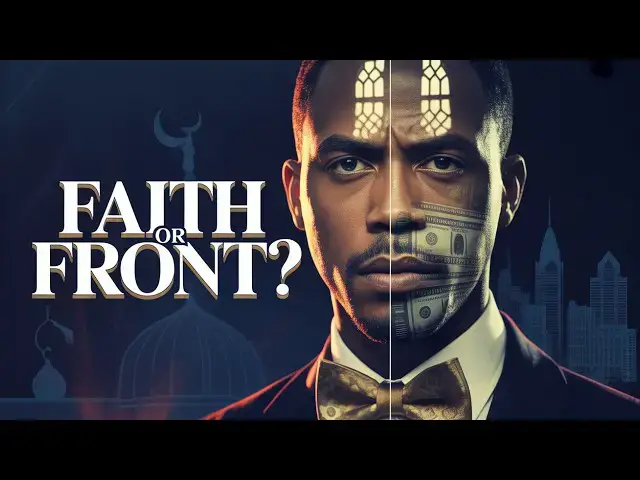
It's February 1973. Inside a converted mosque on North Broad Street in Philadelphia, men in bow ties and dark suits move stacks of cash behind a false wall. This isn't prayer. This is business. Welcome to the most controversial and unexplored chapter in organized crime history—the moment when the Philadelphia Black Mafia and the Nation of Islam became impossible to separate.
For over a decade, the Black Mafia ran one of the most sophisticated criminal operations in American history. They controlled sixty percent of Philadelphia's heroin trade. They laundered millions through Muslim-owned businesses. They used religious infrastructure as cover and the language of black empowerment as camouflage. But was the Nation of Islam complicit, or just exploited? Did leadership know about the envelopes of dirty money funding community breakfast programs? Or were individual members operating in the shadows, weaponizing faith as the perfect front?
This investigation goes deep into the contradictions that federal prosecutors chased for decades. Sam Christian, the disciplined mastermind who studied Malcolm X by day and ran criminal empires by night. Ronald Harvey, the violent enforcer who prayed five times daily and eliminated informants without hesitation. The FBI's Operation Sundown. The wiretaps that captured coded religious language. The halal butcher shop where half a million in heroin changed hands at dawn. The handshake with the Chicago Outfit that connected two underworlds. The disappeared informants. The minister's sermon that ended the alliance. And the ultimate question that still haunts Philadelphia: when survival and morality collide in abandoned neighborhoods, where do you draw the line?
This is the story they tried to bury. The alliance no one wanted to admit. The legacy still debated in barbershops, mosques, and courtrooms.
What do you think—was it faith, or was it just the perfect front? Drop your perspective below.
-~-~~-~~~-~~-~--~-~~-~~~-~~-~--~-~~-~~~-~~-~-
⚠️ Content Disclaimer:
This video is created for educational and informational purposes only. We do NOT glorify, promote, or encourage any form of criminal activity.
All visuals, audio, and materials used in this video are either:
✔ Created using AI tools, or
✔ Sourced from royalty-free platforms with valid licenses.
Some images and characters have been generated using AI and do not represent real people or events.
No copyrighted content belonging to others has been used without permission.
❤️ Support the Channel:
If you enjoy learning about real-life crime stories, history, and social issues, don't forget to:
Show More Show Less View Video Transcript
0:00
It's February 1973 and the phones inside a converted mosque on North Broad Street
0:06
in Philadelphia are ringing off the hook. Outside, three black sedans idle
0:11
in the cold, exhaust rising into the gray winter sky. Inside, men in dark
0:16
suits and bow ties move cash stacks of it from leather bags into filing cabinets behind a false wall. This isn't
0:23
a typical Friday prayer service. This is business. the kind that doesn't get
0:29
recorded in ledgers or discussed in daylight. But when federal agents finally breach the location 6 months
0:34
later, battering ram in hand, warrants in pocket, they find nothing.
0:43
No cash, no books, no evidence of anything except faith. Just prayer rugs
0:49
arranged in perfect rows and copies of the final call stacked neatly on a table by the door. What they don't find
0:56
becomes the centerpiece of a 10-year investigation into something unprecedented. A crime syndicate that
1:02
used religious infrastructure as cover and a religious movement that may have looked the other way or may have been
1:08
more involved than anyone wanted to admit. Some called it a marriage of convenience. Others called it an unholy
1:14
alliance. A few insiders speaking years later under condition of anonymity called it something else entirely.
1:22
Survival. The Philadelphia Black Mafia didn't invent organized crime in America's black neighborhoods, but they
1:28
perfected something others had only whispered about. They weaponized faith. Or did they? Because here's the
1:35
contradiction that federal prosecutors could never resolve. Many of the men involved were true believers. They
1:41
prayed five times a day. They fasted during Ramadan. They gave generously to
1:47
community programs. They also extorted local businesses, trafficked heroin by the kilogram, and eliminated rivals
1:54
without hesitation or remorse. So, which came first? The crime or the cover? The
2:00
muscle or the ministry? The cash or the conversion? No one can agree. Not the prosecutors
2:08
who spent careers chasing ghosts. Not the survivors who watched their neighborhoods transform. Not even the
2:14
sons and daughters left behind, still arguing over their father's legacies in living rooms across Philadelphia. What
2:20
we do know is this. In the late 1960s, two movements collided in the streets of
2:25
North Philadelphia. One promised black empowerment through discipline, faith, and economic. The other promised it
2:32
through power, fear, and territorial control. And for a brief, bloody moment,
2:38
roughly 8 years, they became indistinguishable. The money flowed in both directions.
2:44
The personnel overlapped, the rhetoric synchronized, and the consequences for
2:49
thousands of families caught in the middle were devastating. So get ready to enter the shadows of the mafia universe.
2:57
The truth is, we don't know everything about his early life. Some Christian, the man most historians point to as the
3:03
ideological architect of the black mafia, grew up in the Richard Allen Holmes, a sprawling public housing
3:10
project in North Philadelphia. The year was 19. The Korean War was raging.
3:15
Truman was president and in Philadelphia's black neighborhoods, the future felt like a locked door. No one
3:21
had given you the key. Christian's father worked sporadically at the Navyyard, one of the few places that
3:27
would hire black men for industrial labor. His mother cleaned houses in Chestnut Hill for white families who
3:33
never learned her name. Wadh her the girl even though she was 43 years old. The neighborhood was poor, but it wasn't
3:40
yet desperate. That would come later. With the heroine, with the highway construction that cut communities in
3:46
half, with a factory closures that left entire blocks unemployed, Christian was
3:51
bright. Teachers noticed. He read voraciously everything he could get his hands on. Malcolm X's speeches
3:58
transcribed in Muhammad Speaks, Elijah Muhammad's columns on the nature of the white devil and the necessity of black
4:04
economic independence. James Baldwin, Richard Wright, but also crime novels,
4:12
also political theory. He didn't just absorb them. He studied their structure,
4:18
their rhetoric, their power. He noticed patterns. He noticed how language could
4:23
move people to action or paralysis. But he also noticed something else, something that would shape everything
4:30
that came after. The Italian numbers runners on the edge of his block never got hassled by beat cops. They operated
4:36
in plain sight, taking bets outside corner stores, counting money on parked benches. The Jewish lone sharks operated
4:43
openly on South Street, storefronts with painted windows and back rooms where interest rates were negotiated. The
4:50
Irish controlled the docks, the unions, the flow of goods in and out of the
4:56
city. They had systems, they had protection, they had infrastructure.
5:01
The Black Hustlers, they got arrested. They got beaten in the back of police
5:07
vans. They got sentences three times longer for the same crimes. They operated alone, visible, vulnerable.
5:15
Therefore, by the time Christian was 16 years old, sitting on the steps of his building, watching the world move around
5:22
him, he'd developed a theory that was both brilliant and dangerous. Black
5:27
people needed their own syndicate, organized like the Italians, with hierarchy and rules, disciplined like
5:34
the Muslims, with codes of conduct and public respectability, invisible like the Jews, moving money through
5:40
legitimate businesses. It was a seductive idea. It was also in 1967
5:46
Philadelphia completely unprecedented. Christian began attending Nation of Islam meetings at Temple 12 in 1964.
5:54
Just months after Malcolm X's suspension from the movement, he sat in the back, listened intently, took notes in a small
6:02
black notebook he carried everywhere. He never formally join never took his ex,
6:07
never submitted to the full dietary and behavioral restrictions, but he adopted the aesthetics with precision, the
6:14
cleancut look, the formal almost Victorian speech patterns, the rhetoric
6:19
of self-determination and black economic power. However, he was also running dice
6:25
games and small-cale loan operations on the side, lending money at 20% interest
6:30
to factory workers who couldn't wait until Friday for their paychecks. He wasn't hiding it, but he wasn't
6:35
advertising it either. He presented two faces to two communities. And for a
6:41
while, both communities accepted him. This duality, this ability to exist
6:46
simultaneously in two incompatible worlds would define the black mafia for
6:51
the next decade. Christian met Ronald Harvey in 1965 at a boxing gym on Cecil
6:57
Moore Avenue. Harvey was different, flashier, more volatile. Where Christian
7:03
was the thinker, mapping out long-term strategies and political angles, Harvey was the enforcer, the man who handled
7:10
problems that couldn't be solved with words, he'd done two years in Holsburg prison for aggravated assault. He'd
7:16
grown up in the Brewery Town section where violence wasn't aberrant was Tuesday. But Harvey also had discipline.
7:23
The kind you can't teach. The kind that comes from somewhere deep and unshakable. He didn't drink. He didn't
7:30
use. He showed up on time. He kept his word. Even when his word involved something brutal. Together, they began
7:38
recruiting carefully, methodically. They looked for men who'd done time, men who had nothing
7:45
to lose and everything to prove. But they also looked for men with discipline. Men who could sit through a
7:52
business meeting without exploding. Men who understood that the goal wasn't chaos. It was control. No junkies.
7:59
Absolutely no junkies. That was the first rule. No loudmouths who'd brag in
8:04
bars about scores that hadn't happened yet. No one who couldn't pass as respectable in a room full of believers
8:10
who couldn't sit in a mosque without drawing the wrong kind of attention. They found about 20 soldiers who fit the
8:16
bill. Most had some connection to local mosques, not as formal members necessarily, but as cousins, brothers,
8:24
neighbors, men who'd grown up hearing the same messages about black pride. And so by 1968, the group had a name
8:32
whispered in after hours clubs and precinct houses alike. The Black Mafia,
8:37
it wasn't flashy. It wasn't clever. It was a statement of intent. They ran
8:43
numbers in north and west Philadelphia, taking over corners previously controlled by aging Italian
8:49
subcontractors who reported up to the Bruno family in South Philly. They moved methodically block by block. No, no
8:57
shootouts in daylight. No headlines, just economic pressure undercutting
9:03
prices, offering better odds, paying out festerand, the occasional carefully orchestrated disappearance. A rival
9:10
who'd been worn twice would simply stop showing up. His corner would be empty the next morning. Someone new would be
9:17
there by afternoon. Therefore, the Italians, already stretched thin by
9:22
federal investigations and their own internal power struggles, didn't push back as hard as they might have in
9:29
earlier decades. The vacuum expanded. Christian and Harvey filled it with
9:34
precision. But the real shift, the moment when everything changed, came in 196. That's when they started showing up
9:41
at mosques not just as attendees, but as donors. large donors, cash in plain white
9:48
envelopes handed directly to ministers after services, support for community
9:53
breakfast programs that fed children before school, security for events, well-dressed men who kept order without
10:00
the theatrics of uniformed police. It looked like legitimacy. It felt like
10:05
empowerment, like the community taking care of its own. Nevertheless, the money
10:10
came from the streets, from numbers, from loans, from the heroin that was already starting to flood into North
10:16
Philadelphia, and everyone knew it. Most chose not to ask. Some actively chose
10:23
not to know. The 1970s were the golden years when ambition met opportunity and
10:29
the bodies started piling up in places no one wanted to look. By 1971, the
10:35
Black Mafia controlled an estimated 60% of the heroin trade in Philadelphia, a city already drowning in addiction,
10:42
where emergency rooms saw overdoses every night and entire blocks looked like zombie movies in daylight.
10:48
Conservative federal estimates put their monthly take at over $200,000.
10:53
In today's money, adjusted for inflation. That's over $1.3 million a
10:59
month. They laundered it through car washes that never seemed to wash many cars, barber shops that stayed open late
11:05
but had few visible customers and critically through Muslim-owned businesses that had the added benefit of
11:12
community trust and religious protection. There was a bakery on Germantown Avenue that made the best
11:17
bean pies in the city run by a man everyone called brother Kareem. The front of the shop was legitimate taxual
11:24
customers, actual pies, actual receipts. The back office was where cash got
11:29
counted, bundled, and distributed. There was a clothing store on Cecil Moore that sold suits and bow ties in formal attire
11:36
for mosque services. It also functioned as a message center where enforcers received instructions without anyone
11:43
ever saying anything incriminating out loud. There was a restaurant on Broad Street, Halo Certified, that served the
11:50
community and also served as a meeting spot where Christian and Harvey could sit in a back booth for 3 hours
11:55
discussing territory and targets over untouched plates of food. The lines blurred until they disappeared.
12:01
Customers who came in for a clean shirt might leave past men in the back room discussing who controlled which corner,
12:07
who was behind on payments, who needed to be reminded of the rules. But the operation that best illustrates the
12:14
scope of their ambition, the sheer audacity of what they'd built happened in February 1973. The same month,
12:21
federal agents were watching the mosque. The same month everything started to unravel, even though no one knew it yet.
12:28
It involved a Colombian supplier named Rodrigo. No last name in the files. A
12:33
shipment worth half a million in raw product. Uncut, pure enough to kill if you weren't careful. And a handoff
12:40
inside a hallow butcher shop in West Philadelphia, a place that sold goat meat and lamb and served the Muslim
12:46
community and smelled like blood and spices every hour of every day. Picture the scene in full detail. It's 8:30 on a
12:54
Wednesday morning in late February. The sky is overcast, threatening snow. The
13:00
shop isn't open yet. Metal security gates still cover the front windows. A refrigerated truck, white with faded
13:07
commercial lettering, pulls into the alley behind the building. Tires crunching on broken glass and gravel.
13:14
Three men exit. They're dressed in work uniforms blue coveralls, gloves, the
13:20
kind of anonymous workear that makes you invisible in a city. But they move wrong.
13:26
to careful to aware of their surroundings. They scan rooftops. They check sight
13:32
lines. Inside the shop, Harvey and two lieutenants wait near the meat lockers,
13:37
breath visible in the refrigerated air. One of the lieutenants is a man named Eugene Boaines, 644, former military.
13:45
The kind of presence that ends arguments before they start. The other is James Fox, smaller, quieter, the accountant of
13:53
the crew, the one who tracked every dollar and knew where every body was buried literally and figuratively. The
14:00
Colombians expect Italians. They've been dealing with Italian intermediaries for 2 years. They get black men in bow ties
14:06
and dark suits standing in a hollow butcher shop at dawn. There's hesitation, visible tension. Hands move
14:15
closer to waistbands. Harvey speaks first. calmly in Spanish. He learned during his
14:22
two years in homes where half the population was Porto Raan and you either learned the language or you fought every
14:28
day. He explains the new structure. The Italians have stepped back. This is a
14:34
black neighborhood now. Black supply lines, black distribution. The
14:39
Colombians don't have a choice. Not really. The Italians, specifically a Bruno family captain named Joseph
14:46
Ruggnetto Already agreed to the handoff. This is just a courtesy introduction. A
14:52
formality, but Harvey makes it clear. This is the future. Adapt or find new
14:59
markets. The dope moves from the truck into the freezer, hidden inside hd cow carcasses hanging from steel hooks. Each
15:06
carcass has been prepared in advance. Hollowed out just enough to fit vacuum-sealed packages of heroin without
15:12
being obvious to a casual inspection. It's brilliant. It's disgusting. It
15:17
works. The Colombians leave. The Black Mafia now controls the supply line, not
15:22
just the street corners. Therefore, their power multiplies overnight. Within two months, they're distributing to
15:29
Newark, to Baltimore, to Richmond, to smaller cities up and down the East Coast, where Italian crews are facing
15:36
RICO pressure and can't operate as openly. The Black Mafia becomes a regional power. However, this expansion
15:43
draws attention not just from the FBI, which has been watching for months, but from rivals who'd been patient, waiting
15:50
for a mistake, waiting for an opening. The JBM, the Junior Black Mafier, younger, hungrier crew that resents
15:57
taking orders and wants the crown for themselves. Independent operators who'd been paying street taxes and are tired
16:03
of it, and critically from within. Because money and power don't just attract loyalty. They attract ambition,
16:11
paranoia, and betrayal. The Nation of Islam's official position, articulated
16:16
then and now, is that they had no organizational ties to the Black Mafia.
16:22
Individual members may have strayed. They acknowledge personal failings, but
16:27
the institution itself remained pure, focused on spiritual development and community uplift. The evidence, though,
16:34
tells a more complicated story, one that federal investigators chased for years without ever finding the smoking gun
16:41
that would hold up in court. In 1972, the FBI's Philadelphia field office,
16:47
located in the custom house building downtown, opened a file coden named Operation Sundown. The name was
16:54
symbolic. They were investigating activity that happened in the shadows after the lights went out in the spaces
17:00
between respectability and criminality. the target. Financial flows between
17:05
suspected black mafia operatives and several mosques in the region, specifically Temple 12 on North Broad
17:12
and Temple 7 in West Philadelphia. They assigned 12 agents full-time. They
17:17
requested wiretap warrants. They flipped informants. They followed the money with
17:22
the kind of obsessive detail that only federal bureaucracies can sustain. Wiretaps picked up coded language.
17:29
Conversations that sounded religious but had double meanings. Brothers didn't always mean spiritual brothers.
17:35
Sometimes it meant soldiers, enforcers, crew members. Donations didn't always
17:41
mean charity. Sometimes it meant payments, laundering, tribute. Community
17:46
programs sometimes meant exactly that and sometimes meant fronts for moving
17:51
cash. Nevertheless, nothing was explicit enough for prosecution. Christian and
17:57
Harvey were careful. Paranoid even they never discussed specific crimes inside
18:03
the mosques. They kept the worlds separate barely, but enough. They spoke
18:08
in metaphors. They used intermediaries. They met in public spaces where recording devices were unlikely. But the
18:15
appearance of connection was enough to serve a purpose. It gave them cover in the community, a veneer of legitimacy
18:22
that street gangs could never achieve. Beat cops hesitated before raiding a known gangster if he was photographed at
18:28
a charity dinner with ministers and activists and city councilmen.
18:34
Journalists wrote softer stories. Prosecutors moved slower, worried about accusations of religious persecution or
18:40
racial targeting. Therefore, the Black Mafia weaponized respectability in a way few black criminal organizations had
18:47
before or since. They understood something fundamental. In America, especially in the 1970s, the optics of
18:55
religion could deflect almost anything. But not everyone in the Nation of Islam was comfortable with the arrangement.
19:01
Minister Jeremiah Shabbaz, the longtime head of Temple 12, was a complicated
19:07
figure. By all accounts, he was a true believer, a man who dedicated his life to the teachings of Elijah Muhammad,
19:14
who' built the temple from a storefront into a thriving community center. He also wasn't naive. He knew who was
19:20
sitting in his pews. He knew where some of the envelope money came from. According to later testimony from former
19:27
members, Shabbaz walked a tightroppe. He accepted financial support for programs that genuinely helped people breakfast
19:34
fast for children, rent assistance for families, jobs for exconvicts, trying to
19:39
go straight, but he also enforced boundaries. No guns in the mosque, no
19:45
discussions of criminal activity on temple property, no flaunting of wealth that would draw attention. He was a
19:51
compromise and like all compromises, it satisfied no one completely. The FBI saw
19:57
it as complicity. Community activists saw it as pragmatism. The criminals saw it as permission or at least tolerance.
20:05
The truth, as usual, was probably somewhere in the messy middle, a place where moral clarity dissolves into
20:12
shades of gray. Paranoia crept into the Black Mafia around 1974,
20:17
the way it always does when organizations get too big and too successful. There were too many people,
20:23
too much money, too many variables that couldn't be controlled. Harvey started
20:30
to suspect informants everywhere in the crew, in the mosques, among the women
20:36
they trusted. He wasn't wrong. The FBI had flipped to mid-level enforcer Shrabart New Mims and Lonnie Dodson
20:43
offering witness protection and new identities in exchange for testimony. Both men had families. Both men had seen
20:51
enough bodies to know they'd eventually be won. They talked. They wore wires.
20:56
They gave the FBI names, dates, locations. But Harvey's response was
21:01
disproportionate and counterproductive. He authorized a per over 6 months in
21:07
1974 and 75. At least four suspected informants vanished. One, a numbers
21:13
runner named Terrence Lark, was found in the schoolill river, badly decomposed.
21:20
Dental records required for identification. The others Donald Day, Jerome Sinclair, and a man known only as
21:26
Peanut were never recovered. Their families held funerals with closed c. Their names went into police files.
21:33
Marked presumed deceased. Nobody. Christian, who'd always preached discipline over emotion, strategy over
21:40
tactics, began losing control of his partner. The violence was attracting exactly the kind of heat they'd spent
21:47
years avoiding. headlines, task forces, witness protection programs that made
21:53
people willing to talk. Therefore, fractures appeared within the organization.
21:58
Some of the crew wanted out. They'd made money. They wanted to retire, go
22:04
aheadate, invest in legal businesses, and disappear. Others wanted Harvey out.
22:09
They saw him as a liability, a rabid dog that needed to be put down before he brought the entire structure crashing
22:15
down. Nevertheless, no one moved. Fear is a powerful glue. Harvey had killed
22:22
too many people. He knew too much and he was watching everyone.
22:29
The broader mafia universe wasn't watching passively. In Chicago, the Afith, Italian organized crime syndicate
22:35
that controlled everything from Las Vegas casinos to Midwestern drug distribution, had noticed the black
22:41
mafia's heroin operation and saw an opportunity. The federal government was cracking down hard on Italian
22:47
organizations. Post Rico surveillance was intense. Informants were everywhere.
22:53
But a black organization in East Coast cities that was different. Less
22:58
scrutiny, different neighborhoods, different law enforcement relationships.
23:03
In 1973, a sitdown was arranged in a neutral city, Cleveland, at a restaurant
23:09
in Little Italy that had been hosting mob meetings since Prohibition. two representatives from the black mafia,
23:15
Sam Christian, and a lieutenant named Richard Pork Chops. James met with an outfit lieutenant named James the
23:22
Bummer, a man with connections to Chicago, Milwaukee, and the Teamsters.
23:27
The Italians proposed a partnership. The Black Mafia would handle street level distribution in East Coast cities where
23:33
Italian crews faced too much federal scrutiny. Baltimore, Newark,
23:41
parts of New York. In exchange, they'd get access to outfit connected
23:46
suppliers, better product, better prices, better protection, and political connections in certain jurisdictions
23:53
where the Italians still owned judges and prosecutors. Christian and Harvey agreed cautiously. They didn't trust the
24:00
Italians, but they understood the math. The deal held for about 18 months,
24:06
generating enormous profits on both sides. The Black Mafia moved. Outfit
24:12
supplied heroin through black neighborhoods where Italian crews couldn't operate without standing out.
24:19
The outfit got a cut without the risk. Everyone made money. However, when a shipment went missing in Detroit in late
24:25
1975 20 kg, worth about 2 million on the street, the partnership fractured. The
24:31
outfit blamed the Black Mafia. The Black Mafia blamed a rogue crew they said was operating without authorization. The
24:38
truth disappeared with a dope, probably into someone's personal pipeline, sold independently for pure profit. The
24:45
outfit pulled back. The supply lines dried up. The Black Mafia lost access to
24:50
the best product and the political protection that came with it. Therefore, desperation set in. They started taking
24:58
bigger risks, cutting corners, trusting the wrong people. They bought from less
25:03
reliable suppliers. They expanded into territories they didn't fully control.
25:08
They started internal wars over smaller and smaller pieces of a shrinking pie.
25:14
At the same time, the community was turning. Heroin didn't just hurt other criminals. It destroyed families.
25:21
Mothers buried sons who overdosed in abandoned houses. Children went hungry while parents chased the dragon in
25:28
shooting galleries that operated openly on residential blocks. Activists who'd once quietly tolerated the black mafia's
25:35
presence hood. Accepted that they at least kept white dealers out, at least
25:40
invested some money back into the neighborhood began speaking out. Ministers condemned them from pulpits,
25:46
naming no names but making the message clear. Even within the Nation of Islam, questions were being asked at higher
25:52
levels. How much money had been accepted? From whom? For what purpose
25:57
were community programs worth the moral compromise? In 1976, Minister Jeremiah
26:03
Shabbas gave a sermon at Temple 12 that many interpreted as a veiled rebuke, a
26:09
line in the sand. He spoke of men who cloaked themselves in the garments of righteousness while profiting from the
26:15
poison that destroyed black families. He spoke of the difference between true
26:20
faith and performance. He didn't name names. He didn't point fingers. He
26:26
didn't have to. Sam Christian attended that sermon. He sat in the back as
26:31
always in his usual spot near the door. He wore a dark suit. He listened in
26:37
silence. And according to three people who were present that day, interviewed years later, he never came back. It's
26:44
unclear whether he was officially asked to leave or whether he understood the message and made the choice himself.
26:51
Either way, the separation was complete. Whatever connection had existed, tacid,
26:56
complicated, mutually beneficial, was severed. The fall was messy and slow.
27:01
The way these things usually are, there was no single dramatic moment. No
27:06
climactic shootout or midnight raid. Just a gradual collapse under the weight of its own contradictions. In 1977,
27:14
Ronald Harvu was arrested on federal drug trafficking charges. The evidence was overwhelming. wiretaps capturing his
27:21
voice, financial ledgers seized from a storage unit, and sworn testimony from Robert Mims and Lonnie Dawson, both in
27:28
witness protection, both willing to testify. Harvey was convicted in federal court and sentenced to 30 years in a
27:34
maximum security facility in Pennsylvania. He served 23, got out in the late '9s, and died in 2006. He never
27:43
spoke publicly about the black mafia or the mosque connections. Sam Christia
27:48
somehow managed to avoid indictment. Prosecutors tried. They built cases, but
27:55
Christian had insulated himself with layers of intermediaries and plausible deniability. He never touched the
28:02
product. He never made explicit threats on recorded lines. He was the ghost in
28:08
the machine. By 1979, with Harvey in prison and the organization gutted by
28:13
arrests and defections, the Black Mafia as a coherent entity was finished. The
28:19
name lingered, adopted by younger crews in Philadelphia who lacked the discipline, the vision, the
28:25
infrastructure. They were gangs, not a syndicate. They fought over corners, not
28:31
regions. Christian himself faded into obscurity in a way that still frustrates investigators. Some reports place him in
28:38
Atlanta in the 1980s, running a bookstore in a black neighborhood, selling religious texts and political
28:45
literature. Others claim he moved to the West Coast. A few insist he never left
28:50
Philadelphia, that he lived quietly under a different name, attending a different mosque, keeping his head down.
28:57
He was never charged with a major crime. No federal case ever stuck. He simply
29:03
vanished like smoke, like a ghost, like a man who'd mastered the art of existing
29:09
between worlds. The mysteries remain decades later, debated in documentaries and true crime podcasts and academic
29:16
papers. How much money actually flowed into the Nation of Islam? Was the relationship institutional or just
29:23
individual actors operating independently? Did leadership at the national level know about the Philadelphia situation and look away? or
29:30
were they genuinely in the dark trusting local ministers who assured them that donations were clean? The FBI files
29:37
partially declassified under Freedom of Information Act requests suggest knowledge at some level memos
29:43
referencing concerns about funding sources and requests for audits that were never completed but nothing
29:49
provable in court, nothing that would constitute a criminal conspiracy. Survivors from the community have deeply
29:56
mixed feelings. Feelings that haven't resolved with time. Some say the black mafia, for all their faults, kept white
30:03
dealers out of black neighborhoods, maintained a certain order, invested money back into community institutions
30:09
that government had abandoned. Others say they were predators in religious clothing, nothing more. Wolves who use
30:16
the language of empowerment while destroying the very community they claimed to protect. Both narratives have
30:22
evidence. Both are probably partially true. The children of black mafia
30:27
members namid scattered across the country struggle with the duality in ways that therapy and time haven't fully
30:33
healed. Their fathers provided put them through college, preached discipline,
30:39
pride, self-respect, showed up at school events, coached little league. But the
30:45
money that paid for those educations came soaked in blood and misery from addicts who died in alleys and families
30:52
who lost everything. How do you reconcile that? How do you honor a father who is simultaneously
30:58
your hero and someone else's nightmare? Maybe you don't. Maybe you just live in
31:04
the tension the same way the organization itself did, straddling two incompatible worlds until the weight of
31:10
contradiction finally tore it apart. The legacy isn't a single story with a clear
31:16
moral. It's a question that still hangs over North Philadelphia. over the mosques that accepted the envelopes.
31:22
Over the community programs that genuinely helped people with money that genuinely came from crime. Over the
31:28
families that cashed the checks and tried not to think too hard about the source when survival and morality
31:34
collide in neighborhoods that America has abandoned, where do you draw the line? And if that line shifts depending
31:40
on who's asking, depending on whether your child is hungry or your rent is due or your community center is about to
31:46
close, what does that say about all of us? What does it say about the choices we make when all the options are bad?
31:52
Those questions don't have clean answers. They never did. And maybe that's the real legacy. Not the bodies
32:00
or the money or the convictions but the moral ambiguity that remains decades
32:06
later refusing to resolve into something simple.
#Religion & Belief
#Recreational Drugs