live_tv
Livestream Starting Soon
00
Hours
:
00
Minutes
:
00
Seconds
Up next in 10


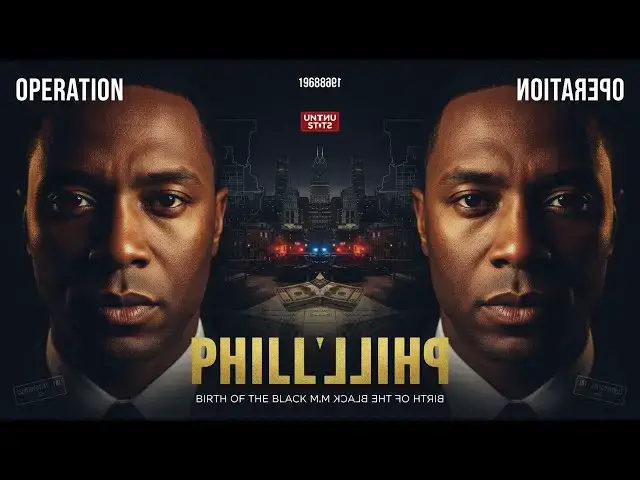
Ridge Avenue, North Philadelphia. October 14, 1968. Six men meet in a closed barbershop to discuss something that will change urban organized crime forever: Operation Philly—the systematic transformation of competing street crews into a unified criminal syndicate.
This is the untold origin story of the Black Mafia, one of the most sophisticated organized crime groups in American history. Between 1968 and 1973, Samuel Christian and his associates built a criminal empire that generated over twenty million dollars while remaining virtually invisible to media obsessed with Italian mobsters. They studied their oppressors, copied their organizational methods, and created something law enforcement didn't see coming: a hierarchical Black criminal syndicate with divisions, territories, and discipline rivaling any Mafia family.
Through FBI surveillance reports, sealed court documents, and testimony from federal RICO prosecutions, this documentary reveals how Operation Philly converted street-level chaos into criminal enterprise. We explore the barbershop meetings where strategy was planned, the territorial consolidation that built their empire, the corruption networks that protected them, and the federal investigation that finally brought them down.
This isn't a story of simple criminality. It's a complex examination of how systemic oppression, limited legitimate opportunity, and sophisticated organizational thinking converged to create an empire built on numbers rackets and narcotics distribution—all while leaders claimed they were practicing Black economic empowerment.
Was Operation Philly criminal entrepreneurship adapting to systemic racism, or exploitation disguised as liberation? The answer is more complicated than either narrative allows.
Subscribe for more untold stories from the Mafia Universe—the hidden empires, forgotten architects, and operations that changed organized crime forever.
Keywords: Black Mafia, Operation Philly, Philadelphia organized crime, Samuel Christian, criminal syndicate formation, 1960s crime, RICO prosecution, urban organized crime, numbers racket, African American mafia history, true crime documentary, federal investigation, criminal enterprise, organized crime origins
-~-~~-~~~-~~-~--~-~~-~~~-~~-~--~-~~-~~~-~~-~-
⚠️ Content Disclaimer:
This video is created for educational and informational purposes only. We do NOT glorify, promote, or encourage any form of criminal activity.
All visuals, audio, and materials used in this video are either:
✔ Created using AI tools, or
✔ Sourced from royalty-free platforms with valid licenses.
Some images and characters have been generated using AI and do not represent real people or events.
Show More Show Less View Video Transcript
0:00
Ridge Avenue, North Philadelphia, October 14th, 1968.
0:05
11:47 p.m. Six men in dark suits sit in the back room of a barber shop that
0:12
closed hours ago. The only light comes from a single bulb hanging over a card table. On that table, $17,000 in cash,
0:21
three handguns, and a handwritten ledger listing 43 names. Outside, autumn rain
0:27
hammers the pavement of a neighborhood where most people earn $90 a week. The oldest man at the table, barely 35,
0:34
speaks in a voice that doesn't need to be raised. He's explaining why independent operators can't survive
0:40
what's coming. Why organization means survival. Why the Italians control
0:45
everything because they understood something Black Street Cruise never did. Structure defeats chaos every single
0:51
time. This meeting will last 47 minutes. When it ends, Philadelphia's criminal
0:56
underworld will have changed forever. But here's what none of them know yet. The FBI has a confidential informant
1:03
three blocks away who just made a phone call. The organization they're about to create will generate over $20 million in
1:10
7 years. And the man speaking so confidently about structure will be in federal prison by 1975,
1:17
watching everything he built collapse from the inside. This isn't the story Hollywood told about the mafia. No
1:23
Sicilian traditions, no blood oats to omen. This is the story of how street level operators in one of America's
1:30
poorest neighborhoods studied their oppressors, copied their methods, and built something law enforcement didn't
1:36
see coming until it controlled entire sections of a major American city. The contradiction that defines their story.
1:43
They preached black liberation while distributing poison in black neighborhoods. They quoted Malcolm X
1:49
while terrorizing black business owners. They called it economic empowerment while building an empire on extortion
1:56
and narcotics. Between 1968 and 1975, what became known as the Black Mafia
2:02
went from street crews running small-time operations to a sophisticated criminal syndicate that federal
2:08
prosecutors would later describe as one of the most disciplined organized crime groups they'd ever investigated. Yet,
2:15
most Americans never heard the name. The media was obsessed with Italian mobsters. Law enforcement assumed black
2:21
criminals couldn't organize at that level. That assumption was their greatest advantage. So get ready to
2:27
enter the shadows of the mafia universe, where the most dangerous empires are the ones nobody's watching, and where
2:33
Operation Fila, systematic conversion of street chaos into criminal enterprise,
2:39
changed the rules of urban organized crime forever. Act one, origins. The
2:46
Street Crew era 1945 to 1967. Titris. We
2:51
don't know everything about the early lives of the men who would transform Philadelphia's underworld. What we do
2:57
know comes from sealed juvenile records obtained through freedom of information requests, interviews with former
3:03
associates conducted by academic researchers in the 1990s, and the fragmentaryary memories of a generation
3:09
that's mostly gone now. But the picture that emerges is clear enough. These men
3:14
were products of a specific time and place where legitimate opportunity was systematically denied and survival
3:21
required adaptation to brutal circumstances. North Philadelphia in the immediate post-war years was a
3:27
neighborhood in transition. The Great Migration had brought tens of thousands of black families north from segregated
3:32
southern states, all chasing the same dream. Factory jobs, decent housing, and
3:39
a future for their children. What they found was a different version of the same oppression. Redlinining confined
3:45
them to specific neighborhoods. Union discrimination kept them out of the best paying jobs. Police treated them as
3:52
suspects rather than citizens. The neighborhood around Colombia Avenue Lar renamed Ciso Bemore Avenue after the
3:59
civil rights attorney became the heart of black Philadelphia. Three-story brick row houses packed with extended
4:05
families. Corner groceries owned by white merchants who lived in the suburbs and left before dark. Social clubs were
4:12
men gathered after brutal shifts at the Navyyard or the steel mills and everywhere threading through every
4:18
aspect of daily life. The numbers game, the numbers racket was the economic
4:23
foundation of the neighborhood's underground economy. For a dollar, sometimes just a quarter you could bet
4:29
on a three-digit number drawn from lottery results or stock market figures. The odds of winning were 600 to1, but
4:36
the payout was 500 to1 with a housekeeping the difference. It seems like terrible mathematics now. But for
4:43
people earning $15 a week, that $500 dream was worth the dollar risk. But
4:49
there was a problem with the numbers game as it existed in the 1950s and early 1960s. The profits flowed out of
4:56
black neighborhoods into white hands. Italian organized crime families, particularly the Angelo Bruno family
5:02
that controlled Philadelphia's underworld from the late 1950s onward, owned the major numbers.
5:09
Banks, they provided the capital to cover large winds and the protection to operate without constant police
5:15
interference. black operators, the policy writers who took bets on street corners, the runners who collected
5:21
money, the counters who tallied results worked for them, generating wealth that
5:26
enriched people who never set foot in North Philadelphia except to collect. Therefore, when Samuel Christian came
5:33
home from a 3-year prison sentence in 1966, he saw an opportunity that others
5:38
had missed. Christian had been born in 1933, raised in the same North Philadelphia neighborhoods where he'd
5:45
later built his empire. His childhood was unremarkable in the context of his time and place. Poverty, limited
5:52
education, early exposure to street life. He'd been arrested multiple times as a juvenile for petty theft and
5:59
assault. His first adult conviction came at 194 armed robbery, resulting in a
6:04
4-year sentence at Gratifford prison. Yet something happened during that first incarceration that would shape
6:10
everything that followed. Christian became a voracious reader. He studied history, political theory, and
6:17
particularly the organizational structures of successful institutions. He read about military hierarchies,
6:23
corporate management, and criminal organizations. When Malcolm X was assassinated in 1965, Christian was
6:30
still in prison reading the speeches and philosophy that would influence a generation. Nevertheless, Christian
6:36
understood something that separated him from idealists. Philosophy without power was just words.
6:43
When he returned to North Philadelphia in late 1966, the neighborhood was simmering with tensions that would soon
6:49
explode. The civil rights movement had challenged legal segregation in the south, but done little to address
6:55
economic inequality in northern cities. Urban renewal programs were demolishing black neighborhoods in the name of
7:01
progress, displacing thousands without providing alternatives. Police brutality was constant and rarely punished. Young
7:09
black men faced unemployment rates approaching 30%. Territori
7:14
began recruiting with a specific message. Black economic power couldn't be achieved through protest or
7:20
legislation alone. It required taking control of the economic systems that already existed in their neighborhoods,
7:27
legal or otherwise. His first recruits came from men he'd known before prison, and others he met through connections at
7:34
the local mosque. The Nation of Islam had a strong presence in North Philadelphia, preaching black
7:39
self-sufficiency, discipline, and separation from white institutions. Several of the men who would become
7:45
black mafia founders had connections to the Noi, though most weren't formal members. They adopted the organization's
7:52
emphasis on sharp dress, behavioral discipline, and economic nationalism.
7:58
While adapting these principles to criminal enterprise, among the early circle, Lonnie Dawson, a former numbers
8:04
runner who understood the mechanics of the racket but resented working for Italian bosses. Walter Hudgens, who'd
8:10
done time for assault and emerged with connections to various street crews across the city. Ronald Harvey, younger
8:16
than the others, but already developing a reputation for intelligence and ruthlessness, and several others whose
8:23
names would appear in FBI files, but who remained deliberately obscure, even in later prosecutions. However, these men
8:30
faced a fundamental challenge. They had ambition, but limited capital, connections, but no structure, street
8:37
credibility, but no organizational discipline. Throughout 1967, Christian's
8:43
group operated as a loose association rather than a formal organization. They ran small-scale operations, taking over
8:49
corner numbers spots, collecting debts for independent operators in exchange for percentages, providing muscle for
8:56
lone sharks. They were in this phase barely distinguishable from dozens of
9:01
other street crews operating in Philadelphia at the time. Yet, Christian was planning something larger. He
9:06
studied how Italian crime families operated, their hierarchical structures, their division of labor, their rules for
9:13
resolving internal disputes without attracting law enforcement attention. He recognized that the Italians power came
9:20
not from individual toughness, but from organizational cohesion. One mobster
9:25
could be arrested, killed, or flipped. But the organization continued because roles were clearly defined and
9:32
succession was predetermined. Therefore, in mid1 1967, Christian began proposing
9:38
a radical restructuring of how black criminal operators in Philadelphia did business. Instead of competing with each
9:45
other for the same territories and opportunities, they would organize under unified leadership. They would establish
9:51
rules, enforce discipline, and present a united front to both law enforcement and
9:57
rival organizations. They would in effect create a black version of the Italian mafia not as imitation but as
10:04
recognition that organization defeats chaos. Nebertis selling this vision required more than words. It required
10:11
demonstrating that cooperation was more profitable than competition between August and October 1967. Christian's
10:18
group orchestrated what would later be described in court documents as a consolidation campaign. They approached
10:25
independent numbers, writers, small-time lone sharks, and street level operators
10:30
with a simple proposition. Join the organization, contribute a percentage of proceeds, and receive protection and
10:37
support or refuse and face coordinated competition that would drive them out of business. The approach was calibrated
10:44
carefully. They didn't start with violence that attracted police attention. They started with economics.
10:51
They undercut prices. They offered better odds to betterers, absorbing short-term losses to capture market
10:58
share. They provided muscle to collect debts that independent operators couldn't collect alone, then kept a
11:03
percentage as payment. They created situations where cooperation became more profitable than independents. But there
11:09
was a problem. The Italian crime families noticed money slowing down from their black neighborhood operations. In
11:16
late 1967, according to FBI surveillance reports obtained decades later through
11:21
foyer requests, representatives of the Angelo Bruno family made inquiries about what was happening in North
11:26
Philadelphia. They sent messages through intermediaries that the independent operators being absorbed into Christians
11:32
network were operating under Italian protection and that any interference would be met with consequences. This was
11:39
the first major test of Christian's organizational theory. A less disciplined group would have either
11:44
backed down or reacted with immediate violence. Christian chose a third path that demonstrated the strategic thinking
11:51
that would define the black mafia's operations. Therefore, he requested a meeting with Bruno family
11:57
representatives to discuss territorial boundaries and mutual interests. The meeting allegedly took place in early
12:04
1968 at a restaurant in South Philadelphia neutral ground where both sides felt secure. Christian brought
12:11
three associates, all dressed impeccably, all maintaining perfect composure. The Italians came expecting
12:18
to dictate terms to ambitious street thugs who had overstepped. What they encountered was something different. Men
12:25
who spoke the language of business, who understood organizational hierarchy, who presented a coherent vision rather than
12:31
emotional demands. Christian's position, as later reconstructed from multiple sources, including testimony from
12:38
participants who eventually cooperated with prosecutors, was straightforward. Black neighborhoods would be run by
12:44
black operators. The Bruno family could either accept this and maintain peaceful
12:50
coexistence, or they could fight a war that would bring intensive law enforcement scrutiny to everyone's
12:55
operations. Christian didn't threaten direct violence. Stat would have been suicide against a far more powerful
13:01
organization. Instead, he threatened disruption. Robberies of Italian controlled operations, anonymous tips to
13:08
police, chaos that would hurt everyone's profits. Oe. Christian also offered something. A percentage of black mafia
13:15
profits in exchange for recognition of territorial boundaries. T Italians,
13:21
according to multiple accounts, were caught between anger at the challenge to their authority and pragmatic
13:26
recognition that North Philadelphia's street level operations were becoming more trouble than they were worth.
13:32
Police pressure on Italian organized crime was intensifying. Federal investigations were using new tools like
13:38
RICO to prosecute entire organizations. Fighting a territorial war in black
13:44
neighborhoods over relatively small revenue streams made little strategic sense. Nevertheless, the meeting ended
13:50
without clear resolution, which was itself significant. The Bruno family didn't order Christian's elimination,
13:57
which meant there was room for negotiation. Over the following months, an uneasy
14:02
accommodation developed. The black mafia controlled street level operations in predominantly black neighborhoods. They
14:08
kicked a percentage of area sources suggest between 10 and 20% to the Bruno
14:13
family as a form of tribute or licensing fee. In exchange, they operated without
14:19
Italian interference and gained access to some Italian controlled resources,
14:24
particularly narcotics wholesale supply lines. Yet, this arrangement contained the seeds of future conflict. The Black
14:31
Mafia was growing rapidly, absorbing independent operators, expanding into
14:36
new territories, and generating increasing revenue. The more successful they became, the more the percentage
14:42
they paid to the Italians represented money they resented losing. The more organized they became, the less they
14:49
needed Italian protection or approval. But this was only the beginning, and their next decision would echo for
14:55
decades. Act to the rise, Operation Philly Syndicate Formation 1 19681973,
15:02
the transformation from Street Crew to Criminal Syndicate began with what insiders called Operation Philly. Though
15:09
whether this was an official name or later reconstruction by investigators remains unclear. What's certain is that
15:15
between late 1968 and early 1970, the Black Mafia underwent systematic
15:20
reorganization that created one of the most disciplined criminal enterprises in American urban history. We're in January
15:27
1969 and Samuel Christian has called a meeting of approximately 20 core members at a location that would become their
15:34
informal headquarters, a barber shop on Ridge Avenue owned by an associate who demade enough money from the numbers
15:40
game to invest in legitimate businesses. The barber shop closed at 6:00 p.m., but
15:45
the back room stayed active until late into the night, functioning as office, meeting space, and strategic planning
15:53
center for an emerging criminal empire. Therefore, Christian laid out a vision that was radical in the context of Black
15:59
Street crime in 1960s Philadelphia. They would stop operating like independent crews competing for the same scraps and
16:07
start functioning like a corporation with divisions, hierarchies and coordinated strategy. The organizational
16:13
structure Christian proposed borrowed from multiple models. From the Italian mafia, he took the concept of formal
16:20
hierarchy with bosses, under bosses, and soldiers. From the Nation of Islam, he
16:26
adopted strict behavioral codes. Members were forbidden from using the drugs they sold. required to dress professionally
16:32
and expected to maintain discipline in both their criminal and personal lives. From corporate management, he
16:38
implemented division of operations into specialized units, each with clear responsibilities and reporting
16:44
structures. However, implementing this structure required more than just announcing it. It required demonstrating
16:50
that organization produced better results than chaos. The numbers racket remained the foundation, but Christian's
16:57
organization transformed how it operated. Instead of individual policy writers competing against each other
17:03
often in the same neighborhoods, they were organized into territories with assigned operators. Each territory had a
17:10
manager who supervised multiple writers, collected daily proceeds, and reported up the chain. The managers reported to
17:17
zone supervisors who controlled multiple territories and handled resolution of disputes, enforcement of collections,
17:24
and coordination with the leadership council. Neveris. This systematization created immediate problems with existing
17:30
independent operators who resented the loss of autonomy between February and May 1969.
17:37
According to later court testimony, the Black Mafia engaged in what prosecutors called aggressive expansion through
17:43
intimidation and economic pressure. Independent numbers writers were given
17:48
clear choices. join the organization and operate under its rules or find their
17:53
operations systematically disrupted through competition, theft or physical intimidation until they quit the
18:00
business entirely. The approach was ruthlessly effective. By mid1 1969, the
18:06
black mafia controlled an estimated 70% of the numbers game in North Philadelphia and significant portions in
18:13
West Philadelphia. Their weekly revenue from numbers alone approached $50,000,
18:18
approximately $400,000 in today's money. This was enough capital to fund
18:23
expansion into more profitable ventures. Yet, the real money, the empire building money, was in narcotics distribution.
18:30
Heroin was flooding into American cities in the late 1960s and early 1970s. The
18:36
French connection Turkish opium processed in French laboratories and smuggled through various routes into
18:42
American ports had created a supply glut that drove street prices down and availability up. Italian crime families
18:49
controlled importation and wholesale distribution, but street level sales were fragmented and disorganized.
18:56
Therefore, the Black Mafia applied the same organizational principles they'd used on the numbers game to heroin
19:02
distribution. They didn't try to import heroin themselves. that required international connections and capital
19:08
they didn't possess. Instead, they negotiated with Italian suppliers to purchase heroine wholesale. Then
19:14
organized street level distribution through a hierarchical network that separated leadership from street sales
19:20
through multiple layers. Dealers operated in assigned territories, reported daily sales and inventory to
19:26
supervisors, and kicked a percentage up the chain. Quality control was maintained by testing product and
19:32
standardizing packaging. Enforcement was handled by specialized units that dealt with theft, territory violations, and
19:39
debt collection. However, organizing the heroine trade brought them into conflict with existing dealers who operated
19:46
independently. The consolidation of narcotics distribution was far more violent than the numbers racket takeover
19:52
had been. Heroin dealers were often armed, desperate, and willing to fight for their territories. The Black Mafia's
19:59
expansion campaign resulted in a series of confrontations that, while not always fatal, established their reputation for
20:06
responding decisively to resistance. According to sealed court documents from later prosecutions between 1969 and
20:13
1971, several independent dealers who refused to join the organization or vacate territories claimed by the Black
20:20
Mafia simply disappeared. Others were found in circumstances suggesting they'd been made examples of. Law enforcement
20:26
at the time treated these as isolated incidents of street violence rather than recognizing the systematic nature of
20:33
what was occurring. Neverles each act of enforcement served organizational purposes. It eliminated competition,
20:41
discouraged resistance from others, and demonstrated to members that the organization protected its territory and
20:46
its people. By 1970, the Black Mafia s narcotics operation was generating an
20:52
estimated $100,000 weekly. roughly 800,000 in current
20:57
money. This revenue funded further expansion into loan sharking where they provided highinterest loans to people
21:04
who couldn't access legitimate credit into extortion where they collected protection money from legitimate
21:10
businesses and into legitimate business fronts that provided cover for criminal operations and opportunities for
21:17
moneyaundering. The legitimate businesses were particularly important to the organizations. E they purchased
21:23
or invested in nightclubs, restaurants, barber shops, record stores, and other
21:29
cash intensive businesses that could absorb illegal proceeds. These establishments served multiple purposes.
21:35
They laundered money through false receipts and inflated revenue reports, provided meeting spaces that appeared
21:41
legitimate, offered employment for members who needed visible income, and created a public image of successful
21:47
black entrepreneurship. But he did not know this move would create his deadliest enemy. The organization sown
21:54
success would attract attention they couldn't control. The more territory they controlled, the more law
22:00
enforcement noticed patterns. Philadelphia Police Department's organized crime unit, which had focused
22:06
almost exclusively on Italian mob activities began receiving reports of a highly organized black criminal network.
22:13
Store owners who'd been extorted started filing complaints. Dealers who'd been driven out of business, talked to
22:20
police. The volume of heroin flowing through North Philadelphia neighborhoods created addiction crises that generated
22:26
political pressure for enforcement action. Yet the Black Mafia had anticipated increased law enforcement
22:32
scrutiny and built countermeasures into their organizational structure. They maintained strict compartmentalization.
22:38
Levville operators knew only their immediate supervisors. Financial records
22:43
were deliberately fragmented. Meetings of leadership were held in varying locations with strict security
22:49
protocols. Most importantly, they invested heavily in corruption, paying off police officers, court officials,
22:56
and even some federal investigators to provide advanced warning of raids, Los Abadinsa, or softened testimony.
23:04
According to later federal investigations, the Black Mafia spent an estimated $20,000 monthly on corruption
23:11
payments by 1971, roughly 160,000 in today s money. This investment paid
23:18
dividends in the form of advanced warning of raids, favorable treatment in court, and crucial intelligence about
23:25
who was cooperating with law enforcement. However, corruption had limits, particularly as federal law
23:31
enforcement became involved. The FBI had been monitoring the Black Mafia peripherally since 1969 as part of its
23:39
broader surveillance of black political movements. The bureau initially struggled to distinguish between
23:44
legitimate black nationalist organizations and criminal enterprises that adopted nationalist rhetoric. The
23:51
black mafia's members attended mosques, participated in community events, and
23:56
spoke the language of black economic empowerment, which made them look similar to groups the FBI was already
24:02
watching for political reasons. Nevertheless, by 1971, federal investigators recognized they were
24:09
dealing with a sophisticated criminal organization rather than a political movement. The shift in federal attention
24:15
coincided with the implementation of Reichair influenced and corrupt organizations act which gave prosecutors
24:22
powerful new tools for dismantling criminal enterprises. Under RICO, the government could prosecute entire
24:28
organizations holding leaders accountable for crimes committed by subordinates. This was devastating for
24:34
groups like the Black Mafia, which had built hierarchical structures specifically to insulate leadership from
24:40
street level criminal activity. Therefore, between 1971 and 1973, a
24:46
multi- agency task force began building a RICO case against the Black Mafia's
24:51
leadership. The investigation used every tool available to federal law enforcement. Electronic surveillance
24:57
through wiretaps on phones and bugs in meeting locations. Financial analysis
25:02
tracking money flows through legitimate businesses. Confidential informants recruited from lower level members
25:08
facing serious charges and physical surveillance documenting patterns of activity that demonstrated
25:14
organizational structure. Yet, the Black Mafia adapted to this pressure in ways that frustrated investigators and
25:20
demonstrated sophisticated understanding of law enforcement methods. They shifted to using payoneses for sensitive
25:26
communications, rotating which phones they used to avoid. They conducted important meetings while walking in
25:32
parks or driving in cars, making electronic surveillance difficult. They created multiple layers of cutouts
25:39
between leadership and criminal operations so that orders passed through intermediaries who could be sacrificed
25:45
if necessary. Most importantly, they enforced strict codes of silence, making
25:50
clear that cooperation with law enforcement meant not just expulsion from the organization, but potential
25:57
danger to family members. However, even sophisticated countermeasures couldn't completely prevent infiltration. In late
26:04
1971, according to later court testimony, federal investigators successfully placed a confidential
26:10
informant within the Black Mafia's mid-level ranks. The informant whose identity was protected even in
26:16
subsequent trials provided inside intelligence about organizational structure, upcoming operations, and the
26:24
locations where leadership meetings occurred. This intelligence allowed investigators to target their
26:29
surveillance more effectively, building the comprehensive picture of the organization needed for a successful
26:35
RICO prosecution. But one phone call would change everything, though nobody recognized its significance at the time.
26:42
On March 14th, 1972, at approximately 3:30 p.m., a call was placed from a pay
26:48
phone in North Philadelphia to a number in Washington, DC. That FBI wiretaps had
26:54
identified as belonging to a major heroin supplier. The caller later identified as a mid-level black mafia
27:01
member named Marco Johnson was attempting to negotiate a larger wholesale purchase than usual. The
27:07
supplier was hesitant, citing concerns about payment and questioning whether Johnson s organization could move that
27:14
much product quickly enough to avoid law enforcement detection. Johnson's response, captured on the wiretap, would
27:21
become crucial evidence in later prosecutions. He explained in detail how the Black Mafia's distribution network
27:28
functioned, mentioning specific territories, naming several high-ranking members and describing the
27:34
organizational structure in ways that corroborated what investigators had pieced together from other sources. He
27:40
did this on an open phone line, apparently confident that law enforcement wasn't listening.
27:45
Nevertheless, they were. and that single call provided prosecutors with recorded evidence directly, linking named
27:52
individuals to conspiracy to distribute narcotics. The investigation continued building momentum through 1972 and into
28:00
1,973. Federal grand juries issued subpoenas for financial records from legitimate
28:07
businesses suspected of being black mafia fronts. Informants wore wires to meetings, capturing conversations about
28:14
criminal operations. Surveillance teams documented daily patterns of activity,
28:20
photographing who met with whom and when. Yet, even as the legal walls closed in, the Black Mafia continued
28:27
expanding their operations with apparent confidence that they were untouchable. This confidence wasn't entirely
28:33
unfounded. Their corruption network had provided accurate intelligence before. Members who'd been arrested on state
28:39
charges often received surprisingly lenient treatment or had evidence mysteriously disappear. The organization
28:47
had survived increased scrutiny before by adapting their methods and sacrificing lower level members when
28:53
necessary. Leadership believed they could weather federal investigation the same way they'd weathered local law
29:00
enforcement pressure. Oh weather. They were about to discover that federal RICO prosecutions operated under different
29:06
rules than anything they'd defaced before. By early 1973, the multi- agency
29:12
task force had compiled extensive evidence, hundreds of hours of recorded conversations, thousands of pages of
29:19
financial records, testimony from multiple cooperating witnesses, and physical surveillance documenting
29:24
organizational hierarchy. Federal prosecutors believed they had everything needed to indict and convict the Black
29:30
Mafia s entire leadership structure under RICO statutes. Therefore, on March
29:36
7th, 1973, federal agents executed coordinated search warrants at dozens of
29:42
locations across Philadelphia simultaneously. The raid was massive in scope. Over 200 federal agents,
29:49
Philadelphia police officers, and Pennsylvania State Police participated. They hit legitimate businesses used as
29:56
fronts, homes of suspected leadership members, meeting locations, and even some operations that were actively
30:03
running numbers or drug distribution when agents arrived. The goal was to seize evidence, disrupt operations, and
30:10
arrest key figures before the organization could respond. At the Pyramid Club 1 of the Black Mafia s
30:16
primary legitimate fronts agents discovered exactly what Samuel Christian had been reviewing that night in October
30:22
1968. Ledgers documenting financial flows through the organization, lists of
30:28
members with their roles and territories, and $17,000 in cash that was allegedly from that week's
30:34
collections. The ledgers alone provided prosecutors with documentary evidence of organizational structure and criminal
30:40
conspiracy. Nevertheless, the raid didn't immediately break the organization's back. Many high-ranking
30:46
members weren't present when the raids occurred. Those who were arrested generally refused to cooperate,
30:52
maintaining silence about organizational activities. The evidence seized was extensive, but required months of
30:58
analysis to prepare for prosecution. And the black mafia's operations, while disrupted, weren't completely shut down.
31:05
Lower level members continued running numbers and selling. Drugs in territories the organization controlled.
31:12
Yet something fundamental had changed. The federal government had demonstrated it, understood how the black mafia
31:18
operated, who ran it, and how to gather evidence against it. The organization's invisibility, their greatest advantage
31:24
for years, was gone. Over the following months, federal prosecutors began the process of preparing RICO indictments
31:31
against Samuel Christian and other black mafia leaders. The charges would allege a criminal conspiracy spanning multiple
31:38
years involving hundreds of criminal acts and generating millions of dollars in illegal proceeds. Under RICO,
31:46
conviction on these charges could result in sentences of decades in federal prison. However, the organization s
31:53
response to this existential threat would reveal deep fractures that had been hidden beneath the surface of
31:58
apparent unity. Some members advocated for intensifying their operations to generate the money needed for expensive
32:05
legal defenses. Others argued for scaling back activities to reduce exposure. While the federal
32:11
investigation continued, some began positioning themselves to take control if current leadership was convicted and
32:17
imprisoned. A few started quietly exploring whether cooperation with prosecutors might offer better outcomes
32:23
than loyalty to an organization that might not survive. Nevertheless, the empire he built was already cracking not
32:31
just from external pressure, but from internal contradictions that organization alone couldn't resolve act
32:38
3's. The fall and legacy t unraveling 1973 to 2020s, the black mafia didn't
32:44
collapse suddenly. It eroded over several years as federal prosecutions, internal betrayals, and changing
32:51
criminal markets systematically dismantled what Samuel Christian had built between 1968 and 1973. The federal
32:59
RICO indictments came down in November 1973, charging Samuel Christian and 12
33:06
other high-ranking black mafia members with conspiracy to distribute narcotics, racketeering, extortion, and operating a
33:14
continuing criminal enterprise. The indictments represented the culmination of 3 years of investigation and
33:20
thousands of hours of surveillance, wattaps, and witness interviews. Teror
33:28
the organization faced a choice that would determine its survival. Fight the charges in court while maintaining
33:34
operations or fracture under the pressure of members seeking individual survival over collective loyalty.
33:40
Christian chose to fight. He retained expensive attorneys who challenged every aspect of the government's case. the
33:47
legality of wiretaps, the credibility of informants, the interpretation of evidence. The trial, which began in
33:53
early 1974, lasted 4 months and generated thousands of pages of testimony. Prosecutors presented a
34:00
comprehensive picture of a sophisticated criminal organization with clear hierarchy, defined territories, and
34:06
systematic illegal operations generating millions annually. However, the defense
34:12
argued that the government was criminalizing legitimate black business activity and targeting successful black
34:18
entrepreneurs because of racial bias in law enforcement. They challenged the
34:23
characterization of the black mafia as a unified organization, arguing instead that prosecutors were artificially
34:29
linking independent operators through churropicked evidence and unreliable informant testimony. The jury
34:36
deliberated for 17 days before returning guilty verdicts on most counts for Christian and several Cody. In June
34:42
1974, Christian was sentenced to 15 years in federal prison. Other convicted
34:48
members received sentences ranging from 8 to 20 years. Neverles, even with
34:53
leadership imprisoned, the organization didn't immediately dissolve. Mid-level
34:58
members who had been indicted continued operating the numbers racket and drug distribution in territories. the black
35:05
mafia controlled for several months after the convictions. The organization functioned in a decapitated state
35:12
operations continued, but strategic direction and dispute resolution mechanisms were absent. This created
35:18
opportunities for ambitious members to expand their own power and for rivals to challenge territories that were suddenly
35:24
less protected. Yet, the organization's real death came not from law enforcement pressure, but from internal
35:30
disintegration. Without Christians authority and organizational discipline, disputes that had been contained began
35:37
escalating. Territory battles that would have been resolved through mediation descended into violence. Financial
35:44
disagreements led to accusations of theft. Members who'd been held in check by fear of organizational punishment
35:50
began acting independently, keeping proceeds they should have kicked upward, making decisions without consulting what
35:57
remained of leadership structure. Between 1974 and 1976,
36:02
according to Philadelphia police records, a series of incidents occurred that investigators later recognized as
36:08
internal black mafia conflicts. Members disappeared, were found deceased under
36:13
suspicious circumstances or simply left Philadelphia entirely. The organization
36:18
was consuming itself. Therefore, by 1977, the Black Mafia, as Christian had
36:24
structured it, had effectively ceased to exist. Former members went various directions. Some formed smaller
36:31
independent crews, applying organizational lessons they'd learned, but operating on smaller scales. Some
36:38
transitioned into legitimate business, their criminal pasts known only to those who'd lived through that era. Some went
36:45
to prison on charges unrelated to the federal RICO case. A few continued criminal careers in other cities,
36:51
bringing black mafia methods to new markets. However, the organization's dissolution left unanswered questions
36:58
that persist today. The Black Mafia's financial records seized in the 1973
37:03
raids documented millions of dollars flowing through the organization. Yet, prosecutors could only trace a fraction
37:09
of these proceeds to legitimate investments or seized assets. Where did the rest go? Did Christian and other
37:16
leaders successfully hide money that was never recovered? Were financial records deliberately incomplete to protect
37:23
certain investments? Did some proceeds get lost in the chaos of the organization's collapse with members
37:30
stealing what they could before everything fell apart? But why did some members receive harsh sentences while
37:35
others avoided prosecution entirely despite similar levels of involvement? Federal prosecutors made strategic
37:41
decisions about who to indict based on available evidence and the strength of cases they could build. Some members who
37:48
were deeply involved in criminal operations were never charged because prosecutors could unprove their
37:54
involvement beyond a reasonable doubt. Others received immunity in exchange for testimony against higher ranking
38:00
members. The pattern of who faced consequences and who didn't reflected prosecutorial strategy more than actual
38:07
culpability. Moreover, mysteries remain about the organization's connections beyond Philadelphia. Investigation
38:14
reports reference relationships with criminal organizations in other cities, New York, Baltimore, Washington DC, and
38:22
Detroit. The Black Mafia apparently had established networks for moving narcotics, sharing intelligence, and
38:28
coordinating activities across multiple jurisdictions. Yet, the full extent of these connections was never fully
38:34
documented in prosecutions. Did the Black Mafia model spread to other cities through these connections? Were there
38:40
organizational relationships that survived the Philadelphia group's collapse? To this day, nobody knows the
38:47
complete story of how deeply the black mafia penetrated legitimate institutions. The corruption payments
38:53
documented in evidence represented only what investigators could prove. Rumors persisted for decades about police
39:00
officers, judges, and politicians who were on the black mafia payroll, but
39:05
never faced exposure. Some of these people rose to positions of significant authority in Philadelphia government and
39:12
law enforcement. Their potential connections to a disbanded criminal organization remained unexamined because
39:18
proving corruption from the 1970s became nearly impossible as witnesses died,
39:23
records disappeared, and memories faded. Nevertheless, the Black Mafia's legacy
39:29
extended far beyond their operational years. They demonstrated that African-American organized crime could
39:35
operate with the same sophistication as Italian crime families that had dominated media attention for decades.
39:41
They showed that street level operators could organize into hierarchical structures that generated enormous
39:47
profits while maintaining operational security. They proved that combining legitimate business fronts with illegal
39:53
operations created powerful cover that complicated law enforcement investigations. These lessons weren't
40:00
lost on the next generation of urban criminals. When crack cocaine exploded in American cities during the 19
40:06
trafficking organizations adopted structural elements pioneered by groups like the Black Mafia, territorial
40:13
organization, hierarchical command structures, separation of leadership from street level activity, investment
40:19
in legitimate businesses for laundering proceeds. Yet the Cira organizations generally lacked the discipline that had
40:26
characterized the Black Mafia at its peak where Christian had enforced strict codes of conduct and professional
40:32
behavior. Crack organizations often operated with chaotic violence that attracted intensive law enforcement
40:38
response where the black mafia had invested in corruption and intelligence to avoid prosecution. Crack dealers
40:45
often relied on intimidation and firepower making themselves highly visible targets. The organizational
40:51
sophistication was partially coped, but the discipline that made it effective was not. Moreover, the Black Mafia's
40:58
story raises uncomfortable questions about economic opportunity, systemic racism, and criminal entrepreneurship.
41:06
Samuel Christian and his associates grew up in neighborhoods where legitimate paths to economic success were
41:12
systematically blocked by discrimination in employment, housing, education, and
41:18
access to capital. They saw Italian mobsters enriching themselves through criminal enterprise while black street
41:24
operators worked for them as subordinates. They applied intelligence and organizational skills that could
41:30
have succeeded in legitimate business to building a criminal empire instead. Does the context of systemic oppression
41:37
provide any moral justification for their choices? Does recognizing that limited legitimate opportunities shape
41:43
their path toward crime excuse the harm they caused to their own communities through narcotics,
41:50
distribution, and extortion? Can we acknowledge the entrepreneurial sophistication they demonstrated while
41:56
condemning the enterprise they applied it to? These questions have no simple answers. The Black Mafia existed in the
42:02
space between systemic victimization and individual moral agency, between legitimate grievances about economic
42:09
exclusion and illegitimate methods of addressing that exclusion. What forced Christian to choose criminal
42:15
organization over legitimate entrepreneurship? Systemic racism certainly limited his options, but did
42:21
it eliminate all legitimate alternatives? Other men from similar backgrounds found legal paths to
42:27
success. What made Christian different? Was it greater ambition, less different
42:32
moral calculations about the acceptability of harming others for personal gain? And in the end, the
42:37
question remains, was operation feliva, systematic transformation of street chaos into criminal syndicatan
42:45
example of black economic empowerment adapting to an unjust system, or was it simply organized exploitation wearing
42:52
the language of liberation as disguise? The answer, like most truths about the mafia universe, is probably both.
42:59
Christian and his associates were products of brutal circumstances who made brutal choices. They were capable
43:05
men denied legitimate opportunities who created illegitimate ones. They were community members who both invested in
43:12
and destroyed their community simultaneously. Their empire is gone.
43:17
Christian died in 2013, having served his sentence and lived quietly in Philadelphia for decades afterward. Most
43:24
other original members are dead or elderly now, their criminal pasts fading into neighborhood memory and academic
43:32
footnotes. The territories they controlled have changed, beyond recognition some gentrified, some still
43:38
struggling with poverty and drugs, none bearing obvious marks of the organization that once ran them. But the
43:44
legacy of operation Philly persists in the structure of urban organized crime, in the methods that subsequent
43:50
generations adopted and adapted, and in a complicated truth that sometimes the most sophisticated criminal
43:56
organizations emerge, not despite oppression, but because of it built by intelligent men who saw the system rules
44:03
and decided that if the game was rigged, they'd rig it in their favor, no matter the cost. In the shadows of the mafia
44:10
universe, some empires fall, others transform.