live_tv
Livestream Starting Soon
00
Hours
:
00
Minutes
:
00
Seconds
Up next in 10

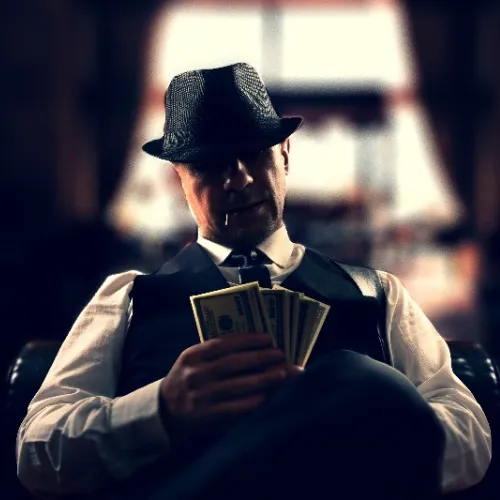
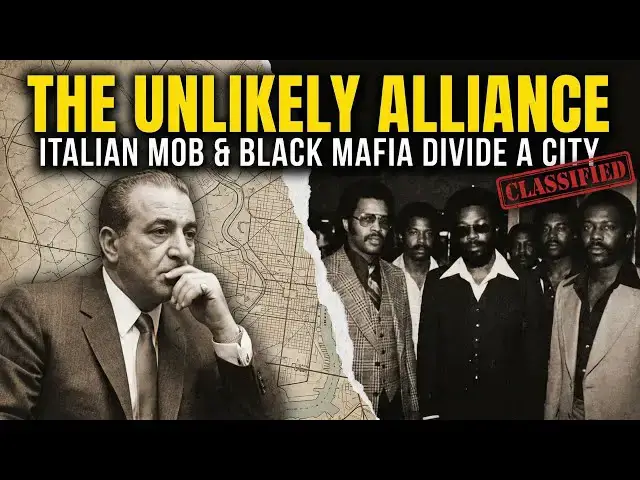
The envelope arrives at Angelo Bruno's social club in 1969. Inside: a proposal that will divide Philadelphia without bloodshed. The Black Mafia wants to negotiate. And the Gentle Don is listening.
This is the true story of one of organized crime's most unlikely alliances—when Philadelphia's Italian mob and the emerging Black Mafia sat down to divide a city. For nearly a decade, two organizations separated by race, culture, and tradition found a way to coexist, share territories, pool political corruption, and split the profits of an underworld empire worth millions.
Angelo Bruno, the pragmatic boss who built his power on avoiding unnecessary violence, recognized that war with the Black Mafia would be costly and unwinnable. Samuel Christian and the Black Mafia leadership understood that Italian political connections and established infrastructure were valuable assets. The deal they struck was pragmatic, profitable, and completely against the rules of traditional organized crime.
This is the story of how the alliance was built, how it operated in the shadows, the tensions that constantly threatened to destroy it, and the forces that finally tore it apart. This is Philadelphia's hidden history—the decade when the underworld integrated faster than the city above it.
🔔 SUBSCRIBE to Global Mafia Universe for more untold stories from the underworld
💬 COMMENT: Could this alliance have lasted if Bruno had lived?
📚 RESEARCH SOURCES: Federal RICO case files, Philadelphia organized crime investigations, academic studies on inter-ethnic criminal cooperation, historical archives
🎵 MUSIC: Original cinematic crime score
#AngeloBruno #BlackMafia #Philadelphia #OrganizedCrime #ItalianMob #TrueCrime #MafiaHistory #CriminalAlliance #1970s #Underworld #GlobalMafiaUniverse #MobDocumentary
-~-~~-~~~-~~-~--~-~~-~~~-~~-~--~-~~-~~~-~~-~-
⚠️ Content Disclaimer:
This video is created for educational and informational purposes only. We do NOT glorify, promote, or encourage any form of criminal activity.
Show More Show Less View Video Transcript
0:00
The sitdown happens in a South
0:01
Philadelphia restaurant after closing
0:03
time, 2 in the morning on a Tuesday in
0:06
March 1969.
0:08
On one side of the table, three black
0:10
men in tailored suits representing an
0:13
organization the newspapers don't know
0:14
exists yet. On the other side, two
0:17
Italian capos from the Bruno family, men
0:19
whose names carry weight from Atlantic
0:21
City to New York. No guns allowed
0:24
inside, but outside. In the cars parked
0:27
on opposite sides of the street, armed
0:30
men wait in silence. The meeting lasts
0:33
47 minutes. No one raises their voice.
0:37
Coffee is served. Hands are shaken. And
0:40
when it ends, the criminal landscape of
0:42
Philadelphia has been redrawn without a
0:45
single shot fired. But the deal made
0:47
that night contains the seeds of a war
0:49
that'll take 15 years to fully bloom.
0:52
And when it does, the bodies will stack
0:54
up faster than anyone at that table
0:56
could have imagined. Philadelphia in the
0:58
late 1960s operates under an unspoken
1:00
system that's held for decades. The
1:02
Italian mob, specifically the Bruno
1:05
family under Angelo Bruno controls the
1:08
traditional rackets, construction,
1:11
unions, lun gambling, and most
1:14
importantly, the political connections
1:16
that keep the whole machine running.
1:18
They've held this power since
1:20
prohibition. built it through violence
1:22
in the 20s and 30s, then maintained it
1:24
through diplomacy and corruption. Angelo
1:26
Bruno, known as the gentle dome for his
1:28
preference for negotiation over
1:30
bloodshed, runs the quietest mob family
1:33
in America. But quiet doesn't mean weak,
1:36
and everyone who matters knows the
1:38
difference. Then there's the emerging
1:40
black underworld. Organizations that
1:42
started with numbers running and policy
1:44
games in black neighborhoods, the
1:46
Italians never fully penetrated, now
1:48
expanding into new territory as heroine
1:51
floods the streets and the old rules
1:53
stop making sense. These groups,
1:55
particularly what will become known as
1:57
the Black Mafia, see opportunity, where
2:00
the Italians see threat.
2:03
The question isn't whether these two
2:05
forces will collide. It's whether they
2:07
can find a way to profit together before
2:09
the collision destroys them both. The
2:12
foundation of the relationship begins
2:14
with simple economics and the realities
2:16
of segregation, both social and
2:18
criminal. The Italian families control
2:21
importation. The international
2:23
connections to Sicilian and Corsacan
2:25
smugglers who bring heroin into American
2:28
ports. They have the political
2:29
protection, the corrupt customs agents,
2:32
the infrastructure built over
2:33
generations. What they don't have is
2:36
effective street level distribution in
2:38
black neighborhoods. When Italian
2:40
dealers try to work north Philadelphia
2:42
or West Philadelphia corners, they're
2:44
visible, vulnerable, and increasingly
2:47
unwelcome.
2:49
As the civil rights movement shifts into
2:51
black power and the tolerance for white
2:53
operators in black communities
2:55
evaporates,
2:58
the black organizations have the
3:00
opposite problem. They control the
3:02
streets, know every corner and every
3:04
building. Have the manpower and the
3:06
trust of the community, but they lack
3:08
the supply connections. They're buying
3:10
from Italian middlemen, paying inflated
3:12
prices, subject to arbitrary cut offs
3:15
when the Italians want to apply
3:17
pressure. It's a dependent relationship
3:19
that grates on men who see themselves
3:21
building empires, not serving as
3:23
subcontractors for white mobsters who
3:26
look down on them even as they take
3:28
their money. The meeting in March 1969
3:30
is designed to restructure this
3:32
relationship into something more
3:34
equitable, or at least something both
3:36
sides can live with. Angelo Bruno, 70
3:39
years old and thinking about legacy more
3:42
than expansion, sees the logic clearly.
3:45
The heroine trade is growing faster than
3:47
his family can manage it, bringing heat
3:49
from federal law enforcement that
3:51
threatens his careful political
3:52
arrangements. If the black organizations
3:54
are going to dominate street
3:56
distribution anyway, better to formalize
3:58
it, tax it, and maintain some control
4:01
rather than fight a war. His family
4:04
can't win without destroying the very
4:05
neighborhoods that generate the profit.
4:07
The black mafia representatives, led by
4:10
men who understand that respect comes
4:12
from power, and power comes from money,
4:14
want something more than crumbs. They
4:17
want direct access to supply. They want
4:20
territorial recognition and they want
4:22
the Italians to stay out of their
4:24
business as long as the money flows
4:26
correctly. What emerges from that
4:28
47minute meeting is a hybrid
4:30
arrangement, elegant in its simplicity
4:32
and doomed by its inherent
4:34
contradictions. The deal has three main
4:36
components, none of them written down.
4:39
All of them enforced by the mutual
4:41
understanding that violation means war.
4:43
First, the Italians will provide heroin
4:46
to Black Mafia distributors at wholesale
4:48
prices that cut out the middlemen,
4:50
allowing the black organization to
4:52
maximize profit and undercut independent
4:54
dealers. In exchange, the Black Mafia
4:56
will pay a tax on all product moved,
4:59
essentially a licensing fee for
5:01
operating in Philadelphia, which Bruno
5:03
can present to the commission as
5:05
maintaining family control even as he
5:07
sees street level power. Second,
5:10
territories are divided along racial and
5:12
economic lines that mostly reflect
5:14
existing realities. The Italians keep
5:16
South Philadelphia, the construction and
5:19
union rackets, the gambling operations
5:21
in white neighborhoods, and the
5:22
political corruption infrastructure, the
5:25
black mafia gets north and west
5:27
Philadelphia, the heroin and cocaine
5:29
trade in black neighborhoods, the policy
5:31
and numbers games, and most importantly,
5:34
the freedom to operate without Italian
5:36
interference as long as they don't cross
5:38
the established lines. Third, disputes
5:41
will be settled through negotiation,
5:43
sitdowns rather than shootings with both
5:46
sides agreeing to control their people
5:48
and avoid the kind of public violence
5:50
that brings federal attention. It's
5:52
organized crime in its purest form,
5:55
rational actors dividing markets and
5:57
maximizing profit while minimizing risk.
6:00
For about 3 years, it actually works.
6:03
The early '7s represent the golden age
6:05
of this arrangement. The period when
6:07
both sides benefit and the tensions
6:09
remain manageable. The Black Mafia uses
6:12
its protected supply line to consolidate
6:14
control over Philadelphia's heroin
6:16
trade, crushing independent operators
6:19
through superior product and ruthless
6:21
enforcement. The money flows in volumes
6:23
that transform the organization from a
6:25
street gang into something approaching a
6:27
criminal corporation. They invest in
6:29
legitimate businesses, launder proceeds
6:31
through car dealerships and check
6:33
cashing operations, start dressing like
6:35
businessmen and making political
6:37
contributions. The Italians, meanwhile,
6:40
collect their tax, maintain their
6:42
traditional operations, and appreciate
6:44
the reduction in heat as the Black
6:46
Mafia's discipline keeps street violence
6:48
lower than it could be. Angelo Bruno
6:50
meets periodically with black mafia
6:52
leadership, usually in restaurants or
6:54
social clubs. conversations that from
6:57
the outside look like nothing more than
6:59
community leaders discussing
7:00
neighborhood issues. The FBI, focused
7:03
primarily on Italian organized crime and
7:06
operating with the racial assumptions of
7:08
the era, doesn't even realize these
7:10
meetings are happening. But the cracks
7:12
in the foundation appear early. Small
7:14
fractures that will eventually shatter
7:16
everything. The first problem is
7:18
respect, or more precisely, the lack of
7:21
it from elements of the Italian mob who
7:23
never accepted the arrangement. Younger
7:25
Italian mobsters, particularly in New
7:28
York families connected to the Bruno,
7:30
see the deal as weakness, a capitulation
7:33
to black criminals who should be
7:35
subordinate. They make their feelings
7:37
known through slurs, through deliberate
7:39
disrespect at social functions, through
7:42
small acts of provocation that Bruno
7:44
can't completely control. The black
7:46
mafia members, men who've fought for
7:49
every inch of respect in a society.
7:51
Built to deny it, absorb these insults
7:54
because the business relationship
7:55
requires it. But the resentment builds.
7:58
Then there's the money issue. The tax
8:00
structure works as long as both sides
8:02
agree on the volume being moved, but
8:05
there's no real enforcement mechanism,
8:07
no auditing, no verification. The
8:10
Italians suspect the black mafia is
8:12
under reporting, skimming on the tax
8:14
payments. The black mafia knows they're
8:16
being charged more than white
8:18
distributors would pay and considers the
8:20
tax itself a racial premium. Neither
8:23
side trusts the others numbers and the
8:25
mutual suspicion creates an atmosphere
8:27
where every payment becomes a
8:29
negotiation and every negotiation feels
8:32
like a confrontation. The territorial
8:34
boundaries, so clear on paper, prove
8:37
impossible to maintain in practice.
8:40
Heroin addiction doesn't respect racial
8:42
lines, and white addicts increasingly
8:44
come into black neighborhoods to buy,
8:46
creating mixed markets that both
8:48
organizations try to claim. A white
8:50
dealer working a corner in a
8:52
transitional neighborhood? Is he Italian
8:54
family business or black mafia
8:56
encroachment? A black dealer selling to
8:58
white customers in South Philadelphia?
9:00
Is he violating territory or just
9:03
following the market? These questions
9:05
adjudicated in periodic sitdowns become
9:08
sources of constant friction. Each side
9:10
accuses the other of creeping expansion
9:13
of violating the spirit if not the
9:15
letter of the agreement. And because the
9:17
agreement was never written because it
9:19
exists only in memory and
9:21
interpretation, there's no objective
9:23
standard to settle the disputes. The
9:25
sitdowns initially cordial
9:26
problem-solving sessions become tense
9:29
affairs where old grievances are aired
9:31
and new ones created. Then comes the
9:33
violence inevitable despite everyone's
9:36
best intentions and each incident tests
9:39
whether the framework can hold. In 1972,
9:42
a black dealer is beaten by Italian
9:44
enforcers for selling in what they claim
9:46
is their territory. The black mafia
9:48
demands retaliation rights once the
9:51
Italians hand it over. Bruno negotiates
9:53
a cash payment instead, compensation
9:56
without admission of guilt. The black
9:58
mafia accepts it, but internally the
10:01
leadership splits on whether this
10:02
represents pragmatic business or
10:05
unacceptable disrespect. 3 months later,
10:07
an Italian numbers runner is robbed by
10:09
black stickup artists who may or may not
10:12
be connected to the Black Mafia. The
10:14
Italians demand justice. The Black Mafia
10:17
claims they can't control every criminal
10:19
in North Philadelphia, that independent
10:21
actors don't represent organizational
10:23
policy. Another sitdown, another
10:26
negotiated settlement, another deposit
10:28
in the Bank of Resentment is
10:30
accumulating on both sides. The
10:31
framework holds, but it's bending and
10:34
everyone can feel it. The real breaking
10:36
point begins in 1974 and it comes from
10:40
an unexpected direction, Atlantic City.
10:42
Bruno controls Atlantic City gambling,
10:45
has for decades, and it's one of his
10:47
most lucrative territories. When New
10:49
Jersey votes to legalize casino gambling
10:52
in 1976, it represents an opportunity
10:55
for massive profits from legitimate
10:57
gaming licenses and construction
10:58
contracts, but also a threat. As
11:01
organized crime from across the country
11:03
looks to muscle in, Bruno, aging and
11:06
increasingly cautious, starts making
11:08
deals with New York families, offering
11:10
them pieces of Atlantic City in exchange
11:12
for peace. Some of his own people see
11:15
this as a weakness. The Black Mafia,
11:17
watching from Philadelphia, sees
11:20
opportunity. They've been excluded from
11:22
Atlantic City by explicit Bruno decree,
11:25
the one territory that was never on the
11:27
negotiating table. But if the structure
11:29
is changing, if New York families are
11:31
being invited in, why not them? They
11:33
approach Bruno through back channels,
11:35
propose a partnership in Atlantic City's
11:37
black neighborhoods, argue they can
11:39
control that market better than anyone.
11:41
Bruno refuses, not even open to
11:43
discussion. To him, Atlantic City is
11:46
Italian family business, period. and the
11:50
suggestion that he'd partner with a
11:51
black organization on something that
11:53
legitimate that visible reveals a
11:55
fundamental misunderstanding of how the
11:57
world works. To the black mafia, the
12:00
refusal is the final confirmation that
12:02
the partnership was never between
12:03
equals, that they were always going to
12:05
be kept in their place, no matter how
12:07
much money they generated or how
12:09
carefully they followed the rules. The
12:11
assassination of Angelo Bruno in March
12:13
1980 changes everything, though not in
12:16
the way anyone expects. Bruno is shot in
12:19
the back of the head while sitting in a
12:20
car in front of his South Philadelphia
12:22
home. Killed by his own people in a hit
12:24
ordered by New York, part of a larger
12:26
power struggle over Atlantic City and
12:29
family leadership. The Black Mafia has
12:31
nothing to do with it. But they
12:33
understand immediately what it means.
12:35
The man who maintained the peace, who
12:37
had the respect and the power to enforce
12:39
the agreement, is gone. What follows is
12:42
a bloodbath within the Italian family.
12:45
the Philadelphia mob war of the early
12:47
80s. As different factions fight for
12:49
control, bosses are killed, entire crews
12:53
are wiped out. The careful discipline
12:55
that Bruno maintained for decades
12:58
evaporates in months. And in that chaos,
13:00
the agreement with the black mafia
13:02
becomes irrelevant. There's no one with
13:04
the authority to negotiate, no one to
13:06
enforce the territorial boundaries, no
13:09
one to settle disputes. The framework
13:11
collapses not because either side
13:13
actively destroys it, but because the
13:15
institutional structure that supported
13:17
it simply ceases to exist. The Black
13:19
Mafia's response to this chaos is
13:21
pragmatic and ruthless. They expand
13:24
aggressively, moving into territories
13:26
that were previously offlimits, knowing
13:28
that the Italians are too busy killing
13:30
each other to respond effectively. They
13:32
establish direct connections to
13:34
international suppliers, cutting out the
13:36
Italian middlemen entirely. No longer
13:38
dependent on Bruno's smuggling
13:40
infrastructure, they stop paying the tax
13:43
because there's no one to pay it to. No
13:45
coherent organization to collect it for
13:48
a brief window in the early8s. The Black
13:50
Mafia operates with a freedom they've
13:52
never had, expanding operations,
13:55
multiplying profits, establishing
13:57
themselves as the dominant force in
13:59
Philadelphia's drug trade. But freedom
14:01
from Italian oversight also means
14:03
freedom from the restraint that Bruno
14:05
imposed, the violence that he kept in
14:07
check. The territorial discipline, the
14:10
rules against public killings, all of
14:13
that disappears. The murder rate in
14:15
Philadelphia explodes as the Black Mafia
14:18
fights internal power struggles and
14:20
external competition simultaneously. The
14:23
federal government, which had largely
14:25
ignored the black mafia while focusing
14:27
on the Italians, finally takes notice.
14:30
The D and FBI, aided by informants from
14:33
the destabilizing Italian families,
14:36
begin serious investigations into black
14:38
organized crime. The RICO statutes
14:41
developed to prosecute the Italian mob
14:44
prove just as effective against the
14:45
black mafia's corporate structure.
14:47
wiretaps, financial investigations, and
14:50
turned witnesses provide the evidence
14:52
for sweeping indictments in the mid. The
14:54
leadership that had sat across from
14:56
Bruno in 19 that had built an empire
14:58
through a combination of violence and
15:00
business acumen finds itself facing
15:03
federal conspiracy charges and mandatory
15:06
minimum sentences that amount to life
15:08
imprisonment. The trials reveal the
15:11
extent of the Italian black mafia
15:12
cooperation, surprising federal
15:14
prosecutors who had assumed the two
15:16
organizations were enemies. The
15:18
testimony about sitdowns and negotiated
15:21
territories, about tax payments and
15:23
dispute resolution, paints a picture of
15:26
organized crime that's more
15:27
sophisticated and more racially
15:29
integrated than the FBI's intelligence
15:31
had suggested. By the late 80s, both
15:34
organizations are shadows of what they
15:36
were. The Philadelphia Italian mob,
15:39
decimated by internal war and federal
15:41
prosecutions, will never recover its
15:43
former power. The Black Mafia,
15:46
leadership imprisoned and structure
15:48
fractured, splinters into smaller, less
15:51
organized groups fighting over scraps of
15:53
territory. The younger generation that
15:55
rzes in the '90s has no memory of the
15:57
agreements, no relationship with the
15:59
Italians, no framework for cooperation.
16:02
Their crack dealers and street gangs
16:04
more violent and less disciplined than
16:06
their predecessors. Operating in a
16:09
landscape where the old rules mean
16:10
nothing. The sitdowns stop happening
16:13
because there's no one with the
16:14
authority to call them and nothing to
16:16
negotiate. The territories become fluid,
16:19
controlled through violence rather than
16:21
agreement. changing hands based on who
16:24
has the most guns and the least
16:26
restraint. Looking back from decades
16:28
later, the alliance between the black
16:30
mafia and the Italian families
16:32
represents a fascinating experiment in
16:34
interorganizational cooperation, one
16:37
that succeeded for longer than most
16:38
observers would have predicted, but
16:40
ultimately failed for reasons that were
16:42
probably inevitable. The racial
16:44
dynamics, the power imbalances, the
16:47
mutual distrust masked by business
16:49
civility, all of it was unsustainable.
16:51
but for a specific window of time in a
16:54
specific city under specific conditions.
16:56
It worked well enough to make both sides
16:58
rich and keep the violence lower than it
17:01
would have been otherwise. The men who
17:03
sat down in that South Philadelphia
17:04
restaurant in 1969 were pragmatists,
17:08
criminals who understood that
17:09
cooperation was more profitable than
17:11
war, at least until it wasn't. They
17:14
built something that looked like peace,
17:16
functioned like partnership, and
17:18
contained the mechanisms of its own
17:20
destruction. From the very first
17:21
handshake, the alliance taught both
17:23
organizations lessons that would echo
17:26
through the decades. The Italians
17:28
learned that exclusion based on race was
17:30
increasingly expensive, that the
17:32
changing demographics of American cities
17:35
meant adapting or becoming irrelevant.
17:37
The Black Mafia learned that deals with
17:39
more powerful partners come with
17:41
invisible strings. that access to
17:43
resources means accepting limitations on
17:46
autonomy and that respect in the
17:48
underworld. Like respect in the
17:50
legitimate world is something you take,
17:52
not something you're given. Both learned
17:54
that agreements without enforcement
17:56
mechanisms last only as long as mutual
17:58
benefit. And the moment one side
18:00
believes it can do better alone. The
18:02
partnership is already over, even if the
18:04
formal break takes years to arrive. The
18:07
restaurant where that first sitdown
18:09
happened is still there, operating under
18:11
a different name, serving a different
18:14
neighborhood. The booth where Bruno sat
18:16
has been replaced. The owners changed
18:18
three times, and nobody remembers that
18:21
on a Tuesday morning in March 1969, the
18:24
future of Philadelphia's underworld was
18:26
decided over coffee and canoli. The men
18:29
who made that deal are dead or
18:32
imprisoned. Their empire dismantled.
18:35
Their agreements forgotten by everyone
18:36
except historians and old heads who tell
18:39
stories that younger generations don't
18:40
believe. But the fundamental dynamics
18:43
they navigated, the tension between
18:45
cooperation and competition, between
18:47
partnership and domination, between
18:50
maintaining peace and seizing
18:51
opportunity. Those dynamics remain
18:54
constant in every criminal organization.
18:56
Every partnership built on distrust and
18:58
maintained by mutual fear, the alliance
19:01
failed, as all such alliances eventually
19:03
do. But for a while, it worked. And in
19:07
the underworld, sometimes that's the
19:09
best you can hope for. The story of
19:11
black mafia alliances with Italian
19:13
families is a story about the limits of
19:16
cooperation in a world built on
19:18
violence. About the impossibility of
19:20
trust when the only enforcement
19:22
mechanism is death and about how even
19:24
the most carefully constructed
19:26
agreements can't overcome the weight of
19:28
history, inequality, and human ambition.
19:32
It's a story that connects to every
19:33
criminal organization that's ever tried
19:35
to work across ethnic or organizational
19:38
lines. And it's a story that's still
19:40
unfolding in new forms with new players
19:43
in cities where the names change but the
19:45
dynamics remain eternal. Subscribe to
19:48
Global Mafia Universe and follow the
19:50
connections deeper into the partnerships
19:52
that built the underworld and the
19:54
betrayals that tore it apart.