live_tv
Livestream Starting Soon
00
Hours
:
00
Minutes
:
00
Seconds
Up next in 10

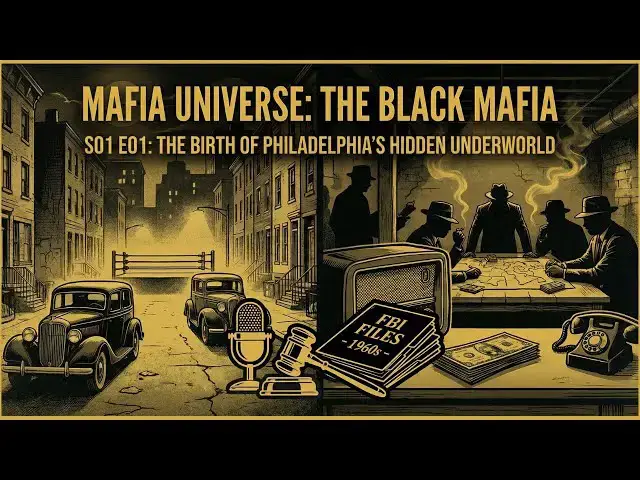
Philadelphia, 1973. Federal agents raid the Pyramid Club and discover ledgers documenting a fifteen-million-dollar criminal empire. But this wasn't the Italian Mafia that Hollywood had made famous. This was the Black Mafia—an organization so invisible that most Americans had never heard of it, yet so powerful it controlled entire neighborhoods and challenged established crime families for control of a major American city.Between 1968 and 1975, a group of young Black men in North Philadelphia built one of the most sophisticated organized crime operations in America. They emerged from the same communities producing civil rights activists, attended the same mosques, and spoke the language of Black economic empowerment. But behind the rhetoric of community investment ran a ruthless criminal enterprise: numbers rackets, heroin distribution, extortion, and enforcement.This documentary reveals the untold story of how the Black Mafia formed in the aftermath of Philadelphia's race riots, how they organized using principles borrowed from the Nation of Islam, how they challenged Italian crime families for territory, and how they ultimately fell to federal RICO prosecutions. Through FBI files, court documents, and the voices of those who lived through this era, we explore the contradiction at the heart of their story: Were they Black men taking control of their economic destiny in a racist system, or criminals exploiting their own community under the cover of empowerment rhetoric?The truth, as always in the Mafia Universe, is more complex than either simple narrative allows.What do you think? Was the Black Mafia a response to systemic racism or an exploitation of it? Drop your thoughts in the comments.Subscribe for more untold stories from the Mafia Universe—the hidden empires, forgotten bosses, and crimes that changed American history but never made it to Hollywood.
https://youtu.be/LWsKhGCrwsg
Show More Show Less View Video Transcript
0:00
Welcome back to Underworld Uncovered
0:02
everyone. Today we're peeling back the
0:04
layers of a story that often gets
0:06
overlooked when we talk about organized
0:08
crime in America. When you hear mafia,
0:11
most people instantly think of a certain
0:13
Italian-American stereotype, right? But
0:16
what if I told you there was another
0:17
powerful, complex, and incredibly
0:20
influential criminal organization
0:22
operating right under everyone's noses
0:24
shaping a major city's history. We're
0:27
talking about the birth of the black
0:28
mafia in Philadelphia.
0:30
It's fascinating, Daniel, because it
0:32
really challenges that dominant
0:33
narrative. Philadelphia for many is
0:36
synonymous with Italian mob figures like
0:38
Angelo Bruno. But the idea that there
0:40
was a parallel formidable black criminal
0:42
enterprise thriving during the same era,
0:45
especially from the 1960s onward, is
0:47
something I think a lot of our listeners
0:48
might not be familiar with.
0:50
Absolutely, Jesse. And I think it's
0:52
crucial to understand the context. The
0:55
1960s in Philadelphia, like many urban
0:58
centers, was a cauldron of social
1:00
change, civil rights struggles, and
1:02
economic disparities. For many black
1:05
communities, opportunities were scarce,
1:07
and systemic racism was rampant. So for
1:11
some, the underworld wasn't just about
1:13
greed. It was, in a twisted way, about
1:16
creating a different kind of power
1:18
structure where none existed for them
1:20
legitimately.
1:21
Exactly, Lily. That's really the core of
1:23
it. We're not glorifying crime here, but
1:26
we're trying to understand the
1:27
sociological forces at play.
1:30
Philadelphia at this time had a
1:31
burgeoning black population concentrated
1:34
in neighborhoods like North Philly and
1:35
West Philly. They were largely shut out
1:37
of traditional economic and political
1:39
power. So when Italian-American mobsters
1:42
largely ignored these communities, it
1:44
created a vacuum, a void that some
1:47
ambitious individuals were more than
1:49
happy to fill. So, we're talking about a
1:51
situation where if you're denied access
1:53
to legitimate businesses, legitimate
1:55
wealth, legitimate power, you start to
1:57
look for alternatives. And when those
1:59
alternatives involve organizing illicit
2:01
activities like numbers running, drug
2:03
distribution, or even protection
2:04
rackets, it quickly evolves into
2:06
something more complex than just street
2:08
level crime.
2:09
And it wasn't just petty crime. These
2:12
were organized, sophisticated
2:14
operations. They saw what the Italian
2:16
mob was doing and they adapted it often
2:19
with their own unique style. Think about
2:21
the numbers game for instance. It was a
2:23
huge source of income in black
2:25
communities for decades. And while often
2:27
controlled by others, black
2:29
entrepreneurs eventually stepped up to
2:31
dominate that market themselves.
2:33
Right? The numbers game was
2:34
foundational, but it wasn't long before
2:36
they moved into other lucrative areas.
2:39
Drugs, particularly heroin, became a
2:41
massive source of revenue as the 60s
2:43
turned into the 70s. This is where
2:46
figures like Leon Heavy Nelson, a sort
2:48
of godfather figure, started to emerge.
2:51
He was one of the early highly
2:52
influential figures who saw the
2:54
potential for a larger, more structured
2:57
organization. And the term black mafia
2:59
itself, while perhaps a media creation
3:01
initially, really stuck because it
3:04
accurately described the hierarchical
3:06
disciplined nature of these groups. They
3:08
weren't just desperate gangs. They
3:10
started to operate with a level of
3:11
organization that mirrored traditional
3:13
mafia families with territories, rules,
3:16
and internal structures.
3:17
What's interesting, too, is how they
3:19
navigated the existing criminal
3:21
landscape. Philadelphia's Italian mob,
3:24
the Bruno family, they largely saw the
3:26
black underworld as separate, almost
3:28
beneath them. They let them operate in
3:30
their own neighborhoods as long as it
3:32
didn't directly interfere with their
3:34
operations or territory. This tacit
3:37
understanding or perhaps dismissal
3:39
allowed the black mafia to consolidate
3:41
power largely unchecked by the
3:43
established white crime families for a
3:45
time.
3:46
Exactly. Angelo Bruno, the gentle dawn,
3:49
preferred peace and stability. He wasn't
3:52
looking for a war with the burgeoning
3:53
black power structure in the inner city.
3:55
His focus was on the docks, the
3:57
construction rackets, the more
3:59
traditional forms of organized crime.
4:01
This strategic hands-off approach,
4:03
whether intentional or not, gave the
4:05
Black Mafia breathing room to expand and
4:08
solidify its control. It's almost like
4:10
they were allowed to grow in plain
4:12
sight, but also in the shadows, if that
4:14
makes sense. Because while they were
4:16
powerful within their communities, they
4:18
weren't getting the same level of media
4:20
scrutiny or law enforcement focus that
4:22
the Italian mob received. This hidden
4:24
aspect really allowed them to operate
4:26
with a certain degree of impunity for a
4:27
significant period. And that's key to
4:30
why so many people don't know the full
4:32
story. The media narrative around crime,
4:35
historically centered on specific
4:37
groups. The idea of a powerful black
4:39
criminal organization challenging norms
4:42
wasn't as readily accepted or even
4:44
acknowledged in mainstream discourse. It
4:47
was happening, but it wasn't being
4:49
reported with the same sensationalism or
4:51
depth.
4:53
Let's talk about some of the early
4:54
pivotal figures. Beyond Heavy Nelson,
4:57
you had groups like the Black Mafia,
4:59
which eventually became a more
5:01
generalized term. But there was a
5:03
specific organization. They weren't just
5:05
running corner operations. They were
5:07
involved in extortion, lone sharking,
5:10
prostitution rings, and later the truly
5:12
devastating crack cocaine epidemic that
5:15
ravaged communities. I think it's
5:17
important to differentiate between the
5:18
individual street gangs and what evolved
5:20
into the black mafia as an organized
5:22
entity. The latter had a hierarchical
5:24
structure, a code of conduct, and a
5:26
clear leadership. They weren't just
5:28
random acts of violence. They were
5:30
strategic moves to consolidate power and
5:32
control lucrative elicit markets.
5:34
And some even tried to legitimize
5:36
themselves, at least on the surface.
5:39
You'd see these figures investing in
5:40
legitimate businesses, car washes,
5:43
clubs, restaurants. It was a classic
5:46
organized crime tactic, a way to launder
5:48
money and create an image of
5:50
respectability, even if everyone knew
5:52
where the real money came from.
5:54
That's a fantastic point, Lily. It
5:56
speaks to their ambition. They weren't
5:58
content to just stay in the shadows
5:59
forever. They wanted influence, wealth,
6:02
and power just like any other organized
6:04
crime syndicate. They saw the blueprint
6:06
and adapted it. And it wasn't just
6:09
Philadelphia. This phenomenon was
6:11
happening in other major cities, too.
6:13
But Phillies was particularly potent and
6:15
long lasting. What about the internal
6:17
dynamics? Was there a strong sense of
6:19
loyalty similar to what we associate
6:21
with traditional mafia families where
6:23
blood ties or sworn allegiances were
6:25
paramount? Or was it more fluid, more
6:27
transactional?
6:28
That's a great question, Jesse.
6:30
Initially, there was a strong sense of
6:32
loyalty, especially amongst those who
6:34
came up together facing the same
6:36
systemic challenges. They were often men
6:39
who had served in the military or had
6:41
been involved in street gangs who then
6:43
recognized the power of unity and
6:45
organization. But like all criminal
6:47
enterprises, as the stakes got higher
6:49
and the money got bigger, betrayal and
6:52
internal conflict became increasingly
6:54
common. Power struggles were inevitable.
6:56
Yeah. And the violence became
6:58
notoriously brutal. They weren't afraid
7:00
to use extreme measures to maintain
7:02
control, settle scores, or send
7:04
messages. We're talking about a level of
7:06
intimidation that truly instilled fear
7:08
within the communities they operated in,
7:10
but also among rival factions.
7:12
Absolutely. The violence was a hallmark.
7:14
They were ruthless. One infamous
7:16
incident, the Lex Street massacre in
7:18
2000, really highlighted the brutal
7:20
lengths these organizations would go to.
7:23
It was a clear demonstration of how high
7:24
the stakes had become in the drug trade
7:26
and the constant fight for dominance.
7:28
It's a stark reminder that while we're
7:30
analyzing the historical and
7:32
sociological factors, these were still
7:34
criminal organizations that caused
7:36
immense suffering and destabilized
7:39
communities. The allure of power and
7:41
money born out of desperation ultimately
7:44
led to a cycle of violence that impacted
7:46
countless lives.
7:48
And that's the tragic irony, isn't it?
7:50
What started for some as a way to gain
7:52
power and resources in the face of
7:54
systemic oppression often ended up
7:56
preying on the very communities it
7:58
originated from. The crack epidemic, for
8:01
example, disproportionately affected
8:03
black neighborhoods, and a significant
8:05
portion of the distribution was
8:06
controlled by these very groups. That's
8:08
a crucial point, Lily. It's not a
8:10
romanticized story of rebels fighting
8:12
the system. It's a complex narrative of
8:14
survival, ambition, and ultimately
8:16
destruction within their own ranks and
8:18
communities. The black mafia moniker
8:20
might evoke images of power, but it also
8:23
represents the profound challenges faced
8:25
by marginalized communities and the dark
8:27
paths some took to navigate them. So,
8:29
how did this hidden underworld interact
8:31
with the city's political landscape? Did
8:33
they exert influence in local politics,
8:36
much like other organized crime groups
8:38
did by buying officials or influencing
8:40
elections?
8:41
Initially, their political influence was
8:43
more localized, more focused on
8:45
protecting their turf from law
8:46
enforcement. But over time, as they
8:48
amassed more wealth, there were
8:50
certainly attempts to influence local
8:52
politics, often through intimidation or
8:55
providing support to certain candidates
8:56
who would turn a blind eye. It's
8:58
difficult to quantify precisely because
9:01
these things are rarely transparent, but
9:03
the understanding was there. They
9:05
operated within a system of tacid
9:07
agreements and unspoken rules. And it
9:09
was also about controlling information.
9:11
The hidden aspect wasn't just about
9:13
media neglect. It was about fear and a
9:15
code of silence within the community.
9:17
People knew, but they didn't speak
9:19
either out of loyalty, fear of reprisal,
9:21
or sometimes because these groups did
9:23
provide a perverse form of justice or
9:25
resources that official channels didn't.
9:28
That's a chilling thought that a
9:30
criminal organization could become a
9:32
source of justice or support simply
9:34
because the legitimate systems failed.
9:36
It really underscores the depth of the
9:38
systemic issues that allowed such groups
9:40
to flourish.
9:41
It truly does. And the story of the
9:43
Black Mafia isn't a static one. It
9:46
evolved significantly from its roots in
9:48
the 60s through the crack era of the 80s
9:50
and 90s and into the modern landscape.
9:53
The structure might have fragmented with
9:55
major figures being incarcerated or
9:57
dying, but the legacy and the impact on
9:59
Philadelphia's crime landscape are
10:01
undeniable. New generations of crews and
10:04
organizations emerge from the
10:05
foundations laid by the pioneers. We see
10:08
echoes of it even today in some of the
10:10
ongoing issues with organized crime in
10:12
the city. The blueprints, the
10:13
territories, some of the methods, they
10:15
didn't just disappear. They adapted,
10:17
changed hands, and continue to influence
10:20
the city's criminal underworld. Even if
10:22
the Black Mafia as a single unified
10:24
entity might be a thing of the past,
10:26
it's a powerful reminder that history
10:28
isn't just about what's in the
10:29
textbooks. There are these hidden
10:31
narratives, these underground currents
10:33
that have shaped our cities and our
10:35
societies in profound ways. The Black
10:38
Mafia in Philadelphia is a testament to
10:40
that complexity.
10:41
Absolutely. It's a story of ambition,
10:44
desperation, power, and the complex
10:46
interplay of social forces that gave
10:48
rise to a formidable criminal
10:50
enterprise. It's a vital piece of
10:52
Philadelphia's history, often whispered
10:54
about, but rarely given the full nuanced
10:57
examination it deserves. And that's
10:59
exactly what we wanted to start doing
11:00
today. Thank you, Jesse and Lily, for
11:03
helping us shed some light on this often
11:05
overlooked history. My pleasure, Daniel.
11:07
It's an incredibly important topic.
11:09
Thanks for having me. This was a really
11:11
insightful conversation.
11:13
And to all our listeners, thank you for
11:15
joining us on Underworld Uncovered. We
11:17
hope this episode has given you a deeper
11:19
understanding of Philadelphia's hidden
11:21
underworld and the complex origins of
11:23
the Black Mafia. We'll catch you next
11:25
time as we continue to explore the
11:27
untold stories of crime and power. Stay
11:30
safe out
#Social Issues & Advocacy
#Discrimination & Identity Relations
#Human Rights & Liberties