live_tv
Livestream Starting Soon
00
Hours
:
00
Minutes
:
00
Seconds
Up next in 10

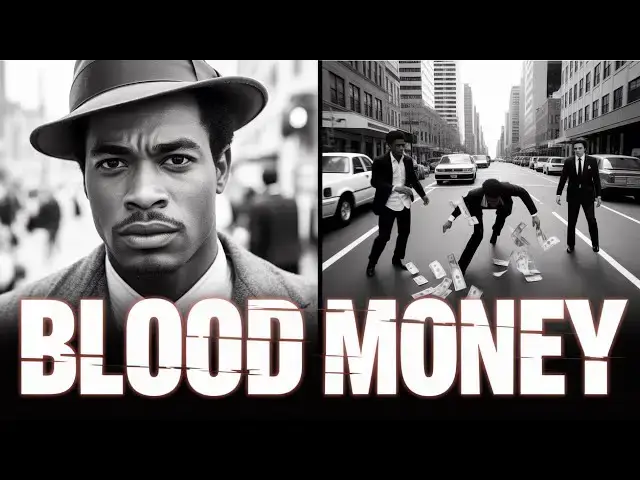
It's eleven forty-five on a Thursday morning, August fourteenth, nineteen sixty-nine. Four men in dark suits walk into a corner store on Columbia Avenue in North Philadelphia. Four minutes later, they walk out carrying fifteen thousand dollars in cash, betting slips, and the contact list for an entire numbers operation. Not a single shot is fired. Not a single punch is thrown. But when those four men step back into the bright August sun, the old order is already dead.
This is the story of the Black Mafia's first major power move—the bold daylight robbery that announced their arrival to Philadelphia's underworld. When Ronald Harvey and Sam Christian targeted Vincent Capelli's Italian-protected numbers operation, they weren't just stealing money. They were stealing permission. They were challenging forty years of established control.
But here's the mystery that still puzzles investigators: Capelli had protection. He paid street tax to the Bruno crime family. Yet when he called for help after the robbery, he got three words that changed everything: handle it yourself. Why did the Italians abandon him? What calculation made four unknown black men more dangerous than protecting their own operation?
This investigation reveals the planning, the execution, and the aftermath of the heist that built an empire. From the Richard Allen Homes to federal courtrooms, from Chicago Outfit connections to witness protection betrayals, we trace how one four-minute robbery in broad daylight redrew the criminal map of Philadelphia.
What do you think—were they criminals or revolutionaries? Share your perspective below.
-~-~~-~~~-~~-~--~-~~-~~~-~~-~--~-~~-~~~-~~-~-
⚠️ Content Disclaimer:
This video is created for educational and informational purposes only. We do NOT glorify, promote, or encourage any form of criminal activity.
All visuals, audio, and materials used in this video are either:
✔ Created using AI tools, or
✔ Sourced from royalty-free platforms with valid licenses.
Some images and characters have been generated using AI and do not represent real people or events.
No copyrighted content belonging to others has been used without permission.
❤️ Support the Channel:
If you enjoy learning about real-life crime stories, history, and social issues, don't forget to:
Show More Show Less View Video Transcript
0:00
It's 11:45 on a Thursday morning, August
0:03
14th, 1969, and the sun is beating down
0:06
on Columbia Avenue in North
0:08
Philadelphia. Inside a corner store that
0:10
sells cigarettes, candy, and dreams for
0:14
men in dark suits walk through the front
0:16
door. They're not customers, the bell
0:19
above the door chimes. T owner. A man
0:23
named Vincent Capelli, who's been
0:25
running numbers for the Bruno family
0:26
since Eisenhower was president, looks up
0:29
from his newspaper. He recognizes the
0:31
threat immediately, but it's already too
0:33
late. The men don't pull weapons. They
0:36
don't need to. Their presence is the
0:39
weapon. One of them, the tallest, walks
0:42
directly to the counter. His voice is
0:45
calm, almost conversational. He says
0:48
three words that will echo through
0:50
Philadelphia's underworld for the next
0:52
decade. The cash box is opened. $15,000
0:56
in small bills. Betting slips from 2
0:58
days of numbers action. And the contact
1:01
list for every collector in a six block
1:03
radius. All of it goes into a leather
1:05
bag. The entire operation takes 4
1:08
minutes. Not a single shot is fired. Not
1:12
a single punch is thrown. But when those
1:15
four men walk out into the bright August
1:17
sun carrying that leather bag like
1:19
businessmen heading to lunch, the old
1:22
order is already dead. It just doesn't
1:25
know it yet. Here's the contradiction
1:26
that still puzzles investigators.
1:29
Vincent Capelli had protection. He paid
1:31
street tax to the Bruno family. He had a
1:34
direct line to a copo who'd promised him
1:36
security. Yet when he called that number
1:38
at noon, 30 minutes after the robbery,
1:41
he got a response that chilled him more
1:43
than the robbery itself. Handle it
1:46
yourself. The Italians, who'd controlled
1:48
black neighborhoods for 40 years, had
1:51
just abandoned him. But why? What did
1:54
they know that Capelli didn't? What
1:56
calculation had been made in South
1:58
Philadelphia social clubs that made four
2:01
unknown black men more dangerous than
2:03
protecting your own operation? The
2:05
answer to that question explains
2:07
everything that came after the violence,
2:11
the empires,
2:12
the bodies. So get ready to enter the
2:15
shadows of the mafia universe. The truth
2:18
is we don't know everything about his
2:20
early life. The man leading that crew
2:22
into Capelli's store was named Ronald
2:25
Harvey. Though everyone called him
2:27
something else on the streets a nickname
2:28
that's been redacted from most federal
2:30
files for reasons that aren't entirely
2:33
clear. Harvey grew up in the Richard
2:34
Allen homes, the same housing projects
2:37
that produced jazz legends and heroin
2:39
addicts in equal measure. The year was
2:41
19. His father drove a truck for the
2:43
city when there was work. His mother
2:45
cleaned office buildings downtown at
2:47
night, taking two buses each way. The
2:50
projects weren't hell yet. That would
2:52
come later with the drugs, with a
2:55
desperation.
2:56
But they were hard. Harvey learned early
2:58
that the world was divided into people
3:00
who took and people who got taken from.
3:03
He decided which side he wanted to be on
3:05
before his 10th birthday. Harvey's
3:07
education and power came from watching
3:09
the Italians. Every Friday, men in nice
3:12
cars would park outside the projects and
3:14
collect envelopes from storefront
3:16
operators. They moved with confidence,
3:18
with certainty. The police never
3:21
bothered them. The beat cops would
3:23
actually nod, show respect. Harvey
3:26
noticed that. Therefore, by the time he
3:28
was 14 in 1963, he understood something
3:32
fundamental. Crime wasn't about breaking
3:35
laws. It was about breaking the right
3:37
laws with the right protection. But he
3:39
also understood something the Italians
3:41
didn't. They could operate in black
3:43
neighborhoods, but they couldn't truly
3:45
control them. They didn't speak the
3:46
language, not literally, but culturally,
3:49
socially, spiritually. They were
3:51
outsiders collecting taxes on someone
3:54
else's poverty. Harvey met Sam Christian
3:56
in 1965 at a boxing gym on Cecil Moore
4:00
Avenue. Christian was different from
4:02
anyone Harvey had encountered. A read
4:05
book's political theory, Malcolm X
4:07
France Fonden, but he also understood
4:10
the streets with a clarity that was
4:12
almost academic. Christian had a theory.
4:15
Black neighborhoods needed black crime
4:17
organizations. Not for moral reasons.
4:20
Christian wasn't interested in morality,
4:22
but for practical ones control,
4:26
efficiency,
4:28
community, infrastructure. The Italians
4:30
were vulnerable, Christian explained,
4:33
because they were visible, because they
4:35
were outsiders, because federal
4:37
investigators were building RICO cases
4:39
against them. However, a black
4:41
organization operating in black
4:43
neighborhoods with community ties and
4:45
legitimate fronts that could be
4:47
invisible, that could be untouchable.
4:50
Together, Harvey and Christian began
4:53
recruiting. They looked for specific
4:54
qualities. Men who'd done time, who
4:57
understood discipline, who could be
4:59
violent but weren't crazy. They found
5:01
Eugene Boaines, 6'4, ex-military, the
5:06
kind of man who ended conversations just
5:08
by standing up. They found Lonnie
5:10
Dawson, a numbers runner who knew every
5:12
collector in North Philadelphia and had
5:14
photographic memory for faces and
5:16
territories. They found James Fox,
5:19
quiet, cerebral, who could track money
5:22
through legitimate businesses and
5:24
understood how to launder cash through
5:26
barber shops and taxi companies. By
5:28
1967, they had a core crew of 12 men.
5:32
Nevertheless, they were still small time
5:35
breaking into cars, running minor dice
5:37
games, lone sharking on a neighborhood
5:40
level. They needed something bigger.
5:42
They needed a statement. The plan came
5:45
together over 6 months of surveillance
5:47
and patience. Christian identified
5:49
Vincent Capelli's operation as the
5:51
perfect target. It was profitable. $15
5:53
to $20,000 a week moving through that
5:56
corner store. It was visible. Everyone
5:58
in the neighborhood knew what Capelli
6:00
was doing. It was Italian controlled,
6:02
which meant taking it would send a
6:04
message that couldn't be ignored. But
6:06
most importantly, Christian had
6:08
information. He knew that the Bruno
6:10
family was distracted, facing federal
6:13
indictments, internal power struggles.
6:16
He knew their protection was stretched
6:18
thin. He knew they might not respond to
6:20
a challenge in a neighborhood they were
6:22
already thinking about abandoning.
6:24
Therefore, the risk was calculated.
6:27
The timing was perfect. August 14th, 196
6:31
Harvey woke up at 6:00 a.m. in a
6:33
one-bedroom apartment in West
6:34
Philadelphia. He'd barely slept, not
6:37
from nerves. Harvey didn't get nervous,
6:39
but from anticipation. He put on his
6:41
best suit, a dark gray three-piece he
6:44
bought specifically for this.
6:46
Christian's instructions had been
6:48
explicit. Look like businessmen. Look
6:51
legitimate. Look like you belong. At
6:54
9:00 a.m., the crew met at a diner three
6:56
blocks from the target. They went over
6:59
the plan one final time. Boaines would
7:02
enter first, establishing physical
7:04
presence. Harvey would handle the
7:06
conversation. Dawson would secure the
7:09
back exit. Fox would carry the bag and
7:11
watch for police response. No guns
7:14
unless absolutely necessary. No violence
7:17
unless forced. This was business, not
7:21
warfare. At 11:45 exactly, they walked
7:24
through Capelli's door. The scene
7:26
unfolded with rehearsed precision.
7:28
Baines positioned himself near the back,
7:31
blocking the hallway to the office.
7:33
Harvey approached the counter. Capelli
7:35
looked up from his racing form, and in
7:38
that moment, he understood everything.
7:40
His hand moved toward the phone. Harvey
7:44
shook his head slightly. The movement
7:46
was minimal, but the message was
7:49
absolute. Capelli's hand stopped. Harvey
7:52
explained the new arrangement. This
7:54
territory was under new management. The
7:56
collections would continue, but the
7:58
profits would flow in a different
8:00
direction. Capelli could keep operating,
8:02
keep his store, keep his percentage, but
8:05
the days of sending money to South
8:07
Philadelphia were over. Capelli started
8:09
to argue, started to invoke names,
8:12
connections, threats. Harvey let him
8:15
finish. Then he gestured to the cash
8:17
box. Capelli understood negotiation was
8:20
not happening. He opened it. Fox filled
8:23
the leather bag. 4 minutes after
8:25
entering, they walked out within an oer
8:29
Capell made his calls. He contacted his
8:32
handler, a Bruno family associate named
8:35
Joseph Rugnette. He expected immediate
8:38
action soldier sent to handle the
8:40
problem. A violent response that would
8:42
restore order. However, what he got was
8:45
silence. Then hours later, a call back
8:49
that shocked him. Let it go. Move your
8:52
operation to block south. The Bruno
8:55
family, Capali learned in that moment,
8:57
had made a calculation. Fighting a war
9:00
in North Philadelphia in black
9:02
neighborhoods, where they stood out and
9:04
federal agents were watching, wasn't
9:06
worth the risk, Nebertellis. This
9:08
decision had consequences the Italians
9:10
didn't fully anticipate. By abandoning
9:13
Capelli, they'd created a vacuum. By not
9:16
responding to Harvey's crew, they'd
9:18
given them legitimacy.
9:20
The streets noticed. If you could rob an
9:22
Italian protected operation in broad
9:24
daylight and walk away, what else could
9:26
you do? Over the next 6 months, Harvey
9:29
and Christian's crew expanded with
9:31
surgical precision. They identified
9:33
every Italian connected operation in
9:35
north and west Philadelphia numbers.
9:37
Runners, lone sharks, drug corners. They
9:40
approached each one with the same
9:42
methodology,
9:43
a polite but unmistakable takeover.
9:47
Some operators resisted. Those
9:49
situations ended badly, though the
9:51
details remain murky in official
9:53
records. Most seen what happened to
9:55
Capellia and watching the Italian
9:58
responsor lack thereof simply switched
10:00
ali. By March 1970, the crew controlled
10:03
an estimated 40% of the numbers racket
10:05
in black Philadelphia neighborhoods.
10:08
Therefore, the money started flowing.
10:10
Thousands a week became tens of
10:12
thousands. They laundered it through
10:14
legitimate businesses,
10:16
a taxi company, a record store, a bail
10:20
bonds office. They employed people from
10:22
the community, creating loyalty through
10:24
economics. But Christian understood that
10:26
money without structure was just
10:28
temporary wealth. They needed
10:30
infrastructure. They established
10:32
counting houses and residential
10:34
buildings using apartments rented under
10:36
false names. They created a network of
10:38
runners, collectors, and bankers. each
10:42
layer insulated from the others. They
10:44
cultivated relationships with lawyers
10:46
who could handle arrests. They
10:48
identified police officers willing to
10:49
look away for the right price. They even
10:51
established connections with bail
10:53
bondsmen and judges, building the same
10:55
protection network the Italians had
10:57
enjoyed. However, they did it with an
10:59
advantage the Italians never had. They
11:02
were invisible in their own
11:03
neighborhoods. A black man in a suit in
11:05
North Philadelphia was a preacher, a
11:08
teacher, a businessman. Nobody looked
11:11
twice. In June 1970, the broader mafia
11:14
universe took notice. A representative
11:17
from the Chicago Outfits policy
11:18
operation, a man with connections to the
11:20
Southside numbers game that had been
11:22
running since the 1920s, reached out
11:25
through intermediaries. The message was
11:27
simple. There was interest in a
11:29
conversation. The meeting happened in
11:31
Cleveland, neutral territory at a
11:34
restaurant in Murray Hill. Sam Christian
11:36
and Ronald Harvey represented
11:38
Philadelphia. The Chicago
11:40
representative, a lieutenant named James
11:42
the Bomber Catuara, with deep ties to
11:45
the outfit's gambling operations,
11:47
represented Midwest interests. The
11:49
outfit had a proposition. They were
11:51
facing the same federal pressure as the
11:53
Philadelphia Italians, RICO
11:55
investigations, surveillance,
11:58
informants, but they saw opportunity in
12:01
black operated gambling networks. Less
12:04
scrutiny, different neighborhoods,
12:05
different law enforcement dynamics.
12:08
Therefore, they proposed a partnership.
12:10
The Philadelphia crew would get access
12:12
to the outfit's layoff betting network,
12:14
which could absorb risk when popular
12:16
numbers hit. In exchange, the outfit
12:19
would get a percentage and more
12:21
importantly would expand this model to
12:23
other cities. It was recognition. It was
12:27
legitimacy from the old order. Christian
12:29
and Harvey accepted the arrangement, but
12:31
with conditions.
12:33
Philadelphia remained autonomous. No
12:35
outfit interference in operations, no
12:38
Chicago control over personnel, just a
12:41
business relationship between equals.
12:43
The outfit agreed, probably
12:45
underestimating what they were creating.
12:47
Nevertheless, the deal held for about 18
12:50
months. The Philadelphia crew gained
12:52
access to sophisticated gambling
12:54
infrastructure that let them take bigger
12:56
bets, manage more risk, expand faith.
12:59
The outfit got what they wanted to,
13:01
plausible deniability and access to
13:03
markets they couldn't touch directly.
13:05
However, the relationship also planted
13:08
seeds of paranoia. Harvey in particular
13:11
never fully trusted the Italians. He
13:14
suspected every coincidence. Every
13:16
police raid, every arrested runner was
13:19
Chicago setting them up. Were they being
13:21
used as fronts for a larger operation
13:23
they didn't control? By late 1971,
13:26
success was breeding problems. The crew
13:29
had gotten to big, maybe 50 people
13:32
directly involved. Hundreds more
13:34
connected tangentially.
13:36
Money was flowing, but so was attention.
13:39
The FBI had opened a case file, though
13:42
they were still in early surveillance
13:43
stages. Local police, some on the
13:46
payroll, but others genuinely trying to
13:48
do their jobs, were noticing patterns.
13:50
competitors. Smaller crews who'd been
13:53
muscled out were talking to
13:54
investigators. Therefore, Christian and
13:57
Harvey implemented stricter security.
13:59
They compartmentalized information. They
14:02
reduced face-to-face meetings. They
14:05
started suspecting everyone. Trust,
14:07
which had built the organization, was
14:09
eroding under the weight of its own
14:11
success. The mistake came in February
14:14
197. A collector named Terrence Lark,
14:16
who had been with the crew since the
14:18
beginning, was arrested on unrelated
14:20
charges, assault during a bar fight that
14:22
had nothing to do with the organization.
14:24
He was facing serious time. The
14:27
prosecutors saw an opportunity. They
14:29
offered a deal, testimony about the
14:31
numbers operation in exchange for
14:33
immunity. Lark refused. Initially, he
14:37
understood the consequences of
14:38
cooperation, but weeks in county jail,
14:41
facing 5 years, broke his resolve. He
14:44
started talking. Not everything he
14:46
didn't know. Everything but enough.
14:49
Names, locations,
14:52
methods. The FBI suddenly had
14:54
confirmation of things they'd only
14:55
suspected. In March 1972, federal and
14:58
local law enforcement executed
15:00
coordinated raids across North
15:02
Philadelphia. They hit six counting
15:04
houses simultaneously.
15:06
They arrested 23 people. They seized
15:09
cash, betting slips, ledgers. It was a
15:12
significant blow, but not a fatal one.
15:15
Christian and Harvey, insulated by their
15:17
careful structure, weren't arrested. The
15:20
evidence didn't reach them directly.
15:22
Nevertheless, the organization was
15:24
wounded. Operations slowed. Trust
15:28
evaporated. Harvey, convinced there were
15:30
more informants authorized responses
15:33
that Christian thought were excessive.
15:35
People disappeared. The violence, which
15:38
they'd always kept controlled and
15:39
minimal, escalated. The discipline that
15:42
had made them successful was cracking
15:44
under pressure. The beginning of the end
15:46
came not from law enforcement but from
15:49
within. Eugene Boines, the enforcer who
15:52
had been with Harvey since the
15:53
beginning, started questioning the
15:55
direction. The violence was attracting
15:57
heat. The paranoia was destroying the
16:00
business. He approached Christian
16:02
privately, suggesting they needed to
16:04
scale back, consolidate, maybe even
16:07
consider getting out. Christian agreed,
16:10
but Harvey saw it differently. Harvey
16:13
interpreted the conversation as
16:14
disloyalty, as weakness, as the first
16:18
step toward betrayal. Therefore, in May
16:21
1972, Bane's Bunny said his body was
16:24
never found. His family was told he'd
16:27
fled to California. Nobody believed it,
16:30
but nobody could prove otherwise.
16:32
Federal prosecutor Patricia Kellerman,
16:34
who'd been building organized crime
16:36
cases in Philadelphia for 3 years, saw
16:39
the Bane's disappearance as an opening.
16:41
She intensified pressure on lower level
16:43
members. She offered immunity deals. She
16:47
threatened RICO charges that would put
16:49
people away for decades. However, she
16:52
also did something clever. She went
16:54
public. She gave interviews to local
16:56
newspapers about emerging organized
16:58
crime in minority communities. She made
17:01
it political, racial, complicated. The
17:04
attention forced action. The police
17:06
department, embarrassed by suggestions
17:09
they'd ignored black organized crime
17:11
while focusing on Italian families,
17:14
dedicated more resources. The FBI
17:16
expanded surveillance. The walls were
17:19
closing in. In August 1972, Lonnie
17:22
Dawson, the numbers runner with the
17:24
photographic memory who knew every
17:26
detail of the operation, made a decision
17:28
that would destroy what remained of the
17:30
organization. He contacted Kellerman's
17:32
office through his lawyer. He offered
17:34
complete cooperation in exchange for
17:36
witness protection. He had everything.
17:39
financial records he'd memorized,
17:41
locations, names, the structure of the
17:44
organization, connections to legitimate
17:46
businesses, even the Chicago outfit
17:49
relationship. Therefore, Kellerman had a
17:52
case, a real case, RICO violations, tax
17:56
evasion,
17:58
conspiracy,
17:59
money laundering. She presented the
18:01
evidence to a grand jury in October.
18:03
They indicted 15 people, including
18:05
Ronald Harvey and Sam Christian. The
18:08
arrests happened simultaneously on a
18:10
cold November morning in 1972.
18:13
Just 3 years after that August day when
18:15
Harvey walked into Capelli's store,
18:17
federal agents hit multiple locations at
18:19
dawn. They found Harvey in his apartment
18:22
in West Philadelphia. He didn't resist.
18:25
He'd been expecting this. Christian was
18:27
harder to locate. He'd gone to ground
18:30
weeks earlier. Sensing the end, but they
18:32
found him eventually staying with family
18:35
in Baltimore. The bail was set at half a
18:38
million dollars each. Neither could make
18:40
it. They sat in federal detention
18:43
awaiting trial. The trial began in March
18:45
1973 and lasted 6 weeks. Kellerman
18:49
presented a devastating case. She had
18:52
Dawson's testimony providing insider
18:55
details that couldn't be disputed. She
18:57
had financial records showing cash flows
18:59
through legitimate businesses. She had
19:02
surveillance evidence. She had wire
19:03
taps, though fewer than she'd of light
19:06
because the crew had been careful about
19:08
phones. Harvey and Christian's defense
19:10
was simple. They were legitimate
19:12
businessmen being targeted because of
19:14
their race and success. The jury didn't
19:17
buy it after 3 days of deliberation.
19:20
They convicted on most counts. The
19:22
sentencing came in May. Harvey got 25
19:26
years.
19:27
Christian got a with Harvey and
19:29
Christian in federal prison. The
19:31
organization collapsed within months.
19:33
The infrastructure they'd built, the
19:35
counting houses, the runner networks,
19:37
the protection systems, all of it
19:39
dissolved. Some crew members tried to
19:41
continue operations independently, but
19:44
without the leadership and structure,
19:46
they were just street criminals.
19:49
The Italians, interestingly, didn't rush
19:52
back in. The neighborhoods had changed.
19:55
State lotteryies were being legalized,
19:57
destroying the numbers racket's
19:59
profitability. The real money was
20:01
shifting to drugs and that was a
20:03
different game with different rules.
20:05
Nevertheless, what Harvin Christian had
20:07
proven couldn't be undone. They'd
20:09
demonstrated that black criminal
20:11
organizations could operate at a
20:13
sophisticated level, could challenge
20:15
established power, could build
20:17
infrastructure and protection that
20:18
rivaled anything the Italian families
20:21
had created. Ronald Harvey served 19
20:24
years. He was released in 1991, a
20:27
different world from the one he'd left.
20:29
He lived quietly in Philadelphia until
20:32
his death in 2008. He never spoke
20:35
publicly about the organization. Sam
20:37
Christian served 13 years, got out in 19
20:41
he two disappeared into obscurity. Some
20:45
reports place him in Atlanta running a
20:47
bookstore. Others say he never left
20:49
Philadelphia living under a different
20:52
name. The businesses they'd built as
20:54
fronts. Sume Surbed went legitimate
20:58
still operate today under different
21:00
ownership. The taxi company still runs
21:03
employing drivers who have no idea about
21:05
its history. The bail bomb's office
21:07
closed in the '90s, but the building
21:10
still stands. The mysteries remain
21:12
debated in academic papers and true
21:14
crime documentaries. How much money
21:16
really flowed through the organization
21:18
at its peak? Estimates range wildly from
21:21
hundreds of thousands to millions
21:23
annually. How many people disappeared
21:26
during the paranoid period of 19?
21:28
Official records show two confirmed
21:30
missing persons, but street legends
21:32
claim a dozen. What happened to the
21:35
money that Cass was never recovered,
21:37
never accounted for in trials or asset
21:39
seizures. Christian and Harvey went to
21:42
prison, but they didn't die poor.
21:44
Someone somewhere had access to hidden
21:47
accounts, buried cash, investments made
21:50
under false names. More importantly,
21:53
what did that August day in 1969 really
21:56
change? When Harvey walked into
21:58
Capelli's store and walked out with that
22:00
leather bag, he wasn't just stealing
22:02
money. He was stealing permission. He
22:05
was taking the idea that certain people
22:07
controlled certain territories and
22:08
certain industries, and he was proving
22:11
it was negotiable. The old order
22:13
Italians controlling black
22:14
neighborhoods, extracting wealth without
22:16
providing infrastructure ended that day.
22:19
What replaced it was complicated. Some
22:22
would argue it was worse. That violence
22:25
and drugs and desperation filled the
22:27
vacuum. Others would say it was
22:29
inevitable. That communities were going
22:31
to control their own criminal
22:32
enterprises eventually. And Harvey and
22:35
Christian just did it more intelligently
22:36
than most. Here's the contradiction that
22:39
still puzzles those who study this
22:40
history. Harvey and Christian were
22:43
criminals. They broke laws. They hurt
22:46
people. They profited from poverty and
22:48
desperation. Yet, they also employed
22:50
people who couldn't get hired elsewhere.
22:53
They provided capital in neighborhoods
22:54
where banks wouldn't lend. They built
22:57
businesses that served the community.
22:59
They demonstrated that black men could
23:01
organize, could build, could compete
23:03
with established power structures.
23:06
So, which were they? Predators or
23:09
providers?
23:10
criminals or entrepreneurs. Maybe the
23:14
question itself is wrong. Maybe in
23:17
neighborhoods abandoned by legitimate
23:19
institutions, the line between crime and
23:22
commerce becomes meaningless. Maybe when
23:24
the legal economy doesn't work for you,
23:26
the illegal one doesn't seem so
23:28
different. The families of those who
23:30
worked for Harvey and Christian still
23:32
live in Philadelphia. Some are
23:34
successful doctors, lawyers, teachers
23:36
educated with money that came from
23:38
numbers and gambling and crime. Others
23:41
are still in the neighborhoods still
23:43
struggling, still dealing with the same
23:45
poverty and lack of opportunity that
23:47
created the market for crime in the
23:49
first place. They have complicated
23:51
feelings about that August day. Pride
23:54
that someone from their community stood
23:56
up to the old power. Shame about where
23:59
the money came from. anger about what
24:02
came after the violence, the
24:03
investigations, the way it all fell
24:06
apart. So, here's the question we're
24:08
left with. The one that makes both
24:10
prosecutors and defenders unc when four
24:12
men walked into that store on a bright
24:14
August morning and took what the old
24:16
orders said they couldn't have. Were
24:18
they criminals committing a crime? Or
24:20
were they revolutionaries challenging an
24:22
unjust system? And if we condemn them
24:24
for the first, what do we do with the
24:26
second? Maybe the answer is that both
24:28
things are true. Maybe that's the real
24:30
legacy of that day. Not the money or the
24:33
organization or the trials, but the
24:35
uncomfortable truth that sometimes crime
24:37
and justice become so tangled they're
24:39
impossible to separate. And maybe, just
24:42
maybe, that says more about the system
24:44
they were challenging than it does about
24:46
the men who challenged