live_tv
Livestream Starting Soon
00
Hours
:
00
Minutes
:
00
Seconds
Up next in 10


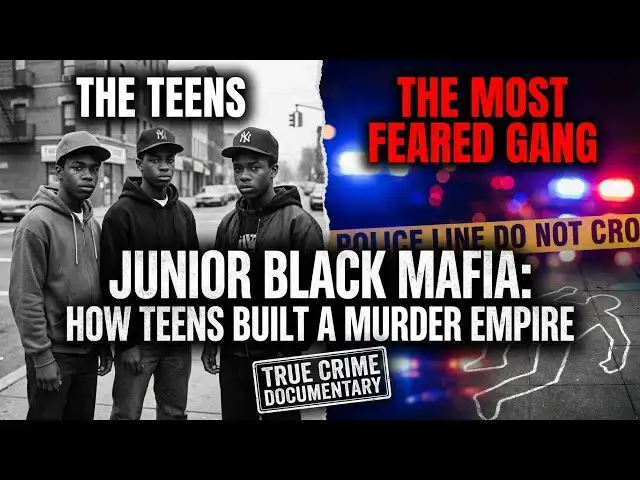
A sixteen-year-old stands over a body on a North Philadelphia corner. Summer 1988. The crack era has arrived. And a new generation of killers is about to rewrite the rules of the street. They called themselves the Junior Black Mafia—and they would murder more than forty people in less than four years.
This documentary tells the complete story of the JBM, the most violent drug organization in Philadelphia history. These weren't hardened criminals with decades of experience. They were teenagers—some barely out of middle school—who built a murder empire on the crack cocaine trade. They killed rivals before those rivals could become threats. They killed witnesses before they could testify. They killed to send messages, to maintain fear, and eventually, they killed children.
The Crawford massacre of August 1990—when JBM soldiers murdered a grandmother and three children in their home—shocked a city that had become numb to drug violence. But by then, the body count was already staggering, and the organization seemed unstoppable.
You'll meet Aaron Jones, the young leader who understood that fear was currency and terror was profit. You'll follow Marcus "Champ" Williams, who committed his first murder at seventeen. You'll witness the federal investigation that eventually brought the JBM down—and the informants who risked everything to help.
This episode examines what happens when the drug trade falls into the hands of teenagers with nothing to lose. How poverty, hopelessness, and the crack epidemic created perfect conditions for organized murder. And how the methods used to destroy the JBM became templates for fighting gang violence across America.
The survivors are still in prison. The dead are still being mourned. And the questions about what created the JBM—and how to prevent the next one—remain unanswered.
Subscribe to Global Mafia Universe for more stories from the shadows.
🎵 Music: Epidemic Sound
📚 Research: Federal court records, Philadelphia Inquirer archives, DOJ documentation
-~-~~-~~~-~~-~--~-~~-~~~-~~-~--~-~~-~~~-~~-~-
⚠️ Content Disclaimer:
This video is created for educational and informational purposes only. We do NOT glorify, promote, or encourage any form of criminal activity.
All visuals, audio, and materials used in this video are either:
Show More Show Less View Video Transcript
0:00
A 16-year-old boy stands over a body on
0:03
a North Philadelphia street corner the
0:05
summer of 1988. The gun in his hand is
0:08
still warm. The man at his feet was a
0:10
rival dealer who made the mistake of
0:12
selling on the wrong block. The boy
0:15
doesn't run. He doesn't panic. He lights
0:17
a cigarette, waits for his crew to
0:19
arrive, and helps them load the body
0:21
into a trunk. By midnight, he'll be back
0:24
on that same corner selling cracked
0:26
cocaine as if nothing happened. He is
0:28
one of the founding members of the
0:29
Junior Black Mafia and he has just
0:32
turned the streets of Philadelphia into
0:34
a war zone that will claim over 40 lives
0:36
in less than 3 years. This is the story
0:39
of the most violent drug organization
0:41
Philadelphia has ever seen. They weren't
0:44
connected to the old black mafia by
0:45
blood or by structure. They took the
0:48
name as a statement of intent, a
0:50
declaration that a new generation had
0:52
arrived, younger, hungrier, and far more
0:55
brutal than anything that came before.
0:58
They didn't just sell drugs. They waged
1:01
war on rivals, on witnesses,
1:06
on anyone who stood in their way. The
1:08
crack epidemic had transformed the drug
1:10
trade into something unrecognizable.
1:13
The old rules no longer applied.
1:15
Patience was a liability. Caution was
1:19
weakness. The Junior Black Mafia
1:21
understood this new reality better than
1:23
anyone. They embraced violence not as a
1:26
last resort, but as a first principle,
1:28
and for a brief, bloody moment. They
1:30
owned Philadelphia's streets completely.
1:33
But empires built on pure violence
1:35
burned fast and bright. The same
1:37
ruthlessness that made them powerful
1:39
made them targets. The same young
1:41
soldiers who killed without hesitation
1:43
would eventually turn on each other.
1:45
This is the story of how a generation of
1:48
teenagers became the most feared
1:50
criminals in the city and how their own
1:52
methods guaranteed their destruction.
1:54
The battas are still being counted. The
1:56
truth has never been fully told until
1:59
now. The crack cocaine epidemic hit
2:02
Philadelphia like a bomb in the mid
2:04
1980s. The drug was cheap to produce,
2:07
easy to sell, and devastatingly
2:10
addictive. It transformed the economics
2:12
of street level dealing overnight, where
2:14
heroin had required patience and
2:16
established networks. Crack demanded
2:19
speed and aggression. The profit margins
2:21
were enormous. The competition was
2:23
lethal. The old black mafia, or what
2:26
remained of it after Operation Cold
2:28
Blood, was poorly positioned for this
2:30
new reality. Their infrastructure had
2:32
been designed for heroin distribution.
2:34
Slower, more sophisticated, requiring
2:37
established connections. The leaders who
2:39
remained free were older Moroshus
2:42
focused on avoiding the federal
2:43
attention that had destroyed so many of
2:45
their peers. They saw crack as beneath
2:48
them, a ghetto drug for desperate
2:50
addicts. This created a vacuum. And into
2:54
that vacuum stepped a generation of
2:55
young men who had grown up in the shadow
2:57
of the Black Mafia's legend, but had
2:59
never known its discipline. They had
3:01
seen the money. They had seen the power.
3:04
They had seen the fear that the
3:05
organization inspired. But they had also
3:08
seen the arrests, the trials, the
3:10
informants who destroyed everything from
3:12
within. They drew their own conclusions.
3:15
The lesson they learned wasn't that
3:17
crime doesn't pay. The lesson was that
3:19
the old ways didn't work anymore. That
3:22
loyalty was a weakness. That patience
3:24
got you killed or imprisoned. That the
3:27
only way to survive was to be so
3:28
violent. so unpredictable, so terrifying
3:32
that no one would dare cross your end.
3:34
No one would dare inform. The Junior
3:36
Black Mafia began to coalesce in 1987
3:39
and 1988, though the name wouldn't
3:42
become widely known until later. The
3:44
core group emerged from the Richard
3:45
Allen homes and surrounding North
3:47
Philadelphia housing, projects, the same
3:49
territory where the original black mafia
3:51
had recruited decades earlier. But these
3:54
weren't revolutionaries wrapped in
3:55
religious ideology. These were pure
3:58
predators forged in poverty and violence
4:00
with no illusions about what they were
4:02
doing or why. The founding figures were
4:04
shockingly young. Aaron Jones was barely
4:07
out of his teens when he began
4:08
organizing the group's structure. Marcus
4:10
Champ Williams was 17 when he committed
4:13
his first murderer for the organization.
4:15
Darnell Denise Thompson hadn't yet
4:17
graduated from high school when he
4:19
started overseeing crack distribution
4:20
for multiple city blocks. Their youth
4:23
wasn't a limitation. It was an
4:25
advantage. They had nothing to lose, no
4:28
families to protect, no legitimate
4:30
options to weigh against the risks. They
4:33
were all in from the beginning. What set
4:35
the Junior Black Mafia apart from the
4:37
dozens of other crack crews operating in
4:39
Philadelphia wasn't their product or
4:41
their territory. It was their
4:43
willingness to kill, not as a last
4:45
resort, not as enforcement against clear
4:49
violations, but as a business strategy.
4:51
They killed rivals before those rivals
4:54
could become threats. They killed
4:56
witnesses before they could testify.
4:58
They killed customers who owed money,
5:00
not to collect the debt, but to send a
5:02
message. They killed for respect, for
5:05
reputation, for the simple reason that
5:07
fear was their most valuable commodity.
5:10
The body count began climbing almost
5:12
immediately. In 1988, there were at
5:15
least seven murders directly attributed
5:17
to the naent JBM in North Philadelphia
5:21
alone. By 1989, that number had more
5:24
than doubled. Bodies appeared in vacant
5:27
lots in burned out cars in the school
5:30
kill river. Some were rivals. Some were
5:33
suspected informants. Some were simply
5:36
people who had seen too much. The
5:38
Philadelphia Police Department noticed
5:39
the spike in violence, but struggled to
5:42
understand what they were facing. This
5:44
wasn't like the organized crime they
5:45
knew. There was no clear hierarchy to
5:48
target, no traditional structure to
5:50
infiltrate. The JBM operated more like a
5:53
terrorist cell than a criminal
5:55
organization's maul groups with
5:57
operational autonomy. Bound together by
5:59
personal loyalty and shared territory
6:02
rather than formal ranks and rules. The
6:04
violence escalated through 1989 as the
6:06
JBM expanded their territory. They
6:09
pushed into West Philadelphia, into
6:11
Germantown, into areas that had been
6:13
controlled by established dealers for
6:15
years. Each expansion was preceded by
6:18
bloodshed. They didn't negotiate. They
6:21
didn't buy out competitors. They
6:24
eliminated them. One incident in
6:26
particular demonstrated the
6:27
organization's approach. In the summer
6:29
of 1989, a dealer named Raymond Carter
6:32
refused to stop selling in the Fairill
6:34
section after being warned by JBM
6:36
soldiers. Carter was experienced,
6:39
connected, and believed his reputation
6:41
would protect him. He had survived in
6:43
the drug trade for over a decade. He
6:46
thought he understood how these things
6:47
worked. 3 days after his refusal,
6:50
Carter's body was found in his own
6:52
apartment. He had been tortured for
6:54
hours before being killed. His eyes had
6:56
been removed. A crackpipe had been
6:58
forced down his throat. The message was
7:00
unmistakable.
7:02
This was what happened to those who
7:03
defied the Junior Black Mafia. The
7:06
killing had its intended effect. Within
7:08
weeks, dealers across North Philadelphia
7:11
were either paying tribute to the JBM or
7:13
leaving the business entirely. The
7:15
organization's territory expanded faster
7:17
than they could have achieved through
7:19
legitimate competition alone. Fear had
7:22
become their primary sales tool. But
7:24
fear works both ways. The same violence
7:27
that intimidated rivals also attracted
7:29
law enforcement attention. By late 1989,
7:32
both the Philadelphia Police Department
7:34
and federal agencies had identified the
7:36
Junior Black Mafia as a priority target.
7:39
The challenge was building cases against
7:41
an organization that killed witnesses as
7:43
a matter of policy. Spring 1990. The
7:47
Junior Black Mafia is at the height of
7:49
its power. They control crack
7:51
distribution across most of North
7:53
Philadelphia and significant portions of
7:55
surrounding neighborhoods. Their weekly
7:57
revenue is estimated at over $200,000.
8:00
Their membership has swelled to nearly
8:02
50 active soldiers with dozens more in
8:05
support roles, and they have killed at
8:06
least 25 people in less than 2 years.
8:09
Aaron Jones, now in his early 20s, has
8:13
emerged as the organization's primary
8:15
leader. He's not a boss in the
8:17
traditional sense.
8:21
JBM doesn't operate with that kind of
8:23
hierarchy, but his word carries the most
8:25
weight. He controls the largest
8:27
territory, commands the most soldiers,
8:30
and has demonstrated a capacity for
8:32
violence that even his peers find
8:34
unsettling. Jones understands something
8:36
that many criminal leaders miss. An
8:39
organization based on fear must
8:41
constantly reinforce that fear. The
8:44
moment people stop being afraid, the
8:46
whole structure collapses. So he
8:48
institutes what he calls maintenance
8:50
violence, periodic killings designed not
8:53
to address any specific threat, but to
8:55
remind everyone of what the JBM is
8:57
capable of. These maintenance killings
9:00
follow a pattern. Every few weeks,
9:03
someone dies. Sometimes it's a dealer
9:05
who's been skimming. Sometimes it's a
9:08
customer who talked too much. Sometimes
9:10
it's someone with no connection to the
9:12
drug trade at all. a random victim
9:14
chosen to demonstrate that the JBM will
9:17
kill anyone for any reason. The
9:19
unpredictability is the point. If people
9:21
can't predict what will trigger
9:23
violence, they become afraid of
9:25
everything. The strategy works in the
9:28
short term. Cooperation with police
9:30
drops to almost zero in JBM territory.
9:33
Witnesses to crimes recent or disappear.
9:36
Informants are killed before they can
9:38
provide useful information. The
9:40
organization seems untouchable, but
9:43
Jones has made a fundamental
9:45
miscalculation. He's designed a system
9:47
that requires constant escalation. Each
9:50
act of violence must be more shocking
9:52
than the last to maintain its
9:54
psychological effect, and there's a
9:56
limit to how far you can escalate before
9:58
you cross lines that even the criminal
10:00
underworld considers unacceptable. That
10:02
limit arrives in August 1990. The
10:05
victim's name was Denise. She was 34
10:08
years old, a mother of three who worked
10:10
as a nurse's aid at Temple University
10:12
Hospital. She lived in a modest rowhouse
10:14
on a quiet block in Fairill. She had no
10:17
connection to the drug trade. Her only
10:19
crime was witnessing a JBM soldier
10:21
dumping a body in a vacant lot near her
10:24
home. Denise didn't report what she saw.
10:26
She didn't talk to police. She didn't
10:28
tell anyone except her sister in a
10:31
private conversation she believed was
10:32
secure, but someone overheard or someone
10:36
informed and word got back to Aaron
10:38
Jones that there was a witness. What
10:41
happened next would be discussed in
10:42
federal courtrooms for years. Jones
10:45
dispatched three soldiers to handle the
10:47
situation. Their instructions were
10:48
simple. Eliminate the witness and send a
10:51
message. They arrived at Denise
10:52
Crawford's house at 3:00 a.m. on a
10:54
Thursday morning. Denise wasn't home.
10:57
She was working the night shift at the
10:59
hospital, but her mother was there
11:01
babysitting the three children. The JBM
11:04
soldiers didn't care. They broke down
11:06
the door, shot Denise's mother in the
11:08
head, and then turned their weapons on
11:10
the children. The oldest was 11. The
11:13
youngest was for all four victims died
11:17
in that house. A grandmother and three
11:19
children murdered because a young mother
11:22
happened to see something she shouldn't
11:23
have. When Denise Crawford learned what
11:25
had happened, she collapsed in the
11:27
emergency room where she worked. She
11:29
would never recover from that night. Not
11:31
mentally, not emotionally. She died by
11:34
suicide 3 years later. Another victim of
11:36
the Junior Black Mafia, even if she
11:38
never appeared in their body count, the
11:40
Crawford massacre changed everything.
11:43
This wasn't a drug dealer killing
11:44
another drug dealer. This wasn't even a
11:46
witness being eliminated to protect the
11:48
organization. This was the slaughter of
11:50
children, the murder of innocents. A
11:53
crime so monstrous that it shocked even
11:55
those who had become numb to
11:57
Philadelphia's violence. The public
11:59
reaction was immediate and overwhelming.
12:01
Vigils were held across the city.
12:04
Politicians who had ignored the drug
12:05
violence suddenly demanded action. The
12:08
newspapers ran the victim's photographs
12:09
on their front pages for days. The
12:12
pressure on law enforcement became
12:13
unbearable. And within the criminal
12:15
underworld, the reaction was equally
12:17
significant. Other organizations, the
12:19
remaining fragments of the old black
12:21
mafia, the Dominican crews, even the
12:24
Italian families looked at what the JBM
12:26
had done and recognized a line that
12:28
should never have been crossed. The
12:30
Crawford murders made everyone a target.
12:32
If the JBM could kill children, no one
12:35
was safe. If the JBM brought this kind
12:37
of heat on the entire drug trade,
12:40
everyone would suffer. The isolation of
12:42
the Junior Black Mafia began
12:44
immediately. Suppliers who had worked
12:46
with them quietly found other
12:47
distributors. Associates who had turned
12:49
a blind eye to their violence suddenly
12:51
discovered principles. Information began
12:54
flowing to law enforcement from sources
12:56
that had been silent for years. The
12:58
streets had rendered their verdict. The
13:01
JBM had gone too far. The federal
13:04
investigation that would eventually
13:05
destroy the Junior Black Mafia had
13:07
actually begun before the Crawford
13:09
massacre. But that atrocity accelerated
13:12
everything. The FBI's violent crimes
13:14
task force made the JBM their top
13:16
priority. The US Attorney's Office
13:19
assigned their most experienced
13:20
prosecutors. Resources that had been
13:22
spread across dozens of investigations
13:24
were concentrated on a single target.
13:27
The challenge remained the same.
13:29
Building cases against an organization
13:31
that killed witnesses. But the Crawford
13:33
murders had created a paradox. The same
13:37
brutality that had previously protected
13:38
the JBM from prosecution now became the
13:41
weapon used against them. Federal
13:43
prosecutors invoked the death penalty,
13:45
making clear that anyone convicted of
13:47
JBM murders would face execution. This
13:50
changed the calculus for potential
13:52
witnesses. Previously, cooperation meant
13:55
death that JBM would kill you before
13:57
trial. But now, non-ooperation might
14:00
also mean death if you were charged
14:02
alongside the leadership and face the
14:04
needle. The choice wasn't between safety
14:07
and danger. It was between two forms of
14:10
deadly risk. And for some, the federal
14:12
protection program started looking like
14:14
the better bet. The first major
14:16
cooperator came forward in early 1991.
14:20
His name was Terrence Little T.
14:22
Washington, a low-level soldier who had
14:24
been present at multiple murders, but
14:25
had never pulled the trigger himself.
14:27
When the feds showed him the evidence
14:29
they had and explained that he was
14:31
facing the death penalty under the
14:32
felony murder doctrine, Little T made
14:35
his choice. His testimony would
14:37
eventually help convict over a dozen JBM
14:39
members. But more valuable than his
14:41
testimony was his knowledge of the
14:43
organization's operations. He explained
14:45
the structure that outsiders had
14:47
struggled to understand how the JBM
14:49
functioned without a traditional
14:51
hierarchy, how territory was divided and
14:53
defended, how decisions about violence
14:56
were made. He provided a road map that
14:58
prosecutors could use to target the
15:00
entire organization. Other cooperators
15:03
followed. Each one who flipped increased
15:05
the pressure on those who hadn't. The
15:07
JBM's policy of killing informants began
15:10
to work against them as members realized
15:12
that everyone around them might be
15:14
wearing a wire. The paranoia that had
15:16
protected the organization started
15:18
destroying it from within. Aaron Jones
15:20
watched his empire crumble with
15:22
increasing desperation. He ordered hits
15:24
on suspected informants, but his
15:26
soldiers were reluctant to carry them.
15:29
Out each killing created more potential
15:31
cooperators. He tried to leave the city,
15:34
but the feds were watching every exit.
15:36
He considered fleeing the country, but
15:38
he had no passport and no international
15:41
connections. In June 1991, the first
15:44
wave of federal indictments came down.
15:46
23 members of the Junior Black Mafia
15:49
were charged under the RICO statute with
15:51
special circumstances that made them
15:53
eligible for the death penalty. The
15:55
charges covered 18 murders, including
15:57
the Crawford massacre. The evidence
15:59
included testimony from five cooperating
16:01
witnesses, hundreds of hours of
16:03
surveillance, and physical evidence from
16:06
a dozen crime scenes. Aaron Jones was
16:08
arrested at his mother's house at 5:00
16:10
a.m. on a Tuesday morning. He didn't
16:13
resist. He didn't try to run. According
16:16
to the marshalss who took him into
16:17
custody as simply took you long enough.
16:20
The trials would take years. The JBM
16:23
cases were among the most complex ever
16:25
prosecuted in the Eastern District of
16:27
Pennsylvania. Defense attorneys attacked
16:29
the credibility of cooperating witnesses
16:31
men who had committed murders themselves
16:34
and were now testifying to save their
16:36
own lives. They argued that the
16:37
government had manufactured a conspiracy
16:39
where only loose associations existed.
16:42
But the evidence was overwhelming. The
16:44
body count was undeniable and the
16:46
Crawford massacre with its murdered
16:48
children guaranteed that no jury would
16:51
show sympathy to the defendants. Aaron
16:53
Jones was convicted on all counts in
16:55
September 1993, received multiple life
16:58
sentences plus an additional 200 years.
17:01
The death penalty was sought, but
17:03
ultimately not imposed. The jury
17:06
couldn't reach unonymity on that
17:07
question. 12 other JBM members received
17:10
life sentences. Five more received terms
17:13
ranging from 25 to 50 years. The Junior
17:17
Black Mafia as a functioning
17:19
organization ceased to exist, but the
17:22
impact of what they had built and what
17:24
they had destroyed continued long after
17:26
the trials ended. The Junior Black
17:28
Mafia's reign lasted less than 4 years.
17:31
In that time, they killed over 40 people
17:33
and traumatized an entire city. They
17:36
represented something new in American
17:38
organized crime. pure purposeless
17:40
violence as a business model. They had
17:42
no ideology, no code, no vision beyond
17:46
immediate profit and power. They were
17:48
capitalism stripped of all restraint,
17:50
the free market with a gun. Their legacy
17:53
is complicated. On one hand, their
17:55
destruction demonstrated that even the
17:57
most brutal organizations could be
17:59
brought down. The cooperation strategies
18:01
developed during the JBM prosecution
18:03
became templates for future cases. The
18:06
willingness to invoke the death penalty
18:07
as leverage against cooperators was
18:09
studied and replicated across the
18:11
country. On the other hand, the JBM
18:13
showed how much damage a relatively
18:15
small group could do when they abandoned
18:17
all limits. The 40 plus people they
18:19
killed were individuals with families,
18:22
futures, dreams that would never be
18:24
realized. The communities they
18:26
terrorized still bear the scars. The
18:28
trauma they inflicted ripples through
18:30
generations. The surviving members of
18:32
the junior black mafia are mostly still
18:35
in prison. Aaron Jones remains
18:36
incarcerated at a federal penitentiary
18:39
serving sentences that will never end.
18:41
Marcus Champ Williams died in prison in
18:44
2008, killed by another inmate over a
18:47
gambling debt. Darnell Denise Thompson
18:49
was released in 2019 after serving
18:51
nearly 30 years and reportedly lives
18:54
under an assumed name in another state.
18:56
The witnesses who testified against them
18:59
have scattered as well. Some remain in
19:01
protection programs, living under names
19:03
that aren't their own. Others have
19:05
returned to Philadelphia, gambling that
19:07
enough time has passed and enough JBM
19:09
members have died that they're no longer
19:11
targets. At least two former cooperators
19:14
have been killed since the trials.
19:16
Whether be HotBeam loyalists or for
19:19
unrelated reasons remains unclear. The
19:21
Crawford murders continue to haunt
19:23
Philadelphia. Every year on the
19:25
anniversary of that August night,
19:27
community members gather at the site of
19:29
the row house where a grandmother and
19:31
three children died. The house itself
19:33
was demolished years ago, replaced by a
19:36
small memorial garden. But the memory
19:38
persists. Denise Crawford, the witness
19:41
who never testified, whose only crime
19:43
was being in the wrong place at the
19:45
wrong time, is buried in a cemetery in
19:47
northeast Philadelphia. Her gravestone
19:49
mentions nothing about how she lost her
19:51
family. It simply bears her name, her
19:54
dates, and a single word, peace. The
19:57
streets set the junior black mafia once
19:59
controlled are different now. The crack
20:02
epidemic has faded, replaced by heroin
20:05
and fentinil. The housing projects where
20:07
JBM recruited have been demolished and
20:09
rebuilt. New organizations have risen to
20:11
control the drug trade. Some violent,
20:14
some more sophisticated. The cycle
20:16
continues. But among those who remember,
20:19
the JBM remains a cautionary tale, a
20:22
reminder of what happens when violence
20:24
becomes an end in itself. When young men
20:26
with no hope and no limits decide that
20:28
fear is the only currency that matters,
20:30
when an organization optimizes for
20:32
brutality and discovers that brutality
20:34
has diminishing returns. The files from
20:36
the JBM prosecutions remain partially
20:39
sealed. Certain witness identities have
20:41
never been revealed. Certain testimony
20:44
has never been made public. There are
20:45
bodies attributed to the JBM that have
20:48
never been found. Murders that were
20:50
never charged, victims who have never
20:52
been officially acknowledged. The truth
20:54
of what happened in those years between
20:56
1988 and 1991 is more complicated than
20:59
any single narrative can capture. The
21:01
Junior Black Mafia was a symptom as much
21:04
as a cause a product of poverty, of the
21:06
crack epidemic, of the failures of every
21:09
institution that should have offered
21:10
these young men something better than a
21:13
gun.
21:14
and a corner. Understanding what they
21:16
did requires understanding what created
21:19
them, and that understanding offers no
21:21
comfort. What we know for certain is
21:23
this. For 4 years, the Junior Black
21:26
Mafia turned Philadelphia into a killing
21:29
field. They murdered without hesitation
21:31
and without remorse. They destroyed
21:33
lives by the dozens and traumatized
21:35
communities by the thousands. And then
21:37
they were gone, swept away by the same
21:40
forces of violence they had worshiped.
21:42
The empire built on fear collapsed into
21:44
fear. The soldiers who killed without
21:46
mercy were betrayed without mercy. The
21:49
organization that trusted no one
21:51
discovered that no one could be trusted.
21:53
In the end, the Junior Black Mafia
21:55
proved only one thing. That there is no
21:58
limit to human cruelty. But there is a
22:01
limit to how long cruelty can sustain
22:03
itself. The bodies are buried. The
22:07
survivors are scattered. The streets
22:09
have new masters now with new names and
22:12
new methods. But somewhere in
22:14
Philadelphia, in the memories of those
22:16
who lived through those years, the
22:18
Junior Black Mafia still exists, not as
22:20
a functioning organization, but as a
22:23
ghost, a warning, a reminder that the
22:26
darkness is always waiting, always ready
22:28
to consume another generation of young
22:30
men who believe that violence is power
22:32
and that power is everything. This was
22:34
the rise of the Junior Black Mafia. This
22:38
was their reign of terror. And this is
22:40
why their story must be told not to
22:42
glorify what they did, but to understand
22:44
it. Because understanding is the only
22:46
defense against history repeating
22:48
itself. And in the streets of America's
22:50
cities, history is always trying to
22:53
repeat. The cycle continues.
22:55
New names, new corners, new bodies. But
22:59
the pattern remains the same. And until
23:02
we break that pattern, until we offer
23:04
young men something better than what
23:06
Aaron Jones found on those North
23:08
Philadelphia streets, there will always
23:09
be another junior black mafia waiting to
23:12
rise. Subscribe now to continue this
23:14
journey into the shadows. The story of
23:17
the Black Mafia connects to something
23:19
larger web of violence and power that
23:21
spans decades. What you've just heard
23:24
was one thread. The pattern goes deeper
23:26
and the next chapter reveals connections
23:29
that will change everything you think
23:30
you know. Global Mafia Universe will
23:33
take you there. The only question is
23:35
whether you're ready for what comes