Up next in 10



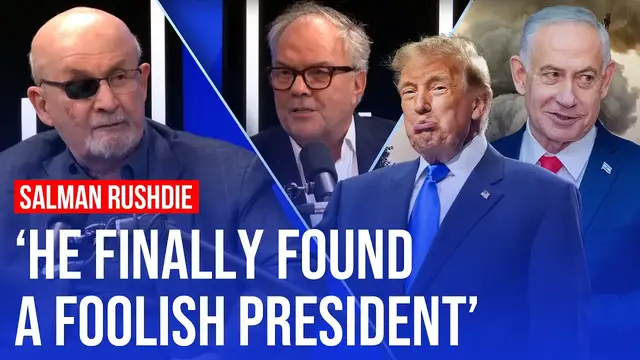
Indian-British novelist Salman Rushdie joins Matt Frei to discuss his attempted murder, the Trump administration, the war in Iran, and the rise of extremism.
Knife: The Attempted Murder of Salman Rushdie - will be out 2nd October, with previous events across 75 cinemas on 30 September.
4:24 and 7:20 footage courtesy of Knife: The Attempted Murder of Salman Rushdie
Listen to the full show on the all-new LBC App: https://app.af.lbc.co.uk/btnc/thenewlbcapp
#mattfrei #salmanrushdie #iran #donaldtrump #trump #netanyahu #uspolitics #LBC
LBC is the home of live debate around news and current affairs in the UK.
Join in the conversation and listen at https://www.lbc.co.uk/
Sign up to LBC's weekly newsletter here: https://l-bc.co/signup
Show More Show Less View Video Transcript
0:00
Salman, it's great to see you in the studio
0:02
25 years since 9-11, what were you doing at the time? Well, although I had just recently moved to New York
0:07
I actually wasn't in New York that day. I had just published my novel, Fury
0:13
and I had just begun a book tour. So actually, on the night of September the 10th
0:18
I was in Houston, Texas, doing a reading, etc. And on the morning of September 11
0:24
I had agreed to do a radio interview from my hotel room
0:29
and the journalist called me early and he said, because of what's happening in New York
0:33
we have to cancel the interview. And I mean, I'm not somebody who turns on the TV
0:37
the moment he wakes up. So you didn't know what he was talking about? No, I said, what's happening in New York? And he said
0:41
turn on the rude word, television. And I turned on the television
0:44
and like so many people, I'd just in time to see the second plane
0:49
Yeah. And I just stood there horrified. And then for a few days
0:55
I couldn't get back to New York because of the so-called ground stop where all the planes were stopped
0:59
And I've always remembered flying back into the city, flying over what was then known as Ground Zero
1:06
and seeing these columns of smoke rising from where these giant buildings had been
1:13
I've never forgotten that site. Yeah, it was very moving. You wrote, I think, a piece in The Guardian at the time
1:21
where you said, I'm paraphrasing it, but the best way to fight back is by just continuing to live
1:28
our normal lives. And, you know, the... Let's see, let's get back to life
1:34
The fundamentalist believes that we believe in nothing. In his worldview, he has his absolute certainties
1:41
while we are sunk in sybaritic indulgences. But it's those indulgences... I'm strongly in favor of sybaritic indulgences
1:50
Exactly. One of the things I thought about being in New York at that time
1:53
was how quickly the city got its groove back. There was a period of time when everybody was very shaken
2:04
But there was a day, I remember, where there was some kind of bomb scare around the Brooklyn Bridge
2:11
And New Yorkers, instead of being terrified because the bridge was closed
2:16
were furious. They say, you know, I need to cross the bridge, I'm going to work
2:20
They took a practical attitude to the inconvenience of terror. Yeah, and I thought, you know, good for you
2:25
you've got your New Yorkness back so in the documentary that's got the same title as the book you wrote
2:32
about the attack that almost ended your life Knife there's a scene where you describe lying in the
2:38
hospital bed in New York and listening to the music of the city
2:42
you know the alarms going off, the sound of people, the sound
2:47
of traffic, those reassuring signs but you, the knife had severed you, you say
2:52
you write from the life of that city that's your home that you got to love to yourself
2:58
Yes, it was very strange because, of course, when the attack happened, I wasn't in New York City
3:02
I was upstate, almost in Canada. And the hospital I was in, Erie, Pennsylvania
3:10
it's right on the lake, and the other side of the lake is Canada. So it was as far from New York City as you could get, really
3:15
within the state. And that moment of being able to come back
3:21
because when I left the emergency hospital and moved into the rehab hospital
3:25
I was transported to New York City. And just coming back to the city did feel better
3:31
It made me feel more cheerful. But at the same time, it felt I'm stuck in a hospital bed
3:37
that I can't even get out of without permission. And New York is out of the window, but I'm not in it yet
3:42
But both after 9-11 and both after your own attack, your own personal 9-11, if you like
3:48
it was the sound of normality, the idea that normal life continues elsewhere
3:53
that allowed you to reconnect I think we all as human beings
3:56
we have a great need for normal life and a great desire to reconstruct
4:02
normal life when it breaks down and I certainly felt that I thought I just have to get back to
4:07
ordinary things the ordinary shape of my life as fast as possible
4:12
I was a young man when the as well you actually when the fatwa was imposed
4:17
I think on Valentine's Day of all days in 1989. And I remember being so shocked
4:23
that a country could impose a death sentence on a writer from our world for something
4:29
that he'd written in a novel. It wasn't a pamphlet raging against Islam. I mean, it's a rather humorous book
4:36
Two things happen to me now when people read the satanic verses
4:40
One is they say, where's the dirty bit because I can't find it? And I say, well
4:45
because it's not really there. And the other thing they say is who knew it was funny
4:49
I say, well, people who read it knew that it was funny. But all the people who attacked it
4:53
starting with the Iranian leader, had never seen a copy of it
4:58
You're assuming the Ayatollah had never read the book. He was just told about it. I mean, he was already very unwell
5:04
and actually died a couple of months later. He wasn't reading 600-page novels in English
5:10
Why do you think they picked on you in that particular book? I'm sure there are lots of other candidates
5:14
to impose a fatwa against. Part of it is bad timing. Their Iran-Iraq war had just ended with enormous loss of life in Iran for no gain
5:28
And the regime was possibly at its most unpopular. And I think they were looking for a way of rallying the troops
5:37
And unfortunately, that was me. And you lived with, I mean, before the attack happened in August of 2022
5:43
you had lived with that for a very, you know, for three decades
5:47
Yeah, well, 25. But it had faded. Because, I mean, what happened was when the Labour Party, when the Labour government came in, Robin Cook as Foreign Secretary met with the Iranian foreign minister in a side meeting during the United Nations General Assembly
6:07
And they basically called the dogs off, which was confirmed to me a little while later by British intelligence
6:17
that the threat level had dramatically dropped. And after that, I mean, basically my life kind of went back to normal
6:26
And for two and a half decades, it was back to normal
6:31
I was leading the ordinary life of a writer. I was writing books. I was talking about books
6:35
I was going on book tours. I was giving lectures. Without any personal protection
6:40
No, and with no hint of trouble. I must have done hundreds of events
6:47
Was it always in the back of your mind? Initially, but it gradually wasn't because nothing was happening
6:53
All that was happening was normal life. And so certainly by the time I went to the Chautauqua Institution, it was very far from my mind
7:02
And also, you know, Chautauqua is a very innocent place. It's a rather beautiful place out of time
7:08
Nobody locks their front doors. I think this was very traumatizing for everybody there
7:13
because they didn't believe something like this could happen in their idyllic little community
7:18
But it could. After 9-11, you wrote a book that I think was published in 2005
7:23
Shalimar the Clown. Yes. And if I correct this is sort of trying to understand the personal motivations behind acts of terror Yeah what I thought is that you know in Kashmir there was a lot of hostility towards the behavior of the Indian government
7:38
But I thought, you know, if you've got a particular village where the story is set and you've got people living in the village all suffering the same hardships
7:46
one of them picks up a rifle and becomes a jihadist and another one does not
7:52
Why? Why does one, under the same pressure, why does one person turn to jihad and another person not
7:59
And the answer actually is a novelistic answer, which is character. Yes
8:03
So I wanted to write from inside that character. But what I'm getting at is that you've got these individuals
8:11
who committed the acts of terror on 9-11. I think 19 hijackers altogether
8:17
And actually, we followed the life of one of them, who was a Lebanese chap from a rich family, Zia Jara
8:21
who was on the plane that crashed in Pennsylvania. And I always wondered what went through this young man's mind
8:27
He had a whole future ahead of him. His father said, when you come back to Beirut
8:31
there'll be a BMW at the airport waiting for you. That's your car. He had quite a lot of material stuff to lose
8:38
And in the same way, you know, and I guess with Shalimar and your novel, his heart was broken because his girlfriend or the woman he loved
8:46
ended up being the mistress of the U.S. ambassador to India, who was then assassinated
8:51
by him. But again, whether it's the 9-11 hijackers or it's the man who tried to kill
8:57
you, at the end of the day grand phrases like the war on terror
9:03
doesn't do justice to the individual choices that these individuals make. One of the things that really was a motivation
9:11
for writing both the memoir and the documentary was exactly what you say, to try and get inside
9:17
the head, the mindset of somebody who's willing to not just throw away my life, but throw away his own life
9:25
He was 24. He had no criminal record. He wasn't some kind of hardened criminal
9:35
He was a kid growing up in New Jersey. And all I know about this is from the very little that his family spoke
9:43
His mother gave one interview, I think, in which she said that he had been a perfectly normal kid
9:49
They were quite a secular family. the parents had separated. The father had gone back to Lebanon
9:55
And at some point, about four years before he attacked me, he visited his father in Lebanon
10:02
And according to the reports I read, his father was living in a very
10:07
Hezbollah-dominated village. And when he came back, according to his mother, he was completely changed
10:14
And then criticized her for not having taught him properly, as he would put it, about religion
10:19
and locked himself away in the basement of her house for four years
10:25
Right. During the course of which I don't know what happened to him, but I presume..
10:29
Spent a lot of time online probably getting, you know, further radicalized. Yes, I invented a character called Imam Utubee
10:35
which is, I think, who he was listening to. And rather comically, when the book was coming into print
10:43
it had to go through Random House lawyers. And they called me and said, they said, is that a real person
10:49
I said, no, it's not a real person. It's a person I made up as a composite figure
10:54
of radical mullahs on the Internet. Young men in basements on the Internet
11:00
has a problem there, isn't there? Yeah, I mean, I think he was
11:05
it seems as if he was not very sociable. He was quite isolated. As I say, he became isolated from his own family
11:13
because they were not ideologically inclined in his direction. So yeah, I mean, it's a lonely, isolated young man
11:24
trying to make a mark on the world, I guess. Is there a problem or a phenomenon with terrorism
11:31
that it gives people who feel homeless, politically, ideologically homeless, a refuge, a family, a sense of belonging
11:39
Well, I think, you know, to put it more broadly, I think we live in an age where
11:44
there's an enormous amount of uncertainty in the world. The world is changing at very high speed
11:52
Somehow these new technologies we've invented, these communications technologies, which should bring us together
11:58
actually have greatly increased loneliness and isolation. So this is the world as it is
12:05
not just in England or America, but kind of everywhere. and young, impressionable, malleable people in that situation
12:16
can be led down a dangerous path. And I was really trying to understand how somebody who's never committed a crime
12:25
is willing to commit murder and to murder somebody he knows nothing about
12:30
By his own admission, he'd read two pages, he said, of my work, didn't say which two
12:35
and didn't seem any curious to find out more. Didn't need to
12:42
He'd been told something and he accepted it, which is that I was a bad person
12:46
A bit insulting that he put the book down so quickly. Well, I don't know which book he picked up
12:51
Right. Or whether it was a book or whether it was something, an article that I found, I don't know
12:57
Would you like to meet him and talk to him? I did it at the beginning. I thought, maybe I should go up to the jail and have a chat
13:03
and my wife thought that was a really bad idea. Because post-traumatic stress was a bad idea
13:10
It was a bad idea. The reason it's a bad idea is, A, he probably wouldn't talk to me
13:14
and B, if he did, he probably wouldn't say anything interesting. He's unlikely to open his heart to me
13:19
the person he wanted to kill. So then I thought, okay, I'll just try and imagine him
13:25
I'm a creative writer. I'll just try and imagine myself into his head
13:30
And I did a version of that in the memoir, and Alex Gibney and I did a version of that in the documentary
13:35
And that's the ultimate power of imagination and of you as a writer
13:40
that you can create a character out of fragments of reality. I'm going to be the one to tell the story
13:46
He's not going to be the one. It's not his story to tell, it's my story. And he's a character in my story, not me a character in his
13:53
And it was a way of taking command of the event, taking charge of it
13:59
I've always resisted the idea of being a victim. And this was a way of not being a victim
14:05
Right, by taking creative charge of what happened to you. So when you're lying in that hospital bed
14:09
and you're listening to the sounds of the city and you literally came within inches
14:14
millimeters of losing your life and lost eyesight in one of your eyes
14:20
I mean, I've seen some of the pictures of what happened to you afterwards, the immediate aftermath
14:23
It's horrendous stuff, horrendous. Do you at that stage, do you think of yourself
14:29
just in a very visceral way as a human being trying to survive
14:33
Was there a part of your brain that thinks this is an extraordinary story
14:38
that I need to document? Well, the survival instinct comes first. Of course
14:42
But maybe the other thing is part of the survival as well. The other thing follows not too long after
14:48
Yeah. If by profession and inclination you're a storyteller, you think in stories and if in this case the story is you it even more urgent to want to tell it
15:05
So I said to my wife Eliza, who was in the emergency room with me, the trauma suite room
15:13
quite soon after it became probable that I was going to live, I said, we need to record this
15:20
we need to document this in some way. I think what I meant is that she would take a picture on her iPhone every couple of days
15:27
Because, you know, we live in an age where if you don't take a picture of it, it didn't happen. So I wasn't thinking very grandly
15:33
I was just thinking like that. But she, apart from being a wonderful writer, she's also a very good photographer and videographer
15:40
She had better ideas. So she sent for her professional camera. And we started making this video diary together
15:47
and without any real sense of what its long-term future might be
15:54
Initially, maybe we were just doing it for ourselves. But even then, I did have an inclination, an inkling rather
16:03
that this event is not just about me. It's bigger than me because it's about stuff like freedom
16:09
and your ability to say what you have to say without being killed for it
16:14
so I thought there is a larger subject here but it was some months later
16:20
when I was out of hospital and feeling better not completely better but much better
16:26
that we sat down together and watched all the footage that she'd made
16:31
and one of the things I thought is it's very well filmed
16:36
this doesn't look amateur it looks professional and I thought well if it's of sufficient quality
16:43
maybe there is a way for it to reach a wider audience. And then we started looking around
16:50
asking documentary filmmakers what they thought. And when we met Alex Gibney
16:55
we admired his work very much anyway. One of the great documentary filmmakers
17:03
It was very encouraging that he thought that the footage that Eliza had made
17:07
was of very high quality. And he said there's obviously a film here. and the question was what was the film
17:13
and we had a long conversation about it and by the end of it I thought
17:17
that we both thought that he's really the right guy because the way
17:21
he's thinking about it will turn into a film I want to watch and so it became a very
17:27
happy collaboration although an unhappy subject. The same title as the book that you wrote about the event called
17:33
Knife, simply called Knife just getting back to the attack I mean it was very brutal
17:39
15 stab wounds, I think. Something like that. Do you forgive the man who tried to kill you
17:44
No, I think my view is that the best revenge is indifference
17:50
So there's a line in the book, which I think is also in the documentary, where I say I don't forgive him, but I also don't not forgive him
17:57
I'm just indifferent to him. You know, he had his moment, and fortunately I was able to survive that moment
18:06
and now he's of no importance to me. You know, he's in jail probably for the rest of his life
18:11
And I'm sitting here talking to you. The idea that there are people out there who are, you know, 24 years old in his case, maybe had never read your book, made a couple of pages according to his own testimony
18:22
And they're able to get radicalized in such a way that they take a decision that not just potentially end someone else's life, but also their own
18:30
Yeah. I mean, that is a very scary thought, isn't it? Because this could be replicated a million times over
18:37
I mean, one of the things about extremist religious ideology is that what it does, it sells young men like this on the idea that the real life is after this life
18:51
The real life is eternity in heaven. And this is just a passing phase
18:56
And once people begin to think like that, it gives them, they value our life less because it's not the one they're looking for
19:09
They're looking for eternity and bliss. And I mean, this is all hypothesis because I've never been inside the mind of such a person
19:18
But I'm just trying to think myself into what might make somebody willing to do such a thing
19:24
So we have, you know, lots of individuals, you know, who do radical things as a result of that belief set
19:31
Then there are tens, hundreds of millions of people around the world who think that the afterlife is going to be better than the one they're actually living
19:37
And then you've got politicians who also subscribe to that, including some of them in the country where you're living in the United States
19:43
Well, I do. That is also a scary thought. I do think one of the things about this whole episode is that the United States has become a very violent country
19:53
That's to say that there is great violence on an almost daily basis
19:58
Children being shot in schools, mass murders in shopping malls. And violent language to go with it
20:06
And violent language to go with it. But the fact is that actual violence, violent death, is an everyday event
20:12
And I can only hypothesize that if a young man grows up in that world
20:18
the ability to pick up a weapon, it becomes easier in a world
20:23
where everybody's picking up weapons. I mean, one of the remarkable things
20:29
that came out after he was arrested was that in his rucksack
20:34
which he brought with him, he had several knives. He brought an assortment of knives
20:40
And I find that very... I don't even know how to understand that. Why would you bring, you know
20:45
six or seven knives if you're planning murder, and then choose one as if it was some kind of artistic decision
20:54
Or perhaps he thought he was fighting an army and he needed those knives further down the road
20:57
But he left most of them in the rucksack. It's extraordinary. There are things about this that I don't understand
21:02
There was also an extraordinary act of courage from the people who intervened to save your life
21:08
and who did indeed save your life. Absolutely. Very few writers could say that they were saved by their readers
21:15
but what happened to me is that the audience saved my life because
21:20
the moment that they understood what was actually happening in front of their eyes they jumped up and ran towards
21:26
rather than away from risking their own lives here's a 24 year old man with a weapon
21:32
and ruthless trying to kill somebody and yet they came towards him
21:38
and dragged him off and disarmed him and if they hadn't done that
21:44
I wouldn't be here. And that act of civility rising up in outrage
21:49
how dare you interrupt this wonderful literary festival in this Arcadian location to kill the person
21:54
we've come to listen to that is very important isn't it? Especially in a country that you described
22:00
when violence has become normalized. Yes I felt that what I witnessed in that
22:04
in that moment was something like the worst of human nature and the best of human nature
22:12
almost simultaneously. You know, the murder attempt being the worst and the rescue attempt, successful rescue
22:22
being the noblest the most selfless and principled And I fortunately in the four years that followed I been in I don know the names of everybody who came on the stage to help but I do know a
22:38
few. And I've been able to thank them and to hear their version of what happened. So
22:47
yeah, I mean, the audience behaved amazingly well. Can we just veer into politics a little bit? So you have, Iran has been a problem for
22:54
America ever since the revolution, ever since the Shah left. There have been various attempts to deal
22:59
with it. All of them have failed. And then the most dramatic attempt came this year on February
23:04
the 28th, when President Trump tried to intervene. He killed the supreme leader, the successor to the
23:12
man who issued the fatwa against you. And it hasn't worked. I mean, what is, do you think that the
23:19
president, the current one, just didn't understand the complexities behind a regime that is murderous
23:27
kills its own people, you know, to the tune of thousands, but is also surprisingly resilient
23:33
I think he doesn't understand much, to be the truth. And I think he was led down the garden
23:39
path by Mr. Netanyahu in this case. I think this is Netanyahu's war. He's wanted it for a long time
23:45
and he finally found an American president foolish enough to do what he said
23:50
And it's not going Netanyahu's way or Trump's way. No, it's not. I mean, and the only thing that nobody's been interested in
23:57
is to improve the condition of the Iranian people. That's not a subject
24:02
Not anymore. I mean, it was at the very beginning, but not anymore. Well, it was just a piece of rhetoric
24:06
It wasn't real. Because, you know, the Iranian people are, first of all, they dislike the regime
24:14
And secondly, it's a very sophisticated culture and entirely capable of if they were given the chance of creating a free society
24:25
But that's not even been on the table. I don't know what Trump wants, but democracy doesn't seem to be it
24:34
Imagine 9-11 happened today with President Trump in charge. What do you think the response would be
24:41
I have no idea. Something messy. I mean, it was messy, the response
24:45
It was really messy. Yeah. But perhaps more messy. How to get messier than that, I'm not sure
24:51
But I think it would be, I think unfortunately we have a kind of incompetency
24:57
at the head of the administration. And lack of curiosity. Yeah, foolishness
25:02
The other thing that we talk about a lot, and we've been talking about it a lot in recent days
25:06
is of course artificial intelligence, AI. As a writer, first of all, as a writer
25:10
someone who uses their imagination and their ability to smith words, does this pose a threat to you or an opportunity
25:20
I don't think either, actually. It's certainly not an opportunity. I have very little interest in AI
25:28
And I'm kind of trying... Because? Because it's not interesting to me
25:32
I do my work and I don't need the help of artificial aids
25:37
I did once... Oh, so the practical interest, yes. A friend of mine who knows more about this stuff than me sat with me one day and asked, I did a chat GPT, I suppose, to write 500 words of me
25:52
And it produced them very rapidly. And they were absolutely terrible. But they could get better
25:59
They learn fast, of course. But there are things that AI can't do
26:04
It can't have an original thought. Because what it can do is absorb enormous amounts of material
26:10
Including yours, by the way. Including mine, and produce versions of that. What it can't do is something that nobody's ever done
26:17
And art is about creating the new thing. The thing that nobody's ever done is what great art does
26:23
And so I don't think for my kind of writing at the moment that it's a problem
26:31
But I do think there's kinds of work where it could be dangerous
26:38
For example, in genre fiction or in genre movies, screenplays, action movies where dialogue is at a minimum and explosions are preferred, it could intervene there
26:55
And I think what's happening is that writers' unions and actors' unions are very aware of this danger
27:02
trying to make sure by negotiation with studio heads that this use doesn't happen
27:10
But we'll see. Do you think then AI could actually make us appreciate the chaotic and the human
27:16
and the genuinely imaginative and creative more? I hope so. I hope so, but people have a very remarkable tendency to choose the wrong thing
27:27
So I don't know. But as I say, I try and lead my life as if AI wasn't happening
27:33
But as a subject matter for a writer? Yeah, I don't want to write about it. In order to write about it, I'd have to find out about it
27:39
You're really resisting the AI temptation, aren't you? I am, yes. I'm being kind of Luddite
27:44
I'm saying this is a piece of contemporary technology that I don't want to use
27:48
I wonder if the Luddite thing could become a real political phenomenon
27:53
We've seen in America already mass demonstrations against these huge data centers
27:57
Yes. With people saying, why should I allow this data center to gobble up my power and my water, which I already pay a lot of money for, while it's also doing away with my job
28:06
Yes, I think it's very interesting how fast the reaction against AI has developed
28:11
And partly for environmental reasons. These data centers drain power out of the grid, drain water
28:22
And there are states where there's a water shortage anyway. And people don't like it
28:29
And it's interesting as we approach the midterm elections in the United States that even Republican candidates are beginning to speak up against these data centers
28:41
And without the data centers, there's no, the artificial intelligence can't function
28:46
But it's enormous drain on the Earth's resources. It's something that really we need to think about and protect ourselves against
28:56
And I think those data centers, if the administration isn't careful, because, of course, they put a lot of faith in AI and they're encouraging investment in it, they will become the new political front lines
29:05
Yeah. As well as the big, beautiful ballroom next to the White House. Oh, my
29:09
But the combination of a very small number of very, very wealthy individuals dictating the terms of life, working life, and at the same time, a president who's prone to some excesses, to put it mildly
29:22
Yeah, it's a bad moment. But I'm hopeful that what happens in November may begin to, that's the midterm elections, may begin to move the needle in the opposite direction
29:34
I want to talk about freedom of speech. Elon Musk, who is the richest or second richest man on the planet, loves to dictate the terms of freedom of speech and loves to tell us here on our island when we're not being free enough about our speech
29:48
What's your response to his intervention? I don't think Elon Musk believes in freedom of speech
29:53
It's a rhetorical tool for him. The whole point of freedom of speech is that you tolerate speech
29:59
which you don't agree with. It's very easy... Getting back to your own personal experience
30:05
It's very easy to say you believe in free speech that you agree with
30:09
or that you're indifferent to, that you don't care about. When you discover whether you believe in free speech
30:16
is when somebody says something you really don't like and you defend that
30:21
The thing that Voltaire never said, which is that he would dislike what you say
30:25
but he would defend to the death your right to say it. I believe he didn't say that, but it's always attributed to him
30:34
That's the point of free expression. It's to allow disagreement to happen
30:43
Democracy is exactly that. It's a process of disagreement, but structured so that it happens peacefully and civilly
30:52
Again, you embody the very clash of that idea that you just outlined
30:57
and what happens when people take a different view through the fatwa. And I think you said that what really upset you was not that they came from Iran
31:06
You could deal with the Iranian regime because they were that was a distant entity geographically and politically
31:11
But it's when South Asians in Britain, you know, or people in your own country above India turned against you or Pakistan
31:20
That's when you got upset. That was very painful. Explain why. Well, because, you know, for a start
31:25
the Satanic Verses is a sympathetic portrait of South Asian people living in London in the 1980s
31:33
It was a book about them. And so to have the people that I wrote about
31:40
marching down the streets protesting it was very painful, still is. But they were also as painful as that
31:49
were people who I thought would be sympathetic and who turned out, I mean, fellow writers
31:54
and very distinguished fellow writers like, I don't know, John Berger, John le Carré
32:04
who I assumed their reflex position would be supportive. Of a fellow writer, exactly
32:12
Remind you what they said. Just that they were highly critical of me
32:17
You had a coming sort of thing. Kind of. I mean, I don't remember the exact words
32:21
but it was deeply shocking to find criticism coming from those quarters
32:29
I mean there was political criticism from parts of the Thatcher government of the time and from
32:40
brilliant intellectuals like Boris Johnson. Brilliant. Well brilliantish. Just briefly about India. So India has gone
32:50
through a very interesting transition, hasn't it? It's gone from being a very, very large, chaotic democracy
32:57
to being, you know, under Narendra Modi, this sort of Hindu nationalist government
33:03
for quite a long time. I think he's been in power now for, what is it, 12 years or so. And then you had this fascinating rebellion
33:10
sort of revolution. The cockroach. The cockroach revolution this year. I'm so fond of it
33:15
Yeah, so am I. Tell me why you're so fond of it. Well, because it started as a joke
33:20
and it developed into a movement. I mean, what happened was that students in parts of India
33:27
began to protest about the fact that examination papers had been leaked, et cetera, et cetera
33:31
and they asked for the resignation of the Minister of Education, which, of course, he refused to do
33:38
One person on Instagram or whichever platform I don know created this graphic of a cockroach Because he refer to them as cockroaches hadn he
33:49
Yeah, he had called the students cockroaches. So the cockroach was created as a graphic
33:53
and was the symbol of what became known as the CJP as opposed to the BJP
33:59
The ruling party of India. The Cockroach Jadda Party, the Cockroach People's Party
34:04
Overnight, tens of thousands, hundreds of thousands of people joined the Cockroach Party
34:11
and demonstrations broke out all over the country, which were interesting demonstrations
34:16
because they weren't just, sometimes political demonstrations in India have been led by a kind of
34:22
highly educated elite class. This was everybody. And all over the country
34:31
And the Minister of Education had to resign. So now we'll see
34:35
I mean, it remains to be seen whether the CJP can actually become a functioning political opposition
34:44
Yeah. But it's been the most heartening thing for a long time
34:48
And it was a wonderful moment when Narendra Modi, the head of the BJP, felt it necessary to go onto the social media platforms that the students had used so effectively, i.e. TikTok, and address them directly
35:00
And of course, immediately, this led to a kind of a wave of ridicule that he did now to use the social media properly
35:07
But he clearly this man who's so utterly confident in his own judgment felt worried enough in order to try and communicate with the students on their own
35:15
I think they were a bit rattled by the cockroach. Yeah, they were. So you've got, you know, Gen Z doing that in India
35:21
You had a Gen Z rebellion in Nepal, which we all know has just been through this terrible tragedy
35:26
but a Gen Zer was put in charge of running the country
35:31
You have the same thing, I think, in Madagascar. You've got the same thing, I mean, all over the Global South
35:36
Young people are using the internet in order to rise up. Well, I have always felt optimistic about the younger generation
35:45
and their increasing skill at activism. and
35:54
in the United States too that's beginning to happen I mean I don't always
36:03
agree with the thing they're activist about but that's alright You like Zoram Mandani as the mayor of New York
36:09
Well I think he's doing a pretty good job so far with politicians
36:13
I always judge by results not by how nice their smile is
36:18
he's got a great smile He's got a great smile and he's a very good communicator
36:22
And as you say, the generation shift is something that I think has been needing to happen in American politics where everybody's 200 years old
36:31
So tying it back to your own terrible experience at the hand of a 24 year old who is also on the Internet
36:38
He's also Gen Z, let's face it, but he's gone to the dark side and a lot of these people are going to the light side
36:44
Yes. Which side wins? I don't know. Don't ask me to predict. I'm very bad at predicting the future. But we'll find out, you know, we'll find out. But but it's in the balance, isn't it
36:55
Yeah, I think so. But what I do, I feel, I'm very often wrong when I predict about politics
37:01
You're not alone. So don't trust me. But I feel that there's a change in the wind in the United States
37:08
I think that the coalition that put the president administration into power twice, that coalition is breaking down
37:19
Yeah. And it breaking down because of the failure of the administration to deliver what people want you know which is cheaper prices affordable gas prices being able to afford going to the supermarket
37:39
Instead, the exact opposite is what's happened. Somebody who promised to come to power and bring down prices on day one has not done that
37:47
done the opposite. somebody who promised no foreign wars has engaged in a number of foreign wars now
37:54
from Venezuela to Iran. While also enriching his family and his friends
37:59
and himself colossally. I mean, embarrassingly. And by raising the national debt
38:05
to levels never seen before. By over a trillion dollars. Surely this is a recipe for political failure
38:12
But then again, you never know, do you, with a democracy, with how this will pan out
38:16
I think there will be attempts to interfere with the election, I'm afraid. Not from what Mr. Trump thinks is going to happen
38:24
but from himself. And we'll see. I mean, November is not so far away now
38:29
So just to end, I mean, you know, you have been on one hell of a journey yourself
38:34
as a writer, but also just as a human being. You survived this attempt on your life
38:40
And there are so many things that one can potentially get worried about
38:44
Climate change, the future of AI, You know, very real wars happening right now in the Middle East and in Europe
38:51
Donald Trump behaving in a slightly unpresidential way, to put it mildly
38:57
Of all those things put together, what is the thing that keeps you up at night
39:01
What is the secret source of your fears? Well, I think if there was one, I would say it's the way that people are becoming disenchanted with the idea of democracy
39:12
If you see what's happening in Germany, what's happening in France, what's happening in America, younger people disenchanted with democracy
39:27
You know, the AfD in Germany has a large vote bank amongst younger voters
39:32
I've just been there. I've just seen them. It is extraordinary. So that, the disillusion with the structure of democracy, that's dangerous
39:41
And what do you think that is about? Is it about disillusionment with the idea that democracy, you know, I deliver them my vote. They don't deliver me the results that they're promising that I should expect
39:54
It's partly that, and it's partly just cynicism. Everybody's a crook. And it's partly the way in which a strong man rises to power is to make you make the electorate or the voters or the people disbelieve what they're being told by journalists, by reporters
40:17
once you believe that what you're being fed is fake news, then the authoritarian can say
40:27
everybody's a liar, I am the truth. So come for me, come to me
40:32
and that way you will come to the truth. Which is why it was so important for you to write Knife
40:38
and to make this film, because you're documenting what actually happened. Yeah
40:43
So that whoever comes along in five years' time says, oh, no, no, that's not what happened, something else happened
40:47
they can be referred to, whether they pay attention or not, is another matter
40:50
Well, this is, yes, obviously on a much smaller scale than we're talking about
40:55
But the principle is put the truth out there and make sure people can't deny it
41:01
And when you have the President of the United States asking you to defy your own eyesight
41:06
about the size of the inauguration crowd in 2016 Well he is obsessed with crowd size There is that Size yes He always been obsessed with size
41:17
It's a validation of his success, I guess. I guess. Even the other day, this convention that he held
41:24
where anybody who watches television cameras could see enormous seas of empty seats
41:29
and yet he says, we're sold out. The sellout audience obviously wasn't
41:35
But crowd size is a big thing for him. Just one final one, reading
41:40
Reading is so important. Reading books is so important. Writing books that people can read, that's your life's work
41:46
How much of a crisis are books in? Well, you say that, but what's actually happening
41:53
I'll just talk about the United States because I know it better. Until about 10 years ago, bookstores across the country were closing
42:02
the biggest chain Barnes & Noble was in real trouble and there was real reason to be very very alarmed
42:14
what's happening now is a reversal of that Barnes & Noble opening 40 new stores
42:21
independent bookstores are opening new branches so the audience for books on that evidence is not shrinking but growing
42:32
And I think sometimes we're too prone, particularly in the book industry, too prone to doom and gloom
42:41
Books have never been, well, you could say that books are like a niche market
42:48
The audience, even for a bestseller, with the exception of Harry Potter, will never be equal to like a hit television series
42:57
It just won't be. But the audience that there is, is very loyal
43:02
People who love books, love books. It's a deep loyalty because it engages you
43:07
Yeah. I mean, I was interested to find out the other day that Starbucks
43:11
Starbucks is thinking of opening 9,000 new stores in America and to have them as third spaces, as they like to call them
43:18
And in those Starbucks, there will be shelves full of hardback, leather-bound copies of books that they hope people will pick up and read
43:26
And I'm sure yours will be on one of them. But the idea is that you get people
43:30
People crave the collective social experience, especially when they've been on the Internet, you know, for so much of their lives
43:37
Yes, I also think what happened in the pandemic with books was something very interesting
43:41
that people wanted actual books. Book sales went up in the pandemic
43:48
And not digital, not e-books, book books, actual books. Something you can smell and hold in your hand. Exactly
43:55
And I think there is a thing happening amongst young people that the desire for real experience as opposed to digital experience is growing
44:04
So people are going back to the movies, for example. But it's also about collective experiences
44:08
Book festivals are flourishing in this country. Do things together. I think it's been a very lonely generation because of the dominance of digital communication
44:23
and I think people are beginning to see that's not what they want
44:29
And using the digital stuff, of course everybody's still using it. Everybody's still using TikTok and Instagram
44:35
and Snapchat, all of that. But people are looking for human connection
44:40
and that may save us yet. And in a way, on the anniversary of 9-11
44:45
talking about your own experience and the discussion we've just had, human resilience, the human spirit
44:51
that's what it's about. I think absolutely that's what it's about. Salma Rushdie, thank you very much
#news