Up next in 10



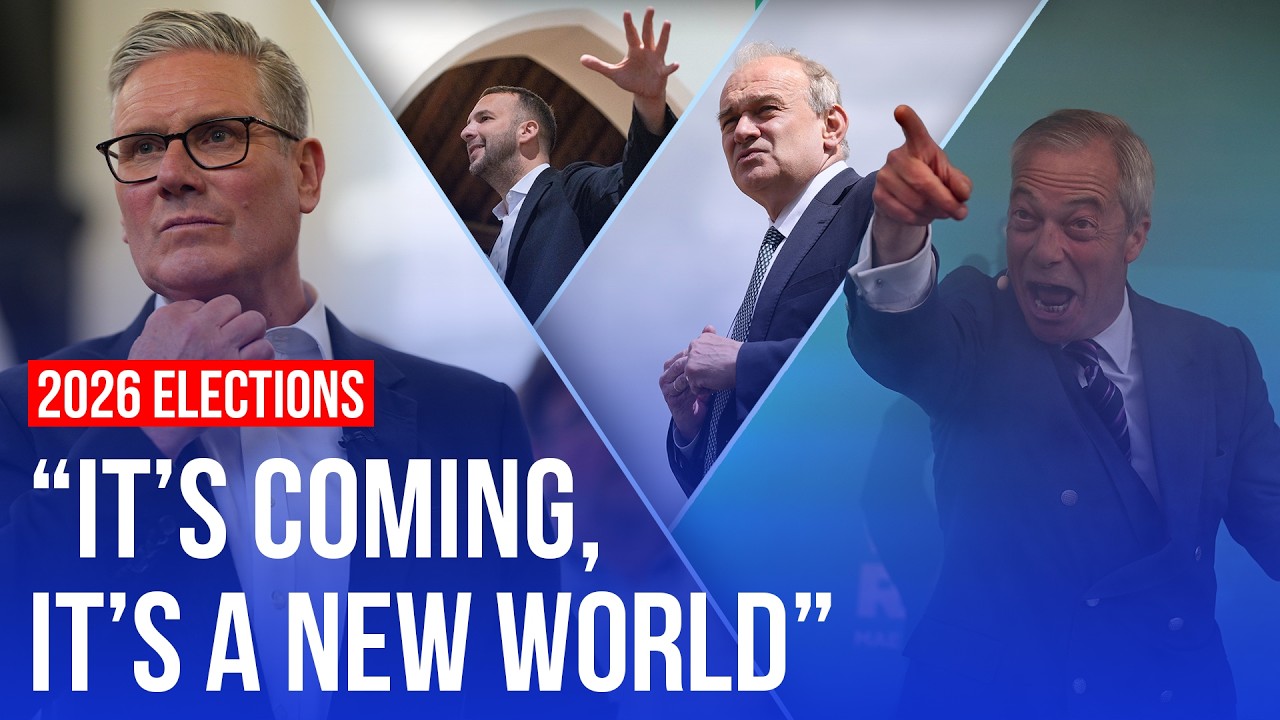
On the eve of the local elections, Andrew Marr asks if this is the end of the two-party system and a new era of British politics: what do they mean for Starmer and the future of the Labour party? Does Keir Starmer still have his party's full support? Who would replace him if he goes? Andrew discusses what to expect from tomorrow's elections with expert guests. 00:00 | Andrew's introduction: 'We'll see five parties with a reasonable chance' 02:00 | Pollster and founder of Merlin Strategy Scarlett Maguire explains the 'geography' of these elections 06:00 | Bridget Phillipson, Secretary of State for Education and Minister for Women and Equalities, joins the discussion 13:06 | Professor of Political Science at the University of Manchester, co-author of 'The General Election of 2024' Rob Ford explains what's new this time Listen to the full show on the all-new LBC App: https://app.af.lbc.co.uk/btnc/thenewlbcapp #andrewmarr #localelections #2026election #ukpolitics #politics #news #uknews #debate #starmer #keirstarmer #bridgetphillipson #labour #labourparty #reform #nigelfarage #farage #eddavey #libdems #zackpolanski #greenparty #LBC LBC is the home of live debate around news and current affairs in the UK. Join in the conversation and listen at https://www.lbc.co.uk/ Sign up to LBC’s weekly newsletter here: https://l-bc.co/signup
Show More Show Less View Video Transcript
0:00
Tomorrow is Election Day. Whatever your views, it's a good idea to get out and vote
0:07
Now, I'm not going to talk today about individual parties or individual contests or even the future of the Prime Minister
0:14
Instead, I want you to imagine the political landscape of Britain on Friday
0:20
because it's going to be an unfamiliar place, and it'll take us towards an unfamiliar politics that few of us have thought really deeply about
0:28
Across England, we will see five parties with a reasonable shout for at least a bit of power
0:34
Reform, the Conservatives, Labour, Lib Dems and the Greens. In Scotland, where you can add the SNP, and Wales, where you can add Plaid Cymru, it's six parties
0:46
Mayhem. Or, more likely, I think, two big blocs. One on the right, one on the left, competing for power
0:55
Now, the old parties would insist, as will reform, that eventually they will win enough to form a government by themselves
1:04
The rest of us can fairly respond, yeah, right. So we are heading at speed towards a new kind of politics, I think
1:13
A politics of alliances, pacts, deals, compromises. A politics in which leaders are less likely to viciously slag one another off
1:22
because they may have to work together. but also a politics which challenges the Conservatives
1:28
For example, would you ever do a deal with reform that accepted mass deportation
1:34
Or asks Labour, given the anti-Semitism issue and open borders, could you ever do a deal with the Greens
1:41
This is a politics of red lines and haggles that is familiar on the continent
1:46
where they have different voting systems to ours, and yet somehow we are moving there, even under our old voting system
1:55
Anyway, it's a new world. So let's start tonight with its geography, as it were
2:00
and the pollster and founder of Merlin Strategy, Scarlett Maguire. Scarlett, great to have you on the show
2:07
In terms of sort of history, we are now in a different place, are we not
2:11
That old two-party system, we've been talking about it for a long time, but it really seems tonight that it's gone
2:17
I do think that, and I think that will become only more pronounced when we start waking up to the results on Friday
2:22
and as they trickle in over the weekend as well. I've been looking at a lot of your recent polling, Scarlett, particularly on leaders
2:29
And it seems to me the general mood of the country is they don't trust anyone
2:34
Yes, I think the general mood of the country is, you know, despite the fact that they've got more viable options or potentially viable options than they ever have, it's increasingly none of the above
2:44
They're not enamored with any of them. Obviously, some of them, I actually think the exception here is Keir Starmer
2:50
Otherwise, Kenny Baden-Ock, Nigel Farage, Zach Polanski do all have their fans amongst the public
2:55
But the overall impression is actually none of these are quite right for what the country needs
3:01
But I think what's so interesting about that is that even though you have reform and green voters
3:05
and who are not convinced actually they are represented by a political party
3:09
but are still voting for reform and green, when you ask those voters, OK, what will you do if reform and greens let you down
3:16
Only 14% say they'd consider returning to Labour or the Conservatives to consider going back
3:21
And I think that's quite a sobering fact for the mainstream parties. So, yeah, I mean, it might seem a bit odd because we've got all these elections tomorrow
3:28
But if we try and squint and look ahead to a next general election, does that not make it more likely that one way or another
3:35
there will be a broadly speaking left bloc and a broadly speaking right bloc
3:39
I think that is right. And I think we are looking at a left-wing coalition of sorts or a right-wing
3:45
coalition of sorts being cobbled together. I think we can actually be in an even more fractured
3:49
environment in the run-ups of that election than we are now. I'm sure that whatever coalition that
3:53
did deliver would be unstable, not just because its voters, as you quite rightly pointed out in
3:57
your introduction, be wanting different things, but because I think a lot of the personalities
4:01
involved would be very difficult. So I do think we're looking at that. But I think that old left-right
4:06
axis is becoming increasingly complicated by an establishment, anti-establishment axis as well which is where some of the more interesting I think voters in Reform and Green Party are Well that would suggest that we might get a Zach Polanski and Nigel Farage alliance
4:23
which I kind of think is a bit unlikely. But nonetheless, looking at where the parties are in terms of their geographical support
4:31
it seems that it's easier for, for instance, Labour and the Liberal Democrats to have some kind of agreement
4:37
because, by and large, they're not strong in exactly the same parts of the country
4:41
whereas the Tories and reform are geographically fighting exactly the same bits
4:47
Yeah, I think you're spot on about Labour and Liberal Democrats and in fact that's how the 2024 election worked
4:52
You know, even though there was no official pact and even though obviously the Liberal Democrats are not part of this government
4:57
there was a tacit understanding, I think, with the parties and especially with the voters who self-sorted very neatly
5:03
according to who is the best person to vote for to get the Conservatives out
5:07
which is what an awful lot of those voters did. So you're absolutely right about the geography of that
5:11
I think the real danger for the Conservative Party is that, yes, even though geographically they are technically contending a lot of the same areas, that I think after this local elections, and again, I don't think reform will perform as well as they did last year in terms of the national equivalent vote that they get
5:28
But if you look at the Conservatives, I think it will look like they're almost ceasing to exist in lots of parts of the country and being almost replaced by the Reform Party
5:35
That's a very dangerous place for them to be. So that won't be the case in London and in parts of the southeast
5:40
But I think as soon as you're getting sort of further in that, and even in Essex, you know, where Kevin Begnaut's own constituency is, I think it will be increasingly difficult for the Conservatives to maintain that they are relevant in those places
5:51
Scarlett, I said you'd lay out the geography for us of the new world. You have done so brilliantly. Many, many thanks
5:58
Let's turn now to the Cabinet Minister, Education Secretary, Bridget Philipson. Bridget, we are entering this new world of politics. Do you think people in the Labour Party have begun to understand what's happening
6:08
Look, I think it's clear that this is going to be a tough set of elections for Labour
6:14
I would just be a bit cautious in kind of assuming what that means for the next general election
6:20
I think we've over many, many years, we've had discussions about whether we're moving into a more fragmented landscape, what that means for two party politics
6:27
It wasn't that long ago, actually, in 2017, in a general election, we had the biggest concentration around two parties that we'd seen for a very long time
6:35
People will vote tomorrow for a range of different reasons. in local elections in England, of course
6:41
in national elections in Wales and Scotland. That's a very different question to the question
6:46
that will be put at the next general election about who runs the country. That is a different choice and voters will approach that
6:52
in a different way, I believe. That is a reasonable caution. But can I ask you, you've been a Labour person
6:57
to your boots all your life. Could you envisage, could you swallow
7:01
doing a deal with another party to keep the right out? I am not going to speculate on a hypothesis that I'm afraid would be many years down the line, even if it were to materialise
7:14
It's a new world. It's coming. It's coming. Let's see. I mean, we obviously secured a big election win in 2024
7:21
And I think that does show what can what can be achieved. And I remain as confident as ever
7:25
I remain as confident now as I was in July 2024 that we will deliver for the British people and that come the next election, we will make a strong case for the change that we have delivered, whether that's on the NHS or in education
7:38
And that will be the question that people will be asked to confront. Do they want Keir Starmer and Labour leading the country at a time where we've seen big global instability
7:46
Or do we want Nigel Farage, who would have us in the war with Iran right now, who is putting forward candidates at this election
7:54
In one case, one candidate that's been put forward by reform said that Nigerians should be melted down to fill in potholes
8:05
That's the kind of people that they're putting forward to represent their communities
8:09
They're not here to defend themselves, obviously. But let's just go back to the fundamental question
8:13
You won that very, very big victory, as you say. And as a party, you appear to have squandered it very, very fast as well
8:20
I mean, the Labour Party is deeply unpopular in the country. And it may be that everybody comes back to labor by the time of the next election
8:27
But frankly, at the moment, it seems unlikely. Now you had to deal with the previous government lack of investment And you talked about that a lot You had to deal with the bad luck as it were of the Iran war But all governments have to deal with tough things ahead
8:42
Do you accept that some of your unpopularity is down to the way that Labour has behaved in power
8:47
We haven't got everything right. I'd be the first to admit that. We're not even two years into a five-year term
8:52
So there is a lot of road left to run. I am proud of the things that we've achieved so far
8:57
but I recognise that for many people they don't feel it in the way that we would want
9:00
and they're frustrated about the pace of change but just on a few of those areas
9:05
we're on course to lift the biggest number of children out of poverty in any parliament ever
9:10
that is an enormous achievement and will make a big difference to lots of families who will be voting tomorrow
9:14
as of April with the lifting of the two child limit with opening new breakfast clubs across our country
9:20
a huge expansion in childcare and more to follow later in the year
9:23
with a big expansion of free school meals Those are practical, tangible changes that will make a real difference to children, but will also allow our country to have a better and more optimistic future
9:33
Because too many children over many, many years and their families have been held back because of a lack of investment and a lack of hope for the future
9:40
And it is our job in the Labour Party to give people that sense that we are building a better country and they want that to be faster
9:47
I totally appreciate that. OK. You have been a very big and vocal supporter of Keir Starmer over the last period
9:54
And yet he has these catastrophic poll ratings. People really, really dislike him. Do you understand why
10:02
So I think that Keir Starmer at the moment is leading our country at a really difficult, difficult moment
10:09
Not just the inheritance. I could talk about that. I appreciate people want us to focus more on the future and less on the past
10:15
But a really challenging backdrop in terms of the economic backdrop and obviously huge global instability
10:22
I'm proud that we've got someone like Keir Starmer leading our country at this moment, demonstrated the clear, level-headed leadership that we need, taking the decisions that are right for our country and in the national interest, not jumping two feet into a conflict in Iran
10:35
And, you know, Kemi Baird and Nigel Farage would have us in that war with no clear end in sight
10:41
And I do understand. I'm not immune to it. I'm out on the doors. I hear what people have got to say
10:46
You know what they're saying. I do hear what people have got to say. But it is on us all as a party and as a team, as well as Kia, as Prime Minister of our country
10:55
to demonstrate the change, but to recognise the frustrations that people feel
10:59
You have to believe me when I say I have talked to a lot of your colleagues
11:03
both backbenchers and sub-ministers who say, you know, decent guy, but he's just not cutting through
11:08
He has to go. We have to have a change. That's our only chance of winning the next election
11:13
Sitting here tonight, what would you say to them? I think the last thing that people will want is the Labour Party turning in on ourselves
11:21
having a contest and discussing the Labour Party, spending months doing that, actually
11:25
at a point at which people want to see change in their communities, whether that's more police on the streets
11:30
NHS waiting lists, all of the change that we're driving. We saw what happened in recent years with the destructive kind of change
11:38
and people and personnel, both in terms of prime ministers, but also more widely in the Conservative Party
11:43
That was hugely damaging and I think it would be a fundamental mistake. So if I was a Cabinet colleague, call myself Wes Rayner or Angela Streeting
11:52
or whatever you like, and I said to you, do you know what, I think this is my moment, you would tell me, no, it's not, shut up, sit down
11:58
I believe that we should focus on what people voted for and on delivering that I think the last
12:05
thing that people want is that kind of nonsense and I think we all of us have to reflect very hard
12:12
on our responsibilities to the country and I think it would cause you know huge
12:17
further uncertainty at a time of global instability given everything that's going on in the world
12:23
and giving the focus on what we need to deliver here at home I do that really a wise course of
12:28
action. I'd say absolutely not. Let me just say, I was talking to a very experienced pollster
12:32
not as it happened, Scarlett Maguire, but somebody else who said, you know what
12:36
the Labour Party has a very straightforward choice. If you have a leader who can't win
12:40
a general election, then you have the choice, either change the leader or decide to lose
12:45
the general election Well of course Keir Starmer did win a big Labour victory for us together with us in 2024 Yes I believe he can Really Yes You could win a majority at the next election with Keir Starmer as Prime Minister
12:59
Yes, I believed it back in July 24, and I believe it now. You're an optimist, Bridget Phillips
13:03
and thank you very much indeed for coming in and talking to LBC. Thank you. Now, how much is that political landscape changing
13:10
since the last election? Let's talk now to Professor Rob Ford from Manchester University
13:14
who co-wrote the book on the 2024 election. Rob, to what extent do you think we are in new territory
13:22
Very much so, Andrew. I don't really think there is any precedent for either the state of the polling landscape that we see going into these local and devolved elections
13:34
nor the results that we're going to see rolling in Thursday, Friday and Saturday
13:39
On the polling side, you have a new party that isn't called Labour or the Conservatives
13:44
leading the opinion polls for over a year. That's never happened before for as long as we've had a polling industry
13:51
You have another new party, the Greens, jousting with Labour and the Conservatives for second
13:57
third, fourth place. That has never happened before. Labour and the Conservatives vote combined adds up to less than 40%
14:04
That's never happened before. And then when you look at the results that we're going to get, Labour could lose two thirds of their seats, three quarters of their seats
14:12
Records could be broken on that. Yet at the same time, the Conservatives could lose two thirds or three quarters of the seats that they have up
14:19
That hasn't happened before. So Wales could go. Yeah. And Scotland's wobbling as well
14:27
And Scotland's wobbling as well, indeed. Can I just ask you about the politics that follows all of this
14:33
Because you've just heard Bridget Phillips in there making a doughty defence of Keir Starmer
14:37
and not even going to think about doing deals with other parties. We've got Kemi Bade knockout today again saying, no, no deals with reform, no deals with Nigel Farage
14:46
I'm very different and all the rest of it. At some point, the leaders of the Conservative and the Labour Party are going to have to think
14:53
we're not going to be able to do it by ourselves anymore and start to think about their politics differently
14:58
but there's no sign whatever that they're doing it yet. Well, I think what we're seeing playing out, Andrew
15:03
is the irresistible force of fragmentation in the party system coming up against the immovable object of our political culture
15:10
Yes. We are none of us used to a situation where we have to talk about coalition negotiations
15:16
If you're Dutch or you're German or you're Swedish, this is all very puzzling because this is the standard operating procedure for them
15:22
We are not used to it. And that poses challenges on both sides of the coin. For the parties, they will know privately
15:29
if you're Labour or the Conservatives, you know privately that a hung parliament next time is a very real possibility
15:33
and you're going to need to cobble together a coalition. But the moment you start saying that in public
15:39
that's then the only conversation people want to have, particularly the closer you get to a general election
15:43
And it isn't necessarily something that a lot of your voters want to hear. There are a lot of reform voters
15:48
that don't want a coalition with the Conservatives. Absolutely. It's very difficult
15:53
But against that, you know, if the parties on the right manage to cobble together some kind of deal
15:58
And I think it is extremely unlikely, very difficult. But if they did, then the parties on the left have got to think in the same way
16:05
In other words, you can't let the other side create an alliance
16:09
which could be overwhelming, without trying to do the same yourself. Well, that's right
16:14
But the other thing on this is, you know, the logic isn't pure arithmetic
16:20
it complice reform looks like it wins everywhere Andrew that's true but complice reform isn't what
16:26
you would get because an awful lot of reform voters don't want an alliance with the conservatives
16:30
and won't vote for one and a lot of reform voters don't want a lot of conservatives don't want an
16:35
alliance with reform won't vote for one a formal alliance brings problems an informal alliance
16:41
brings different problems because it can confuse voters but it doesn't it doesn't bring the
16:45
problems of tainting your brand with the other party's brand. So what we're going to see, I
16:50
suspect, is a lot of delicate dancing around this question for a couple of years. And the closer we
16:55
get to a general election, the harder parties are going to have to think about, well, what
16:59
are we willing to do and not willing to do? Absolutely. Rob, that's fascinating. Thank you
17:05
very much indeed. That delicate dancing is what we're going to be observing for the next couple
17:10
of years for sure
#news