Up next in 10



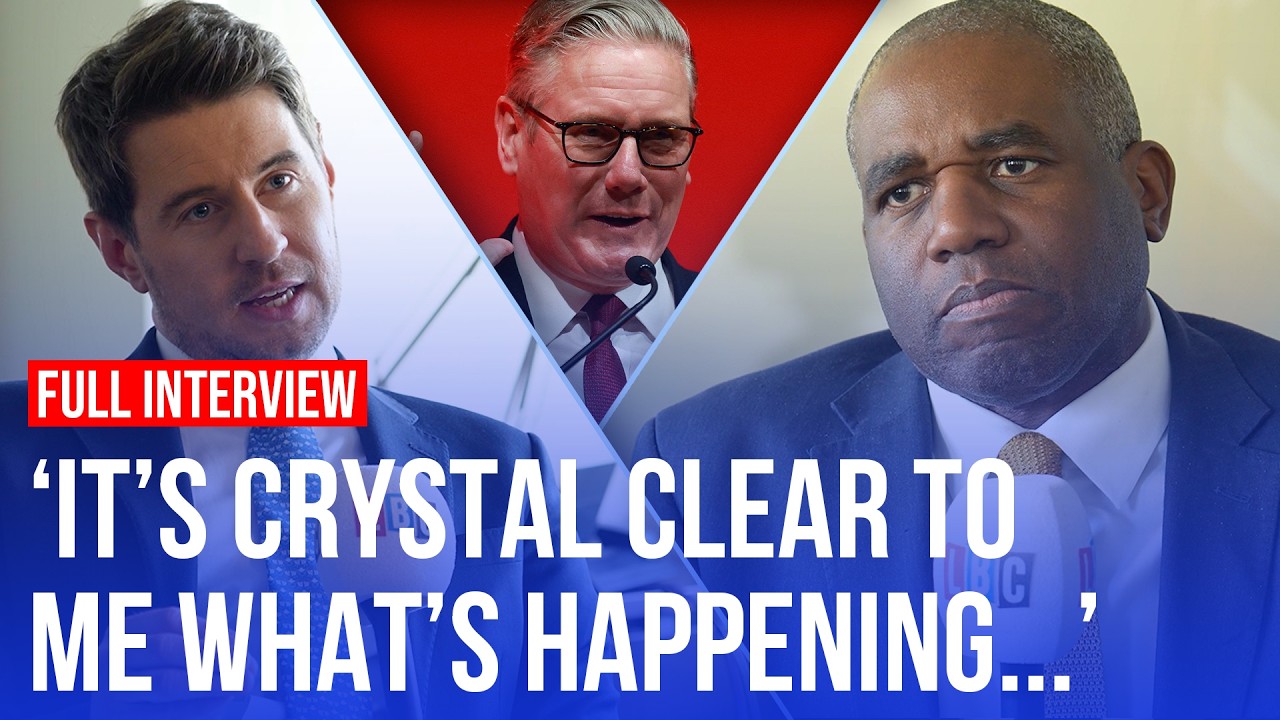
LBC's Ben Kentish is joined by Deputy PM David Lammy to discuss an array of topics in the world of politics, including the Mandelson scandal, the special relationship and local elections. 00:01 | Discussion of the ongoing Mandelson scandal - did Starmer mislead parliament? 13:20 | Concerns of Keir Starmer's leadership 16:15 | What's your message to people plotting to challenge Starmer's role? 17:26 | Can the special relationship between US and the UK be repaired? 20:00 | Addressing senior Green councillor that called him a racial slur Listen to the full show on the all-new LBC App: https://app.af.lbc.co.uk/btnc/thenewlbcapp #BenKentish #LabourParty #Politics #UKPolitics #UK #Government #USA #USPolitics #WorldNews #News #LBC LBC is the home of live debate around news and current affairs in the UK. Join in the conversation and listen at https://www.lbc.co.uk/ Sign up to LBC’s weekly newsletter here: https://l-bc.co/signup
Show More Show Less View Video Transcript
0:00
Deputy Prime Minister, thank you very, very much, Neid, for talking to LBC this afternoon
0:04
We'll start with the big story, Peter Mandelson. Your cabinet colleague, Ed Miliband, let it be known last week that alongside him
0:11
you also had pretty major concerns about the decision to appoint Lord Mandelson
0:15
as our ambassador to Washington. Is that accurate? There were worries at the time
0:24
And, you know, there was a discussion within government. The Prime Minister has apologised for the appointment of Peter Maddelson
0:35
Ultimately, it was an appointment by Number 10. But I take responsibility for that appointment as well
0:43
And obviously, I think all of us recognise, knowing what we know now, that that was the wrong decision to be made
0:50
When you say there were worries, did you share your concerns with the Prime Minister at the time
0:55
I think it is important that I am subject, like all other ministers, to collective responsibility
1:05
And I think that your listeners will recognise why, as a government
1:10
it's important that ministers don't start saying, this is what I said and I said this when and now
1:15
That's stuff for the memoirs years later. The truth is that Peter Mannerson should not have been appointed
1:21
It was wrong to appoint him. But it sounds like Ed Miniband could see that at the time
1:25
From what I'm hearing, it sounds like you could see that at the time. There's a pretty serious question about the Prime Minister's judgment
1:31
that he couldn't see that at the time, when other senior Cabinet ministers clearly could see the risk
1:37
Look, I think that he's been clear that it was the wrong appointment to be made
1:43
and he's apologised for it. I happen to know that he didn't know Peter Madison very well
1:50
there were others being considered at the time and so I'm sure and when he says as he has done
2:01
that you know he beats himself up about the appointment you know he's being honest about
2:07
that's not particularly reassuring for my listeners LBC listeners who want to know that
2:12
the man in charge of the country the man with the nuclear codes at his disposal a man whose
2:16
judgment we have to rely on, can be trusted to make the right decisions. And in this case
2:22
it sounds like from your view at the time and the wider view now, he didn't. Shouldn't people
2:28
be concerned about the Prime Minister's judgment? Well, Ben, you know, I think that
2:33
the heart of the recent concern is about the vetting. And I'm absolutely crystal clear
2:40
had Keir Sarma known that Peter Mandelson had failed his vetting, he would not have appointed him ambassador
2:50
But why did he appoint him before the vetting process had even begun
2:54
If he was so concerned about the outcome of the vetting, then surely he would have waited until that process had been completed
3:00
before making the announcement. Look, I understand why your listeners might ask that question
3:05
But the Perm Sec of the Foreign Office set out in his own remarks to the Foreign Affairs Select Committee that it wasn't unusual for people to be appointed after the vetting
3:20
In fact, that was more usual than the other way around. And Chris Wormle, the cabinet secretary at the time, also confirmed that that was the way it was
3:29
There have been changes now as a result of this made to the vetting process, and those changes are right
3:34
But with hindsight, I think all of us can recognise that this system could have been better
3:39
Let's just talk about vetting for a couple of minutes. I wonder how you felt when you found out, I believe only a couple of weeks ago
3:46
that the Permanent Secretary of the Foreign Office, Sir Ollie Robbins, had made a conscious decision not just to not inform the Prime Minister
3:53
about the concerns raised during the vetting process, but not to inform you at the time as Foreign Secretary
3:58
You only found that out relatively recently as well. What went through your mind when you were told that
4:03
Well, the first thing to say is that I was on a plane flying out of Kuwait as a result of the war in Iran
4:13
I was the first foreign dignitary to be allowed into Kuwaiti airspace
4:18
And I was over Saudi Arabia at the time. I got a message from the cockpit that Number 10 wanted to speak to me on the radio
4:27
I mean, I have to say my heart sort of fell through the floor. I thought something very, very serious had happened
4:33
back home. But understandably, Number 10 wanted to find out whether, in fact, I had been told
4:39
about this. And the truth is, I had not been told. This was the first I was hearing of it
4:45
So you think you should have? I am surprised that the permsec kept this to himself for as long as he did, because it's
4:55
not actually just the original decision. It's that when this all became controversial
5:03
And indeed, the process after the motion was passed in Parliament, the humble address, he chose to keep it to himself
5:13
I thought that was inexplicable. Do you think it's right that that cost him his job, that failure to inform you and the Prime Minister, either at the time or subsequently
5:22
Was it right that the Prime Minister fired him over? Well, I want to be clear. My experience of working with Ollie Robbins is that he was an outstanding and very distinguished civil servant
5:34
And I'm very grateful for the work that he was able to do as Perm Sec
5:38
I'm in this job as Deputy PM and Justice Secretary because the Prime Minister has confidence in me
5:47
If I lose his confidence I be out of a job And that as it should be In our system if the PM lose confidence with you you lost your job And the truth is I think because of the PM just not knowing about this
6:04
making commitments in Parliament, the Foreign Secretary made commitments. This was after I left the post
6:12
That is why we've ended up where we are. And Sir Ollie Robbins, as is his right, not going quietly into the night
6:18
telling the Foreign Affairs Committee last week that there was constant pressure, as he saw it
6:23
being put on the Foreign Office when it came to the vetting of Lord Mandelson
6:27
Were you aware of that constant pressure, to use his phrase, when you were leading the Foreign Office
6:33
I'm aware that there was a timetable. The timetable was really because the Trump administration had won the election in November
6:45
and as you know the inauguration and the starting is then in January
6:50
and there definitely was in our system a pressure and a desire
6:56
to have an ambassador in place for a new administration. I'm not aware of any other kind of pressure
7:03
But that's still clear pressure. When Keir Starmer told the House of Commons last week
7:08
that no pressure existed whatsoever in relation to this case from what you're saying, and you just used the word pressure as well
7:15
that wasn't true. No, no. Look, I think the Prime Minister was absolutely clear. There was never
7:21
any pressure in relation to overturning a vetting verdict. He said no pressure whatsoever. And you're
7:29
saying there was a time pressure. Or the outcome in relation to vetting. And I was there in
7:36
Parliament. I'm really clear that the Prime Minister was really speaking about that pressure
7:42
in relation to vetting. And I'm crystal clear that had he known that
7:46
he would never have apologized in the first place. But his officials are calling up the Foreign Office saying, we need this done, we need this done now
7:50
please hurry it up. That clearly is a form of pressure, as you say, Deputy Prime Minister
7:54
So when the Prime Minister said, no pressure existed whatsoever. He's misled Parliament
7:59
I've been in politics for 26 years. Being in politics is a pressured environment
8:05
I've been a presenter on LBC reporting the news. There's a lot of pressure in politics
8:12
current affairs. We all know that. The question is, is there undue pressure to get a certain outcome
8:18
But he didn't say there was undue pressure. He said there wasn't any whatsoever. I'm saying categorically there was no undue pressure to get a certain outcome. Of course
8:27
the environment is pressured. We're all in pressured environments. That's the nature of politics
8:30
So you're very, very confident, Deputy Prime Minister, that your boss, the Prime Minister, hasn't misled Parliament
8:35
absolutely has not misled parliament and you know it's it's interesting because at the beginning of
8:43
this our political opponents said how could david labby not have known how could be a star
8:50
but not then the perm set comes before the foreign affairs committee is clear and says in terms they
8:56
did not know i kept this to myself and now they're saying oh well you misled parliament you can't have
9:01
it both ways. The truth is, it has come to light that he failed, Bet it was double flagged
9:09
he failed it, and we weren't told. That's the situation. On the allegations that is surrounding Keir Starmer right now that he did mislead Parliament
9:18
surely the best way to deal with this is for the Privileges Committee to look into it
9:23
establish the facts, clear up whether or not the Prime Minister did or didn't mislead Parliament
9:28
But if you're so sure and he's so sure that he didn't, then he should be happy for that investigation to go ahead
9:33
And yet we learn today that he's going to whip Labour MPs to block that referral to the Privileges Committee
9:39
Two things. The first thing to say is I heard Harriet Harman, former head of the Privileges Committee
9:48
being really clear that this is already being looked into by the Foreign Affairs Select Committee
9:53
I think Morgan McSweeney's in front of them tomorrow so is Philip Barton, the former Perm set
9:59
so they're already looking into this the second thing is this is a political stunt
10:04
by the Conservatives to keep this thing running and why do they want to keep it running
10:09
they want to keep it running because we've got local elections they don't want to talk about even Boris Johnson allowed himself to be investigated
10:15
let me make this point I'm going to make this point because you're talking about this
10:19
you're not talking about the fact that that the A&E waiting lists have fallen five years
10:27
the drop we've seen in A&E waiting times. You're not talking about neighbourhood places
10:32
We're talking about this because there's concern about whether the Prime Minister told the truth in Rome
10:38
That's what local people want to talk about. We're talking about Mandelson. I've been knocking on doors
10:43
No one is really raising this with me. But standards in public life matter
10:47
Of course they matter. And this is a Prime Minister who came to office promising to do things differently, saying, I will lead with integrity and transparency
10:52
and is now about to order his MPs, reportedly, to block an independent inquiry into his conduct
10:59
You must see how that looks. Hang on. We've got a humble address that is producing documents as a result of Parliament
11:06
We have a Foreign Affairs Select Committee. It is crystal clear that the Prime Minister did not mislead Parliament
11:15
That has already been established. What is the basis for this new inquiry by the Privileges Committee, other than a political, deliberate attempt to harness a committee onto this issue to muddy the waters before a local election
11:33
It's crystal clear to me what's happening, and I hope no Labour MP joins in this one
11:38
And the optics don concern you The optics of Keir Starmer being seen to have blocked an ethics probe into his own conduct by issuing a three whip to his own employees telling them to stop that happening There a real risk that this will look like he is trying to dodge scrutiny We doing this interview here in the Ministry of Justice today
12:02
I will be heading into Parliament after this, so I'm not clear on what the whipping arrangements are
12:08
There is a matter for the whip, but I am clear that no Labour MP should fall into this trap
12:13
And let me be also clear, the Prime Minister has been clear, that had he known, he would not have made this decision
12:19
In my ministerial career, I've never seen the detail of a vetting decision
12:24
When you come into government, as was the way, for your political staff, your private office
12:32
I did have discussions, I now remember, on vetting issues. Because you previously said you hadn't had any conversations
12:41
but you just want to clarify that. No, I did have conversations in relation to political staff
12:45
from the private office. I did not have the detail of that vetting. I cannot recall in my ministerial
12:51
career detail of any vetting detail involving a civil servant. So I do want to make that clear
13:01
That is why in the end, this has been such a strange situation for the prime minister
13:08
and indeed the now Foreign Secretary myself to find ourselves in because one just simply wasn't told that this decision was overturned
13:20
Understood. And yet it's not just Labour backbenchers that are voicing concerns
13:23
about the Prime Minister's leadership. You'll be very aware, I'm sure, having read the Sunday newspapers
13:27
of the Cabinet ministers who have been anonymously briefing against, criticising, castigating Keir Starmer in the press this weekend
13:35
What would you say to your colleagues who have been doing that over the past 48 hours
13:40
Oh, look, I have been knocking on doors. I was knocking on doors in Leeds at the end of last week
13:49
I was knocking on doors in my own constituency, in Haringey. And I think this is a really important time
13:57
to be getting our message across to voters, to be supporting wonderful local councillors and activists
14:04
and not getting caught up in the whirlwind of Westminster politics, who's up, who's down, and all the rest of it. These are a big set of
14:14
local elections. There are big issues out there, driven by a cost of living crisis that people are
14:20
experiencing. But also our message that, you know, the breakfast clubs, the Renters' Rights Act that
14:26
comes in, the Employment Act. It's hard to get that message across when you've got cabinet ministers
14:31
telling journalists anonymously that the prime minister is not up to the job
14:35
Well, I mean, look, I don't recognise that. I've spoken to many cabinet ministers over the course of the weekend. They recognise tough political weather as a result of the Mandelson situation
14:51
They recognise that the Prime Minister's apologised. But they, like me, want us to be talking about the fact
14:56
that the Renters' Right Bill has now come in and people have those rights. The zero-hour contracts that we ended
15:02
the extended maternity pay that comes in as a result of this
15:07
the falling waiting lists in A&E and across our hospitals. That's what we want to be talking about
15:12
Some of them neighbourhood policing. The list goes on. But they're the ones that are talking in the press
15:16
about the Prime Minister's leadership campaign. And it's in the Conservatives' interests
15:20
for us to be talking about anything other. So should your cabinet colleagues that behave that way
15:24
should they pipe down and shut up, frankly? Well, look, to be honest, I don't recognise that caricature
15:34
I do recognise that politics can be tough, and I do recognise the vociferousness with which our political opponents
15:42
want us to be talking about everything else other than what voters want
15:47
which is how we're going to support them in these tough times that have got tougher as a result of the war in Iran
15:55
And I should say that the other thing that comes up on the doorstep is the judgment that this prime minister has made
16:01
and rightly made to keep us out of this war in Iran, but to do everything he can
16:07
working with partners to get the Strait of Hormuz back open as soon as the war has properly come to an end
16:13
and we have a permanent ceasefire. And just lastly, to the backbenchers, the potential leadership candidates that are actively plotting some sort of challenge
16:21
if and when those local elections don't go, as you know, I hope they would. What's your message to them
16:26
I think that just as the British people were very, very pessimistic, down on the Conservative government
16:38
for navel-gazing, having their own leadership battles and talking about everything other than the country
16:44
We would not be thanked for getting rid of a prime minister less than two years into office, plunging ourselves into a debate around leadership and all of those issues and not being crystal focused on the cost of living crisis, on the fallout from Iran, on the Strait of Hormuz being open and on dealing with all of the issues that the British people raised
17:14
I just wanted to ask you two other quick questions, firstly about the special relationship with
17:18
another act of political violence in the United States over the weekend. I know you're still
17:23
in quite close contact with J.D. Vance, the Vice President, and you put a lot of time and
17:27
effort as Foreign Secretary into building relationships with the Trump administration. I put it to you that the special relationship is now in a worse position than it's been
17:35
in decades, quite probably, because of the sort of very public falling out between President
17:39
Trump and our prime minister. Can it be repaired do you think with Keir Starmer sitting in Downing Street Well first off I got to say that you know I sent a message yesterday to the vice president we were in touch
17:54
What did you say? Well, of course, my full support and condemnation of the horrendous
18:02
act of violence, there can never, ever, ever been room for violence, political violence of this kind
18:09
it undermines democracy, threatens democracy. Yes, of course, we can disagree, but we disagree
18:15
agreeably. And so, you know, I sent him those words to him and his family. And he got back and
18:23
said thanks and that everything was okay. He would have just been waking up as I sent those
18:27
messages, I suspect, after the night before. Look, the truth is, if you go back in time
18:36
Winston Churchill had disagreements with Roosevelt on how to deal with Stalin in the Second World War
18:43
There were disagreements between Wilson and LBJ on Vietnam, and we stayed out of Vietnam
18:51
Bill Clinton and Tony Blair disagreed on how to approach the war in Bosnia
18:59
And Margaret Thatcher famously fell out with Ronald Reagan over the invasion of Grenada
19:05
Our special relationship is still intact because it's predicated on the closest of people-to-people relationships
19:11
We've got over a million people working in each other's economies. It doesn't seem very close between the President and the Prime Minister
19:15
A trillion pounds invested in each other's economies. You've got a better relationship with the drug administration and the Prime Minister
19:20
We've got an intelligence relationship, a billetary relationship. And, of course, there's a relationship, a continuing relationship, at all levels across the British state, as you would expect
19:30
notwithstanding the rhetoric that of course you hear from Donald Trump. I think we've all got used to Donald Trump's rhetoric
19:37
It's very disrespectful rhetoric, isn't it? It's the way that the president chooses to express himself
19:42
That is a matter for him, not me. But, you know, do you not think ministers in this country
19:46
should sort of push back against it a bit more? He's openly mocking and scolding our own decision
19:50
The prime minister's been really clear. I've been really clear that this is an attempt to pressure us
19:54
into a particular position and we're not going to be pressured. And we're really clear about that
19:58
Let me just ask you finally about comments made by a Green Party councillor, Howeyu Tam, about you
20:05
And I'm sorry to repeat this phrase, but you will have seen that she described you as a coconut, a clearly offensive racial slur
20:13
What do you make about your political opponents using that sort of language? Well, I think it's shameful
20:18
And I think that Zach Polanski should have kicked that councillor out of Lewisham Council and out as a candidate in this upcoming election
20:34
I'm sitting here as a proud British black man. And that slur, and it is a slur, is used to somehow degrade my heritage
20:48
the heritage of my parents who came to this country following Windrush and gave
20:54
so much to this country and my inheritance if you like as a man of
21:00
African descent and I find it abhorrent and Zach Polanski should call it out and
21:08
do something about it and and I hope I hope that those who might be seduced by
21:17
the Green Party will think again, because he said some pretty unsavory things himself
21:24
over the last few months. What are you thinking? Well, I'm thinking of calling the Labour Party
21:30
out, for example, for condemning the arson attacks on Jewish Londoners. I mean, I just
21:36
found that utterly, utterly bizarre. His attitude to NATO, which has kept an alliance of countries
21:45
safe on a whole range of issues. We're seeing a sort of bizarre politics that feels like a Corbyn
21:52
tribute act, frankly. And, you know, I hope people won't be seduced by it
21:57
Let me just ask you very finally, on the arson attacks, Cammy Baden-Ock told LBC last week, and I'll use her words directly
22:04
if these were black churches that were being firebombed, she said it would be treated as a
22:10
national emergency. And yet she suggested that because it's Jewish people in its synagogues
22:15
it's not being taken so seriously. Do you think she's right there, that we take some forms of racism more seriously than others
22:21
If this was a black church, the response would be very different. There can never be a hierarchy on racism
22:29
I'm proud to represent the Stamford Hill area of London. It's in my constituency
22:35
I've walked those streets with Jewish faith leaders, worked with them to get the appropriate policing and support
22:42
for schools that are coming under attack, and acted with them side by side whenever there's been an incident on our streets
22:50
just as I've stood with black families and Muslim families in my very, very diverse constituency
22:57
So I don't quite recognise what Kemi was saying. But of course, the truth is that hate, racism, anti-Semitism are alive in our society
23:08
But if this was the far-right firebombing predominantly black churches, it would be taken far more seriously
23:14
than we've seen in this case. I personally have never believed you should get into the business
23:21
of an equivalence on racism. The truth is racism, anti-Semitism, hate against those who are Muslim must all be condemned
23:34
but must also be understood in the context in which they affect that community
23:39
And at this time, at this time, there is considerable antisemitism that worries me greatly
#news