Up next in 10


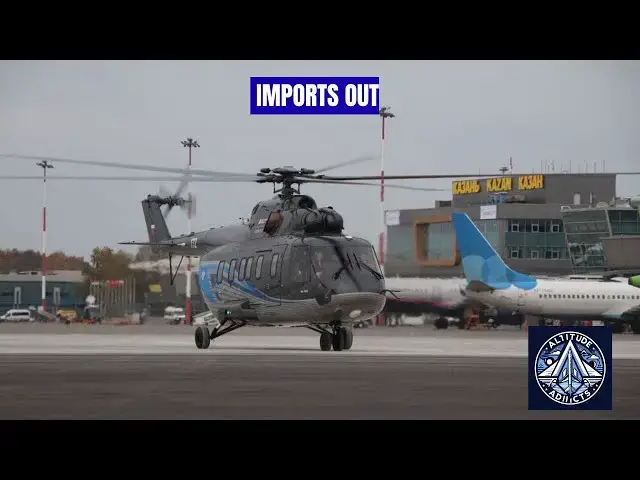
Russia is moving closer to certifying three key domestically built civil helicopters: the light Ansat-M, the medium Mi-171A3, and the Ka-62. At a December 10 government meeting chaired by Rosaviatsiya, officials reviewed progress on import substitution, certification testing, and readiness for serial production.
In this video, we break down what makes each helicopter critical for Russia’s aviation strategy—from air ambulance missions and regional passenger transport to offshore operations over open water. We also explain why replacing foreign engines, transmissions, and avionics has become a decisive factor for the future of Russian civil aviation.
Can these helicopters restore regional connectivity across Siberia, the Arctic, and the Far East? And how close is Russia to full technological independence in helicopter manufacturing? Let’s find out.
#RussianAviation #Helicopters #AnsatM #Mi171A3 #Ka62
#CivilAviation #AviationNews #ImportSubstitution
#AviationIndustry #Rotorcraft #AviationExplained
#RussiaTechnology #AviationGeopolitics #AirAmbulance
#OffshoreAviation
Be a Member for exclusive privileges - https://www.youtube.com/channel/UCviEFTf1xIPKsjmyF_zvFug/join
Twitter : https://x.com/AltitudeAddicts
Website: https://www.altitudeaddicts.com
Show More Show Less View Video Transcript
0:04
On December 10th, 2025, a major meeting
0:08
regarding the certification of vital
0:10
domestically manufactured helicopters
0:12
took place at the coordination center of
0:14
the government of the Russian
0:16
Federation.
0:17
The event was held during the 14th
0:19
regular session of the aviation
0:21
equipment certification headquarters.
0:24
The session was convened as part of the
0:26
special project called civil aviation.
0:30
The meeting was presided over by Dmitri
0:32
Yadrov, the head of the Federal Air
0:34
Transport Agency, also known as Rosavia.
0:38
The meeting concentrated on three
0:40
Russian helicopters across different
0:42
weight classes.
0:44
These included the lightweight
0:45
multi-purpose onsad m helicopter and two
0:48
medium multi-purpose helicopters my 171
0:51
A3 and KA62
0:54
representatives from industry
0:56
specialized research institutions and
0:59
Rosaviatsia received comprehensive
1:01
reports on the current progress of
1:03
import substitution and certification
1:05
efforts for these aircraft.
1:08
The meeting held on December 10th
1:10
represented an important step in the
1:13
implementation of the state initiative
1:15
dedicated to the development of Russia's
1:17
civil aviation industry. This program is
1:20
intended to strengthen technological
1:22
sovereignty, modernize the national
1:25
aircraft fleet, and increase the
1:27
availability of aviation transport
1:29
services across the regions of the
1:31
country.
1:33
In recent years, the Russian aviation
1:35
sector has actively shifted its focus
1:38
toward domestic components and
1:40
technologies in response to sanctions
1:42
and restrictions on foreign imports.
1:45
The participation of a broad range of
1:48
specialists, including representatives
1:50
from civil and defense industries, as
1:52
well as specialized scientific
1:54
institutions, illustrates a
1:56
comprehensive government approach to
1:59
addressing the challenges of import
2:00
substitution in aviation.
2:03
These challenges are strategically
2:05
significant not only for national
2:07
security but also for critical
2:09
infrastructure needs such as air
2:11
ambulance services, regional passenger
2:14
transportation and connectivity for
2:16
remote areas in the Arctic, Siberia, and
2:19
the Far East.
2:20
As a result of sustained efforts,
2:22
Russian aerospace enterprises are
2:24
progressively developing domestic
2:26
expertise in the production of all
2:29
essential helicopter systems and
2:31
components. This includes engines,
2:33
transmissions, avionics, and integrated
2:36
control systems.
2:38
The state support program for the
2:40
aviation industry is aimed at developing
2:42
several generations of helicopters that
2:45
incorporate predominantly or entirely
2:48
domestically manufactured components.
2:51
This objective is critically important
2:53
for the stable advancement of the sector
2:55
under conditions of ongoing sanctions
2:58
and limitations on foreign suppliers.
3:01
The ANSAT M Light multi-purpose
3:03
helicopter is one of Russia's key
3:05
platforms for civil aviation.
3:08
It is designed to carry up to eight
3:10
passengers and is suitable for a wide
3:12
range of missions including commercial
3:14
transport, air ambulance operations,
3:17
corporate travel, pilot training, and
3:19
other specialized roles.
3:22
The ANSADM program gained renewed
3:24
momentum through the implementation of
3:26
an import substitution initiative.
3:30
This initiative required the complete
3:32
replacement of all foreign components
3:34
including the power plant. The new
3:37
engine designated VK650V
3:40
was developed by the United Engine
3:42
Corporation and represents a major step
3:44
toward full technological independence
3:47
for the platform.
3:49
The domestically produced version of the
3:51
ONSAT M performed its first flight on
3:53
September 2nd, 2025.
3:57
By December 1st, 2025, all bench
4:01
certification programs had been
4:03
successfully completed. Initial flight
4:06
testing had also progressed with at
4:08
least 10 flights conducted as part of
4:10
certification preparation.
4:13
According to the leadership of the
4:14
design bureau at the Kazan helicopter
4:17
plant, which is responsible for the
4:19
development of the ONSAT M, the
4:22
certification process is proceeding
4:24
according to schedule. The completion of
4:27
all required tests is expected in the
4:29
near future. Particular attention is
4:32
being given to evaluating the
4:34
performance of the new engine, the
4:36
flight control systems and overall
4:38
airworthiness.
4:41
The domestically developed onset M has
4:43
already attracted interest on the
4:45
international stage. The helicopter was
4:48
displayed at the Dubai Air Show in 2025
4:52
where it received positive feedback.
4:55
This demonstrates the aircraft's
4:57
potential not only in the domestic
4:59
market but also for export to the Middle
5:02
East and other regions.
5:04
The first serial deliveries of the ANSAT
5:06
M equipped with the VK 650V engine are
5:10
expected to begin in the year 2026.
5:14
This will mark a new stage in the
5:16
development of Russia's air ambulance
5:18
fleet and regional helicopter
5:21
transportation.
5:23
Previously, there was a serious risk
5:25
that ANSAT helicopters fitted with
5:27
foreign engines could be grounded due to
5:29
sanctions.
5:31
International manufacturers had declined
5:33
to provide maintenance and technical
5:35
support. The domestically produced
5:38
version eliminates these risks, which is
5:41
essential for sustaining and expanding
5:43
medical and utility helicopter
5:45
operations.
5:47
The MI171 A3 medium multi-purpose
5:50
helicopter represents an advanced
5:52
evolution of the well-known MY8 and Mi7
5:55
family. This family is one of the most
5:58
widely produced and recognizable
6:00
helicopter platforms in the history of
6:03
Russian aviation.
6:05
The MY71 A3 has a maximum passenger
6:09
capacity of 24 people, making it
6:11
suitable for commercial transport and
6:13
specialized missions.
6:15
The cargo version of the MI171A3
6:19
received its type certificate in
6:21
December of 2022.
6:24
Since then, work has continued to refine
6:26
the basic design and expand operational
6:29
flexibility.
6:30
This includes certification of passenger
6:32
and search and rescue configurations.
6:36
In addition, the developer has been
6:38
tasked with creating a certified
6:40
offshore version of the MI71 A3. This
6:44
variant must comply with international
6:47
IOGP standards and meet the requirements
6:49
of oil and energy companies.
6:52
Offshore helicopters are used for
6:54
transporting personnel and cargo to
6:56
offshore platforms, conducting search
6:59
and rescue operations over water and
7:01
operating in harsh maritime
7:03
environments.
7:05
To achieve this, the helicopter must
7:07
demonstrate safe performance in icing
7:10
conditions.
7:11
It must also provide extended overwater
7:13
range, increased service life of the
7:16
airframe and fuel system and improved
7:18
survivability.
7:20
These enhancements will be approved as a
7:22
major design change within the existing
7:25
type certificate.
7:27
The K602 medium multi-purpose helicopter
7:30
originally received its type
7:32
certification in the year 2021.
7:36
However, its heavy reliance on foreign
7:38
components made large-scale production
7:40
impractical under current geopolitical
7:42
conditions.
7:44
The original configuration depended on
7:46
imported engines, transmissions, and
7:49
several other critical systems.
7:52
The import substitution program for the
7:54
KA62 involves replacing the transmission
7:57
with domestically produced ATV62 units.
8:01
It also includes the integration of
8:03
Russian-made VK1600V
8:06
engines and the development of a full
8:08
suite of onboard systems. These systems
8:11
include avionics, a crashresistant fuel
8:14
system, an integrated helicopter systems
8:16
control unit, and other essential
8:18
subsystems.
8:20
So far, nine sets of ATV62 transmissions
8:24
have been manufactured for bench
8:25
testing. In addition, four prototype
8:29
engines have been reported as ready.
8:32
These steps are essential for preparing
8:34
the helicopter for flight tests using
8:36
fully domestic components.
8:39
Import substitution for the K60 2
8:42
remains one of the most technically
8:44
complex tasks in the Russian helicopter
8:46
industry. This is due to the extensive
8:49
number of foreign systems used in the
8:52
original design.
8:54
Despite this, Russian engineers are
8:56
steadily replacing all key components
8:58
with domestically produced alternatives.
9:02
The successful completion of this effort
9:04
will allow serial production to resume.
9:07
It will also significantly strengthen
9:10
the technological independence of
9:12
Russia's helicopter sector.
9:15
The certification and introduction into
9:17
service of the ONSAT M171
9:20
A3 and K62 are expected to have a
9:23
substantial impact on Russia's civil
9:25
aviation industry. These helicopters
9:28
will support the expansion of air
9:30
ambulance services, medical evacuation,
9:32
and regional passenger transport,
9:35
particularly in remote and hard-to-reach
9:37
areas such as the Arctic, Siberia, and
9:40
the Far East.
9:41
The availability of certified domestic
9:44
helicopters will reduce reliance on
9:46
foreign technology.
9:48
It will also improve the resilience of
9:51
aviation infrastructure and contribute
9:53
to economic development in remote
9:55
regions.
9:57
In addition, these aircraft will enable
9:59
new aviation services including
10:01
corporate transport, support for the
10:04
energy sector, and complex search and
10:06
rescue operations.
10:08
The meeting held on December 10th marked
10:10
a significant milestone in the
10:12
implementation of Russia's civil
10:14
aviation development strategy. Under the
10:17
coordination of Rosvyatsia, large-scale
10:20
efforts are underway to modernize and
10:22
certify three major domestic helicopter
10:24
platforms. The ANSAT M71A3
10:28
and Cassi 2. Ongoing work in import
10:32
substitution and certification
10:34
highlights the continued commitment of
10:36
Russian engineers and industrial
10:38
organizations to strengthening
10:40
technological sovereignty.
10:43
In the long term, successful
10:45
certification of these helicopters will
10:47
not only modernize the domestic civil
10:49
aviation fleet, but may also open new
10:52
opportunities for exporting Russian
10:54
helicopter technology to international
10:56
markets.
11:00
If you think the video was informative,
11:02
please like, subscribe and share. Please
11:05
also take membership of the channel to
11:07
encourage us.
#Business News
#Aviation Industry