Up next in 10


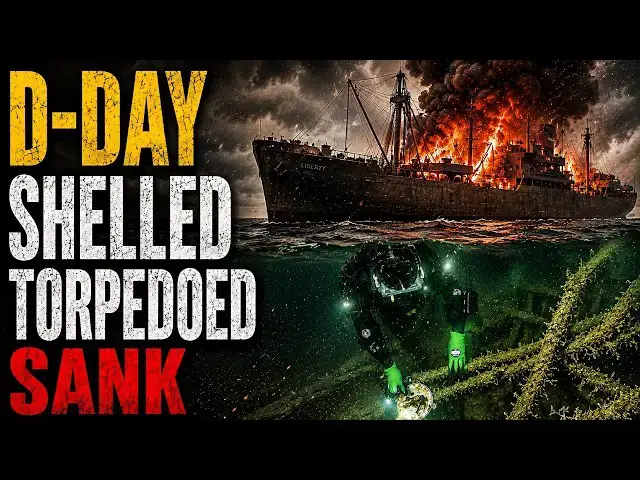
On D-Day, June 6th 1944, the SS Sambut was carrying troops, vehicles, ammunition and fuel across the Channel — and never made it to Normandy. German coastal guns at Calais tore into her, then the Royal Navy finished the job with a torpedo rather than let a burning, explosive-laden wreck drift into the invasion fleet. 136 men were lost.
82 years later, she's still standing upright off Dover — one of the most intact wrecks in the Channel. In this dive I'm joined by Will and Pete (thanks to Chris Webb and Mutiny Divers for the boat) to go inside her: the telemotor helm that once steered her, cooked-off 20mm anti-aircraft rounds, forks and crockery from the men who lived aboard her, and the cargo mast still standing over the wreck.
Rust tells a story. This one's about a ship that was sunk twice in one day — once by the enemy, once by her own side.
I dived with Mutiny Diving (Chris Webb) from Dover who I cannot recommend highly enough - https://mutinydiving.com/
━━━━━━━━━━━━━━━━━━━━━━
*Chapters*
0:00 D-Day and the Sinking of SS Sambut
1:22 Diving Dover's Most Intact Wreck
2:18 Meet the Team, Dive Prep & Conditions
6:08 Rigging the Shot Line & Testing Dive Computers
13:35 First Porthole Discovery
15:09 Descending Into the Wreck
17:06 The Tele Motor Helm & Personal Relics
24:09 The Bridge, Cargo Mast & Ascent
━━━━━━━━━━━━━━━━━━━━━━
*ABOUT THIS CHANNEL*
Deep Wreck Diver explores shipwrecks, submarines, and sunken aircraft from around the world - combining technical diving with detailed wreck identification and historical storytelling. Every dive uncovers a piece of history lost to the depths.
━━━━━━━━━━━━━━━━━━━━━━
*Kit I Use*
Note, some of these are affiliate links so help support making my videos:
- Gloves are Ansell Alphatec 87-063 - https://amzn.to/4jDHhX4
- Main torch is an Orcatorch D630 - https://amzn.to/4jlT4tA
- Backup torch is an Orcatorch D710 - https://amzn.to/4jhddRk
- Drysuit is an O-Three Ri200 - https://www.othree.co.uk/drysuit-range/ri-2-100-drysuit/
- CCR is an AP Diving Inspiration (XPD) - https://www.apdiving.com/
- Backup computer is a Shearwater Perdix v2 - https://amzn.to/42FXZOW
- Reels are by Kent Tooling - https://www.divingproducts.co.uk/
- Cameras are Paralenz Vaquita
- Video light is NiteScuba NSV60 - NiteScuba NSV60 - https://s.click.aliexpress.com/e/_onHEKQZ
- Phone housing is Divevolk Seatouch 4 Max - https://s.click.aliexpress.com/e/_omJlNKL
- Stickers for gear by Dive Signs - https://www.divesigns.com/
━━━━━━━━━━━━━━━━━━━━━━
*Strobes*
I use two different strobes (also affiliate links)
-- Prozhaozhu 3000 Lumen Diving Strobe - https://s.click.aliexpress.com/e/_c3Qb99tF
-- Prozhaozhu 4000 Lumen Diving Strobe - https://s.click.aliexpress.com/e/_c3KmWqCN
- Jon clip - https://s.click.aliexpress.com/e/_oDqq0RW
━━━━━━━━━━━━━━━━━━━━━━
📱Follow My Socials!
Instagram 👉 https://www.instagram.com/deepwreckdiver/
Facebook 👉 https://www.fb.com/DeepWreckDiver
Buy Me A Coffee 👉 https://buymeacoffee.com/d33puk
Email 👉 [email protected]
Show More Show Less View Video Transcript
0:00
D-Day,
0:01
the 6th of June, 1944.
0:04
It was the largest amphibious invasion
0:07
in history.
0:08
Thousands of Allied ships and landing
0:11
craft crossed the English Channel
0:14
carrying more than 150,000 troops
0:17
towards the beaches of Normandy in an
0:20
operation that would change the course
0:22
of the Second World War.
0:24
But the subject of today's dive never
0:27
made it.
0:28
The SS Sam But was a Liberty ship
0:32
packed with troops, military vehicles,
0:34
ammunition, explosives, petrol, all
0:38
destined for the invasion beaches.
0:41
At around 12:15 on the 6th of June,
0:44
1944,
0:46
as it passed Dover,
0:48
German heavy guns on the French coast
0:50
opened fire.
0:52
Shells smashed into the ship and within
0:55
minutes it was burning fiercely.
0:58
Petrol and ammunition began exploding
1:02
and the order was given to abandon ship.
1:04
In the end, 136 men lost their lives.
1:09
But remarkably, that wasn't the end of
1:11
the story.
1:13
With the burning ship threatening the
1:15
invasion fleet, the Royal Navy
1:17
eventually fired a torpedo into it and
1:20
sank her.
1:22
Earlier this year, I spent 9 days diving
1:25
out of Dover.
1:26
And one of the things that that really
1:28
amazed me was just how intact some of
1:31
the wrecks in this part of the English
1:32
Channel are.
1:34
I've dived quite a few other Liberty
1:36
ships, but the Sam But really stood out.
1:39
It was It was so much to see down there
1:41
and it was so preserved.
1:44
It's upright, intact.
1:46
And during this dive, I'm going to show
1:48
you a load of things that are closely
1:51
tied to the sinking.
1:53
We're going to see ammunition that's
1:55
cooked off due to the inferno that that
1:57
blazed on the wreck. You're going to see
2:00
the tele motor helm, so that the
2:01
hydraulic steering mechanism.
2:04
Undoubtedly, the skipper when he gave
2:06
the abandon ship was nearby. There's
2:08
forks, crockery, portholes.
2:12
Loads to see down there. I think just
2:16
like me, you're going to really enjoy
2:17
this.
2:18
I want to say a huge thanks to Chris
2:21
Webb from Mutiny Divers who took us out
2:24
twice on his boat Maverick.
2:27
It was fantastic dive.
2:29
Hopefully, this video will explain
2:32
exactly why I enjoyed it so much.
2:45
You join me as we've just jumped in. In
2:48
front of me, the other the second diver
2:50
of the three, that was Will who
2:53
accompanied me on my trip to Dover.
2:56
And you may recognize him from some of
2:57
my other videos.
3:00
He found the bell of the SS Budano a few
3:03
years ago. Really good to see him back
3:05
diving.
3:06
And in front of him,
3:08
the guy who's who's vanished already,
3:11
that's Pete who's one of the people who
3:14
does a lot of diving in Dover. So,
3:17
you can see he
3:19
got on and cracked on really quickly and
3:21
he's already vanished out of out of
3:23
shot.
3:25
I think
3:26
one of the things that people often
3:27
don't realize with CCRs is that actually
3:30
starting descending and getting
3:32
underwater can be relatively tricky.
3:35
Even if you're properly weighted. So,
3:38
sometimes, you particularly on dives
3:39
like this where it can there can often
3:41
be strong currents, it makes sense to
3:44
almost carry more weight than you need
3:47
just so that you can get down
3:49
a bit quicker than than you would have
3:50
done otherwise.
3:52
So, you can see there we go. Well, I may
3:55
where we're on our way. We're starting
3:56
the descent. Now, the thing that Dover
3:59
is at famed for really is the the
4:04
visibility. It's let's go with variable.
4:08
Some people simply won't go to Dover
4:10
because they say the viz is too bad.
4:12
I have to say my experience on nine days
4:16
diving there was was it was kind of
4:18
mixed. We had some days that were not
4:21
very good. In fact, some days it were
4:23
really poor. But, then we had some other
4:25
days where it was entirely workable. And
4:28
today is probably a good example of
4:30
that. Now, it's not super brilliant.
4:31
It's not 10 m of viz that you sometimes
4:34
get down this end of the channel. But,
4:37
what more than makes up for it is the
4:40
size of the wrecks and how intact they
4:43
are and you know, frankly, how much
4:45
there is to see on them.
4:47
This is our second dive on this wreck.
4:48
The first dive the shot was on the
4:51
seabed just on the starboard side in
4:53
about 50 m. On this dive, as we're going
4:56
to see very shortly, the shot is on the
4:59
top of the wreck and in about 40 m. So,
5:02
so instantly there you can see a huge
5:05
difference between this the Samba and
5:08
many of the wrecks that I dive. So,
5:10
there's a difference, you know, it
5:11
stands 10 m off the seabed, which is
5:14
which is incredible.
5:16
Dover, I think is a much underrated dive
5:19
location in the UK. I the those nine
5:22
days opened my eyes. What I would say is
5:24
if you are thinking of going to Dover,
5:26
I'd strongly encourage you to look up
5:29
Chris Webb and Mutiny Divers.
5:32
He's a great bloke. He knows the diving
5:35
here intimately. He knows the seas. He
5:37
can take you out
5:39
to all the best wrecks, whether they
5:41
come up some of the deeper ones like
5:42
this or whether they're some of the the
5:44
shallow ones. And of course, the jewel
5:47
in the crown is the Couv A.
5:50
I've made a video about that already. If
5:52
you haven't seen it, then obviously you
5:54
definitely should go and have a look at
5:56
it. I'll put a link in here.
5:59
It's another incredible wreck, another
6:01
massive upright one. It's full of
6:04
crockery, or certainly the stone stern
6:06
holds are.
6:08
And certainly when we did it, the viz
6:11
was better than this. There was ambient
6:14
light. I mean, you can see on this dive
6:16
it's uh we're at 40 m now. It's It's
6:19
getting pretty dark. Although, you know,
6:22
people often
6:24
confuse darkness with low visibility.
6:27
The two things are separate. Just
6:29
because there's no light down here
6:30
doesn't mean the water isn't clear. I
6:33
mean, you can see here the the
6:34
visibility is easily 4 m, I guess.
6:38
There is the diver in front of me. That
6:40
looks as though I have managed to catch
6:43
up Pete, who started off quick but then
6:45
slowed down at the end. In front of him
6:47
there is Will, who is tying the shot in
6:50
on the starboard side of of the wreck.
6:54
And you can see Pete is going to join
6:56
him. I think Pete actually lines off.
6:58
Although neither Will or myself feel
7:01
it's necessary to do that. We We did it
7:03
on the first dive.
7:05
I think when we were uncertain of the
7:08
wreck and the conditions and all those
7:09
kind of things. But on the second dive,
7:11
we were much more confident
7:13
that we understood that this wreck was
7:16
pretty intact. We also had made the
7:18
decision that we weren't going to travel
7:20
as far as we did on the first one. So,
7:23
we were just going to stick in and
7:24
around the the bridge area, which which
7:27
you'll see I do largely on the dive.
7:29
There you go, I've got my strobes on.
7:31
Um
7:32
always makes it a lot easier to find
7:35
your your way back.
7:37
I think one of the things it's kind of
7:38
difficult to get from this piece of
7:40
video is that this is the side of the
7:43
wreck. You can see it's 40 m on the
7:45
parallel lines, 40 m on the sheerwater
7:47
overlay I've got off to the right-hand
7:49
side there down to the seabed. As I've
7:51
already said, I think a couple of times,
7:53
that goes 10 m down. So,
7:56
it's it's really incredible to think
7:59
that we're sitting on top of the wreck
8:01
pretty much at the deck height as it
8:03
would have been when it was built.
8:06
The Liberty Ship that we dive a lot in
8:07
Plymouth, the James Eagan Layne,
8:11
uh used to be like this, certainly when
8:14
I first dived it 35 years ago. It was
8:18
probably not quite as intact as this,
8:20
but certainly had decks at this kind of
8:23
level. Not not as intact as these ones,
8:24
but they they were definitely there.
8:26
The other thing I should probably
8:27
mention is what Will is doing, which is
8:30
he's tied his arm with that blue rope
8:32
onto the wreck, and then he's folding
8:34
the the grapple up. And what that means
8:37
is that when the skipper comes to
8:40
release the shot,
8:43
the the grapple won't hold us to the
8:46
wreck. The blue rope will break when he
8:49
puts enough force on it, and then
8:51
obviously everything will come back up
8:53
to up to the ship up to to Chris on the
8:56
surface. So, it's a slight variant on
8:58
the technique that we use in Plymouth,
9:00
but but relatively similar. The idea
9:02
that you tie in and that secures the
9:05
shot to the wreck, but also you've got a
9:07
means of getting your
9:10
the actual shot, the grapple, back up.
9:12
In Plymouth, we have one with we tend to
9:14
use one that's got bendy tines. Here in
9:17
Dover, you fold up the grapple.
9:20
I think that's probably a technique that
9:22
works better when you've got shallower
9:25
wrecks.
9:26
Um obviously, what you don't want to be
9:28
doing on on deeper wrecks is using a
9:30
minute or 2 minutes of your bottom time
9:33
messing around doing that. So,
9:35
horses for courses,
9:37
and
9:38
there's never with diving, I think, one
9:40
perfect solution. There's just different
9:42
solutions, some of which work for your
9:45
particular scenario.
9:48
The other thing to mention is on all of
9:50
these Dover dives, Will and me were
9:53
using multiple dive computers. So, you
9:56
can see occasionally popping into view,
9:58
as it is there, the dive computer on my
10:01
wrist. It's not my standard Shearwater,
10:04
although I am also carrying a
10:06
Shearwater. On this dive, I'm diving
10:08
with the Liberty Freedom.
10:11
Not a computer I I had any experience
10:14
with previously, so it was really
10:15
interesting. I think Will had on this
10:18
one the Garmin X50i.
10:22
And during this week, we dive with all
10:24
these different computers. We also had a
10:26
Ratio, we had an OSTC 5, and we both use
10:30
Shearwaters. And at the end of the week,
10:32
we put together our kind of initial
10:34
thoughts on all these computers and and
10:36
rated them.
10:38
If you haven't seen that video, once
10:39
again, I will put a link into it. But it
10:42
was it was really interesting. I think
10:44
probably all of us as divers, we just
10:46
get used to
10:48
our own computers, we get comfortable
10:50
with the ones that we know. So,
10:52
being able to dive with lots of
10:53
different ones on different dives was a
10:56
really good way, I think, of kind of
10:58
understanding,
11:00
you know, what works and and what
11:01
doesn't work well. So, you can see there
11:03
I'm I'm fiddling with my Shearwater.
11:04
That's That's the bottom one, and then
11:06
the Liberty one is on the top.
11:09
One of the interesting things about it,
11:10
you can probably see from the glimpses
11:12
every now and again, is it has a really
11:14
big display.
11:16
Makes it really easy to see things.
11:18
One of the downsides is that as soon as
11:20
you start doing anything with it and
11:21
getting it into the menus, it it has
11:23
really quite small
11:26
uh writing, which is a problem if you're
11:29
like me
11:31
and need reading glasses. Clearly not a
11:33
universal problem, but there's a
11:35
surprisingly large number of
11:38
aging divers, I guess, out there for
11:40
whom that is an issue.
11:42
The really nice thing about being able
11:44
to use all of these dive computers
11:48
next to each other for so many dives and
11:51
dives at reasonable depths is that you
11:54
get a really good feeling for the
11:57
individual idiosyncrasies, what works,
11:59
what doesn't work. And the information
12:01
that I get from doing this, I'm not
12:04
going to really say testing, it's more
12:06
using these computers,
12:08
I am going to use to put together a
12:09
series of videos where I give you my
12:12
thoughts on them.
12:14
It's not science, it's not rigorous
12:15
testing, it's absolutely anecdotal, but
12:20
I do do a lot of diving. I think I know
12:23
what's important on a computer.
12:26
These days, they all essentially use the
12:28
same algorithm, and one of the things I
12:30
have found from all of these computers
12:33
is that if you put the same settings in
12:35
in terms of
12:36
gradient factors and deco stops, and you
12:40
change the PO2 at the right time, and
12:43
all that sort of stuff, you end up with
12:45
essentially the same decompression
12:47
profile. So, the rest of it is about
12:49
usability. Anyway, back back to the
12:52
dive. You can see that I'm mixing the
12:55
footage up a bit, so you've got some
12:57
GoPro footage, you have got some
12:59
Paralenz footage.
13:01
>> Okay.
13:03
Well,
13:03
I'm just going to have a look under
13:05
here.
13:06
I'm going to go
13:07
down that way.
13:09
>> For those of you unfamiliar with CCR
13:12
speak, you've also just heard me
13:14
speaking through my mouthpiece there,
13:16
and Will as well, just telling each
13:17
other we're going to go our separate
13:19
ways.
13:20
Although we're we'd agreed before the
13:22
dive that we're going to stay within the
13:24
rough sort of vicinity, which is the
13:26
bridge area, so
13:27
at no point are we more uh particularly
13:29
far away from each other, and you'll see
13:32
we keep on encountering each other
13:33
during the dive.
13:35
I'm just going to skip forward a bit
13:37
into the dive because I want to show you
13:41
something that I found that is
13:43
I guess quite unusual to see on uh a
13:47
Liberty ship wreck. Certainly, I've
13:49
never seen one of these on the James
13:51
Eagan Layne in Plymouth, and there it
13:53
is, just coming into view on the
13:54
right-hand side there. It is a porthole.
13:58
Liberty ship portholes can be
14:00
surprisingly nice. I've seen some lovely
14:03
ones uh photos of them and a couple for
14:06
real that have been uh brought up and
14:09
restored. Now, this one here, I am I'm
14:13
not 100% convinced about. I'm not
14:16
certain whether it is uh brass or not.
14:19
It seems to have a deadlight on it. It
14:22
is a bit fuzzy, so so maybe it isn't.
14:26
Don't know. Uh could just be really
14:29
covered in marine growth. So, anyway,
14:32
let us know what you think about this
14:33
porthole. Is it Is it a decent one? If
14:35
it isn't, that might be why it's been
14:37
left on the wreck.
14:39
I'm not interested in portholes, so I'm
14:42
not I'm not going to touch it other than
14:44
I think it's useful for, you know, you
14:46
guys to see. I am kind of slightly
14:48
interested as to what it's uh it's made
14:51
out of.
14:52
You can see I've flipped it over again.
14:54
I'm going to get my knife out. Uh I'm
14:56
going to, you know, just see if I can
14:58
see any signs of brass
15:00
uh or glass. You can see there I'm
15:01
stabbing it there. That, I think, is
15:03
probably uh iron,
15:05
which is a bit of a pity, but there you
15:08
go.
15:09
Maybe not all Liberty ship portholes are
15:12
as nice as ones that I've seen before.
15:15
You can also see I'm just about to find
15:17
a uh piece of something here. It could
15:20
be a toilet or a wash basin or something
15:23
like that, but there it is. Get it out,
15:26
put it up there.
15:28
I guess I thought when you see things
15:30
like that, you often wonder whether
15:31
they're plates or or or something like
15:32
that, but
15:34
whatever it is, it's not going to be
15:36
particularly special because this was,
15:39
you know, a workhorse of the fleet.
15:41
That's what Liberty ships were.
15:43
They weren't liners. They weren't grand
15:45
things. This one was carrying a whole
15:47
load of soldiers and soldiers don't
15:51
um
15:52
nice bits and pieces.
15:54
What you may have noticed is that my
15:55
depth
15:56
has increased, so I actually dropped
15:59
below the main deck level where the
16:01
shots was and went underneath it, so I
16:04
was slightly enclosed. I've now come
16:07
back out of that and come back up onto
16:09
the top of the wreck. And as I swim
16:11
around here, one of the things you can
16:12
see is stuff like this in front of me,
16:15
which for me, these are
16:18
the bottom parts of walls or
16:21
compartments. So, the there would have
16:23
been ship's superstructure above this
16:25
deck level that is no longer no longer
16:27
present. Maybe it was destroyed when the
16:30
ship was shelled, maybe it was destroyed
16:32
during the fire that followed
16:34
afterwards, or maybe it's just decayed
16:37
through the natural process of time like
16:40
some of those holes I've I've just gone
16:41
past there because this has been
16:43
underwater since 1944, so at the time of
16:46
diving, that was 82 years and that's a
16:50
lot of corrosion, a lot of tides, a lot
16:52
of fishing gear and all that kind of
16:53
stuff.
16:56
The next thing I'd like to show you is
16:59
something
17:01
that I've mentioned already. It's the
17:04
telemotor helm,
17:06
which is the hydraulic mechanism by
17:08
which the ship was steered. Obviously,
17:11
huge ship needed a lot of power to move
17:13
the rudder.
17:14
But just before we do that, you can see
17:16
I've come back upon Will again and he's
17:20
found something really interesting. So,
17:23
you know, that is a a totally intact
17:25
plate.
17:26
He's left it there on the seabed and
17:28
it's still there. So, or certainly was
17:30
when we left anyway. So, if you want to
17:32
find it, that's where it is. But, this
17:34
that he's got his torch on here is the
17:37
the Teletor helm. As I say, really quite
17:40
unusual to see one of these
17:42
and they are impressive things. I mean,
17:44
that is solid brass down there. If you
17:47
look at it, you can see the the pedestal
17:48
at the bottom left. That's
17:51
how it was would have been mounted to
17:53
the deck of the ship. You can see all
17:55
the hydraulic pipes and stuff going into
17:59
uh
18:00
where the the steering mechanism was,
18:02
which is on the top right. And if you
18:04
look just in the middle there, you can
18:06
actually see where the wooden wheel
18:09
where the spokes of the wooden wheel
18:10
would have gone in there. So, you can
18:12
imagine when this ship was sunk, there
18:16
would have been somebody at the helm
18:18
there as they were taking incoming shell
18:20
fire as the ship was hit. Almost
18:24
certainly,
18:26
the captain would have been in the near
18:27
vicinity of this object here
18:30
giving the commands, you know,
18:32
attempting to save his ship and then
18:35
ultimately, of course, having to do the
18:36
thing that I think no captain ever wants
18:39
to do, which is give the order to
18:42
abandon abandon ship. So, a really, I
18:46
think, poignant object, a really
18:49
interesting thing to see and
18:52
there you go, at 42 m on the sand butt,
18:56
you can go and you can go and see it.
19:01
The next thing that's going to happen,
19:03
actually it's a little bit further
19:05
because I've I've skipped forward a bit,
19:07
is that I decide I'm going to go and see
19:10
if I can get
19:12
down another deck. Now, I've already
19:13
done that where I found the porthole
19:15
earlier on, but I'm going to try and get
19:18
underneath the bridge,
19:20
which is where the telemotor was. So,
19:22
what I've done is I've dropped off, as
19:24
you can see, I'm dropping off the port
19:25
side here, and you can see the depth
19:26
that is increasing. We're kind of 43 m.
19:29
There's a big hole in the in the hole
19:31
here. Don't know what caused that,
19:33
whether it was shelling, whether it was
19:35
just corrosion, but I've now swam inside
19:37
it. So, I'm now in the wreck,
19:39
and
19:41
I'll be honest, at this point, I'm a a
19:44
little bit nervous.
19:46
Going inside wrecks always makes me
19:49
nervous, but in in this particular case,
19:51
I think it's probably because it's dark,
19:54
and I
19:56
I knew that
19:57
I was much less likely to be able to see
19:59
light from the exit um
20:02
on a wreck like this cuz it is so dark,
20:05
but but I've dropped in, and although it
20:07
may not be really obvious at the moment,
20:10
it's kind of when you watch my videos,
20:11
you're looking at everything through a a
20:14
small a tube. What you're not getting is
20:16
the peripheral vision that I am getting
20:18
during the dive.
20:20
What I know is that I'm I'm relatively
20:22
close to the hull, and I actually know
20:24
that if I if I go up, so I dropped down
20:26
again, so I'm kind of probably two or
20:28
maybe even three decks down from from
20:31
the bridge. Uh there's a nice little
20:32
lobster.
20:34
So, I've dropped down. I'm I'm right
20:36
inside it. I'm I'm probably
20:38
relatively close to either one of the
20:40
boilers, or possibly in a cargo hold
20:44
underneath the bridge, but but I'm down
20:47
relatively uh close to the seabed level.
20:50
Why am I doing that? It's quite a good
20:52
question.
20:54
As I think I've mentioned already, I I'm
20:56
just looking, and you know, hopefully
20:58
there'll be something down here that's
20:59
maybe uh fallen down, or
21:02
>> [snorts]
21:02
>> yeah, something inside inside the wreck.
21:05
As it turns out, there isn't. There's uh
21:07
there's nothing in here. And
21:09
I just going to come back up and get
21:11
back on top of the wreck. But when I get
21:13
back up on top of the wreck, I do find
21:15
some things that I tell the story of
21:19
what happened to the Sambut. And I think
21:23
that's something you're going to enjoy
21:25
seeing.
21:27
So this is me starting my exit.
21:32
I've had enough of being inside the
21:33
wreck.
21:34
You can see there the the ribs that form
21:37
the outer bit of the hull. Really
21:39
distinctive. I I recognize those from
21:42
diving on the James Eagan Lane.
21:44
They're identical in design, obviously,
21:46
and they're
21:47
The only difference is on the James
21:48
Eagan Lane, all the plating in between
21:51
those ribs, or pretty much all the
21:52
plating has gone in the majority of the
21:53
wreck. So there you go, you can see I've
21:55
gone up another deck there. This is is
21:58
where the exit is, and I'm going to head
22:00
out there in
22:02
a moment. But you can see that I've just
22:04
spotted something on the seabed there.
22:07
Those kind of coppery
22:09
uh things. I mean, the first thing
22:11
there, that's a a fork. But then here,
22:15
you can probably see that I'm picking
22:17
some stuff up, and those are 20-mm
22:21
anti-aircraft ammunition. I recognize
22:23
them because I've seen identical things
22:25
on other Second World War ships. There
22:27
you go, I'm illuminating them really
22:29
nicely there.
22:30
And I hope you can see them them really
22:32
clearly.
22:33
The thing about them is that they've all
22:35
cooked off. I.e., they've exploded, not
22:39
through being fired, but that must have
22:41
been the heat, the fire. That's what's
22:44
caused that 20-mm ammunition to cook
22:46
off. They would have had They would have
22:48
been a single-piece ammunition. They've
22:50
had a head in it.
22:51
The temperature, the the fire, the
22:54
inferno has caused those just to
22:57
explode. No idea where the heads have
23:00
gone, but the
23:01
the the remains of the cases are there
23:03
and there also is a a fork you can see.
23:07
And anytime I see something like that in
23:09
a wreck,
23:11
you know, that fork will have been used
23:13
almost certainly by some of the people
23:16
some of the men who were on this ship.
23:19
You kind of wonder if some of the people
23:20
who died, maybe they used that fork.
23:24
Maybe some of the survivors, you know,
23:26
who knows, but it's it's such a tangible
23:29
link with real people
23:32
and the event. So, you've got the two
23:33
things there. You've got the ammunition,
23:35
you've got the fork. That just to me
23:38
tells the story of the Sam but and it's
23:40
it's really nice to see something like
23:42
that on a wreck.
23:43
Well, it is for me anyway because it
23:45
gives you that connection that you
23:47
wouldn't otherwise have.
23:50
Wrecks aren't just big lumps of rusting
23:52
metal. They all have stories and the
23:56
stories all involve people. So, seeing
23:58
the fork, seeing the ammunition, I am
24:00
really pleased I decided to drop off the
24:02
top and I went inside the inside the
24:05
wreck because if I hadn't have done
24:06
that, I wouldn't have seen those things.
24:09
Having done that, the next item on the
24:11
agenda is actually to go round the front
24:15
of the bridge. First of all, you can see
24:17
I've just done a a bit of videoing of
24:19
the kind of inside through those
24:21
uh
24:21
>> [snorts]
24:22
>> various
24:23
holes in the side of the wreck. So, this
24:25
is on the port side.
24:28
I'm going to swim up onto the top here.
24:30
You can see there's uh some mooring
24:31
bollards.
24:34
And then what I'm going to do is move
24:36
slightly further forward and drop onto a
24:40
bit of the wreck where
24:42
where the I've been told that the bridge
24:44
had dropped down and where there was
24:46
likely to be um some port holes still in
24:49
bits of plate. So, that's what I'm
24:51
looking for. I mean, there's other bits
24:53
and pieces there. You've just seen that
24:54
that is some sort of machinery. I don't
24:56
know whether they're pumps or something
24:58
like that. I mean, clearly they are
24:59
steel or iron. They're not brass cuz
25:02
they're all
25:03
They've got that kind of classic fairy.
25:06
But, this is, I think, the area that is
25:09
either the bridge, just below the
25:11
bridge, and then I'm I'm moving forward
25:13
here. I'm going to drop off and going to
25:15
start looking for for bits of plate that
25:18
have got portholes in. The telemotor
25:21
that we saw earlier on is is off up to
25:24
the right-hand side
25:26
as I'm looking at it now. So,
25:28
there you go. You can see just swimming
25:29
forward I mean, that thing there, that
25:31
looks like some sort of big valve
25:34
perhaps. Is that a wheel on the top of
25:36
it
25:37
for turning it on or off potentially?
25:39
Um one of the things with all of these
25:42
videos is I love it when people come on
25:44
in the comments and say, "Oh, yeah, no,
25:45
that thing at
25:47
25:55
25:48
minutes, that was a whatever else it
25:51
is." Cuz there's definitely people out
25:52
there who know far more about these than
25:54
me. What I do know that's a spider crab,
25:56
and there, just down at the bottom
25:57
there, I've just gone over the top of
25:59
it, is, I believe, a
26:02
porthole.
26:03
Thoroughly fixed in that bit of plate.
26:06
The That would have been the side that
26:08
looks out. The bit underneath it would
26:10
have had the the opening on it and
26:13
with the the dogs and all that sort of
26:15
stuff.
26:17
And once again, you just look off to the
26:19
right-hand side there. I think I've just
26:20
gone past the telemotor.
26:23
The other thing that you can clearly see
26:25
on the Well, the right-hand side, it's
26:27
just out of shot, but you just got a bit
26:28
of it there, is that looks to me very
26:30
much like a cargo mast.
26:33
So, Liberty ships, like most ships of
26:36
this day,
26:37
carried masts. Now, the masts weren't
26:40
for sails or anything like that. They
26:42
were
26:43
to help with loading cargo in and out of
26:46
the the cargo holds. So, they're
26:47
literally, you know, I'm digging around
26:49
under the base of it of the cargo mast
26:51
there. So, somehow that has fallen onto
26:53
the bridge. There's the base of the tele
26:56
motor up there.
26:57
Um I've just dug whatever that thing is
26:59
out on the right-hand side.
27:01
It won't be anything interesting, cuz
27:02
I've just left it there. But, that's the
27:04
the tele motor again. I mean, it is a
27:06
huge huge object. I've seen photos of
27:08
one of those that's been lifted off
27:11
another wreck, and they are incredible
27:13
uh things. That one
27:15
I suspect could be got out by anybody
27:17
who was willing to spend an awful lot of
27:19
time and effort doing it and had
27:20
something suitably
27:22
big to, you know, crane or whatever to
27:24
get it on a boat. But, but that's the
27:26
the mast. You can see the the triangular
27:28
shape of the top of the cargo mast is is
27:30
just on the right-hand side underneath
27:31
where that spider crab is. And the rest
27:33
of the mast goes off to the left-hand
27:35
side.
27:37
Once again, I've seen cargo masts like
27:40
this or the the the head of the cargo
27:42
mast on on lots of other ships. Uh the
27:44
other thing that I guess is worth
27:45
mentioning is the the black bag there.
27:48
I think that is nothing special. That's
27:50
just rubbish.
27:52
Somehow it would have been floating in
27:53
the breeze and ended up caught there. I
27:55
mean, that is also what looks a lot like
27:57
uh a ladder.
27:59
Uh maybe there's a rung missing in the
28:00
middle. But, yeah, you you you probably
28:01
saw earlier on a bit of a ladder there.
28:03
So, you know, whole loads of things that
28:05
tell the story or a part of the story of
28:10
of the Sambut.
28:12
All closely together and all uh
28:14
I mean, not a super great depth. I mean,
28:16
42 m is probably beyond what most people
28:19
would be happy diving with at
28:21
recreational gear on. But, certainly,
28:23
you know, in the day, lots of people
28:25
would have done this on air or single
28:27
cylinders. Maybe not for a 32-minute
28:29
bottom time like me, but on a
28:30
rebreather, this is a great depth. I'm
28:34
breathing, as you can see, 10/52
28:37
diluents.
28:38
Now, that's not a a mixture that anybody
28:40
is going to suggest is a good mix.
28:43
The reason uh people use 10/52 or the
28:46
reason I use 10/52, is it is super easy
28:49
to blend. If you don't know, you put 100
28:51
bar of helium in, you put 100 bar of air
28:53
in, you end up with 10/52. It's kind of
28:57
a lazy a lazy blending gas.
29:00
But it's
29:01
a perfectly decent gas for I don't know,
29:04
down to 70 m.
29:08
Time to have a look at my
29:10
Liberty Freedom there. You can see about
29:11
27 minutes of
29:14
TTS, so time to surface.
29:17
It's one of the slightly odd things
29:19
about diving wrecks at this kind of
29:21
depth, because I'm so used to diving
29:24
wrecks that are much much deeper than
29:26
this.
29:27
And you kind of know how long you've
29:29
been underwater, so I know I've been
29:30
been down a while, and therefore I'm
29:33
expecting to have far more decompression
29:35
to do than that. So and this feels like
29:38
a a deep dive, because it is it is very
29:41
dark. It feels like a deep dive, and
29:43
therefore when I look at my computer and
29:45
I try to say I've you know, only got
29:46
half an hour of deco to do, that that
29:49
feels a little bit odd. I mean, not bad
29:52
odd, it feels it feels good odd.
29:55
But still odd.
29:58
And the other thing you can see is I've
29:59
I've come across one of the other divers
30:00
here. I think this is this is Pete.
30:04
You can see he's he's just giving me an
30:06
okay signal there. The the classic
30:08
circle with the torch, that's okay. You
30:10
can see he's found a few other bits and
30:11
pieces there. There is his line, which
30:15
you may recall from the beginning of the
30:16
dive. He lined out from the shot line,
30:19
and that's it running off off the side
30:21
there. You can see it's going to take
30:22
you back without any problems
30:24
[clears throat] at all.
30:26
That's one of those things, it's kind of
30:28
personal preference. You could criticize
30:29
me for not using a line when the guy who
30:31
is the really experienced over diver, he
30:33
chose to use a line. So why didn't I as
30:36
the new boy, why didn't I use one?
30:38
Really really valid points.
30:41
We'll get back to that in a minute,
30:42
because what I'd like to show you, as
30:44
you can see down there, is there are
30:46
some more of these 20 mm ammunition
30:49
shells.
30:50
I'm going to pick one up in a moment.
30:53
Um there you go, you can see it. It's uh
30:55
the head is gone.
30:57
It's uh it's cooked off again. There
30:58
there's a load more down there. So, once
31:00
again, these tell the story.
31:04
I think it's difficult to appreciate how
31:07
much ammunition these ships carried.
31:08
Even though this was a freighter,
31:11
it had a ton of ammo on board it.
31:15
And the German Luftwaffe, whilst I think
31:18
air superiority had been gained at this
31:20
point, there was still a significant
31:21
threat. So, all of these ships were
31:23
festooned with anti-aircraft guns. They
31:25
had platforms that were built above the
31:27
main deck that carried the anti-aircraft
31:30
guns, sat right up on top of the wreck
31:32
that could see, obviously, up into the
31:34
sky and could engage aircraft.
31:37
The James Eagan Layne, the Liberty Ship
31:39
near us, the stern broke open a few
31:41
years ago and when it did that, it
31:42
exposed boxes and boxes of ammunition. I
31:45
mean, thousands of rounds.
31:47
An unbelievable amount. And even though
31:50
people have been down there ever since
31:51
helping themselves to them, there is
31:54
still a whole load of it left down
31:56
there. Loads and loads of ammunition.
31:57
So, anybody wants a 20 mil shell, go to
32:00
the James Eagan Layne.
32:02
Don't get them off the sand bar because,
32:03
as far as I can tell, they've all
32:05
exploded.
32:07
And the nice thing about Pete Layne's
32:09
line is it's it's there for me to
32:12
follow. You can see that I'm staying
32:13
relatively close to it.
32:15
I am, I guess,
32:17
aware that I'm I'm towards the end of my
32:19
dive and therefore it's a really nice
32:22
way to get back to the shot line.
32:24
You can also probably see that the depth
32:27
is reducing. You can probably hear the
32:29
sound as I'm venting my loop, getting
32:31
rid of some of the excess gas.
32:34
Any moment now, I'm going to see my
32:37
strobes. I'm going to see that flashing.
32:39
And then any dive where you need to get
32:41
back to the shot line, the moment you
32:42
see those strobes, even when you know
32:44
there's a line that is that is a a good
32:47
moment.
32:48
What I'd say is if you're watching this
32:50
video and you are a mod one rebreather
32:52
diver or you are you're twin set diver
32:57
and maybe you can use a light trimix mix
33:00
or you're happy with
33:02
nitrox or or maybe even air, you've got
33:05
some sort of accelerated deco
33:06
qualification, this is a great great
33:10
dive for you. It's
33:13
a great introduction to some of the
33:15
techniques and some of the procedures
33:17
that you can use on technical diving all
33:19
while you are diving a wreck with a huge
33:22
amount of history, a fascinating story
33:25
and something that is really intact and
33:29
memorable.
33:30
You can see there
33:32
I've just turned off the the video
33:33
lights. I've just turned off the GoPro.
33:36
You can see the strobes flashing.
33:39
You can see how well they are they're
33:41
working, but you also get a feel for
33:43
actually how dark it is without those
33:46
lights on. So, I don't have a I don't
33:47
have my torch on at the moment. I was
33:49
all the way through the dive I was I was
33:50
pretty much using my my video
33:53
[clears throat] lights. You can also see
33:54
another diver over there.
33:56
I think that is that's Will. We've both
33:59
ended up back at the shot at the same
34:00
time. And there you go. There are my my
34:03
beautiful strobes.
34:06
My double strobe. If you want to know
34:08
all about those, I've I've got a video
34:10
and I'll put a link
34:12
up in the top that you can go to and
34:14
there is the the shot line taking me
34:16
back safely home.
34:19
One of the things I think when people
34:21
first start doing deeper dives with
34:24
decompression, they often forget
34:27
is when you ascend, you actually have to
34:30
ascend. You have to come up as quickly
34:33
as you possibly can within
34:36
whatever you decide to use as a safety
34:38
measure. So, most computers these days,
34:40
that's 10 m a minute. If you come up at
34:43
10 m a minute, you are within the
34:46
parameters of your plan. If you come up
34:48
at 2 m a minute or 3 m a minute, which
34:50
people often do on recreational dives,
34:53
what you find is that you just end up
34:55
incurring more and more decompression
34:59
for no particularly good reason. You're
35:00
midwater, you're not seeing what you're
35:02
there for. So, it is a really important
35:05
thing. If you ascend, you have to
35:07
ascend. And you can probably see as I've
35:09
been talking to you, that's exactly what
35:12
I am doing at the moment. I'm ascending.
35:14
You can hear me venting from my loop.
35:16
You can see the diver in front of me
35:18
doing exactly the same thing.
35:20
And that's something super important,
35:22
but isn't always, I think, maybe
35:25
understood or emphasized enough when
35:27
people go through those kind of
35:29
lower-level technical courses.
35:31
Ascending at a reasonable speed is
35:34
really important.
35:36
As of course is doing all your
35:38
decompression,
35:40
doing it at the right level, all those
35:42
kind of things. And there you go, you
35:43
can see me using the Liberty Freedom
35:45
there.
35:46
As I said, it was
35:48
nice enough computer.
35:50
I've personally found the some of the
35:53
menu system a bit
35:55
not super intuitive.
35:57
And as I've already said, I think the
36:00
menu the the writing when you get into
36:02
the menu structure was was just
36:05
probably too small for me, but that's
36:06
very personal thing.
36:09
This is a great moment in any dive.
36:11
You've cleared your decompression stops,
36:14
and it's time to come up to the surface.
36:19
I've had a great dive. I've really
36:21
enjoyed my second dive on the sand
36:22
boots. So much to see down there. Some
36:25
absolutely
36:27
fascinating objects.
36:29
Lovely to have that connection with the
36:32
extremely sad events of D-Day, 6th of
36:35
June, 1944.
36:38
A story that frankly I'd never heard of.
36:41
I suspect most people who watch this
36:42
video will never have heard of the
36:44
Sambut and the 136 men
36:47
who lost their lives when it was hit
36:49
by shells from a German battery in in
36:53
Calais.
36:54
And here I am. My chariot awaits.
36:56
There's Maverick. There's Chris Webb,
36:58
the team from Mutiny.
37:01
I want to thank them so much for taking
37:03
me on this dive, for picking me up
37:04
safely, taking me back, and all the
37:06
other dives we did in Dover, which were
37:10
equally great.
37:12
As always, I hope you've enjoyed my
37:14
video. I hope you've seen something
37:15
different. I hope maybe you kind of
37:19
think, "Oh, maybe I should go and have a
37:20
look at Dover and see what they've got
37:22
down there." If you do decide to do
37:24
that, definitely give Chris a call
37:29
and say that you saw it on my channel.
37:31
I'm sure he would appreciate that. But
37:33
for now, I'm Don Robinson, deep wreck
37:36
diver, finishing my dive, wishing you
37:39
all the best. If you want to do
37:40
something else, go and have a look at my
37:43
dive on the Q 8, which was also in
37:45
Dover, also with these guys, and was
37:48
equally good but in a different way.
37:51
Thank you all, and I'll see you on the
37:53
next one.
38:00
No, this is a video that's not going to
38:01
be posted
Sports