Up next in 10


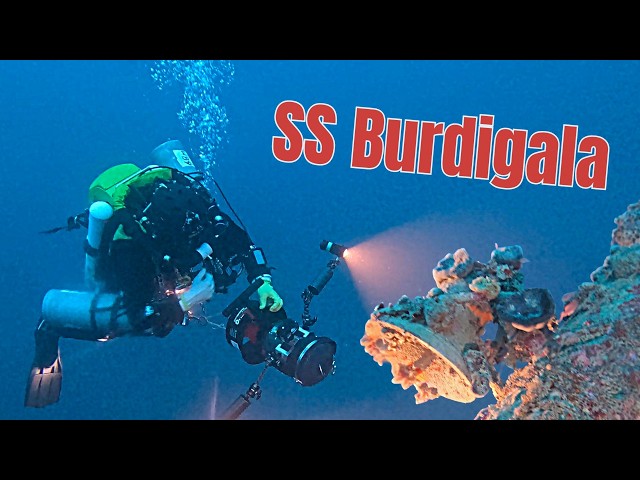
In this video, I take you down onto the wreck of the SS Burdigala — a First World War ocean liner lying in the Aegean Sea, and one of the most overlooked shipwreck dives in maritime history. We explore her deck structure, hunt for the crow's nest bell, and piece together the story of a ship that history chose to forget.
The Burdigala was a German-built liner, requisitioned by the French Navy and used as a troop transport during the First World War. On the 14th of November 1916, she struck a mine laid by the German submarine U-73 and sank in 15 minutes.
A week later, Britannic — the largest of the three Olympic-class sisters — suffered the same fate in the same waters.We know the Britannic story. Very few people know this one.
━━━━━━━━━━━━━━━━━━━━━━
*CHAPTERS*
00:00 – Hit by a Mine: What Sank Burdigala
04:10 – The Deadly Minefield (Britannic Too)
08:09 – Dropping Into the Blue (70m Descent)
15:14 – The Bow: Guns, Bell & First Clues
26:20 – The Liner That Failed From Day One
36:30 – What We Found on the Wreck
━━━━━━━━━━━━━━━━━━━━━━
*ABOUT THIS CHANNEL*
Deep Wreck Diver explores shipwrecks, submarines, and sunken aircraft from around the world - combining technical diving with detailed wreck identification and historical storytelling. Every dive uncovers a piece of history lost to the depths.
━━━━━━━━━━━━━━━━━━━━━━
*Kit I Use*
Show More Show Less View Video Transcript
0:00
November the 14th, 1916.
0:04
The SS Burdigala is running south
0:07
through the Kea Channel. It's empty.
0:10
It's heading back to Toulon.
0:12
15 minutes earlier,
0:14
this was a routine journey. Then,
0:17
boom. A mine on the starboard side, a
0:21
huge explosion.
0:23
The blast rips open the hull and floods
0:26
the engine room within seconds.
0:30
The captain gives the order to abandon
0:32
ship.
0:33
15 minutes later,
0:35
another explosion.
0:37
The ship breaks in two
0:39
and sinks to the bottom of the sea.
0:43
7 days later,
0:45
1 nautical mile to the northeast,
0:48
another ship hits another mine in the
0:51
same minefield.
0:54
That ship's name is Britannic,
0:56
sister to Titanic,
0:59
one of the most iconic shipwrecks in the
1:01
world.
1:03
Now, today you're joining me as I dive
1:07
the SS Burdigala.
1:09
It's 70 m to the seabed.
1:11
It's in the Kea Channel in Greece.
1:14
And as I run through the dive, I'm going
1:17
to tell you everything about the
1:19
extraordinary story of this ship.
1:22
A ship that failed at almost everything
1:24
it was designed to do.
1:26
A ship that was dismissed, renamed,
1:30
and then, after it sunk, forgotten.
1:35
These days, the Burdigala is best known
1:37
as the warm-up dive for Britannic, which
1:40
is super super unfair because it is an
1:42
incredible wreck dive. When people heard
1:45
that I was coming out to dive the
1:46
Britannic, everyone who'd been here
1:48
previously said, "Look,
1:50
it Although the Britannic is great, you
1:52
are going to enjoy the Burdigala, you
1:54
know, just as much and possibly even
1:57
more."
1:58
Which is, you know, that's a big claim
2:00
when you think about Britannic, you
2:01
know, and where it sits on people's
2:03
bucket list. So, I've been really
2:05
excited to do the Burdigala ever since I
2:07
heard that.
2:09
You can see us here. We're at the bottom
2:11
of the shot line. The individual divers
2:14
are sticking on their strobes, just
2:15
sorting themselves out.
2:17
One of the things that we're using this
2:19
dive for is to practice our team
2:21
procedures.
2:23
When we dive the Britannic, we are going
2:25
to be working as a team. All four of us
2:28
are going to go down together. We're
2:30
going to stick together during the dive,
2:32
and then we're going to come up
2:33
together.
2:34
This dive is our opportunity to practice
2:36
this. We We've done another dive before
2:38
this in about 50 m, so we're getting
2:40
those team skills together.
2:42
The three of us who are visitors,
2:45
there's myself, there's Henry, and
2:47
there's Greg. And we're being led around
2:49
the wreck by George.
2:51
One of his responsibilities, as well as
2:53
taking us around the wreck and showing
2:55
us everything, is also to make the
2:57
decision as to whether he thinks the
2:59
team is up to diving the Britannic. So,
3:02
although it's not stated, there's a
3:03
little bit of self-pressure on all of
3:06
us, I think, just to make sure that we
3:08
do everything properly, we stick with
3:11
the guidance that he's given us, and
3:13
frankly to be as good as we possibly can
3:15
because he is a top-class technical
3:18
diver, one of the
3:20
best-known
3:21
technical dive instructors in here in
3:24
Greece. And he's also done all of these
3:26
wrecks an incredible amount of time. So,
3:29
he's just in front of us there. You can
3:31
see that's him on the scooter. We're all
3:33
We're all on scooters.
3:35
The Burdigala is broken into two bits.
3:38
The biggest bit, which is the bow,
3:41
and actually all the way back to after
3:44
the engine, and then there's the stern,
3:47
which is a much smaller bit, but still
3:50
actually really significant. And then in
3:52
between them, there's about a a 10 m gap
3:54
you've seen. I've just crossed over that
3:56
gap and so we're we're heading to the
3:57
stern here. We're on the deck. You can
4:00
see the depth.
4:02
Behind me are the other two members of
4:04
the team.
4:05
We're on a a bit of a mission because we
4:07
want to see as much of this wreck as we
4:09
possibly can. We've given ourselves a
4:11
2-hour run time.
4:13
Now we'll be doing longer than that on
4:15
the Britannic, but for this dive it's
4:17
the opportunity particularly for
4:19
everybody to understand what their
4:21
thermal protection is like, whether they
4:23
need more or less for doing those longer
4:26
longer dives. So it's it's all part of
4:28
our our build-up. We did a shorter dive
4:30
the day before. We're about 2 hours
4:32
today, and then when we dive the
4:34
Britannic it will be about 3 hours.
4:37
What you can see here is is I'm
4:39
fascinated by the
4:42
fixtures and fittings that are on the
4:43
ship. It has never had any sort of
4:46
salvage. You saw there there was a row
4:49
of square porthole windows. There was
4:51
just a porthole there in that little
4:54
uh whatever it was that I went in. You
4:56
can see I'm just going over the lifeboat
4:57
davits here.
4:59
There is George in front of me. And what
5:01
he's doing is he's letting us know that
5:04
we're about to descend down to the
5:05
seabed to get our maximum depth and to
5:08
see the props which are absolutely
5:11
beautiful on this wreck. And the stern
5:13
is is well known for being totally
5:16
lovely. So we're going to see that in a
5:18
second. While we're waiting for the
5:20
other divers to catch up, probably just
5:22
a moment to say all this video from this
5:25
dive is shot from the GoPro on the front
5:27
of my scooter.
5:29
I you probably saw when I would go in
5:31
the water I did have two power lenses on
5:33
my helmet.
5:36
One of them was brand new. I didn't have
5:37
the exposure settings correct, so that
5:40
one
5:42
basically the video footage is unusable.
5:44
The other one
5:45
had died and I couldn't get it off the
5:48
mount. I had a spare one, I couldn't get
5:49
it off the mount, so
5:51
I like to have two on cuz it it sorts
5:53
out the balance.
5:54
But anyway, so neither of my power
5:56
lenses came out. It
5:58
really really frustrating. But the good
6:00
news is I've got some fairly decent
6:02
GoPro footage. I've also got some
6:04
footage from Henry, who is the diver
6:08
who's just gone to my right. You might
6:10
be wondering what was just going on
6:12
there. So so Greg, who's the diver in
6:14
the red drysuit,
6:15
had managed to don't know how get the
6:19
part of the leash from his scooter
6:21
wrapped around part of his equipment. I
6:23
think he used O2 cylinder, so it was it
6:25
was really uncomfortable for him to
6:27
scooter. The good news is that that
6:28
George sorted him out there as you can
6:30
see,
6:31
Greg is
6:33
all all good now and he's cracking on.
6:35
One of the many interesting things about
6:37
this dive is we got a real variety of
6:39
equipment. So you can see Greg in front
6:40
of me there. He's got effectively side
6:43
mount with a chest mounted rebreather.
6:47
It is his own rebreather, so Greg
6:50
is the owner of Scubatron.
6:53
He has designed, manufactures, and sells
6:57
the Golem chest mount rebreather, which
7:00
is what he's diving and is also what
7:02
Henry is diving as well. We'll probably
7:04
see him in a bit.
7:06
I had the opportunity to have a go with
7:08
one of those the day after this.
7:10
Absolutely absolutely incredible
7:11
experience. I'm going to put together a
7:13
video explaining all about that, but
7:15
that's that's for another moment. So
7:17
Greg is diving it in that side mount
7:19
configuration. Henry, we'll see in a
7:21
bit, has got the same rebreather. He's
7:22
diving it with a twin set.
7:26
Now here you go. You see I've come off
7:28
the side of the wreck here, and the
7:29
reason I've done that is I just want to
7:31
get the scale and also so you can see
7:34
all the the divers. The one in front
7:36
there, that's George. He's our guide.
7:39
You can see Greg there with the orange
7:41
fins on, and then just behind him, there
7:44
we go. There's Henry. You can see him.
7:46
He's got those big uh twin 12s, the
7:49
doubles.
7:51
I
7:51
I think this the other bit of video
7:53
there.
7:54
It's great to see the divers. Also shows
7:56
how fantastic the visibility was even
8:00
down here where, you know, we're nearly
8:01
70 m. You can start to see the props
8:03
coming out of the gloom there.
8:05
One of the things that Henry had asked
8:07
me to do was to get some video of him
8:09
with the prop. So, what I'm doing out
8:11
here is I'm going out onto the seabed. I
8:12
think you'll you'll see George in a
8:14
minute. And then I'm going to to kind of
8:16
come in and and capture that video of of
8:19
Henry on the props.
8:22
Here he is. He's He's just there. And
8:24
you see just just above me.
8:26
You can see, I think
8:28
you can see how big this wreck is. And
8:31
it's even though this is the warm-up
8:33
dive for the for the Britannic, and it
8:34
gets stuck into that kind of
8:37
um I guess box of being the warm-up
8:39
dive,
8:40
it is
8:41
an unbelievably good dive. And it's also
8:44
the interesting thing about it is it's
8:46
it's not just a good dive. This ship has
8:48
got a brilliant story associated with
8:51
it. I kind of touched on a bit of about
8:53
that at the beginning, but I'm going to
8:54
be coming back to it it because
8:57
it's fascinating story. It's actually a
8:59
fascinating ship in itself. The The
9:01
design and the construction
9:03
and what happened to it during its life.
9:05
The The sinking is just one small part
9:08
of that.
9:09
Number one. You can see here is this is
9:11
me off the back end of the wreck. You
9:13
can look up there. You can see that that
9:15
beautiful stern. The scale, obviously,
9:18
by the size of the divers, you can just
9:20
see how big it is. I mean, this ship is
9:22
20,000 tons,
9:25
which is
9:26
very, very large.
9:28
It's extremely rare that we get to dive
9:31
or I get to dive a shipwreck as big as
9:33
this.
9:34
Particularly rare to dive one that is as
9:36
intact as this. And as you've seen so
9:39
far,
9:40
this ship is significantly significantly
9:42
intact. One bit that isn't intact there
9:44
is you have a look at that prop where
9:46
Henry is is modeling, you can see that
9:49
it's got three blades. Well, it would
9:51
have had three blades, but one of them
9:53
is missing. And when we get round to the
9:55
prop on the other side, you'll see
9:56
there's a blade missing on that. So, my
9:58
guess is that the prop was still turning
10:02
when it hit the seabed. And that's
10:05
what's broken off one of the blades on
10:07
each prop.
10:08
The other thing that George mentioned
10:10
before we got in the water, he said,
10:12
"When you're on the seabed at the stern,
10:14
look around because there is a load of
10:16
ammo around there." Now, I'm a bit of a
10:19
sucker for ammo, and sure enough, as you
10:21
can see here on the seabed, that is a
10:24
case for one of the guns.
10:27
Like a lot of ships of the time, the
10:28
Berwick Castle was defensively armed.
10:31
So, it's got four 140 mm 5 and 1/2 inch
10:35
there or thereabouts guns, and this is
10:38
one of the shell cases for one of them.
10:40
There's also a smaller gun on the bow.
10:43
Two of the 140 mm guns are mounted on
10:46
the stern, and two of them are on the
10:49
forepeak.
10:50
And we're going to see the two forward
10:52
ones in the video.
10:54
We're also There's also another smaller
10:55
one right on the bow. I don't know what
10:58
caliber that is, and it's it's got an
11:00
interesting thing, but we'll see that
11:01
later on. You can see there's some shell
11:03
cases. I also think there's some
11:06
actual warheads for these as well.
11:10
But not 100% certain. You can see
11:13
there's also the thing back there that
11:14
looked a bit like a Clarkston case.
11:16
Wasn't entirely certain, but to me
11:19
anyway, it looks like this ammunition is
11:21
multiple piece. So, you have a shell
11:24
case,
11:25
then you potentially have some more
11:26
propellant, and then you have the actual
11:29
projectile that's going to get fired.
11:32
Those would normally be steel, so
11:35
you've seen, I think, back there a
11:36
couple of the projectiles. You've seen a
11:38
few of the cartridge cases and that
11:40
thing that looks to me a bit like a
11:42
Clarkson case.
11:43
What I'm doing here, though, is uh,
11:45
going back to the prop.
11:47
And you can see there, you can see two
11:50
of the blades on that prop.
11:52
You can also see that the other divers
11:54
have headed off. They're not as
11:56
interested in this stern as I am.
11:59
One of the things is is that we have to
12:01
be on a bit of a mission with this wreck
12:03
because it is so big and we've given
12:04
ourselves that 2-hour run time that
12:07
clearly there wasn't much opportunity
12:09
for dilly-dallying. Especially here
12:12
because this is the deepest part of the
12:13
wreck. Our plan was to come round onto
12:16
the starboard side, go along the
12:17
starboard side side until we saw the
12:19
mast that is that is broken off and laid
12:22
laid over that side, which you can see
12:23
in front of me. Once we hit the mast, we
12:26
were then going to come up onto the
12:27
wreck and then travel along the wreck
12:30
again. I mean, that is incredible there.
12:32
Once again, shows how how great the
12:34
visibility is. Well, great by my
12:36
standards. George said that he's seen
12:38
much better vis on the Berta car, which
12:40
would be would be would be super
12:43
impressive. Well, the other nice thing
12:45
about this, and you won't catch me
12:46
saying this in many of my videos,
12:48
there's also quite a lot of fish life on
12:49
this wreck. You can see all the small
12:51
ones around the mast. And just in a
12:53
second, you're going to see this school
12:54
of much bigger ones. I I'm not 100%
12:57
certain what what they are, but if we
12:59
were in the Red Sea, I'm pretty certain
13:01
they would be calling these jacks or
13:03
something like that. But, you can see
13:05
there they go.
13:06
Just um, a huge shoal of them. Loads of
13:09
fish. Really nice to see.
13:11
My previous dives in the Med,
13:13
I haven't seen that many fish. It's kind
13:15
of My perception is always that the the
13:18
Med is
13:19
very heavily fished and kind of
13:21
overfished. So, it's really nice to see
13:25
marine life of that kind of size on on a
13:27
wreck always adds a little bit to it.
13:30
What I'm trying to do though, as you can
13:31
see, is catch up with the rest of the
13:34
divers. In front of me there are Greg
13:35
and Henry, and somewhere in front of
13:37
them is George.
13:40
So, I want to stick together. Remember
13:42
that was our plan. I don't want to get
13:44
any
13:45
I don't want to get any bad marks from
13:46
George for for not sticking together
13:48
with the rest of the group.
13:50
But what you can also see is I've just
13:51
gone past on the left is that one of the
13:54
things about the stern and it is known
13:56
to be covered in this really big net.
13:59
And what I've done is just stopped for a
14:01
moment there so you can see you can see
14:03
that net.
14:05
There it is covering a whole load of the
14:07
wreck. It would be fascinating to see
14:09
what's under there. I'm going to show
14:11
you the bells later on, but there is a
14:13
thought that there might be a third
14:15
bell, a stern bell, somewhere underneath
14:18
underneath this net, but getting
14:20
underneath it would obviously be really
14:22
dangerous and taking it off is going to
14:23
be a load of hard work.
14:26
What is also a bit of hard work is the
14:27
fact that I am by taking that video I'm
14:30
starting to lose the two divers in front
14:32
of me or the three divers in front of
14:33
me. So, I'm going to
14:36
once I stop looking around Oh, I know
14:38
what I'm looking at here. This is a deck
14:40
light. You can see there that that thing
14:43
there would have some prisms and it
14:45
would allow natural light to go below
14:47
decks.
14:49
Obviously in this kind of period
14:50
electric lights weren't particularly
14:53
great and also
14:56
um not every ship had them. I don't know
14:57
whether the Birdie Gallant had so
14:59
relying on natural light or providing a
15:01
means for natural light to go below
15:03
decks was an important thing. You're
15:04
going to see a few more of those deck
15:06
lights.
15:07
This is the break, that 10 m break that
15:09
I said there was between the two uh
15:12
sections of the wreck.
15:14
One of the fascinating things about the
15:16
Birdie Gallant and that it's design was
15:18
that most ships you have
15:21
from coming from the bow, you have the
15:23
bow, the bridge, the boilers, the
15:26
engine, and then the prop. The Birdie
15:29
Gall interestingly enough had the
15:31
engines out has two engines, but the
15:34
engines are in between some of the
15:36
boilers. So, it's a really unusual
15:38
design. So, probably just a bit further
15:41
forward of where we are now. That is
15:43
That is where the engines are. So,
15:44
pretty much, I guess, where the shot
15:46
line is.
15:47
Fascinating design. I have no idea why
15:50
it was designed in that way, but it is
15:52
one of the many things that makes the
15:54
Birdie Gall uh uh
15:56
interesting.
15:57
Another interesting bit about the Birdie
15:59
Gall is you have to understand what it
16:02
was designed to be. So, this was built
16:04
in 1897 in Danzig in Germany and was
16:09
originally called the Kaiser Friedrich.
16:12
So, named after the German king. And it
16:15
was supposed to be the German answer to
16:18
the Atlantic speed record.
16:20
The shipyard was contracted to build a
16:23
ship that would do 22 and 1/2 knots. So,
16:26
it would be able to get across the
16:27
Atlantic in 6 days and therefore get the
16:30
blue ribbons, the famous
16:33
not real trophy for the fastest crossing
16:35
of the of the Atlantic.
16:37
Now,
16:38
it never got past 20 knots. And And that
16:41
may be the I guess the requirement to
16:43
hit that speed may be why it was built
16:46
in the way it was built. I don't really
16:48
know.
16:50
Just going back to the dive here. This
16:52
here is just I'm just going underneath
16:55
the the bridge. Now, we're going to come
16:56
back to the bridge in a minute. Uh no,
16:59
in a few more minutes. We're going to go
17:00
to the bow first. And the bridge is
17:02
absolutely incredible and well worth uh
17:05
hanging on in there for. But before we
17:07
do that, we're going to see one of the
17:09
absolute standout features of the Birdie
17:12
Gall and something that that was I knew
17:15
was going to be a special moment. You
17:17
can see it there. George is
17:19
illuminating the bell on the forward
17:22
mast just above the crow's nest and this
17:25
is a really special moment for me. I've
17:28
seen
17:29
um four mast bells. I've never seen one
17:34
actually on the foremast above the
17:36
crow's nest exactly where it should be.
17:39
And as you can see that is a big big
17:42
bell as well. It it would be an
17:44
absolutely beautiful thing but
17:47
really nice to see it in position and in
17:49
situ even though at some point it's
17:51
going to fall off and end up on the
17:53
seabed.
17:54
For those who follow the story of
17:56
Britannic's bell, that's exactly what
17:59
would have happened to the bell that was
18:00
recovered
18:01
in 2025 by Richie Kohler and his team.
18:05
It was discovered in 2019 effectively on
18:08
the seabed below this position on the
18:10
Britannic. So,
18:12
kind of really nice to get that context
18:14
and really nice to get it before we go
18:16
to Britannic. So, one of the things I'm
18:18
hoping to do perhaps is is go on that
18:20
mast and be able to look down and see
18:23
where they where they found the bell.
18:25
On this one though as you can see there
18:26
I'm just looking in inside hoping that
18:28
the the clanger might be in there or
18:30
checking a clanger's in there.
18:32
Henry is just coming into shot there
18:34
taking a bit of video for me and you can
18:36
see further out there there is there is
18:39
Greg
18:40
all of us just admiring this really
18:42
special moment when we see
18:45
the ship's bell or one of the ship's
18:47
bells cuz there is another one to come.
18:50
Unfortunately, we can't hang around.
18:52
George is cracking the whip. We need to
18:54
see or try and see this entire as much
18:57
of this massive ship as we possibly can.
19:00
And I know that the best bit is coming
19:03
at the end which is that we're going to
19:04
go up on the bridge. I heard all about
19:06
the bridge. I've seen all the photos.
19:08
It's something that I am very much
19:10
looking forward to. First of all though,
19:12
we've got to get to the bow and as we
19:15
head forward we're going to see the one
19:18
of the guns. I promised you those
19:20
earlier on. There's There's George and
19:22
then just to my right here, that is one
19:24
of the 140 mm guns.
19:27
So, the Birgitte you have to understand
19:29
its role, which is that it was a
19:32
auxiliary cruiser. So, the French Navy
19:36
weren't using it as a liner, which is
19:39
what it was designed for. They stuck
19:41
these guns on it and we're using it as
19:43
effectively a small, though it wasn't
19:46
small,
19:47
it was a a warship.
19:51
Its main role was carrying troops, but
19:54
the fact is it had all these guns on it,
19:56
so it was a formidable opponent. Those
19:58
140 mm guns, 5 and 1/2 inch, that is
20:02
going to
20:04
outgun any submarine and quite a lot of
20:08
small warships as well. So, very, very
20:10
powerful
20:12
vessel and
20:14
other nations did exactly the same
20:16
thing. So, if you've seen some of my
20:18
other videos, the one where we dived the
20:20
Mamore for instance, HMS Mamore, much
20:24
smaller liner than this. It was It was
20:25
10,000 tons, although still pretty big.
20:29
Also had on board it It had exactly the
20:32
same thing, which is that it was
20:34
converted
20:36
and the Royal Navy stuck some serious
20:37
armaments on it.
20:40
As you can see from the dive, we are
20:42
carrying on heading forward. Henry's
20:44
overtaking me there. You can see very
20:46
distinctive with those two white
20:47
cylinders.
20:48
Also see the anchor capstans and the and
20:51
there's some anchor chain, I think, off
20:53
to the left-hand side. The other
20:55
interesting thing is you can see there's
20:56
a hole in the the deck here.
20:59
It allows you to look down and see see
21:01
the deck below. The other interesting
21:03
thing, and this is a really good
21:04
Britannic link, is if you have a look to
21:06
the right, you can see where the wooden
21:09
decking has rotted away and you can
21:11
imagine it must have been some sort of
21:13
hardwood, but it's left only the
21:15
caulking which was in between the the
21:18
bits of wood. Exactly the same thing has
21:21
happened on the Britannic and if you see
21:23
one of the videos I've done with Richie,
21:25
he talks about exactly that thing.
21:29
As we move forward, there's there's more
21:30
stuff. I'm just going past on the left
21:32
is the crane which would have been used
21:34
to lift the massive into position.
21:38
We're going to see one of the anchors in
21:39
a moment.
21:41
The other thing of note is what I'm
21:42
looking at here which is a small caliber
21:44
gun.
21:45
I've tried to find out what size it is
21:48
online but not had any joy. I think this
21:51
looking at the looking at the size of it
21:52
though, it's probably a 35 or 40 mil,
21:55
that kind of
21:56
size, probably
21:58
some sort of fast firing thing.
22:00
I don't know. If anybody out there knows
22:02
the answer, I'd love to know it.
22:04
You see George has has gone off the bow
22:06
there. He was very keen that we all did
22:09
this. He said that the view is
22:11
fantastic, so I'm heading out into the
22:13
blue and in a moment I'm going to turn
22:15
around and look back at the ship and
22:16
you're going to see the the bow which is
22:19
wonderfully sleek and once again brings
22:21
you back to that idea that the purpose
22:24
of this ship.
22:25
So it was never built to be an auxiliary
22:27
warship. It was built to get the blue
22:31
ribbon for Germany to do that fastest
22:33
transatlantic
22:35
crossing. Unfortunately,
22:38
that didn't happen. The company that
22:41
would had contracted for it, when they
22:43
realized it wasn't as fast as it was
22:45
supposed to be, they refused to take
22:46
delivery
22:48
and
22:49
there was a contract argument
22:51
that went back and forth. What happened
22:53
in the end was it ended up being
22:56
abandoned almost. It was just sat in a
22:59
dockyard. Nobody wanted it. It didn't go
23:01
anywhere, didn't get used for anything.
23:04
And and it sat there for quite a long
23:05
time until in 1912, the year that
23:09
Titanic sank, a French shipping company
23:12
bought the Kaiser Friedrich for 4
23:15
million francs, which was about 30% of
23:19
the actual value. So, they clearly felt
23:21
they were getting a good deal.
23:25
Obviously, they're not going to want a
23:26
ship called the Kaiser Friedrich. So,
23:28
they changed the name to the Burdigala,
23:31
which is the ancient Roman name for
23:33
Bordeaux. And then, in the next 3 years,
23:36
it ran all sorts of shipping routes in
23:39
the Mediterranean taking passengers
23:41
backwards and forwards.
23:43
But, in 1915, like all navies, the
23:47
French navy needed extra ships and they
23:50
requisitioned the Burdigala. They stuck
23:53
those guns on it, the 440 mm guns,
23:57
whatever the one is on the bow, and
24:00
turned this liner that was kind of
24:02
nobody really wanted into an auxiliary
24:05
warship. And they used it for carrying
24:07
troops around in the Mediterranean
24:09
including um from Toulon uh Toulon,
24:13
rather, to Thessaloniki.
24:17
The ship that couldn't do anything right
24:19
was now a weapons platform in the middle
24:22
of a world war. That's looking at that
24:24
gun again and you can see just the
24:26
right-hand side, that is the anchor
24:28
crane that I've mentioned about. You can
24:30
also see the massive chains that are
24:32
running along the the deck here. And
24:35
then, as we move
24:36
as we start heading back down the deck,
24:38
you can see the the anchor capstans
24:41
there again. So, for me,
24:44
I've dived loads of ships where you see
24:45
all of this sort of stuff. What is
24:47
really rare is to see them actually in
24:50
situ. That's really rare. I'm not even
24:53
sure that I've I've dived
24:55
a wreck this big, this intact, with
24:58
everything exactly where it should be.
25:01
So,
25:03
absolutely fascinating and
25:06
a brilliant brilliant thing for me to
25:08
do.
25:10
You can just see I'm just coming up onto
25:12
the second gun. This one is the one on
25:15
the port side, and as you can see,
25:17
rather than aiming forward, it's aimed
25:19
off to the side. You can see one of the
25:20
wheels there. I'm not sure whether
25:21
that's a traverse rear wheel or the
25:23
elevation. And then all the other stuff
25:26
is on there. I think the sights are
25:28
still on there. Absolutely incredible.
25:31
There's Henry. He's He's coming past.
25:34
Uh just seen George in front of us. You
25:36
know, once again,
25:37
he wants us to see everything, but at
25:39
the same time he's got that
25:40
responsibility of making sure that we
25:42
hit that 2-hour dive time, and therefore
25:45
he's keeping us moving forward. And the
25:47
reason he keeps us moving forward is
25:48
because there is so much to see on this
25:51
wreck. One dive nowhere near enough.
25:54
I really hope that we'll get the
25:55
opportunity to dive it again on this
25:57
trip. What you can see there is is
25:59
George has stuck his camera on a lamp,
26:02
paraffin lamp. Henry's coming in to get
26:04
some some video of it. Now, clearly,
26:07
that lamp
26:09
wasn't there when the ship sank, so
26:10
somebody's moved it and stuck it there.
26:13
And what you're going to see in a second
26:14
is that beneath it is the lamp locker,
26:17
and there is a whole load more lamps in
26:19
there. Once again, I've seen lamps on
26:22
ships. I've seen lamp lockers before.
26:26
Normally, they're crushed and broken and
26:28
things are spilling out or whatever. So,
26:30
absolutely incredible, as you can see he
26:32
here, to be able to look down on top of
26:34
it through the deck and see all those
26:37
um all those brass objects in there.
26:39
They They look absolutely wonderful.
26:42
Now, for me,
26:45
I know that
26:46
the Greeks have protected this wreck,
26:48
and they've made it absolutely
26:50
wonderful, and it is a beautiful thing.
26:52
It's fantastic to see these things in
26:54
here, but the the material these are
26:56
made out of is relatively thin.
27:00
They've been underwater 100 years, and
27:02
it will eventually
27:05
decay. It will corrode even even brass,
27:08
believe it or not. The the individual
27:10
elements corrode and and and everything.
27:12
So,
27:13
if it was me, I would be getting
27:15
somebody to lift some of those up, get
27:17
them onto the surface, stick them in a
27:19
museum where they can be preserved
27:22
forever. But But there you go.
27:24
Now, just to my left there, you've
27:25
probably seen that that looks like a
27:27
skylight,
27:28
and potentially that would have been
27:30
into, I guess, a dining area or
27:33
something like that.
27:34
But in front of me here is
27:36
uh the bridge, and you can see I'm
27:38
looking up there that the main bridge is
27:40
off to my left-hand side. This is the
27:43
one of the wings that would that would
27:45
come out from the bridge. And when they
27:46
were docking, I think they would send
27:48
people out onto the end of those wings
27:50
to kind of relay information about how
27:52
close the ship was and those kind of
27:53
things. Often they have telegraphs up on
27:55
there. Uh as you'll see, I do go I go
27:58
round it and then come up on top of it
27:59
and I have a look. There isn't a There
28:01
isn't a telegraph there. All the four
28:03
telegraphs
28:05
uh are in the bridge, and we're and
28:07
we're going to see those in a second.
28:10
But it is quite nice,
28:12
this kind of whole thing. Just to come
28:14
off the side of the wreck. So, to the
28:16
the main bit of the wreck is is beneath
28:18
me. There you can see Greg's in front of
28:19
me. You see there's some more uh davits
28:22
for for lifeboats, and you can imagine
28:24
when the ship was sinking that those
28:27
davits were in action. That's
28:30
one of the reasons why so few people
28:32
died when the Burdigala was sunk. In
28:34
fact, the records show there was only a
28:36
single casualty. He actually died of
28:40
burns, which is obviously very sad,
28:42
but I guess incredible that a ship of
28:44
this size
28:46
sank relatively quickly, had so few
28:49
casualties.
28:51
One of the many interesting things about
28:53
the Burdigala is that it was sunk by
28:56
a mine from the same submarine that sank
29:00
the Britannic. In fact, there's only 7
29:02
days difference between the sinkings.
29:05
The Burdigala was sunk first.
29:07
Unfortunately, I guess for the
29:09
Britannic, but fortunately for me, they
29:12
didn't realize that the Burdigala was
29:16
sunk by mine at the time. They thought
29:18
it had been torpedoed, and in fact, the
29:19
captain's report says that they fired
29:22
shots at what they thought was a
29:23
periscope. So, they didn't think it was
29:25
a mine. I guess if they'd have known it
29:27
was a mine, they would probably or
29:30
possibly have let Britannic know, and
29:32
Britannic might have taken a different
29:34
route, and therefore might not have hit
29:35
the minefield.
29:37
So, potentially, there was an
29:38
opportunity missed there.
29:40
Opportunity not to be missed out is what
29:42
we are currently doing, which is having
29:45
a look at the bridge.
29:47
You can see Greg in front of me there is
29:50
pretending to operate one of the four
29:53
telegraphs that we're going to see in a
29:54
minute. There you go. There's two
29:56
telegraphs in that picture. In fact,
29:58
there's There you go, all four of them
29:59
are there. I'm going to come back in and
30:01
have a look at them in a moment. But,
30:03
the other fascinating thing is is this
30:05
thing here, which is a rangefinder. And
30:08
the rangefinder is on top of
30:11
the part of the compass binnacle. So,
30:14
incredible to see those things in situ,
30:18
pretty much where they would have been.
30:19
Actually, I think there was another
30:21
level above the one where we are now,
30:23
and we're going to see in a bit the helm
30:25
that was up there. That rangefinder, I
30:27
think, would have been up there as well.
30:29
But, but here we've got those four
30:30
telegraphs, three in that picture, as
30:33
we're as we're looking at it, and the
30:35
fourth one, there you go, just the right
30:37
hand side. Incredible.
30:39
Imagine what that bridge would have
30:41
looked like
30:42
back in the day. It would have I think
30:44
all of those things would have been
30:46
glistening, would have been absolutely
30:48
incredible. Now, what you can see there
30:50
in the middle of the screen or the
30:51
bottom of the screen, that's one of the
30:53
helms.
30:54
And you can see it's attached by a long
30:56
pole to that thing there, which is in
30:57
the middle of the screen, which is the
30:59
telemotor helm to the hydraulic helm.
31:02
The The smaller helm would have been up
31:04
on top, above above this deck. That I
31:07
think is would have been wooden and has
31:08
all completely rotted away, which is why
31:10
this is all fallen out fallen down here,
31:12
the rangefinder.
31:14
That the top helm, potentially the the
31:16
binnacle would have been up there as
31:18
well. Although you'd imagine there would
31:19
also have been a binnacle on this level.
31:22
I'm coming back in here just to have a
31:23
look at these four telegraphs. There's a
31:25
whole load of other stuff around here as
31:27
well. There's things that look to me
31:29
like potentially um
31:32
bells, maybe they were telephones or
31:35
some sort of communication device. You
31:36
can see one just to the bottom left of
31:38
the telegraph just going out of shot.
31:40
I'm concentrating In fact, there it is.
31:42
You can see straight in front of me
31:43
there.
31:45
There's all sorts of things uh in and
31:48
around the bottom here that have
31:50
that have been covered up. I'm just
31:52
I'm kind of I'm pro- I'm a bit awestruck
31:55
at this moment to see all this stuff
31:57
like this. So so unusual. People tell me
32:00
you get this in Truk Lagoon. I've not
32:03
been to Truk. I don't believe that you
32:06
get
32:07
liners of this quality and this size in
32:10
Truk Lagoon there. You might get
32:12
merchant ships. Yeah, fine. Which will
32:15
will have some of this sort of stuff,
32:16
but not the quality and the quantity
32:19
that that we're currently looking at
32:21
here. So if somebody out there knows a
32:22
wreck
32:24
that is a liner wreck like the Birdie
32:26
Gallant that is in this good a
32:28
condition, I would I'd be really
32:30
fascinated to hear about it, but I I
32:32
think it's pretty unique.
32:34
Now, the thing that I'm doing there, you
32:35
can see George is just sat off the back.
32:38
I'm very keen to know where the the bell
32:40
is and the second bell is and as you can
32:43
see he's he's just pointing
32:45
it out to me there.
32:48
It's
32:49
not really where I was expecting it to
32:51
be. I would have expected the second
32:53
bell to be much closer to the the bridge
32:55
gear, so those telegraphs and stuff. So,
32:58
I'm not entirely sure why it's ended up
33:00
down here, but there's no doubt it is
33:02
the bell. This that's not in any
33:04
dispute. You can see it there balanced
33:05
precariously on the lip of
33:09
that bit of rusted plate. It potentially
33:12
it's being held on by
33:14
uh its hanger, but
33:17
I also suspect that at some point that
33:19
bell is going to fall into the bowels of
33:22
the ship through that big hole and will
33:23
end up several decks down, so
33:26
that will be a great loss when that
33:28
happens, but it's the reality. All these
33:30
ships, they're not static, they're not
33:32
museums, they are
33:35
things that are in going through the
33:37
gradual pro- process of decay and
33:40
ultimately they're all going to end up
33:42
flat on the seabed.
33:45
And that will be very sad for future
33:46
generations of divers. All they're going
33:48
to have be able to do is come and watch
33:50
videos from people like me.
33:52
The other thing I think I've spotted in
33:53
there is is that looks like a bath.
33:56
I don't know whether that was a bath for
33:59
the crew, a bath for the passengers, or
34:02
given its location in a proximity to the
34:04
bridge, perhaps that was the the
34:06
captain's bath. I don't know.
34:09
If somebody's got the plans or somebody
34:10
knows some more, then then please please
34:13
tell me. The other thing So, you can
34:15
proceed that orange fins, so Greg is
34:17
coming to have a look at the bell as
34:19
well.
34:20
You can see some more davits off to the
34:22
left-hand side there. You can also see
34:24
this area here is where one of the
34:26
funnels would be. Three funnels.
34:29
Quite an unusual layout, as I said,
34:31
because of the the fact that boilers
34:32
were aft of of the engine. So,
34:35
in between the the funnels I thought I'd
34:37
just gone past the funnel there, I
34:38
think, on the left-hand side. In between
34:40
the funnels,
34:41
just coming back up on the top of the
34:43
wreck for that last glimpse at this
34:45
bridge area.
34:46
I
34:47
I know that the dive is coming to an
34:49
end. I know that
34:51
we're running out of time, but I so want
34:53
to spend longer in this area. In fact, I
34:54
want to spend longer on the whole wreck.
34:56
It is It is so good, but I know that
34:59
George is cracking the whip. He's on
35:01
that 2-hour timeline, so
35:04
I can't. I know that we're going to have
35:06
to head back to the shot line, which is
35:08
off to our left-hand side. It's
35:12
not very far away. You're going to see
35:14
the strobes and stuff in a second, but
35:15
I'm just having a look around here. Just
35:17
getting that hopefully not final
35:19
glimpse, cuz I hope I'm going to come
35:20
back to this wreck, but but you never
35:22
know. Funnel fallen over off to my
35:24
right-hand side there.
35:26
And then uh you can see here heading
35:28
back. The other guys are already They're
35:30
already ahead of me. You start seeing
35:32
the strobes coming into view there.
35:34
And you can see a very reluctant me
35:37
heading to join them.
35:39
I can't begin to tell you how much I've
35:41
enjoyed this dive. It's one that I've
35:42
been looking forward to for years and
35:45
years. It absolutely deserves the
35:47
plaudits it gets.
35:49
What it doesn't get is enough plaudits
35:51
because this is a world world-class
35:55
dive. It is so good. I'll tell you what
35:58
you so good as well. You can see uh the
36:00
strobes there.
36:02
You ever want a
36:03
an indication of why strobes are good,
36:06
this this shows you there. You see mine
36:08
are the two at the bottom, my my kind of
36:09
classic double strobes, and then there's
36:11
few of the other guys. So,
36:13
I'm going to I'm going to take those
36:15
off, and then it's the beginning of the
36:18
ascent.
36:19
Which is is sad, but hey, that's that's
36:22
the way it is with this kind of diving.
36:24
You have to be disciplined. If you say
36:26
you're going to do something, you have
36:28
to stick to it, especially for people in
36:32
a team. That's not the easiest thing in
36:35
the world. As a as an individual, you
36:37
have to you have to be disciplined. You
36:40
have to do what the group has agreed.
36:42
And you've probably seen that at there's
36:44
a couple of occasions on this video
36:46
where I've kind of
36:47
I've kind of hung back and I guess if
36:50
I'm being a bit self-critical on myself,
36:52
I probably shouldn't have done that. I
36:54
should have probably made more of an
36:56
effort to stick a bit closer.
36:58
Greg's just removing his stray from the
37:01
shot line. It's not something he does
37:03
all the time. I think this is a bit of a
37:05
a jury-rigged thing.
37:06
So, he's finding it a little bit more
37:08
challenging. I think this might be the
37:09
first time he's done it for a for a long
37:11
time. George is going to come in and
37:13
help him there, but
37:14
while that's going on, I'm just looking
37:16
up the line there. You can see Henry and
37:18
that there, that's the the route to
37:20
home. Going to spend several hours
37:22
looking at that line. And this is it.
37:24
This is on a bit further on. There's his
37:26
on deco stops. Well, that's Henry's
37:28
video. He's
37:30
having a taking a bit of a video of
37:31
himself and you can see looks pretty
37:33
good in that GBM chest mount rebreather
37:36
with his with his twins on the back.
37:38
He's also got that lovely head-up
37:40
display, which is the
37:42
the new one by Halcyon. There you go,
37:45
just a bit of a photo bomb. I've just
37:47
appeared in the background to try and
37:50
make sure I get in there. You probably
37:52
see the bubbles there from one of the
37:53
support divers.
37:54
Over there, that's that's George looking
37:57
very cool.
37:58
There isn't much current. We're we're
38:00
very lucky. There's Henry looking down
38:03
at me. You can see I've got my dive
38:04
boat. And I I think I was taking photos
38:07
or watching some video or something like
38:10
that. But we were really lucky not to
38:12
get the current that sometimes plagues
38:14
this area.
38:15
There's Greg. He's obviously a bit
38:16
further ahead on on the deco stops than
38:19
the rest of us.
38:21
And uh, right, I think Oh, yeah, out in
38:24
the blue there, that's the support diver
38:26
with George, and this is the surface,
38:28
that's me, just arrived.
38:31
Obviously chuffed to anything.
38:34
Done the Burdigala, brilliant wreck, one
38:36
I've been looking forward to for so
38:38
long. And behind me there you can see
38:40
the chase boat, which is
38:41
uh, if a diver comes off the, uh,
38:43
trapeze or the system and
38:47
you know, get swept away by the current,
38:48
need someone to to pick them up.
38:52
You probably also see I'm just starting
38:53
to take off my, uh, scooter there, so
38:56
that'll be the first thing that gets out
38:57
of the water. But yeah, Burdigala,
39:00
absolutely stunning, world-class dive.
39:03
I'm so pleased to have done it. It's
39:06
It's something I enjoyed a lot. I'm
39:08
really hopeful that I'm going to get the
39:09
opportunity to dive it again. There's so
39:12
much more to see down there. It's, uh, I
39:14
mean, I could probably spend the entire
39:16
trip out here diving the Burdigala, to
39:18
be honest. But anyway, there we go. Next
39:21
one, fingers crossed, will be the
39:23
Britannic.
39:24
I hope you've enjoyed this video. As
39:26
always, please do all the usual sort of
39:28
stuff, like, um, leave us comments,
39:31
and
39:32
of course, tell other people about it.
39:34
But for now, I'm Don Robinson, deep
39:37
wreck diver. I'll look forward to seeing
39:38
you on the next one.
#Sports